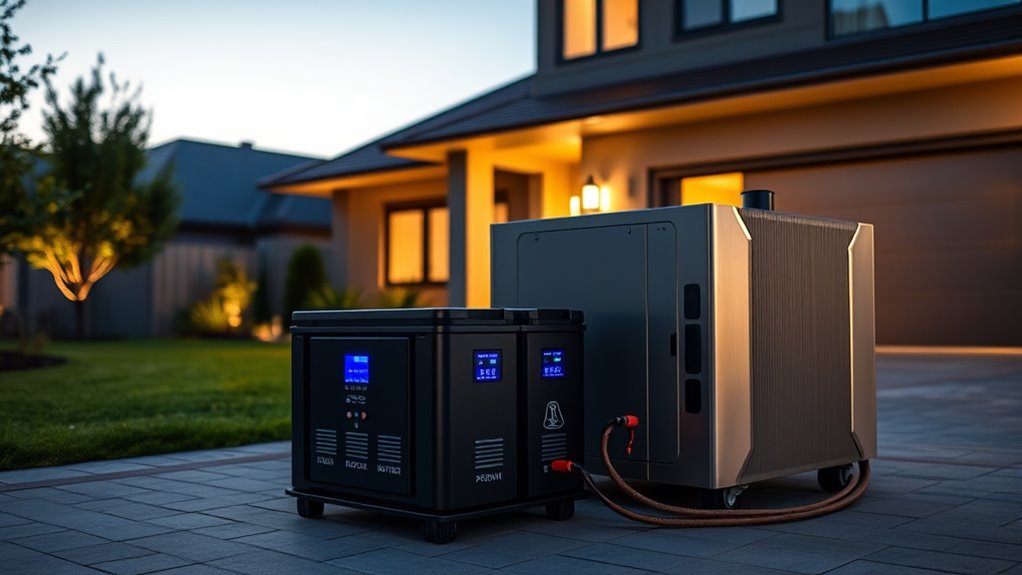

A battery backup with 240V output can run compatible well pumps, some HVAC equipment, and other 240V loads, but the right choice depends on both output capacity and how the system connects to your home. My best overall pick is the Anker SOLIX F3800 Plus with its 240V generator adapter, which pairs a portable power station with a specific path to 240V use. The EcoFlow DELTA Pro Ultra with Extra Battery stands out for larger home-backup needs, while the PECRON E3600LFP two-unit setup offers another route to double-voltage power. The main tradeoffs are capacity, continuous and surge output, installation needs, portability, and whether 240V is available directly or only through an accessory. Read on for the full breakdown and guidance on matching a system to your loads.

Get backup power and energy gear delivered free with Prime
- Fast, free delivery on millions of items
- Prime Video, Amazon Music and more included
- Member-only deals all year
Complete the kit


Key Takeaways
- A 240V label does not tell the whole story: output method, wattage limits, surge capability, and included or optional adapters determine whether a unit can run a particular appliance.
- The Anker SOLIX F3800 Plus is the standout for an accessible 240V setup: its listed generator adapter gives buyers a defined route to 240V use, but they still need to verify compatibility and connection requirements.
- The EcoFlow DELTA Pro Ultra with Extra Battery is aimed at bigger home-backup plans: its 12kWh system is a different scale from compact portable units, with installation and system planning carrying more weight.
- Several products reach 240V through a paired system or accessory rather than one standalone outlet: the PECRON double-voltage hub and the Anker adapter approach make setup details a key part of the comparison.
- Battery capacity and 240V output answer different questions: more stored energy can extend runtime, but it does not by itself prove a system can start or continuously run a demanding 240V load.
| BLUETTI Apex 300 Portable Power Station 2764.8Wh 3840W LFP Solar Generator | 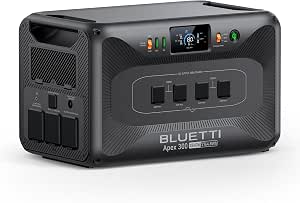 | Best for Expandable Portable Backup | Battery capacity: 2764.8Wh | Wattage: 3840W | Listed voltage: 120V | VIEW ON AMAZON | See Our Full Breakdown |
| PECRON Portable Power Station E3800 with 3840Wh LiFePO4 Battery Backup |  | Best for High-Capacity 120V Loads | Battery capacity: 3840Wh | Battery type: LiFePO4 | AC output: 4200W | VIEW ON AMAZON | See Our Full Breakdown |
| EF ECOFLOW 12kWh Power Station: DELTA Pro Ultra with Extra Battery |  | Best for Whole-Home-Scale Capacity | Included capacity: 12kWh | Inverter output: 7200W | Listed voltage: 120V | VIEW ON AMAZON | See Our Full Breakdown |
| Jackery HomePower 3600 Pro Max Power Station, 3584Wh, 2000W 120V/4000W 240V |  | Best Clearly Specified 240V Pick | Battery capacity: 3584Wh | 240V output: 4000W | 120V output: 2000W | VIEW ON AMAZON | See Our Full Breakdown |
| Eaton Tripp Lite SMX1500LCDT 230V 1500VA UPS with LCD Display |  | Best for 230V Electronics Backup | Maximum power: 900W | Input voltage: 230V | Listed output voltage: 120V | VIEW ON AMAZON | See Our Full Breakdown |
| GROWATT HELIOS 3600 Portable Power Station, 3600Wh LFP Solar Generator |  | Best for Expandable Backup | Battery capacity: 3,600Wh | Battery chemistry: LFP | Output wattage: 3,600W | VIEW ON AMAZON | See Our Full Breakdown |
| EBL 2400W Portable Power Station LiFePO4 Battery for Home Use |  | Best for 120V Essentials | Battery capacity: 1,843.2Wh | Output power: 2,400W | Battery chemistry: LiFePO4 | VIEW ON AMAZON | See Our Full Breakdown |
| Anker SOLIX F3800 Plus Portable Power Station and 240V Generator Adapter |  | Best High-Output 240V Package | Battery capacity: 3,840Wh | AC output: 6,000W | Solar input: 3,200W | VIEW ON AMAZON | See Our Full Breakdown |
| Anker SOLIX F3800 Portable Power Station, 3,840Wh |  | Best for Expandable EV and RV Backup | Battery capacity: 3.84kWh | Maximum output: 6,000W | Starting wattage: 10,200W | VIEW ON AMAZON | See Our Full Breakdown |
| Jackery HomePower 3600 Plus Power Station, 3584Wh, 3600W AC Output |  | Best Portable 240V Home-Backup Pick | Battery capacity: 3,584Wh | AC output: 3,600W | Voltage: 120V and 240V in parallel | VIEW ON AMAZON | See Our Full Breakdown |
| ECO-WORTHY 48V Home Backup Power Station with 10240Wh Battery and 10KW Inverter |  | Best for High-Capacity Home Backup | Battery capacity: 10,240Wh | Battery configuration: Two 51.2V 100Ah LiFePO4 batteries | Inverter output: 10,000W pure sine wave | VIEW ON AMAZON | See Our Full Breakdown |
| PECRON 2xE3600LFP Portable Power Station, 240V Double Voltage Hub, 3072Wh |  | Best Portable 240V-Oriented Setup | Battery capacity: 3,072Wh | Battery type: LiFePO4 | Maximum power: 3,600W | VIEW ON AMAZON | See Our Full Breakdown |
| Anker SOLIX F3000 Portable Power Station, 3,072Wh, 6,000W, Solar Generator |  | Best for Expandable Portable Backup | Battery capacity: 3,072Wh | Output wattage: 3,600W | Surge power: 6,000W | VIEW ON AMAZON | See Our Full Breakdown |
| Jackery HomePower 3600 Plus with 2x200W Solar Panels, 3584Wh, 3600W AC Output |  | Best for Solar-Ready 240V Expansion | Battery capacity: 3,584Wh | AC output: 3,600W | Output voltage: 120V and 240V in parallel | VIEW ON AMAZON | See Our Full Breakdown |
| battery backup with 240v | Battery capacity | Weight | Dimensions |
|---|---|---|---|
| BLUETTI Apex 300 Portable Powe | 2764.8Wh | 66.1 lb | 20.67 × 12.87 × 12.6 in |
| PECRON Portable Power Station | 3840Wh | 87.3 lb | 17.5 × 12.1 × 14.7 in |
| EF ECOFLOW 12kWh Power Station | — | 293.6 lb | 27.2 × 18.9 × 8.4 in |
| Jackery HomePower 3600 Pro Max | 3584Wh | 74 lb | — |
| Eaton Tripp Lite SMX1500LCDT 2 | — | 24.7 lb | — |
| GROWATT HELIOS 3600 Portable P | 3,600Wh | — | — |
| EBL 2400W Portable Power Stati | 1,843.2Wh | 55lb | 16.9 x 11.8 x 11in |
| Anker SOLIX F3800 Plus Portabl | 3,840Wh | 135.6lb | 27.64 x 15.55 x 15.28in |
| Anker SOLIX F3800 Portable Pow | 3.84kWh | — | — |
| Jackery HomePower 3600 Plus Po | 3,584Wh | 77.2lb | 15.2 x 12.2 x 19.3in |
| ECO-WORTHY 48V Home Backup Pow | 10,240Wh | — | 20.55 x 17.13 x 5.63 in |
| PECRON 2xE3600LFP Portable Pow | 3,072Wh | 79 lb | 17.5 x 12.1 x 13.8 in |
| Anker SOLIX F3000 Portable Pow | 3,072Wh | 91.5 lb | — |
| Jackery HomePower 3600 Plus wi | 3,584Wh | 77.2 lb | 15.2 x 12.2 x 19.3 in |
More Details on Our Top Picks
BLUETTI Apex 300 Portable Power Station 2764.8Wh 3840W LFP Solar Generator
The BLUETTI Apex 300 balances substantial storage with a more manageable footprint than the 12kWh EF ECOFLOW DELTA Pro Ultra. Its 2,764.8Wh capacity, 3,840W rating, and charging from AC, solar, or a vehicle suit backup for essential appliances and mobile setups. The built-in UPS function can help keep connected equipment powered through an outage, while additional batteries offer a path to longer runtime. The tradeoff is that its listed voltage is 120V, so this model alone is not a clear fit for equipment that specifically requires 240V output. At 66.1 pounds, it is also heavy to carry regularly, and expanding the system adds setup complexity. I’d choose it for flexible 120V backup, not as a direct 240V solution.
Pros:- 2,764.8Wh capacity supports longer use than smaller portable stations
- Accepts solar, AC, and vehicle charging
- Built-in UPS function supports blackout backup for connected equipment
- Expandable with additional batteries
Cons:- Listed voltage is 120V, which does not meet a straightforward 240V-output requirement
- At 66.1 pounds, it is cumbersome for frequent carrying
- Battery expansion adds accessories and setup complexity
Best for: Buyers who want a high-capacity 120V station for home essentials, RV use, or off-grid charging, with the option to add battery capacity later.
Not ideal for: Anyone whose primary goal is direct 240V appliance backup; the listed output voltage is 120V, so confirm system configuration before buying.
- Battery capacity:2764.8Wh
- Wattage:3840W
- Listed voltage:120V
- Power sources:Solar, AC, and car
- Total outlets:6
- UPS:Built-in
- Weight:66.1 lb
- Dimensions:20.67 × 12.87 × 12.6 in
Our verdict“Choose the Apex 300 for expandable, multi-source 120V backup, but pick a model with specified 240V output if that is your main requirement.”
PECRON Portable Power Station E3800 with 3840Wh LiFePO4 Battery Backup
The PECRON E3800 brings more stored energy and a higher stated output rating than the BLUETTI Apex 300: 3,840Wh and up to 4,200W. That combination is useful for longer backup sessions with demanding 120V devices, while the LiFePO4 battery is rated for more than 3,500 cycles. Its 8–20ms UPS function, touchscreen, and app controls add practical monitoring and backup features. The key limitation for this roundup is that the supplied specifications do not state 240V output; high wattage alone does not mean a unit can power a 240V load. It is also the heaviest portable model here at 87.3 pounds. I’d favor it over the Apex 300 for capacity, but not for confirmed 240V service.
Pros:- Large 3840Wh LiFePO4 battery rated for over 3,500 cycles
- 4200W AC output rating exceeds the BLUETTI Apex 300’s listed 3840W
- Supports AC, solar, and car charging
- UPS function and Wi-Fi/Bluetooth app control provide backup and monitoring options
Cons:- 240V output is not specified in the supplied product data
- 87.3-pound weight limits portability
- Solar connections may require more setup than a basic plug-in backup
Best for: Home or RV users who need substantial 120V backup capacity, app monitoring, and multiple charging options, and can accommodate a heavy unit.
Not ideal for: Buyers needing confirmed 240V output or a station they can lift and move often; the provided data does not specify 240V, and the unit weighs 87.3 pounds.
- Battery capacity:3840Wh
- Battery type:LiFePO4
- AC output:4200W
- AC outlets:4
- Maximum expandable capacity:53.76kWh
- UPS transfer time:8–20ms
- Weight:87.3 lb
- Dimensions:17.5 × 12.1 × 14.7 in
Our verdict“Pick the E3800 for long-running, high-demand 120V backup, but verify 240V capability before relying on it for a 240V appliance.”
EF ECOFLOW 12kWh Power Station: DELTA Pro Ultra with Extra Battery
The EF ECOFLOW DELTA Pro Ultra is the capacity-first choice in this group: its listed package includes 12kWh, with expansion up to 90kWh and a 7,200W inverter. That puts it in a different class from the portable BLUETTI Apex 300 and PECRON E3800, whose stored energy is measured in roughly 3–4kWh. The extra capacity is better suited to extended residential outages and heavier loads, while the online UPS is listed with zero-millisecond transfer. But the product data specifies 120V, not 240V output, so I would not select it for a 240V load without confirming the exact system configuration and output hardware. At 293.6 pounds, it is also a stationary installation rather than a grab-and-go backup.
Pros:- 12kWh included capacity is far greater than the BLUETTI Apex 300 or PECRON E3800
- 7,200W inverter rating supports heavier loads
- Expandable capacity is listed up to 90kWh
- Online UPS is specified with 0ms transfer
Cons:- Listed voltage is 120V, so the data does not confirm direct 240V output
- At 293.6 pounds, it is difficult to move and better treated as a fixed installation
- Large system size and expansion require more planning than a portable power station
Best for: Households planning substantial, extended home backup who have space for a large system and can verify that its configured outputs match their appliances.
Not ideal for: Buyers seeking a portable station or confirmed 240V output straight from the listed specifications; this model weighs 293.6 pounds and lists 120V.
- Included capacity:12kWh
- Inverter output:7200W
- Listed voltage:120V
- Maximum expandable capacity:90kWh
- UPS transfer:0ms online UPS
- Total outlets:6
- Weight:293.6 lb
- Dimensions:27.2 × 18.9 × 8.4 in
Our verdict“Choose the DELTA Pro Ultra for very long home-backup runtimes, but confirm 240V output and installation needs before committing.”
Jackery HomePower 3600 Pro Max Power Station, 3584Wh, 2000W 120V/4000W 240V
For a roundup centered on 240V battery backup, the Jackery HomePower 3600 Pro Max is the clearest match: its product title specifies 4,000W at 240V, unlike the BLUETTI Apex 300 and EF ECOFLOW DELTA Pro Ultra listings, which give 120V figures. Its 3,584Wh battery and expansion up to 43kWh make it a more flexible home-backup platform than a small electronics UPS, while the under-10ms transfer claim and quiet operation suit residential use. The capacity is still much smaller than the DELTA Pro Ultra’s listed 12kWh package, so runtime under heavy loads will be shorter. At 74 pounds, it is not light, and a transfer switch is required for a home installation. I’d rank it first here because the 240V claim is explicit.
Pros:- Explicitly lists 4000W 240V output, making it the most direct match in this batch
- 3584Wh battery can be expanded up to 43kWh
- UPS transfer is specified as under 10ms
- Quiet operation is listed below 30dB
Cons:- Included 3584Wh capacity is well below the EF ECOFLOW DELTA Pro Ultra’s listed 12kWh
- 74-pound weight makes frequent relocation difficult
- Home integration requires a transfer switch
Best for: Homeowners who need a specified 240V output for compatible appliances and want a battery system that can expand for longer backup.
Not ideal for: Buyers needing maximum included energy or a simple carry-anywhere station; the DELTA Pro Ultra has far more listed capacity, and this Jackery weighs 74 pounds and calls for transfer-switch installation.
- Battery capacity:3584Wh
- 240V output:4000W
- 120V output:2000W
- Maximum expandable capacity:43kWh
- UPS transfer time:Under 10ms
- Cycle life:6000 cycles
- Noise level:Under 30dB
- Weight:74 lb
Our verdict“Choose the HomePower 3600 Pro Max when specified 240V output matters more than maximum included capacity or easy portability.”
Eaton Tripp Lite SMX1500LCDT 230V 1500VA UPS with LCD Display
The Eaton Tripp Lite SMX1500LCDT serves a narrower purpose than the Jackery HomePower 3600 Pro Max: it is a line-interactive UPS for protecting electronics, not a high-capacity station for household appliances. Its input is listed at 230V, with eight outlets, automatic voltage regulation, an LCD, and up to 10 minutes of runtime at half load. That short window can give networking or computer equipment time for a controlled shutdown; it cannot match the Jackery’s 3,584Wh storage or 4,000W 240V output. There is also a specification conflict: the product description calls it a 230V UPS, while the listed output voltage is 120V. I’d confirm the output and plug configuration before connecting equipment, especially when true 230/240V backup is the requirement.
Pros:- 230V input is specified for compatible electrical setups
- LCD and automatic voltage regulation aid monitoring and power conditioning
- Eight outlets allow multiple devices to be connected
- Up to 10 minutes at half load can allow a controlled shutdown
Cons:- Maximum output is 900W, far below the Jackery HomePower 3600 Pro Max
- Runtime is short and suited to electronics rather than extended backup
- Output voltage is listed as 120V despite the 230V product description, so compatibility needs confirmation
Best for: IT or office users seeking short-duration UPS protection for critical electronics on a compatible 230V input, after confirming the unit’s output configuration.
Not ideal for: Households needing long runtimes, high-wattage appliance support, or unambiguous 240V output; its maximum power is 900W and the listed output voltage is 120V.
- Maximum power:900W
- Input voltage:230V
- Listed output voltage:120V
- Number of outlets:8
- Runtime:Up to 10 minutes at half load
- Weight:24.7 lb
- Form factor:Tower
Our verdict“Choose this UPS for brief electronics protection, not as a substitute for a high-capacity 240V home battery system.”
GROWATT HELIOS 3600 Portable Power Station, 3600Wh LFP Solar Generator
The GROWATT HELIOS 3600 stands out for buyers who want a large battery now and a path to much longer backup later: its capacity can expand up to 36kWh. That headroom is greater than the Anker SOLIX F3800’s stated 26.9kWh expansion limit, making the Growatt the stronger fit for extended outages if the compatible split-phase setup meets your needs. Its 3,600W output and support for split-phase connection make it relevant to a 240V backup plan, but the listed voltage is 120V; confirm the required equipment and wiring before treating it as a ready-to-use 240V outlet. Fast AC and solar charging can reduce downtime, while the 3,600Wh starting capacity is not enough for long operation at heavy loads. At large, heavy size, it is better suited to a planned home or off-grid setup than frequent carrying.
Pros:- Expandable capacity up to 36kWh supports longer backup plans.
- 3,600W output provides substantial power for compatible appliances.
- AC and solar charging are described as taking under 1.5 hours.
- Cold Start Technology and stated extreme-weather suitability support off-grid use.
Cons:- The listed voltage is 120V, so the 240V split-phase arrangement and required accessories need verification.
- Large, heavy construction makes frequent transport difficult.
- A 3,600Wh battery can run down quickly under sustained high loads.
Best for: Homeowners planning a compatible split-phase system who want substantial expansion capacity for longer outages.
Not ideal for: Buyers who need a clearly specified, standalone 240V outlet or a lightweight station they can move often.
- Battery capacity:3,600Wh
- Battery chemistry:LFP
- Output wattage:3,600W
- Starting wattage:4,500W
- Listed voltage:120V
- Expandable capacity:Up to 36kWh
- Outlets:16
- Charging:AC and solar; stated charging time under 1.5 hours
Our verdict“Choose the HELIOS 3600 if expandable capacity matters more than portability and you can confirm the equipment needed for your 240V setup.”
EBL 2400W Portable Power Station LiFePO4 Battery for Home Use
The EBL Acc2400 is the practical pick here for buyers whose backup plan is centered on 120V essentials rather than a 240V appliance. Its 2,400W output and 1,843.2Wh battery are smaller than the Jackery HomePower 3600 Plus, so it is less suited to running several high-draw household loads for long periods. In return, the EBL provides a useful spread of ports, including 100W USB-C PD and wireless charging, for keeping personal devices and smaller equipment supplied alongside AC devices. The LiFePO4 battery is rated for over 3,500 cycles, and the description cites fast emergency power switching. But the provided specifications do not identify a 240V output or split-phase capability, so I would not choose it as the core of a 240V backup system. At 55 pounds, it is portable only in a limited, planned sense.
Pros:- 1,843.2Wh capacity and 2,400W output suit a range of 120V devices.
- Port selection includes USB-C PD 100W and wireless charging.
- LiFePO4 battery is rated for over 3,500 charging cycles.
- Fast emergency power switching is described as protecting connected devices during outages.
Cons:- No 240V output or split-phase capability is specified.
- 55-pound weight limits casual portability.
- Lower capacity and output than the Jackery HomePower 3600 Plus restrict longer or heavier-load backup.
Best for: Households or campers who need a mid-capacity 120V station with varied device-charging options and occasional backup power.
Not ideal for: Buyers who need native 240V output, whole-home backup, or a unit that is easy to carry over distance.
- Battery capacity:1,843.2Wh
- Output power:2,400W
- Battery chemistry:LiFePO4
- Weight:55lb
- Dimensions:16.9 x 11.8 x 11in
- Charging cycles:Over 3,500
- AC outlets:4
- Other ports:2 USB-A, 2 USB-C, 1 car, 2 DC, wireless charging
Our verdict“Pick the EBL for varied 120V device backup, but skip it if 240V power is a firm requirement.”
Anker SOLIX F3800 Plus Portable Power Station and 240V Generator Adapter
The Anker SOLIX F3800 Plus is the clearest fit in this group for buyers seeking a packaged route toward 240V backup: the product includes a 240V generator adapter and pairs it with 6,000W AC output. That makes it a stronger starting point for demanding loads than the EBL Acc2400, whose listed output is 2,400W and whose specs do not identify 240V capability. Its 3,840Wh battery gives useful stored energy, while stated solar input of 3,200W and support for AC or generator recharging offer several ways to refill it. The tradeoff is substantial: at 135.6 pounds, this is not a casually portable power station, and a 240V adapter does not by itself confirm compatibility with every home circuit or appliance. I would verify the connection method and load requirements before purchase.
Pros:- Includes a 240V generator adapter, giving it a more direct 240V-oriented package than the EBL Acc2400.
- 6,000W AC output supports higher-demand loads than lower-output options in this group.
- 3,840Wh LiFePO4 capacity provides substantial stored energy.
- Supports solar, generator, and AC recharging; stated solar input is 3,200W.
Cons:- 135.6-pound weight makes moving the unit difficult.
- The adapter and connection requirements may make setup more involved than a basic portable station.
- Confirm 240V output behavior and compatibility with the intended circuit; the listed specs do not detail those limits.
Best for: Homeowners who need high output and a supplied 240V generator adapter for compatible backup loads.
Not ideal for: Campers, renters, or anyone who needs a lightweight station or a simple plug-and-play connection to household wiring.
- Battery capacity:3,840Wh
- AC output:6,000W
- Solar input:3,200W
- Weight:135.6lb
- Dimensions:27.64 x 15.55 x 15.28in
- Warranty:5 years
- Included 240V equipment:Generator adapter
- Recharging options:AC, solar, and generator
Our verdict“Choose the F3800 Plus when high output and an included 240V generator adapter matter more than easy transport or simple setup.”
Anker SOLIX F3800 Portable Power Station, 3,840Wh
The Anker SOLIX F3800 makes sense for buyers who want a high-output base station that can grow with an EV, RV, or home backup plan. Its 3.84kWh capacity expands to 26.9kWh with additional batteries, and the description calls out dual-voltage AC outlets and a NEMA 14-50 port for direct EV or RV charging. Compared with the F3800 Plus, this version’s product details emphasize expansion and vehicle charging rather than an included 240V generator adapter, so it may suit a different connection plan. The provided specs list 120V and 6,000W output but do not spell out the exact 240V outlet configuration; I would confirm that detail before buying for a 240V appliance. Expansion also brings added setup complexity, and the station’s large format makes it a poor match for frequent transport.
Pros:- 3.84kWh capacity can expand up to 26.9kWh with additional batteries.
- Description identifies dual-voltage AC outlets and a NEMA 14-50 port for EV or RV charging.
- 6,000W output offers more load capacity than the EBL Acc2400.
- Wi-Fi and Bluetooth remote control and a 5-year warranty are specified.
Cons:- Listed voltage is 120V despite the dual-voltage description, so buyers should verify the exact 240V output arrangement.
- Expansion requires additional batteries and adds system setup complexity.
- Large, heavy design is cumbersome to transport.
Best for: EV or RV owners and homeowners planning a scalable backup system who can verify the required 240V connection and add-on equipment.
Not ideal for: Buyers who need a clearly documented, ready-to-connect 240V outlet or a compact station for regular travel.
- Battery capacity:3.84kWh
- Maximum output:6,000W
- Starting wattage:10,200W
- Expandable capacity:Up to 26.9kWh
- Listed voltage:120V
- Ports:3 power outlets listed; description also identifies a NEMA 14-50 port
- Warranty:5 years
- Frequency:60Hz
Our verdict“Choose the F3800 for expandable EV, RV, and backup plans if its exact 240V connections match your equipment.”
Jackery HomePower 3600 Plus Power Station, 3584Wh, 3600W AC Output
The Jackery HomePower 3600 Plus is the most approachable choice here for buyers who want substantial home-backup capacity without hauling the 135.6-pound Anker SOLIX F3800 Plus. Its 77.2-pound wheeled design with a telescopic handle makes repositioning more manageable, and the specs explicitly describe 120V and 240V operation in parallel. That 240V detail gives it a clearer match to this roundup’s purpose than the EBL Acc2400, which lists no 240V capability. Its 3,584Wh battery and 3,600W AC output suit many backup loads, while expansion options can scale capacity for longer outages. There are limits: the product lists only two outlets, and the provided information does not explain the parallel setup or accessories needed for 240V. Buyers should confirm those details before planning a circuit connection.
Pros:- Specs state 120V and 240V operation in parallel, directly addressing 240V use.
- 3,584Wh capacity and 3,600W output support a range of household backup needs.
- Wheels and a telescopic handle make repositioning easier than the heavier Anker F3800 Plus.
- Expansion options are stated up to 21kWh or 43kWh with multiple units.
Cons:- Only two outlets are listed, limiting direct connections without a suitable distribution plan.
- The 77.2-pound weight still makes lifting and carrying difficult.
- The 240V parallel setup and required components are not detailed in the supplied specs.
Best for: Homeowners who want wheeled, expandable backup with a stated 120V/240V parallel option and can confirm the setup requirements.
Not ideal for: Buyers who need multiple built-in AC outlets, a lightweight carryable unit, or 240V output without additional setup.
- Battery capacity:3,584Wh
- AC output:3,600W
- Voltage:120V and 240V in parallel
- Battery chemistry:LFP
- Weight:77.2lb
- Dimensions:15.2 x 12.2 x 19.3in
- Outlets:2
- Charging time:AC: 2.5 hours; solar: 4 hours; hybrid AC+DC: 2 hours
- Battery life:6,000 cycles; stated 10-year lifespan
Our verdict“Pick the Jackery for wheeled, expandable home backup with a stated 240V parallel option, after confirming what the setup requires.”
ECO-WORTHY 48V Home Backup Power Station with 10240Wh Battery and 10KW Inverter
For buyers who want a substantial home backup system, the ECO-WORTHY pairs 10,240Wh of LiFePO4 storage with a 10,000W pure sine wave inverter. That capacity and output put it in a different class from the PECRON E3600LFP and Anker SOLIX F3000, whose listed batteries are both 3,072Wh. It can suit a broader household backup plan, while Bluetooth and WiFi monitoring offer a way to check system status remotely. Its listed output is 120V, though, so buyers seeking 240V power should confirm the required parallel configuration and supported equipment before purchasing; the product details do not establish native 240V output from one unit. The tradeoff is a more involved installation: expanding with multiple units takes planning, and the system is not an easy grab-and-go option.
Pros:- 10,240Wh of stated battery capacity supports longer backup needs than the 3,072Wh PECRON and Anker models here.
- 10,000W pure sine wave inverter is suited to higher-output backup loads.
- Bluetooth and WiFi monitoring allow remote status checks.
- UL and ETL certifications are listed, and the system supports expansion.
Cons:- The listed output voltage is 120V; buyers needing 240V must verify the supported configuration.
- Parallel expansion requires multiple units and adds setup complexity.
- Its size and weight make it less suitable for frequent transport.
Best for: Homeowners planning a larger fixed backup setup who value high battery capacity, remote monitoring, and the ability to expand the system.
Not ideal for: Buyers who need confirmed 240V output from a single unit, a lightweight portable station, or a simple plug-and-play installation.
- Battery capacity:10,240Wh
- Battery configuration:Two 51.2V 100Ah LiFePO4 batteries
- Inverter output:10,000W pure sine wave
- Listed output voltage:120V
- Input voltage:48V
- Power sources:Solar and battery
- Dimensions:20.55 x 17.13 x 5.63 in
- Monitoring:Bluetooth and WiFi
Our verdict“Choose this for a large, expandable home backup plan, but verify the 240V configuration before relying on it for 240V appliances.”
PECRON 2xE3600LFP Portable Power Station, 240V Double Voltage Hub, 3072Wh
The PECRON’s key distinction is its named 240V Double Voltage Hub, making it the most directly relevant choice here for shoppers seeking a portable 240V-oriented arrangement. Its 3,072Wh LiFePO4 battery and range of AC, USB, and DC connections also suit camping or outage use where several kinds of devices need power. Compared with the ECO-WORTHY, it offers much less stated storage and a lower listed 3,600W maximum, but it is designed around portable use rather than a larger home system. The listing gives 120V as the station voltage, so I would verify exactly how the included hub creates 240V and which loads it supports before connecting an appliance. At 79 pounds, it is portable in category, not light in practice.
Pros:- The product is specifically paired with a 240V Double Voltage Hub.
- 3,072Wh LiFePO4 capacity supports extended use away from mains power.
- AC, USB-A, USB-C, TT30-R, XT60-F, and DC5525 outputs cover varied devices.
- Fast charging and BMS protection are listed.
Cons:- The listed station voltage is 120V, so buyers must confirm hub configuration and appliance compatibility.
- At 79 pounds, moving it often or lifting it into a vehicle can be difficult.
- Its 3,072Wh capacity and 3,600W maximum are below the ECO-WORTHY home system’s stated capacity and inverter output.
Best for: RV owners and campers who want a high-capacity portable station and a 240V double-voltage hub for compatible equipment.
Not ideal for: Buyers needing a simple, confirmed single-unit 240V outlet or a light station they can carry frequently without help.
- Battery capacity:3,072Wh
- Battery type:LiFePO4
- Maximum power:3,600W
- Listed voltage:120V
- 240V accessory:Double Voltage Hub
- Output options:4 AC, 1 TT30-R, 4 USB-A, 2 USB-C, 1 XT60-F, 1 cigar port, 1 DC5525
- Weight:79 lb
- Dimensions:17.5 x 12.1 x 13.8 in
- Warranty:2+3 years
Our verdict“Pick the PECRON for portable use when its double-voltage hub matches your 240V equipment, and confirm the connection requirements first.”
Anker SOLIX F3000 Portable Power Station, 3,072Wh, 6,000W, Solar Generator
The Anker SOLIX F3000 is a capable portable backup choice for buyers who value expandability up to 24kWh and flexible charging more than built-in 240V output. Its listed battery capacity is 3,072Wh, with 3,600W output and 6,000W surge power; those figures suit many portable backup plans, but the specs identify 120V, not 240V. Compared with the PECRON, it offers a much higher stated surge figure and a larger expansion ceiling, while the PECRON explicitly includes a 240V Double Voltage Hub. Solar and generator charging can help replenish the Anker when grid power is unavailable, though its fastest stated charging depends on multiple sources. At 91.5 pounds, it is also the heaviest portable option among these four.
Pros:- Expandable capacity is listed up to 24kWh for longer backup plans.
- 6,000W surge power provides headroom for compatible startup loads.
- Solar and generator charging offer alternatives when grid power is unavailable.
- Five-year warranty is listed.
Cons:- The listed voltage is 120V, so it is not a confirmed direct 240V solution.
- At 91.5 pounds, it is less convenient to move than the PECRON or Jackery listed here.
- Maximum charging speed depends on using multiple charging sources.
Best for: RV users and households building expandable 120V backup who can charge from solar or a generator and do not require direct 240V output.
Not ideal for: Buyers whose primary requirement is a confirmed 240V outlet or who need a lighter unit for frequent lifting and transport.
- Battery capacity:3,072Wh
- Output wattage:3,600W
- Surge power:6,000W
- Listed voltage:120V
- Expandable capacity:Up to 24kWh
- Charging sources:Solar and generator
- Total outlets:11
- Weight:91.5 lb
- Warranty:5 years
Our verdict“Choose the F3000 for expandable portable 120V backup, not as a confirmed standalone 240V power source.”
Jackery HomePower 3600 Plus with 2x200W Solar Panels, 3584Wh, 3600W AC Output
The Jackery is the clearest fit in this group for buyers who specifically want 240V capability through parallel operation: its specs list “120V & 240V in parallel.” That distinction matters because the other portable options list 120V output or depend on a separate hub, while the ECO-WORTHY is a larger system with a configuration buyers should verify. The Jackery also brings 3,584Wh capacity, 3,600W AC output, and a stated two-hour AC+DC charging time. Its included pair of 200W solar panels gives solar charging a place in the package, though the product description also notes that panels may be sold separately, so buyers should confirm what this exact bundle includes. At 77.2 pounds it is still heavy, and parallel setup adds work before 240V use.
Pros:- Specs state 120V and 240V operation in parallel.
- 3,584Wh capacity is higher than the listed 3,072Wh PECRON and Anker stations.
- Supports AC, solar, and gas-generator charging.
- Wheels and a telescopic handle help move the 77.2-pound unit.
Cons:- 240V operation requires parallel setup rather than a confirmed single-unit output.
- The product details are inconsistent about whether solar panels are included; confirm the bundle contents.
- Its weight and setup demands limit easy transport and quick deployment.
Best for: Homeowners seeking a portable, solar-oriented backup system who can use parallel operation for compatible 240V loads.
Not ideal for: Buyers who need a single-unit 240V outlet, a lightweight carryable station, or a 240V setup with no configuration steps.
- Battery capacity:3,584Wh
- AC output:3,600W
- Output voltage:120V and 240V in parallel
- Expandable capacity:Up to 21kWh
- Weight:77.2 lb
- Dimensions:15.2 x 12.2 x 19.3 in
- Charging time:2 hours (AC+DC)
- Charging options:Solar, AC, and gas generator
- Solar panels listed:2 x 200W
Our verdict“Choose the Jackery when you want a comparatively large portable battery and can accommodate its parallel configuration for 240V use.”

How We Picked
I ranked these options by how clearly their listed configurations address the specific need for 240V battery backup. I weighed stated voltage and output details, battery capacity, power rating, expandability, and whether a 240V connection relies on an included accessory, a separate adapter, or a paired-unit setup. I also considered practical fit: a portable station suits a different buyer from a fixed or semi-permanent home system, and a 230V UPS serves a narrower role than a high-capacity backup station.
The ranking favors products with a clearly described 240V path and enough published system information to help buyers judge fit. Systems with larger capacity or higher output can rank well for whole-home or high-demand plans, but they do not automatically outrank simpler choices when their setup is more involved. Models whose listed details do not establish 240V output are included as comparison options, not assumed to provide it; buyers should confirm the exact outlet, accessory, and operating limits before purchase.
Factors to Consider When Choosing Battery Backup With 240v
Choosing a 240V battery backup starts with the appliance and connection, not the biggest capacity figure. These checks can help avoid buying a system that stores plenty of energy but cannot deliver the voltage, power, or installation method your equipment requires.
Match the System to the Appliance’s Electrical Requirements
Start with the appliance nameplate or manual and record its voltage, running watts or amps, and starting demand. A 240V appliance may draw more power during startup than while running, so a station’s surge rating matters alongside continuous output. Also check whether the equipment needs a particular plug, a neutral connection, or a specific circuit arrangement; the voltage number alone does not settle compatibility. Avoid estimating from a similar appliance, since motors, pumps, and compressors can have very different startup demands. If the electrical requirements are unclear, ask a qualified electrician before buying or connecting backup equipment.
Check How 240V Is Produced and Connected
Some systems provide 240V through a dedicated outlet, while others use an adapter, a double-voltage hub, or two coordinated power stations. Those approaches are not interchangeable: each may have distinct compatibility rules, power limits, and setup steps. Confirm whether the required accessory is included, sold separately, or only supported by a particular model revision. A 240V outlet on a unit also does not automatically make it suitable for feeding a home panel. For panel connection, follow the manufacturer’s instructions and use an approved transfer method installed or checked by a qualified professional.
Size Capacity for Runtime, Not Just Peak Output
Power output tells you what a system may run at one time; battery capacity gives a rough indication of how long it may run. Estimate energy use over the outage by adding the watt-hours of the loads you plan to power, then allow for conversion losses and changes in appliance demand. A high-wattage tool used briefly can call for strong output without much stored energy, while a modest continuous load can drain a smaller battery over many hours. Do not assume a large capacity figure guarantees long runtime for every appliance. For essential loads, plan around realistic use periods and leave room for uncertainty.
Decide Whether You Need Portable Backup or a Home System
A portable station can be moved between a home, vehicle, or job site, but high-capacity units can be heavy and may need substantial storage space. A home-focused system can better suit planned backup circuits, yet it can require more installation work and may be less convenient to relocate. Think through where the equipment will sit, how it will be charged, and whether you can move it safely before selecting a format. Buyers expecting to power only selected appliances may not need a system designed for broad home backup. Those planning to connect to household wiring should resolve installation details before purchase rather than treating them as a later accessory choice.
Compare Expansion, Charging, and Solar Plans
Extra batteries can extend runtime, but expansion compatibility is model-specific; do not assume batteries from the same brand work across product families. Check the supported battery configuration, charging inputs, and any limits on combined power before building a larger system. Solar charging can help during a long outage, although panel capacity, sunlight, placement, and charging windows affect how much energy returns to the battery. A bundled panel kit may simplify a first setup but can limit flexibility if its panel size does not fit your future plan. Compare the complete system you intend to use, including required cables, adapters, and charging equipment.
Treat 230V UPS Backup as a Different Use Case
A 230V UPS is commonly designed to keep connected electronics running briefly and provide a controlled shutdown, rather than power a home’s larger 240V appliances for an extended outage. Its VA rating is not the same as usable watt-hours, so it should not be compared directly with a portable station’s battery capacity. Check the UPS’s real-power rating, battery runtime information, outlet type, and compatibility with the equipment it will protect. Buyers needing backup for a server or sensitive electronics may value UPS behavior more than portability or solar charging. Buyers looking to run a pump, range, or other high-demand appliance should compare against systems designed for that load instead.
Frequently Asked Questions
Can any power station with a 240V outlet run my well pump?
No. The outlet voltage is only one part of compatibility. Check the pump’s running and startup requirements, the station’s continuous and surge output, and the exact connection method. Some pumps also have wiring or control requirements that a portable outlet cannot meet directly. If the pump is connected to household wiring, ask an electrician about a safe, approved backup connection before choosing a unit.
Is a 240V adapter the same as a built-in 240V outlet?
No. An adapter may depend on a specific power station, a particular port, or a paired-unit arrangement, and it may impose its own operating limits. A built-in outlet can be more direct, but buyers still need to confirm its wattage, plug type, and intended use. Read the documentation for the exact model and accessory rather than relying on a product-family name. Also check whether the adapter is included and whether it supports the appliance connection you need.
Can I connect a 240V battery station to my home electrical panel?
Only when the system and connection method are explicitly designed for that purpose. A standard outlet or adapter is not a safe substitute for an approved transfer switch or other permitted connection arrangement. Improperly feeding a panel can create shock and fire hazards and can send power back onto utility lines. Confirm the manufacturer’s approved setup and consult a qualified electrician about local requirements. Do this before purchase if panel backup is a main reason for choosing the system.
How much battery capacity do I need for 240V backup?
Capacity depends on the energy your appliances use and how long you need them to run; voltage by itself does not determine runtime. Add the expected watt-hours for the loads and operating periods you plan to cover, then account for conversion losses and variable demand. Separately confirm that the system can handle each appliance’s continuous and startup power. A brief high-demand use can require strong output but modest energy, while a smaller load running overnight can need substantial capacity. Use appliance labels and manuals rather than relying on a general capacity rule.
Should I choose a 230V UPS or a portable power station for backup?
Choose based on the equipment and the kind of backup you need. A UPS is typically suited to connected electronics that need short runtime, power conditioning, or time for an orderly shutdown. A portable power station is usually a better category to compare for longer runtime, mobility, or larger household loads, though its exact 240V capability must be confirmed. The Eaton Tripp Lite SMX1500LCDT is listed as a 230V UPS, so it should not be treated as equivalent to the higher-capacity 240V-oriented systems in this roundup. Check voltage compatibility with your equipment before connecting either type.
Conclusion
For most buyers prioritizing a clearly described 240V route in a portable format, I would start with the Anker SOLIX F3800 Plus and its 240V generator adapter as the best overall fit, after confirming the adapter and appliance match. The best premium direction is the EcoFlow DELTA Pro Ultra with Extra Battery for buyers planning a larger home-backup system and prepared to handle more involved setup. For value-conscious shoppers, compare the PECRON two-unit system and the standard Anker SOLIX F3800 by the full cost and compatibility of any required 240V accessories rather than capacity alone. Beginners should favor a system with a clearly documented connection path and ask an electrician before attempting panel integration. For a narrow electronics and shutdown-backup need, the Eaton 230V UPS may fit better than a portable power station; for any high-demand appliance, verify output and startup limits before choosing.
Halloween Picks
halloween
As an affiliate, we earn on qualifying purchases.