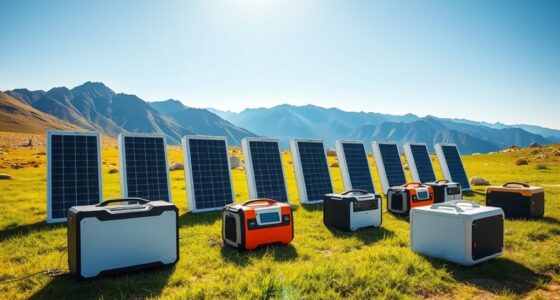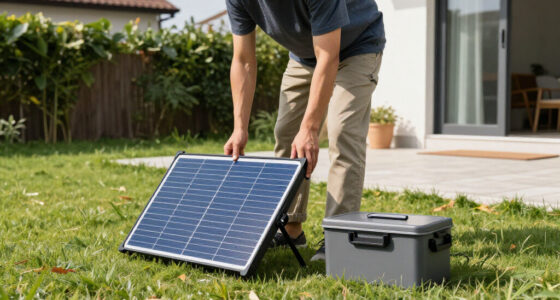
For most glamping setups, my best overall pick is the WEN DF360iX, which pairs dual-fuel flexibility with RV-ready power and a CO sensor. The WEN 56235i is a better fit when low carry weight and a smaller campsite footprint matter most, while the WEN DF480iX suits campers who need more output and electric start. The main tradeoff is straightforward: compact models are easier to bring along but can limit what you run, while larger units offer more capacity at the cost of added bulk, fuel use, and campsite noise. A generator’s rated running watts, outlet type, and operating sound matter more than a headline peak-watt figure. Read on for the full comparison and guidance on choosing a size that fits your glamping setup.

Get backup power and energy gear delivered free — and shop member deals
- Fast, free delivery on millions of items
- Access to Prime Big Deal Days deals on October 6–7
- Prime Video, Amazon Music and more included
Complete the kit


Key Takeaways
- The WEN DF360iX leads the roundup for balanced glamping use: it combines dual-fuel operation, an RV-ready outlet, and a CO sensor without jumping to the bulk and output of the larger models.
- Small and large units solve different problems: the WEN 56235i and AIVOLT 1600W favor portability and modest loads, while the WEN DF680iX and Westinghouse 8200 offer capacity that may be unnecessary for a typical tent or cabin stay.
- Dual fuel is a flexibility feature, not a guarantee of quieter camping: propane availability can help with fuel planning, but sound, ventilation, and campsite rules still determine whether a generator is suitable.
- RV-ready outlets matter only if your setup uses them: a 30-amp connection can simplify powering a compatible RV, but tent campers may get more practical value from lower weight and standard household outlets.
- Several higher-output options trade portability for headroom: the Oxseryn 5000, WEN 4800-watt models, and open-frame Oxseryn 4400 are better matched to multiple or heavier loads than to campers seeking the smallest, quietest package.


| portable inverter generator for glamping | Weight | Noise level | Engine |
|---|---|---|---|
| WEN Quiet and Lightweight 3600 | 49 lb | — | — |
| WEN 3600-Watt Portable Inverte | 46 lb | 65 dB | — |
| WEN Super Quiet 2350-Watt Port | 39 lb | — | — |
| Oxseryn 5000-Watts Portable In | 59.5 lb | 70 dB | — |
| WEN Quiet and Lightweight 4800 | 78.5 lb | — | — |
| Oxseryn 4400-Watts Inverter Ge | 56 lbs | — | — |
| WEN Quiet and Lightweight 4800 | 72.7 lbs | 62 dB at quarter load | 224 cc |
| WEN 6800-Watt Dual Fuel RV-Rea | — | 64 dB at quarter load | 224 cc |
| AIVOLT 1600W Super Quiet Inver | 28 lbs | 57 dBA | 60 cc, 4-stroke |
| Oxseryn 2800-Watts Portable In | 39 lbs | Under 58 dBA from 23 feet | 79.8 cc, 4-stroke OHV |
| 3000W Inverter Generator | — | 53–56 dB | 97.7 cc, 4-stroke |
| Westinghouse 8200 Peak Watt Tr | — | — | 298 cc, 4-stroke OHV |
| Oxseryn Power Equipment 4400 W | 56 pounds | Under 72 dBA | 208 cc, 4-stroke |
More Details on Our Top Picks
WEN Quiet and Lightweight 3600-Watt Dual Fuel RV-Ready Portable Inverter Generator with Fuel Shut Off and CO Watchdog (DF360iX)
The DF360iX suits glampers who want propane flexibility without moving up to a larger, heavier generator. Its gasoline and propane capability can make fuel planning easier at a campsite, while clean inverter power is a sensible match for phones, laptops, and other electronics. Compared with the smaller WEN 56235i, this model offers more surge capacity and an RV-ready setup, but gives up some portability and gasoline run time. At 49 pounds and about five hours at half load on gasoline, it is better for a site where you can set it down once than for frequent carrying or all-day operation. The supplied description lists quiet operation and CO Watchdog protection; check the product configuration for the safety features included. Its main appeal is fuel choice, not long unattended stretches between refills.
Pros:- Dual-fuel operation offers flexibility when choosing or packing fuel.
- 3600-watt gasoline surge capacity provides more headroom than the WEN 56235i.
- Clean inverter output is suited to sensitive electronics.
- Fuel shut-off helps reduce stale-fuel buildup in the carburetor.
Cons:- About five hours of gasoline run time at half load can mean frequent refueling.
- At 49 pounds, it is a substantial carry for a portable campsite generator.
- The supplied product details do not list built-in wheels or a transport handle.
Best for: Glampers with an RV-ready setup who want the option to use gasoline or propane and need more headroom than a small camping generator provides.
Not ideal for: Solo campers who need to carry a generator over distance or run it for long periods without refueling; its 49-pound weight and roughly five-hour gasoline run time are limiting.
- Surge wattage, gasoline:3600 W
- Surge wattage, propane:3500 W
- Engine displacement:149 cc
- Gasoline tank capacity:1.5 gallons
- Run time at half load, gasoline:5 hours
- Weight:49 lb
- Noise level at quarter load:65 dB
- Warranty:3-year limited
Our verdict“Choose the DF360iX if dual-fuel flexibility and RV-ready capacity matter more than low carry weight or long gasoline run time.”
WEN 3600-Watt Portable Inverter Generator, RV-Ready, Quiet and Lightweight with Fuel Shut Off
For glamping with a modest electrical load, this WEN offers 3600-watt maximum output and an RV-compatible receptacle without the dual-fuel setup of the DF360iX. That simpler gasoline-only design may suit buyers who prefer not to manage a propane connection, and its 46-pound weight is a little easier to handle than the DF360iX’s 49 pounds. Both have a listed 65 dB noise level and about five hours of run time at half load, so neither is a strong fit for long stretches away from camp. Six outlets and eco-mode add useful flexibility, but recoil starting means there is no push-button convenience. I’d shortlist it for a compact RV base camp with nearby refueling, rather than for a remote stay where fuel endurance or electric start matters more.
Pros:- RV-ready output and six listed outlets offer connection flexibility at camp.
- At 46 pounds, it is lighter than the WEN DF360iX.
- Clean inverter power is appropriate for sensitive electronics.
- Eco-mode and fuel shut-off support more efficient operation and easier storage.
Cons:- Five hours of run time at half load limits extended use between refills.
- Gasoline-only operation lacks the fuel flexibility of the DF360iX.
- Recoil starting requires a manual pull rather than a button press.
Best for: RV campers who want a gasoline inverter with an RV-compatible outlet, multiple connection points, and a slightly lighter carry than the dual-fuel WEN DF360iX.
Not ideal for: Campers who want to use propane, need electric start, or expect to run a generator for long periods without refueling.
- Maximum wattage:3600 W
- Engine displacement:149 cc
- Fuel tank capacity:1.6 gallons
- Run time at half load:5 hours
- Noise level:65 dB
- Weight:46 lb
- Output outlets:6
- Starting system:Recoil
- Voltage:120 V
Our verdict“Pick this WEN for a gasoline-powered RV base camp where lighter handling and outlet count matter more than propane capability or electric start.”
WEN Super Quiet 2350-Watt Portable Inverter Generator with Fuel Shut Off, Gasoline Power, Ultra Lightweight (56235i), Black
The WEN 56235i is the lineup’s clearest choice when low carry weight and quiet operation matter more than running larger appliances. At 39 pounds and a listed 51 dB, it is easier to bring to a glamping site than the 46-pound WEN 3600-Watt model, and less likely to dominate a quiet outdoor setting. Its tradeoff is capacity: with 1900 running watts, it is better for charging devices and supporting a modest setup than for higher-draw equipment. The one-gallon tank and listed runtime figures call for careful planning; the description cites over 5.7 hours per gallon, while the specs also list up to 10 hours without specifying the load. Unlike the larger WEN models, it is gasoline-only and does not provide RV-ready capacity.
Pros:- At 39 pounds, it is the lightest of these five options.
- Listed 51 dB noise level favors quieter campsites.
- Clean inverter power suits phones, laptops, and other sensitive electronics.
- Fuel shut-off helps limit carburetor deposits during storage.
Cons:- 1900 running watts leave less headroom than either 3600-watt WEN model.
- Gasoline-only operation offers no propane backup option.
- The one-gallon tank can require refueling during longer outings.
Best for: Car campers and small-group glampers who prioritize a lighter carry and quiet power for electronics and a modest campsite load.
Not ideal for: RV owners or campers running high-draw appliances who need more running capacity, dual-fuel operation, or an RV-ready connection.
- Starting wattage:2350 W
- Running wattage:1900 W
- Fuel type:Gasoline
- Tank capacity:1 gallon
- Engine displacement:79 cc
- Listed noise level:51 dB
- Weight:39 lb
- Total power outlets:5
- Dimensions:17.3 × 11.5 × 17.5 in
Our verdict“Choose the 56235i for a quiet, lighter generator serving a modest campsite load, not for RV-level power needs.”
Oxseryn 5000-Watts Portable Inverter Generator, Gas for Home Backup, RV Ready, ECO Mode, 60 lbs
The Oxseryn brings the most listed gasoline output in this group, with 4000 rated watts for campers whose setup needs more than device charging and light-duty power. That headroom distinguishes it from the WEN 3600-watt models, but comes with a less glamping-friendly noise profile: the listed 70 dB is more likely to intrude at a quiet site than the WEN 56235i’s 51 dB. Its 59.5-pound weight and open-frame design also favor transport by vehicle over carrying it far from the parking area. The two-gallon tank provides a listed six hours at 50% load, so it still needs refueling during a full day of use. One listed power outlet is a notable practical limit for a camp serving several devices.
Pros:- 4000 rated watts provide more running capacity than the WEN 3600-watt models.
- Electric start avoids relying on a recoil pull.
- Eco mode can reduce fuel use when the electrical load is lower.
- Listed clean power is intended for sensitive electronics.
Cons:- Listed 70 dB noise level is less suited to noise-sensitive glamping.
- Only one listed power outlet limits simultaneous direct connections.
- At 59.5 pounds, it is heavier than the WEN options here.
Best for: RV campers or group glampers who need higher rated output for multiple or more demanding electrical loads and can place the generator away from their living area.
Not ideal for: Quiet-site campers, anyone carrying gear far from a vehicle, or groups who need several direct outlet connections at once.
- Peak wattage:5000 W
- Fuel type:Gasoline
- Tank capacity:2 gallons
- Run time at 50% load:6 hours
- Noise level:70 dB
- Weight:59.5 lb
- Starting system:Electric start
- Total power outlets:1
Our verdict“Choose the Oxseryn when output headroom takes priority over quiet operation, easy carrying, and multiple outlet access.”
WEN Quiet and Lightweight 4800-Watt Dual Fuel RV-Ready Electric Start Portable Inverter Generator with Fuel Shut Off and CO Watchdog (DF480iX)
For glampers who need substantial output and easier starting, the DF480iX is the most capable WEN in this selection. It supplies up to 4000 rated watts on gasoline and 3600 rated watts on propane, with a push-button electric start, wheels, and a telescoping handle. Those features make it more practical to position than the hand-carried WEN 3600-Watt models, though the listed 78.5-pound weight means “portable” still means rolling it, not carrying it comfortably. It also runs longer than the Oxseryn 5000’s listed six hours at half load: WEN specifies up to seven hours on gasoline and up to 20 hours on a 20-pound propane tank. The added capacity and convenience cost quiet-site appeal; at a listed 62 dB at quarter load, it is louder than the WEN 56235i.
Pros:- Provides 4000 rated watts on gasoline and 3600 rated watts on propane.
- Electric start is backed by a recoil starter.
- Wheels and a telescoping handle help move its substantial weight.
- Includes an RV receptacle, USB ports, fuel shut-off, and CO shutdown sensor.
Cons:- At 78.5 pounds, it is considerably heavier than the other listed options.
- A 62 dB quarter-load rating is louder than the WEN 56235i’s listed 51 dB.
- The gasoline tank’s listed run time is up to seven hours at half load, so extended use still calls for fuel planning.
Best for: RV owners and glamping groups with larger electrical demands who want dual-fuel flexibility, electric start, and wheeled transport.
Not ideal for: Minimalist campers who need a light, easy-to-carry generator or prioritize the quietest possible campsite; this model is heavier and louder than the WEN 56235i.
- Surge wattage, gasoline:4800 W
- Surge wattage, propane:4320 W
- Engine displacement:224 cc
- Gasoline tank capacity:1.9 gallons
- Run time at half load, gasoline:Up to 7 hours
- Weight:78.5 lb
- Noise level at quarter load:62 dB
Our verdict“Pick the DF480iX for a higher-demand RV campsite that benefits from propane, electric start, and wheeled movement more than minimum weight or noise.”
Oxseryn 4400-Watts Inverter Generator, Gas Powered, Emergency Home Backup, RV Ready 30A Outlet
I’d shortlist the Oxseryn when a glamping setup needs more than phone and lighting power but still benefits from a relatively manageable 56-pound package. Its 3400 running watts and 30A RV outlet give it more headroom for an RV hookup than the AIVOLT 1600W, which is much easier to carry but better suited to lighter loads. Eco mode may help limit fuel use as demand changes, and the 12V DC outlet adds another way to power compatible gear. The tradeoff is that the stated 14-hour runtime is at 25% load, not a promise of a full weekend without refueling, and the description gives no noise figure. I’d choose it for a power-hungry campsite where portability still matters, but skip it if quiet operation is a deciding factor.
Pros:- 3400 running watts provide more capacity than compact options such as the AIVOLT 1600W.
- 30A RV outlet supports a direct RV connection.
- 56-pound weight is relatively manageable for this output class.
- Eco mode and 12V DC output add flexibility for changing loads and compatible equipment.
Cons:- No noise-level figure is provided, making campsite sound comparisons difficult.
- The stated 14-hour runtime applies at 25% load and may not suit extended, higher-demand use.
- Gasoline-only operation offers less fuel flexibility than dual-fuel alternatives.
Best for: RV glampers who need a 30A connection and enough output for several campsite or RV essentials, while still moving the generator by hand.
Not ideal for: Noise-sensitive campers who need a documented sound level, or buyers seeking a small generator mainly for phones, lights, and other low-wattage devices.
- Peak output:4400 watts
- Running output:3400 watts
- Fuel:Gasoline
- Tank capacity:2 gallons
- Listed runtime:14 hours
- Weight:56 lbs
- Dimensions:19.4 × 15.2 × 19.2 inches
- Voltage:120 volts
Our verdict“Choose the Oxseryn if you need RV-ready output in a comparatively portable package and can accept limited noise and runtime information.”
WEN Quiet and Lightweight 4800-Watt RV-Ready Portable Inverter Generator with Fuel Shut Off (56477i)
The WEN 56477i makes the most sense when a glamping trip needs substantial 120V capacity without giving up a specified sound level. It supplies 4000 rated watts and is listed at 62 dB at quarter load, offering more output than the Oxseryn 4400 while giving buyers a clearer basis for judging campsite noise. Four household outlets, an RV receptacle, and USB ports help serve several devices, while clean power is intended for sensitive electronics. Wheels and a telescoping handle matter because its 72.7-pound weight is a step up from the Oxseryn’s 56 pounds. The 1.9-gallon tank runs up to seven hours at half load, so heavy use calls for refueling sooner than a long, unattended session might allow. I’d favor it over the AIVOLT for an RV with larger loads, not for minimalist tent camping.
Pros:- 4000 rated watts provide ample 120V capacity for a more equipment-heavy campsite.
- 62 dB at quarter load gives a stated sound reference for campsite planning.
- Wheels and telescoping handle help move its 72.7-pound body.
- Fuel shutoff, CO shutdown sensor, and multiple outlet types support practical operation.
Cons:- At 72.7 pounds, it is considerably heavier than the Oxseryn 4400 and AIVOLT 1600W.
- The 1.9-gallon tank is listed for up to seven hours at half load, so sustained demand means more refueling.
- The parallel connection kit is sold separately.
Best for: RV glampers bringing several 120V appliances or electronics who want higher running output, onboard transport aids, and a stated noise level.
Not ideal for: Solo campers prioritizing low carry weight, or anyone needing long run times at substantial loads without refueling.
- Surge output:4800 watts
- Engine:224 cc
- Fuel tank:1.9 gallons
- Runtime:Up to 7 hours at half load
- Noise level:62 dB at quarter load
- Weight:72.7 lbs
- RV outlet:120V TT-30R
- Warranty:3-year limited warranty
Our verdict“Pick the WEN 56477i for a quieter, higher-output RV campsite where wheels matter more than carrying the generator over distance.”
WEN 6800-Watt Dual Fuel RV-Ready Electric Start Portable Inverter Generator with Fuel Shut Off and CO Watchdog for Electric Vehicle Backup (DF680iX)
For glamping that includes a large RV, multiple power-hungry appliances, or a need for backup beyond the campsite, the WEN DF680iX offers the broadest capability in this batch. It produces 5100 rated watts on gasoline and 4500 on propane, plus a 120V/240V outlet and an RV connection. Compared with the WEN 56477i, it adds dual-fuel operation, electric start, and 240V capability, but that extra versatility is more machine than many tent campers need. The listed sound level is 64 dB at quarter load, and its 2.9-gallon tank provides up to 6.1 hours at half load; propane is listed for up to nine hours at half load on a 20-pound tank. I’d choose it for flexibility and substantial loads, not for a lightweight, low-fuss campsite.
Pros:- Dual-fuel operation offers a choice between gasoline and propane.
- 5100 rated watts on gasoline and 4500 on propane exceed the WEN 56477i’s rated output.
- Electric start and wheels with a telescoping handle simplify setup and movement.
- CO shutdown sensor, fuel shutoff, and 120V/240V and TT-30R outlets add practical versatility.
Cons:- The 64 dB quarter-load figure and larger output class may be excessive for quiet, low-demand camping.
- Gasoline runtime is listed at up to 6.1 hours at half load, requiring planned refueling for sustained use.
- Its heavier, higher-capacity design is less suited to buyers who need a generator that is easy to carry.
Best for: RV glampers with high electrical demands who want gasoline and propane options, electric start, and 120V/240V output for compatible equipment.
Not ideal for: Tent campers with modest power needs, or buyers who value easy lifting and long half-load gasoline runtime over extra output and fuel flexibility.
- Gasoline output:6800 surge watts / 5100 rated watts
- Propane output:6000 surge watts / 4500 rated watts
- Engine:224 cc
- Fuel tank:2.9 gallons
- Gasoline runtime:Up to 6.1 hours at half load
- Propane runtime:Up to 9 hours at half load with a 20-pound tank
- Noise level:64 dB at quarter load
- Outlets:L14-30R 120V/240V, TT-30R RV, 120V, 12V DC, and 5V USB
- Starting:Electric start with recoil backup
Our verdict“Choose the DF680iX when high campsite loads and dual-fuel flexibility justify a larger, more involved generator.”
AIVOLT 1600W Super Quiet Inverter Generator – Portable for Camping
The AIVOLT is the clear choice here when easy carrying and low campsite noise matter more than running multiple large appliances. At 28 pounds and a stated 57 dBA, it is far easier to place near a compact camp setup than either WEN model, both of which add substantial weight for more output. Its 1260 running watts suit essentials such as lighting and device charging, and the description lists clean power and CO auto-shutdown. The limitation is capacity: it cannot match the Oxseryn 2800’s 2000 running watts, so buyers should check appliance startup and running demands before relying on it. The product data lists an eight-hour runtime but also gives a 3.5-gallon tank without clarifying the load for that figure. I’d select it for minimalist glamping, not an RV setup with several simultaneous loads.
Pros:- 28-pound weight is the easiest to carry among these five picks.
- 57 dBA is a useful stated sound level for a quieter campsite.
- Clean-power design and CO auto-shutdown are listed for electronics and operating safety.
- Compact output suits basic campsite essentials without hauling a larger generator.
Cons:- 1260 running watts limit the number and size of loads it can support.
- The listed eight-hour runtime does not specify the load, making endurance harder to estimate.
- Parallel operation requires a separate kit, and engine oil is not included.
Best for: Solo campers or couples who need portable power for lighting, charging, and a small number of compatible devices, with low carry weight as a priority.
Not ideal for: RV owners or groups planning to run several appliances at once; its 1260 running watts offer less headroom than the Oxseryn 2800.
- Starting output:1600 watts
- Running output:1260 watts
- Engine:60 cc, 4-stroke
- Fuel:Gasoline
- Tank capacity:3.5 gallons
- Listed runtime:8 hours
- Noise level:57 dBA
- Weight:28 lbs
- Warranty:2-year manufacturer warranty
Our verdict“Choose the AIVOLT for light-duty glamping where carrying a compact generator matters more than powering an RV’s larger appliances.”
Oxseryn 2800-Watts Portable Inverter Generator for Home and Camping
The Oxseryn 2800 fills the middle ground between the AIVOLT’s very light, limited-output design and the larger RV-focused WEN generators. Its 2000 running watts give a glamping pair more room for campsite essentials than the AIVOLT, while its 39-pound weight remains easier to handle than the 72.7-pound WEN 56477i. A stated noise level under 58 dBA from 23 feet is also useful for comparing campsite placement. The 1.1-gallon tank is listed for up to nine hours at 25% load, so that figure suits modest demand rather than a full-output expectation. This is a gasoline-only option, and the description says use above 4000 feet requires a high-altitude kit. I’d pick it for a balanced, moderate-load camp setup; choose the AIVOLT for easier carrying or the WEN for heavier RV loads.
Pros:- 2000 running watts provide more headroom than the AIVOLT 1600W for moderate campsite use.
- 39-pound weight is lighter than the WEN 56477i while offering more output than the AIVOLT.
- Noise is specified at under 58 dBA from 23 feet.
- Up to nine hours at 25% load supports a long stretch of modest-demand use.
Cons:- The 1.1-gallon tank and runtime figure apply to a 25% load, not sustained high-output operation.
- A high-altitude kit is required for use above 4000 feet.
- Gasoline-only operation provides less fuel flexibility than the WEN DF680iX.
Best for: Couples or small groups who want more capacity than a compact charging generator for lighting and moderate campsite loads, without moving a full-size RV unit.
Not ideal for: RV campers with high-draw appliances or people camping above 4000 feet who do not want to source and fit a high-altitude kit.
- Peak output:2800 watts
- Running output:2000 watts
- Engine:79.8 cc, 4-stroke OHV
- Fuel tank:1.1 gallons
- Runtime:Up to 9 hours at 25% load
- Noise level:Under 58 dBA from 23 feet
- Weight:39 lbs
- High-altitude use:High-altitude kit required above 4000 feet
Our verdict“Choose the Oxseryn 2800 for moderate campsite power and manageable weight, provided its output suits your planned loads.”
3000W Inverter Generator, Ultra Quiet Portable Gas Generator for RV and Camping
For a glamping setup centered on phones, lighting, and other sensitive electronics, this model prioritizes quiet operation and clean inverter power over running several heavy appliances at once. Its 2,350 running watts are less than the Oxseryn 4400’s 3,400, but the stated 53–56 dB noise level makes it the more appealing fit when generator sound could intrude on a peaceful campsite. Eco Mode is intended to reduce fuel use and noise as demand falls, which suits lighter loads better than constant high-draw use.
The tradeoff is capacity: two outlets limit how many devices can connect directly, and gasoline is the only listed fuel. Choose it for a compact, lower-power glamping kit; skip it if you need the Oxseryn’s higher output or more outlets for several appliances.
Pros:- Stated 53–56 dB operation better suits noise-conscious campsites
- Inverter power is described as suitable for sensitive electronics
- Eco Mode is designed to reduce fuel consumption and noise at lighter loads
- More compact power choice than the higher-output Oxseryn 4400
Cons:- 2,350 running watts may not cover multiple demanding appliances
- Only two power outlets can limit direct connections
- Gasoline-only operation offers less fuel flexibility than the tri-fuel Westinghouse iGen8200TFc
Best for: Glampers powering sensitive electronics, lights, and small essentials who put campsite quiet ahead of running multiple large appliances.
Not ideal for: Campers running several high-draw appliances or needing multiple direct connections, because it supplies 2,350 running watts and has only two outlets.
- Starting wattage:3,000 watts
- Running wattage:2,350 watts
- Fuel:Gasoline
- Noise level:53–56 dB
- Engine:97.7 cc, 4-stroke
- Outlets:2
- Dimensions:20.08 × 13.39 × 19.69 inches
- Additional feature:Eco Mode
Our verdict“Choose this generator for quieter glamping with electronics and modest loads, but pick a higher-output model if you plan to power several appliances.”
Westinghouse 8200 Peak Watt Tri-Fuel Portable Inverter Generator with Remote Electric Start and CO Sensor
The Westinghouse iGen8200TFc sits at the opposite end of the lineup from the compact 3000W inverter: its 6,600 running watts can support a much broader mix of equipment, while tri-fuel capability lets owners use gasoline, propane, or natural gas. That flexibility makes it a stronger choice for glampers who want one machine to cover campsite power and backup needs at home. Remote electric start also avoids a pull-start routine when the unit is positioned outside the living area.
Those advantages bring a real portability compromise. At 298 cc with a steel-and-aluminum construction, this is a much bigger commitment to transport than the 56-pound Oxseryn 4400. Its stated runtime reaches 17 hours, but that figure is tied to a 25% load, not heavy use. Pick it for capacity and fuel choice; skip it if easy solo handling matters most.
Pros:- Tri-fuel operation allows use of gasoline, propane, or natural gas
- 6,600 running watts provide far more capacity than the 3000W inverter
- Remote electric start adds convenience when the generator is placed outside
- CO sensor, overload protection, and digital display add useful operating features
Cons:- Larger and harder to transport than lighter options such as the 56-pound Oxseryn 4400
- The 17-hour runtime is specified at 25% load, so heavier use will reduce it
- Its home-backup scale may be excessive for glampers powering only small devices
Best for: Glamping groups with substantial power needs who also want a tri-fuel generator for home backup and value remote starting.
Not ideal for: Solo campers with limited vehicle space or no help moving equipment, since its high output comes with a heavier, less compact setup than the Oxseryn 4400.
- Peak wattage:8,200 watts
- Running wattage:6,600 watts
- Fuel types:Gasoline, propane, and natural gas
- Engine:298 cc, 4-stroke OHV
- Fuel tank:3.9 gallons
- Runtime:Up to 17 hours at 25% load
- Voltage:240 volts
- Starting and safety features:Remote electric start and CO sensor
Our verdict“Choose the Westinghouse if you need substantial campsite and home-backup power with fuel flexibility, and can manage its bulk.”
Oxseryn Power Equipment 4400 Watts Inverter Generator Gas Powered, Portable Open Frame Generator, Low Noise with ECO Mode, RV Ready, Emergency Home Backup
The Oxseryn 4400 offers a useful middle ground for glampers who need more headroom than the 3000W inverter but do not need the Westinghouse iGen8200TFc’s home-backup-scale output. Its 3,400 running watts and four outlets give a group more room to connect gear, while the listed 56-pound weight is easier to manage than a substantially larger generator. A two-gallon tank is specified for up to 14 hours of runtime, giving it a practical balance for extended outings, though actual runtime depends on load.
The compromise is noise and fuel choice: operation is rated under 72 dBA, notably louder than the 3000W model’s stated 53–56 dB, and it runs on gasoline only. The open-frame design also makes it a less quiet-campsite-focused pick. Choose it for portable, midrange capacity; skip it if minimizing generator noise is your main priority.
Pros:- 3,400 running watts offer more capacity than the 3000W inverter
- Four outlets provide more connection options than the 3000W model’s two
- Listed weight of 56 pounds supports easier transport than larger high-output units
- Two-gallon tank is specified for up to 14 hours of runtime
Cons:- Under-72 dBA noise rating is less suited to quiet campsites than the 3000W model’s stated level
- Gasoline-only fuel limits flexibility compared with the tri-fuel Westinghouse
- No electric-start feature is listed
Best for: RV campers and glamping groups who need several outlets and moderate appliance capacity in a generator listed at 56 pounds.
Not ideal for: Noise-sensitive campers who prioritize quieter operation, or buyers who want propane or natural-gas fuel options.
- Starting wattage:4,400 watts
- Running wattage:3,400 watts
- Fuel:Gasoline
- Engine:208 cc, 4-stroke
- Fuel tank:2 gallons
- Runtime:Up to 14 hours
- Outlets:4
- Weight:56 pounds
- Noise level:Under 72 dBA
Our verdict“Choose the Oxseryn 4400 for a portable balance of RV-ready output and outlet count, but favor the 3000W model if lower noise matters more.”
How We Picked
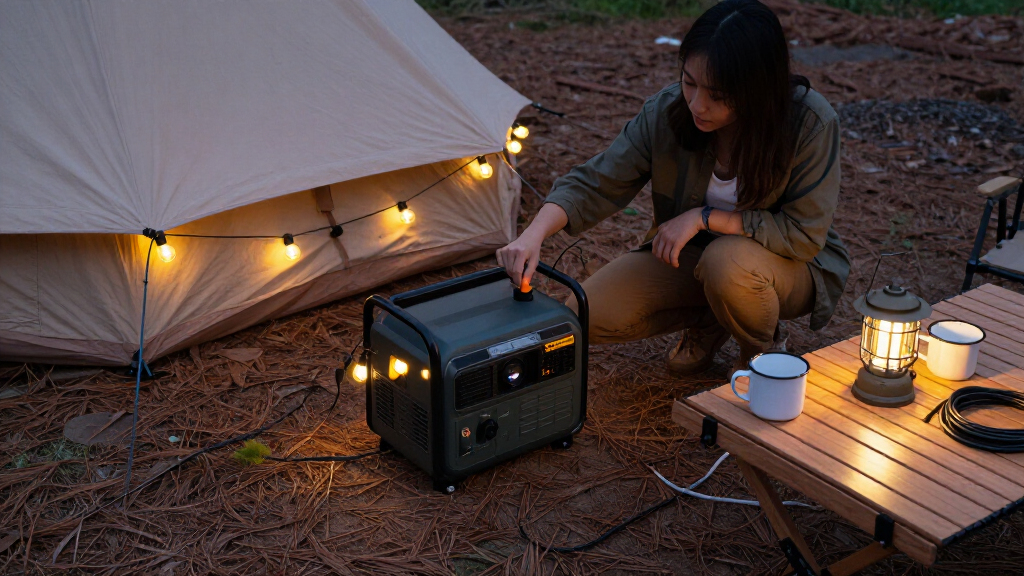
I ranked these generators around the needs of glamping: enough clean power for likely campsite loads, manageable transport, useful outlets, and features that make remote operation less of a chore. I gave extra weight to models that balance output with portability and offer practical camping details such as RV-ready connections, fuel shutoff, dual-fuel capability, electric start, or a CO sensor. I treated wattage claims as a starting point, not a substitute for checking running watts, outlet limits, and the needs of each appliance.
The order reflects fit for glamping rather than maximum output. The WEN DF360iX ranks first because its combination of moderate capacity and dual-fuel flexibility serves more mixed camping setups than a very small unit or a heavy-duty backup model. Compact generators rank well for low-load campers, while higher-output options place lower when their added size and capacity are harder to justify at a campsite. Where model details do not establish a clear advantage in noise, runtime, or weight, I avoid treating those qualities as proven distinctions; buyers should confirm the manufacturer’s current specifications before purchase.
Factors to Consider When Choosing Portable Inverter Generator For Glamping
Choosing a generator for glamping is less about buying the biggest wattage figure and more about matching power to your actual campsite routine. I would start with the appliances you plan to run, then factor in where the generator can sit, how it will be transported, and whether your site permits generator use.
Size the generator around running watts and startup surges
List the devices you expect to use at the same time, then check each one’s running watts and any startup surge. Refrigerators, pumps, and some climate equipment can briefly demand more power when they start, so a generator that barely matches their steady draw may still struggle. Avoid adding every appliance’s peak rating together if you will not run them simultaneously; a simple load plan can keep you from buying more generator than your trip needs. At the same time, leave some headroom for a phone charger, lighting, or an unexpected load. If you are mainly charging electronics and running small lights, a compact unit may be easier to live with than a 4,800- or 6,800-watt model. For air conditioning or several substantial appliances, verify both the generator’s running output and the appliance’s startup requirements before choosing.
Treat noise as a campsite and placement issue
“Quiet” is not a universal threshold, and a product label alone cannot tell you how disruptive a generator will be at your site. Look for a published decibel figure and check the distance and operating conditions used for that measurement; figures taken at different distances are not directly comparable. Sound can carry farther across open campsites, especially at night, so campground quiet hours and posted generator rules may matter more than a small difference on a spec sheet. Place the unit outdoors, away from neighboring sites and sleeping areas, while keeping it clear of enclosed spaces and openings. Never run a generator inside a tent, vehicle, RV, or enclosed shelter. If you expect to use power after quiet hours, plan for batteries or campsite power instead of assuming an inverter generator will be acceptable.
Choose portability for the way you travel
Generator weight is only part of the carrying burden: dimensions, handles, wheel kits, and the path from your vehicle to the campsite all affect setup. A heavier model can make sense when it stays in an RV or vehicle and supplies several high-draw appliances, but it is a poor match for a walk-in site. Check whether the listed weight includes oil or accessories, and confirm that you can lift or roll the unit safely. Compact choices such as the WEN 56235i and AIVOLT 1600W better suit trips where space and handling matter more than high output. If you camp from a vehicle and want an RV connection, a larger RV-ready unit may be a sensible compromise. Do not buy extra capacity on the assumption that it comes without a transport penalty.
Compare fuel choices, runtime, and refueling needs
Gasoline is widely available, while dual-fuel models can offer a propane option that may suit campers who already carry propane for cooking. Fuel flexibility does not mean identical performance on each fuel: check the rated output and runtime for the fuel you expect to use. Runtime figures also depend on load, so a test at a low percentage of capacity may not match a night of powering appliances. Consider how much fuel you can transport and store safely, and whether the campsite allows fuel storage or refueling. Fuel shutoff can be useful for storage preparation, but it does not remove the need to follow the manual’s maintenance and storage directions. Choose the fuel setup that fits your trip logistics rather than treating extra fuel options as an automatic benefit.
Match outlets and safety features to your setup
Check the actual outlet layout before buying, including whether you need standard household receptacles, USB charging, or a 30-amp RV connection. An RV-ready label does not mean every RV can connect without checking plug type, adapter needs, and the RV’s power limits. If you plan to connect sensitive electronics, confirm the manufacturer’s guidance on inverter output and any relevant power-quality specifications. A CO sensor or shutdown feature can add a layer of protection, but it cannot make indoor or enclosed operation safe. Keep the generator outdoors with exhaust directed away from people and openings, and use working CO alarms in occupied spaces as directed by their manufacturers. Safety features should support safe setup habits, not replace them.
Check campsite rules and maintenance before committing
Some glamping sites provide shore power, restrict generators, or permit them only during set hours, so confirm the rules before buying around generator use. If a site has power, a battery or power station may be a quieter and simpler choice for overnight electronics. Gas generators need routine care, including oil checks, clean air intake, fuel management, and periodic operation according to the manual. Ask whether replacement parts and service information are accessible in your area, especially if you plan to rely on the unit for repeated trips. A feature-rich model may reduce setup effort, but it also adds controls and systems to learn before you travel. Keep the manual with your gear and practice safe outdoor setup at home rather than learning it at the campsite.
Frequently Asked Questions
Is a 1,600- to 2,350-watt generator enough for a glamping trip?
It can be enough if your plan centers on charging devices, lights, and a few modest appliances rather than air conditioning or multiple high-draw loads. Add the running watts of the equipment you will use together, then check whether any motor-driven device needs extra startup power. The AIVOLT 1600W and WEN 56235i are the roundup’s more portable choices, but their smaller output means you need to be selective about simultaneous use. If your setup includes a microwave, space heater, or RV air conditioner, check each device’s requirements before relying on a compact generator. You may find that running fewer appliances or using a battery for overnight loads makes a smaller unit more practical.
Should I choose dual fuel for camping if I already carry propane?
Dual fuel can make sense when propane is already part of your camp kitchen or when you want more than one refueling option. It does not automatically provide the same output or runtime as gasoline, so compare the manufacturer’s figures for each fuel type and the loads you intend to run. A model such as the WEN DF360iX offers that flexibility in a more moderate-output package than the DF680iX. Propane cylinders still take up space and must be stored and handled according to safety guidance. If gasoline is easier to obtain on your route and you do not need a backup fuel, a single-fuel model may be simpler.
Can I run an RV air conditioner from any RV-ready generator in this roundup?
No. “RV-ready” describes a connection feature, not a promise that the generator can start every air conditioner. Compare the air conditioner’s startup and running requirements with the generator’s rated output, then account for other loads that may run at the same time. Check the outlet’s amperage and plug type as well; an adapter does not increase available power. The larger WEN and Westinghouse models offer more headroom than the compact picks, but the air conditioner’s specifications still decide the match. If the numbers are close, ask the RV or generator manufacturer about compatibility before your trip.
Is a CO sensor enough to make a generator safe beside my glamping tent?
No. A carbon monoxide sensor or shutdown feature is an added safeguard, not permission to run a generator near or inside a tent, cabin, RV, or other enclosed area. Exhaust can enter occupied spaces, so the generator must operate outdoors in line with its manual and applicable safety guidance. Keep it away from doors, windows, vents, and neighboring sleeping areas, and direct exhaust away from people. Use working carbon monoxide alarms in occupied spaces as directed by their manufacturers. Also check the campground’s placement rules, since some sites set distances or generator-use limits.
Would I be better off with a battery power station instead of a generator?
A battery power station may suit a glamping trip if your loads are modest, you can recharge it between uses, and quiet operation matters more than extended high-wattage output. It can be especially useful for phones, lights, and other electronics during quiet hours, even when a generator handles heavier daytime loads. A fuel generator is a stronger fit for sustained demand or when you cannot recharge a battery reliably, but it brings noise, exhaust, fuel storage, and maintenance. Compare usable battery capacity and inverter output with your planned runtime rather than judging by capacity alone. Some campers use both, with the battery covering overnight needs and the generator reserved for permitted daytime charging.
Conclusion
For the broadest mix of glamping and RV needs, I recommend the WEN DF360iX as best overall: its dual-fuel setup, RV-ready connection, and CO sensor give it a useful balance without moving into the largest class. My best value in practical features is the gasoline WEN 3600-watt RV-ready model for buyers who want a similar middle-ground output without needing dual fuel. For best for beginners, the WEN 56235i is the easier category to start with when your loads are modest and low weight matters; make a load list first so its output is enough. The best premium choice for higher-demand setups is the Westinghouse 8200 peak-watt tri-fuel model, though its greater capacity makes most sense for RVs or backup needs rather than simple campsite charging. Choose the AIVOLT 1600W for a compact, low-load setup, or the WEN DF680iX when you need substantially more capacity and accept the added bulk. Before buying, confirm your campsite permits generator use and check the running watts, outlet match, weight, and noise information for your exact setup.
Fall Picks
fall essentials
As an affiliate, we earn on qualifying purchases.