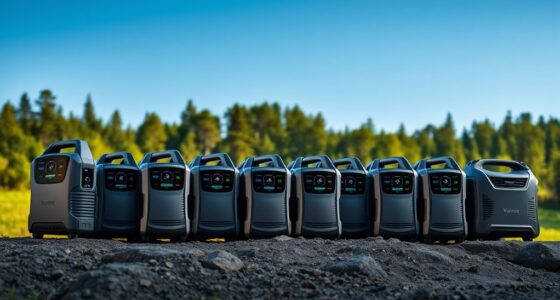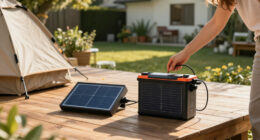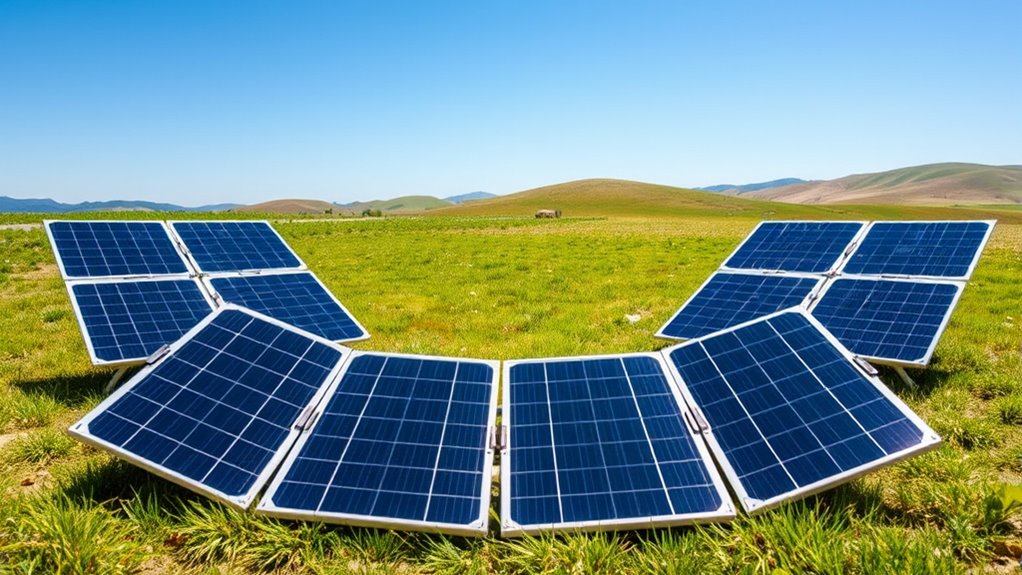

A folding solar panel with 240V can recharge a power station that supplies 240V AC, but the panel itself does not produce 240V AC: it sends DC power to a compatible power station, which converts it to AC. My best overall pick is the ZOUPW 450W PRO Bifacial for buyers who want the highest listed panel output, while the ZOUPW 220W N-Type 16BB stands out as a more portable middle ground and the FlexSolar 100W suits lighter charging needs. The main tradeoffs are charging speed versus packed size and weight, plus checking that the panel’s output and connector match the power station’s solar input. Read on for how the 14 options differ and which one best fits your setup.

Get backup power and energy gear delivered free with Prime
- Fast, free delivery on millions of items
- Prime Video, Amazon Music and more included
- Member-only deals all year
Key Takeaways
- The panel does not make 240V AC. A power station with a 240V AC outlet supplies that voltage; the panel charges the station with DC power.
- The ZOUPW 450W PRO has the highest stated wattage in this lineup. Its higher output suits buyers prioritizing faster recharging, but it is a less compact choice than the 100W and 200W panels.
- Several models cluster around 200–220W. At these ratings, connector compatibility, input limits, and panel dimensions may matter more than small wattage differences.
- Portability and weather protection are separate strengths. The FlexSolar 100W is the lowest-output option, while multiple 200W–220W models list waterproof ratings; those features serve different buyers.
- Specifications need checking against the power station manual. Panel voltage, current, connector type, and maximum solar input determine compatibility—not the station’s 240V AC output rating.


| folding solar panel with 240v | Maximum power | Weight | Maximum voltage | Output voltage |
|---|---|---|---|---|
| ZOUPW 450W PRO Bifacial Portab | 450 watts | 20.9 pounds | 46 volts | 40 volts |
| 200W Portable Foldable Solar P | 200 watts | 8.6 pounds | 21.24 volts | 21.24 volts |
| FlexSolar 100W Foldable Portab | 100 watts | 4.1 pounds | — | — |
| SOKIOVOLA 220W Portable Foldab | 220 watts | 5.6 pounds | 18 volts | — |
| 200 Watt Portable Foldable Sol | 200 watts | 18.9 pounds | 21 volts | 20 volts |
| 120W Portable Foldable Solar P | 120 W | 7.1 lb | 19.2 V | — |
| BougeRV 200W Portable Foldable | 200 W | 13.8 lb | — | 31.1 V |
| ZOUPW 230W Bifacial Portable S | 230 W | 12.6 lb | 20 V | — |
| ZOUPW 220W N-Type 16BB Portabl | 220 W | 15.9 lb | 22.74 V | 19.8 V |
| BALDR 200W Foldable Solar Pane | 200 W | 9.3 lb | 22 V | — |
| LVYUAN 200W Portable Foldable | 250 watts listed; title identifies the panel as 200W | 11.6 pounds | 24 volts | 24 volts |
| 220W Portable Folding Solar Pa | 220 watts | 8.07 kg | 48 volts | 40 volts |
| 220W Portable Foldable Solar P | 220 watts | 15.21 pounds | 20 volts | — |
| 200W Portable Foldable Solar P | 200 watts | Not specified | — | Not specified |
More Details on Our Top Picks
ZOUPW 450W PRO Bifacial Portable Solar Panel N-Type 16BB
For a buyer who needs substantial solar input for a compatible portable power station, the 450W maximum output makes this the standout here. Its bifacial N-Type cells can collect reflected light as well as direct sunlight, which may help when the panel is positioned over a bright surface. Compared with the SOKIOVOLA 220W, it offers more than twice the rated output, but that extra capacity comes with a larger deployed footprint and a 20.9-pound carry weight. The stated 46V maximum voltage also rules it out for power stations that accept only lower-voltage solar input; compatibility needs checking before purchase. This is a strong fit for RV or campsite setups where output matters more than compact packing, not for a small battery or casual day hike.
Pros:- 450W rated output suits higher-demand power stations better than the 100W FlexSolar.
- Bifacial cells can capture reflected light from suitable surfaces.
- N-Type monocrystalline cells have a stated 25.6% efficiency.
- Foldable construction and waterproofing support outdoor use.
Cons:- The 46V maximum voltage is incompatible with some lower-voltage power stations.
- At 20.9 pounds, it is substantially heavier than the FlexSolar 100W.
- Its long deployed dimensions require more setup space than smaller panels.
Best for: RV travelers and off-grid campers with a power station rated for the panel’s voltage and input current who want high solar capacity at camp.
Not ideal for: Owners of power stations with solar inputs below 30V, or hikers who need a light, compact panel.
- Maximum power:450 watts
- Maximum voltage:46 volts
- Output voltage:40 volts
- Amperage capacity:12.4 A
- Cell efficiency:25.6%
- Weight:20.9 pounds
- Dimensions:121.9 x 0.9 x 34.6 inches
- Cell type:A+ monocrystalline, bifacial N-Type
Our verdict“Choose the ZOUPW 450W PRO when your power station accepts its voltage and you want substantially more solar input than the smaller folding options provide.”
200W Portable Foldable Solar Panel – 25% High Efficiency
The clearest advantage here is not raw output but the supplied 1-to-4 adapter cable, which covers MC4, XT60, Anderson, DC5521, and DC7909 connections. That makes this 200W panel a flexible match for campers who already own different gear, although connector fit alone does not guarantee that a power station’s voltage limits are compatible. Its 21.24V maximum voltage places it in a lower-voltage category than the ZOUPW 450W PRO, while its 8.6-pound weight is much easier to manage than the 18.9-pound 200W model in this roundup. The compact folded package and IP67 rating add practical appeal for car camping and RV storage. Skip it if you need a built-in charge controller or a panel for a higher-voltage solar input.
Pros:- Adapter cable includes MC4, XT60, Anderson, DC5521, and DC7909 connectors.
- Weighs about 8.6 pounds, less than half the weight of the other listed 200W panel.
- Folds to a compact 23.03 x 18.31 x 2.17-inch package with a carry handle.
- IP67 dust and water-splash protection suits outdoor use.
Cons:- Maximum voltage of 21.24V limits use with higher-voltage systems.
- No built-in charge controller for battery charging.
- At 8.6 pounds, it may still be too heavy for some backpacking trips.
Best for: Campers and RV owners with compatible 200W power stations who want multiple common connector options and a relatively light panel.
Not ideal for: Buyers whose power station requires higher-voltage solar input, or anyone expecting a built-in controller for direct battery charging.
- Maximum power:200 watts
- Maximum voltage:21.24 volts
- Output voltage:21.24 volts
- Amperage capacity:10 A
- Cell efficiency:25%
- Weight:8.6 pounds
- Folded dimensions:23.03 x 18.31 x 2.17 inches
- Included connector types:MC4, XT60, Anderson, DC5521, DC7909
Our verdict“Pick this 200W panel for car camping or RV use when its lower-voltage output suits your power station and connector flexibility matters.”
FlexSolar 100W Foldable Portable Solar Panel Charger IP67 Waterproof
The FlexSolar 100W is the most portable choice in this group: at 4.1 pounds, it is much easier to carry than either 200W panel, and its built-in USB-C, USB-A, and DC outputs can serve phones and smaller devices without making a larger panel part of every trip. That convenience has a clear ceiling. Its 100W rating is half the output of the 200W options and far below the ZOUPW 450W PRO, so it is not the right pick for quickly replenishing a large power station or supporting high-demand appliances. The IP67 rating and carry bag suit emergency kits and short camping trips, though the product data does not provide a maximum voltage for checking power-station compatibility. Choose it for portability and direct device charging, not as a substitute for a high-capacity 240V power setup.
Pros:- At 4.1 pounds, it is the lightest panel among these five products.
- USB-C PD 3.0, USB-A, and DC outputs support several device types.
- IP67 rating provides dust and water protection.
- Includes a carry bag for storage and transport.
Cons:- 100W output is limited compared with the 200W and 450W panels in this group.
- Its stated outputs do not include a maximum voltage for checking power-station compatibility.
- Foldable construction may be less sturdy than a rigid panel.
Best for: Day campers and emergency-kit owners who want a light panel for phones, tablets, and modest DC charging needs.
Not ideal for: RV owners relying on rapid power-station charging or buyers who need enough panel output for high-demand equipment.
- Maximum power:100 watts
- Weight:4.1 pounds
- Dimensions:12.99 x 10.43 x 2.17 inches
- Cell type:Monocrystalline silicon
- USB-C output:PD 3.0, 45W
- USB-A output:18W
- DC output:100W
Our verdict“Choose the FlexSolar for lightweight personal-device charging, but pick a higher-wattage panel for meaningful power-station replenishment.”
SOKIOVOLA 220W Portable Foldable Solar Panel for Camping and Power Stations
The SOKIOVOLA pairs a 220W rating with a listed weight of just 5.6 pounds, making it the lightest higher-output option here on paper. That combination gives it a clear portability advantage over the 18.9-pound 200W panel, although its 83.26-inch deployed length still calls for a suitable place to spread it out. The stated 18V maximum voltage is relatively low, so buyers should check their power station’s solar-input range rather than assume the MC4 connector makes it compatible. Its IP68 rating and ETFE coating suit outdoor use, while setup may take more attention than a smaller, simpler panel such as the FlexSolar 100W. This is a compelling middle ground for campsite charging, but the output rating alone does not make it a fit for every station or a 240V appliance.
Pros:- 220W rated output exceeds the two 200W options in this group.
- Listed weight of 5.6 pounds is lower than the other higher-output panels here.
- IP68 rating and ETFE coating support outdoor use.
- MC4 connector suits systems that accept that connection.
Cons:- The 18V maximum voltage may not match some power-station solar inputs.
- Its 83.26-inch deployed length needs substantial setup space.
- Setup can be cumbersome compared with the compact FlexSolar 100W.
Best for: Campers who want more rated solar output than a 100W panel while keeping panel carry weight low and have a compatible power station.
Not ideal for: Owners of power stations with incompatible input limits, or hikers who cannot manage its long deployed format and setup.
- Maximum power:220 watts
- Maximum voltage:18 volts
- Weight:5.6 pounds
- Deployed dimensions:83.26 x 23 x 1.5 inches
- Folded size:23 x 22.24 inches
- Cell type:Monocrystalline silicon
- Coating:ETFE
- Connector:MC4
Our verdict“Choose the SOKIOVOLA if you want 220W of rated panel output with low listed carry weight and have confirmed your power station accepts its 18V output.”
200 Watt Portable Foldable Solar Panel
This 200W panel is the better fit for buyers who prioritize adjustable positioning over easy carrying. Its multiple angle settings can help aim the panel toward the sun at a stationary campsite, while 25.2% stated efficiency and USB-A, USB-C, and 12V outputs broaden its usefulness. The tradeoff is striking: at 18.9 pounds, it weighs more than twice as much as the other 200W panel, so it is much less appealing to move between stops. Its 21V maximum voltage also puts it closer to that lighter model’s lower-voltage class, not the ZOUPW 450W PRO’s higher-voltage setup. IP65 offers weather resistance, not permission to submerge the panel. Choose this one when stable placement matters more than frequent transport, and verify compatibility with your power station before relying on its output.
Pros:- Multiple adjustable angles help position the panel at a stationary campsite.
- 25.2% stated cell efficiency supports effective collection in suitable sunlight.
- USB-A, USB-C, and 12V outputs offer varied charging options.
- IP65 weather resistance supports outdoor use when kept out of standing water.
Cons:- At 18.9 pounds, it is much heavier than the other listed 200W panel.
- IP65 does not protect against submersion.
- Its 200W output is lower than the SOKIOVOLA 220W and ZOUPW 450W PRO.
Best for: Car campers and RV owners who can leave the panel set up at camp and want adjustable sun-facing positions plus multiple output types.
Not ideal for: Backpackers and frequent movers who need a lightweight 200W panel, or anyone expecting submersion protection.
- Maximum power:200 watts
- Maximum voltage:21 volts
- Output voltage:20 volts
- Amperage capacity:10 A
- Cell efficiency:25.2%
- Weight:18.9 pounds
- Dimensions:27.44 x 20.85 x 2.56 inches
- Water resistance:IP65
- Outputs:USB-A, USB-C, 12V
Our verdict“Pick this panel for adjustable, stationary campsite charging if its 18.9-pound weight is acceptable and your power station supports its voltage.”
120W Portable Foldable Solar Panel with High Efficiency ETFE Cells, Waterproof, for Camping and Emergency Power
For buyers prioritizing a manageable carry over high charging capacity, this 120W foldable panel is the most compact-power-oriented choice in this group. Its stated 25.8% cell efficiency and 7.1-pound weight suit campers who want to charge phones directly or feed a compatible power station without hauling a heavier panel. The USB-C port supplies up to 60W, while QC3.0 and standard USB allow several small devices to charge at once. Compared with the BALDR 200W, this panel is lighter but gives up 80W of rated output, so replenishing a power station will generally take longer under comparable conditions. It is a solar panel, not a 240V AC source: a compatible power station with a 240V inverter is needed for that. Its lower wattage and still-noticeable folded footprint limit its appeal for larger loads.
Pros:- 7.1-pound weight is lower than the larger 200W and 220W panels in this group.
- USB-C output up to 60W plus QC3.0 and standard USB supports direct device charging.
- Stated 25.8% cell efficiency is high for a panel at this rated output.
- Waterproof construction suits outdoor camping and emergency use.
Cons:- 120W output is the lowest among the five reviewed panels, limiting power-station recharge speed.
- Requires a compatible power station for higher-capacity storage and 240V AC output.
- Folded dimensions may still be awkward for users with very limited storage space.
Best for: Solo campers and emergency-kit owners who value a lighter panel and direct USB charging more than fast power-station recharging.
Not ideal for: RV users running larger appliances or buyers expecting the panel itself to provide 240V AC; it has only 120W rated output and needs an inverter-equipped power station for AC.
- Maximum power:120 W
- Cell efficiency:Up to 25.8%
- Maximum voltage:19.2 V
- Amperage capacity:6.3 A
- Weight:7.1 lb
- Dimensions:18.6 × 1.3 × 15.7 in
- Direct outputs:USB-C 60 W, QC3.0 18 W, USB 5 V/3 A
- Cell material:Monocrystalline silicon
Our verdict“Choose this panel for portable USB charging and modest power-station input, not for quickly supporting a 240V setup.”
BougeRV 200W Portable Foldable Solar Panel with N-Type Connectors
The BougeRV is the sturdier choice for buyers who expect a panel to handle dusty campsites and regular transport. Its fiberglass-reinforced construction and IP65 water- and dust-resistance put durability ahead of low carry weight. At 200W, it offers substantially more rated output than the 120W panel, making it a better match for feeding a compatible power station that can later supply 240V through its own inverter. The tradeoff is a 13.8-pound carry, heavier than both the BALDR 200W and the ZOUPW 230W. Its XT60 and DC7909 connectors and included extension cables help with placement, but the supplied details do not list direct USB outputs or a 240V AC outlet. Buyers should check their station’s input limits and connector needs before choosing it.
Pros:- 200W rated output is a meaningful step up from the 120W compact pick.
- IP65 water- and dust-resistance is suited to exposed outdoor setups.
- Fiberglass-reinforced construction is designed to resist impact and abrasion.
- XT60 and DC7909 connectors plus extension cables offer setup flexibility.
Cons:- At 13.8 pounds, it is heavier than the BALDR 200W and ZOUPW 230W.
- No direct USB outputs are listed in the supplied product details.
- A compatible power station or battery is needed, and 200W may fall short for high-demand recharging.
Best for: Car campers and RV owners who need a rugged 200W panel for a compatible power station and can manage a heavier carry.
Not ideal for: Hikers, weight-conscious campers, or anyone expecting a panel with built-in 240V AC; it weighs 13.8 pounds and AC depends on a separate inverter-equipped power station.
- Maximum power:200 W
- Output voltage:31.1 V
- Weight:13.8 lb
- Water and dust resistance:IP65
- Connector types:XT60, DC7909
- Cell type:N-Type solar cells
- Construction:Fiberglass-reinforced
- Design:Foldable with carrying handles
Our verdict“Pick the BougeRV if outdoor toughness matters more than weight, and pair it with a compatible power station for 240V AC.”
ZOUPW 230W Bifacial Portable Solar Panel N-Type 16BB for Power Station
The ZOUPW 230W makes the strongest case here for buyers seeking more panel output without moving to the lineup’s heaviest option. Its bifacial N-Type cells can collect reflected light from the rear, which may help when the panel sits above a bright surface; the stated extra gain depends on the setup and light conditions. At 12.6 pounds, it is lighter than the ZOUPW 220W, though not as light as the BALDR 200W. The included 5-in-1 adapter is a practical advantage for matching it to different power-station inputs. Its 20V maximum voltage could limit compatibility with stations that require a different solar-input range, so check the station specifications before buying. Like the other panels here, it does not itself provide 240V AC; that requires a separate power station with a suitable inverter.
Pros:- 230W rated output exceeds the 200W BougeRV and BALDR panels.
- Bifacial design can capture reflected light when positioned over a suitable surface.
- 12.6-pound weight is lower than the ZOUPW 220W’s listed 15.9 pounds.
- Included 5-in-1 adapter supports connection to a range of power stations.
Cons:- 20V maximum voltage may not match every power station’s solar-input requirements.
- The stated rear-side gain depends on surface reflectivity and panel placement.
- Requires a compatible power station with an inverter for 240V AC output.
Best for: Power-station owners who want more than 200W of rated solar input, travel with one panel, and can make use of bifacial placement.
Not ideal for: Buyers whose power station requires a solar input above the panel’s 20V maximum, or anyone seeking a standalone 240V AC source.
- Maximum power:230 W
- Cell efficiency:Over 25%
- Maximum voltage:20 V
- Amperage capacity:11.5 A
- Weight:12.6 lb
- Dimensions:32.5 × 2.5 × 22.8 in
- Connector:MC4 with included 5-in-1 adapter cable
- Water protection:IP68
- Cell design:Bifacial N-Type 16BB
Our verdict“Choose this ZOUPW for higher rated output and adapter flexibility, provided its 20V limit matches your power station.”
ZOUPW 220W N-Type 16BB Portable Foldable Solar Panel – 25.6% Efficiency, IP67 Waterproof, Compatible with Jackery, EcoFlow, Bluetti, Anker – Ideal for RV Camping and Emergencies
Unlike panels that mainly serve as power-station inputs, this ZOUPW includes USB-A and 45W USB-C outputs for charging devices directly, alongside its 220W solar output. That makes it a flexible option for RV trips where phones or smaller electronics need power while a compatible station collects solar energy. Its IP67-rated panel surface, multiple connector choices and 25.6% stated efficiency give it a broader feature set than the simpler BALDR 200W. The cost of that versatility is weight: at 15.9 pounds, it is the heaviest of these five, and the junction box is not waterproof, so its placement needs care despite the panel’s rating. Its ports do not turn it into a 240V source; a power station with a 240V inverter is still required for AC appliances.
Pros:- Built-in USB-A QC3.0 and USB-C PD 45W support direct device charging.
- Multiple connector options cover a range of compatible power-station inputs.
- 220W rated output and 25.6% stated efficiency offer more capacity than the 200W picks.
- IP67-rated panel surface is suited to demanding outdoor conditions.
Cons:- At 15.9 pounds, it is heavier than every other panel in this group.
- The junction box is not waterproof and needs sheltered placement.
- 240V AC requires a separate compatible power station with an inverter.
Best for: RV campers and emergency-preparedness buyers who want direct USB charging, multiple power-station connector options, and a 220W panel.
Not ideal for: Hikers and buyers who need an entirely weather-sealed assembly; the panel weighs 15.9 pounds and its junction box is not waterproof.
- Maximum power:220 W
- Cell efficiency:25.6%
- Maximum voltage:22.74 V
- Output voltage:19.8 V
- Amperage capacity:11.77 A
- Weight:15.9 lb
- Connector types:Anderson, XT60, DC7909, DC8020, DC5521
- Direct outputs:USB-A QC3.0, USB-C PD 45 W
- Water protection:IP67 panel rating; junction box is not waterproof
Our verdict“Choose this ZOUPW if direct USB charging and connector variety outweigh its heavier carry and exposed junction box.”
BALDR 200W Foldable Solar Panel, Portable Charger for Power Stations
The BALDR is the easiest 200W option here to justify for buyers who care about carry weight and straightforward power-station compatibility. At 9.3 pounds, it is considerably lighter than the BougeRV 200W and ZOUPW 220W, while its USB-C PD 60W and USB-A 24W outputs let it charge smaller devices without routing every connection through a power station. The tradeoff is a lower stated efficiency of 23.5% than the 25.6% ZOUPW 220W and 25.8% 120W panel. Its junction box is not waterproof, so the IP65 panel rating does not mean every component can sit exposed to rain. For 240V AC, treat it as a solar input source: a compatible power station with a 240V inverter must supply the outlet.
Pros:- At 9.3 pounds, it is lighter than the other 200W-or-higher panels reviewed here.
- USB-C PD 60W and USB-A 24W provide direct charging for smaller devices.
- Included 6-in-1 cable supports compatibility with multiple power stations.
- IP65-rated construction is suited to outdoor use when the junction box is protected.
Cons:- 23.5% stated efficiency is below the listed figures for both ZOUPW panels and the 120W panel.
- Junction box is not waterproof and needs protection from moisture.
- Its 200W output still depends on a compatible power station for storage and 240V AC.
Best for: Campers and power-station owners who want a relatively light 200W panel, direct USB charging, and broad adapter compatibility.
Not ideal for: Buyers who need a fully weather-sealed assembly, the highest stated cell efficiency, or 240V AC directly from the panel.
- Maximum power:200 W
- Cell efficiency:23.5%
- Maximum voltage:22 V
- Weight:9.3 lb
- Folded dimensions:23 × 19 × 2 in
- Connector:Anderson
- Direct outputs:USB-C PD 60 W, USB-A 24 W
- Water protection:IP65; junction box is not waterproof
- Cell material:Monocrystalline silicon
Our verdict“Pick the BALDR for a lighter 200W setup with direct USB charging, while keeping its junction box dry and pairing it with an inverter-equipped station for 240V.”
LVYUAN 200W Portable Foldable Solar Panel, 24V P-PERC, IP64 Waterproof, 23% Efficiency, Includes Anderson Plug, 12 Pounds
The LVYUAN makes the most sense for buyers who want a 24V panel with an Anderson plug and a compact folded form, rather than the highest wattage in this group. Its listed maximum power is 250W, though the title identifies it as a 200W panel, so I would confirm the output rating and match it to the power station’s input limits before buying. At 11.6 pounds, it is lighter than the 220W panel in this lineup that weighs 15.21 pounds, which helps when carrying it from a vehicle to a campsite. Its 23% efficiency and rugged cover suit outdoor use, but the ports are not fully waterproof, and some stations need an extra adapter. Choose it for connector flexibility; skip it if you need verified weather protection at every connection or a clearly consistent wattage rating.
Pros:- Anderson plug and included attachment accessories can simplify mounting and connection for compatible setups.
- At 11.6 pounds, it is lighter than the listed 15.21-pound 220W panel in this group.
- 23% monocrystalline efficiency supports useful output from a portable panel.
- Foldable form and rugged cover suit transport and outdoor use.
Cons:- Ports are not fully waterproof, so connections need protection in wet weather.
- Some power stations require additional adapters and careful voltage matching.
- The title says 200W while the specs list 250W maximum power, so buyers should confirm the applicable output rating.
Best for: Campers with a power station that accepts Anderson input and buyers who prioritize a lighter panel over a 220W option.
Not ideal for: Buyers who need exposed connections to withstand rain or who cannot verify their station’s voltage, connector, and input limits.
- Maximum power:250 watts listed; title identifies the panel as 200W
- Output voltage:24 volts
- Maximum voltage:24 volts
- Amperage capacity:12.5 A
- Efficiency:23%
- Cell material:Monocrystalline silicon
- Weight:11.6 pounds
- Dimensions:15.3 x 15.3 x 2.36 inches
Our verdict“Choose the LVYUAN if your station accepts its Anderson connection and 24V output, but verify the wattage and protect its ports from rain.”
220W Portable Folding Solar Panel for Power Station
This panel’s main point of difference is its 48V maximum voltage and seven-in-one solar connector, making it a candidate for power stations designed to accept a higher-voltage solar input. Its listed output voltage is 40V, so connector fit alone is not enough: buyers need to check their station’s operating range and maximum input. Compared with the LVYUAN 200W, this model offers 220W rated power and 23.5% efficiency, but its 8.07 kg weight makes it less appealing for carrying on foot. The waterproof, dustproof design and plug-and-play connections suit RV stops and established campsite setups. Its folded dimensions are still substantial, and a station with a lower input ceiling may curtail the panel’s potential. I’d pick it for compatible higher-voltage systems, not as a universal 240V AC solution.
Pros:- 220W maximum power offers more listed output than the LVYUAN 200W model.
- 23.5% efficiency and monocrystalline cells support strong collection potential for its rated wattage.
- Seven-in-one solar connector can suit a range of compatible power-station setups.
- Waterproof and dustproof construction is suited to outdoor use.
Cons:- At 8.07 kg, it is heavier than the LVYUAN and less convenient to carry away from a vehicle.
- The 40V output and station input limits must be checked before connecting.
- Its folded footprint may be awkward in vehicles with limited storage space.
Best for: RV owners and power-station users whose solar input specifications support a 40V output and a compatible seven-in-one connector.
Not ideal for: Hikers, compact-car campers, or owners of stations with low solar-input limits or incompatible voltage ranges.
- Maximum power:220 watts
- Output voltage:40 volts
- Maximum voltage:48 volts
- Amperage capacity:5.5 A
- Efficiency:23.5%
- Connector:7-in-1 solar connector
- Weight:8.07 kg
- Folded size:23.5 x 21.25 x 2.3 inches
- Material:Monocrystalline silicon
Our verdict“Pick this 220W panel for a compatible higher-voltage power station and vehicle-based trips, but not for lightweight packing or direct 240V AC output.”
220W Portable Foldable Solar Panel with Adjustable Kickstands, Waterproof for Camping and RV Off-Grid Use
Adjustable kickstands give this 220W panel a practical advantage when campsite conditions make it hard to lay a panel flat: you can angle it toward the sun rather than settling for a poor position. Its 25% efficiency is the highest listed among these four products, while its 15.21-pound weight is also the heaviest, so the efficiency gain comes with more carrying burden. Compared with the 220W seven-in-one panel, this model has a lower listed maximum voltage of 20V and a heavier listed weight; buyers should confirm that its output suits their power station. It is described as waterproof, but the control box is not, so the electronics need shelter from rain. This is a better fit for a stationary campsite than frequent carry-and-repack trips, and it produces power rather than storing it.
Pros:- 25% efficiency is the highest listed among these four products.
- Adjustable kickstands help position the panel for better sun exposure at camp.
- 220W maximum power suits compatible power stations and off-grid charging setups.
- ETFE and monocrystalline construction is specified for the panel.
Cons:- At 15.21 pounds, it is heavier than the other panels in this group with listed weights.
- The control box is not waterproof and needs protection from rain.
- It generates power but does not store electricity, so a separate power station or battery is needed.
Best for: Campers and RV users who can set up a panel in one spot and want to angle it toward changing sunlight.
Not ideal for: Travelers who need a light carry, buyers expecting onboard energy storage, or anyone who needs the control box exposed to wet weather.
- Maximum power:220 watts
- Maximum voltage:20 volts
- Efficiency:25%
- Material:ETFE and monocrystalline solar cells
- Dimensions:22.99 x 20.27 x 1.77 inches
- Weight:15.21 pounds
- Stand:Adjustable kickstands
Our verdict“Choose this model for angle-adjustable campsite charging and its listed 25% efficiency, provided you can carry its weight and shelter the control box.”
200W Portable Foldable Solar Panel, IP67 Waterproof, 23.5% Monocrystalline Efficiency
The clearest reason to choose this 200W panel is its IP67 rating, which gives the panel a stronger stated water-protection level than the LVYUAN’s IP64 listing. That does not establish that every connector or accessory is waterproof, so I would still keep connections protected. Its 23.5% efficiency is a modest step above the LVYUAN’s 23%, while the 200W maximum power sits below the two 220W models in this group. An MC4 cable is included, but the product data does not specify output voltage, amperage, weight, or folded dimensions. Those omissions make it harder to judge compatibility and portability before purchase, especially for a 240V AC setup, which would require a suitable power station or inverter. Pick it when panel weather protection matters more than extra wattage or detailed fit information.
Pros:- IP67 is a stronger stated panel water-protection rating than the LVYUAN’s IP64 listing.
- 23.5% conversion efficiency is above the LVYUAN’s listed 23%.
- MC4 cable is included for compatible solar-input setups.
- Foldable design and multiple output ports are described for portable use.
Cons:- At 200W, it has less listed maximum power than either 220W panel in this group.
- Product data omits output voltage and amperage, limiting compatibility checks.
- Weight and dimensions are not supplied, making storage and carrying fit harder to assess.
Best for: Campers and RV users who prioritize a stated IP67 panel rating and already know their power station accepts the included MC4 cable.
Not ideal for: Buyers who need confirmed voltage, amperage, weight, or dimensions before choosing, or who want 220W output.
- Maximum power:200 watts
- Conversion efficiency:23.5%
- Material:Monocrystalline silicon, ETFE, high-density polyester canvas, aluminum
- Included cable:MC4 cable
- Output voltage:Not specified
- Weight:Not specified
- Dimensions:Listed as 2 x 0.2 x 2 inches; verify before purchase
Our verdict“Choose this panel if its IP67 rating and MC4 cable suit your setup, but seek confirmed electrical and size specifications before relying on it for a 240V system.”

How We Picked
I compared the listed panels by the factors that shape a 240V power-station charging setup: rated wattage, stated efficiency, weather protection, portability cues, and connection details. A higher-wattage panel can shorten charging time when sunlight and the power station’s input limit allow it, while a smaller panel may be easier to carry or position. I also gave weight to details such as bifacial construction, kickstands, cell type, and included connector information where those details were provided.
The ranking reflects fit for distinct buyer needs, not a claim that every panel will reach its rated output in ordinary conditions. Models with more clearly stated output or practical features rank ahead for buyers seeking a versatile match; lower-wattage or less-detailed options can still suit simpler setups. Since product titles do not establish compatibility with every power station, I treat connector and voltage matching as a required check rather than assuming that a panel works with a particular brand.
Factors to Consider When Choosing Folding Solar Panel With 240v
Choose a panel around the power station’s solar-input specifications and your real charging routine, rather than its 240V AC output alone. These factors help prevent mismatched connections, unrealistic charging expectations, and a panel that is too cumbersome to use.
Match the panel to the station’s DC solar input
A power station’s 240V AC output describes what it can supply to appliances, not the voltage a solar panel should deliver. Check the station manual for its allowed solar-input voltage range, maximum current, maximum wattage, and supported connector. A panel that exceeds the input voltage limit can be unsuitable even if its wattage looks appealing. A panel below the station’s maximum input can still work, but it may charge more slowly. Do not rely on a plug adapter to solve an electrical mismatch; adapters change connection shape, not voltage or current behavior. Verify the panel’s electrical specifications before buying, especially when combining panels.
Choose wattage for your charging window
Higher rated wattage can put more energy into a power station during a short stretch of good sun, which makes panels such as the 450W ZOUPW relevant for larger stations or frequent use. Real output varies with sun angle, shade, temperature, and the station’s own input ceiling. A panel rated above that ceiling will not necessarily charge the station faster than one that already reaches the limit. For occasional top-ups, a lighter 100W panel may be easier to deploy even if it takes longer. Estimate how much energy you need between uses and how many hours of direct sunlight you usually have. That calculation is more useful than choosing the biggest number by itself.
Treat portability as a full setup, not a wattage label
A folding panel must be carried, unfolded, aimed at the sun, and packed away, so weight, folded dimensions, handles, and support legs all affect whether it gets used. A 200W panel can be a reasonable compromise for vehicle camping, while a 100W option may suit a backpack or small emergency kit better. Larger panels can take more space in a vehicle and may need more room to reposition during the day. Check the folded measurements and stated weight rather than assuming panels with similar wattage pack alike. Also account for cable length: a short lead can force the power station to sit in sun or weather when the panel is outside. If the panel will stay near a vehicle, bulk may matter less than it does for walking trips.
Read weather ratings with the right limits
An IP rating describes resistance to dust and water under defined test conditions; it does not make a panel indestructible or suitable for permanent outdoor installation. Several choices here list IP67, while the LVYUAN panel lists IP64, giving buyers a useful comparison point for stated protection. The rating for a folding panel may not apply equally to every connector, cable, or power station attached to it. Keep electrical connections dry, follow the manufacturer’s storage guidance, and avoid leaving fabric-backed folding panels exposed when not charging. Rain protection can help with changing outdoor conditions, but it is not a reason to ignore the product’s use instructions. Buyers who camp in rough weather should also weigh construction and secure placement, not just the rating.
Check connectors and expansion plans before ordering
Connector compatibility can decide whether a panel is ready to use or needs a separate cable. This lineup names details such as Anderson plugs on the LVYUAN and N-Type connectors on the BougeRV, but the station’s input port still determines the correct match. Confirm whether a cable is included, whether an adapter is required, and whether the station maker permits third-party panels. If you plan to connect multiple panels, check the station’s rules for series or parallel wiring and the resulting voltage and current. Combining panels with different electrical characteristics can limit output or exceed an input boundary. Buying for a future expansion plan is sensible only when the station supports that configuration.
Compare efficiency claims with usable area and setup
Efficiency figures, including the listed 25.6% for one ZOUPW model and 23% for the LVYUAN, describe how effectively cells convert light under specified conditions. They do not tell you the panel’s total output without its area, nor guarantee that it will outperform a larger panel in every setup. When storage space is tight, higher efficiency may help provide more rated power within a smaller footprint. For a vehicle-based setup with room to spare, total wattage and ease of positioning may be more useful than a small difference in the stated percentage. Cell labels such as N-type, P-PERC, or monocrystalline are helpful context, but they do not replace checking output specifications and warranty terms. Compare the full panel dimensions and electrical limits before paying extra for a cell-efficiency claim.
Frequently Asked Questions
Does a folding solar panel itself provide 240V AC?
No. These folding panels supply DC power to a compatible power station, and the station’s inverter provides AC output, which may include 240V depending on the model. The panel’s voltage and current must fit the station’s solar-input limits, which are separate from its AC outlet specifications. Check the station’s manual for its input range and connector before choosing a panel. A panel described as compatible with a power station brand is not automatically compatible with every model from that brand.
Is a 450W panel always a better choice than a 200W panel?
Not always. A higher-rated panel can collect more energy in favorable sunlight, but the power station may cap how much solar input it accepts. A larger panel can also take more space and be less convenient to carry or reposition. For short trips or small stations, a 200W panel—or even the 100W FlexSolar—may be the more practical match. Compare expected charging time, station input limits, and packed size together.
Can I connect any of these panels to a power station from another brand?
Possibly, but brand names alone do not confirm compatibility. Match the panel’s open-circuit voltage and operating current to the station’s allowed solar-input range, then confirm the connector and cable arrangement. Some stations accept third-party panels, while others set limits or require specific cables. Do not connect panels in series or parallel until you have checked the station’s wiring instructions and maximum input values. If any specification is missing, ask the manufacturer before connecting the panel.
Will an IP67 folding panel be safe to leave outside in rain?
An IP67 claim indicates a defined level of dust and water resistance for the rated product, but it does not promise safe long-term exposure in every outdoor condition. Cables, connectors, and the power station may have different protection levels from the panel itself. Follow the manufacturer’s instructions, keep connections protected, and pack the panel away when charging is finished or weather worsens. For camping, secure the panel against wind and avoid treating a water-resistance rating as a substitute for careful setup.
Should I buy a panel with the same wattage as my power station’s solar-input limit?
That can be a useful starting point, but rated panel wattage and usable charging power are not the same thing. Sun conditions, panel angle, temperature, cable losses, and the station’s input behavior affect the power delivered. A panel rated above the station’s limit may be capped, while one rated below it may leave some charging capacity unused. Check both the station’s maximum wattage and its voltage and current limits before deciding. If you need faster charging, compare the full electrical specifications rather than matching wattage alone.
Conclusion
For the broadest charging headroom in this group, my best overall choice is the ZOUPW 450W PRO Bifacial, provided its electrical output fits your station and its size suits your setup. The ZOUPW 220W N-Type 16BB is my best value-style balance for buyers who want a midrange panel without stepping up to the 450W model; the LVYUAN 200W is a strong specific pick when its Anderson plug, stated 24V P-PERC output, and 12-pound weight match your needs. For a best premium direction, consider the higher-output ZOUPW 450W, but only if your station can use that input. Beginners who want a simpler, lower-output starting point may prefer the FlexSolar 100W, while buyers focused on weather protection should compare the IP67-rated options and confirm connector compatibility. Before choosing any panel, match its DC specifications to the power station—its 240V AC capability comes from the station, not the panel.