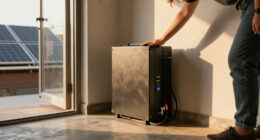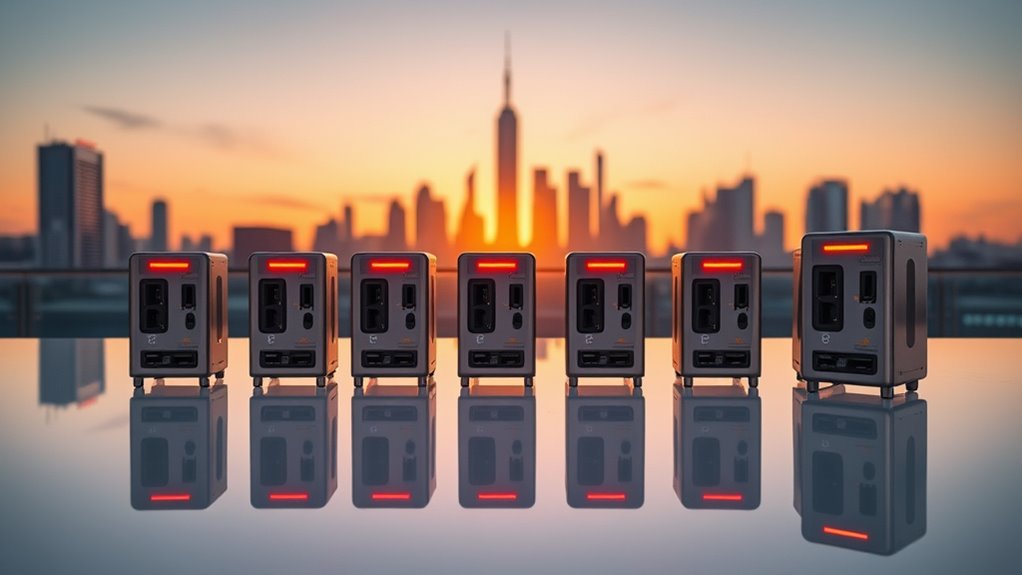

If you ride an electric bike and want to keep it charged away from a wall outlet, you quickly run into two very different product categories that both answer the same question. You can buy a standalone solar generator bundle that recharges your bike’s battery off-grid, or you can buy an e-bike whose removable battery doubles as a power station itself. My top pick for most riders is the DaranEner 600W bundle, which pairs a 576Wh LiFePO4 station with a 100W solar panel at a sensible size for topping up an e-bike battery at camp. If you want raw capacity and speed, the VTOMAN FlashSpeed 2400 recharges in about an hour and can genuinely run appliances. And if you’re buying a bike anyway, the Wallke H9 Ultra folds a 2640Wh power-station-grade battery into an AWD fat-tire e-bike. The core tradeoffs across this lineup are capacity versus portability, recharge speed, and whether the battery lives on your bike or in your trunk.

Get backup power and energy gear delivered free with Prime
- Fast, free delivery on millions of items
- Prime Video, Amazon Music and more included
- Member-only deals all year
Complete the kit


Key Takeaways
- The DaranEner 600W is the best pure charging companion: 576Wh plus a 100W panel covers one to two e-bike battery top-ups per charge at a carry weight of 13.7 lb.
- The VTOMAN FlashSpeed 2400 is the capacity and speed champion, hitting a full charge in about an hour with 600W solar input, but it is far heavier and bulkier to haul.
- The Wallke H9 Ultra and H7 Ultra flip the concept: their removable 2640Wh (48V 55Ah) battery supports AC output and solar charging, merging the e-bike and the power station into one purchase.
- LiFePO4 chemistry appears across the standalone stations, giving 3000+ cycles — a meaningful edge over typical e-bike lithium packs for long-term backup use.
- Match the bundle to your charger: a 600W inverter handles most e-bike chargers fine, but high-watt fast chargers may need the VTOMAN’s 2400W output.
| DaranEner Portable Power Station 600W with 100W Solar Panel |  | Best Overall | Capacity: 576Wh LiFePO4 | Output: 600W continuous, 1200W peak | Ports: 3 AC, 100W USB-C PD, 2 USB-A, 12V car port | VIEW ON AMAZON | See Our Full Breakdown |
| Wallke H9 Ultra 4000W Dual Motor Electric Bike with 2640Wh Power Station Battery |  | Best Two-in-One: E-Bike and Power Station | Battery: 2640Wh (48V 55Ah), removable | Motor: Dual hub, 4000W peak, AWD | Top speed: Up to 38 MPH (where legal) | VIEW ON AMAZON | See Our Full Breakdown |
| VTOMAN FlashSpeed 2400 Power Station with 200W Pro Solar Panel |  | Best Premium / Best for Heavy Duty | Capacity: 1408Wh LiFePO4 | Output: 2400W continuous, 3200W peak | Ports: 12 total: 3 AC, 2 USB-C, 4 USB-A, 3 DC | VIEW ON AMAZON | See Our Full Breakdown |
| Wallke H7 Ultra 4000W AWD Electric Bike with 2640Wh Power Station Battery |  | Best Value Two-in-One | Battery: 2640Wh (48V 55Ah), removable | Motor: Dual hub, 4000W peak, AWD | Charging: AC or solar input | VIEW ON AMAZON | See Our Full Breakdown |
| power station bundle for electric bike | Warranty | Capacity | Output | Ports |
|---|---|---|---|---|
| DaranEner Portable Power Stati | 3 years | 576Wh LiFePO4 | 600W continuous, 1200W peak | 3 AC, 100W USB-C PD, 2 USB-A, 12V car port |
| Wallke H9 Ultra 4000W Dual Mot | 1 year | — | — | — |
| VTOMAN FlashSpeed 2400 Power S | — | 1408Wh LiFePO4 | 2400W continuous, 3200W peak | 12 total: 3 AC, 2 USB-C, 4 USB-A, 3 DC |
| Wallke H7 Ultra 4000W AWD Elec | 1 year | — | — | — |
More Details on Our Top Picks
DaranEner Portable Power Station 600W with 100W Solar Panel
This kit earns the top spot because it matches the actual scale of the job. A typical e-bike battery holds somewhere between 400 and 1000Wh, and the DaranEner’s 576Wh LiFePO4 pack gives you roughly one full charge of a mid-capacity battery, or a healthy top-up of a big one, before the station itself needs recharging. Compared with the VTOMAN below, you give up two-thirds of the capacity — but you also give up lugging a 30-plus-pound brick to a trailhead.
The bundled 100W foldable panel with MPPT is the piece that makes this a genuine off-grid system rather than a battery in a box. At roughly 80% recharge in three hours from a wall, and steady solar harvest during a riding day, this station can sit in camp recovering while you’re out riding. Seven output ports, including three AC outlets and a 100W USB-C PD, mean it can run your charger, phone, and lights simultaneously, and the 3500+ cycle rating means it will still be doing this job years after a cheaper NMC pack has faded.
The limitations are real, though. A 600W continuous inverter covers standard e-bike chargers but will choke on anything power-hungry, and 576Wh won’t run a fridge through a long outage the way the VTOMAN can. If your plan is whole-trip energy independence for a high-capacity fat-tire rig, this is one size too small. For one bike, weekend trips, and double duty as home backup for phones and a CPAP, it hits the sweet spot.
Pros:- 576Wh capacity covers one to two typical e-bike battery charges
- Complete kit includes a 100W foldable solar panel with MPPT charging
- LiFePO4 chemistry rated for 3500+ cycles for long service life
- Light 13.7 lb build with handle makes it easy to bring along
Cons:- 600W inverter ceiling limits larger appliances and fast chargers
- 3-hour AC recharge is slow next to the VTOMAN’s one-hour recovery
Best for: Weekend bikepackers and commuters who want a light, complete solar kit sized for one e-bike
Not ideal for: Riders with power-hungry fast chargers or multi-bike households needing several charges per outing
- Capacity:576Wh LiFePO4
- Output:600W continuous, 1200W peak
- Ports:3 AC, 100W USB-C PD, 2 USB-A, 12V car port
- Solar input:Up to 120W with MPPT
- Recharge time:~3 hours to 80% via AC
- Weight:13.7 lb
- Cycle life:3500+ cycles
- Warranty:3 years
Our verdict“The most sensible bundle for the most common job: keeping one e-bike charged off-grid without hauling excess weight.”
Wallke H9 Ultra 4000W Dual Motor Electric Bike with 2640Wh Power Station Battery
The H9 Ultra takes the opposite approach from every other pick here: instead of buying a station for your bike, the bike’s own 2640Wh battery becomes the power station. That’s more than four times the DaranEner’s capacity, and because it’s removable, supports AC output and solar charging, it can run camp appliances or serve as genuine home backup when it’s not pushing you up a hill. For anyone who was going to buy both an e-bike and a generator anyway, this consolidates the purchase.
As a bike, the spec sheet is aggressive: peak 4000W dual hub motors with all-wheel drive, a torque sensor for natural pedal assist, full suspension, 4-piston hydraulic brakes, and 20×4.0 fat tires that handle sand, snow, and trail. The folding frame matters here more than it usually does on fat bikes, because a machine this heavy is far easier to stow in an RV or apartment closet when it folds in half. It also supports a second battery, which turns an already long-range bike into a rolling 5000Wh-plus power reserve.
The honest tradeoff is weight and complexity. This is a heavy, high-powered machine that will feel like overkill for flat city errands, and its 1-year warranty is shorter than the DaranEner’s 3 years. Using the bike battery as your power station also means choosing between riding range and camp power — drain the battery running a fridge and your next day’s ride gets shorter. Compared with the H7 below, the H9 adds the folding frame and dual-battery readiness; choose accordingly.
Pros:- 2640Wh removable battery works as a genuine power station with AC output
- Solar and AC charging options for off-grid recovery
- 4000W peak AWD dual motors with 150Nm torque-sensor assist
- Folding frame and dual-battery support for storage and range extension
Cons:- Heavy and oversized for everyday city use
- 1-year warranty lags the standalone stations
- Camp power use directly cuts into riding range
Best for: Adventure riders and RV owners who want one purchase covering both serious off-road transport and a large power station
Not ideal for: Casual commuters or anyone who doesn’t want a heavy, high-powered fat bike in the garage
- Battery:2640Wh (48V 55Ah), removable
- Motor:Dual hub, 4000W peak, AWD
- Top speed:Up to 38 MPH (where legal)
- Charging:AC or solar input
- Tires:20 x 4.0 in fat tires, full suspension
- Frame:Aluminum, foldable
- Brakes:4-piston hydraulic disc
- Warranty:1 year
Our verdict“The most efficient way to buy an e-bike and a big power station in one transaction, as long as you actually want the bike half.”
VTOMAN FlashSpeed 2400 Power Station with 200W Pro Solar Panel
Where the DaranEner is sized for one bike, the VTOMAN is sized for the whole trip. With 1408Wh of LiFePO4 storage and 2400W of continuous output, it will charge a large e-bike battery twice over, run a microwave alongside it, and still keep a CPAP and router alive through an outage. Its standout trick is recharge speed: a 1500W AC input takes it to full in roughly 58 minutes, which is transformative if you’re rotating the station through short shore-power windows between rides.
Solar performance is the other differentiator. The bundled 200W Pro panel uses 23%-efficient monocrystalline cells and carries an IP67 waterproof rating, and the station accepts up to 600W of solar — you can even stack AC and solar simultaneously. That’s three times the solar throughput of the DaranEner, which matters when your basecamp days are short. Twelve ports, including dual USB-C, let the whole group charge at once.
The costs are obvious: this is a big, heavy unit that belongs in an RV bay or the back of a van, not strapped to a bike rack. It’s also the priciest way to solve a single-bike charging problem — buying it just to top up one 500Wh battery is like buying a truck to carry a backpack. And while the 10ms UPS switchover is great at home, it does nothing for you at a trailhead. This pick makes the most sense for riders who also want legitimate whole-home emergency backup from the same purchase.
Pros:- 1408Wh capacity charges a large e-bike battery twice
- 58-minute full AC recharge is far faster than any rival here
- 600W solar input with IP67-rated 200W panel
- 2400W output runs appliances a 600W station cannot touch
Cons:- Large and heavy for transport to remote trailheads
- Overkill in both capacity and output for a single mid-size e-bike
Best for: RV travelers, multi-bike families, and riders who also want serious home emergency backup
Not ideal for: Minimalists charging one modest e-bike, or anyone who must carry the station by hand
- Capacity:1408Wh LiFePO4
- Output:2400W continuous, 3200W peak
- Ports:12 total: 3 AC, 2 USB-C, 4 USB-A, 3 DC
- AC recharge:Full in ~58 minutes (1500W input)
- Solar input:Up to 600W, AC+solar combined
- Panel:200W Pro monocrystalline, IP67
- Cycle life:3000+ cycles to 80% capacity
- Extras:10ms UPS switchover, 5-mode LED
Our verdict“The heavy-duty choice when one kit has to cover e-bike charging, camp power, and home backup at once.”
Wallke H7 Ultra 4000W AWD Electric Bike with 2640Wh Power Station Battery
The H7 Ultra shares its sibling’s core powertrain: the same 2640Wh removable battery with AC output and solar charging, the same 4000W-peak dual-motor AWD system, the same torque sensor, full suspension, and 4-piston hydraulic brakes. What you give up versus the H9 is the folding frame and the dual-battery option — which is exactly why it earns a separate place in this lineup rather than being a duplicate.
If your bike lives in a garage, shed, or ground-floor space where folding doesn’t matter, the H7 delivers the identical bike-as-power-station concept without paying for the H9’s extra hardware. As a power station, that 2640Wh pack outclasses both standalone stations here on raw capacity, and being able to recharge it by solar means a multi-day bikepacking loop can be energy self-sufficient — ride, park, deploy a panel, repeat.
The same caveats as the H9 apply: it’s heavy, it’s far more machine than a paved-path rider needs, and its 1-year warranty is the shortest in this group. The tradeoff versus the standalone stations also bears repeating — there’s no separate power bank, so every watt you pull at camp is a watt you don’t ride on tomorrow. And compared directly with the H9, the lack of a folding frame makes storage and RV transport genuinely harder. Within this lineup, the H7 is the pick when you want the Wallke formula and the folding feature isn’t worth the premium to you.
Pros:- Same 2640Wh removable, solar-capable power station battery as the H9
- 4000W-peak AWD performance with torque-sensor assist
- Full suspension and hydraulic brakes for demanding terrain
- Includes rear bag and mirrors out of the box
Cons:- No folding frame or dual-battery support like the H9
- Heavy machine with only a 1-year warranty
Best for: Riders with fixed storage space who want the Wallke power-station battery concept at a lower entry point
Not ideal for: Apartment dwellers or RV owners who need the H9’s folding frame for storage
- Battery:2640Wh (48V 55Ah), removable
- Motor:Dual hub, 4000W peak, AWD
- Charging:AC or solar input
- Tires:20 x 4.0 in fat tires, full suspension
- Frame:Aluminum, rigid (non-folding)
- Brakes:4-piston hydraulic disc
- Warranty:1 year
Our verdict“The smarter buy of the two Wallkes if you never needed the frame to fold.”

How We Picked
I judged every option through one specific lens: keeping an electric bike charged, whether at a campsite, on an RV trip, or during an outage at home. That meant prioritizing capacity relative to a typical e-bike battery (most hold 400–1000Wh, so a station needs enough headroom to deliver a meaningful top-up), inverter wattage high enough to run a standard e-bike charger, solar input for off-grid recovery, and battery chemistry that survives years of partial cycles.
Weight and transport also mattered, because a bundle you leave at home doesn’t help on a bike trip. Finally, I favored products sold as true complete kits — panel, cables, and station in one box — over piecemeal setups, and I weighed warranty length and cycle-life ratings as proxies for long-term ownership cost. Where an option strayed from the core mission, like the Wallke bikes being full e-bikes rather than accessories, I scored them only on how well their power-station features serve this use case.
| power station bundle for electric bike | Solar input | Frame |
|---|---|---|
| DaranEner Portable Power Stati | Up to 120W with MPPT | — |
| Wallke H9 Ultra 4000W Dual Mot | — | Aluminum, foldable |
| VTOMAN FlashSpeed 2400 Power S | Up to 600W, AC+solar combined | — |
| Wallke H7 Ultra 4000W AWD Elec | — | Aluminum, rigid (non-folding) |
Factors to Consider When Choosing Power Station Bundle For Electric Bike
Choosing a power station bundle for an e-bike comes down to a handful of questions you can answer before you shop. Here’s how I’d work through them.Capacity: Do the Math on Your Battery
Look up your e-bike battery’s watt-hours (voltage multiplied by amp-hours if it isn’t listed). To fully recharge it from a power station, you need roughly 20–30% more capacity than the battery holds, because conversion losses eat into every transfer. A 576Wh station suits bikes in the 400–500Wh range; anything bigger, or any second bike, points you toward 1000Wh-plus options or the Wallke’s 2640Wh pack.
Inverter Wattage Must Clear Your Charger
E-bike chargers typically draw 100–300W, which any station here can handle, but fast chargers on high-end bikes can pull far more. A 600W inverter covers standard charging; the VTOMAN’s 2400W ceiling is only necessary if you’re also running appliances or a high-watt fast charger. Check the charger label before buying.
Solar Input Determines Your Off-Grid Ceiling
The bundled panel matters less than the station’s maximum solar input. The DaranEner accepts up to 120W, which replaces roughly one good sunny day of use; the VTOMAN’s 600W input with MPPT can genuinely keep pace with daily consumption. If you plan multi-day trips without shore power, prioritize solar throughput over raw battery size.
Integrated Battery vs. Standalone Station
Buying an e-bike with a power-station battery, like the Wallkes, means one purchase and one battery to maintain — but your ride range and camp power come from the same tank. A standalone station keeps those budgets separate and works with any bike you own now or later. If you already own a bike you like, the standalone route is the only route.
Chemistry and Cycle Life
LiFePO4 chemistry, used in both standalone stations here, tolerates thousands of partial cycles and degrades gracefully — the right trait for a device that lives at 60% charge most of the time. Most e-bike packs use denser but shorter-lived chemistries, which is fine for riding but a real limitation if you’re cycling the battery daily as a generator.
Frequently Asked Questions
Can I charge my e-bike battery from a power station while camping?
Yes, provided two numbers line up. Your e-bike charger’s wattage draw must stay under the station’s continuous inverter rating — a 200W charger is easy for a 600W station, while a 600W fast charger needs the VTOMAN’s 2400W output. You also need enough watt-hours in reserve: a full charge of a 500Wh e-bike battery consumes roughly 550–600Wh from the station after conversion losses. So a 576Wh station handles one such charge per refill, while the VTOMAN’s 1408Wh or the Wallke’s 2640Wh handle two to four.
How long does it take to recharge a power station with a solar panel?
Divide the station’s capacity by its maximum solar input, then add cloud and angle losses of 25–40%. The DaranEner’s 100W panel replenishes its 576Wh in roughly two full sunny days; the VTOMAN’s 200W panel and 600W input ceiling recover its 1408Wh in about one long sunny day, and you can add more panels to speed that up. Real-world harvest is always lower than the nameplate rating, so I plan on panels delivering about two-thirds of their sticker output in good conditions.
Is an e-bike with a power station battery a replacement for buying both separately?
For many riders, yes — the Wallke’s 2640Wh pack exceeds the capacity of most standalone stations and recharges by solar or AC. But the coupling has a cost: every watt-hour you use at camp subtracts directly from your riding range, and the bike must be parked near where you need power unless you remove the battery. If your bike sits idle on trips anyway, that shared battery is an efficient design. If you want to ride all day and still have full camp power at night, separate budgets in separate devices work better.
What size power station do I actually need for one e-bike?
For a single bike with a 400–600Wh battery used on weekend trips, a station in the 500–800Wh range is the practical sweet spot — enough for one full charge plus phone and light duty, light enough to actually carry. Step up to 1000Wh-plus only if you charge two bikes, run appliances, or want the same unit to serve as home backup. Buying much more capacity than you use just means paying for weight and lithium you’ll never cycle.
Do I need a pure sine wave inverter to charge an e-bike battery?
Modern e-bike chargers generally tolerate modified sine wave power, but pure sine wave is the safer choice and every option in this lineup offers it. Pure sine wave delivers the same clean waveform as a wall outlet, which means your charger runs cooler, quieter, and with no risk of long-term stress on its electronics — relevant when the charger may cost hundreds to replace. I’d treat pure sine wave as a baseline requirement rather than a premium feature for this use.
Conclusion
If you already own an e-bike you like, the decision is between the DaranEner and the VTOMAN: pick the DaranEner if you’re a weekend rider with one mid-size battery who values portability and a complete, tidy kit; pick the VTOMAN if you’re outfitting an RV, charging multiple bikes, or want the same bundle to double as real home emergency backup with sub-hour recharges.
If you’re buying the bike and the power capability together, the two Wallkes make a compelling case. Choose the H9 Ultra when storage space is tight or you want the option of a second battery for extended loops; choose the H7 Ultra when the bike lives in a garage and the folding frame would be paying for a feature you’d never use. Whichever route you take, size the system to your actual battery and charger rather than chasing capacity — the best bundle is the one you’ll happily carry to the trailhead.