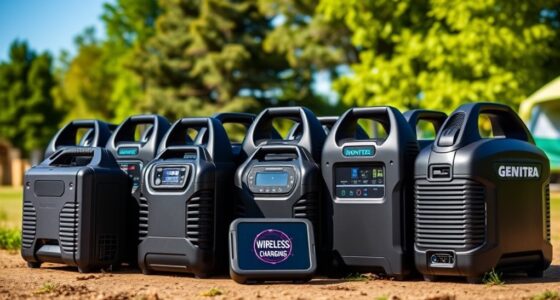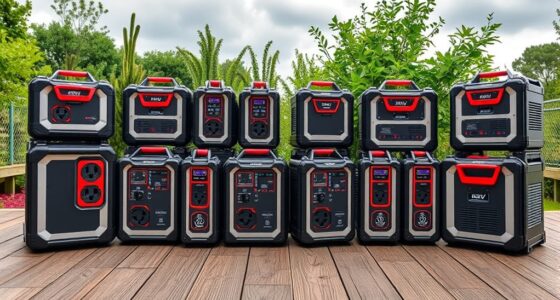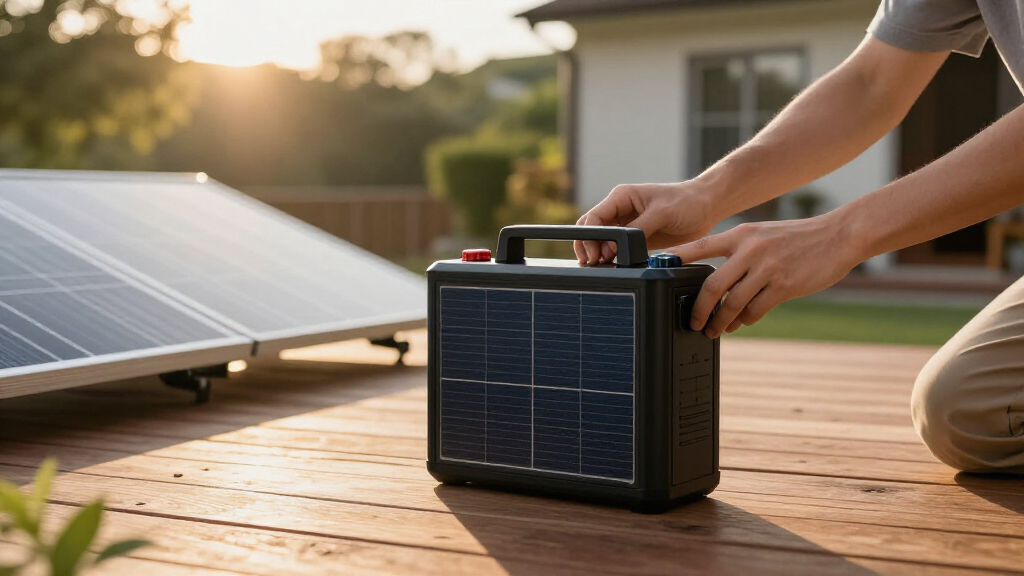
Solar-powered backup batteries fall into two very different camps: small power banks that keep phones alive on a hike, and portable power stations that can run fridges, lights, and laptops during an outage. My top pick overall is the Jackery Solar Generator 1000 V2, because its 1070Wh capacity and 200W panel make it the only option here that can genuinely back up a household. For smaller budgets, the Jackery Solar Generator 300 hits a sweet spot of capacity and trusted build, while the BLAVOR 20000mAh stands out among power banks for honest capacity claims and wireless charging. The main tradeoff you’ll face is weight versus capability — serious backup power means carrying pounds, not ounces — and whether solar input is fast enough to matter in an emergency. Keep reading for the full breakdown of all 15 options and who each one actually suits.
Get ready for Prime Big Deal Days — try Prime free
Exclusive member deals on October 6–7, plus fast free delivery. Cancel anytime.
Start your free trialAs an affiliate, we earn on qualifying purchases.
Complete the kit


Key Takeaways
- The 38800mAh and 49800mAh power bank ratings in this lineup are widely inflated; realistically expect 8,000–12,000mAh of usable charge, which is why the honest 20,000mAh models ranked higher.
- 40W solar panels barely recharge a 300Wh power station (a full day of sun adds maybe 60–70%), so panel wattage mattered as much as battery size in the rankings.
- Only the Jackery 1000 V2 can run meaningful household loads like a mini-fridge; every 300W-class unit is limited to lights, phones, and small appliances.
- Built-in cables and wireless charging were the strongest differentiators among power banks, cutting the gear you need to carry.
- Jackery‘s three entries swept the power station category on build quality and warranty support, but budget generic units offer similar specs at nearly half the price.


| solar-powered backup batterie | Capacity |
|---|---|
| 200W Solar Powered Generator w | 146Wh / 39600mAh |
| Solar Charger Power Bank 38800 | 38800mAh |
| Portable Solar Generator with | 220Wh (60000mAh) |
| Jackery Solar Generator 300 wi | 292Wh |
| BLASOUL Solar Power Bank 49800 | 49800mAh |
| SOARAISE Solar Power Bank 4800 | — |
| BLAVOR Solar Power Bank 20000m | — |
| Portable Solar Generator 300W | — |
| Blavor Solar Power Bank 10,000 | 10000mAh |
| Mregb Solar Charger Power Bank | 20000mAh |
| Jackery Explorer 300 Portable | 292Wh |
| Solar Charger Power Bank 20000 | 20000mAh |
| Jackery Solar Generator 1000 V | 1070Wh |
| YELOMIN 38800mAh Solar Power B | 38800mAh |
| Solar Power Bank 40000mAh PD20 | 40000mAh |
More Details on Our Top Picks
200W Solar Powered Generator with 40W Solar Panel – Portable Power Station
For buyers dipping a toe into solar backup power without a big spend, this 146Wh station with a bundled 40W panel is one of the cheapest complete kits available. The pure sine wave AC outlets matter more than the wattage suggests — they run laptops and camera gear safely, which is something cheaper modified sine wave units can’t claim. Compared with the 300W generator with 40W panel, this option gives up roughly a third of the capacity and 100W of output, but it also sheds two pounds of carry weight, which matters for hikers and campers. The tradeoff is real: 146Wh won’t carry a phone-and-laptop workflow past a weekend, and the 200W ceiling rules out anything with a heating element or a fridge compressor. As a first kit or a glovebox emergency unit, though, it covers the basics sensibly.
Pros:- Bundled 40W foldable solar panel means no separate panel purchase
- Pure sine wave AC is safe for sensitive electronics
- At 3 lbs, it is the lightest power station in this lineup
- Multiple simultaneous outlets across AC, USB, and DC
Cons:- 200W output ceiling excludes most appliances and power tools
- 146Wh capacity is small for anything beyond a weekend
- Solar recharging is slow and weather-dependent at 40W
Best for: Budget-conscious campers and first-time buyers who want a complete solar kit for phones, cameras, and laptops
Not ideal for: Anyone planning to run small appliances or bridge multi-day outages — the 146Wh capacity drains quickly under real loads
- Capacity:146Wh / 39600mAh
- Power Output:200W
- Solar Panel:40W foldable, included
- AC Outlets:2 x 110V pure sine wave
- USB Outlets:4 x USB (5V/3.1A)
- DC Output:12V/8A
- Weight:3.0 lbs
- Wall Recharge Time:5-6 hours
Our verdict“A sensible, low-commitment entry point for light outdoor charging needs, as long as expectations stay at the phone-and-laptop level.”
Solar Charger Power Bank 38800mAh, 22.5W USB-C Fast Charging Portable Charger
Not everyone needs a power station. For emergency preparedness kits and bug-out bags, this rugged 38,800mAh power bank is the better shape of solution: no AC inverter to fail, no bulky chassis, and an IP65 rating that shrugs off rain and dust that would sideline a typical power station. The four built-in cables are the standout convenience — in an emergency, hunting for the right cord is the last thing anyone wants, and it’s an advantage over the BLASOUL 49800mAh, which matches the cable trick but adds bulk. Compared with the Jackery Explorer 300, this bank trades AC outlets for pocketability and toughness. The honest tradeoff: the solar panel on any bank this size is a trickle charger at best, so treat it as a wall-charged backup with a solar safety net, not a self-sustaining generator.
Pros:- IP65 waterproof, dustproof, shockproof build survives real field abuse
- Four built-in cables eliminate cord-carrying entirely
- Dual LED flashlights with emergency modes add go-bag value
- 22.5W fast charging tops up modern phones quickly
Cons:- No AC outlets — strictly a USB charging solution
- Solar recharging is very slow relative to the large capacity
- No published weight makes packing decisions harder
Best for: Preppers and outdoor adventurers building an emergency kit where toughness and built-in cables matter more than AC power
Not ideal for: Anyone who needs to run AC devices or expects solar alone to recharge it — the panels are supplementary at best
- Capacity:38800mAh
- Power Output:22.5W
- Ports:4 (USB-C, USB-A)
- Built-in Cables:Yes, 4 types
- Waterproof Rating:IP65
- Flashlights:Dual LED
- Voltage:5V
Our verdict“The right pick if the priority is a bomb-proof emergency charger rather than a power station.”
Portable Solar Generator with 40W Solar Panel, 300W Power Station
This 300W/220Wh unit is where value and capability start to overlap. For a modest step up from the 200W budget generator, buyers get 50% more capacity, USB-C PD ports, and a 600W surge rating that handles motor startup — the difference between charging a drone battery and actually running a small fan or CPAP through the night. Against the Jackery Solar Generator 300, it matches the wattage and panel size while adding a second USB-C port and a built-in LED floodlight, typically at a lower price. The catch is chemistry and durability: Jackery’s LiFePO4 cells are rated for thousands more cycles than the standard cells here, so this pick front-loads value while the Jackery pays off over years. For occasional campers rather than weekly off-grinders, that’s a trade worth making.
Pros:- 300W continuous with 600W peak handles motors and surge loads
- Eight ports including two USB-C PD for modern gear
- Included 40W panel makes it a complete kit out of the box
- Built-in LED floodlight useful at camp
Cons:- 220Wh still runs dry quickly under sustained AC loads
- Standard battery chemistry offers shorter lifespan than LiFePO4 competitors
- 40W panel means slow full-solar recharges
Best for: Weekend campers and road-trippers who want 300W capability and a bundled panel without paying brand-name prices
Not ideal for: Frequent or daily users — the standard battery chemistry won’t match the cycle life of LiFePO4 rivals like the Jackery
- Power Output:300W (600W peak)
- Capacity:220Wh (60000mAh)
- Solar Panel:40W, included
- Ports:2 AC, 2 USB-C PD, 3 USB-A, 1 DC carport
- Weight:5 lbs
- Dimensions:8.5 x 6.7 x 4.1 inches
Our verdict“The smart middle pick for occasional users who want near-Jackery capability at a friendlier price.”
Jackery Solar Generator 300 with 40W Solar Panel
This is the pick I’d point most buyers toward in the compact class. The LiFePO4 battery rated for 4,000+ cycles is the headline — that’s roughly a decade of weekly use, while the 300W value generator will likely fade in a fraction of that time. Jackery’s charging ecosystem also runs faster and cleaner: 80% in under three hours from a 100W panel, versus five or six hours on lesser kits with the same 40W hardware. The 292Wh capacity sits comfortably above the budget 146Wh unit and the 220Wh value pick, giving real headroom for a laptop-heavy day off-grid. The tradeoffs are price and modularity — it costs more than generic rivals, and the solar panel ships separately, so buyers must confirm the bundle before checkout. For longevity alone, the premium is justified.
Pros:- LiFePO4 chemistry rated for 4,000+ charge cycles
- Fast solar charging: 80% in 2.8 hours with a 100W panel
- Largest capacity in the compact class here at 292Wh
- Established ecosystem with panel upgrade options
Cons:- Higher price than comparable generic 300W stations
- Solar panel ships separately — bundle availability needs checking
- 300W output still can’t run kitchen appliances or heaters
Best for: Buyers who want a compact station that survives years of regular use and recharges fast from upgraded solar panels
Not ideal for: Bargain hunters — the brand premium is real, and anyone on a tight budget gets more raw capacity per dollar from generic rivals
- Capacity:292Wh
- Power Output:300W (600W peak)
- Battery Chemistry:LiFePO4, 4000+ cycles
- Solar Recharge:80% in 2.8 hours (100W panel)
- Outlets:2 AC, 1 USB-C PD, 2 USB-A, 1 car port
- Weight:7.5 lbs
Our verdict“The best long-term compact choice for anyone willing to pay extra for cycle life and fast solar recharging.”
BLASOUL Solar Power Bank 49800mAh Wireless Portable Phone Charger
When the job is keeping a family’s phones alive, raw milliamp-hours win, and this 49800mAh bank is the largest capacity in this batch — roughly enough to charge a modern smartphone eight or more times. It pairs that capacity with 15W wireless charging and four built-in cables, so a household with mixed iPhone and Android devices never fights over a cord. Compared with the 38800mAh rugged power bank, it offers more capacity plus wireless top-ups, though it lacks that unit’s clear positioning as a hardened survival tool. Set against any power station here, it obviously forgoes AC power entirely, but it also costs and weighs far less than a Jackery Explorer 300. The reality check: solar input remains a slow trickle, and at this capacity the bank itself is chunky enough to notice in a daypack.
Pros:- Largest capacity in this batch at 49800mAh
- 15W wireless charging plus 22.5W wired fast charging
- Built-in iOS, Type-C, Micro, and USB-A cables
- IP65 durability and SOS-capable flashlight
Cons:- Large and heavy for everyday pocket carry
- Solar charging is slow and unreliable as a primary method
- No AC output at all
Best for: Families or group travelers who need to keep many phones topped up across several days without carrying cables
Not ideal for: Minimalist hikers and anyone needing AC outlets — it’s heavy for its class and strictly USB/wireless
- Capacity:49800mAh
- Wired Fast Charging:22.5W
- Wireless Charging:15W
- Built-in Cables:iOS, Type-C, Micro USB, USB-A
- Water Resistance:IP65
- Extras:LED flashlight with SOS and strobe modes
Our verdict“The pick when the mission is maximum phone recharges for a group, not running appliances.”
SOARAISE Solar Power Bank 48000mAh Wireless Portable Charger with 4 Cables
Four solar panels set this model apart from single-panel rivals like the BLAVOR 20000mAh, which means noticeably faster top-ups when sunlight is the only option. The 48000mAh capacity is enormous for a power bank — enough to keep a phone, camera, and headlamp running across a long weekend — and the built-in cables plus wireless pad eliminate the classic ‘forgot the right cord’ problem. Compared with the Mregb 20000mAh, this option is better suited to groups or extended trips where recharging opportunities are scarce. The tradeoff is size and weight: despite a listed 50 g spec that looks like a typo, a battery this large is realistically a pack item, not a pocket one. Solar input still trails wall charging by a wide margin, so treat the panels as an emergency trickle, not a primary strategy.
Pros:- 48000mAh capacity supports multi-day, multi-device trips
- Four solar panels charge faster than single-panel competitors
- Built-in cables and wireless charging reduce what you have to pack
- Waterproof, shockproof, and dustproof construction
Cons:- Heavy and bulky compared with slimmer 10000–20000mAh options
- Solar charging speed still depends heavily on direct sunlight
- No certified waterproof/shockproof rating details for verification
Best for: Campers and group travelers who need to charge several devices over multiple days far from outlets
Not ideal for: Day hikers and commuters — the capacity is overkill and the footprint dominates a small pack or pocket
- Battery Capacity:48000mAh
- Solar Panels:4
- Ports:3 (2 USB-A, 1 USB-C)
- Wireless Charging:Yes
- Fast Charging:PD QC 3.0
- Protection:Waterproof, shockproof, dustproof
- Dimensions:6.38 x 3.43 x 1.57 inches
Our verdict“Pick this if you’re powering a whole camp for days; skip it if a weekend solo trip is the use case.”
BLAVOR Solar Power Bank 20000mAh Wireless Charger for Phones & Apple Watch
What separates this BLAVOR unit from the crowded 20000mAh field is its dedicated Apple Watch charging support — a rare feature that its sibling, the Blavor 10000mAh, doesn’t match in scope. With built-in USB-C, iOS, and USB-A cables, it covers most households without packing a single cord, and the 20W USB-C fast charging outpaces standard 10W competitors. The bundled flashlight, compass, and carabiner push it toward the outdoor-utility end of the spectrum, though the Mregb 20000mAh beats it on ruggedness with an IP67 rating versus BLAVOR’s unspecified ingress protection. Realistically, solar input is a backup feature here, not a selling point — plan to charge from the wall before any trip. Weight is the other honest drawback: a full 20000mAh plus wireless coil makes this noticeably heavier than the 10000mAh alternative.
Pros:- Apple Watch wireless charging support is uncommon at this price
- Four built-in cables cover USB-C, iOS, and USB-A devices
- 20W fast charging via USB-C
- Flashlight, compass, and carabiner included for outdoor use
Cons:- Heavy and large for everyday carry
- No published IP rating or solar efficiency figures
- Solar panel works best as emergency backup only
Best for: Apple Watch owners who want one rugged power bank to wirelessly top up watch and phone on trips
Not ideal for: Minimalist travelers — it’s heavier and larger than 10000mAh options like the Blavor compact model
- Battery Capacity:20000mAh
- Wireless Charging:Yes (phones and Apple Watch)
- Fast Charging:20W USB-C
- Built-in Cables:2 USB-C, 1 iOS, 1 USB-A
- Protection:Waterproof, shockproof, dustproof
Our verdict“The right pick for Apple-heavy households who want cable-free charging on the trail; others can save weight elsewhere.”
Portable Solar Generator 300W with 60W Solar Panel
This is the entry point into true solar generator territory — it runs AC devices that no power bank in this roundup can touch, including the SOARAISE 48000mAh, which tops out at 5V USB output. The bundled 60W foldable panel is the largest solar input among the smaller stations here, meaning faster battery replenishment than the 40W-panel bundles like the Jackery Solar Generator 300. For campers who want to run a small fan, lights, or a laptop, that AC outlet is the whole point. The compromises are real, though: push past 300W and you risk damaging the unit, which rules out kettles, hair dryers, and most power tools. The junction box also isn’t waterproof, so the panel setup needs dry conditions or shelter — a genuine limitation for unpredictable weather. Budget-hungry buyers get capability here, not refinement.
Pros:- AC outlets support devices no USB power bank can run
- 60W foldable panel recharges faster than bundled 40W kits
- Overload and short circuit protection built in
Cons:- 300W ceiling excludes most kitchen appliances and power tools
- Junction box is not waterproof — solar setup needs dry conditions
- Battery degrades if left uncharged for long stretches
Best for: Campers and van-lifers who need AC outlets for laptops, lights, and small appliances without paying premium-brand prices
Not ideal for: Anyone running appliances over 300W or expecting a weatherproof panel setup in the rain
- Output Wattage:300W
- Solar Panel:60W foldable
- Voltage:110V AC
- Power Sources:Battery, solar, AC/DC
- Safety Features:Overload and short circuit protection
- Recommended Uses:Home backup, RV, camping
Our verdict“The cheapest credible route to real AC power from the sun, provided your devices stay under 300W.”
Blavor Solar Power Bank 10,000mAh Portable Wireless Charger for Cell Phones
In a lineup obsessed with bigger numbers, this Blavor compact earns its place by being genuinely pocketable — it’s the smallest and lightest option here, while the BLAVOR 20000mAh and SOARAISE 48000mAh demand pack space. The 10000mAh capacity translates to roughly two full phone charges, which is plenty for a day hike or an unexpected outage evening. A certified IPX5 waterproof rating gives it an honesty advantage over competitors that claim water resistance without numbers, and the 20W USB-C output matches chargers twice its size. The obvious ceiling is capacity: heavy users draining tablets or running GPS all day will hit empty fast. Solar charging remains a slow trickle at this panel size — a fair trade for the form factor, but one worth knowing before relying on it off-grid.
Pros:- Smallest and lightest option in the roundup for true pocket carry
- Certified IPX5 waterproof rating, not just a vague claim
- 20W USB-C fast charging and wireless output
- Flashlights and compass add outdoor utility
Cons:- 10000mAh capacity limits multi-day or multi-device use
- Larger than basic non-solar slim power banks
- Solar trickle charging is slow in real conditions
Best for: Day hikers and everyday carriers who want reliable backup power that actually fits in a pocket
Not ideal for: Heavy users or multi-day trips — 10000mAh runs out after roughly two phone charges
- Capacity:10000mAh
- Charging:USB-C 20W fast charging, wireless
- Waterproof Rating:IPX5
- Material:Flame-retardant ABS and PC
- Battery Type:Lithium-cobalt
Our verdict“The right choice when portability beats capacity — buy it for pocketability, not for powering a camp.”
Mregb Solar Charger Power Bank 20000mAh Portable External Battery Pack with Flashlight
The IP67 rating is this model’s defining feature — full dust tightness and immersion protection that the BLAVOR 20000mAh doesn’t certify, making it the safer bet for kayak trips, monsoon hikes, or dusty worksites. Combined with drop-proof construction and a flashlight rated for up to 100 hours, it reads as an emergency kit resident rather than a daily driver — a genuine blackout or stranded-vehicle companion. Charging performance splits the difference: QC 3.0 via USB-C is solid from the wall, but be aware it wants a charger above 5V/2A, so ancient USB bricks will crawl. The solar panel, by the maker’s own framing, is slow and unreliable — better than nothing in a true emergency, worse than the SOARAISE four-panel setup for deliberate off-grid recharging. Frame this as insurance, and it delivers; frame it as a solar charger, and it disappoints.
Pros:- IP67 waterproof rating exceeds unspecified competitors
- Drop-proof and dust-proof for extreme environments
- Flashlight runs up to 100 hours for prolonged outages
- 20000mAh with QC 3.0 fast charging from the wall
Cons:- Solar charging is slow and unreliable by design
- Requires a charger above 5V/2A for reasonable wall recharge times
Best for: Emergency-preppers and outdoor workers who need certified survivability in water, dust, and drops
Not ideal for: Off-grid users expecting solar to be the primary recharging method — the panel is too slow
- Capacity:20000mAh
- Fast Charging:QC 3.0 via USB-C
- Waterproof Rating:IP67
- Drop-proof:Yes
- Dust-proof:Yes
- Flashlight Runtime:Up to 100 hours
Our verdict“Buy this for certified toughness in disasters and foul weather, not for serious solar recharging.”
Jackery Explorer 300 Portable Power Station, 292Wh
For buyers who want true AC power without the back strain, this is the lightest full power station in the lineup. At 7.5 lbs, the Explorer 300 undercuts the Jackery Solar Generator 1000 V2 by more than 15 pounds, making it the realistic choice for hikers and paddlers rather than car campers. The LiFePO4 chemistry rated for 4,000+ cycles means years of weekend trips without meaningful degradation — a genuine advantage over cheaper power banks in this roundup that don’t publish cycle ratings. The tradeoff is scale: 292Wh and a 600W surge ceiling rule out anything with a heating element or power tool. Compared with the Solar Charger Power Bank 20000mAh, you gain AC outlets and a car port but lose pocket portability. Note that a solar panel is a separate purchase.
Pros:- Featherlight at 7.5 lbs — genuinely carryable in a backpack
- LiFePO4 chemistry rated for 4,000+ charge cycles
- Versatile port selection: 2 AC, USB-C PD, 2 USB-A, and a car port
- Fast solar charging reaching 80% in roughly 2.8 hours
Cons:- Solar panel sold separately, adding real cost to a complete setup
- 600W peak surge caps what appliances it can start
Best for: Hikers, paddlers, and minimalist campers who need AC outlets for laptops, drones, or small devices while keeping pack weight low
Not ideal for: Anyone planning to run appliances during a home power outage — 292Wh won’t sustain a fridge or heater
- Capacity:292Wh
- Weight:7.5 lbs
- Outlets:2 AC, 1 USB-C PD, 2 USB-A, 1 car port
- Rated output:300W (600W peak surge)
- Charge cycles:Over 4,000 (LiFePO4)
- Solar charging time:~2.8 hours to 80%
Our verdict“Buy this if you need portable AC power you can actually carry; skip it if your goal is whole-home emergency backup.”
Solar Charger Power Bank 20000mAh with Wireless Fast Charging, Built-in Cables, and LED Flashlights
This is the roundup’s pick for cable-free everyday carry. The built-in Lightning, Type-C, and USB-A cables mean it works straight out of a bag with no forgotten cords — something neither the YELOMIN 38800mAh nor the 40000mAh PD20W offers — and wireless Qi charging tops up a phone by simply resting it on the case. Capacity is modest at 20000mAh, so it’s a two-to-four phone charge device rather than a multi-day power source like the larger banks in this guide. The rugged ABS shell with a 3-mode flashlight (including SOS) makes it a smart glovebox or emergency-kit staple. Just don’t lean on the solar panel as a primary charging method; think of it as a trickle option when the sun cooperates.
Pros:- Built-in Lightning, Type-C, and USB-A cables eliminate cord clutter
- Wireless Qi fast charging for compatible phones
- Shockproof, waterproof, dustproof housing suited to outdoor abuse
- 3-mode LED flashlight with SOS signaling
Cons:- Solar charging is slow and unreliable in weak sunlight
- No published weight or dimensions make packing plans guesswork
Best for: Commuters, travelers, and emergency-kit builders who want one grab-and-go charger with every cable built in
Not ideal for: Off-grid trips lasting more than a couple of days — 20000mAh runs out quickly with multiple devices
- Capacity:20000mAh
- Built-in cables:Lightning, Type-C, USB-A
- Wireless charging:Qi fast charging
- Output ports:2x USB-A, USB-C input
- Flashlight modes:Steady, strobe, SOS
- Build:ABS — shockproof, waterproof, dustproof
Our verdict“The most convenient pocket option here for people who hate carrying cables; not the choice for extended off-grid power.”
Jackery Solar Generator 1000 V2 with 200W Solar Panel, 1070Wh, 1500W AC
When the lights go out, this is the only entry in the batch with enough muscle to matter. With 1070Wh of capacity and a 1500W running output (3000W starting surge), it can drive a refrigerator, microwave, or power tools — territory no power bank in this roundup can touch. Compared with the Jackery Explorer 300, you’re trading 16 pounds of portability for roughly 3.7x the stored energy and 5x the output, which is the right trade for garage or emergency-closet storage. The bundled 200W panel and fast charging shorten recharge times after an outage, though some listings ship the panel separately, so verify before a storm season. The honest limitation: at full 1500W draw, runtime is about two hours, so load management still matters.
Pros:- 1500W running / 3000W surge output handles real appliances
- 1070Wh capacity is several times larger than any power bank here
- Fast charging with app control for monitoring
- Foldable handle keeps it manageable despite the size
Cons:- Roughly two hours of runtime at full 1500W load
- Solar panel may ship separately from the station
- Some features require app setup to access fully
Best for: Homeowners and RV owners who want outage insurance for a fridge, medical device, or essential appliances
Not ideal for: Backpackers and day hikers — at 23.8 lbs with no pocketable form factor, it belongs in a vehicle or at base camp
- Capacity:1070Wh
- AC output:1500W running / 3000W starting
- Weight:23.8 lbs
- Dimensions:12.87″L x 8.82″W x 9.72″H
- Total outlets:3
- Runtime at full load:~2 hours
- Included panel:200W solar panel
Our verdict“The serious emergency option in this lineup — buy it for appliances and outages, not for the trail.”
YELOMIN 38800mAh Solar Power Bank, Portable Charger with USB-C Fast Charging, Dual LED Flashlights, Waterproof and Rugged
This model occupies the sweet spot between capacity and carry weight. At 280g with 38800mAh on tap, it delivers roughly double the phone charges of the 20000mAh wireless power bank while remaining light enough for a jacket pocket — a balance the larger 40000mAh PD20W struggles to match given its bulk. The waterproof, dustproof housing and dual flashlights with SOS mode make it a dependable companion for multi-day hikes or a go-bag. Realistically, its solar panel is a supplemental trickle charger, not a primary power source, so plan to top it up from a wall adapter between trips. USB-A ports are capped at 5V/2.4A, meaning slower phone charging than PD-equipped rivals.
Pros:- 38800mAh capacity covers several days of phone charges
- Light 280g weight despite the large battery
- Waterproof and dustproof build for harsh weather
- Dual LED flashlights with emergency modes
Cons:- Solar input is supplemental only and sunlight-dependent
- Charges devices slowly at 5V/2.4A on USB-A
Best for: Budget-conscious campers and hikers who want multi-day phone charging capacity without power-station weight or price
Not ideal for: Anyone charging tablets or needing fast top-ups — 2.4A USB-A output is noticeably slower than PD fast charging
- Capacity:38800mAh
- Weight:280g
- Ports:USB-C, 2x USB-A 5V/2.4A
- Flashlight modes:Steady, SOS, strobe
- Weatherproof:Yes
- Recharge options:Solar, wall adapter
Our verdict“The best capacity-per-dollar, capacity-per-gram pick for multi-day outdoor trips where fast charging isn’t a priority.”
Solar Power Bank 40000mAh PD20W Fast Charging Portable Solar Charger
If raw charge count is the goal, this is the biggest battery in the batch at 40000mAh with 20W PD fast charging. That PD output is the key differentiator: it tops up a modern phone at full speed, something the YELOMIN 38800mAh can’t do with its 2.4A USB-A ports. The IP67 rating is also the most explicit waterproof spec among the power banks here, giving confidence for rain-soaked trails or kayak spray. The price of that capacity is physical size — this is the bulkiest bank in the lineup, better suited to a pack’s side pocket than a trouser pocket. And like every solar bank in this guide, the panel is an emergency trickle charger, not a daily recharging method; the wall adapter remains the practical way to refill it.
Pros:- Largest capacity in the roundup at 40000mAh
- 20W PD Type-C fast charging for quick device top-ups
- IP67 waterproof plus shockproof and dustproof construction
- Dual LED flashlights with 4 modes including SOS
Cons:- Solar charging is very slow and best treated as emergency-only
- Physically bulky compared with smaller banks
- Fast daily recharging requires a wall adapter
Best for: Outdoor adventurers and emergency preppers who want the most device charges possible plus fast PD top-ups for modern phones
Not ideal for: Minimalist travelers who value pocketability — the large chassis is awkward for everyday carry
- Capacity:40000mAh
- Fast charging:20W PD Type-C
- Ports:USB-C, USB-A, Micro USB
- Flashlights:Dual, 4 modes
- Waterproof rating:IP67
- Material:ABS (shockproof, dustproof)
Our verdict“The pick when you need maximum stored phone charges with fast output, provided you accept a chunky form factor.”
How We Picked
I separated these 15 products into power stations (100Wh+) and solar power banks (under 100Wh), because judging them against each other directly would be misleading — a 38,800mAh bank and a 1070Wh generator solve completely different problems. Within each group, I weighed usable capacity versus claimed capacity, solar recharge speed, output wattage and port variety, build quality and ingress protection, and value per watt-hour. Reputation and warranty support also played a role, since backup power is something you buy once and depend on during emergencies.
The ranking logic favors products that do their one job well over products that claim to do everything. Power banks with inflated capacity ratings, tiny solar inputs, or flimsy built-in cables ranked lower even when their spec sheets looked impressive. Power stations ranked higher when their bundled panel could realistically recharge the unit, when their inverter handled surges from real appliances, and when the brand stood behind the product long-term.
Factors to Consider When Choosing Solar-powered Backup Batteries
Before you pick a specific product from this lineup, it helps to understand the category itself. Solar backup batteries are sold on headline numbers that often don’t reflect real-world performance, and the biggest mistake buyers make is purchasing the wrong class of product entirely for their needs.
Decide Between a Power Bank and a Power Station First
The single most common mistake in this category is buying a solar power bank when you actually need a power station, or vice versa. A 20,000–50,000mAh power bank keeps phones, headlamps, and tablets charged for a few days — that’s it. It cannot run a CPAP machine, a laptop through an outage, or a fridge. Power stations start around 200Wh and scale past 1000Wh, and that extra capacity is what separates convenience from genuine emergency backup. If your goal is storm preparedness, anything under 100Wh is the wrong tool regardless of how rugged the marketing sounds. Match the class to the job before comparing specs within it.
Learn to Read (and Discount) Capacity Claims
Power bank capacity is stated at the cell’s internal voltage (3.7V), but your phone charges at 5V or higher, and conversion losses eat another 15–25%. A claimed 38,800mAh bank delivers roughly 100Wh of real energy — about three full phone charges, not ten. Some off-brand listings inflate numbers even beyond that. Watt-hours (Wh) is a more honest metric, which is why power stations use it. When comparing options in this roundup, I mentally cut power bank ratings by 60–70% and compared the result against the price. That math is why the honest 10,000–20,000mAh models beat the flashy 40,000+ ones.
Solar Input Speed Matters More Than You Think
A small solar panel is not a fast charger — it’s a trickle that keeps you from running dry. A 5W panel on the back of a power bank takes 40+ hours of direct sun for a full charge, which means the solar feature is an emergency last resort, not a primary charging method. Power station panels are different: a 40W panel needs two full sunny days to refill a 300Wh station, while a 100W+ panel can do meaningful work in one afternoon. If you expect solar to be your main recharge method, budget for the biggest panel you can transport and position it properly — angled toward the sun, wiped clean, and moved every couple of hours.
Output Wattage and Ports Determine What You Can Actually Run
Check the inverter’s continuous and surge ratings before assuming a power station will run your appliance. A 200W inverter can’t run a 600W blender, period, and even a 300W unit will trip on anything with a motor. Surge rating matters for devices like mini-fridges that spike at startup. On the power bank side, look for USB-C Power Delivery of at least 20W if you want fast phone charging, and note whether built-in cables support fast charging or just slow 5W trickle. Wireless charging pads are convenient but slow — treat them as a convenience feature, not a primary charging method.
Build Quality, Weather Resistance, and Longevity
Backup batteries live in cars, backpacks, and emergency kits — environments that kill cheap electronics. Look for genuine IP ratings (IP65 or better) rather than vague ‘waterproof’ claims, shock-absorbing housings, and sealed ports. Longevity is the quieter issue: lithium cells degrade whether you use them or not, so a battery that sits in a go-bag for two years may have lost 20% of its capacity. Establish a recharge schedule every 3–4 months. Established brands like Jackery back their stations with multi-year warranties, which matters for a purchase you hope to never use but must rely on when you do.
When to Pay More — and When Not To
Paying more makes sense when capacity, inverter quality, or warranty support directly serve your emergency plan — the jump from a generic 300W station to a name-brand 1000Wh setup is real capability, not markup. Paying more for a premium power bank rarely pays off unless you specifically need wireless charging or an IP-rated housing. Where cheap units genuinely struggle: voltage regulation under load, cell consistency (capacity fades unevenly), and support if something fails. A reasonable strategy is to spend on the power station that anchors your backup plan and stay frugal on the small power banks you toss in bags and glove compartments as redundancy.
Frequently Asked Questions
Can a solar power bank realistically recharge itself with its built-in panel?
Only partially, and slowly. The small panels embedded in power banks typically produce 5W at best in direct sunlight, meaning a full self-charge takes multiple full days of ideal sun — and ideal sun rarely happens when a bank is sitting in a backpack pocket. Treat the solar feature as an emergency trickle that extends your runtime rather than a replacement for wall charging. The realistic play is to top the bank up at home, use the solar panel to offset daily drain when you’re off-grid, and angle it directly at the sun rather than leaving it flat. If solar charging is genuinely central to your plans, a separate folding panel paired with a power station is a far better system than any all-in-one bank.
Is a 300Wh power station enough for a power outage?
It depends on what you consider ‘enough.’ A 300Wh station will keep phones, radios, LED lights, and a router running for one to two days, and can run a laptop for several work sessions — which covers the most common short outages. It will not run a refrigerator, space heater, microwave, or sump pump. Those appliances draw 300–1500W continuously or in surges that exceed a small inverter’s limits, and the math on watt-hours fails quickly. A useful exercise: list the devices you actually need during an outage, multiply their wattage by hours of use, and buy capacity with 30% headroom. For many households, that exercise points to 500–1000Wh, not 300.
Why did the 38,800mAh and 49,800mAh power banks rank below 20,000mAh models?
Because those headline numbers don’t survive contact with physics. Voltage conversion from 3.7V cells to 5V+ output, plus heat losses, means you get roughly 60–65% of rated capacity at best — and several ultra-high-capacity off-brand banks overstate even the cell rating itself. Independent teardowns of similar products have found cells totaling far less than advertised. The 20,000mAh models from BLAVOR, Mregb, and others are closer to industry-standard cells with honest ratings, charge faster over USB-C, and cost less. When a spec sheet promises more energy than a physically larger, heavier product delivers, skepticism is the correct response, and the rankings reflect that.
What can I run on a 1500W inverter like the Jackery 1000 V2’s?
A 1500W continuous inverter covers most household plug-in devices short of major heating and cooling: refrigerators and freezers (typically 100–200W running, with startup surges the V2’s surge rating handles), microwaves on lower settings, coffee makers, TVs, computers, power tools, and CPAP machines. It still won’t run electric heaters, dryers, ovens, or central air — those are 1500–5000W and belong on a generator or whole-home system. Paired with its 200W panel, you can replenish meaningful capacity each sunny day, which is what makes sustained multi-day outage use possible rather than a one-shot drain. That combination of inverter headroom and solar recharge speed is why it leads this lineup.
How should I store solar backup batteries so they’re ready when I need them?
Lithium batteries self-discharge and degrade over time, so an uncharged battery in a closet is a failed battery when the storm hits. Store every unit at roughly 50–80% charge, top it up every three to four months, and keep it somewhere cool — heat is the main killer of lithium cells, so a hot garage or a car in summer is the worst spot. Check that power stations haven’t dropped into protection mode, and run a quick discharge test annually so you know real capacity hasn’t faded. If your unit has removable fold-out panels, inspect cables for corrosion. Fifteen minutes of maintenance a year is the difference between backup power and a paperweight.
Conclusion
If you want the best overall solar-powered backup battery, the Jackery Solar Generator 1000 V2 is the clear choice — it’s the only product in this lineup with the capacity, inverter power, and panel wattage to serve as genuine household backup. For best value, the Jackery Solar Generator 300 and the generic 300W station with 60W panel deliver the most usable watt-hours per dollar for apartment dwellers and short outages. The BLAVOR 20000mAh is the smart pick for beginners and casual users who just want a dependable, honestly rated bank for camping trips. If you’re on a strict budget or need grab-and-go redundancy, the Mregb 20000mAh and Blavor 10,000mAh are cheap enough to stash in every car and bag. Whatever you choose, buy for the job you actually need done — phones or fridge — not the biggest number on the box.
Fall yard work Picks
leaf blowers
As an affiliate, we earn on qualifying purchases.