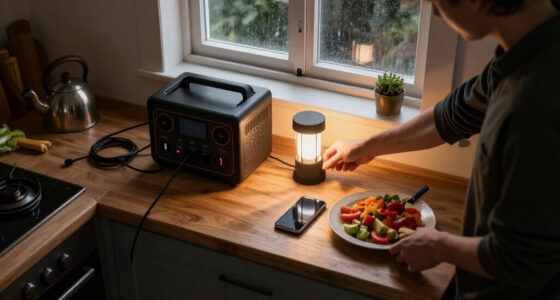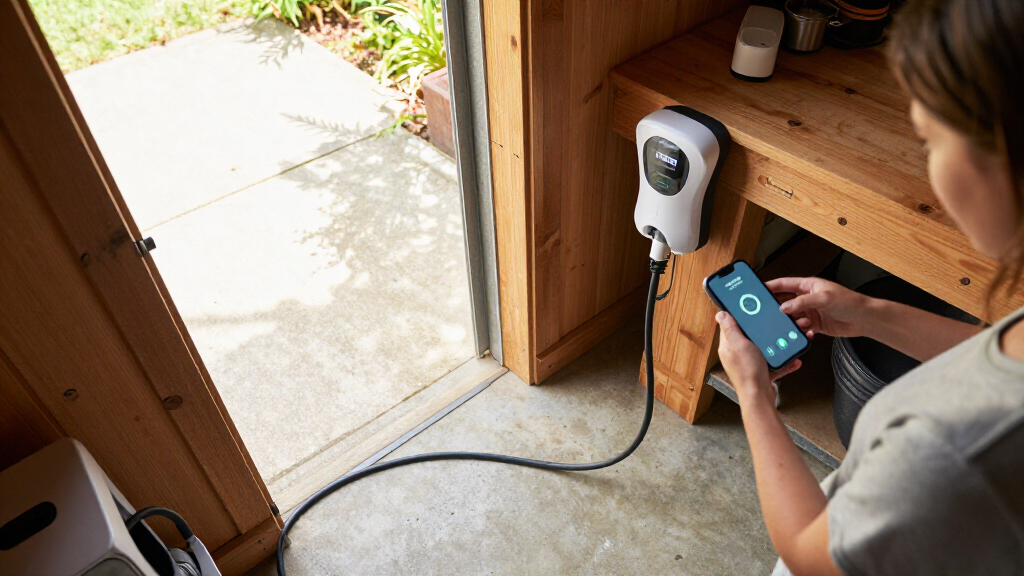

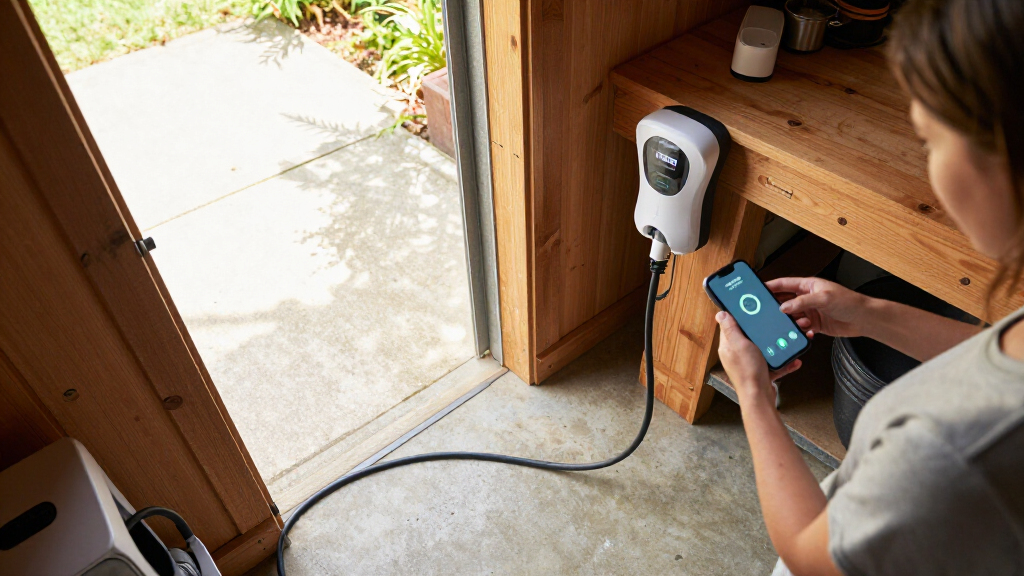
The best home battery EV chargers depend on your car’s connector, your home’s electrical capacity, and whether you want a plug-in or hardwired installation. I’d put the ChargePoint HomeFlex J1772 first for its flexible installation options, while the Emporia Pro stands out for homeowners who want load management and the Autel MaxiCharger 80A for a high-capacity hardwired setup. The main tradeoffs are charging power versus electrical-panel limits, plug-in convenience versus installation flexibility, and J1772 compatibility versus a direct NACS connection. A higher-amp charger cannot overcome a vehicle’s onboard charging limit or a circuit that is too small. Read on for the full comparison, selection criteria, and guidance on matching a charger to your home and vehicle.

Get backup power and energy gear delivered free with Prime
- Fast, free delivery on millions of items
- Prime Video, Amazon Music and more included
- Member-only deals all year
Key Takeaways
- Installation flexibility separates the leading picks: the ChargePoint HomeFlex J1772 is offered with either a NEMA 14-50 plug or a hardwired connection, while other models in the list commit to one setup.
- More amperage is not automatically more useful: the Autel MaxiCharger’s 80A capacity is aimed at homes and vehicles that can use it; many buyers will get better value from a 40A or 48A charger.
- Connector choice can narrow the field quickly: most listed chargers use J1772, while the ChargePoint HomeFlex hardwired NACS and EVIQO EVIPOWER-2 offer NACS connections.
- Long cables are common across this lineup: several models list 25-foot cables, making cable reach and parking layout more useful points of comparison than cable length alone.
- Smart features and portability serve different needs: the Emporia Pro emphasizes PowerSmart load management, while the EVDANCE and ELEGRP portable models suit buyers who want a charger that can travel between compatible outlets.
| Battery Tender eCharge 48 Level 2 EV Charger with 25 ft Cable |  | Best for App-Free Charging | Maximum current: 48 A | Maximum power: Up to 11 kW | Voltage: 240 V | VIEW LATEST PRICE | See Our Full Breakdown |
| 50A Level 2 J1772 EV Charger, NEMA 14-50 or Hardwired, 240V |  | Best for App-Based Scheduling | Charging level: Level 2 | Maximum current: Up to 50 A | Voltage: 240 V | VIEW LATEST PRICE | See Our Full Breakdown |
| ChargePoint HomeFlex Level 2 EV Charger with J1772 Connector and NEMA 14-50 Plug |  | Best for Established App Controls | Output voltage: 240 V | Connector: J1772 | Plug type: NEMA 14-50 | VIEW LATEST PRICE | See Our Full Breakdown |
| Grasside 40A Level 2 J1772 EV Charger with NEMA 14-50 Plug |  | Best for Fine-Tuned Current Adjustment | Maximum current: 40 A | Maximum power: 9.6 kW | Voltage: 240 V | VIEW LATEST PRICE | See Our Full Breakdown |
| BETUMODA Level 2 EV Charger, 40A, 25 ft Cable, 9.6 kW, J1772 |  | Best for Portable Outlet Flexibility | Charging level: Level 2 | Maximum current: 40 A | Maximum power: 9.6 kW | VIEW LATEST PRICE | See Our Full Breakdown |
| ChargePoint HomeFlex Level 2 Hardwired EV Charger with NACS Connector |  | Best Hardwired Pick for Tesla Drivers | Output voltage: 240 V | Connector: NACS | Charging speed: Up to 45 miles of range per hour, depending on the vehicle | VIEW LATEST PRICE | See Our Full Breakdown |
| EVIQO Level 2 EV Charger, 40A, J1772, NEMA 14-50 |  | Best App-Connected Plug-In Pick | Maximum amperage: 40 A | Voltage: 240 V | Outlet: NEMA 14-50 | VIEW LATEST PRICE | See Our Full Breakdown |
| EVDANCE Level 2 Portable EV Charger, 40A, 240V, 25 ft Cable |  | Best for Adjustable Charging and Portability | Maximum current: 40 A | Maximum power: 9.6 kW | Voltage: 240 V | VIEW LATEST PRICE | See Our Full Breakdown |
| AIMILER Level 2 EV Charger, 32A, 25 ft Cable, NEMA 14-50 Plug, J1772 Connector, Wi-Fi App |  | Best Lower-Amperage Smart Portable Pick | Output voltage: 240 V | Maximum current: 32 A | Maximum charging power: 7.68 kW | VIEW LATEST PRICE | See Our Full Breakdown |
| SEGUMA Level 2 EV Charger, 40A, 25 ft Cable |  | Best for On-Charger Feedback and Flexible Output | Maximum current: 40 A | Maximum charging power: 9.6 kW | Voltage: 240 V | VIEW LATEST PRICE | See Our Full Breakdown |
| Autel MaxiCharger 80A Level 2 EV Charger, Hardwired, J1772 |  | Best for Maximum Charging Output | Maximum output: 19.2 kW | Maximum current: 80 A | Input voltage: 240 V | VIEW LATEST PRICE | See Our Full Breakdown |
| BETUMODA Level 2 EV Charger, 40A, 240V, 9.6kW, 25 ft Cable |  | Best Adjustable Portable Pick | Maximum power: 9.6 kW | Maximum current: 40 A | Voltage: 240 V | VIEW LATEST PRICE | See Our Full Breakdown |
| ELEGRP Level 2 40A Portable EV Charger with J1772 Connector and 25 ft Cable |  | Best for Outdoor Portable Charging | Maximum charging power: 9.6 kW | Current settings: 16 A, 20 A, 24 A, 32 A, 40 A | Voltage: 240 V | VIEW LATEST PRICE | See Our Full Breakdown |
| EVIQO EVIPOWER-2 Level 2 NACS EV Charger, 40A, NEMA 14-50, 25 ft Cable |  | Best for Tesla and NACS Vehicles | Connector: NACS | Maximum current: 40 A | Outlet: 240 V NEMA 14-50 | VIEW LATEST PRICE | See Our Full Breakdown |
| Emporia Pro Level 2 EV Charger with PowerSmart, 48 A, J1772 Connector, 25 ft Cable |  | Best for Managing Household Electrical Load | Maximum current: 48 A | Input voltage: 240 V | Connector: J1772 | VIEW LATEST PRICE | See Our Full Breakdown |
| home battery EV charger | Cable length | Maximum current | Connector | Warranty |
|---|---|---|---|---|
| Battery Tender eCharge 48 Leve | 25 ft | 48 A | J1772 | 3 years |
| 50A Level 2 J1772 EV Charger | — | Up to 50 A | J1772 | — |
| ChargePoint HomeFlex Level 2 E | 23 ft | — | J1772 | 3 years |
| Grasside 40A Level 2 J1772 EV | 25 ft | 40 A | — | 3 years |
| BETUMODA Level 2 EV Charger | 25 ft | 40 A | — | — |
| ChargePoint HomeFlex Level 2 H | — | — | NACS | 3 years |
| EVIQO Level 2 EV Charger | 25 ft | — | J1772 | 3 years |
| EVDANCE Level 2 Portable EV Ch | 25 ft | 40 A | J1772 | — |
| AIMILER Level 2 EV Charger | 25 ft | 32 A | — | — |
| SEGUMA Level 2 EV Charger | 25 ft | 40 A | — | — |
| Autel MaxiCharger 80A Level 2 | 25 ft | 80 A | SAE J1772 | 5 years |
| BETUMODA Level 2 EV Charger | 25 ft | 40 A | SAE J1772 | — |
| ELEGRP Level 2 40A Portable EV | 25 ft | — | J1772 | 2 years |
| EVIQO EVIPOWER-2 Level 2 NACS | 25 ft | 40 A | NACS | 3 years |
| Emporia Pro Level 2 EV Charger | 25 ft | 48 A | J1772 | 3 years |
More Details on Our Top Picks
Battery Tender eCharge 48 Level 2 EV Charger with 25 ft Cable
I’d choose the Battery Tender eCharge 48 for a home setup where reliable controls matter more than app features. Its adjustable output reaches 48A and up to 11 kW, while the LCD and two RFID cards provide at-a-glance status and a way to limit access without relying on a phone. Compared with the ChargePoint HomeFlex, this model trades app-based controls and charging information for a simpler, app-free operating experience; its 25-foot cable is also two feet longer.
The tradeoff is that it uses a J1772 connector, so some vehicles need an adapter, and its plug-in or hardwired setup still depends on the electrical arrangement at the charging location. I’d rank it ahead of app-dependent choices for buyers who value straightforward access control, but not for drivers seeking remote scheduling.
Pros:- Adjustable output up to 48A and a stated maximum of 11 kW
- 25-foot J1772 cable provides reach across a garage or driveway
- LCD display and two RFID cards offer status information and access control
- Can be installed plug-in or hardwired and does not require a mobile app
Cons:- J1772 may require an adapter for vehicles with a different inlet
- Plug-in or hardwired installation depends on suitable wiring and equipment at the location
Best for: Households that want high-current charging, a long cable, and RFID access without managing a charger app.
Not ideal for: Drivers who want remote monitoring or app-based schedules, or owners whose vehicles need a charging connector adapter.
- Maximum current:48 A
- Maximum power:Up to 11 kW
- Voltage:240 V
- Connector:J1772
- Cable length:25 ft
- Installation:Plug-in or hardwired
- Access control:Two RFID cards
- Warranty:3 years
- Certifications:ETL, Energy Star, FCC
Our verdict“Choose the eCharge 48 if you want a powerful, long-cabled home charger with RFID controls and no app requirement.”
50A Level 2 J1772 EV Charger, NEMA 14-50 or Hardwired, 240V
This 50A J1772 charger suits drivers who want to schedule charging and check status remotely, with the choice of a NEMA 14-50 plug or professional hardwired installation. Temperature monitoring and automatic power cutoff add a layer of protection, while the weather-resistant enclosure allows indoor or outdoor placement. Unlike the app-free Battery Tender eCharge 48, this model puts scheduling and remote monitoring in the app, making it a better fit for buyers who want charger controls away from home.
That flexibility comes with setup and compatibility limits: the hardwired route calls for a professional, and Tesla drivers need an adapter for the J1772 connector. The product information does not specify a cable length or certifications, so I’d compare those details before choosing it over the Grasside 40A, which lists a 25-foot cable and named certifications.
Pros:- Supports charging current up to 50A
- Offers NEMA 14-50 plug-in or hardwired installation
- App provides charging schedules and remote monitoring
- Temperature monitoring, automatic cutoff, and a weather-resistant enclosure are specified
Cons:- Tesla vehicles require a separate adapter
- Hardwired installation requires a professional
- Product details do not provide cable length or named certifications
Best for: EV owners with a suitable 240V circuit who want app-based charging schedules, remote status checks, and flexible installation.
Not ideal for: Buyers who prefer an app-free charger, need a confirmed cable length or certification list, or want a hardwired installation without hiring a professional.
- Charging level:Level 2
- Maximum current:Up to 50 A
- Voltage:240 V
- Connector:J1772
- Installation:NEMA 14-50 plug-in or hardwired
- Smart features:Mobile app, charging schedules, remote monitoring
- Safety features:Temperature monitoring and automatic power cutoff
- Enclosure:Weather-resistant
- Vehicle compatibility:J1772 vehicles; Tesla models with an adapter
Our verdict“Pick this model if app scheduling and remote checks matter more to you than app-free operation or clearly listed cable and certification details.”
ChargePoint HomeFlex Level 2 EV Charger with J1772 Connector and NEMA 14-50 Plug
The ChargePoint HomeFlex is a strong fit for buyers who want app-based controls in a plug-in home charger and a cable specified for cold conditions. Its 23-foot cable gives useful reach, and the unit is listed for indoor or outdoor installation. The product description says it can charge compatible vehicles up to nine times faster than a 120V outlet, a meaningful step up for drivers moving from basic household-outlet charging. Compared with the Battery Tender eCharge 48, HomeFlex emphasizes app controls rather than RFID access cards, and its cable is shorter by two feet.
The main constraint is the electrical setup: it requires a 240V NEMA 14-50 outlet on a 40A or 50A circuit, so it is not a fit for buyers without that supply. Its J1772 plug may also call for an adapter on Tesla vehicles. I’d favor the Grasside for a longer listed cable and adjustable current, but choose HomeFlex for app controls and a cold-resistant cable.
Pros:- App-based controls provide charging information
- Cold-resistant 23-foot cable offers practical reach
- Listed for indoor and outdoor installation
- UL certified
Cons:- Requires a 240V NEMA 14-50 outlet and a 40A or 50A circuit
- Tesla vehicles require an adapter
- Cable is shorter than the 25-foot options from Battery Tender and Grasside
Best for: Drivers with a 240V NEMA 14-50 outlet who want app controls, indoor or outdoor placement, and a cable specified for cold conditions.
Not ideal for: Households without a suitable 40A or 50A circuit, or drivers who need a native connector for a vehicle that uses a different inlet.
- Output voltage:240 V
- Connector:J1772
- Plug type:NEMA 14-50
- Ports:1
- Cable length:23 ft
- Weight:13.8 lb
- Certification:UL
- Warranty:3 years
Our verdict“Choose HomeFlex if you already have the required outlet and want app controls paired with a cold-resistant cable.”
Grasside 40A Level 2 J1772 EV Charger with NEMA 14-50 Plug
The Grasside 40A stands out for drivers who want to match charger output to their home circuit rather than choose from just a few preset levels. Its current adjusts from 10A to 40A in 1A increments, and Wi-Fi or Bluetooth supports app scheduling and monitoring. The IP65 enclosure, 25-foot cable, and listed UL, CSA, and ETL certifications make its installation details clearer than those supplied for the 50A app-based charger in this group. Compared with the ChargePoint HomeFlex, Grasside offers a longer cable and more granular current adjustment, while both provide app controls.
Its ceiling is 9.6 kW at 40A, below the 48A Battery Tender eCharge 48 and the listed 50A model. It also requires a NEMA 14-50 outlet, and Tesla drivers need a separate adapter. I’d select it for a well-documented, adjustable plug-in installation, not for buyers seeking the highest output in this lineup.
Pros:- Adjustable current from 10A to 40A in 1A increments
- Wi-Fi and Bluetooth support app scheduling and monitoring
- 25-foot cable and IP65 weather resistance suit varied parking layouts
- UL 2594, CSA, ETL, and FCC certifications are listed
Cons:- Maximum output is 40A and 9.6 kW, below the 48A Battery Tender eCharge 48
- Requires a NEMA 14-50 outlet
- Tesla vehicles need a separate J1772-to-NACS adapter
Best for: Drivers with a NEMA 14-50 outlet who want precise current adjustment, app scheduling, and a 25-foot cable for indoor or outdoor use.
Not ideal for: Buyers who need output above 40A, lack a NEMA 14-50 outlet, or want a native connector for a Tesla.
- Maximum current:40 A
- Maximum power:9.6 kW
- Voltage:240 V
- Adjustable current:10A–40A in 1A increments
- Connector and plug:SAE J1772; NEMA 14-50P
- Cable length:25 ft
- Connectivity:Wi-Fi (2.4 GHz) and Bluetooth
- Weather resistance:IP65
- Warranty:3 years
Our verdict“Choose Grasside if precise current control and documented outdoor protection matter more than charging above 40A.”
BETUMODA Level 2 EV Charger, 40A, 25 ft Cable, 9.6 kW, J1772
The BETUMODA 40A is the most flexible pick here for someone who wants one portable charger for a 240V home outlet and occasional access to a standard 120V outlet. It includes NEMA 14-50 and NEMA 5-15 connections, plus five current settings from 8A to 40A, so drivers can adapt the charging setup to the available connection. Its 25-foot cable and 1–12-hour scheduling add useful reach and basic timing control. Compared with the wall-oriented ChargePoint HomeFlex, BETUMODA brings the 120V adapter and adjustable current settings; the tradeoff is a CE/FCC certification list rather than HomeFlex’s stated UL certification.
This is not a substitute for a dedicated 240V circuit when using Level 2 charging: the product specifies that requirement, and the standard outlet connection does not make 240V charging available everywhere. Tesla vehicles need an adapter, and the listed product details do not name a warranty. I’d pick it for portability, not as the clearest choice for a permanent, fixed installation.
Pros:- Includes NEMA 14-50 and NEMA 5-15 connections
- Five current settings range from 8A to 40A
- 25-foot cable supports flexible parking locations
- Scheduling and built-in electrical protections are specified
Cons:- Level 2 charging requires a dedicated 240V circuit
- Tesla vehicles need a separate adapter
- Listed certifications are CE and FCC, and the product data does not specify a warranty
Best for: Drivers who want a portable J1772 charger with both 240V and 120V outlet connections for home and travel use.
Not ideal for: Buyers seeking a hardwired home unit, a listed UL certification, or Level 2 charging without access to a dedicated 240V circuit.
- Charging level:Level 2
- Maximum current:40 A
- Maximum power:9.6 kW
- Output voltage:240 V AC
- Adjustable current settings:8 A, 16 A, 24 A, 32 A, 40 A
- Connections:NEMA 14-50 and NEMA 5-15 adapter
- Vehicle connector:SAE J1772
- Cable length:25 ft
- Scheduling:1–12 hours
Our verdict“Choose BETUMODA if outlet flexibility and portability matter more than a fixed-installation focus or a listed UL certification.”
ChargePoint HomeFlex Level 2 Hardwired EV Charger with NACS Connector
For a Tesla owner who wants a fixed home setup, this ChargePoint pairs a NACS connector with charging speeds of up to 45 miles of range per hour, depending on the vehicle. Its hardwired installation avoids relying on a NEMA 14-50 receptacle, but it also means an electrician is required and the charger is less portable than the plug-in EVIQO Level 2 EV Charger. App controls and reminders add a way to manage charging without being beside the unit, while the UL certification and indoor-or-outdoor rating support more placement options. The cold-resistant cable is a practical plus for exposed installations. Its main limitation is compatibility: the listed connector support is for Tesla vehicles, so J1772 drivers should look at options such as the ChargePoint HomeFlex with J1772 instead.
Pros:- NACS connector listed for Tesla vehicles
- Up to 45 miles of range per hour, depending on the vehicle
- App controls, reminders, and charging information
- UL-certified for indoor or outdoor installation, with a cold-resistant cable
Cons:- Hardwired installation requires an electrician
- Listed compatibility is limited to Tesla vehicles
- Less portable than plug-in options such as the EVIQO Level 2 EV Charger
Best for: Tesla owners who want a hardwired, weather-rated home charger and are comfortable arranging electrician installation.
Not ideal for: Drivers with J1772-only vehicles, renters, or anyone who needs a plug-in charger they can move between locations.
- Output voltage:240 V
- Connector:NACS
- Charging speed:Up to 45 miles of range per hour, depending on the vehicle
- Installation:Hardwired; electrician installation required
- Installation location:Indoor or outdoor
- Certification:UL-certified
- Dimensions:7.06 x 11.19 x 5.2 inches
- Warranty:3 years
Our verdict“Choose this ChargePoint if you drive a Tesla and want a permanently installed NACS charger rather than a portable plug-in model.”
EVIQO Level 2 EV Charger, 40A, J1772, NEMA 14-50
The EVIQO makes a strong case for drivers who want smart controls without committing to hardwiring: it plugs into a NEMA 14-50 outlet and supports remote control, scheduling, and energy tracking through a 2.4 GHz Wi-Fi connection. Its 25-foot cable gives more reach around a garage than a short-lead setup, and the IP66/NEMA 4 housing is suited to indoor or outdoor placement. Compared with the portable EVDANCE charger, EVIQO emphasizes app-based management rather than a built-in display and selectable current settings. That distinction matters if scheduling from a phone is a priority. The tradeoff is infrastructure: it needs a dedicated 50A circuit and compatible outlet, and its Wi-Fi features depend on a 2.4 GHz network. J1772 compatibility suits many EVs and plug-in hybrids, but Tesla drivers need an adapter.
Pros:- App supports remote control, schedules, and energy tracking
- 25-foot cable offers generous reach from the outlet
- IP66/NEMA 4 housing supports indoor or outdoor use
- J1772 connector serves compatible EVs and plug-in hybrids
Cons:- Requires a dedicated 50A circuit and NEMA 14-50 outlet
- App connectivity requires 2.4 GHz Wi-Fi
- Tesla vehicles require a separate adapter
Best for: J1772 EV and plug-in hybrid owners with a dedicated NEMA 14-50 outlet who want app scheduling and charging-energy tracking.
Not ideal for: Drivers without a 50A circuit or 2.4 GHz Wi-Fi, or those who want adjustable current controls directly on a portable charger.
- Maximum amperage:40 A
- Voltage:240 V
- Outlet:NEMA 14-50
- Connector:J1772
- Cable length:25 ft
- Wi-Fi:2.4 GHz
- Weather resistance:IP66 / NEMA 4
- Certifications:UL, ETL, FCC, Energy Star
- Warranty:3 years
Our verdict“Pick the EVIQO if you have the required outlet and want app scheduling and energy tracking in a weather-rated plug-in charger.”
EVDANCE Level 2 Portable EV Charger, 40A, 240V, 25 ft Cable
EVDANCE stands apart from the app-focused EVIQO with practical controls built into the charger: six current settings, a 1–12-hour delayed start, and a display that shows charging information. Those adjustments give owners more flexibility when sharing a circuit or setting a later start, while the 25-foot cable, carry bag, and holders suit drivers who may store or move the equipment. It delivers up to 40A and 9.6 kW from a NEMA 14-50 outlet, with IP66 weather resistance and multiple electrical protections. The tradeoff is that its listed connector is J1772, so Tesla drivers need to supply an adapter. Like the EVIQO and SEGUMA, it also depends on having a compatible 240 V outlet; portability does not remove the need for suitable home wiring.
Pros:- Six selectable current settings from 10 A to 40 A
- Delayed start can help schedule charging
- 25-foot cable, carry bag, and holders support portable use
- IP66 rating and built-in electrical protections
Cons:- Tesla vehicles require a separate adapter
- Requires a compatible 240 V NEMA 14-50 outlet
- Lacks the Wi-Fi app controls offered by the EVIQO
Best for: J1772 drivers who want a portable charger with on-unit current selection, delayed starts, and a long cable.
Not ideal for: Tesla owners who do not already have a J1772-to-Tesla adapter, or households without a compatible NEMA 14-50 outlet.
- Maximum current:40 A
- Maximum power:9.6 kW
- Voltage:240 V
- Current settings:10 A, 16 A, 20 A, 24 A, 32 A, 40 A
- Plug:NEMA 14-50P
- Connector:J1772
- Cable length:25 ft
- Delayed start:1–12 hours
- Weather resistance:IP66
Our verdict“Choose EVDANCE if you value portable accessories and direct current and delay controls more than app-based charging management.”
AIMILER Level 2 EV Charger, 32A, 25 ft Cable, NEMA 14-50 Plug, J1772 Connector, Wi-Fi App
AIMILER is the lineup’s more modest-output app-connected portable option: it tops out at 32A and 7.68 kW, below the 40A EVDANCE and SEGUMA models. That lower ceiling may suit drivers whose vehicle, circuit, or charging routine does not call for the higher output, while adjustable current from 16A to 32A adds some flexibility. The Wi-Fi app and display cover scheduling and charging-status monitoring, features the EVDANCE does not list. Its 25-foot cable also helps when the outlet is not beside the parking spot. However, the product information advises against direct sunlight or rainy-day exposure, making it a less convincing choice for an exposed outdoor location than the IP66-rated EVDANCE. Tesla and other NACS drivers need an adapter, and the 110–120V adapter is sold separately.
Pros:- Wi-Fi app supports scheduling and charging-status monitoring
- Adjustable current from 16 A to 32 A
- Display shows charging and input information
- 25-foot cable provides useful reach
Cons:- Maximum 32 A output is lower than the 40 A EVDANCE and SEGUMA
- Tesla and other NACS vehicles require a separate adapter
- Product guidance advises against direct sunlight or rainy-day exposure
Best for: J1772 drivers with a NEMA 14-50 outlet who want app scheduling and monitoring but do not need a 40A charger.
Not ideal for: Drivers seeking maximum listed output, exposed outdoor installation, or included Tesla and 110–120V adapters.
- Output voltage:240 V
- Maximum current:32 A
- Maximum charging power:7.68 kW
- Current range:16 A to 32 A
- Plug type:NEMA 14-50
- Connector type:J1772
- Cable length:25 ft
- Connectivity:Wi-Fi app
- Certifications:ETL, FCC
Our verdict“Choose AIMILER for app-connected 32A charging in a sheltered location, but look to EVDANCE or SEGUMA for higher output and listed IP66 protection.”
SEGUMA Level 2 EV Charger, 40A, 25 ft Cable
SEGUMA combines the higher output of the 40A EVDANCE with a 2.4-inch display and six current settings, making it a straightforward choice for drivers who want to see charging status at the unit and adjust output to suit their setup. It reaches up to 9.6 kW, includes a delay timer, and comes with a 25-foot cable, holders, and a carry bag. Compared with the EVIQO, SEGUMA puts more emphasis on local display and portable accessories than on app-based scheduling and energy tracking. Its IP66 rating and listed safety standards support a wider range of installation conditions, though it still needs a suitable 240 V NEMA 14-50 outlet. Tesla drivers must buy an adapter separately, and those who specifically want Wi-Fi controls may prefer the EVIQO or AIMILER.
Pros:- Up to 40 A and 9.6 kW output
- Six current settings and a delay timer
- 2.4-inch display shows charging data and status
- 25-foot cable, carry bag, IP66 rating, and listed safety standards
Cons:- Tesla vehicles require a separate J1772-to-NACS adapter
- Requires a compatible 240 V circuit and NEMA 14-50 outlet
- Does not list Wi-Fi app controls like the EVIQO and AIMILER
Best for: J1772 EV owners who want up to 40A output, visible charging data, adjustable current, and portable storage accessories.
Not ideal for: Tesla owners without an adapter, drivers lacking a compatible NEMA 14-50 outlet, or buyers who prioritize Wi-Fi app controls.
- Maximum current:40 A
- Maximum charging power:9.6 kW
- Voltage:240 V
- Adjustable current:10 A, 16 A, 20 A, 24 A, 32 A, 40 A
- Connector type:J1772
- Plug type:NEMA 14-50
- Cable length:25 ft
- Display:2.4-inch TFT
- Water resistance:IP66
Our verdict“Pick SEGUMA if you want a portable 40A charger with on-unit feedback and flexible output, rather than app-based controls.”
Autel MaxiCharger 80A Level 2 EV Charger, Hardwired, J1772
For a home with the electrical capacity to support it, the Autel MaxiCharger’s 80A output sets it apart from the 40A plug-in options here. Its maximum 19.2 kW can replenish a compatible vehicle faster, though the car must be able to accept that power; many drivers will not see the full benefit. The 25-foot J1772 cable covers a wide range of North American EVs and plug-in hybrids, while app scheduling and energy monitoring add useful control. Unlike the portable BETUMODA 40A, this Autel is hardwired, so it is not a charger to move between outlets. Professional installation is recommended, and Tesla drivers need a separate NACS adapter. Temperature monitoring, theft protection, and a five-year warranty round out a capable but installation-intensive pick.
Pros:- Up to 80A and 19.2 kW for vehicles that can use the higher charging rate
- App supports charging schedules, remote controls, and energy monitoring
- 25-foot J1772 cable serves many North American EVs and plug-in hybrids
- Temperature monitoring, theft protection, and a five-year warranty
Cons:- Hardwired installation calls for professional electrical work and suitable circuit capacity
- Tesla NACS adapter is not included
- The 80A maximum may offer little benefit to vehicles with lower onboard charging limits
Best for: Owners of high-rate-compatible EVs who have suitable home electrical capacity and want a permanently installed, high-output charger.
Not ideal for: Renters, drivers who need a portable charger, or Tesla owners who do not want to source a separate NACS adapter.
- Maximum output:19.2 kW
- Maximum current:80 A
- Input voltage:240 V
- Connector:SAE J1772
- Cable length:25 ft
- Installation:Hardwired
- Certifications:CSA, UL
- Warranty:5 years
Our verdict“Choose the Autel if your vehicle and home wiring can make use of its high output and you want a fixed J1772 installation.”
BETUMODA Level 2 EV Charger, 40A, 240V, 9.6kW, 25 ft Cable
The BETUMODA is a straightforward fit for drivers who already have a NEMA 14-50 outlet and want to take a portable J1772 charger between suitable locations. Its five current settings, from 8A to 40A, let owners match charging to the circuit or dial back demand when needed; the 1–12-hour delay timer also helps schedule a session without relying on app connectivity. Compared with the ELEGRP 40A, BETUMODA offers lower current settings, which can be useful for more cautious power adjustment, but its description does not list the ELEGRP’s IP67 weather-resistance rating or ETL certification. This model is recommended for dry conditions and a properly grounded outlet, so I would not choose it for an exposed outdoor setup. Tesla owners also need to buy an adapter separately.
Pros:- Up to 40A and 9.6 kW from a compatible 240V outlet
- Five current settings, including lower 8A and 16A options
- 25-foot cable gives placement flexibility
- Delay timer and multiple listed electrical protections
Cons:- Recommended for dry environments and a properly grounded outlet
- Tesla adapter is sold separately
- No weather-resistance rating or certification is specified in the provided product data
Best for: J1772 EV and plug-in-hybrid owners with a grounded NEMA 14-50 outlet who want portable charging and several current levels.
Not ideal for: Drivers who need documented weather resistance for an exposed installation, or Tesla owners seeking a ready-to-connect charger.
- Maximum power:9.6 kW
- Maximum current:40 A
- Voltage:240 V
- Connector:SAE J1772
- Plug:NEMA 14-50
- Cable length:25 ft
- Current settings:8 A, 16 A, 24 A, 32 A, 40 A
- Delay timer:1–12 hours
Our verdict“Pick this BETUMODA for adjustable portable charging in a dry location with a suitable grounded NEMA 14-50 outlet.”
ELEGRP Level 2 40A Portable EV Charger with J1772 Connector and 25 ft Cable
Among the portable J1772 options in this group, the ELEGRP has the clearest case for use beyond a sheltered garage: its IP67 weather-resistance rating and stated operating range of -21°F to 121°F provide useful context for outdoor placement. It still needs a compatible 240V NEMA 14-50 outlet, so the rating does not remove the need for suitable electrical installation. Like the BETUMODA 40A, it reaches 9.6 kW, has a 25-foot cable, and includes a delay timer. The difference is that ELEGRP starts its adjustable current range at 16A rather than 8A, while adding ETL certification and a two-year warranty. Tesla drivers must supply a separate NACS adapter, and this is not a smart app-controlled choice based on the supplied features.
Pros:- IP67 weather-resistance rating supports outdoor use
- Five current settings from 16A to 40A and a 1–12-hour delay timer
- 25-foot cable offers flexible reach
- ETL certified with a two-year warranty
Cons:- Requires a compatible 240V NEMA 14-50 outlet
- Tesla NACS adapter is sold separately
- Lowest current setting is 16A, higher than the BETUMODA 40A’s 8A minimum
Best for: J1772 vehicle owners who need a portable charger for a suitable NEMA 14-50 outlet in an outdoor or variable-weather location.
Not ideal for: Drivers without a NEMA 14-50 outlet, those who need app-based controls, or Tesla owners who do not want to purchase an adapter.
- Maximum charging power:9.6 kW
- Current settings:16 A, 20 A, 24 A, 32 A, 40 A
- Voltage:240 V
- Connector:J1772
- Plug type:NEMA 14-50
- Cable length:25 ft
- Weather resistance:IP67
- Warranty:2 years
Our verdict“Choose the ELEGRP over the BETUMODA when documented weather resistance matters more than a lower minimum current setting.”
EVIQO EVIPOWER-2 Level 2 NACS EV Charger, 40A, NEMA 14-50, 25 ft Cable
The EVIPOWER-2 makes the most sense for a household whose main vehicle uses NACS: unlike the J1772 Autel MaxiCharger or Emporia Pro, it connects to Tesla and other NACS vehicles without an adapter. Its 40A output, 25-foot cable, and IP66 / NEMA 4 weather protection suit a fixed indoor or outdoor charging spot. The app adds scheduling, remote control, and energy tracking, though those features depend on a 2.4 GHz Wi-Fi network. This is a plug-in charger, not a high-output hardwired alternative to the 80A Autel, and the required NEMA 14-50 outlet must be on a dedicated 50A circuit. J1772 drivers need a separate adapter, which makes this a less convenient shared-household option if most vehicles use that connector.
Pros:- Native NACS connector for Tesla and other NACS vehicles
- App offers remote control, schedules, and energy tracking
- IP66 / NEMA 4 weather protection supports indoor or outdoor placement
- 25-foot cable and a glow-in-the-dark holster
Cons:- Requires a dedicated 50A circuit and NEMA 14-50 outlet
- J1772 adapter is not included
- App features require a 2.4 GHz Wi-Fi network
Best for: Tesla and other NACS vehicle owners with a dedicated NEMA 14-50 setup who want app controls and weather-protected installation.
Not ideal for: J1772-focused households that want a charger with the matching connector included, or homes without a dedicated 50A circuit and 2.4 GHz Wi-Fi.
- Connector:NACS
- Maximum current:40 A
- Outlet:240 V NEMA 14-50
- Cable length:25 ft
- Connectivity:2.4 GHz Wi-Fi
- Weather resistance:IP66 / NEMA 4
- Weight:19.81 lb
- Warranty:3 years
Our verdict“Choose the EVIPOWER-2 for a NACS-first home that has the required circuit and wants connected, weather-protected charging.”
Emporia Pro Level 2 EV Charger with PowerSmart, 48 A, J1772 Connector, 25 ft Cable
The Emporia Pro’s defining advantage is not simply its 48A charging capacity; it is the included Vue Home Energy Monitor and PowerSmart, which balance charging against household electrical use. That makes it a stronger fit for homes where panel capacity is a concern than the basic plug-in BETUMODA or ELEGRP, neither of which lists this load-management setup. The charger can be installed with a NEMA 14-50 plug or hardwired, giving owners more flexibility than the hardwired-only Autel MaxiCharger. App scheduling and real-time energy tracking add visibility, with both Wi-Fi and Bluetooth listed. The tradeoffs are a J1772 connector, which means NACS vehicles need an adapter, and the need for compatible 240V wiring. Its 48A ceiling also sits below the Autel’s 80A maximum.
Pros:- PowerSmart works with the included Vue Home Energy Monitor to balance charging with household use
- Supports charging schedules and real-time energy tracking
- Can be installed with a NEMA 14-50 plug or hardwired
- Includes Wi-Fi and Bluetooth connectivity
Cons:- J1772 connector may require an adapter for NACS vehicles
- Needs compatible 240V home electrical service
- Maximum 48A output is lower than the Autel MaxiCharger’s 80A
Best for: Homeowners who want to coordinate EV charging with household electrical demand and value a choice between plug-in and hardwired installation.
Not ideal for: NACS-only vehicle households that want a native connector, or buyers seeking the highest possible output rather than load management.
- Maximum current:48 A
- Input voltage:240 V
- Connector:J1772
- Cable length:25 ft
- Installation:NEMA 14-50 plug or hardwired
- Connectivity:Wi-Fi and Bluetooth
- Included monitor:Vue Home Energy Monitor
- Warranty:3 years
Our verdict“Choose the Emporia Pro if household load management and flexible installation matter more than native NACS support or the Autel’s higher output.”
How We Picked
I compared the 15 chargers on the factors that shape everyday home use: connector compatibility, rated amperage, plug-in versus hardwired installation, cable reach, portability, and stated smart or load-management features. I also looked at how clearly each model’s configuration fits a particular buyer, since a high-output unit is a poor match if the home circuit or vehicle cannot use its capacity. Claims in a product name do not establish charging speed in every setup; the car’s onboard charger and the installed circuit also set limits.
The ranking favors useful flexibility and a clear fit for a broad range of homes, then gives higher placements to products with a distinct advantage such as load management, NACS connection, portability, or higher output. Models with similar 40A or 25-foot-cable specifications are separated by connector, installation style, and stated features rather than treated as interchangeable. I did not assume that a model is better simply because it has a higher amperage rating, and buyers should confirm electrical requirements and compatibility before purchase.
Factors to Consider When Choosing Best Home Battery EV Chargers
For home charging, the best choice is the one that fits your car and electrical service without adding features or installation complexity you will not use. I’d start with the connector and circuit, then decide whether smart controls, a portable design, or extra charging capacity solves a real need.
Match the connector to your vehicle and future plans
Most chargers in this roundup use a J1772 connector, while two listed configurations use NACS. Check your vehicle’s inlet and the manufacturer’s approved charging options rather than relying on a model year or brand assumption. If you expect to change vehicles, think about whether you prefer a charger that directly matches your next car or a J1772 unit used with a compatible adapter. Adapters can add a step and may have vehicle-specific limits, so confirm their permitted use before buying. A connector mismatch can make an otherwise suitable charger inconvenient or unusable, which is why I would settle this question before comparing app features.
Size charging output around the circuit and the car
A charger’s amp rating is only one part of the charging equation: the home circuit and the vehicle’s onboard AC charging limit also set the usable rate. Have an electrician confirm what your panel and wiring can support before choosing a 40A, 48A, or 80A model. A plug-in unit using a NEMA 14-50 outlet and a hardwired charger can have different installation requirements, so do not assume one can simply replace the other. Paying for higher capacity makes sense when the electrical setup and vehicle can use it, or when future needs justify the installation. Otherwise, a lower-rated model may meet overnight charging needs without an unnecessary electrical upgrade.
Choose plug-in or hardwired based on your installation
A NEMA 14-50 plug-in charger can be easier to remove or relocate if the outlet is already properly installed for EV charging. Hardwiring can suit a permanent installation and is the format used by some higher-output models, but it calls for the right wiring and professional installation. Avoid choosing a plug-in unit just because an existing outlet looks compatible; outlet condition, circuit rating, and continuous-load requirements still matter. Also check whether the charger’s supplied plug and selected amperage work together as specified. If your setup is not already clear, get an electrician’s assessment before ordering so the charger configuration does not dictate a costly surprise.
Measure the route from charger to vehicle
Many chargers here list a 25-foot cable, but cable length should be judged against your parking position, not treated as a universal advantage. Measure from the planned wall or post location to the vehicle’s inlet with the car parked in its usual spot, allowing slack without routing the cable across a walkway. Consider whether you park nose-in or back-in and whether more than one vehicle needs access. A long cable can improve reach but may need a tidy storage plan to keep it off the floor and away from tires. If the cable barely reaches in your normal parking arrangement, changing the mounting position may be safer than stretching or suspending it awkwardly.
Pay for smart controls only when they solve a problem
App scheduling can help shift charging to a preferred time, while load management can matter when household electrical capacity is limited. The Emporia Pro’s PowerSmart feature is a distinct reason to look at it, but smart functions add little if you will always charge on a fixed schedule and do not need load sharing. Check what the feature requires, including any compatible equipment, network access, or electrician configuration. Do not assume an app can raise your home’s safe charging capacity; it works within the limits of the electrical installation. Buyers who want simple charging may be better served by a model whose connector and installation format fit their needs without extra controls.
Decide whether portability is worth the compromise
A portable charger can be useful when you expect to move between suitable outlets or want a unit that can travel with the vehicle. Models such as the EVDANCE and ELEGRP are listed as portable, while many other options are better treated as fixed home installations. Portability does not mean universal compatibility: the outlet, circuit, connector, and charging settings still need to match the location. Repeated setup and storage may also be less convenient than a permanently mounted charger for daily use. Choose a portable model for genuine flexibility, not as a substitute for checking the safety and capacity of every outlet where you plan to use it.
Frequently Asked Questions
Can I use a 40A or 48A charger if my home has a NEMA 14-50 outlet?
Do not assume the outlet alone confirms that a charger can run at its full rating. The circuit, wiring, breaker, outlet condition, and charger configuration all affect what is safe and permitted. Follow the charger’s installation instructions and have an electrician verify the circuit, especially if you are unsure how it was installed. A charger may need to be set to a lower current for a particular circuit. The vehicle’s onboard charger may also limit how much AC power it can accept.
Should I choose a J1772 charger or a NACS charger?
Start with the inlet on the vehicle you plan to charge most often and confirm compatibility in its manual. This roundup includes many J1772 choices, plus NACS options from ChargePoint and EVIQO. If your current vehicle and a future vehicle use different connectors, check whether a manufacturer-approved adapter is suitable before deciding. An adapter may affect convenience and can have vehicle-specific restrictions. A direct connector match is usually the simpler daily setup, while future-proofing depends on your actual vehicle plans.
Is an 80A home charger a better choice than a 40A or 48A model?
Not for every household. An 80A charger only pays off if the home electrical installation and the vehicle can use its higher capacity, and it may call for a more demanding hardwired installation. Many drivers can meet routine charging needs with a lower-amp unit, particularly when the vehicle is parked at home for long periods. Ask an electrician to check panel capacity and wiring before buying around the maximum rating. The Autel’s higher output makes it a specialized option, not a default upgrade.
When is a portable EV charger a better fit than a wall-mounted unit?
A portable charger makes sense if you genuinely need to move it between compatible outlets, travel with it, or avoid a fixed installation. It is less convenient if the unit will stay in one place and you want a dedicated, tidy charging area. Before using a portable model at a new location, verify the outlet and circuit are suitable; a familiar-looking outlet does not guarantee safe EV charging. Compare cable reach and storage needs as well as portability. For routine home charging, installation fit may matter more than the ability to carry the unit.
Do I need a smart charger with load management?
Load management is most useful when your home’s electrical capacity is a concern or you want charging coordinated with household demand. The Emporia Pro is the standout in this roundup for its PowerSmart feature, but that does not make it necessary for every installation. If a dedicated circuit comfortably supports the charging level you need, basic charging may be enough. Check what hardware or setup the feature requires before relying on it to avoid electrical work. Smart controls can shape when charging happens, but they do not replace a properly rated circuit.
Conclusion
My best overall pick is the ChargePoint HomeFlex J1772 for buyers who want a choice between plug-in and hardwired configurations. For best value, compare the 40A J1772 plug-in options—such as Grasside, EVIQO, and the BETUMODA models—against the installation and features you actually need rather than paying for unused capacity. The best premium pick is the Autel MaxiCharger 80A for a compatible, high-capacity hardwired setup; the Emporia Pro is the stronger choice when load management is the priority. For beginners, I’d favor a configuration that matches the existing vehicle connector and a verified outlet, with ChargePoint’s plug-in HomeFlex as a flexible starting point. If you need a specific fit, choose NACS with the ChargePoint hardwired or EVIQO EVIPOWER-2, or pick EVDANCE or ELEGRP for portability. Confirm the vehicle, circuit, and installation details first, then choose the charger whose distinctive feature addresses a real need.