The best home energy monitors pair useful, real-time consumption data with a setup and control approach that fits your home. My best overall pick is the Emporia Energy Monitor with 16 Sensors and 4 Smart Plugs, which combines panel monitoring with device-level control. The Meross 18-circuit monitor stands out for broader circuit coverage and solar features, while the Refoss model with local control suits buyers who prefer less reliance on cloud services. The main tradeoffs are circuit coverage, app and automation features, local versus cloud access, and the work involved in installation. Read on for how all 13 options compare and which one best matches your needs.

Get backup power and energy gear delivered free — and shop member deals
- Fast, free delivery on millions of items
- Access to Prime Big Deal Days deals on October 6–7
- Prime Video, Amazon Music and more included
Key Takeaways
- The Emporia bundle is the most rounded pick: it combines 16 circuit sensors with four smart plugs, so buyers can track panel circuits and control selected plug-in devices from one package.
- More circuit sensors can matter more than a longer feature list: the Meross 18-circuit model offers two additional monitored circuits compared with the common 16-sensor options in this roundup.
- Local access is a real point of separation: Refoss offers a model positioned around local control and another with open API, Home Assistant support, and no cloud requirement.
- Not every monitor offers the same view of the home: circuit-sensor systems aim to break usage down by branch circuit, while the WiFi model with two 120A CTs focuses on broader power tracking.
- The lineup includes several near-duplicates: multiple Emporia Vue 3 listings differ by bundle or included sensors, so buyers should compare package contents instead of assuming the model name tells the whole story.
| Emporia Energy Monitor with 16 Sensors and 4 Smart Plugs Bundle – Whole Home Electricity Tracking & Control |  | Best Complete Monitoring-and-Control Bundle | Sensors: 16 | Smart plugs: 4 | Compatibility: iOS, Android, and Alexa | VIEW LATEST PRICE | See Our Full Breakdown |
| Emporia Vue 3 Home Energy Monitor – Smart Home Automation Module and Real-Time Electricity Usage Monitor |  | Best Expandable Starter Monitor | Model: EMV3A-2P-WH | Sensor capacity: Up to 16 branch sensors, sold separately | Connectivity: Wi-Fi, 2.4 GHz | VIEW LATEST PRICE | See Our Full Breakdown |
| Meross Smart Home Energy Monitor with 16 Branch Circuit Sensors |  | Best for Home Assistant and Local Data | Model: EM16 | Main circuit capacity: 2 circuits, 200A | Branch circuit capacity: 16 circuits, 60A | VIEW LATEST PRICE | See Our Full Breakdown |
| Refoss Smart Home Energy Monitor with 16 60A Circuit Sensors and Local Control |  | Best for Open Local Integrations | Number of circuits: 18 | Branch sensor capacity: Up to 60A per sensor | Main sensor capacity: 200A | VIEW LATEST PRICE | See Our Full Breakdown |
| Eyedro Smart Home Energy Monitor 200A WiFi/Ethernet |  | Best for Straightforward Whole-Home and Solar Tracking | Sensors: 2 x 200A | Connectivity: Wi-Fi 2.4 GHz and Ethernet | Power source: AC | VIEW LATEST PRICE | See Our Full Breakdown |
| Smart Home Energy Monitor with 16 Circuit Sensors |  | Best for Broad Electrical-System Compatibility | Circuit sensors: 16 × 50A | Measurement accuracy: 1% | Connectivity: 2.4 GHz Wi-Fi | VIEW LATEST PRICE | See Our Full Breakdown |
| Refoss Smart Home Energy Monitor with Open API, Home Assistant, No Cloud |  | Best for Solar Automation and Local Control | Model: EM16P | Current sensors: 2 main sensors at 200A each; 16 branch sensors at 1–60A | Accuracy: ±1% at 200A; ±2% at low current | VIEW LATEST PRICE | See Our Full Breakdown |
| Wiser Energy from Square D – Energy Monitor System, White |  | Best for Mainstream Smart-Home Alerts | Power source: Corded electric | Compatible devices: Amazon Alexa, Google Home, Philips Hue, TP-Link, and WeMo | Connectivity: Wireless | VIEW LATEST PRICE | See Our Full Breakdown |
| Meross Smart Home Energy Monitor with 18 Circuit Monitoring, Home Assistant Support, Real-Time Energy Usage Tracking, Solar Surplus Detection, Smart Alerts, No Subscriptions, 2-Year Warranty | | Best for Maximum Circuit Coverage | Model: EM16 | Number of circuits: Up to 18 | Monitoring capabilities: Real-time energy usage and solar-surplus detection | VIEW LATEST PRICE | See Our Full Breakdown |
| Siemens Inhab Smart Home Energy Monitor with Circuit-Level Sensors |  | Best for Utility and Solar Load Management | Model: INHEM1216 | Main sensors: 2 × 200A CTs | Circuit sensors: 16 × 50A CTs | VIEW LATEST PRICE | See Our Full Breakdown |
| Emporia Vue 3 Home Energy Monitor with 16 Circuit Sensors |  | Best for Whole-Panel Circuit Coverage | Model: EMV3A-2P-16 | Included sensors: Sixteen 50A branch sensors | Connectivity: 2.4 GHz Wi-Fi with internet connection | VIEW LATEST PRICE | See Our Full Breakdown |
| WiFi Home Energy Monitor with 2 x 120A CTs and Power Tracking |  | Best for Solar and Battery Flow Tracking | Power source: Battery powered | Current transformers: 2 x 120A split-core CTs | Measurement type: Bi-directional tracking | VIEW LATEST PRICE | See Our Full Breakdown |
| Emporia Vue 3 Home Energy Monitor |  | Best for Moderate Circuit Coverage | Model: EMV3A-2P-8 | Circuit sensors: 8 | Accuracy: ±2% | VIEW LATEST PRICE | See Our Full Breakdown |
| home energy monitor | Connectivity | Warranty | Model |
|---|---|---|---|
| Emporia Energy Monitor with 16 | — | — | — |
| Emporia Vue 3 Home Energy Moni | Wi-Fi, 2.4 GHz | — | EMV3A-2P-WH |
| Meross Smart Home Energy Monit | — | 2 years | EM16 |
| Refoss Smart Home Energy Monit | Wi-Fi, Open API, MQTT, and WebSocket | 2 years | — |
| Eyedro Smart Home Energy Monit | Wi-Fi 2.4 GHz and Ethernet | — | — |
| Smart Home Energy Monitor with | 2.4 GHz Wi-Fi | 1 year | — |
| Refoss Smart Home Energy Monit | Open API, MQTT, and web UI | 2 years | EM16P |
| Wiser Energy from Square D | Wireless | 18 months | — |
| Meross Smart Home Energy Monit | Local data, open API, and web control | 2 years | EM16 |
| Siemens Inhab Smart Home Energ | Wi-Fi | — | INHEM1216 |
| Emporia Vue 3 Home Energy Moni | 2.4 GHz Wi-Fi with internet connection | 1 year | EMV3A-2P-16 |
| WiFi Home Energy Monitor with | — | — | — |
| Emporia Vue 3 Home Energy Moni | 2.4 GHz Wi-Fi and internet connection required | 1 year | EMV3A-2P-8 |
More Details on Our Top Picks
Emporia Energy Monitor with 16 Sensors and 4 Smart Plugs Bundle – Whole Home Electricity Tracking & Control
I’d choose this Emporia bundle when I want circuit-level tracking and a way to act on what the data reveals. Its 16 sensors support detailed whole-home monitoring, while the four smart plugs add remote control and automation for plug-in devices. That makes it a more ready-to-use package than the Emporia Vue 3, which supports up to 16 branch sensors but requires those sensors to be purchased separately. Solar net-metering support also makes the bundle relevant to homes tracking both consumption and solar production.
The tradeoff is complexity: configuring sensors, automations, and the app may take more effort than basic monitoring requires. I’d skip it if I only need a whole-home usage view or don’t plan to use the plugs; this bundled setup may be more than that buyer needs.
Pros:- Includes 16 sensors for detailed circuit-level monitoring
- Four smart plugs add remote control and automation
- Supports solar net metering
- Works with iOS, Android, and Alexa
Cons:- Sensor and automation setup can take time
- The app may feel complex for basic monitoring
- The bundled features may be unnecessary if smart plugs are not part of the plan
Best for: Homeowners who want circuit-level energy data plus smart-plug control for appliances and other plug-in devices.
Not ideal for: Buyers who only need a simple whole-home reading, or who don’t want to configure sensors and automation in an app.
- Sensors:16
- Smart plugs:4
- Compatibility:iOS, Android, and Alexa
- Solar support:Supports solar net metering
- Monitoring:Whole-home electricity tracking
- Control:Remote control and automation through included smart plugs
Our verdict“Choose this bundle if you want a single Emporia package for circuit monitoring and plug-in device control, rather than the sensor-ready but less complete Vue 3.”
Emporia Vue 3 Home Energy Monitor – Smart Home Automation Module and Real-Time Electricity Usage Monitor
The Emporia Vue 3 makes sense as a starting point for panel-based monitoring when I want real-time usage data without buying a full set of branch sensors up front. It supports up to 16 sensors, but they’re sold separately, so I can begin with the monitor and add circuit-level detail later. By comparison, the Emporia 16-sensor bundle arrives with those sensors and four smart plugs, making it the more complete choice for buyers ready to track and control multiple loads immediately.
This model is UL-certified and supports solar and net metering, but its reliance on 2.4 GHz Wi-Fi means real-time access depends on a stable connection. Buyers also need to plan for extra sensors if appliance-level insights are the goal. I’d pick it for a gradual setup, not for an all-in-one monitoring package.
Pros:- Supports up to 16 branch sensors for later expansion
- UL-certified
- Supports solar and net metering
- Offers smartphone and web app access with automation features
Cons:- Branch sensors for detailed circuit monitoring are sold separately
- Real-time connectivity depends on stable 2.4 GHz Wi-Fi
- Advanced features may require app configuration
Best for: Homeowners who want panel-based monitoring now and prefer to add branch sensors as their tracking needs grow.
Not ideal for: Buyers who want circuit-by-circuit data out of the box or prefer not to depend on Wi-Fi and app configuration.
- Model:EMV3A-2P-WH
- Sensor capacity:Up to 16 branch sensors, sold separately
- Connectivity:Wi-Fi, 2.4 GHz
- Certification:CE and UL
- Supported systems:Single-phase, split-phase, 2-wire, 3-wire, and 3-phase 4-wire Wye
- Dimensions:10 x 5 x 5 inches
- Weight:1.92 pounds
- Color:White
Our verdict“Pick the Vue 3 if you want a certified, expandable monitor and are comfortable adding circuit sensors later, rather than buying the Emporia bundle’s included sensors and plugs.”
Meross Smart Home Energy Monitor with 16 Branch Circuit Sensors
I’d put the Meross EM16 on the shortlist for buyers who want 16 branch circuits, local data storage, and Home Assistant integration in one system. It reports power, voltage, current, and power factor, giving technically minded homeowners more than a basic consumption readout. The listed ±1% accuracy and exportable historical reports also suit anyone who wants to examine usage patterns over time. Compared with the Emporia Vue 3, which can support 16 branch sensors but sells them separately, this Meross package includes its branch sensors.
The tradeoff is electrical-system compatibility: it supports single-phase, split-phase, and 3-phase 4-wire Wye systems, but not Delta. Installation fit depends on the home’s wiring, so I’d check that before choosing it. Local storage avoids a subscription requirement, though buyers seeking a simpler setup may prefer a less technical monitor.
Pros:- Includes sensors for up to 16 branch circuits and two main circuits
- Home Assistant integration and local data storage without subscriptions
- Stores data for up to five years and supports exportable reports
- ETL-certified and backed by a two-year warranty
Cons:- Does not support Delta electrical systems
- Compatibility depends on the home’s wiring configuration
- Circuit-sensor installation may be more involved than whole-home-only monitoring
Best for: Home Assistant users and technically confident homeowners who want local, long-term records across multiple circuits.
Not ideal for: Homes with Delta wiring, or buyers who want a minimal setup without checking electrical compatibility or working with circuit sensors.
- Model:EM16
- Main circuit capacity:2 circuits, 200A
- Branch circuit capacity:16 circuits, 60A
- Accuracy:±1%
- Supported systems:Single-phase 2-wire, split-phase 3-wire, and 3-phase 4-wire Wye; no Delta
- Integration:Home Assistant
- Data storage:Up to 5 years
- Warranty:2 years
- Dimensions:4.5 x 3.48 x 1.1 inches
Our verdict“Choose the Meross EM16 if local records and Home Assistant matter more to you than broad wiring compatibility or a minimal setup.”
Refoss Smart Home Energy Monitor with 16 60A Circuit Sensors and Local Control
The Refoss is the strongest fit here for buyers who want to keep monitoring and automation close to home. Its local Web UI, open API, MQTT, and WebSocket options give smart-home hobbyists more ways to connect the monitor than the Emporia Vue 3’s phone-and-web-app approach. It also tracks up to 18 circuits, stores data for five years, and supports solar energy management—useful for households that want both circuit detail and longer-term analysis.
That flexibility comes with a steeper learning curve. Refoss itself flags setup as potentially complex, and there’s no integrated display, so readings depend on a web interface or connected system. The Meross EM16 also offers local storage and Home Assistant support, but Refoss’s open interfaces are the more distinctive draw. I’d choose it only if I’m prepared to configure the system.
Pros:- Local Web UI with Open API, MQTT, and WebSocket connectivity
- Monitors up to 18 circuits
- Stores data for up to five years and supports solar energy management
- ETL-certified with a two-year warranty
Cons:- Setup may require technical knowledge
- No integrated display; readings rely on connected interfaces
- Local integration options may be unnecessary for buyers who only want basic usage tracking
Best for: Smart-home hobbyists who want local monitoring, open integration options, long-term records, and circuit-level detail.
Not ideal for: Buyers who want a simple plug-and-view monitor, an onboard display, or a setup that avoids technical configuration.
- Number of circuits:18
- Branch sensor capacity:Up to 60A per sensor
- Main sensor capacity:200A
- Connectivity:Wi-Fi, Open API, MQTT, and WebSocket
- Supported systems:Single-phase, split-phase, and 3-phase 4-wire Wye
- Data storage:5 years
- Certification:ETL
- Warranty:2 years
- Accuracy:±1%
Our verdict“Choose Refoss if open, local integrations and 18-circuit tracking are priorities; choose the Emporia Vue 3 for a more conventional app-led setup.”
Eyedro Smart Home Energy Monitor 200A WiFi/Ethernet
The Eyedro is a good match for homeowners who want to monitor whole-home electricity use and production without making circuit-level tracking the central feature. Its two 200A sensors and support for solar, grid, and net metering cover the broad energy picture, while Wi-Fi and Ethernet give buyers a choice of wireless or wired connectivity. That wired option sets it apart from the Wi-Fi-dependent Emporia Vue 3, although Eyedro’s listed package does not offer the same branch-sensor detail as the Emporia 16-sensor bundle or Meross EM16.
There’s an important limitation for solar setups: the product description says net metering requires two units. I’d verify that requirement against my system before buying. The North American standards focus also narrows its fit, so this is better for compatible homes seeking a simpler overview than for buyers who want extensive circuit-by-circuit analysis.
Pros:- Tracks home electricity consumption and production
- Supports solar and net metering
- Offers both Wi-Fi and Ethernet connectivity
- Includes two 200A sensors and an Ethernet cable
Cons:- Net metering setup requires two units, according to the product description
- Does not list branch-circuit sensors for appliance-level monitoring
- Compatibility is focused on North American safety standards
Best for: North American homeowners who want a broad view of household consumption and solar production, with a choice of Wi-Fi or Ethernet.
Not ideal for: Buyers seeking included branch-circuit monitoring, non-North-American compatibility, or a net-metering configuration that does not require an additional unit.
- Sensors:2 x 200A
- Connectivity:Wi-Fi 2.4 GHz and Ethernet
- Power source:AC
- Compatibility:North American safety standards
- Energy support:Solar and net metering
- Dimensions:8 x 8 x 3 inches
- Weight:1.54 pounds
- Included components:Sensor module, two 200A sensors, power adapter, Ethernet cable, and Quick Start Guide
Our verdict“Choose Eyedro for a whole-home and solar overview with Ethernet flexibility, but look to the Emporia bundle or Meross EM16 for included circuit-level detail.”
Smart Home Energy Monitor with 16 Circuit Sensors
This monitor stands out for supporting single-phase, split-phase, and specified three-phase systems, a wider electrical fit than the US-and-Canada-focused Siemens Inhab. Its 16 included 50A sensors let owners break down circuit use, while solar monitoring and time-of-use templates add context for homes with panels or changing utility rates. The stated 1% accuracy and real-time cost estimates make it useful for spotting which loads may be driving a bill. A tradeoff is the setup: it mounts inside the electrical panel, so installation is not a casual plug-in task. Local MQTT operation requires Home Assistant, which makes the Refoss EM16P a more natural alternative for buyers already building a local-control setup. It also excludes Delta three-phase systems.
Pros:- Includes 16 × 50A circuit sensors for detailed circuit-level tracking
- Supports solar monitoring and configurable time-of-use rate templates
- Lists 1% measurement accuracy
- Can operate locally through MQTT with Home Assistant
Cons:- Requires installation inside the electrical panel
- Local MQTT use depends on Home Assistant setup
- Does not support Delta three-phase systems
Best for: Homeowners who need 16-circuit tracking and support for single-phase, split-phase, or compatible wye three-phase power, especially those comparing solar output or time-of-use rates.
Not ideal for: People seeking plug-in monitoring, anyone with a Delta three-phase system, or buyers who want local MQTT without setting up Home Assistant.
- Circuit sensors:16 × 50A
- Measurement accuracy:1%
- Connectivity:2.4 GHz Wi-Fi
- Home Assistant support:MQTT; local operation without cloud or app
- Supported systems:Single-phase up to 240VAC line-neutral; split-phase 120/240VAC; three-phase up to 415Y/240VAC; no Delta
- Data history:Hourly exports retained for 90 days; day, month, and year exports permanent
- Warranty:1 year
- Dimensions:3.1 × 1.2 × 4.18 inches
Our verdict“Choose this model if broad electrical-system support and rate-aware, circuit-level tracking matter more than plug-in simplicity.”
Refoss Smart Home Energy Monitor with Open API, Home Assistant, No Cloud
The Refoss EM16P is a strong fit for solar owners who want energy data to stay on their network and feed automations. Its open API, MQTT, and web UI offer more local-control paths than the app-centered Wiser Energy, while Home Assistant and OpenClaw AI compatibility can help coordinate loads around available solar power. The clamp-on sensors are described as non-invasive, and ETL and UL 61010 certifications are listed. Its measurement accuracy is specified as ±1% at 200A, but loosens to ±2% at low current, a useful distinction when tracking small loads. Compared with the Meross EM16, the Refoss specifies two 200A main sensors and 16 branch sensors, but its technical setup may take more work than buyers seeking straightforward app monitoring expect.
Pros:- Offers local access through an open API, MQTT, and web UI
- Supports Home Assistant and OpenClaw AI integrations
- Includes two 200A main sensors and 16 branch sensors
- Lists ETL and UL 61010 certifications and a 2-year warranty
Cons:- Open API and MQTT integrations require technical setup
- Accuracy is specified as ±2% at low current rather than ±1%
- Sensor configuration is limited to two main sensors and 16 branch sensors
Best for: Solar homeowners and Home Assistant users who want local energy data, open integrations, and automations to shift consumption toward solar production.
Not ideal for: Buyers who prefer a simple app-led setup, do not want to configure an API or MQTT, or need a monitor with a stated long data-retention period.
- Model:EM16P
- Current sensors:2 main sensors at 200A each; 16 branch sensors at 1–60A
- Accuracy:±1% at 200A; ±2% at low current
- Connectivity:Open API, MQTT, and web UI
- Compatibility:Home Assistant and OpenClaw AI
- Installation:Clamp-on, non-invasive
- Certifications:ETL; UL 61010
- Warranty:2 years
Our verdict“Pick the Refoss EM16P if local-first solar automation matters more to you than a low-setup monitoring experience.”
Wiser Energy from Square D – Energy Monitor System, White
Wiser Energy takes a more accessible smart-home approach than the circuit-heavy Siemens Inhab: it combines real-time usage monitoring with customizable device-activity alerts and compatibility with Alexa, Google Home, Philips Hue, TP-Link, and WeMo. That mix suits owners who want energy information alongside familiar smart-home controls rather than a system centered on local APIs or extensive circuit sensors. The stated 240V rating and support for single-phase 120/240V panels limit its reach compared with the Smart Home Energy Monitor with 16 Circuit Sensors, which lists several electrical configurations. The product data also does not specify circuit-level sensor counts, accuracy, or data-retention details, so buyers seeking granular diagnostics should look at the Siemens Inhab or Refoss EM16P instead. Installation calls for comfort with a wireless DIY setup.
Pros:- Provides real-time home energy monitoring
- Offers customizable alerts for device activity
- Lists compatibility with Alexa, Google Home, Philips Hue, TP-Link, and WeMo
- Compact listed dimensions of 1.3 × 5.4 × 2.6 inches
Cons:- Limited to single-phase 120/240V panels
- Product data does not specify circuit-sensor count or measurement accuracy
- Requires comfort with wireless DIY installation
Best for: Owners of compatible single-phase homes who want energy-use visibility and activity alerts connected to popular smart-home platforms.
Not ideal for: People needing detailed circuit-by-circuit monitoring, non-single-phase compatibility, or clearly specified local data and measurement accuracy.
- Power source:Corded electric
- Compatible devices:Amazon Alexa, Google Home, Philips Hue, TP-Link, and WeMo
- Connectivity:Wireless
- Alert type:Motion only
- Voltage:240 volts
- Dimensions:1.3 × 5.4 × 2.6 inches
- Warranty:18 months
- Color:White
Our verdict“Choose Wiser Energy for familiar smart-home alerts in a compatible single-phase home, not for detailed circuit diagnostics.”
Meross Smart Home Energy Monitor with 18 Circuit Monitoring, Home Assistant Support, Real-Time Energy Usage Tracking, Solar Surplus Detection, Smart Alerts, No Subscriptions, 2-Year Warranty
With support for up to 18 circuits, this Meross monitor offers more listed circuit capacity than the 16-circuit Smart Home Energy Monitor and Siemens Inhab. That extra coverage can matter in a larger panel where leaving several branches untracked would weaken the value of circuit-level comparisons. It also combines real-time usage tracking with solar-surplus detection, smart alerts, Home Assistant compatibility, and local data storage with up to five years of history. Those features give it a broader monitoring picture than the Wiser Energy, whose product data does not list circuit-level coverage. The main compromise is installation: Meross specifies a qualified professional, and compatibility is limited to US systems that are single-phase or three-phase with neutral. Buyers should check their panel and electrical configuration before choosing it.
Pros:- Supports monitoring for up to 18 circuits
- Includes solar-surplus detection and smart alerts
- Stores data locally for up to five years
- Lists Home Assistant compatibility and a 2-year warranty
Cons:- Installation is specified for a qualified professional
- Compatibility is limited to US single-phase or three-phase systems with neutral
- Product data does not specify sensor amperage or measurement accuracy
Best for: Homeowners with many branch circuits who want long local history, solar-surplus detection, and Home Assistant automation.
Not ideal for: DIY installers, households outside the listed US electrical configurations, or anyone with a three-phase system without neutral.
- Model:EM16
- Number of circuits:Up to 18
- Monitoring capabilities:Real-time energy usage and solar-surplus detection
- Data storage:Local storage for up to 5 years
- Connectivity:Local data, open API, and web control
- Compatibility:Home Assistant
- Supported systems:US single-phase or three-phase with neutral
- Warranty:2 years
Our verdict“Choose this Meross model when 18-circuit coverage and long local history outweigh the need for DIY installation or wider system compatibility.”
Siemens Inhab Smart Home Energy Monitor with Circuit-Level Sensors
The Siemens Inhab pairs whole-panel and circuit-level readings with features aimed at managing when energy is used: peak-demand monitoring, excess-solar management, net metering, load shedding for compatible devices, and personalized alerts. That makes it more than a usage dashboard for households trying to coordinate solar production or reduce simultaneous heavy loads. It includes two 200A main sensors and 16 50A circuit sensors, matching the circuit count of the Smart Home Energy Monitor but adding a stated set of demand and load-management functions. By contrast, the Refoss EM16P is the clearer choice for buyers prioritizing open API and MQTT-based local control; Siemens lists Wi-Fi and a mobile app but no local API details. It also requires panel installation and is limited to the United States and Canada.
Pros:- Measures both main-panel usage and up to 16 individual circuits
- Includes two 200A main sensors and 16 50A circuit sensors
- Supports peak-demand, excess-solar, net-metering, and compatible load-shedding features
- Lists UL Listed certification and mobile-app history
Cons:- Requires installation in an electrical panel
- Availability is limited to the United States and Canada
- Product data does not specify open API, MQTT, or local-only operation
Best for: US and Canadian homeowners who want main-panel and circuit readings alongside solar, net-metering, peak-demand, or load-shedding features.
Not ideal for: Buyers outside the United States and Canada, people seeking a plug-in monitor, or users who require documented MQTT or open-API support.
- Model:INHEM1216
- Main sensors:2 × 200A CTs
- Circuit sensors:16 × 50A CTs
- Connectivity:Wi-Fi
- Monitoring:Real-time and historical energy use and production
- Energy management:Peak demand, excess solar, net metering, and load shedding for compatible devices
- Availability:United States and Canada
- Certifications:CE marked and UL Listed
Our verdict“Pick the Siemens Inhab if you want circuit readings tied to solar and demand-management tools and live within its US-and-Canada service area.”
Emporia Vue 3 Home Energy Monitor with 16 Circuit Sensors
With 16 branch sensors included, this Emporia Vue 3 is the strongest fit here for homeowners who want to identify energy use across many individual circuits, not just track a household total. It also follows solar production and net metering, making it more informative for homes that both consume and generate electricity. Compared with the eight-sensor Emporia Vue 3 Home Energy Monitor, this package can cover more circuits before additional sensors are needed. The tradeoff is that broad monitoring still depends on a compatible electrical panel, 2.4 GHz Wi-Fi, and internet access. Its one-second data is only available while the app is open and is retained for three hours, so it is less suited to continuous, second-by-second review.
Pros:- Includes 16 sensors for monitoring individual circuits
- Tracks whole-home use, solar production, and net metering
- Reports measurements with stated accuracy of ±2%
- UL and CE listed
Cons:- Requires 2.4 GHz Wi-Fi and an internet connection
- Some supported three-wire and three-phase systems need an additional 200A sensor
- One-second data is available only while the app is open and is retained for three hours
Best for: Homeowners with many branch circuits who want circuit-by-circuit data alongside solar and net-metering tracking.
Not ideal for: People seeking an offline monitor, or owners of electrical systems that need an additional 200A sensor for compatibility.
- Model:EMV3A-2P-16
- Included sensors:Sixteen 50A branch sensors
- Connectivity:2.4 GHz Wi-Fi with internet connection
- Measurement accuracy:±2%
- Supported systems:Single phase, single-split phase, and 2-wire systems; select 3-wire and 3-phase systems require an additional 200A sensor
- Certifications:UL and CE
- Warranty:1 year
Our verdict“Choose this package over the eight-sensor Emporia Vue 3 if you need broader circuit coverage and your panel is compatible.”
WiFi Home Energy Monitor with 2 x 120A CTs and Power Tracking
This monitor’s clearest distinction is bi-directional measurement: its two 120A split-core CTs are intended to track power flowing both into and out of a single-phase, three-wire home. That makes it a plausible fit for buyers focused on solar or battery flows rather than mapping a large number of household circuits. The Emporia Vue 3 with 16 Circuit Sensors provides much broader branch-level visibility, while this model keeps its stated setup centered on two CTs and app-based tracking. The product data also describes pluggable terminals and split-core sensors as installation aids, though setup problems are reported by some users. It relies on 2.4 GHz Wi-Fi for full functionality and is limited to single-phase systems, so it is a narrower choice than the Emporia monitors for homes needing wider circuit coverage.
Pros:- Bi-directional tracking can show energy moving into and out of the home
- Two 120A split-core CTs support the stated single-phase, three-wire application
- Pluggable terminals and split-core CTs are designed to simplify installation
- App integration supports real-time analysis and home automation
Cons:- Limited to single-phase systems
- Full functionality requires a 2.4 GHz Wi-Fi connection
- Some users report setup difficulties
Best for: Owners of single-phase, three-wire homes with solar or battery storage who want to track power moving in both directions.
Not ideal for: Homeowners who need monitoring across many individual circuits, require support for other electrical configurations, or want to avoid Wi-Fi-dependent features.
- Power source:Battery powered
- Current transformers:2 x 120A split-core CTs
- Measurement type:Bi-directional tracking
- Application:Single-phase 3-wire
- Wi-Fi frequency:2.4 GHz
- Compatible control device:Smartphone
Our verdict“Pick this over the Emporia Vue 3 models if your priority is bi-directional solar or battery tracking on a compatible single-phase system rather than broad circuit coverage.”
Emporia Vue 3 Home Energy Monitor
The eight-sensor Vue 3 is a better match than the 16-sensor package for households that want circuit-level insight without monitoring as many branches. It still tracks real-time electricity use, solar production, and net metering, while the Emporia app adds historical reports, notifications, automation features, and cloud data export. Compared with the Emporia Vue 3 Home Energy Monitor with 16 Circuit Sensors, the main compromise is straightforward: fewer circuits can be monitored with the included sensors. The stated ±2% accuracy and UL and CE listing also match the larger package, but app-connected data depends on 2.4 GHz Wi-Fi and internet access. One-second readings have a short window: they appear only while the app is open and are retained for three hours.
Pros:- Includes eight circuit sensors for monitoring selected branches
- Tracks electricity use, solar production, and net metering
- App offers historical reports, cloud data export, notifications, and automation
- UL and CE listed with stated accuracy of ±2%
Cons:- Eight included sensors provide less circuit coverage than the 16-sensor Emporia package
- Requires 2.4 GHz Wi-Fi and an internet connection
- One-second data is available only while the app is open and is retained for three hours
Best for: Households that want to monitor a selected set of major circuits plus whole-home and solar use, without needing 16 included branch sensors.
Not ideal for: Owners who want to monitor more than eight circuits from the included sensors or who need local, internet-independent monitoring.
- Model:EMV3A-2P-8
- Circuit sensors:8
- Accuracy:±2%
- Connectivity:2.4 GHz Wi-Fi and internet connection required
- Compatible devices:iPhone, Android, and web app
- Certifications:UL and CE listed
- Warranty:1 year
Our verdict“Choose this eight-sensor Emporia Vue 3 if you want solar-aware monitoring for selected circuits and do not need the broader coverage of the 16-sensor version.”
How We Picked
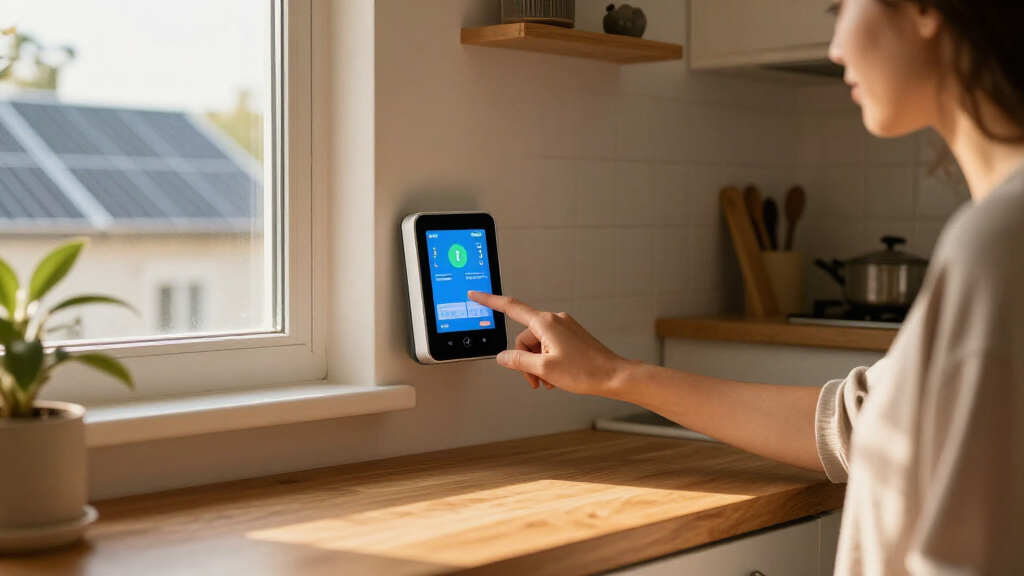
I ranked these monitors by how well their stated features support the decisions buyers usually want to make: finding high-use circuits, tracking consumption in real time, and choosing whether to add controls or smart-home automation. I gave weight to circuit coverage, the usefulness of included accessories, connectivity choices, solar-related functions, and how much flexibility a buyer gets without depending on a particular service. A broader sensor count or an open integration path can matter more than a long feature list if it better fits the home and the way its owner uses energy data.
The order reflects the balance of capability and fit, not a claim that every option is right for every panel. The Emporia bundle ranks first for its combination of circuit monitoring and smart plugs; Meross’s 18-circuit model follows for buyers who need wider circuit coverage and solar features. Refoss models rank well for local access and automation flexibility, while simpler or less fully specified options sit lower because the product details make it harder to judge their fit against feature-rich alternatives. Buyers should verify panel compatibility, sensor count, and installation requirements before choosing.
Factors to Consider When Choosing Best Home Energy Monitors
Choosing a monitor starts with the questions you want its data to answer. Use the factors below to match the system’s coverage and access model to your panel, household, and plans for automation.
Decide Whether You Need Whole-Home or Circuit-Level Data
Whole-home readings can show when total consumption rises, but they may not identify the appliance or circuit behind the change. Circuit-level sensors can help narrow the cause, especially when a home has distinct loads such as heating, cooling, or an electric vehicle charger. Before buying, count the circuits you actually want to track rather than assuming every panel position needs a sensor. A sensor limit can leave some loads grouped together or unmonitored, depending on the system. Also check how the product handles circuits that need special sensor placement or measurement. More channels add useful detail, but only when you have a plan to use that information.
Check Panel Fit and Installation Requirements First
A monitor can have the right features and still be a poor fit if its sensors or wiring do not suit your electrical panel. Confirm the panel layout, available physical space, circuit arrangement, and the monitor’s stated sensor compatibility before ordering. Product names that mention a particular sensor count do not, by themselves, confirm compatibility with every home. Many panel installations involve working near live electrical equipment, so do not treat app setup as a sign that installation is a casual DIY task. If the instructions or your comfort level raise concerns, ask a qualified electrician to assess the job. Resolving fit questions early can prevent buying a system that cannot monitor the circuits you care about.
Choose Cloud, Local, or Open Integration Deliberately
Cloud-connected apps can make setup and remote access straightforward, while local control can appeal to buyers who want fewer service dependencies. Open API or Home Assistant support matters most if you already maintain a smart-home setup and are prepared to configure integrations. A feature label alone does not tell you how much data remains available during an internet outage, so check the product’s documentation for offline behavior and data access. Also review whether the functions you want depend on an account, cloud connection, or app. Buyers who mainly want simple usage trends may not benefit from an advanced integration path. Those who build automations should confirm that the monitor exposes the measurements and controls their system needs.
Match the Monitor to Your Energy Goals
Different goals call for different readings. To find standby loads, you may want frequent consumption updates and a way to isolate individual circuits; to compare monthly use, historical summaries may matter more. Solar owners should check how the system identifies production, imports, exports, or surplus rather than assuming a general energy monitor covers each flow. Smart plugs can add control for selected plug-in devices, but they do not replace panel sensors for hardwired loads. Set a short list of questions before shopping, such as which circuit is driving evening peaks or whether solar power is being used at home. That list helps separate useful measurements from features that sound appealing but do not support your goal.
Compare Package Contents, Not Just Model Names
This roundup includes several listings built around the Emporia Vue 3 name, including versions with different sensor or accessory bundles. Similar naming can obscure meaningful differences in what arrives in the box, so check the exact number and type of sensors and whether smart plugs are included. Apply the same discipline to any claimed channel count: verify what can be monitored at once and whether additional sensors are supported. Accessories can change the system’s usefulness without changing its central monitor. A bundle may be a better fit for someone who wants device control, while a monitor-only kit may suit a buyer who already has compatible accessories. Compare the complete package and its stated compatibility before treating two listings as equivalent.
Pay More for Capability You Will Use
Additional sensors, solar detection, smart-home support, and local access can add value, but only when they solve a real problem in your home. A larger channel count is most useful when you have enough separate circuits to justify the extra detail. Open integrations make more sense for a buyer who will build automations than for someone who only wants a basic view of household consumption. Smart plugs are useful for controllable plug-in equipment, but they do not add control to every hardwired circuit. Before paying for added capability, decide which readings or actions you expect to use regularly. If you cannot name them, a simpler system may be easier to set up and maintain.
Frequently Asked Questions
Can a home energy monitor show which appliance is using the most electricity?
A circuit-level monitor can show consumption on the circuit where an appliance is connected, but that does not always identify a single appliance when several share a circuit. Dedicated smart plugs, like the ones included in the Emporia bundle, can add more direct tracking and control for compatible plug-in devices. Hardwired equipment generally requires circuit-level measurement or another compatible monitoring method. Before buying, map the appliances you want to identify to their circuits. If several important loads share one circuit, ask whether the monitor offers a way to separate them.
Do I need a monitor with 16 or 18 circuit sensors?
The right sensor count depends on how many circuits you want to view separately, not on a rule that more is always better. The 18-circuit Meross option offers two more monitored circuits than the 16-sensor kits, which may help in a panel with many priority loads. A smaller count can be enough if you mainly want to track a few high-consumption circuits alongside whole-home usage. Check whether the system can leave some circuits unmonitored, group them, or accept added sensors. Count your panel circuits and choose based on the loads you want to distinguish.
Will a home energy monitor work with solar panels?
Solar support differs by monitor, so do not assume that a system designed for household electricity use will report solar production or surplus in the way you want. The Meross 18-circuit listing specifically calls out solar surplus detection, making it a notable option for solar owners in this lineup. Before choosing any monitor, check whether it can distinguish generation from household consumption and whether it reports exports or only net usage. Your inverter and electrical setup can affect which measurements are possible. Confirm compatibility with your installation rather than relying on a general solar-related label.
Is local control worth choosing over a cloud-connected app?
Local control can appeal if you want fewer cloud dependencies or plan to connect readings to a home automation system. The Refoss options stand out here: one emphasizes local control, while another lists an open API, Home Assistant support, and no cloud requirement. A cloud app may be a simpler fit if remote access and a straightforward setup matter more than integration flexibility. Check what functions remain available without internet access, since local and cloud features can vary by product. Choose based on how you want to access data and whether you are willing to manage smart-home integrations.
Can I install a circuit-level energy monitor myself?
Installation usually involves opening the electrical panel and placing sensors around circuit conductors, so it carries risks beyond ordinary app setup. The exact work depends on the monitor and your panel, and not every panel is a straightforward fit. Read the manufacturer’s installation instructions before buying and check whether your panel layout matches the supported configuration. If you are not qualified or comfortable working around electrical equipment, have an electrician handle installation. A professional can also help confirm which circuits are worth monitoring and whether the sensors are placed correctly.
Conclusion
For most buyers who want both detailed monitoring and some device control, I recommend the Emporia Energy Monitor with 16 Sensors and 4 Smart Plugs as the best overall choice. The best value depends on the exact package and features you need; among the listed options, the standard Emporia Vue 3 or 16-sensor configuration makes the most sense when you want circuit data without paying for add-ons you will not use. For a best premium-style feature set, choose the Meross 18-circuit monitor if wider coverage and solar surplus detection match your home. Beginners who want a familiar route into circuit monitoring can start with an Emporia Vue 3 package, after confirming its included sensors and installation fit. For local control or Home Assistant, favor the relevant Refoss model; for broad, simpler power tracking, compare the two-CT WiFi monitor. Match the final choice to your panel, monitoring goals, and preferred way to access data.
Halloween Picks
halloween
As an affiliate, we earn on qualifying purchases.