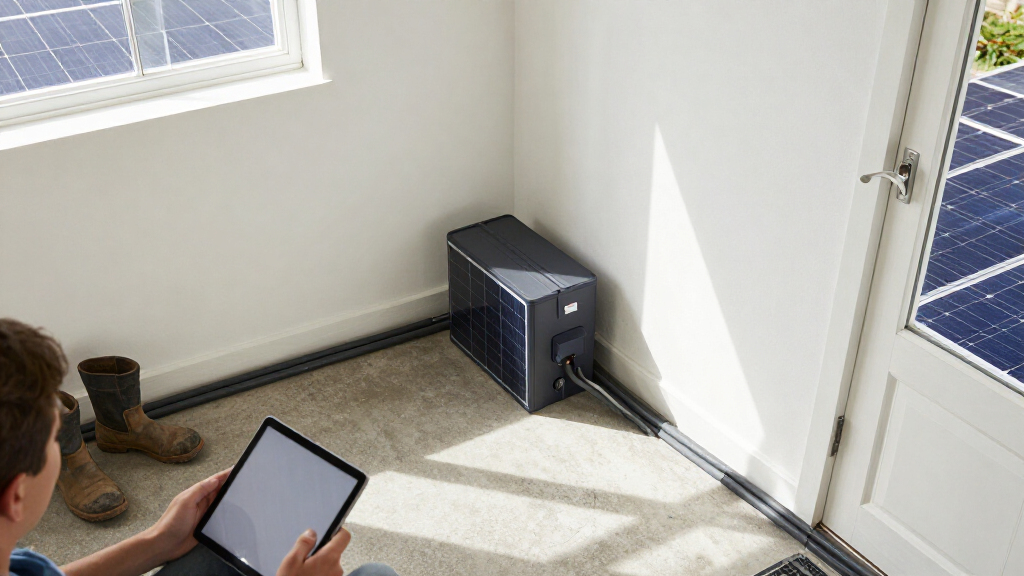
The best home solar battery overall in this roundup is the ECO-WORTHY 48V Home Backup Power System, pairing a 10.24kWh battery with a 10kW inverter for a more integrated backup setup. For larger storage needs, the Dawnice 21 kWh wall-mounted battery stands out for its high capacity, while the Jackery HomePower 3600 Plus is simpler for buyers who want a portable, panel-ready power station instead of a rack-mounted system. The main tradeoffs are usable capacity, inverter compatibility, installation complexity, and portability; a large battery is not automatically a good fit if it cannot work with your solar equipment or household loads. This lineup also ranges from compact 12V batteries to multi-unit 48V systems, so the right choice depends on what you need to power and for how long. Read on for the full comparison and guidance on matching a battery to your home.

Get backup power and energy gear delivered free with Prime
- Fast, free delivery on millions of items
- Prime Video, Amazon Music and more included
- Member-only deals all year
Key Takeaways
The ECO-WORTHY 48V backup system leads as the most integrated home-oriented option here, with battery storage and a 10kW inverter in one system rather than a battery alone.
Capacity varies widely: the 12V ECO-WORTHY 314Ah battery suits smaller setups, while the Dawnice 21 kWh unit and multi-battery ECO-WORTHY systems target longer backup needs and larger loads.
Voltage and system design matter as much as capacity. A 12V battery, a 48V rack battery, and a portable power station are not interchangeable without compatible equipment.
Jackery’s portable stations trade expansion flexibility for easier setup, making them a different kind of choice from the fixed, high-capacity rack and wall-mounted batteries.
AGM remains a distinct alternative: the Renogy 12V 200Ah battery may suit a compatible lead-acid system, but buyers comparing it with LiFePO4 options should weigh chemistry and usable storage, not just stated amp-hours.


| home solar batterie | Warranty | Weight | Capacity | Chemistry |
|---|---|---|---|---|
| ECO-WORTHY Cubix100 48V 600Ah | 10 years | 636 lb | — | LiFePO4 |
| ECO-WORTHY 12V 314Ah LiFePO4 B | 3 years | 60.4 lb | 314Ah | LiFePO4 |
| ECO-WORTHY 48V Home Backup Pow | — | 265.5 lb | — | LiFePO4 |
| AOUSK 48V 314Ah LiFePO4 Lithiu | 5 years | — | 314Ah | LiFePO4 |
| POERUNI 3-Pack 51.2V 100Ah LiF | 2 years | 24 lb per battery | 100Ah per battery | LiFePO4 |
| Jackery HomePower 3600 Plus Po | 5 years | 77.2 pounds | — | — |
| ECO-WORTHY Powermega 48V 314Ah | 10 years | — | 314Ah | LiFePO4 |
| Jackery Solar Generator 1000 v | 5 years | 23.8 pounds | 1,070Wh | — |
| Renogy 12V 200Ah Deep Cycle AG | 2-year prorated material and workmanship warranty | 127.9 pounds | 200Ah at C20 | — |
| VATRER POWER 51.2V 100Ah LiFeP | 5 years | — | 100Ah per battery | — |
| ECO-WORTHY Cubix100 48V 600Ah | — | — | — | — |
| Dawnice 21 kWh LiFePO4 Solar B | — | — | — | — |
More Details on Our Top Picks
ECO-WORTHY Cubix100 48V 600Ah LiFePO4 Battery System with RACK6 V3 Cabinet
The Cubix100 is the strongest fit here for a household planning substantial, rack-mounted storage: its 30.72kWh capacity comes as six 100Ah batteries in a cabinet, rather than requiring buyers to assemble a large bank from individual units. CAN/RS485 plus Bluetooth and Wi-Fi support monitoring and inverter communication, while expansion to 32 parallel units leaves room to grow. Compared with the ECO-WORTHY 10.24kWh backup kit, this system offers three times the stated battery capacity, but it does not include the kit’s 10kW inverter. That makes inverter compatibility and system design the buyer’s responsibility. The 636-pound system weight also calls for careful planning around delivery, placement, and installation; this is a fixed home-storage setup, not a battery to move around casually.
Pros:- Six 100Ah batteries and a RACK6 V3 cabinet are included as one system.
- 30.72kWh stated energy capacity suits substantial household storage needs.
- Bluetooth, Wi-Fi, CAN, and RS485 provide several monitoring and communication options.
- Supports parallel expansion up to 32 units.
Cons:- At 636 lb, delivery, positioning, and installation need significant planning.
- A compatible inverter is needed for an integrated system.
- The rack configuration is less suitable for buyers who need portable or space-flexible backup.
Best for: Homeowners designing a high-capacity, rack-based solar storage system with a compatible inverter and space for a heavy cabinet.
Not ideal for: Buyers seeking a ready-to-connect battery-and-inverter kit, portable backup, or a system that can be installed without planning for its 636-pound weight.
- Chemistry:LiFePO4
- System voltage:51.2V DC
- Total capacity:600Ah
- Energy capacity:30.72kWh
- Configuration:Six 100Ah batteries with RACK6 V3 cabinet
- Maximum parallel units:32
- Communications:CAN, RS485, Bluetooth, and Wi-Fi
- Weight:636 lb
- Warranty:10 years
Our verdict“Choose the Cubix100 if you need a large, expandable rack battery bank and already have a plan for the inverter and installation.”
ECO-WORTHY 12V 314Ah LiFePO4 Battery with Bluetooth Monitoring and Low-Temperature Protection
This 12.8V battery serves a different job from the larger 48V systems in this roundup: it offers a 12V platform with 4,019.2Wh of stored energy, making it a practical building block for compatible RV, solar, or backup setups. Bluetooth monitoring, status LEDs, and a fault buzzer make battery condition easier to check, while the low-temperature charging cutoff stops charging below -7°C. That protection matters for batteries used in chilly spaces, though it does not make the unit a substitute for a properly designed cold-weather installation. Compared with the ECO-WORTHY 48V 10.24kWh kit, this battery is far less of a complete home-backup solution: it has no included inverter and stores less energy. Its 60.4-pound weight and three-year warranty are also worth weighing before choosing it for a permanent household bank.
Pros:- 12.8V, 314Ah capacity stores 4,019.2Wh.
- Bluetooth monitoring, status LEDs, and a fault buzzer help track battery condition.
- Charging cutoff below -7°C helps protect the battery in cold conditions.
- Supports expansion configurations up to a stated 32.15kWh.
Cons:- The 12V format is not a direct replacement for the roundup’s 48V home-storage systems.
- At 60.4 lb, moving it into position may take effort.
- Three-year warranty is shorter than the 10-year coverage stated for the Cubix100.
Best for: RV owners and solar DIYers who need a monitored 12V LiFePO4 battery with low-temperature charging protection and compatible expansion plans.
Not ideal for: Homeowners seeking a complete 48V backup system, included inverter, or a long warranty for a permanently installed household battery bank.
- Chemistry:LiFePO4
- Voltage:12.8V
- Capacity:314Ah
- Energy:4,019.2Wh
- BMS:200A
- Low-temperature charging cutoff:-7°C (19.4°F)
- Weight:60.4 lb
- Maximum expanded capacity:32.15kWh
- Warranty:3 years
Our verdict“Pick this ECO-WORTHY battery for a monitored, expandable 12V setup, not as a standalone whole-home backup system.”
ECO-WORTHY 48V Home Backup Power System, 10.24kWh Battery, 10kW Inverter
Unlike the Cubix100, which supplies a large battery bank but requires a compatible inverter, this ECO-WORTHY kit pairs 10.24kWh of LiFePO4 storage with a 10,000W pure sine wave inverter. That bundled approach gives buyers a clearer starting point for backup design, and 120V or 240V split-phase output can serve a wider range of household circuits than a battery-only unit. Two independent MPPT controllers and app-based battery monitoring add useful system-level flexibility. The tradeoff is capacity: the Cubix100 lists 30.72kWh, so this kit is better suited to a defined backup load than a large reserve. At 265.5 lb, it is still a substantial installation, and the components ship separately. Buyers should also confirm that the kit’s inverter and battery setup match their planned loads and installation.
Pros:- Includes two 51.2V 100Ah batteries and a 10,000W inverter.
- Supports 120V and 240V split-phase output.
- Two independent MPPT controllers support solar input management.
- Expandable with up to six parallel inverters and 32 batteries.
Cons:- 10.24kWh capacity is substantially below the Cubix100’s stated 30.72kWh.
- The 265.5-pound kit requires a planned installation location.
- Components ship separately, complicating delivery coordination.
Best for: Homeowners who want a bundled 48V battery-and-inverter starting point for 120V or 240V backup and value a high inverter output.
Not ideal for: Buyers who need the roundup’s largest battery reserve, a lightweight portable system, or a single-package delivery.
- Chemistry:LiFePO4
- Battery capacity:10,240Wh total
- Battery configuration:Two 51.2V 100Ah batteries
- Inverter output:10,000W
- Peak power:20,000W
- Output:120V or 240V split-phase; 120V single-phase
- MPPT controllers:Two independent
- Maximum parallel inverters:6
- Weight:265.5 lb
Our verdict“Choose this kit if you want battery storage and a high-output inverter together, and its 10.24kWh capacity matches your backup plan.”
AOUSK 48V 314Ah LiFePO4 Lithium Battery, 16.07 kWh
The AOUSK offers a useful middle ground between the ECO-WORTHY 10.24kWh kit and the 30.72kWh Cubix100: one battery provides 16.07kWh at 51.2V, with support for up to 15 units in parallel. Its display, app, RS232, RS485, and CAN options give buyers several ways to check status or connect with compatible equipment. A 200A BMS, six-layer protection, and dual breakers add protection features, while built-in wheels and handles can help with positioning. Those conveniences do not make it light: at 291 pounds, installation still calls for planning and suitable access. Unlike the ECO-WORTHY kit, this is a battery rather than a battery-and-inverter package, so compatibility depends on the inverter chosen. The five-year warranty also falls short of the Cubix100’s stated 10 years.
Pros:- 16.07kWh capacity offers more storage in one unit than the ECO-WORTHY 10.24kWh kit’s battery bank.
- Monitoring and communication options include display, app, RS232, RS485, and CAN.
- 200A BMS, six-layer protection, and dual breakers are included.
- Handles and wheels aid positioning, and up to 15 units can be paralleled.
Cons:- At 291 lb, it remains difficult to move and install despite the wheels and handles.
- A compatible inverter is not included, and communication depends on the selected system.
- Five-year warranty is shorter than the Cubix100’s stated 10 years.
Best for: Solar-system owners who want a single 48V battery with multiple monitoring interfaces and the option to expand a compatible bank.
Not ideal for: Buyers who need a complete inverter kit, a lightweight battery, or a system with guaranteed compatibility across any inverter brand.
- Model:51.2V314Ah A
- Chemistry:LiFePO4
- Voltage:51.2V
- Capacity:314Ah
- Energy storage:16.07kWh
- BMS current:200A
- Cycle life:Up to 6,000 cycles at 80% state of health
- Parallel units:Up to 15
- Warranty:5 years
Our verdict“Choose the AOUSK if you want a feature-rich, expandable 48V battery and can confirm inverter compatibility before installation.”
POERUNI 3-Pack 51.2V 100Ah LiFePO4 Battery (5120Wh) with Built-in BMS
The POERUNI pack takes a modular route: three 51.2V 100Ah batteries are listed with 5,120Wh total energy, and each weighs 24 pounds. That lighter-per-unit format can make placement easier than moving the 291-pound AOUSK battery or the 636-pound Cubix100 cabinet, especially where access is tight. Built-in BMS protection and a maintenance-free LiFePO4 design suit buyers who prefer separate battery modules over one large cabinet. The product description claims more than 15,000 cycles, but the two-year warranty is notably shorter than the 10 years stated for the Cubix100. Its listed total capacity is also lower than several other options here, including the ECO-WORTHY 10.24kWh kit. Check system compatibility and mounting orientation before buying; this pack cannot be installed upside down.
Pros:- Three 51.2V 100Ah batteries are supplied as a pack.
- At 24 lb per battery, individual units are easier to position than the AOUSK or Cubix100.
- Built-in BMS protection and maintenance-free LiFePO4 construction.
- Product description states more than 15,000 cycles.
Cons:- Listed total energy of 5,120Wh is below the ECO-WORTHY 10.24kWh kit and AOUSK 16.07kWh battery.
- Two-year warranty is shorter than the other large 48V options in this batch.
- Cannot be mounted in an inverted position.
Best for: DIY solar owners who value lighter individual battery modules and want to position a three-battery pack in a space where a large cabinet is impractical.
Not ideal for: Households seeking high total storage in a single purchase, long stated warranty coverage, or installation that requires inverted mounting.
- Chemistry:LiFePO4
- Voltage:51.2V
- Capacity:100Ah per battery
- Total energy:5,120Wh
- Quantity:3-pack
- Cycle life:15,000+ cycles
- Weight:24 lb per battery
- Operating temperature:-20°C to 60°C
- Warranty:2 years
Our verdict“Pick the POERUNI pack if lighter individual modules matter more than high total storage or a longer warranty.”
Jackery HomePower 3600 Plus Portable Power Station with 2 × 200W Solar Panels
The Jackery HomePower 3600 Plus is the most mobile high-output option in this group: its 3,584Wh capacity and 3,600W output can run more substantial loads than the smaller Jackery Solar Generator 1000 v2. Expansion and parallel operation add a path to more storage and 240V output, making it a flexible backup choice rather than a fixed battery installation. The included pair of 200W panels gives buyers a solar starting point, while AC, generator, and hybrid charging provide alternatives when sunlight is limited. That flexibility comes with a portability tradeoff: at 77.2 pounds, wheels and a telescopic handle help with rolling, but not lifting. I’d choose it for households wanting portable backup; buyers seeking a permanent, high-capacity system should compare it with the ECO-WORTHY Powermega 48V 314Ah 2-pack.
Pros:- 3,600W output and 3,584Wh capacity suit heavier backup loads than the Jackery Solar Generator 1000 v2.
- Can expand and operate in parallel for higher capacity and 240V output.
- Supports solar, AC, gas-generator, and hybrid charging.
- Wheels and a telescopic handle make moving it across level ground easier.
Cons:- At 77.2 pounds, it remains difficult to lift despite its wheels.
- A portable station is less suited to a permanent home battery installation than the ECO-WORTHY Powermega system.
- The solar panels may arrive separately from the power station.
Best for: Households that want a wheeled, relocatable backup station with enough output for larger appliances and included solar panels.
Not ideal for: Buyers planning a fixed whole-home battery installation or anyone who needs to carry the unit up stairs regularly.
- Battery capacity:3,584Wh
- AC output:3,600W
- Parallel output:7,200W
- Battery chemistry:LFP
- Expandable capacity:Up to 21kWh per unit or 43kWh with multiple units
- Charging options:Hybrid AC+DC, AC, solar, and gas generator
- Weight:77.2 pounds
- Warranty:5 years
Our verdict“Choose the HomePower 3600 Plus if you want substantial backup power that can move around the property, not a permanently installed battery.”
ECO-WORTHY Powermega 48V 314Ah LiFePO4 Battery, 2-Pack
For a substantial fixed battery bank, the ECO-WORTHY Powermega 2-pack offers far more storage than portable picks such as the Jackery HomePower 3600 Plus. The two batteries provide 16.07kWh each, and the system can expand to as many as 15 units, giving off-grid owners room to scale. Its UL 1973 certification, aerosol fire suppression, and 200A active-balancing BMS are relevant safeguards for a large installation; a touchscreen and wireless monitoring also make system status easier to check. This is not the convenient, self-contained route the Jackery provides: it is a heavy, pallet-delivered battery system that needs compatible equipment and a suitable installation space. I’d rank it for buyers prioritizing capacity and system growth, while the smaller VATRER POWER 2-pack makes more sense for a less demanding storage target.
Pros:- Two 16.07kWh batteries provide substantial storage for off-grid backup.
- UL 1973 certification, aerosol fire suppression, and active cell balancing add system safeguards.
- Wi-Fi, Bluetooth, and a 7-inch touchscreen provide several monitoring options.
- Supports expansion up to 15 units, with a stated maximum of 241kWh.
Cons:- Large, heavy units require appropriate installation space and handling.
- Pallet-truck delivery can be difficult for residential addresses without suitable access.
- Unlike the Jackery HomePower 3600 Plus, this is a battery system rather than a portable, self-contained power station.
Best for: Off-grid homeowners or cabin owners building a large 48V storage bank with room to expand and the ability to handle pallet delivery.
Not ideal for: Apartment dwellers, buyers seeking a plug-and-play portable station, or anyone whose delivery location cannot accommodate a truck and pallet.
- Configuration:2-pack
- Nominal voltage:48V (51.2V)
- Capacity:314Ah
- Energy capacity:16.07kWh per battery
- Chemistry:LiFePO4
- BMS:200A with active cell balancing
- Certification:UL 1973
- Parallel expansion:Up to 15 units; up to 241kWh
- Warranty:10 years
Our verdict“Pick the Powermega 2-pack for a scalable, high-capacity off-grid battery bank if you can support its delivery and installation needs.”
Jackery Solar Generator 1000 v2 with 200W Solar Panel
The Jackery Solar Generator 1000 v2 is the compact choice for buyers who need modest backup or portable power, not a large stationary home battery. Its 1,070Wh capacity and 1,500W AC output can support selected appliances, while the 200W solar panel offers a way to recharge away from the grid. At 23.8 pounds, it is much easier to move than the HomePower 3600 Plus, but that convenience comes with markedly less stored energy and output. Fast AC charging can shorten preparation time, though the one-hour emergency mode must be activated through the app. I’d favor it for a fridge, devices, or short outages; for longer household backup, the HomePower 3600 Plus or ECO-WORTHY Powermega provides a more substantial reserve.
Pros:- At 23.8 pounds, it is easier to carry and store than the HomePower 3600 Plus.
- 1,500W AC output and 3,000W surge support a range of smaller appliances.
- Includes a 200W solar panel and offers multiple charging methods.
- Two USB-C ports and three AC outlets support several devices at once.
Cons:- Its 1,070Wh capacity is limited for extended household outages.
- One-hour emergency charging requires manual activation through the app.
- Solar panel and power station may ship separately.
Best for: Campers, road-trippers, and households wanting a compact station for device charging and limited appliance backup during short outages.
Not ideal for: Homeowners who need extended backup for multiple large appliances or a scalable, permanent battery bank.
- Capacity:1,070Wh
- AC output:1,500W (3,000W surge)
- Battery type:LiFePO4 (LFP)
- Weight:23.8 pounds
- Solar panel:200W
- Charging time:1 hour in Emergency Mode; 1.7 hours in Standard Mode; 3 hours via alternator
- Ports:2 USB-C, 1 USB-A, 1 DC car port, and 3 AC outlets
- Warranty:5 years
Our verdict“Choose this Jackery for portable, short-duration backup and skip it if your priority is running a home through a prolonged outage.”
Renogy 12V 200Ah Deep Cycle AGM Lead-Acid Battery
The Renogy 12V 200Ah AGM battery is a straightforward fit for an existing 12V solar, RV, or marine system, but it is a different kind of home-storage option from the LiFePO4 batteries elsewhere in this roundup. Its maintenance-free, valve-regulated design avoids routine fluid maintenance, and the stated low self-discharge rate can suit systems that sit unused between trips. The tradeoff is weight: at 127.9 pounds, it is heavier than the Jackery HomePower 3600 Plus and lacks a portable station’s integrated outlets and charging controls. Its 12V format also makes it less natural for buyers assembling a large 48V home bank, such as the ECO-WORTHY Powermega setup. I’d consider it when compatibility with an existing 12V system matters more than portability or a modern lithium configuration.
Pros:- 12V, 200Ah format suits compatible solar, RV, marine, and cabin systems.
- Maintenance-free AGM construction helps avoid routine fluid maintenance.
- Reported self-discharge is below 3% per month at 77°F.
- Designed for operation in low temperatures.
Cons:- At 127.9 pounds, it is difficult to move and install.
- The 12V format is a less direct fit for the 48V systems used by the ECO-WORTHY Powermega.
- The two-year prorated warranty is shorter than the warranties listed for the LiFePO4 options in this batch.
Best for: RV, marine, cabin, and small off-grid system owners who already use compatible 12V lead-acid equipment.
Not ideal for: Buyers building a large 48V home battery bank or anyone who needs a lightweight battery that is easy to reposition.
- Battery type:Lead-acid, AGM
- Voltage:12V
- Capacity:200Ah at C20
- Maximum discharge current:2000A
- Self-discharge rate:Below 3% per month at 77°F (25°C)
- Dimensions:20.5 × 9.4 × 8.8 inches
- Weight:127.9 pounds
- Warranty:2-year prorated material and workmanship warranty
Our verdict“Choose the Renogy when you need a compatible 12V AGM battery for an existing setup, not when building a new large home-storage system.”
VATRER POWER 51.2V 100Ah LiFePO4 Battery, 2-Pack, with 100A BMS
The VATRER POWER 2-pack sits between portable stations and the much larger ECO-WORTHY Powermega bank: each battery provides 5.12kWh, making the pair a moderate-capacity choice for compatible 48V solar and off-grid systems. A built-in display and mobile app give owners a direct way to check battery status, while the 100A BMS includes several protection functions and a low-temperature cutoff. That cutoff helps prevent charging in cold conditions, but it also means the installation needs a suitable environment or heating plan if winter temperatures fall below its operating threshold. Buyers should also confirm compatibility before purchase because the product information refers to both 48V and 51.2V. Compared with the Renogy 12V AGM battery, this is a higher-voltage lithium option with more monitoring, but it is not a portable all-in-one power station like either Jackery.
Pros:- Two batteries provide 5.12kWh of usable energy per battery.
- Touch display and mobile app offer convenient status monitoring.
- 100A BMS includes overcharge, over-discharge, over-current, short-circuit, and temperature protections.
- Dual positive and negative terminals can help with current distribution.
Cons:- Low-temperature cutoff prevents charging in cold conditions.
- Product information refers to both 48V and 51.2V, so buyers should verify system compatibility.
- Unlike the Jackery Solar Generator 1000 v2, it is a battery component rather than a self-contained power station.
Best for: Solar and off-grid owners seeking a two-battery, higher-voltage LiFePO4 bank with built-in status monitoring.
Not ideal for: Buyers needing a plug-and-play power station, a 12V replacement, or a battery installation exposed to cold charging conditions without a temperature plan.
- Pack size:2 batteries
- Voltage:51.2V
- Capacity:100Ah per battery
- Usable energy:5.12kWh per battery
- Battery chemistry:LiFePO4
- BMS:Built-in 100A
- Cycle life:Manufacturer-stated 5,000+ cycles
- Monitoring:Touch display and mobile app
- Warranty:5 years
Our verdict“Pick the VATRER POWER pair for monitored LiFePO4 storage in a compatible solar system, provided its voltage and cold-weather limits suit your installation.”
ECO-WORTHY Cubix100 48V 600Ah LiFePO4 Server Rack Battery System, 6-Pack
With 30.72 kWh across six batteries, this system suits homes that need substantial stored energy for extended backup or off-grid operation. Its 51.2V LiFePO4 batteries support CAN and RS485 for system integration, plus Bluetooth and WiFi monitoring for checking battery status. Compared with the ECO-WORTHY Cubix100 system bundled with a RACK6 V3 cabinet, this package leaves the rack to the buyer, which can suit an existing rack setup but adds a separate equipment decision. Expansion to as many as 32 units gives larger installations room to grow, though that scale may exceed what a typical backup setup needs. Installation accessories and a 10-year limited warranty add practical support; the tradeoffs are the missing rack and the possibility that the six batteries arrive separately.
Pros:- 30.72 kWh total energy capacity for extended backup or off-grid use
- CAN, RS485, Bluetooth, and WiFi communication options
- Expandable by paralleling up to 32 units
- Installation accessories and a 10-year limited warranty are included
Cons:- Server rack is not included, unlike the Cubix100 package with a RACK6 V3 cabinet
- Six batteries may arrive in separate packages at different times
- The large system may be excessive for households with limited backup requirements
Best for: Off-grid homeowners or households planning substantial backup storage who already have a compatible server rack or can source one separately.
Not ideal for: Buyers seeking a ready-to-house battery package, a compact installation, or storage for modest backup needs; the rack is not included and this six-battery system may be more capacity than they need.
- Battery chemistry:LiFePO4
- System voltage:51.2V (48V nominal)
- Total capacity:600Ah
- Energy capacity:30.72 kWh
- Battery count:6
- Communication:CAN, RS485, Bluetooth, and WiFi
- Maximum expansion:Up to 32 units; up to 163.8 kWh
- Certifications:UL9540, UL1973, CEC listed
- Rack and warranty:Rack not included; 10-year limited warranty
Our verdict“Choose this six-battery system for large-scale backup or off-grid storage if you can provide a rack and have a use for its substantial capacity.”
Dawnice 21 kWh LiFePO4 Solar Battery, 51.2V 410Ah, Wall-Mounted
The Dawnice offers 21 kWh of stated storage in a wall-mounted format, a middle ground between smaller battery packs and the 30.72 kWh ECO-WORTHY Cubix100 six-pack. Its 200A BMS and stated maximum output of 21 kW are aimed at systems that need substantial discharge capability, while Bluetooth monitoring gives owners a way to check battery status. The advertised 6,000-plus cycle life and 10-year limited warranty may appeal to buyers planning long-term solar storage, but the listing gives conflicting capacity and voltage figures, so I would verify the exact configuration with the seller before designing a system around it. An inverter is required, and the listed standard charge-discharge current is 100A, so buyers should confirm compatibility and operating limits rather than relying only on the maximum output claim.
Pros:- 21 kWh stated capacity in a wall-mounted design
- 200A BMS with protections against overcharge, over-discharge, overcurrent, overheating, and short circuits
- Bluetooth monitoring for system checks
- Manufacturer claims 6,000-plus cycles and a 10-year limited warranty
Cons:- A compatible inverter is required and is not included
- Capacity and voltage figures differ between listing sections
- The listed standard charge-discharge current is 100A, below the stated 200A maximum discharge current
Best for: Homeowners with a compatible inverter who want a wall-mounted battery with substantial stated capacity and Bluetooth monitoring.
Not ideal for: Buyers who need an inverter included, require unambiguous capacity and voltage specifications, or want a rack-based system that can be expanded as a multi-battery bank.
- Battery chemistry:LiFePO4
- Listed voltage:51.2V (48V also listed)
- Listed capacity:21 kWh; listing also states 410Ah
- Standard charge-discharge current:100A
- Maximum discharge current:200A
- Maximum output power:21 kW
- Battery management system:200A BMS
- Monitoring and installation:Bluetooth; wall-mounted
- Cycle life, warranty, and inverter:6,000+ cycles claimed; 10-year limited warranty; inverter required
Our verdict“Consider the Dawnice if you want a wall-mounted 21 kWh-class battery and can confirm its specifications and inverter compatibility before purchase.”
How We Picked
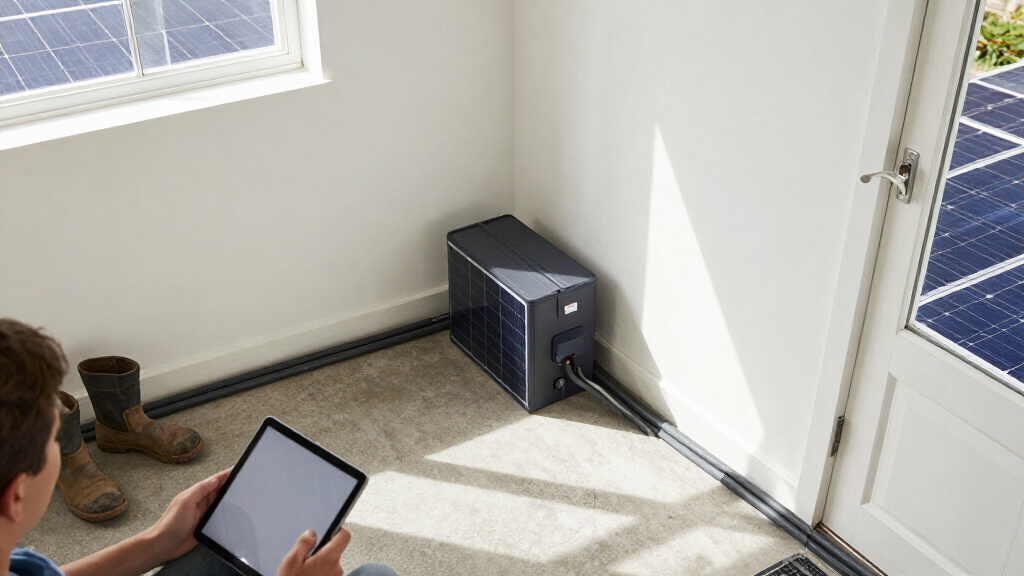
I ranked these products by how well their stated format and features suit real home solar storage or backup needs. I looked at capacity, system voltage, included components, battery chemistry, monitoring and protection features, and installation style. I also separated whole-system packages and portable power stations from standalone batteries: they solve different problems, so comparing them as if they were equivalent would obscure the choice.
The ranking favors options with a clearer path to practical home use, especially systems that pair substantial storage with an inverter or offer a defined modular setup. Products with high stated capacity rank well for buyers with longer backup goals, but capacity alone does not settle the order: compatibility, setup demands, and intended scale also matter. A smaller battery or portable unit can be the better pick for a focused use case, while a battery-only product may require additional equipment and qualified installation before it can serve as home backup.
Factors to Consider When Choosing Best Home Solar Batteries
Choosing a home solar battery starts with your loads and existing equipment, not the largest capacity figure on a product page. I would work through these factors before deciding whether a compact battery, modular rack system, or portable power station fits your setup.
1. Size Storage Around the Loads You Want to Keep Running
List the circuits or appliances you want powered during an outage, then estimate their energy use over the period you want to cover. A refrigerator, lights, and internet equipment create a different storage requirement from electric heating, cooking, or vehicle charging. Do not treat a battery’s nominal kilowatt-hours as a guarantee of delivered energy; inverter losses, reserve settings, and operating conditions affect what reaches your loads. Also separate peak power from stored energy: a battery may hold enough energy for hours but still be unable to start or run a high-demand appliance. If you are unsure, plan around a smaller set of priority circuits rather than buying capacity based on your entire household’s daily consumption.
2. Confirm Voltage, Inverter, and Solar-Charging Compatibility
Battery voltage must match the design of the inverter or charge controller, and the equipment must support the battery’s chemistry and charging settings. A 12V battery is not a drop-in substitute for a 48V rack battery, even if their advertised capacities look comparable. Check the manufacturer’s compatibility information for communications protocols, charging limits, and any required accessories before ordering. With a battery-only product, account for the inverter, disconnects, wiring, and other balance-of-system equipment that may not be included. A bundled system can reduce guesswork, but it still needs to suit your panels, service panel, and intended backup circuits.
3. Choose a Form Factor That Matches Your Installation
Rack batteries are designed around a fixed installation and can support larger modular systems, but they need suitable space, wiring, and often professional configuration. Wall-mounted units can save floor space, though wall strength, access, clearances, and service requirements still matter. Portable power stations avoid some permanent-installation work and can be useful for temporary backup or flexible use, but their output and expansion options may differ from a fixed home battery. Check where the unit will live, how it will be connected, and whether it can be serviced without moving other equipment. A lower-complexity format is not automatically the better home backup choice if it cannot support the circuits you need.
4. Compare Battery Chemistry and Protection Features
LiFePO4 and AGM batteries have different charging needs, maintenance expectations, and system behavior, so compare them as complete operating choices rather than by amp-hours alone. Many LiFePO4 models include a battery management system to protect against conditions such as overcurrent or temperature extremes; check which protections are specified and whether low-temperature charging is addressed. Bluetooth monitoring can make status checks easier, but it does not replace an appropriate inverter, safe wiring, or a clear fault-response plan. AGM may fit an existing lead-acid setup, while a chemistry change can call for adjustments to charging equipment. If you are replacing an older battery bank, verify the manufacturer’s charging guidance before connecting a new chemistry.
5. Decide Whether You Need a Single Unit or a Modular Bank
One large battery can simplify the physical layout, while multiple smaller batteries may let you add capacity in stages or distribute the system differently. Those benefits depend on the manufacturer’s rules for parallel connections, matched units, cabling, and BMS communication. Never assume that batteries with the same nominal voltage can be combined safely just because their connectors fit. Ask how the system behaves if one unit reports a fault and whether capacity can be expanded later with the same model. A modular design can be useful for a growing solar installation, but it may add wiring and configuration work that a single-unit buyer would rather avoid.
6. Plan for Installation, Service, and Backup Operation
Before purchase, check whether the battery is intended for indoor or outdoor placement, what environmental limits apply, and what service access it needs. Home backup may require an electrician, a transfer switch or equivalent equipment, and changes to the household panel; a portable station is not automatically wired into home circuits. Ask about warranty terms, local service availability, firmware or monitoring requirements, and the process for handling a fault. A battery that stores plenty of energy is less useful if its installation is incompatible with local electrical rules or difficult to maintain. Get an installer’s review when the system will connect to household wiring or a grid-interactive inverter.
Frequently Asked Questions
Can I connect any of these batteries to my existing solar inverter?
No. Compatibility depends on voltage, battery chemistry, charging limits, BMS communication, and the inverter’s supported battery list. Start with the inverter model and check its manufacturer documentation against the exact battery model, not just the battery brand. Some products in this roundup are complete power stations, while others are standalone batteries that need compatible external equipment. If the inverter maker does not confirm support, ask a qualified installer before connecting the battery.
Should I buy one large battery or several smaller batteries?
One large unit can simplify placement and reduce the number of connections, while several smaller batteries may offer a modular path to capacity growth. The right choice depends on whether the exact model supports parallel operation and how its BMS manages a multi-unit bank. Multiple units also mean more wiring, configuration, and potential points to troubleshoot. Compare the manufacturer’s expansion instructions and your installer’s plan before choosing based on capacity alone.
Will a home solar battery keep my whole house running during an outage?
Not by itself in every setup. Whole-home backup depends on battery output, inverter capacity, the loads running at once, wiring, and whether the system is configured to isolate the home safely from the grid. Large loads such as electric heating or cooking can exceed a system’s output even when substantial energy remains in the battery. Many households get a more practical result by backing up selected circuits. Have an installer calculate both the starting power and ongoing energy needs of the appliances you want to use.
Is a portable power station a substitute for a fixed home battery?
It can cover some backup needs, but it serves a different role from a fixed battery bank. Portable stations can be easier to move and may pair with portable panels, while fixed systems are designed for integration with home solar and household circuits. Check output, expansion options, transfer arrangements, and how the unit can be recharged during an extended outage. If you want automatic backup for hardwired circuits, confirm that the specific station supports a safe, compatible installation rather than assuming portability provides that feature.
What should I check before replacing an AGM battery with LiFePO4?
Check whether your inverter or charger supports the LiFePO4 charging profile and whether its voltage settings can be adjusted to the battery maker’s specifications. Review the new battery’s BMS limits, temperature protections, and guidance for series or parallel connections. Amp-hour figures are not directly comparable across chemistries as a measure of usable energy, so compare the operating limits and system design as well. You may need to change charging equipment or settings, and an installer can confirm whether existing wiring and protection devices remain suitable.
Conclusion
For a broad home-backup starting point, I recommend the ECO-WORTHY 48V Home Backup Power System as the best overall pick because it combines a 10.24kWh battery with a 10kW inverter. The best value in this lineup depends on your existing equipment and required capacity; buyers wanting a modular 48V bank can compare the POERUNI 3-pack with the VATRER POWER 2-pack, while checking compatibility and expansion rules first. For a best premium, high-capacity option, the Dawnice 21 kWh wall-mounted battery suits buyers planning for substantial storage and a compatible fixed installation. Beginners who want a more self-contained, portable setup should look at the Jackery HomePower 3600 Plus, while the Jackery Solar Generator 1000 v2 is better suited to smaller, focused loads. For specific needs, choose the ECO-WORTHY 12V 314Ah battery for a compact 12V system or the Renogy AGM battery when maintaining a compatible lead-acid setup matters more than moving to LiFePO4. I would make the final choice only after confirming the battery’s voltage, inverter pairing, installation requirements, and the actual loads you expect it to support.