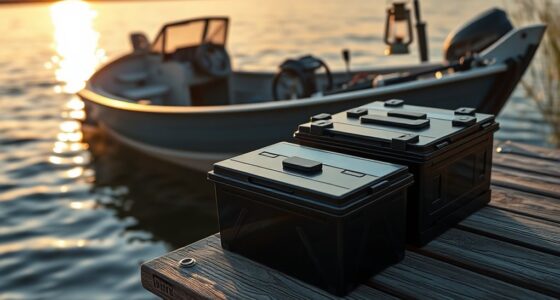
A solar panel kit for fishing can keep a boat battery topped up, recharge essential gear, or supply more power for longer trips. My best overall pick is the ECO-WORTHY 200W kit for its useful balance of capacity and a 30A controller; the Renogy 200W kit stands out as a higher-spec alternative, while the SOLPERK 20W kit suits compact maintenance needs. The main tradeoff is between portable, low-output kits for battery upkeep and larger systems that take more space but can support greater loads. Mounting style, battery compatibility, and shade on the water also affect what a panel can deliver. Read on for the full breakdown and guidance on matching a kit to your fishing setup.

Get backup power and energy gear delivered free with Prime
- Fast, free delivery on millions of items
- Prime Video, Amazon Music and more included
- Member-only deals all year
Key Takeaways
The 200W ECO-WORTHY kit leads the roundup for buyers who want a higher-output system with a 30A controller, while the Renogy 200W kit is the stronger premium alternative.
The 20W and 25W kits are better viewed as battery maintainers than as power sources for running multiple fishing electronics.
The 220W ZOUPW kit offers the highest listed panel capacity here, but its two-panel setup calls for more mounting area than compact options.
Flexible construction gives the XINPUGUANG kit a distinct fit for curved surfaces, though installation and heat management differ from rigid-panel setups.
A kit that includes a lithium battery changes the buying equation: the 100W system may simplify a starter setup, but buyers should check storage capacity and controller compatibility before choosing it.


| solar panel kit for fishing | Maximum power | Output voltage | Dimensions | Weight |
|---|---|---|---|---|
| ECO-WORTHY 200W 12V/24V Solar | 200 watts | — | 35.2 x 23.1 x 1.3 inches | 31.6 pounds |
| ZOUPW 220-Watt Solar Panel Kit | — | 18.14 V | 38.2 x 22.7 x 1.2 inches | 26.9 pounds |
| 12V Solar Battery Charger Main | 20 watts | 18 V | 16 x 13.1 x 0.8 inches | 3.8 pounds |
| SOLPERK Solar Panel Kit 50W 12 | 50 watts | 12V DC | 7 x 4 x 3 inches | — |
| XINPUGUANG Flexible Solar Pane | 200 watts | — | 43.1 x 21.65 x 0.11 inches | — |
| 100W 12V Solar Power Kit with | — | 24V | — | — |
| SOLPERK 50W 12V Solar Panel Ki | 50W | 12V DC | — | — |
| ECO-WORTHY 25W 12V Solar Panel | 25W | 12V DC | — | 2.34 kg |
| Renogy 200W 12V N-Type RV Sola | 200W | — | 41.8 × 20.9 × 1.4 in | 16.5 lb |
| SOLPERK 20W Waterproof Solar P | 20W | 12V | — | 3 lb |
More Details on Our Top Picks
ECO-WORTHY 200W 12V/24V Solar Panel Kit with Monocrystalline Panels and 30A PWM Charge Controller
For anglers who want a fixed solar setup to support a boat battery between trips, I rank this ECO-WORTHY kit first for its 200W output, two-panel layout, and 12V/24V system flexibility. Its aluminum frames, IP65 junction boxes, and included mounting brackets suit a more permanent installation better than the XINPUGUANG flexible panel, which is lighter and fits curved surfaces but lacks mounting hardware. The supplied MC4 cables also simplify wiring for buyers building a conventional rooftop or deck setup.
The tradeoff is portability: at 31.6 pounds, this is not the kit I’d choose to move between a vehicle and a fishing spot. Its PWM controller can also be less effective than an MPPT option in variable light. Choose it for a sturdy, fixed installation, not for a lightweight portable rig.
Pros:- Two 100W monocrystalline panels provide a useful 200W total for a fixed setup.
- 12V and 24V configuration supports more than one common off-grid system voltage.
- Pre-drilled brackets and MC4 cables make installation more straightforward.
- Aluminum frames and IP65 junction boxes suit outdoor mounting.
Cons:- At 31.6 pounds, the kit is cumbersome for frequent transport.
- The panels’ combined footprint can be difficult to fit on a small boat or crowded roof.
- The included PWM controller may harvest less power than an MPPT controller in changing light.
Best for: Boat or RV owners who want a mounted 200W kit to maintain a battery and support modest off-grid loads between fishing trips.
Not ideal for: Anglers who need a portable panel to carry to different launch sites, or who have limited roof or deck space.
- Maximum power:200 watts
- Panel configuration:Two 100W monocrystalline panels
- Amperage capacity:11 A
- Maximum voltage:27.4 V
- System compatibility:12V or 24V
- Connectors:MC4
- Dimensions:35.2 x 23.1 x 1.3 inches
- Weight:31.6 pounds
- Controller:30A PWM
Our verdict“I’d choose this kit for a permanent boat or RV installation where sturdy mounting and 200W capacity matter more than portability.”
ZOUPW 220-Watt Solar Panel Kit with 30A LCD PWM Charge Controller (2 x 110W N-Type Monocrystalline Panels) for 12V/24V Battery – Off-Grid RV, Marine, Boat, Rooftop
I’d put the ZOUPW kit on the shortlist for anglers who want 220W from two panels and an at-a-glance view of charging through its LCD controller. Its two 110W N-Type panels offer a little more stated capacity than the ECO-WORTHY 200W kit, while the package includes cables and mounting hardware for a ready-to-install setup. The controller’s dual USB ports can also be handy for small devices at camp, though they don’t replace a properly sized battery system for larger loads.
This is still a relatively substantial fixed installation at 26.9 pounds, not a grab-and-go panel for shore fishing. Its 30A controller is PWM rather than MPPT, so the higher panel rating does not remove the controller’s charging tradeoff. I’d favor it over ECO-WORTHY when the LCD display and USB ports matter; skip it if compact portability is the priority.
Pros:- Two 110W N-Type panels provide 220W of stated capacity.
- LCD controller makes charging information easier to check at a glance.
- Included mounting hardware and cables reduce the need to source basic installation parts.
- Dual USB ports provide a convenient way to power small devices.
Cons:- The PWM controller can be less effective than MPPT in changing or low-light conditions.
- At 26.9 pounds, the kit is better suited to mounting than frequent transport.
- The stated maximum input of 400W can limit future system expansion.
Best for: Boat and RV owners who want a two-panel 12V/24V setup with a controller display and built-in USB charging.
Not ideal for: Shore anglers seeking a lightweight temporary panel, or buyers planning substantial expansion beyond the controller’s stated input limit.
- Power output:220 watts
- Panel configuration:Two 110W N-Type 16BB monocrystalline panels
- Panel efficiency:25.6%
- Maximum voltage:21.14 V
- Output voltage:18.14 V
- System compatibility:12V or 24V
- Controller:30A PWM with LCD monitor and dual USB ports
- Dimensions:38.2 x 22.7 x 1.2 inches
- Weight:26.9 pounds
Our verdict“I’d choose ZOUPW over the ECO-WORTHY kit when a controller display and USB ports matter more than a lighter, simpler setup.”
12V Solar Battery Charger Maintainer 20W Solar Panel Kit
This 20W kit is a deliberately modest pick: it suits anglers who want to maintain a 12V battery during storage, rather than run a boat’s larger electrical loads. At 3.8 pounds, it is much easier to position or transport than either the ECO-WORTHY 200W kit or the 220W ZOUPW system. Its pre-drilled holes, extension cables, and included 10A PWM controller also make it a simpler small-scale installation.
The limit is clear in the 20W rating and 1.11A capacity: this is not a substitute for a higher-output kit when you need to replenish a battery quickly or support several devices on a fishing trip. Compared with the SOLPERK 50W kit, it gives up output but may suit a battery that only needs a light maintenance charge. I’d skip it for regular high-draw use.
Pros:- Light 3.8-pound panel is easier to handle than the larger kits in this roundup.
- A 10A PWM controller is included for battery protection.
- Pre-drilled mounting holes and extension cables simplify basic setup.
- Aluminum frame and tempered glass suit outdoor use.
Cons:- 20W output is too limited for fast recharging or substantial onboard loads.
- The 12V design does not offer the 12V/24V flexibility of the ECO-WORTHY and ZOUPW kits.
- The product data calls for proper mounting and maintenance for effective operation.
Best for: Anglers who store a 12V boat, trailer, or shed battery and want a small panel for maintenance charging.
Not ideal for: Boat owners who need meaningful daily recharge capacity or power for several electronics while fishing.
- Maximum power:20 watts
- Output voltage:18 V
- Maximum voltage:12 V
- Amperage capacity:1.11 A
- Number of cells:40
- Controller:10A PWM
- Dimensions:16 x 13.1 x 0.8 inches
- Weight:3.8 pounds
- Warranty:12 months
Our verdict“I’d pick this for maintaining a stored 12V fishing-boat battery, not for powering active trips or quickly recovering a depleted battery.”
SOLPERK Solar Panel Kit 50W 12V Solar Battery Trickle Charger Maintainer
The SOLPERK’s defining advantage is its MPPT controller, which sets it apart from the PWM controllers bundled with the 20W battery maintainer and both larger panel kits in this group. That makes this a more appealing small-panel choice for anglers focused on keeping a 12V battery topped up, rather than building a high-output boat power system. Its 50W rating also gives it more stated capacity than the 20W maintainer, while retaining a compact format for tight mounting areas.
There are limits to that convenience: 50W remains modest for powering active fishing electronics or recovering a heavily discharged battery, and the description says no mounting bracket is included. The listed 7 x 4 x 3-inch dimensions are unusual for a panel, so I would confirm the physical fit before planning an installation. Choose it for compact maintenance charging, not for a complete onboard energy supply.
Pros:- MPPT controller distinguishes it from the PWM-based 20W, ECO-WORTHY, and ZOUPW kits.
- 50W rating exceeds the 20W maintainer for modest battery upkeep.
- Designed for marine, RV, trailer, motorcycle, and automotive battery applications.
- Aluminum framing and tempered glass are specified for the panel.
Cons:- 50W is limited for powering active onboard electronics or rapid battery recovery.
- No mounting bracket is included, so buyers must plan their own installation.
- The listed dimensions should be checked against the intended mounting area before purchase.
Best for: Anglers seeking a small 12V battery maintainer with an MPPT controller for a boat, trailer, or stored vehicle.
Not ideal for: Fishing-boat owners who need to run multiple devices or want a complete kit with mounting hardware included.
- Maximum power:50 watts
- Output voltage:12V DC
- Controller type:MPPT
- Panel material:Monocrystalline silicon
- Frame and cover materials:Aluminum and tempered glass
- Dimensions:7 x 4 x 3 inches
- Intended battery applications:Marine, RV, trailer, motorcycle, and automotive
Our verdict“I’d choose this over the 20W maintainer when a compact 12V setup with MPPT matters, but not when the boat needs substantial power.”
XINPUGUANG Flexible Solar Panel Kit 200W 12V/24V for RV & Boat
For a fishing boat with a curved cabin top or another awkward mounting surface, the XINPUGUANG’s flexible 200W panel has a clear use case. It weighs about 4 pounds and can curve to a stated 250° arc, a sharp contrast with the rigid, heavier ECO-WORTHY 200W kit. That makes it easier to fit where a conventional framed panel may not sit flush. Its stated 23% conversion efficiency and included 20A controller add useful capacity for an off-grid boat or RV system.
Flexibility comes with installation tradeoffs: the kit includes no mounting hardware, so buyers need to supply a suitable attachment method. Its actual daily output will also depend on sunlight, and the supplied controller is 20A rather than the 30A controllers in the ECO-WORTHY and ZOUPW kits. I’d choose it for shape and weight, not for a ready-to-mount package.
Pros:- Flexible construction can conform to surfaces with a stated curve of up to 250°.
- At about 4 pounds and 0.1 inch thick, it is far lighter and thinner than the rigid ECO-WORTHY kit.
- 200W rating offers substantially more stated output than the 20W and 50W maintainers.
- Included 20A controller lists short-circuit, overload, reverse-polarity, and open-circuit protection.
Cons:- Mounting hardware is not included, so installation requires separate parts or a custom approach.
- The 20A controller has less capacity than the 30A controllers supplied with ECO-WORTHY and ZOUPW.
- Actual daily energy production depends heavily on sunlight and may fall below the stated estimate.
Best for: Boat or RV owners who need a lightweight 200W panel that can conform to a curved surface and can provide their own mounting solution.
Not ideal for: Anglers who want rigid framed panels, included mounting hardware, or a kit intended for systems above 24V.
- Maximum power:200 watts
- System compatibility:12V and compatible with 24V systems
- Panel flexibility:Curves to a stated 250° arc
- Panel weight:About 4 pounds
- Thickness:0.1 inch
- Dimensions:43.1 x 21.65 x 0.11 inches
- Panel material:Monocrystalline silicon
- Controller:20A with multiple protection features
- Warranty:30-day return guarantee
Our verdict“I’d choose this over the rigid ECO-WORTHY kit when a curved boat surface and low panel weight matter more than included mounting hardware.”
100W 12V Solar Power Kit with Lithium Battery and Charge Controller
The built-in 20Ah LiFePO4 battery is the main reason I rank this kit ahead of panel-only maintainers for fishing: it gives you stored power for a short trip, rather than only tending a battery already on board. Its 100W panel also offers more charging potential than the SOLPERK 50W kit, while the included 10A controller and mounting accessories keep the parts list relatively simple. That makes it a practical match for a small boat setup with modest needs, such as keeping a compatible battery topped up between outings. The tradeoff is limited capacity: 20Ah and 100W are not a substitute for a larger marine power system, and the kit has no inverter for standard AC devices. Setup also calls for basic electrical know-how, and the listed voltage details merit checking against your battery and loads before buying.
Pros:- Includes a 20Ah LiFePO4 battery as well as the 100W panel and controller.
- LiFePO4 battery is specified for up to 5,000 cycles.
- Automatic system detection is listed for 12V and 24V setups.
- Mounting and cabling accessories are included.
Cons:- The 100W panel and 20Ah battery limit support for sustained or high-draw loads.
- No inverter is included for AC-powered equipment.
- Installation requires basic technical knowledge, and the voltage specifications should be checked for compatibility.
Best for: Anglers setting up modest 12V off-grid power who want a panel, LiFePO4 battery, and controller in one kit.
Not ideal for: Anglers running high-draw electronics for long trips or needing AC power, because the battery is 20Ah and no inverter is included.
- Solar panel power:100W
- Battery capacity:20Ah
- Battery type:LiFePO4 lithium
- Charge controller:10A PWM
- Maximum voltage:24V
- Output voltage:24V
- Panel dimensions:40.16 × 20.08 × 1.38 in
- Connector type:MC4
Our verdict“Choose this kit if you want a modest fishing setup with its own battery, but skip it for heavy loads or AC equipment.”
SOLPERK 50W 12V Solar Panel Kit – Battery Trickle Charger, Waterproof Controller, Adjustable Mount Bracket for Automotive, Motorcycle, Boat, Marine, RV, Camping Roof
I’d choose this 50W panel kit for maintaining a boat’s 12V battery when it is parked or moored, rather than trying to power a full fishing setup throughout the day. Its IP65 controller and adjustable bracket give it a more installation-ready feel than the smaller SOLPERK 20W kit, while the extra panel output makes it the better fit when a basic maintainer needs more headroom. The bracket adjusts from 0° to 60°, which can help aim the panel as the sun shifts. Its weather-oriented glass and frame also suit exposed vehicle or marine mounting. The compromises are practical: 50W remains modest for electronics-heavy trips, and installation requires drilling and mounting hardware. Unlike the 100W kit with a battery included, this one does not provide stored energy; you need a compatible 12V battery already in your setup.
Pros:- 50W output provides more charging potential than the SOLPERK 20W kit.
- IP65 waterproof charge controller is specified to protect the battery.
- Adjustable bracket offers angles from 0° to 60°.
- Low-iron tempered glass and corrosion-resistant aluminum frame suit outdoor mounting.
Cons:- 50W output may not meet the needs of larger battery banks or high-draw equipment.
- Requires drilling and mounting hardware for installation.
- Does not include a battery, unlike the 100W kit in this roundup.
Best for: Boat owners who want a mountable panel to maintain an existing 12V battery between fishing trips.
Not ideal for: Anglers who need substantial power during a day on the water or do not want to drill and mount a panel.
- Maximum power:50W
- Output voltage:12V DC
- Cell efficiency:21%–30% (as listed)
- Charge controller:IP65 waterproof controller
- Bracket adjustment:0°–60°
- Panel dimensions:21.3 × 21.3 × 4.45 in
- Wind pressure resistance:2400 Pa
- Snow load capacity:5400 Pa
- Connector type:SAE
Our verdict“Pick this for maintaining an existing 12V boat battery with a mountable 50W panel, not for powering demanding fishing electronics.”
ECO-WORTHY 25W 12V Solar Panel Battery Charger Trickle Maintainer Kit
This ECO-WORTHY kit is for keeping a 12V battery maintained, not for building a large fishing power system. Its 25W panel is more capable than the SOLPERK 20W maintainer on paper, and the included smart controller adds temperature compensation and multiple protections. The controller’s compatibility with LiFePO4, AGM, SLA, GEL, and other listed battery types makes it useful for anglers who already have a battery and want a small solar maintainer suited to different chemistries. A sealed, weatherproof design also fits outdoor boat or trailer mounting. The clear limit is output: 25W is still a small contribution for running fish finders, lights, and other equipment during an extended trip. Compared with the SOLPERK 50W kit, this is the more modest option, best when maintaining a battery matters more than adding meaningful charging capacity.
Pros:- Smart controller lists compatibility with several common 12V battery chemistries.
- Temperature compensation and multiple safety protections are included.
- Sealed weatherproof construction suits outdoor use.
- 25W output exceeds the 20W SOLPERK maintainer’s listed panel power.
Cons:- 25W output is limited for larger batteries or sustained equipment use.
- Does not include a battery, so it cannot provide stored energy on its own.
Best for: Anglers with an existing compatible 12V battery who want a compact solar maintainer for a boat, trailer, or motorcycle.
Not ideal for: Fishing crews who need to recharge a larger battery bank quickly or run several high-draw devices from solar.
- Maximum power:25W
- Output voltage:12V DC
- Panel efficiency:Up to 23%
- Panel type:Monocrystalline
- Weight:2.34 kg
- Materials:Aluminum, monocrystalline silicon, tempered glass
- Controller features:Temperature compensation and multiple safety protections
Our verdict“Choose this as a weather-resistant maintainer for an existing 12V battery, not as the main power source for an electronics-heavy fishing trip.”
Renogy 200W 12V N-Type RV Solar Panel Kit with Adventurer 30A Controller
Among these five options, the Renogy gives anglers the most panel capacity at 200W, making it the strongest fit for a boat or fishing camper with a larger 12V battery and several modest loads. Two 100W panels, a 30A controller, brackets, and cables make it a fuller installation kit than the SOLPERK 50W maintainer; the latter is better for topping up an existing battery than adding substantial generation. Renogy also lists 22% cell efficiency, an aluminum frame, and IP67 protection for outdoor use. The tradeoffs are that 200W still may not cover large energy demands, and the included PWM controller is less efficient than an MPPT alternative. At 16.5 pounds, it also asks for more mounting space and support than the smaller panels. I’d check available deck or roof area before choosing it.
Pros:- 200W total panel power is the highest among these five options.
- Includes two 100W panels, a 30A PWM controller, mounting brackets, and cables.
- 22% cell efficiency and an IP67 rating are listed.
- Pre-drilled holes support a more straightforward installation.
Cons:- A 30A PWM controller is less efficient than an MPPT alternative.
- The 16.5-pound kit needs suitable mounting support and space.
- 200W may still fall short for large energy demands.
Best for: Anglers outfitting a boat or camper with room for two panels and a 12V battery system that needs more solar input.
Not ideal for: Small-boat owners with limited mounting area, or buyers seeking a compact kit or an included MPPT controller.
- Maximum power:200W
- System voltage:12V
- Charge controller:30A PWM
- Cell efficiency:22%
- Connector type:MC4
- Dimensions:41.8 × 20.9 × 1.4 in
- Weight:16.5 lb
- Warranty:5 years
Our verdict“Choose the Renogy when your fishing boat or camper can accommodate two panels and needs more solar capacity than a maintainer kit can offer.”
SOLPERK 20W Waterproof Solar Panel Kit with MPPT Controller and Adjustable Mount
The SOLPERK 20W is the smallest-output option here, but its MPPT controller gives it a distinct role: compact maintenance for an existing 12V battery when mounting space matters more than fast charging. Compared with the ECO-WORTHY 25W kit, it offers less panel power, so I’d favor ECO-WORTHY when output is the priority. The SOLPERK instead pairs a waterproof design with an adjustable mount and a listed 8A capacity, making it a candidate for a small boat, motorcycle, or other tight installation. It is not a panel for running a full set of fishing electronics; 20W is best treated as a modest charging contribution. Its single-12V limit also rules out higher-voltage systems. Check the unusually compact listed dimensions against the actual mounting space and bracket arrangement before ordering.
Pros:- Includes an MPPT controller, unlike the listed PWM-controller kits in this group.
- Waterproof construction is suited to outdoor vehicle or marine use.
- Adjustable bracket allows different mounting angles.
- Compact role suits battery maintenance where larger panels are impractical.
Cons:- 20W output is limited for larger battery banks or active equipment use.
- Designed only for 12V systems.
- Listed panel dimensions are unusually small and should be checked against the intended installation.
Best for: Anglers with a small 12V battery and very limited mounting space who want a weather-resistant maintainer with an adjustable bracket.
Not ideal for: Anglers charging larger battery banks, running multiple devices, or using a system above 12V.
- Maximum power:20W
- Maximum voltage:12V
- Output voltage:12V
- Amperage capacity:8A
- Controller:Smart MPPT controller
- Connector type:SAE
- Listed dimensions:7 × 4 × 3 in
- Weight:3 lb
- Panel material:Monocrystalline silicon
Our verdict“Pick this for space-constrained 12V battery maintenance, but choose the ECO-WORTHY 25W or SOLPERK 50W when you need more panel output.”

How We Picked
I ranked these kits by how well their listed specifications map to real fishing power needs: maintaining a starting battery, supporting electronics, or providing a larger off-grid supply. I weighed panel capacity, controller type and rating, battery-voltage support, mounting flexibility, and whether the kit includes a battery. For fishing use, marine suitability and practical installation matter alongside wattage: a panel that cannot be mounted securely or gets shaded by gear may deliver less useful energy than its headline rating suggests.
The ranking favors kits with a more adaptable mix of output, controller capacity, and boat or off-grid relevance. Lower-wattage maintainers remain useful for anglers who only need to offset standby drain, but they rank below larger systems for broader power needs. Premium placement reflects features and system fit, not a guarantee of greater real-world output; actual charging varies with sunlight, panel angle, shade, and battery condition.
Factors to Consider When Choosing Solar Panel Kit For Fishing
Before choosing a kit, I would work backward from what needs power on a fishing day and how the panel will live on the boat or at camp. These decisions often matter more than a small difference in advertised wattage.
Match Panel Output to Your Actual Loads
List the devices you plan to support, such as a fish finder, phone, lights, or trolling motor battery, and check their energy use rather than guessing from device names. A small maintainer can help counter battery drain while equipment is idle, but it is not a substitute for a larger charging system when loads run for hours. For a trolling motor, calculate expected daily energy use and compare it with realistic solar harvest, not just the panel’s rated output. Sun angle, clouds, shade from a canopy, and short winter days all reduce collection. If the system cannot meet your daily use, solar may extend battery life without fully recharging it. Leave room for a margin rather than sizing exactly to an ideal sunny day.
Check Battery Chemistry and System Voltage
Confirm whether your battery is 12V or 24V and whether it uses lead-acid, AGM, gel, or lithium chemistry before connecting a controller. A kit’s voltage label does not automatically mean its charging profile suits every battery type. Controller settings can affect charging behavior and battery longevity, so read the manual for supported chemistries and configuration steps. If you plan to add a second battery later, check whether the controller can handle the intended bank arrangement. Avoid assuming that a bundled controller will recognize a lithium battery without configuration. A mismatch can reduce charging performance or create a safety issue.
Plan the Mounting Location Around Fishing Conditions
Choose a mounting spot with strong sun exposure that does not block access, interfere with casting, or create a trip hazard around the deck. Rigid panels generally need a secure, flat mounting area, while flexible panels can suit curved surfaces but still need proper attachment and airflow. A panel shaded by a rod holder, cabin edge, or person can lose useful output even when most of it remains in sunlight. On a moving boat, mounts and cable routing need to tolerate vibration, spray, and repeated handling. Consider whether you want a permanent installation or a panel you can reposition between trips. Do not treat an adjustable bracket as a substitute for checking fasteners and mounting strength.
Decide Whether You Need a Maintainer or a Power System
Maintainers are suited to keeping a battery topped up during storage or offsetting small, steady losses; they are not designed to satisfy every active-use load. A fishing setup with multiple electronics may need a larger panel and a compatible controller, plus enough battery capacity to store energy when the sun is available. A bundled battery can make a starter system more convenient, but it also limits your choices if its capacity or chemistry does not match your plans. Think about whether you need power only on sunny outings or also overnight and during cloudy weather. The latter use case depends on battery storage, not panel wattage alone. Choosing the wrong system type is a common reason a kit feels underpowered.
Account for Marine Exposure and Maintenance
Fishing gear encounters water, salt, vibration, and temperature changes, so check the protection rating and installation guidance for the panel, controller, connectors, and wiring. A waterproof panel does not mean every part of the system can be left exposed. Keep electrical connections protected from spray and corrosion, and inspect them periodically for looseness or wear. Flexible panels may need particular care around bending, attachment points, and ventilation. Rigid panels can be more exposed to impacts or mounting stress if placed where gear is handled. Factor in the effort needed to clean the panel and keep it clear of grime, which can cut output.
Compare the Whole Setup, Not Just the Wattage
Panel wattage is only one part of a working system; controller capacity, wiring, connectors, mounting hardware, and battery compatibility affect how easily it can be installed and used. A higher-output panel can be a poor fit if it needs more space than your boat offers or comes with a controller that does not suit your battery bank. Conversely, a compact kit may be the better choice when storage and simple battery upkeep matter more than powering devices. Check which accessories are included and what you may need to source separately. For a system you plan to expand, verify that the controller and wiring can support the intended additions. Comparing the complete setup helps avoid buying a panel that cannot meet the rest of your system’s needs.
Frequently Asked Questions
Can a 20W or 25W kit run a fish finder while I’m fishing?
These low-wattage kits are primarily suited to battery maintenance and modest charging, not reliably powering a fish finder throughout a trip. Whether one can offset a fish finder’s use depends on the device’s draw, sunlight, panel angle, and how much shade falls on the panel. A battery can supply power when solar production dips, but it needs enough stored capacity for the full outing. If the fish finder is a regular load, estimate its daily consumption and size the battery and panel around that figure. Treat a small maintainer as support for the battery, not as a guaranteed live power source.
Which kit makes the most sense for a boat with limited flat mounting space?
The XINPUGUANG flexible kit is the lineup’s clearest option for a curved or space-constrained surface, while compact SOLPERK kits need less room overall because their listed output is lower. A flexible panel can help with fit, but it still needs secure attachment, suitable airflow, and a surface that will not damage it. Before buying, measure the usable area and check panel dimensions rather than relying on wattage alone. Also account for shade from the cabin, canopy, or fishing equipment as the boat changes orientation. If the available area cannot support a larger panel, a smaller system may be more practical even if it charges more slowly.
Is a 200W kit enough for a trolling motor battery?
A 200W kit can contribute meaningful charging, but it should not be assumed to fully recharge a trolling motor battery during a typical fishing day. Runtime depends on battery capacity, motor use, sun exposure, panel placement, and the controller’s compatibility with the battery. A trolling motor can draw far more energy than small electronics, especially during long runs or heavy use. Compare your expected daily consumption with likely solar production and plan for shore charging or a larger battery if needed. The 200W kits in this roundup are better candidates for a substantial solar setup than the small maintainers, but actual results still depend on conditions.
Should I choose a kit with an MPPT controller over one with PWM?
An MPPT controller can make better use of a panel’s available voltage, particularly when panel and battery conditions differ, but the controller type alone does not determine whether a kit will suit your boat. Panel capacity, correct battery settings, wiring, and mounting conditions remain important. A PWM kit may be a straightforward fit for a modest maintenance setup, while an MPPT option can appeal when you want more charging flexibility from a compact system. Check the controller’s supported battery chemistries and voltage limits before deciding. Do not pay for a controller feature if the panel, battery, or usage pattern is the real limitation.
Can I leave a solar kit connected to my boat battery between fishing trips?
Many solar kits are intended to maintain batteries, but safe unattended use depends on the controller, battery type, wiring, and installation instructions. Confirm that the controller supports your battery chemistry and has the appropriate charging behavior before leaving it connected. Protect connections from water and corrosion, secure the panel against wind, and route cables so they cannot snag or chafe. A boat stored under cover may receive too little sunlight for useful charging, while a panel in full exposure faces more weather stress. Check the manufacturer’s guidance for long-term connection and inspect the setup regularly.
Conclusion
For the broadest mix of panel capacity and controller capability, I recommend the ECO-WORTHY 200W kit as best overall. The best premium pick is the Renogy 200W kit for buyers who want a substantial RV-style system, while the ZOUPW 220W kit is a strong fit when maximum listed panel capacity is the priority and mounting room is available. For beginners focused on simple battery upkeep, the SOLPERK 20W kit is the more approachable compact choice; the ECO-WORTHY 25W kit is another low-output maintainer option. If you want a lower-output kit for a small boat battery, compare the SOLPERK 50W kits by controller and mounting details. For curved mounting surfaces, choose the XINPUGUANG flexible kit; for a bundled starting setup, look closely at the 100W kit with lithium battery and confirm its capacity and compatibility. The right choice depends on whether you need to maintain a battery, support active electronics, or build a larger charging system.