
TL;DR

Get backup power and energy gear delivered free with Prime
- Fast, free delivery on millions of items
- Prime Video, Amazon Music and more included
- Member-only deals all year
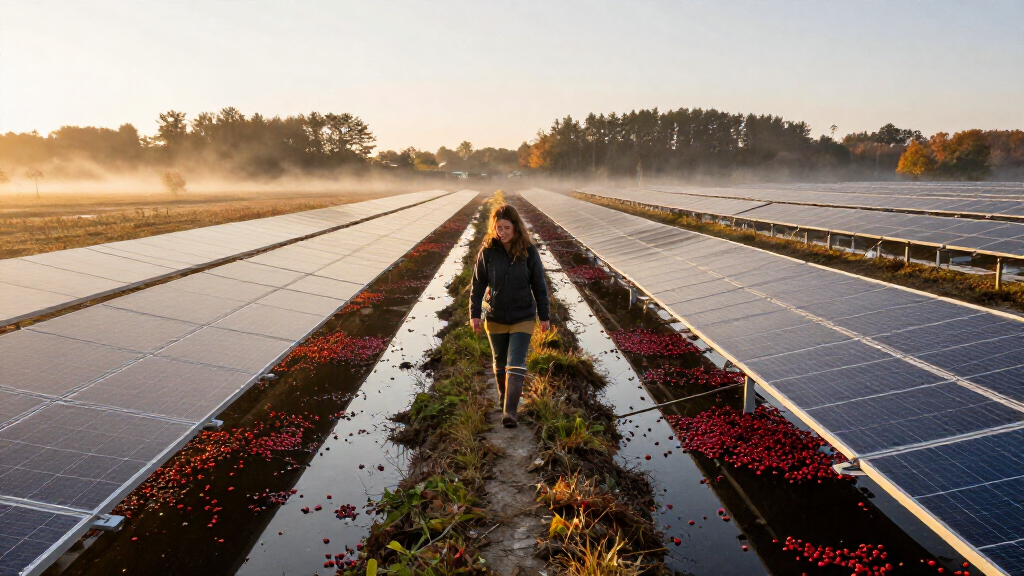
Two cranberry farms in Kingston and Plymouth, Massachusetts, have harvested crops beneath operating solar panels for a second season. The projects pair agriculture with electricity generation, using elevated, widely spaced panels designed to accommodate cranberry-growing and harvesting equipment.
Two cranberry farms in Kingston and Plymouth, Massachusetts, have harvested berries for a second season beneath operating solar panels, according to Canary Media. The projects pair cranberry production with electricity generation and offer a working example of agrivoltaics—solar development designed to share land with active agriculture.
The installations were developed by Greenbacker Renewables with construction by Distributed Energy Infrastructure. The Kingston project combines a 4.4-megawatt solar array with a 13.5-megawatt-hour battery. The neighboring Plymouth site has a 1-megawatt array. Both use a community solar model, selling electricity to customers, the report said.
The projects sit on land that had been used for cranberry growing for decades. Greenbacker bought the property from farmers who were ready to leave the business, then hired local cranberry farmer and solar consultant Iain Ward to manage cultivation beneath the panels. The source report describes the two sites as the first in the country—and possibly the world—to grow cranberries under an operating solar installation; that broader distinction is not independently established in the supplied material.
The panels stand about 10 feet above the bogs and can tilt to track the sun. Developers spaced support pilings farther apart than in a conventional array to allow harvesting equipment through. Because cables could not be buried in the wet ground, wiring was routed overhead. The design followed testing to find foundations capable of reaching stable ground beneath the bogs, Distributed Energy Infrastructure co-founder Prateek Tare told Canary Media.
The projects address a persistent siting problem: Massachusetts needs more solar power, but proposals for arrays can face resistance when they use undeveloped land, while rooftops and parking lots may cost more to develop or offer less generating capacity. Dual-use solar offers another option by keeping agricultural production underway alongside energy generation.
That approach may be particularly relevant to cranberry growers. Massachusetts is the nation’s second-largest cranberry-producing state, behind Wisconsin, according to the report. Cranberry bogs are protected wetlands, meaning they cannot simply be converted to housing or commercial development when farming stops. For bogs that can connect to the electrical grid, solar revenue could offer owners a way to keep land in agricultural use while adding a source of income. The projects do not, by themselves, establish how financially viable the model will be for other farms.
“This is a farm viability opportunity,” Ward said. The comment reflects the potential value to growers, rather than a published assessment of the projects’ earnings or effects on crop yields.
Products Worth Considering

Ring Alarm 5-Piece Wireless Security System

eufy Security Essential 7-Piece Alarm System

Samsung 65-Inch The Frame Pro Neo QLED 4K TV (2026) Bundle with Modern Brown Bezel, HDMI Cables, and Home Theater Guide
As an affiliate, we earn on qualifying purchases.
Massachusetts Backs Dual-Use Solar
Massachusetts has encouraged agrivoltaics through its solar incentive program. The source report says the state became the first to offer a financial boost for dual-use solar in 2018. At the time of the report, qualifying arrays received an additional 9 cents per kilowatt-hour on top of the base rate. It listed a base rate of 23.17 cents per kilowatt-hour for arrays with capacity between 1 and 5 megawatts. Those are figures reported at the time, not confirmation of current rates.
The projects also follow a distinct ownership and operating arrangement. Greenbacker purchased the land, while Ward manages the cranberry operations and the arrays sell power through community solar. That structure differs from a simple lease in which a farmer retains ownership and rents out part of the property, so the sites do not show that every grower would receive the same benefits.
The bog installations have also informed other work by Tare’s company, the report said, including agrivoltaic projects involving apple orchards, cattle pasture and a Christmas tree farm. Preliminary work had started on another cranberry bog, while an earlier project in nearby Carver remained incomplete after the developer went bankrupt.
““We are literally proving it can be done.””
— Prateek Tare, co-founder and executive vice president of Distributed Energy Infrastructure
Costs, Yields And Expansion Remain Open
The source report does not provide crop-yield comparisons between the shaded bogs and conventional cranberry fields, the farms’ operating costs, or the projects’ financial returns. It also does not establish whether the panels’ shade changes growing conditions or harvest volumes over time.
The report describes the projects as the first of their kind nationally, perhaps globally, but the supplied material does not document a survey of all operating cranberry-and-solar sites. It also does not state the present status of the additional bog under preliminary development or confirm that the Carver project has returned to construction. Incentive rates and project conditions may have changed since the report was published.
Further Bogs May Test The Model
The immediate next step is continued operation of the Kingston and Plymouth farms, which can provide more seasons of evidence on whether cranberry production and solar generation can coexist under the same structures. The source report also said preliminary work was underway at another bog and that the owner of the stalled Carver sites intended to complete them. Those plans were reported as intentions, not completed milestones.
Further evidence would help growers and developers judge whether the design can be replicated: crop and harvest data, project economics, grid access, and the upkeep required for both farming and solar equipment. The report does not give a schedule for new construction, a timeline for the Carver arrays, or updated details about the projects after its publication.
Key Questions
Where are the cranberry-and-solar farms?
They are in Kingston and Plymouth, Massachusetts. The report says both sites had harvested cranberries beneath operating solar panels for a second season.
How large are the solar projects?
The Kingston installation has a 4.4-megawatt array and a 13.5-megawatt-hour battery. The Plymouth array has a capacity of 1 megawatt.
How do the panels accommodate cranberry farming?
The panels are mounted about 10 feet above the bogs, with wider spacing between support pilings so harvesting equipment can pass. Wiring is routed overhead because it could not be buried in the boggy ground.
Does the report show that solar increases cranberry yields or farm profits?
No. It describes the combined use of the land and quotes a farmer calling solar a farm viability opportunity, but it does not provide yield comparisons, revenue figures or project profitability data.
What is happening with the stalled Carver project?
A previous developer went bankrupt after arrays were built, according to the report. Ward said the new bog owner intended to finish the project, but the source does not confirm that construction resumed or provide a completion date.
Source: canarymedia.com