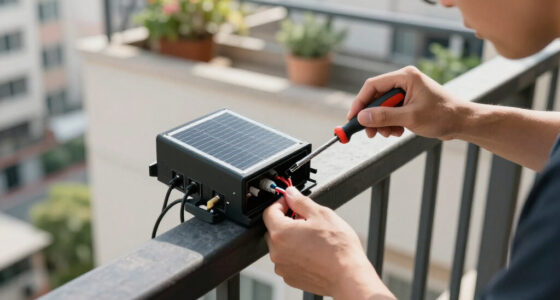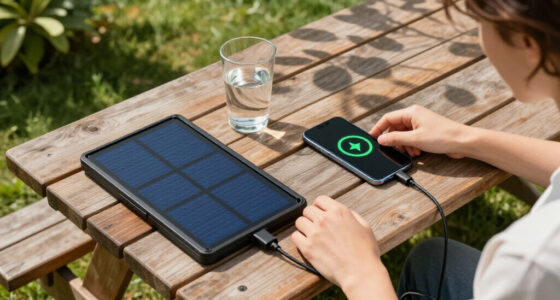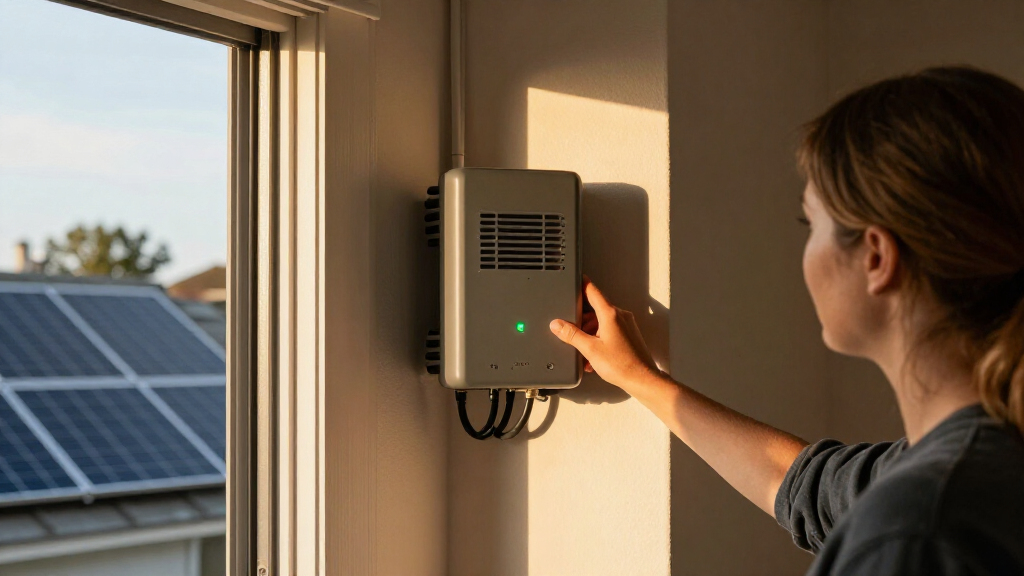
The best whole home solar inverter for most buyers in this roundup is the ANENJI 12,000W Hybrid Solar Inverter, whose 48V split-phase output is designed to serve both 120V and 240V loads. The POWLAND 12,000W adds Wi-Fi and dual MPPT inputs, while the SUNGOLDPOWER 10,000W is a lower-capacity alternative for homes with more modest simultaneous loads. The main tradeoffs are output capacity, grid interaction, battery and solar compatibility, and whether you want a standalone inverter or a kit with panels and batteries. Smaller 24V models and a grid-tie microinverter address narrower needs, not the same whole-home backup job. Read on for the full breakdown and a guide to matching inverter capacity to your home.

Get backup power and energy gear delivered free with Prime
- Fast, free delivery on millions of items
- Prime Video, Amazon Music and more included
- Member-only deals all year
Key Takeaways
- Split-phase 48V models lead this lineup for whole-home coverage: ANENJI and POWLAND provide 120V/240V output, a useful match for homes with mixed household circuits and larger appliances.
- More rated watts do not settle the choice: battery voltage, surge capacity, input limits, and the home’s load plan all affect whether an inverter can run the loads buyers care about.
- System kits trade flexibility for bundled equipment: ECO-WORTHY kits include panels and battery components, while standalone inverters give buyers more freedom to select compatible parts.
- Some products are better suited to partial-home or specialized setups: the SUMRY and SZMiNiLED are 24V models, and the 1200W microinverter is a grid-tie option rather than a battery-backed whole-home inverter.
- High charging and bypass figures need system context: the ANENJI’s 240A charging and WattCycle‘s 200A bypass are not substitutes for checking battery limits, wiring, protection, and installation design.
| ANENJI 12,000W Hybrid Solar Inverter, 48V Split Phase, 120V/240V, 240A Charging |  | Best for High-Capacity Expansion | Output: 12,000W split-phase; 6,000W single-phase | AC output voltage: 120V/240V | Battery voltage: 48V or 51.2V | VIEW LATEST PRICE | See Our Full Breakdown |
| SUNGOLDPOWER 10,000W 48V Solar Hybrid Inverter with Dual MPPT Controllers |  | Best for Flexible Battery Setups | Inverter output: 10,000W pure sine wave | Peak output: 20,000W | Battery voltage: 48V DC | VIEW LATEST PRICE | See Our Full Breakdown |
| ECO-WORTHY 10 kW Off-Grid Solar System Kit with Split-Phase Inverter, Batteries, and Solar Panels |  | Best Complete Off-Grid Package | Inverter continuous power: 10,000W | Inverter peak power: 20,000W | Output voltage: 120V/240V split-phase | VIEW LATEST PRICE | See Our Full Breakdown |
| POWLAND 12,000W Hybrid Solar Inverter with WiFi, Dual MPPT, and Split-Phase Output |  | Best for Battery-Free Grid-Connected Use | Model: MLV-10K | Listed output power: 12,000W in title; 10,000W in product information | Input voltage: 48V | VIEW LATEST PRICE | See Our Full Breakdown |
| ECO-WORTHY Liber 10,000W 48V Off-Grid Solar Inverter |  | Best for Clearly Defined Off-Grid Builds | Surge power: 20,000W | Battery voltage: 48V | Output voltage: 120V/240V split-phase or 120V single-phase | VIEW LATEST PRICE | See Our Full Breakdown |
| SUNGOLDPOWER 10,000W 48V Pure Sine Wave Solar Inverter with Dual MPPT Controllers | | Best All-in-One Inverter for Whole-Home Builds | Peak output: 20,000W | Battery voltage: 48V | Solar controllers: 2 MPPT | VIEW LATEST PRICE | See Our Full Breakdown |
| ECO-WORTHY 10 kW Off-Grid Solar Panel Kit with 48V Battery |  | Best Complete Kit for Off-Grid Homes | Inverter continuous output: 10,000W | Inverter peak output: 20,000W | Output voltage: 120V/240V split-phase | VIEW LATEST PRICE | See Our Full Breakdown |
| 1200W Solar Grid-Tie Micro Inverter with Dual MPPT |  | Best for Adding a Small Grid-Tied Solar Array | Continuous AC output: 1,200W | Peak conversion efficiency: 96% | Output voltage: 120V AC | VIEW LATEST PRICE | See Our Full Breakdown |
| ECO-WORTHY 10 kW Off-Grid Solar System Kit with 9.36 kWh Daily Output |  | Best Kit for Modular Panel Layouts | Inverter maximum continuous output: 10,000W | AC output voltage: 120V/240V | Solar panels: 12 panels, 195W each | VIEW LATEST PRICE | See Our Full Breakdown |
| SUMRY 4000W Hybrid Solar Inverter, 24V DC to 120V AC, Pure Sine Wave |  | Best Compact Inverter for Smaller Homes | Peak output: 8,000W | Battery input: 24V DC | AC output: 120V AC | VIEW LATEST PRICE | See Our Full Breakdown |
| SZMiNiLED 3600W 24V Hybrid Solar Inverter with Wi-Fi |  | Best for Smaller 24V Whole-Home Backup Systems | Input voltage: 24V DC | Output voltage: 120V AC | Peak output power: 4200W | VIEW LATEST PRICE | See Our Full Breakdown |
| WattCycle 48V 12kW Hybrid Solar Inverter with 200A Bypass |  | Best for High-Capacity Whole-Home Backup | Peak output power: 18,000W | Input voltage: 48V DC | Output type: 120V/240V split phase | VIEW LATEST PRICE | See Our Full Breakdown |
| whole home solar inverter | Output voltage |
|---|---|
| ANENJI 12,000W Hybrid Solar In | — |
| SUNGOLDPOWER 10,000W 48V Solar | — |
| ECO-WORTHY 10 kW Off-Grid Sola | 120V/240V split-phase |
| POWLAND 12,000W Hybrid Solar I | 120V/240V split-phase in title; 240V in product information |
| ECO-WORTHY Liber 10,000W 48V O | 120V/240V split-phase or 120V single-phase |
| SUNGOLDPOWER 10,000W 48V Pure | — |
| ECO-WORTHY 10 kW Off-Grid Sola | 120V/240V split-phase |
| 1200W Solar Grid-Tie Micro Inv | 120V AC |
| ECO-WORTHY 10 kW Off-Grid Sola | — |
| SUMRY 4000W Hybrid Solar Inver | — |
| SZMiNiLED 3600W 24V Hybrid Sol | 120V AC |
| WattCycle 48V 12kW Hybrid Sola | — |
More Details on Our Top Picks
ANENJI 12,000W Hybrid Solar Inverter, 48V Split Phase, 120V/240V, 240A Charging
The ANENJI 12,000W earns this role for households that need substantial split-phase output now and room to expand later. Its dual MPPT inputs accept up to 18,000W of PV, while parallel support for as many as six units offers a path to larger loads. Compared with the SUNGOLDPOWER 10,000W, it provides more listed inverter capacity and higher maximum hybrid charging current; the tradeoff is that ANENJI’s lithium battery communication depends on a compatible BMS. Built-in Wi-Fi, scheduled charging and discharging, and a typical 10ms transfer time add useful monitoring and backup-control options. This is still an inverter, not a complete whole-home system: batteries, panels, wiring, and correctly configured parallel equipment are separate planning decisions.
Pros:- 12,000W split-phase output supports substantial 120V and 240V loads.
- Dual MPPT inputs accept up to 18,000W of PV capacity.
- Wi-Fi monitoring and scheduled charging and discharging aid system management.
- Supports parallel connection of up to six units.
Cons:- Lithium battery communications require a compatible BMS.
- Parallel expansion depends on compatible equipment and careful setup.
- The inverter alone does not include panels or battery storage.
Best for: Homeowners building a 48V split-phase system with high solar input needs and a realistic plan to expand inverter capacity.
Not ideal for: Buyers seeking a ready-to-install package or those with lithium batteries whose BMS is not confirmed compatible.
- Output:12,000W split-phase; 6,000W single-phase
- AC output voltage:120V/240V
- Battery voltage:48V or 51.2V
- Maximum hybrid charging current:240A
- Maximum PV input:18,000W
- MPPT channels:2
- MPPT operating range:100V–450V
- Maximum PV open-circuit voltage:500V
- Parallel expansion:Up to 6 units
Our verdict“Choose the ANENJI if high split-phase output and future parallel expansion matter more than a bundled system or plug-and-play battery compatibility.”
SUNGOLDPOWER 10,000W 48V Solar Hybrid Inverter with Dual MPPT Controllers
The SUNGOLDPOWER 10,000W is a strong fit for buyers who want one inverter to handle several battery and operating scenarios. It supports AGM, gel, flooded, lithium, and user-defined battery settings, and can also run without a battery—a useful distinction from systems built around storage from day one. Against the ECO-WORTHY Liber 10,000W, it offers a wider mix of output and charging modes, but the Liber lists UL 1741 certification and a clear off-grid-only use case. SUNGOLDPOWER combines two MPPT controllers with up to 200A charging and split-phase output, so the core equipment is consolidated. Its 54 lb weight and 48V battery requirement for battery-backed use call for deliberate installation planning; this is not a lightweight add-on for a casual setup.
Pros:- Supports several battery chemistries as well as user-defined settings.
- Battery-free operation allows a solar setup without storage.
- Dual MPPT controllers and up to 200A charging combine key functions in one unit.
- Scheduled charging, discharging, and multiple output priorities support flexible operation.
Cons:- Battery-backed operation requires a 48V battery system.
- At 54 lb, the unit needs a sturdy mounting location and careful handling.
- The inverter does not include solar panels or batteries.
Best for: Homeowners comparing battery chemistries or planning a system that may initially operate without battery storage.
Not ideal for: Buyers who need a lighter unit, a complete panel-and-battery kit, or a system with a stated certification profile matching the Liber.
- Inverter output:10,000W pure sine wave
- Peak output:20,000W
- Battery voltage:48V DC
- Maximum battery charging current:200A
- Solar controllers:2 MPPT
- Maximum PV open-circuit voltage:500V DC
- Output options:120V/240V split-phase or 120V single-phase
- Battery compatibility:AGM/sealed, gel, flooded, lithium, and user-defined
- Weight:54 lb
Our verdict“Pick SUNGOLDPOWER when battery-chemistry flexibility and battery-free operation are more useful to you than a bundled system or lighter hardware.”
ECO-WORTHY 10 kW Off-Grid Solar System Kit with Split-Phase Inverter, Batteries, and Solar Panels
Unlike the inverter-only ANENJI and POWLAND options, this ECO-WORTHY kit bundles the main pieces of an off-grid system: a 10,000W split-phase inverter, nine panels, and four LiFePO₄ batteries with 20.48 kWh of listed storage. That makes it the clearest choice here for buyers who want coordinated generation and storage rather than sourcing each component separately. Its 5,310W panel array is much smaller than the ANENJI’s stated 18,000W maximum PV input, so buyers should not confuse a supplied kit with the greatest potential solar-input capacity. Bifacial panels and Wi-Fi monitoring add useful features, but the panels are large, truck-shipped items and professional installation is recommended. This is an off-grid package, not a simple inverter replacement or a utility grid-tie solution.
Pros:- Bundles inverter, solar panels, batteries, and necessary cables.
- Four LiFePO₄ batteries provide 20.48 kWh of listed storage.
- Split-phase output supports both 120V and 240V loads.
- Bifacial panels and Wi-Fi monitoring are included in the system description.
Cons:- The 5,310W supplied array is below the PV input capacity listed for several inverter-only alternatives.
- Large panels ship by truck on a pallet and need substantial handling space.
- Professional installation is recommended, adding project complexity.
Best for: Homeowners planning an off-grid 120V/240V system who want panels, batteries, and an inverter supplied as one package.
Not ideal for: Buyers who already own compatible panels or batteries, need a compact shipment, or expect a straightforward grid-connected replacement.
- Inverter continuous power:10,000W
- Inverter peak power:20,000W
- Output voltage:120V/240V split-phase
- Solar panels:9 × 590W
- Total solar capacity:5,310W
- Battery configuration:4 × 48V 100Ah LiFePO₄
- Total battery storage:20.48 kWh
- Panel efficiency:23.23%
- Features:Dual MPPT, bifacial panels, Wi-Fi monitoring, CAN/RS485 communication
Our verdict“Choose this kit if you want a bundled off-grid system with substantial included storage and can accommodate professional installation and pallet-sized panels.”
POWLAND 12,000W Hybrid Solar Inverter with WiFi, Dual MPPT, and Split-Phase Output
The POWLAND stands apart from the off-grid-only ECO-WORTHY Liber because it is described as able to use solar, battery, and grid power, with battery-free operation and possible excess-solar feed-in when configured with an optional CT sensor. That makes it worth a look for buyers who want more than a stand-alone off-grid inverter. There is a major specification caveat: the title says 12,000W, while product information lists 10,000W, and the output-voltage details also vary. I would verify the exact model rating and grid configuration with the supplier before designing a whole-home system around it. Dual MPPT, parallel support, and an OLED display are useful, but the optional sensor and unclear power figures make this a less straightforward choice than the ANENJI.
Pros:- Supports solar, battery, and grid power, including described battery-free operation.
- Dual MPPT and parallel operation support system design flexibility.
- Compatible with 48V LiFePO₄ and lead-acid batteries.
- OLED monitoring display and listed protection functions aid system oversight.
Cons:- Product information conflicts on whether output is 10,000W or 12,000W.
- Grid feed-in requires an optional CT sensor.
- Output-voltage information is inconsistent across the supplied specifications.
Best for: Solar owners seeking battery-free operation and possible grid feed-in who are prepared to confirm the unit’s exact output and connection requirements.
Not ideal for: Buyers who need unambiguous power specifications or want grid export without purchasing and configuring an optional CT sensor.
- Model:MLV-10K
- Listed output power:12,000W in title; 10,000W in product information
- Input voltage:48V
- Output voltage:120V/240V split-phase in title; 240V in product information
- Solar input:90–500VDC / 200A (description)
- MPPT:Dual MPPT
- Battery compatibility:48V LiFePO₄ and lead-acid
- Parallel capacity:Up to 6 units
- Dimensions and weight:24.41 × 17.13 × 5.12 in; 46 lb
Our verdict“Consider POWLAND for battery-free, grid-connected flexibility only after confirming its output rating and the hardware needed for grid feed-in.”
ECO-WORTHY Liber 10,000W 48V Off-Grid Solar Inverter
The ECO-WORTHY Liber makes the most sense when the system is deliberately off-grid and the buyer wants a clearly stated boundary: this inverter is not grid-tie capable. That limitation is more direct than the POWLAND’s optional-CT grid-feed-in arrangement, but it can simplify selection for a cabin, remote property, or backup system that will not export power. The unit combines a 10,000W inverter, charger, and dual MPPT controllers, with up to 11,000W of PV input and parallel expansion for as many as six units. Compared with the ANENJI, its listed PV capacity is lower and its battery charging tops out at 200A rather than 240A. UL 1741 certification is listed, though permanent installation may still call for an experienced installer.
Pros:- Combines inverter, charger, and dual MPPT controllers in one unit.
- Provides 120V/240V split-phase output for household loads.
- Supports parallel connection of up to six units.
- Lists UL 1741 certification and several battery chemistries.
Cons:- Off-grid only; it cannot feed power back to the utility grid.
- Panels and batteries are not included.
- Permanent installation may require an experienced installer.
Best for: Owners of off-grid homes or remote properties who want a 48V split-phase inverter with integrated charging and a stated UL 1741 certification.
Not ideal for: Homeowners who want utility-grid export, or who need a complete system with panels and batteries included.
- Surge power:20,000W
- Battery voltage:48V
- Output voltage:120V/240V split-phase or 120V single-phase
- Maximum PV input:11,000W
- Maximum PV open-circuit voltage:500V DC
- Maximum battery charging current:200A
- Battery compatibility:AGM, gel, flooded, and lithium
- Use and certification:Off-grid only; UL 1741
Our verdict“Choose the Liber for a defined off-grid build with integrated solar charging, but skip it if grid export is part of your plan.”
SUNGOLDPOWER 10,000W 48V Pure Sine Wave Solar Inverter with Dual MPPT Controllers
For a whole-home system assembled from separate panels and batteries, this SUNGOLDPOWER combines a 10,000W inverter, dual MPPT controllers, and 200A battery charging in one unit. Its split-phase 120V/240V output can serve both ordinary household circuits and compatible 240V loads, while battery-free operation offers a way to use solar without installing storage immediately. Compared with the ECO-WORTHY 10 kW Off-Grid Solar Panel Kit with 48V Battery, this is the more flexible starting point if you want to choose your own battery and panels rather than buy a bundled system. The tradeoff is that it supplies no panels or battery, so system design and component matching remain your job. At 53.5 lb, it also calls for sturdy mounting and careful configuration of its selectable output voltage.
Pros:- Combines a 10,000W inverter, two MPPT controllers, and up to 200A battery charging in one unit.
- Supports 120V and split-phase 120V/240V output for a broader range of household loads.
- Works with several battery chemistries and supports battery-free operation.
- Time-slot scheduling and multiple charging modes allow flexible power management.
Cons:- Panels and batteries are not included, so buyers must plan and source the rest of the system.
- The 53.5 lb body requires secure mounting and may be awkward to handle.
- Selectable output voltage may require configuration before connecting household loads.
Best for: Homeowners designing a custom 48V system who want split-phase output and the freedom to choose their own panels and batteries.
Not ideal for: Buyers seeking a ready-to-install package with panels and storage included, or anyone who wants a lightweight unit with minimal setup.
- Peak output:20,000W
- Battery voltage:48V
- Solar controllers:2 MPPT
- Maximum battery charging current:200A
- Maximum PV open-circuit voltage:500V DC
- Output:120V or split-phase 120V/240V
- Battery compatibility:AGM/sealed, gel, flooded, lithium, and user mode
Our verdict“Choose this SUNGOLDPOWER if you want a high-output 48V inverter foundation for a custom whole-home system rather than a complete kit.”
ECO-WORTHY 10 kW Off-Grid Solar Panel Kit with 48V Battery
This kit ranks highest for buyers who want the main parts of an off-grid system packaged together: 10kW split-phase inverter, five 590W panels, and a 48V LiFePO₄ battery with about 16.1kWh of listed storage. That bundle makes it a more direct route to a whole-home setup than the standalone SUNGOLDPOWER inverter, which leaves panel and battery selection to the buyer. Its 120V/240V output suits homes with both standard circuits and compatible 240V equipment, and the battery supports monitoring and parallel expansion. The system’s 2,950W of PV capacity, however, is modest beside its inverter rating; high inverter capacity alone does not mean the panels can replenish a large battery quickly. Professional installation is recommended, and delivery requires room for bulky freight.
Pros:- Bundles inverter, five panels, 48V battery, and cables in one system.
- 10,000W continuous inverter output with 120V/240V split-phase support.
- About 16.1kWh of LiFePO₄ storage, with monitoring and parallel expansion support.
- Includes dual MPPT controllers and multiple inverter protection features.
Cons:- The 2,950W panel array may limit how quickly the system replenishes storage under demanding household use.
- Professional installation is recommended for a system of this scale.
- Truck delivery requires an address that can accommodate large freight.
Best for: Off-grid homeowners who want panels, a large LiFePO₄ battery, and a split-phase inverter supplied as one coordinated package.
Not ideal for: Buyers who already own panels or batteries, need a compact DIY delivery, or expect the included PV array to sustain heavy loads without careful energy planning.
- Inverter continuous output:10,000W
- Inverter peak output:20,000W
- Output voltage:120V/240V split-phase
- Solar panels:5 panels, 590W each
- Total PV capacity:2,950W
- Battery:48V, 314Ah LiFePO₄
- Battery energy capacity:16.076kWh
- Maximum system voltage:500V
Our verdict“Pick this kit if you want a bundled off-grid system with substantial battery storage and can arrange professional installation and freight delivery.”
1200W Solar Grid-Tie Micro Inverter with Dual MPPT
This micro inverter is the lineup’s narrowest fit for a whole-home solar plan: it handles up to 1,200W of grid-tied AC output, not whole-house backup or off-grid power. Its two independent MPPT channels let each connected panel track its own operating point, which can help when panel conditions differ. App monitoring and an IP67-rated enclosure add practical visibility and outdoor placement options. Compared with the SUNGOLDPOWER 10,000W 48V inverter, this is much smaller and does not need a battery, but it also cannot provide split-phase 240V or keep loads running during a utility outage. The active-grid requirement is a defining limitation, not a minor setup detail. Buyers also need to keep each panel’s open-circuit voltage below 60V, including in cold weather.
Pros:- Two independent MPPT channels accommodate panels operating under different conditions.
- Provides up to 1,200W continuous AC output with a listed peak conversion efficiency of 96%.
- Smart Life app monitoring reports production and operating status over 2.4GHz Wi-Fi.
- IP67-rated enclosure is designed for outdoor use.
Cons:- Requires an active utility grid and provides no off-grid or backup power.
- 120V output and 1,200W capacity are far below what a whole-home inverter requires.
- Panel open-circuit voltage must stay below 60V, including under cold-weather conditions.
Best for: Homeowners with an active 120V utility connection who want to add up to two panels to a grid-tied system and monitor production by app.
Not ideal for: Anyone seeking whole-home capacity, 240V output, battery charging, or solar backup during a grid outage.
- Continuous AC output:1,200W
- Peak conversion efficiency:96%
- Output voltage:120V AC
- MPPT channels:2
- MPPT voltage range:22–55V per channel
- Recommended panel power:200–625W per channel
- Maximum panel open-circuit voltage:Below 60V
- Grid protection:Anti-islanding
Our verdict“Choose this micro inverter only for a small grid-tied panel addition; it is not a whole-home or backup-power substitute for the SUNGOLDPOWER inverter.”
ECO-WORTHY 10 kW Off-Grid Solar System Kit with 9.36 kWh Daily Output
This kit pairs a 10,000W inverter and 10.24kWh of listed battery capacity with twelve relatively compact 195W bifacial panels. That panel format can suit buyers who prefer more pieces for a distributed installation rather than the five large panels in ECO-WORTHY’s other 10kW kit. The listing estimates up to 9.36kWh of daily production under four hours of full sunshine; treat that as a condition-dependent figure, not a guaranteed household energy supply. Compared with the ECO-WORTHY kit with a 48V 314Ah battery, this one lists less storage but includes mounting accessories and states support for connecting up to six inverters in parallel. Professional installation is recommended, and even a 10kW inverter cannot compensate for limited sunlight or undersized daily generation.
Pros:- Includes panels, two lithium batteries, inverter, and Z-bracket mounting accessories.
- Supports 120V/240V output and parallel connection of up to six inverters.
- Battery status can be monitored through an app using Bluetooth or Wi-Fi.
- Offers configurable charging and output-priority modes.
Cons:- Listed daily production of up to 9.36kWh depends on four hours of full sunshine.
- Total listed battery energy is 10.24kWh, less than the 16.076kWh in ECO-WORTHY’s other kit.
- Professional installation is recommended.
Best for: Off-grid buyers who want a packaged split-phase system with numerous smaller panels, included mounting hardware, and the option to expand inverter capacity.
Not ideal for: Households with high overnight consumption that need more listed storage than 10.24kWh, or buyers who expect a fixed daily energy yield regardless of weather and site conditions.
- Inverter maximum continuous output:10,000W
- AC output voltage:120V/240V
- Solar panels:12 panels, 195W each
- Total PV capacity:2,340W
- Battery configuration:2 × 48V, 100Ah lithium batteries
- Total battery energy:10.24kWh
- Estimated daily output:Up to 9.36kWh under four hours of full sunshine
- Inverter certification:UL 1741
Our verdict“Choose this ECO-WORTHY kit if a modular 12-panel layout and future inverter expansion matter more than maximizing included battery storage.”
SUMRY 4000W Hybrid Solar Inverter, 24V DC to 120V AC, Pure Sine Wave
The SUMRY is a smaller-scale hybrid option, not a like-for-like alternative to the 10kW split-phase systems in this roundup. Its 4,000W rated output, 24V battery input, and 120V AC output fit a limited set of household circuits better than a whole-home panel, particularly where loads do not require 240V. A 140A MPPT controller and support for solar, utility, and battery power give it more operating flexibility than the grid-tied micro inverter, which cannot supply backup power. It can also run without a battery in suitable daytime conditions. The tradeoff is the lower output ceiling and absence of split-phase service; buyers should not mistake the 8,000W peak figure for continuous capacity. Solar-only operation also has specific PV and grid conditions.
Pros:- Pure sine wave output and support for solar, utility, and battery power.
- 140A MPPT controller with up to 5,600W maximum PV power.
- Can operate without a battery in suitable daytime solar conditions.
- Supports multiple 24V battery chemistries and configurable power priorities.
Cons:- 4,000W rated output is substantially below the 10,000W systems in this roundup.
- 120V-only output does not provide split-phase service for compatible 240V loads.
- Solar-only operation requires PV input above 120V and no grid connection.
Best for: Owners of smaller homes, cabins, or selected essential circuits who need a 120V hybrid inverter with a 24V battery bank.
Not ideal for: Households seeking whole-home 240V split-phase service, 10kW-class continuous output, or a system built around a 48V battery bank.
- Peak output:8,000W
- Battery input:24V DC
- AC output:120V AC
- Charge controller:140A MPPT
- Maximum PV power:5,600W
- Maximum PV input voltage:350V DC
- Maximum conversion efficiency:98%
Our verdict“Pick the SUMRY for a compact 120V hybrid setup serving selected loads, not as the primary inverter for a typical whole-home system.”
SZMiNiLED 3600W 24V Hybrid Solar Inverter with Wi-Fi
The SZMiNiLED suits a modest, off-grid backup setup where 120V loads matter more than powering a full 120V/240V household. Its integrated 120A MPPT controller and support for several 24V battery chemistries keep the system simpler to configure than pairing separate inverter and charge-control equipment. Wi-Fi monitoring adds a useful way to check system status remotely, while pure sine wave output is a sensible match for sensitive electronics.
Its limits are clear beside the WattCycle 48V 12kW: that model offers split-phase output and far more capacity for whole-home loads, while this SZMiNiLED provides only 120V AC and is built around a 24V battery bank. The claimed 4200W peak and battery-free operation should not be treated as a substitute for sustained output or a battery-backed design; battery-free use depends on operating conditions. Choose it for a smaller system, not a typical whole-house installation.
Pros:- Pure sine wave 120V output is suited to sensitive electronics.
- Built-in 120A MPPT controller combines two system components.
- Wi-Fi app monitoring provides remote system visibility.
- Supports 24V lithium, AGM, gel, and lead-acid batteries.
Cons:- 24V input limits battery-system compatibility and is less suited to larger whole-home systems.
- 120V-only output cannot directly serve 240V split-phase loads.
- Battery-free operation is conditional, so it is not a dependable replacement for battery storage.
Best for: Owners building a compact 24V off-grid or backup system for selected 120V circuits who want an integrated MPPT controller and app monitoring.
Not ideal for: Households seeking whole-home 120V/240V split-phase power, high sustained loads, or compatibility with a 48V battery bank.
- Input voltage:24V DC
- Output voltage:120V AC
- Peak output power:4200W
- Solar charge controller:120A MPPT
- Maximum PV input:4200W
- Battery compatibility:24V lithium, AGM, gel, and lead-acid
- Output waveform:Pure sine wave
- Monitoring:Built-in Wi-Fi with companion app
Our verdict“Choose the SZMiNiLED for a smaller 24V system serving selected 120V circuits, but pick the WattCycle if you need split-phase whole-home capacity.”
WattCycle 48V 12kW Hybrid Solar Inverter with 200A Bypass
For a whole-home inverter roundup, the WattCycle is the most directly equipped option here for serving a larger household: it combines 12,000W output with 120V/240V split-phase power, which can accommodate both standard circuits and 240V loads. Its dual MPPTs accept up to 24,000W of solar input, while the 250A charger, generator auto-start ATS, and 200A bypass support a more involved solar-and-generator backup design. Touchscreen and Wi-Fi controls add monitoring options.
Compared with the SZMiNiLED 3600W, this is built for much higher demand and split-phase service, but it also requires a compatible 48V battery system and a more substantial system design. Parallel support for up to six units leaves room for expansion, though the product data does not specify installation requirements or sustained output conditions. Its listed 120V output alongside split-phase capability also merits confirmation with the seller before purchase.
Pros:- 12,000W output and 120V/240V split-phase capability support larger household loads.
- Dual MPPTs accept up to 24,000W of solar input.
- Generator auto-start ATS, 250A charger, and 200A bypass support integrated backup arrangements.
- Parallel operation supports expansion up to six units, with Wi-Fi and touchscreen controls.
Cons:- Requires a compatible 48V battery system.
- High system capacity can call for more extensive planning and compatible equipment than a small backup installation.
- Product data lists both 120V output and split-phase output; buyers should confirm the exact output configuration before ordering.
Best for: Households planning a 48V off-grid or backup system with substantial 120V and 240V loads, solar expansion, and generator integration.
Not ideal for: Buyers with a small 24V system, modest loads, or no compatible 48V battery bank; its high capacity and system requirements may exceed their needs.
- Peak output power:18,000W
- Input voltage:48V DC
- Output type:120V/240V split phase
- Solar input capacity:24,000W
- Solar charge controllers:Dual MPPT
- Bypass capacity:200A
- Charger:250A
- Parallel support:Up to 6 units
Our verdict“Choose the WattCycle for a 48V system that needs substantial split-phase capacity and generator integration, rather than a compact 24V setup like the SZMiNiLED.”
How We Picked
I ranked these options by how well their stated design fits a whole-home solar or backup system, rather than treating every product labeled an inverter as interchangeable. The main factors were output level and phase configuration, battery-voltage fit, solar input and MPPT setup, charging or bypass features, and whether the listing is for an inverter alone or a kit. I also weighed usability features such as Wi-Fi, while treating them as secondary to electrical fit and system scope.
That puts the 48V split-phase hybrid models ahead for buyers seeking broad household coverage. Standalone units rank differently from bundled kits because kits reduce component-selection work but can limit choice and require close review of included capacity. The 24V units and low-wattage microinverter rank lower for whole-home use because their stated format serves narrower applications. Product names and headline ratings alone do not confirm compatibility or suitability; buyers should verify full specifications with the manufacturer and a qualified installer before purchase.
Factors to Consider When Choosing Whole Home Solar Inverters
Choosing a whole-home inverter starts with the electrical system you want to build, not the largest wattage printed in a product name. I would map the home’s loads and backup goals first, then match phase, battery voltage, solar input, and grid behavior to that plan. These checks help avoid buying a powerful-looking unit that cannot support the circuits or batteries you intend to use.
Match Output and Phase to Your Actual Loads
List the appliances and circuits you want powered together, including their running and startup demands. Many homes use both 120V circuits and 240V equipment, so a 120V-only inverter may leave major loads outside the backup plan. Split-phase output can serve both voltage types, but its headline wattage does not say how much power is available on each leg or under surge conditions. Ask for the continuous rating, surge rating, surge duration, and per-leg limits. A load calculation by an electrician can reveal that backing up selected circuits is more practical than attempting to run everything at once. Oversizing without checking those details can add expense without fixing a voltage or startup mismatch.
Treat Battery Voltage and Current as a System Choice
Inverter voltage must match the battery bank, and a 24V system is not a drop-in substitute for a 48V system. At similar power levels, lower battery voltage requires higher current, which can mean heavier cables and more demanding protection requirements. Confirm that the inverter supports the battery chemistry and communication method you plan to use, not just the nominal voltage. Check the battery’s maximum charge and discharge current against the inverter’s demands; a large charging figure is useful only if the battery bank can accept it. Also plan for safe disconnects, fusing, cable sizing, and ventilation with a qualified installer. Choosing batteries and inverter together avoids a mismatch that can limit usable output or charging.
Check Solar Input Limits, Not Just MPPT Count
Multiple MPPT trackers can help manage separate strings or roof orientations, but the count alone does not establish how many panels the inverter can accept. Compare each tracker’s voltage window and current limit with the proposed panel string, and check the total allowable solar input. Cold-weather open-circuit voltage can rise above a panel’s nominal figure, so string design needs a safety margin. Roof shading, different orientations, and panel-level layout may affect whether separate trackers offer a real benefit. Do not size an array from the inverter’s charging claim alone; the solar input limits and battery charging limits both apply. A system designer can confirm a string layout that stays within the equipment ratings.
Decide Whether You Need Grid-Tie, Off-Grid, or Backup Operation
Hybrid, off-grid, and grid-tie products do different jobs even when their product names share terms such as solar inverter. A grid-tie microinverter converts panel output for a grid-connected system, but it does not by itself provide whole-home backup during an outage. Backup operation can require a battery, transfer equipment, and approved isolation from the utility grid. Off-grid systems need enough storage and generation to cover periods without sun, while grid-connected systems may use the utility as a supplement. Verify the inverter’s operating modes, transfer behavior, and required external equipment before choosing. Local utility rules and electrical codes can also affect what can be installed and interconnected.
Compare a Kit With a Standalone Inverter by Included Scope
A kit can simplify sourcing by bundling panels, batteries, and an inverter, but the word “kit” does not guarantee that every component needed for installation is included. Review the exact panel count and wattage, battery usable capacity, inverter model, mounting hardware, cabling, and protection devices. Daily energy estimates depend on sunlight, location, tilt, shading, and system losses, so a stated daily output is not a promise for every home. Standalone inverters allow more freedom to choose panels and storage, but they place more responsibility on the buyer to verify compatibility. Compare the cost and effort of any missing components before deciding that a bundle is the easier route. Ask for a complete bill of materials and installer review.
Plan for Installation, Certification, and Service
A whole-home inverter is part of a high-current electrical system, so installation quality matters as much as its feature list. Before purchase, verify applicable safety certifications, warranty terms, support availability, and whether the manufacturer provides documentation for utility or permit review. Wi-Fi monitoring can make status checks easier, but it cannot replace accessible fault information or responsive technical support. Confirm mounting location, clearance, temperature limits, noise expectations, and whether an electrician can service the unit safely. A lower-cost or less-documented product may demand more installer verification and troubleshooting time. Get written confirmation of compatibility and installation requirements before committing to a complete system.
Frequently Asked Questions
Can a 10,000W inverter run my whole house?
It depends on which loads you mean by “whole house” and whether they run at the same time. A 10,000W rating may cover many household loads, but electric ranges, central air conditioning, well pumps, and other motors can have substantial startup demands. Check continuous output, surge rating and duration, voltage, and split-phase limits against a load calculation. You may get better results by backing up selected circuits and managing large loads rather than expecting every appliance to operate together. Ask an electrician to review the panel and planned loads before choosing an inverter.
Is a split-phase inverter necessary for a US home?
It is often needed if your backup plan includes both common 120V circuits and 240V equipment. A 120V-only inverter can support selected household circuits, but it will not directly serve 240V loads such as many dryers, ranges, or HVAC systems. Split-phase output still needs to match the home’s panel and the inverter’s per-leg and total output limits. Buyers with a small cabin or a carefully selected 120V backup circuit may have no need for 240V output. Have an electrician confirm the service configuration and transfer arrangement.
Will a grid-tie microinverter keep my home powered during an outage?
Usually not on its own. Standard grid-tie equipment shuts down when utility power fails to prevent sending electricity onto lines that may be under repair. Backup operation requires equipment designed to form a safe local power source, typically with compatible storage and isolation or transfer hardware. The 1200W microinverter in this roundup is a narrower grid-tie option, not a direct substitute for a whole-home hybrid inverter. Check the manufacturer’s approved backup architecture before treating any grid-connected solar setup as outage power.
Should I buy a bundled solar kit or choose each component separately?
A kit can reduce component-sourcing work, especially for someone building an off-grid system, but only if its included capacity fits the household’s needs. Check the precise battery capacity, panel output, inverter rating, cables, mounting parts, and protection equipment rather than relying on the kit title. A standalone inverter gives more control over battery and panel choices, though it also makes compatibility checks the buyer’s responsibility. Compare the bundle against a full parts list for a custom system, including items that may not be included. Installer approval can reveal whether the bundle is genuinely convenient or needs extra equipment.
How do I know whether a 24V inverter is enough, or should I choose 48V?
The answer depends on the inverter’s rated output, battery-bank design, cable distances, and the loads you need to support. At high power, a 24V system draws more current than a 48V system, which can call for heavier conductors and careful attention to connection and protection ratings. A 24V model may fit a smaller or existing 24V setup, while 48V models are more common among the higher-output choices in this roundup. Do not switch voltage without checking that the batteries, charger, solar input, and system components all support the new design. Ask an installer to size the battery bank and conductors for the intended continuous and surge loads.
Conclusion
For the broadest whole-home fit among these options, I would start with the ANENJI 12,000W Hybrid, then verify its full output limits and system compatibility with an installer. Buyers who want monitoring features alongside split-phase power should compare the POWLAND 12,000W; those seeking a lower-capacity 48V hybrid should look at the SUNGOLDPOWER 10,000W models. For a bundled off-grid setup, the ECO-WORTHY kits may reduce parts-selection work, though each kit’s included storage and hardware need close review. Beginners may find a clearly itemized kit easier to plan than a standalone inverter, while buyers with specialized 120V or grid-tie needs should consider the SUMRY, SZMiNiLED, or microinverter only after matching the product to that narrower job. For premium-oriented buyers prioritizing stated output and features, compare the ANENJI, POWLAND, and WattCycle by verified specifications, support, and installation requirements rather than headline wattage alone.