Among these whole home standby generators, I rank the Generac Guardian 22 kW with transfer switch and Wi-Fi monitoring as the best overall balance of output and system visibility. The Generac 24 kW with a 200-amp transfer switch is a stronger fit for buyers seeking a more integrated, higher-capacity setup, while the Generac 10 kW with a 16-circuit switch suits homes with a shorter list of priority loads. The main tradeoffs are generator capacity, transfer-switch coverage, and monitoring features, all of which affect what can run during an outage and how the system is managed. Higher output does not automatically mean a better fit if the electrical service and household loads do not call for it. Read on for the full comparison, selection criteria, and guidance on matching a generator to your home.

Get backup power and energy gear delivered free with Prime
- Fast, free delivery on millions of items
- Prime Video, Amazon Music and more included
- Member-only deals all year
Complete the kit


Key Takeaways
- The 22 kW Guardian is the roundup’s balanced pick: it pairs substantial listed capacity with a transfer switch and Wi-Fi monitoring, without jumping to the 24 or 26 kW models.
- Capacity alone does not define whole-home coverage: models with 16-circuit switches and models paired with 200-amp switches represent different approaches to managing household loads.
- The 24 and 26 kW models target heavier demand: they make more sense when a load assessment supports the added capacity, rather than as automatic upgrades for every home.
- Monitoring is a meaningful differentiator: cellular options appear across several Generac models, while the 22 kW Guardian listing specifies Wi-Fi; buyers should compare connectivity and service requirements before choosing.
- Several listings are close alternatives, not entirely different categories: the 10, 14, 22, 24, and 26 kW choices repeat across switch and monitoring configurations, so the right match depends on the complete installation package.


| whole home standby generator | Power output | Dimensions | Fuel | Weight |
|---|---|---|---|---|
| Honeywell 14kW Home Standby Ge | 14 kW | 48 × 25 × 29 in | Natural gas or propane | — |
| Generac 10 kW Whole-Home Stand | 10,000 watts | 47.3 × 25.6 × 30.7 in | Natural gas or liquefied petroleum gas | 384 lb |
| Generac Guardian 22 kW Home St | 22,000 watts | 50 × 27 × 29 in | Natural gas or LP gas | 466 lb |
| Generac 24 kW Whole-Home Stand | 24 kW | 46.4 × 26.3 × 30.7 in | Natural gas or LP | 461 lb |
| Generac 26kW Whole-Home Standb | 26 kW | 46.4 × 26.3 × 30.7 in | Natural gas or propane | 524 lb |
| Generac 24kW Whole-Home Standb | 24 kW | 46.4 x 26.3 x 30.7 in | Propane or natural gas | 461 lb |
| Generac 14 kW Whole-Home Stand | 14 kW | 46.4 x 26.3 x 30.7 in | Natural gas or LP | 391 lb |
| Generac 10 kW Whole-Home Stand | 10 kW | 46.3 x 24.6 x 30.7 in | Natural gas or LP/propane | 344 lb |
| Generac 22kW Whole Home Genera | 22 kW | 46.4 x 26.3 x 30.7 in | Natural gas or LPG | 451 lb |
| Generac 26 kW Whole-Home Stand | 26 kW | 46.4 x 26.3 x 30.7 in | Propane or natural gas | 524 lb |
| Generac 14 kW Whole-Home Stand | 14,000 watts (14 kW) | 46.4 x 26.3 x 30.7 inches (L x W x H) | — | 391 pounds |
More Details on Our Top Picks
Honeywell 14kW Home Standby Generator with 16-Circuit Transfer Switch
The Honeywell 14kW stands out for buyers who want a midrange standby unit with a choice of natural gas or propane and a transfer switch for 16 circuits. It starts automatically when an outage is detected, while the included composite mounting pad can simplify planning for a soil installation. Compared with the Generac 10 kW Whole-Home Standby Generator, it offers more rated output; the Generac, in turn, adds cellular monitoring and a longer warranty. Honeywell’s LCD control panel and weather-resistant aluminum enclosure keep the package focused on core residential backup rather than app-based oversight. Its main limitation is coverage: buyers need to decide which circuits to back up, and the unit depends on a compatible fuel supply. The description also lists whole-home coverage as an option, not a guaranteed installation configuration.
Pros:- Runs on natural gas or propane, giving homeowners flexibility to use an available fuel supply.
- Automatic outage detection starts the generator without manual operation.
- Includes a composite mounting pad designed for installation on soil.
- Aluminum enclosure, LCD controls, and selectable backup coverage support residential use.
Cons:- A compatible natural gas or propane supply is required.
- Backup coverage depends on selected circuits or a whole-home configuration, which must be planned.
- Its 3-year limited warranty is shorter than the 5-year limited warranties listed for the Generac models here.
Best for: Homeowners seeking a 14 kW standby generator, a choice between natural gas and propane, and an included mounting pad for a soil installation.
Not ideal for: Households that want remote cellular monitoring included or need confirmed whole-home coverage without planning circuit selection.
- Power output:14 kW
- Fuel:Natural gas or propane
- Transfer switch:16-circuit
- Control panel:LCD
- Enclosure:Weather-resistant aluminum
- Included components:Transfer switch and composite mounting pad
- Dimensions:48 × 25 × 29 in
- Warranty:3-year limited
Our verdict“Choose the Honeywell if you want 14 kW, two fuel options, and a supplied soil mounting pad, but skip it if cellular monitoring or a longer listed warranty matters more.”
Generac 10 kW Whole-Home Standby Generator with 16-Circuit Transfer Switch and Cellular Connectivity
The Generac 10 kW is the lineup’s lower-output choice for homeowners who value cellular monitoring and maintenance alerts more than extra capacity. Its automatic 16-circuit transfer switch provides a defined way to select backed-up loads, while cold-start support and oil-level monitoring address readiness details the Honeywell 14kW does not list. The tradeoff is a clear step down in output: homes with larger simultaneous electrical demands may find the Honeywell’s 14 kW more accommodating, though neither rating alone guarantees every household can run every appliance at once. Generac supports natural gas and LP, and its five-year limited warranty is longer than Honeywell’s. Remote app service requires a premium subscription, and the 384-pound unit calls for careful installation planning.
Pros:- Built-in cellular connectivity supports remote monitoring and maintenance alerts through Mobile Link.
- Runs on natural gas or liquefied petroleum gas.
- Cold-start support and oil-level monitoring help homeowners track readiness.
- Five-year limited warranty is longer than the Honeywell 14kW’s listed warranty.
Cons:- 10 kW output is lower than the 14 kW Honeywell and the 22–26 kW Generac models in this group.
- Mobile Link app service requires a premium subscription.
- At 384 pounds, it is heavy to handle and requires installation planning.
Best for: Homeowners with a modest planned backup load who want cellular status monitoring, maintenance alerts, and cold-start support.
Not ideal for: Households expecting to power many high-demand appliances simultaneously or buyers who do not want app features tied to a premium subscription.
- Power output:10,000 watts
- Fuel:Natural gas or liquefied petroleum gas
- Transfer switch:Automatic, 16-circuit
- Connectivity:Built-in cellular; Mobile Link app service requires a premium subscription
- Cold-weather and oil features:Cold-start support and oil-level monitoring
- Weight:384 lb
- Dimensions:47.3 × 25.6 × 30.7 in
- Warranty:5-year limited
Our verdict“Pick this Generac for a carefully selected, smaller backup load and cellular oversight; choose a higher-output model if your household demand is greater.”
Generac Guardian 22 kW Home Standby Generator with Transfer Switch and Wi-Fi Monitoring
The Generac Guardian 22 kW pairs substantial residential output with a 200 A outdoor-rated transfer switch, making it a stronger fit for broader backup plans than the 10 kW Generac or 14 kW Honeywell. Its natural gas or LP compatibility and automatic outage response suit homeowners seeking a permanently installed system, while Wi-Fi Mobile Link can report generator status and maintenance alerts. Unlike the Generac 24 kW Whole-Home Standby Generator with Cellular Connectivity, this model lists Wi-Fi rather than built-in cellular, and it delivers 2 kW less output. That distinction matters if the generator’s location has unreliable home Wi-Fi. The G-Force 1000 Series engine and five-year limited warranty add useful specifications, but at 466 pounds, delivery and professional installation need to be planned carefully.
Pros:- 22 kW output offers more capacity than the 10 kW and 14 kW options in this group.
- Includes a 200 A, NEMA 3R outdoor-rated transfer switch.
- Wi-Fi Mobile Link provides generator status and maintenance alerts.
- Runs on natural gas or LP gas and includes a five-year limited warranty.
Cons:- Wi-Fi monitoring depends on a usable home network, unlike the cellular-connected models listed here.
- At 466 pounds, the generator is difficult to handle without a planned installation.
- Installation is recommended to be performed by a certified, licensed electrician.
Best for: Homeowners seeking 22 kW of standby capacity with a 200 A outdoor-rated transfer switch and Wi-Fi status alerts.
Not ideal for: Buyers who need cellular monitoring independent of home Wi-Fi or want the highest output available among these listed models.
- Power output:22,000 watts
- Fuel:Natural gas or LP gas
- Transfer switch:200 A, NEMA 3R, outdoor-rated
- Monitoring:Wi-Fi Mobile Link
- Engine:Generac G-Force 1000 Series, 999 cc
- Weight:466 lb
- Dimensions:50 × 27 × 29 in
- Warranty:5-year limited
Our verdict“Choose the Guardian for 22 kW output and its included 200 A outdoor switch, but favor a cellular model if Wi-Fi coverage is a concern.”
Generac 24 kW Whole-Home Standby Generator with Cellular Connectivity
For buyers comparing capacity and oversight, the Generac 24 kW makes the strongest all-around case in this group: it combines higher output than the Generac Guardian 22 kW with built-in cellular monitoring and control. Automatic outage response, natural gas or LP compatibility, oil-level sensors, and cold-start improvements cover the practical needs of a permanent standby setup. Those additions may suit homeowners who want to check status without relying solely on Wi-Fi, although Mobile Link’s described app features require a premium subscription. The 26 kW Generac offers another 2 kW, but weighs more at 524 pounds; this 24 kW unit is 461 pounds. That is still a substantial load for delivery and installation, and the provided details do not specify a transfer switch, so buyers should confirm the required switch and system configuration before purchase.
Pros:- 24 kW output exceeds the 22 kW Guardian and 10 kW Generac options in this group.
- Built-in cellular connectivity supports remote monitoring and control.
- Oil-level sensors and cold-start improvements support generator readiness.
- Natural gas and LP compatibility offers fuel-supply flexibility.
Cons:- Mobile Link app monitoring and control require a premium subscription.
- At 461 pounds, it requires careful delivery and installation planning.
- The supplied product details do not identify an included transfer switch.
Best for: Homeowners planning broad residential backup who want 24 kW output and cellular monitoring without stepping up to the listed 26 kW model.
Not ideal for: Buyers who need a transfer switch confirmed in the package, want to avoid subscription-based app features, or have a tight installation access route.
- Power output:24 kW
- Fuel:Natural gas or LP
- Voltage and frequency:240 V, 60 Hz
- Connectivity:Built-in cellular; Mobile Link app features require a premium subscription
- Features:Automatic voltage regulation, low-oil shutdown, automatic idle control
- Weight:461 lb
- Dimensions:46.4 × 26.3 × 30.7 in
- Warranty:5-year limited
Our verdict“Choose this 24 kW Generac for a strong balance of output and cellular oversight, after confirming the transfer-switch package and subscription needs.”
Generac 26kW Whole-Home Standby Generator with Cellular Connectivity
The Generac 26 kW is the highest-output option in this five-product group, adding 2 kW over the Generac 24 kW Whole-Home Standby Generator. That extra rated capacity may help households planning to run more loads at once, but it does not by itself confirm that every appliance can operate simultaneously; a load plan and compatible installation still matter. Like the 24 kW model, it runs on natural gas or propane, starts automatically during an outage, and offers built-in cellular monitoring and control through Mobile Link. The listed app features require a premium subscription. The main practical tradeoff is its 524-pound weight, which is higher than the 24 kW unit’s 461 pounds. Its 5-year limited warranty and enclosed aluminum-and-steel construction are useful, but the product data does not specify an included transfer switch.
Pros:- 26 kW is the highest listed output among these five products.
- Runs on natural gas or propane.
- Built-in cellular connectivity supports remote monitoring and control.
- Includes automatic voltage regulation, low-oil shutdown, and a five-year limited warranty.
Cons:- At 524 pounds, it is heavier than the 24 kW Generac and may complicate delivery and installation.
- Mobile Link app features require a premium subscription.
- The supplied product details do not specify an included transfer switch.
Best for: Homeowners with a larger planned backup load who want the highest rated output in this group and have room for a heavy permanent installation.
Not ideal for: Buyers with constrained access or installation capacity, modest backup needs, or a preference for a package with a transfer switch explicitly listed.
- Power output:26 kW
- Fuel:Natural gas or propane
- Voltage:240 V
- Connectivity:Built-in cellular; Mobile Link app features require a premium subscription
- Materials:Aluminum and steel
- Weight:524 lb
- Dimensions:46.4 × 26.3 × 30.7 in
- Warranty:5-year limited
Our verdict“Select the 26 kW Generac when your load plan justifies the group’s highest output and the heavier installation is workable.”
Generac 24kW Whole-Home Standby Generator with 200-Amp Transfer Switch and Cellular Connectivity
The 24 kW output makes this a strong middle ground in this lineup: it offers more capacity than the Generac 14 kW and 10 kW models without reaching the 26 kW model’s greater size and weight. Its automatic 200-amp transfer switch starts backup power when utility service fails, while natural gas or propane operation lets buyers use an existing compatible fuel supply. Built-in cellular monitoring can provide remote status and alerts, a practical benefit if the generator is installed away from the house—but the app’s remote features require a premium subscription. Cold-weather provisions and a sloped roof with a rear intake address winter readiness, though they do not remove the need for a suitable installation location and maintenance. At 461 pounds, it calls for careful installation planning, and its fuel options depend on having a compatible gas connection.
Pros:- 24 kW output offers more capacity than the listed 10 kW and 14 kW options.
- Automatic 200-amp transfer switch starts backup power when utility service is lost.
- Built-in cellular connectivity supports remote monitoring and alerts.
- Cold-weather features and sloped-roof, rear-intake design support winter readiness.
Cons:- Mobile Link remote features require a premium subscription.
- The 461-pound enclosure requires substantial installation planning.
- Operation depends on a compatible natural-gas or propane supply.
Best for: Homeowners seeking substantial automatic backup capacity, cellular monitoring, and a 200-amp transfer switch who already have a natural-gas or propane supply.
Not ideal for: Buyers with a smaller backup load, no compatible fuel connection, or no interest in paying for the subscription required for remote app features.
- Power output:24 kW
- Fuel:Propane or natural gas
- Voltage:240 V
- Transfer switch:Automatic 200 A
- Connectivity:Built-in cellular; Mobile Link remote features require a premium subscription
- Weight:461 lb
- Dimensions:46.4 x 26.3 x 30.7 in
- Warranty:5-year limited
Our verdict“Choose this 24 kW model for a balance of substantial backup capacity and automatic whole-home transfer, provided its fuel and subscription requirements fit your setup.”
Generac 14 kW Whole-Home Standby Generator with 200 Amp Transfer Switch and Cellular Connectivity
At 14 kW, this model suits buyers who want automatic residential backup but do not need the higher output of the Generac 22 kW or 24 kW options. Its 200-amp automatic transfer switch is a notable pairing for a lower-output generator, but the output still sets a limit on how many large electrical loads can run together; homeowners should match capacity to their actual loads with an installer. Built-in cellular connectivity adds remote monitoring and maintenance alerts, though the listed app features require a premium subscription. Compatibility with select Generac energy products, including ecobee by Generac thermostats and PWRcell systems, may appeal to buyers planning a broader system. The tradeoff is a heavy, fully enclosed unit at 391 pounds, with a footprint similar to the larger Generac models rather than a compact alternative.
Pros:- Automatic 200-amp transfer switch detects outages and starts backup power.
- Cellular connectivity supports remote monitoring and maintenance alerts.
- Compatible with select ecobee by Generac thermostats and Generac PWRcell systems.
- Natural-gas or LP operation works with an existing compatible fuel supply.
Cons:- 14 kW output provides less capacity than the 22 kW and 24 kW models.
- Mobile Link app features require a premium subscription.
- At 391 pounds, it needs significant handling and installation planning.
Best for: Households prioritizing automatic backup for selected home loads and remote status checks, especially those already considering compatible Generac energy products.
Not ideal for: Homes expecting to run many high-demand appliances simultaneously or buyers who want a lighter, smaller installation than the higher-capacity lineup.
- Power output:14 kW
- Fuel:Natural gas or LP
- Voltage:240 V
- Transfer switch:Automatic 200 A
- Connectivity:Built-in cellular; Mobile Link app features require a premium subscription
- Weight:391 lb
- Dimensions:46.4 x 26.3 x 30.7 in
- Design:Fully enclosed, stainless steel
Our verdict“Pick this model when 14 kW aligns with your planned backup loads and you value cellular monitoring or Generac system compatibility over higher output.”
Generac 10 kW Whole-Home Standby Generator with Cellular Monitoring
This 10 kW standby generator is the lowest-output option among these five, making it a more focused choice than the Generac 14 kW, 22 kW, or 24 kW units. It can automatically respond to an outage and run on natural gas or LP, but that modest capacity means buyers should plan around selected loads rather than assume every appliance can operate at once. Cellular monitoring and remote control can make it easier to check on an unattended unit, although remote app features require a premium subscription. Cold-start support and oil-level monitoring help with readiness, and the sloped roof and rear intake are designed to reduce ice or snow intrusion. At 344 pounds, it is lighter than the other models in this group, but it is still a substantial fixed installation—not a portable or space-saving backup option.
Pros:- 10 kW output offers a lower-capacity alternative to the 14 kW and larger models.
- Automatically detects utility outages and starts backup power.
- Cellular monitoring and remote features are available through Mobile Link.
- Cold-start support, oil-level monitoring, and a snow-conscious enclosure design support readiness.
Cons:- Its 10 kW capacity may require careful load selection and management.
- Remote Mobile Link features require a premium subscription.
- At 344 pounds, it remains a heavy unit that needs installation planning.
Best for: Homeowners with a carefully selected set of backup loads who want automatic operation and cellular monitoring without stepping up to a 14 kW or larger unit.
Not ideal for: Households expecting broad whole-home coverage or simultaneous operation of multiple high-demand appliances; its 10 kW output may not match those needs.
- Power output:10 kW
- Fuel:Natural gas or LP/propane
- Voltage:120 V
- Connectivity:Built-in cellular; remote Mobile Link features require a premium subscription
- Weight:344 lb
- Dimensions:46.3 x 24.6 x 30.7 in
- Warranty:5-year limited
- Enclosure material:Aluminum
Our verdict“Choose this model for automatic backup of a defined, modest set of home loads, not for buyers who need the greater capacity of the 14 kW or 24 kW options.”
Generac 22kW Whole Home Generator, Transfer Switch & Cellular Capability
The 22 kW output puts this model well above the Generac 14 kW and 10 kW options, making it a better fit for homes with larger backup demands. It runs on natural gas or LPG and includes a 200-amp transfer switch, so the system can detect a utility outage and begin backup automatically. Compared with the Generac 24 kW, it gives up some stated capacity while keeping the same general whole-home standby approach; buyers should weigh that difference against the loads they need to support. Cellular monitoring and alerts offer remote visibility, but the Mobile Link premium subscription is required for remote features. Electronic fuel control is listed as a way to optimize fuel efficiency and emissions, while cold-start features support readiness. The 451-pound weight and fixed fuel connection make this a planned installation, not a flexible backup device.
Pros:- 22 kW output offers substantially more capacity than the 10 kW and 14 kW models.
- Includes a 200-amp automatic transfer switch for outage response.
- Cellular connectivity supports remote monitoring and alerts.
- Electronic fuel control is designed to optimize efficiency and emissions.
Cons:- The Generac 24 kW offers higher stated output in a similar standby category.
- Remote Mobile Link features require a premium subscription.
- At 451 pounds, it requires substantial handling and installation planning.
Best for: Homeowners whose calculated backup needs exceed what a 14 kW unit can support and who want automatic transfer with cellular status alerts.
Not ideal for: Buyers with modest backup loads, no compatible natural-gas or LPG supply, or a preference for avoiding subscription-based remote monitoring.
- Power output:22 kW
- Fuel:Natural gas or LPG
- Voltage:240 V
- Transfer switch:200 A
- Connectivity:Built-in cellular; Mobile Link remote features require a premium subscription
- Weight:451 lb
- Dimensions:46.4 x 26.3 x 30.7 in
- Warranty:5-year limited
Our verdict“Select this 22 kW model if your planned loads call for more capacity than the 14 kW option but do not justify choosing the 24 kW alternative.”
Generac 26 kW Whole-Home Standby Generator with 200 A Transfer Switch and Cellular Connectivity
With 26 kW of output, this is the highest-capacity option in this five-product group, ahead of the Generac 24 kW and 22 kW models. That extra stated capacity may suit homes with greater backup demands, but it should not replace a load assessment: the right choice depends on which appliances must run together. The 200-amp automatic transfer switch handles outage detection and backup transfer, while propane or natural-gas operation ties the installation to a compatible fuel supply. Built-in cellular connectivity supports remote monitoring and alerts, although Mobile Link app features require a premium subscription. Cold-weather readiness features add practical appeal in winter climates. The main tradeoff is substantial: at 524 pounds, it is the heaviest unit here, and its listed dimensions are similar to the lower-output models, so installation access and handling deserve advance planning.
Pros:- 26 kW is the highest stated output among these five products.
- Automatic 200-amp transfer switch responds to utility outages.
- Built-in cellular connectivity supports remote monitoring and maintenance alerts.
- Cold-weather features and a fully enclosed design support residential standby use.
Cons:- At 524 pounds, it is the heaviest model in this group and needs careful installation planning.
- Mobile Link remote features require a premium subscription.
- Requires a compatible propane or natural-gas supply.
Best for: Homeowners with high calculated backup loads who want the greatest stated generator capacity in this group and have a suitable gas supply and installation site.
Not ideal for: Buyers whose load plan fits a 22 kW or 24 kW unit, or anyone with limited installation access, no compatible fuel supply, or no appetite for subscription-based remote features.
- Power output:26 kW
- Fuel:Propane or natural gas
- Voltage:240 V
- Transfer switch:Automatic 200 A
- Connectivity:Built-in cellular; Mobile Link app features require a premium subscription
- Weight:524 lb
- Dimensions:46.4 x 26.3 x 30.7 in
- Warranty:5-year limited
Our verdict“Choose the 26 kW model when a load assessment supports its higher capacity and your site can accommodate its heavy, fuel-connected installation.”
Generac 14 kW Whole-Home Standby Generator with Cellular Monitoring
This model pairs automatic outage response with built-in cellular monitoring, making it a strong fit for homeowners who want to check generator status away from home. Its 14 kW output sits above the listed Generac 10 kW options but below the 22–26 kW models, so it suits homes with a measured backup-load plan rather than buyers seeking the most capacity in this lineup. It runs on natural gas or propane, offering flexibility based on the home’s fuel access.
Oil-level monitoring and cold-start support add useful readiness features. The tradeoff is that real-time updates and maintenance alerts require a premium Mobile Link subscription; cellular access does not make every monitoring feature free. At 391 pounds, it also calls for substantial installation support. Compared with the Generac 14 kW model bundled with a 200-amp transfer switch, this listing emphasizes the generator and monitoring rather than a specified switch bundle.
Pros:- Automatically detects outages and starts supplying backup power.
- Built-in cellular connectivity supports remote monitoring and control.
- Runs on either natural gas or propane.
- Oil-level monitoring and cold-start support help with readiness.
Cons:- Real-time updates and maintenance alerts require a premium Mobile Link subscription.
- The 14 kW output is lower than the listed 22–26 kW Generac alternatives.
- At 391 pounds, it requires substantial installation support.
Best for: Homeowners with a defined backup-load plan who want cellular status checks and the choice of natural gas or propane.
Not ideal for: Buyers who need higher output for a larger load plan, want real-time alerts without a subscription, or need a listing that specifies an included transfer switch.
- Power output:14,000 watts (14 kW)
- Fuel type:Natural gas or propane
- Voltage:240 volts
- Frequency:60 hertz
- Connectivity:Built-in cellular; Mobile Link app monitoring and control
- Weight:391 pounds
- Dimensions:46.4 x 26.3 x 30.7 inches (L x W x H)
- Material:Stainless steel
Our verdict“Choose this 14 kW Generac if remote cellular monitoring and dual-fuel flexibility matter more than maximum capacity or an explicitly included transfer switch.”
How We Picked
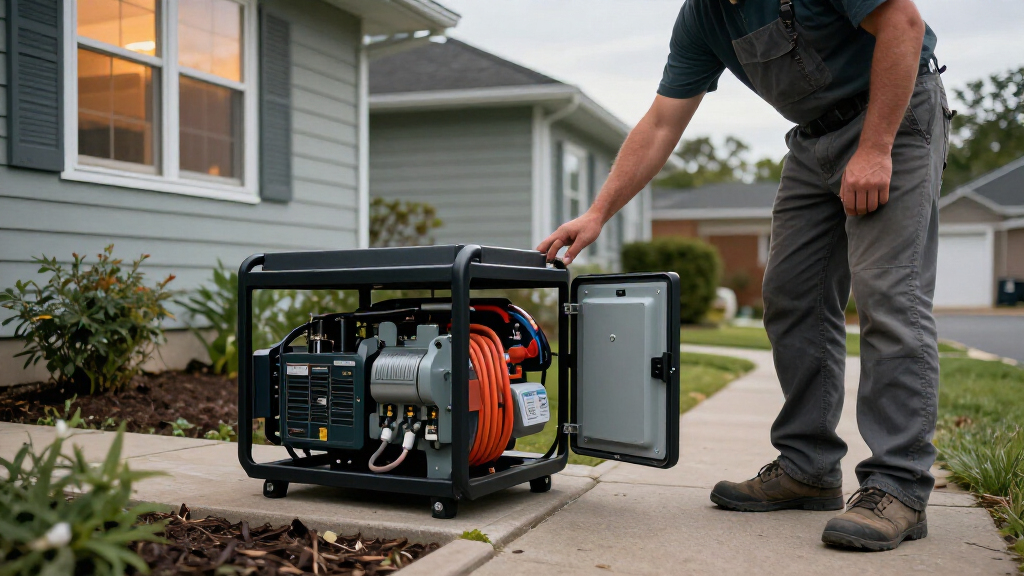
I compared these generators by the factors that shape a real standby-power decision: listed output, transfer-switch configuration, monitoring, and fit for different household demands. Capacity mattered, but I did not treat the largest number as an automatic win. A generator paired with an appropriate transfer switch can be a more useful choice than a higher-output unit whose listed package does not match the home’s electrical setup.
The ranking favors models with a clear balance of capacity and included system features, then separates options by their likely buyer: homes prioritizing selected circuits, buyers needing a 200-amp switch, and households with greater power demands. I also considered how plainly each listing identifies its monitoring and switch package. The supplied product details do not establish fuel use, noise, warranty terms, installation cost, or measured performance, so I do not use those claims to rank the models; buyers should confirm them with the manufacturer and installer.
| whole home standby generator | Connectivity |
|---|---|
| Honeywell 14kW Home Standby Ge | — |
| Generac 10 kW Whole-Home Stand | Built-in cellular; Mobile Link app service requires a premium subscription |
| Generac Guardian 22 kW Home St | — |
| Generac 24 kW Whole-Home Stand | Built-in cellular; Mobile Link app features require a premium subscription |
| Generac 26kW Whole-Home Standb | Built-in cellular; Mobile Link app features require a premium subscription |
| Generac 24kW Whole-Home Standb | Built-in cellular; Mobile Link remote features require a premium subscription |
| Generac 14 kW Whole-Home Stand | Built-in cellular; Mobile Link app features require a premium subscription |
| Generac 10 kW Whole-Home Stand | Built-in cellular; remote Mobile Link features require a premium subscription |
| Generac 22kW Whole Home Genera | Built-in cellular; Mobile Link remote features require a premium subscription |
| Generac 26 kW Whole-Home Stand | Built-in cellular; Mobile Link app features require a premium subscription |
| Generac 14 kW Whole-Home Stand | Built-in cellular; Mobile Link app monitoring and control |
Factors to Consider When Choosing Whole Home Standby Generators
Before choosing a model, I would treat the generator and its installation as one system. The nameplate capacity, transfer switch, home wiring, fuel supply, and local requirements all affect what backup power can deliver. These broader checks can prevent a common mistake: selecting by kilowatts alone and discovering that the package or site cannot support the intended loads.
Start With a Load Plan, Not a Kilowatt Guess
Make a list of what must keep running during an outage, then separate those items from conveniences you can live without. Include large motor-driven appliances and heating or cooling equipment, since their starting demands can differ from their normal running demand. Ask a qualified installer to assess both the home’s total load and the combination of appliances likely to operate at once. A higher-capacity model may help support more simultaneous use, but it cannot correct undersized wiring or a poor load plan. This step helps determine whether a 10 or 14 kW option is plausible or whether a 22, 24, or 26 kW model deserves evaluation.
Match the Transfer Switch to Your Electrical Service
A generator’s capacity and its transfer switch solve different problems: the generator supplies power, while the switch manages the connection between utility and backup power. Listings in this roundup include 16-circuit switches, 200-amp switches, and packages whose switch details are less explicit. Do not assume a 200-amp switch means every circuit can run at full demand at once, or that a 16-circuit switch cannot support a carefully selected set of essential loads. Have the installer check your service rating, panel layout, and intended circuits before buying. The right package is the one that fits the actual electrical system, not simply the one with the largest switch number.
Compare Cellular and Wi-Fi Monitoring Before You Commit
Remote monitoring can help owners check system status without visiting the generator, but the connection type affects how practical that feature is at a given property. The products here identify either cellular connectivity, cellular monitoring, or Wi-Fi monitoring, and those labels should not be treated as interchangeable. Ask whether the monitoring service requires a subscription, how coverage is verified at the installation site, and what alerts the system provides. A generator located where home Wi-Fi is unreliable may favor a cellular setup, while buyers with dependable network access may prefer Wi-Fi if the included functions meet their needs. Confirm the exact service terms for the model and package rather than relying on a general product-family description.
Check Fuel Supply and Site Requirements Early
Standby generators depend on a suitable fuel source and a compliant outdoor installation location, so verify these before settling on a capacity. Ask an installer to confirm fuel availability, line sizing, clearances, ventilation, local permits, and any neighborhood or municipal restrictions. These requirements can affect which models are feasible and what the complete project involves. A larger generator may call for different site or fuel planning than a smaller one, but the product names alone do not establish those needs. Get a site-specific assessment before ordering, especially if access, setbacks, or existing fuel infrastructure are limited.
Compare the Complete Installed System, Not Just the Generator
The listed product may include a transfer switch and monitoring capability, but it does not describe every part of an installation. Ask for a written scope covering electrical work, fuel connections, permits, startup, and any required accessories or ongoing service. This is also the point to confirm warranty coverage, maintenance intervals, and who handles support after installation. Two models with similar output can lead to different project requirements because their included switch packages and connection features differ. Comparing complete proposals helps reveal whether a simpler generator package is genuinely a better fit or merely leaves more work outside the box.
Frequently Asked Questions
Does a 200-amp transfer switch mean a generator can power my entire home at once?
No. The switch rating describes its electrical-service capacity, not how much power the generator can supply simultaneously. The generator’s output, the home’s demand, and any load-management setup determine which appliances can run together. Have an electrician review your service panel and expected loads before treating a 200-amp switch as full-load coverage. This distinction is especially useful when comparing the 200-amp packages with listings that specify a 16-circuit switch.
Should I choose a 24 or 26 kW model if I want fewer limits during an outage?
Only if a load assessment shows that your household needs the added output. A larger model may support more demand, but it does not automatically eliminate load management or guarantee that every appliance can start together. Your installer should account for large motors, heating and cooling equipment, and the loads you expect to use concurrently. If your planned backup loads fit a smaller unit, the higher-capacity choice may add complexity without solving a real need. Compare the complete installation requirements as well as the generator rating.
Is a 16-circuit transfer switch enough for a whole-home backup plan?
It can be enough for a plan centered on selected essential circuits, but circuit count alone does not tell you how much power those circuits require. A smaller number of high-demand circuits can still exceed a generator’s capacity, while a well-chosen set may cover a household’s priorities effectively. Ask an installer to identify which circuits can be backed up and whether load controls are needed. If you want broader service coverage, compare the switch arrangement with the 200-amp packages in this roundup. Do not infer whole-panel coverage from the phrase “whole home” in a product name.
Should I prefer cellular monitoring over Wi-Fi monitoring?
Choose based on the connection available where the generator will sit and the monitoring functions you actually want. Cellular connectivity may be useful when home Wi-Fi does not reliably reach the installation area, while Wi-Fi can suit a property with dependable network coverage. Check whether either option requires a paid service, what alerts are included, and whether the connection depends on a separate account or activation step. The listings identify different monitoring types, but they do not provide enough detail to assume identical service terms. Confirm those details for the exact model before purchase.
What should I confirm before ordering a generator online?
First, confirm that the generator’s fuel arrangement, transfer switch, and output fit your home and local electrical requirements. Ask a licensed installer to check site clearances, fuel supply, permits, wiring, and the scope of required work before delivery. Verify exactly which switch and monitoring components are included, since similar model names can refer to different packages. Also get written information about warranty coverage, maintenance, and startup support. A delivery-ready generator is not the same as a complete, permitted standby-power installation.
Conclusion
For most buyers comparing this lineup, I would start with the Generac Guardian 22 kW with transfer switch and Wi-Fi monitoring as the best overall balance. The Generac 10 kW with a 16-circuit transfer switch is the value-minded choice for homes focused on a defined set of priority loads, while the Generac 26 kW with a 200-amp transfer switch is the premium direction for buyers whose load assessment supports greater capacity and a broader switch package. Beginners should favor a clearly specified package and work with an installer to plan backed-up circuits before choosing by output alone; the 14 kW models offer a middle-capacity starting point, with package details varying. For buyers who specifically need cellular monitoring or a 200-amp switch, compare the matching 14, 24, and 26 kW listings and confirm the exact included components. My final recommendation is to select by verified household load and installation fit, then use capacity and monitoring as tie-breakers.