The best commercial energy storage systems pair useful battery capacity with an inverter setup that fits a business’s loads and electrical service. My best overall pick is the ECO-WORTHY Powermega system with an 18kW three-phase inverter, which stands out for buyers who need an integrated commercial-style setup. The Cubix100 battery-and-12,000W-inverter system is a strong alternative for larger 48V storage needs, while the standalone 16.07kWh batteries suit projects where an installer is building around a separate inverter. The main tradeoffs are system integration versus component flexibility, and higher capacity versus installation complexity. Read on for the full breakdown and guidance on matching a system to your site.

Get backup power and energy gear delivered free with Prime
- Fast, free delivery on millions of items
- Prime Video, Amazon Music and more included
- Member-only deals all year
Key Takeaways
- The Powermega 18kW three-phase system is the clearest fit for commercial-style loads among these picks because its inverter is specified for three-phase service; confirm compatibility with the site’s electrical design before purchase.
- The Cubix100 6-pack emphasizes expandable rack storage, while the Cubix100 battery-and-inverter bundle offers a more integrated path for buyers who want storage and conversion equipment together.
- Three standalone batteries cluster around 16kWh: Wirentech, Powermega, and AOUSK differ less in stated capacity than in integration, BMS specification, compatibility documentation, and support.
- Complete backup bundles can simplify equipment selection, but the 10,240Wh/5000W system and six-battery/10kW system should be judged against actual load and runtime needs, not battery count alone.
- Most options use 48V-class LiFePO4 storage, so inverter compatibility, parallel limits, installation requirements, and service arrangements can separate a workable commercial system from an expensive mismatch.
| ECO-WORTHY 48V Home Backup Power System, 10,240Wh LiFePO4 Battery and 5000W Inverter |  | Best Entry-Point Complete System | Battery chemistry: LiFePO4 | Battery configuration: Two 51.2V 100Ah batteries | Total battery capacity: 10,240Wh | VIEW LATEST PRICE | See Our Full Breakdown |
| ECO-WORTHY Cubix100 48V 600Ah LiFePO4 Server Rack Battery System, 6-Pack |  | Best Value for Modular Storage | Battery chemistry: LiFePO4 | System voltage: 51.2V | Capacity per battery: 100Ah | VIEW LATEST PRICE | See Our Full Breakdown |
| ECO-WORTHY Cubix100 48V 600Ah LiFePO4 Battery and 12,000W Hybrid Inverter System |  | Best for Three-Phase Commercial Loads | Battery chemistry: LiFePO4 | Battery configuration: 6 × 51.2V 100Ah | Total battery capacity: 600Ah, 30.72 kWh | VIEW LATEST PRICE | See Our Full Breakdown |
| Wirentech 51.2V 314Ah LiFePO4 Battery, 16.07kWh, 300A BMS |  | Best for High-Current Battery Expansion | Model: WP51314-00 | Battery chemistry: LiFePO4 | Voltage: 51.2V | VIEW LATEST PRICE | See Our Full Breakdown |
| ECO-WORTHY Powermega 48V 314Ah LiFePO4 Battery, 16.07kWh |  | Best Monitored Battery with Built-In Safety Features | Voltage: 51.2V (48V nominal) | Capacity: 314Ah | Energy: 16.07 kWh | VIEW LATEST PRICE | See Our Full Breakdown |
| ECO-WORTHY Powermega 48V 314Ah LiFePO4 Energy Storage System with 18kW Three-Phase Inverter |  | Best for Three-Phase Commercial Backup | Battery chemistry: LiFePO4 | Battery configuration: Two 48V 314Ah batteries | Total battery capacity: 32.15kWh | VIEW LATEST PRICE | See Our Full Breakdown |
| ECO-WORTHY 48V Home Backup Power System with 10kW Inverter and Six LiFePO4 Batteries |  | Best Expandable Split-Phase Backup | Battery chemistry: LiFePO4 | Battery configuration: Six 51.2V 100Ah batteries | Total battery capacity: 30,720Wh | VIEW LATEST PRICE | See Our Full Breakdown |
| AOUSK 48V 314Ah LiFePO4 Lithium Battery, 16.08 kWh |  | Best Modular Battery Expansion | Battery chemistry: LiFePO4 | Voltage: 48V (51.2V model) | Capacity: 314Ah | VIEW LATEST PRICE | See Our Full Breakdown |
| commercial energy storage system | Battery chemistry | Battery configuration | Total battery capacity |
|---|---|---|---|
| ECO-WORTHY 48V Home Backup Pow | LiFePO4 | Two 51.2V 100Ah batteries | 10,240Wh |
| ECO-WORTHY Cubix100 48V 600Ah | LiFePO4 | — | — |
| ECO-WORTHY Cubix100 48V 600Ah | LiFePO4 | 6 × 51.2V 100Ah | 600Ah, 30.72 kWh |
| Wirentech 51.2V 314Ah LiFePO4 | LiFePO4 | — | — |
| ECO-WORTHY Powermega 48V 314Ah | LiFePO4 | — | — |
| ECO-WORTHY Powermega 48V 314Ah | LiFePO4 | Two 48V 314Ah batteries | 32.15kWh |
| ECO-WORTHY 48V Home Backup Pow | LiFePO4 | Six 51.2V 100Ah batteries | 30,720Wh |
| AOUSK 48V 314Ah LiFePO4 Lithiu | LiFePO4 | — | — |
More Details on Our Top Picks
ECO-WORTHY 48V Home Backup Power System, 10,240Wh LiFePO4 Battery and 5000W Inverter
This is the most approachable way in this group to get both storage and power conversion in one package: 10.24 kWh of LiFePO4 capacity pairs with a 5,000W pure sine wave inverter and built-in 100A MPPT controller. That integrated setup can simplify planning compared with the Wirentech or Powermega batteries, which need a compatible inverter selected separately. Its capacity and inverter output are more modest than the six-battery ECO-WORTHY Cubix100 system, so I would treat it as a smaller-site or staged-install choice rather than a high-demand commercial plant. Parallel expansion offers a path to add batteries and inverters, but the single-inverter output is 120V; other listed voltages require multiple inverters. The batteries and inverter also ship separately, which can complicate delivery coordination.
Pros:- Combines two LiFePO4 batteries, inverter, and 100A MPPT controller in one system.
- Pure sine wave output suits compatible sensitive equipment.
- Bluetooth and Wi-Fi app monitoring provide remote battery visibility.
- Supports parallel expansion up to six inverters and 32 batteries.
Cons:- Single-inverter output is 120V; other listed output voltages require parallel inverters.
- The 10.24 kWh battery bank is relatively limited beside the 30.72 kWh Cubix100 packages.
- Batteries and inverter ship separately.
Best for: Small commercial sites or workshops seeking a matched battery-and-inverter package for essential loads, with room to expand later.
Not ideal for: Facilities that need three-phase service, high continuous power, or a ready-made large-capacity cabinet; the single inverter provides 120V output and the included storage is smaller than the Cubix100 systems.
- Battery chemistry:LiFePO4
- Battery configuration:Two 51.2V 100Ah batteries
- Total battery capacity:10,240Wh
- Inverter output:5,000W; 10,000W peak
- Waveform:Pure sine wave
- MPPT charge controller:100A
- PV input voltage range:120–500V DC
- Monitoring and communications:Bluetooth, Wi-Fi, ECO-WORTHY app, CAN, and RS485
- Expansion:Up to 6 inverters and 32 batteries in parallel
Our verdict“Choose this as a comparatively compact, expandable complete system when integrated solar charging matters more than three-phase output or a large initial battery bank.”
ECO-WORTHY Cubix100 48V 600Ah LiFePO4 Server Rack Battery System, 6-Pack
For buyers who already have a suitable inverter or are specifying one separately, this six-battery pack delivers 30.72 kWh of storage without bundling equipment they may not need. That makes it a more modular choice than the 10.24 kWh ECO-WORTHY home backup system, and it matches the battery capacity of the Cubix100 hybrid inverter package at the core. The distinction is that this listing is a battery system, not a complete power-conversion setup: the rack is not included, and buyers must verify inverter compatibility and provide installation infrastructure. CAN/RS485 communication and app monitoring help with system integration and oversight, while the stated UL9540, UL1973, and CEC listings support specification work. Large systems may arrive in multiple packages, so receiving and staging the equipment takes planning.
Pros:- Six 51.2V 100Ah batteries provide 30.72 kWh of stated storage.
- CAN/RS485 communication and Bluetooth/Wi-Fi app monitoring support system oversight.
- Can be expanded by paralleling up to 32 units.
- Includes parallel, communication, and grounding accessories.
Cons:- Rack is not included, adding a separate equipment and installation requirement.
- No inverter is included, so buyers must confirm compatibility and source power conversion separately.
- Large orders may arrive in multiple packages.
Best for: Commercial solar and backup projects that already have a compatible 48V inverter and need a scalable six-battery storage bank.
Not ideal for: Buyers seeking a turnkey system with an inverter and cabinet included, or sites without space and equipment for rack installation.
- Battery chemistry:LiFePO4
- System voltage:51.2V
- Capacity per battery:100Ah
- Number of batteries:6
- Total energy storage:30.72 kWh
- Communications:CAN and RS485
- Monitoring:Bluetooth and Wi-Fi via ECO-WORTHY app
- Maximum parallel units:32
- Certifications and listings:UL9540, UL1973, CEC listed
Our verdict“Pick this battery-only Cubix100 package when modular 30.72 kWh storage is the priority and you already have a compatible inverter and rack plan.”
ECO-WORTHY Cubix100 48V 600Ah LiFePO4 Battery and 12,000W Hybrid Inverter System
This is the most complete high-output package in this group: six batteries supply 30.72 kWh of storage, while the hybrid inverter supports 120V/240V split-phase or 120V/208V three-phase. That three-phase option separates it from the 5,000W ECO-WORTHY home backup system and makes this package a stronger fit for sites with varied commercial loads. Dual MPPT controllers and a 200A maximum battery charger provide solar and charging capability within the inverter, reducing the need to assemble a battery-only setup like the Cubix100 six-pack. The stated 24,000W figure is peak power, not a continuous rating, so buyers should confirm operating requirements against the full inverter documentation. Installation needs coordination, and the batteries and inverter ship separately.
Pros:- Six batteries provide 30.72 kWh of storage.
- Inverter supports split-phase and three-phase output options.
- Dual MPPT controllers and a maximum 200A battery charger are integrated into the hybrid inverter.
- Supports expansion up to six inverters and 32 batteries.
Cons:- The stated 24,000W output is peak power; buyers need to confirm continuous ratings for their loads.
- Batteries and inverter ship separately, complicating receiving and installation scheduling.
- Requires installation planning and compatible site electrical infrastructure.
Best for: Commercial properties needing a bundled battery-and-hybrid-inverter system with three-phase output options, substantial storage, and room to expand.
Not ideal for: Small facilities with simple 120V backup needs, or buyers who need a single-shipment kit and do not have access to qualified installation support.
- Battery chemistry:LiFePO4
- Battery configuration:6 × 51.2V 100Ah
- Total battery capacity:600Ah, 30.72 kWh
- Inverter peak power:24,000W
- Inverter features:Pure sine wave, dual MPPT controllers, maximum 200A battery charger
- Output options:120V/240V split-phase or 120V/208V three-phase
- Battery communication and monitoring:CAN/RS485; Bluetooth and Wi-Fi via ECO-WORTHY app
- Expansion:Up to 6 inverters and 32 batteries
- Warranty:Battery: 10 years; inverter: 5 years
Our verdict“Choose this package when you need a bundled 30.72 kWh battery bank and inverter with three-phase capability, and can plan for professional installation.”
Wirentech 51.2V 314Ah LiFePO4 Battery, 16.07kWh, 300A BMS
The Wirentech stands out among the standalone batteries for pairing 16.07 kWh of capacity with a 300A BMS and active cell balancing. That higher BMS current rating distinguishes it from the ECO-WORTHY Powermega battery’s 200A BMS, though actual system power still depends on inverter compatibility and configuration. App access to battery and individual-cell data can help operators monitor the bank, while CAN and RS485 support integration with compatible equipment. Its stated Pylontech protocol may help narrow inverter selection, but it does not remove the need to confirm the exact model and settings before purchase. Compared with the all-in-one Cubix100 hybrid system, this battery leaves inverter and system design to the buyer. It is also a large floor-standing unit that ships by truck.
Pros:- Provides 16.07 kWh of LiFePO4 storage in one battery.
- 300A BMS and active cell balancing support battery management.
- App monitoring includes battery and individual-cell data.
- Supports CAN/RS485 integration and expansion up to 16 batteries.
Cons:- Inverter compatibility must be confirmed for CAN or RS485 operation.
- Battery-only purchase requires separate inverter, charging, and system design.
- Truck delivery and local pickup availability may complicate receiving.
Best for: Solar and backup system integrators who need a high-capacity 51.2V battery with a 300A BMS and can verify inverter communications before installation.
Not ideal for: Buyers wanting a turnkey system, or those without a compatible inverter and the facilities to receive a large truck-delivered battery.
- Model:WP51314-00
- Battery chemistry:LiFePO4
- Voltage:51.2V
- Capacity:314Ah
- Energy capacity:16.07 kWh
- BMS current:300A
- Cell balancing and monitoring:Active balancing; mobile app with individual-cell data
- Communications and protocol:CAN, RS485, Pylontech inverter protocol
- Expansion and warranty:Up to 16 batteries; 10-year warranty
Our verdict“Select the Wirentech when a 300A BMS and cell-level app data matter more than getting an inverter or cabinet in the same package.”
ECO-WORTHY Powermega 48V 314Ah LiFePO4 Battery, 16.07kWh
Powermega’s case is less about raw capacity than about built-in monitoring and protection. Its 16.07 kWh capacity matches the Wirentech battery, but this model adds a 7-inch touchscreen, Wi-Fi and Bluetooth monitoring, an external two-pole circuit breaker, and aerosol fire-suppression modules. Those features can make local status checks and protection hardware more accessible to an operator, though they do not replace system-level fire planning or a compatible inverter. The 200A active-balancing BMS is rated below the Wirentech’s 300A BMS, so buyers prioritizing that current rating may prefer the Wirentech. Powermega supports up to 15 units in parallel and carries UL 1973 certification. Its pallet-sized truck delivery means the site must be able to receive and handle a large battery.
Pros:- 16.07 kWh capacity with expansion support for up to 15 units.
- 7-inch touchscreen plus Wi-Fi and Bluetooth monitoring.
- 200A smart BMS includes active cell balancing.
- Includes an external two-pole circuit breaker and aerosol fire-suppression modules.
Cons:- 200A BMS current rating is lower than the Wirentech battery’s 300A rating.
- Battery-only system requires a separately selected compatible inverter.
- Pallet delivery by truck requires a suitable receiving address.
Best for: Commercial solar operators who want a standalone 16.07 kWh battery with local touchscreen status, remote monitoring, and added onboard protection hardware.
Not ideal for: Buyers prioritizing a 300A BMS, a bundled inverter, or delivery to a site that cannot accommodate truck freight and pallet handling.
- Voltage:51.2V (48V nominal)
- Capacity:314Ah
- Energy:16.07 kWh
- Battery chemistry:LiFePO4
- BMS:200A smart BMS with active cell balancing
- Maximum parallel units:15
- Monitoring:7-inch HD touchscreen, Wi-Fi, and Bluetooth
- Ports:RS485 and CAN
- Certification and warranty:UL 1973; 10-year manufacturer warranty
Our verdict“Choose Powermega for its touchscreen, remote monitoring, and onboard protection features, but favor the Wirentech if BMS current is the deciding factor.”
ECO-WORTHY Powermega 48V 314Ah LiFePO4 Energy Storage System with 18kW Three-Phase Inverter
The Powermega’s 18kW three-phase inverter makes this the clearest fit here for facilities with three-phase loads, rather than a simple home-backup setup. Its 32.15kWh battery bank combines two 48V 314Ah LiFePO4 batteries, while solar input up to 28.8kW gives a site room to pair substantial PV capacity with storage. Compared with the ECO-WORTHY 10kW Home Backup system, this unit offers higher inverter output and three-phase 120/208Vac output, but the 10kW system provides six separate batteries and 120/240V split-phase support. The Powermega’s peak output reaches 36kW for 10 seconds, useful for brief surges, not sustained loads. At 713.2 lb, it requires planned delivery, placement, and installation; it is a poor match for buyers seeking a light, simple add-on.
Pros:- 18kW three-phase inverter suits compatible commercial loads.
- 32.15kWh of LiFePO4 storage supports extended backup or off-grid operation.
- Up to 28.8kW solar input and dual MPPT support substantial PV integration.
- Active-balancing BMS, fire suppression module, WiFi, and Bluetooth add protection and monitoring options.
Cons:- At 713.2 lb, delivery, floor placement, and installation require planning.
- Its 120/208Vac three-phase output does not match sites that need 120/240V split-phase service.
- Batteries may arrive on a pallet in multiple packages, complicating receiving and setup.
Best for: Small commercial sites or off-grid properties with three-phase 120/208Vac loads, substantial solar arrays, and room for a heavy battery system.
Not ideal for: Residential buyers who need 120/240V split-phase output, or sites without equipment and space to receive and position a 713.2 lb system.
- Battery chemistry:LiFePO4
- Battery configuration:Two 48V 314Ah batteries
- Total battery capacity:32.15kWh
- Inverter output:18,000W
- Output voltage:120/208Vac three-phase
- Peak output power:36,000W for 10 seconds
- Maximum solar input:28.8kW
- Weight:713.2 lb
Our verdict“Choose the Powermega when three-phase output and high solar input matter more than easier handling or split-phase compatibility.”
ECO-WORTHY 48V Home Backup Power System with 10kW Inverter and Six LiFePO4 Batteries
This ECO-WORTHY system stands out for buyers who want six modular batteries and a familiar 120V or 120/240V split-phase setup. Its 30.72kWh capacity is close to the Powermega’s 32.15kWh, but the Powermega is the better fit for three-phase 120/208Vac sites and higher inverter output. Here, the 10kW inverter and 20kW peak rating are aimed at whole-home backup and off-grid loads, while dual MPPT controllers help connect solar. CAN/RS485 battery communication and app monitoring give installers useful system visibility, and expansion supports up to six inverters and 32 batteries in parallel. The tradeoff is substantial: at 677.5 lb, this is no lightweight installation, and separately shipped components can complicate receiving. Buyers should also confirm compatibility and system design before expanding.
Pros:- 30.72kWh capacity across six batteries supports substantial backup and off-grid use.
- Provides 120V single-phase or 120/240V split-phase output.
- Dual MPPT controllers, app monitoring, and CAN/RS485 communication support system management.
- Expansion supports up to six inverters and 32 batteries in parallel.
Cons:- The 677.5 lb total weight calls for planned delivery and installation.
- Components ship separately, so receiving and coordinating setup may take extra effort.
- Its 10kW inverter output is lower than the Powermega’s 18kW rating and is not three-phase.
Best for: Homeowners, workshops, or small sites that need 120/240V split-phase backup, a substantial battery bank, and room to expand with compatible components.
Not ideal for: Commercial sites that require three-phase output or buyers who need a compact, single-package system that is simple to move and receive.
- Battery chemistry:LiFePO4
- Battery configuration:Six 51.2V 100Ah batteries
- Total battery capacity:30,720Wh
- Inverter output:10,000W
- Peak power:20,000W
- Output:120V single-phase or 120V/240V split-phase
- Expansion:Up to 6 inverters and 32 batteries in parallel
- Weight:677.5 lb
Our verdict“Pick this system for expandable, high-capacity split-phase backup, but choose the Powermega instead if your loads require three-phase output.”
AOUSK 48V 314Ah LiFePO4 Lithium Battery, 16.08 kWh
The AOUSK is a single 16.08kWh battery, not a complete storage system with an inverter, so it suits buyers building or expanding a compatible installation. RS485, CAN, and RS232 connections give it more integration options than a basic battery, while Bluetooth, WiFi, and a display make status checks accessible. Its support for up to 15 units in parallel offers a path to larger storage, unlike purchasing an integrated package such as the ECO-WORTHY 10kW system, which includes an inverter and six batteries. That flexibility comes with work: buyers must source a compatible inverter and verify communication and installation requirements. At 291 lb and 33.54 inches tall, it is also a heavy, tall unit despite its built-in wheels and handles. The stated cycle-life figure is useful planning data, not a guarantee of service life in every installation.
Pros:- 16.08kWh capacity in one LiFePO4 battery supports modular system builds.
- RS485, CAN, and RS232 interfaces provide multiple inverter communication options.
- Bluetooth, WiFi, and an onboard display support battery monitoring.
- Parallel connection supports up to 15 units, and built-in wheels and handles aid positioning.
Cons:- An inverter is not included, so buyers must source and confirm a compatible system.
- The 291 lb weight still requires careful handling despite the wheels and handles.
- Its 33.54-inch height may restrict installation locations.
Best for: Commercial installers or technically capable owners who already have a compatible 48V inverter and want to add storage in parallel.
Not ideal for: Buyers seeking a ready-to-run system with an included inverter, or sites with limited clearance and no means to position a 291 lb battery.
- Battery chemistry:LiFePO4
- Voltage:48V (51.2V model)
- Capacity:314Ah
- Energy capacity:16.08kWh
- BMS:200A with six-layer protection
- Cycle life:Up to 6,000 cycles at 80% state of health
- Communication interfaces:RS485, CAN, RS232, Bluetooth, WiFi
- Parallel connection:Up to 15 units
- Weight:291 lb
Our verdict“Choose the AOUSK to add compatible 48V storage incrementally; choose an ECO-WORTHY integrated system if you need an inverter and batteries in one package.”
How We Picked
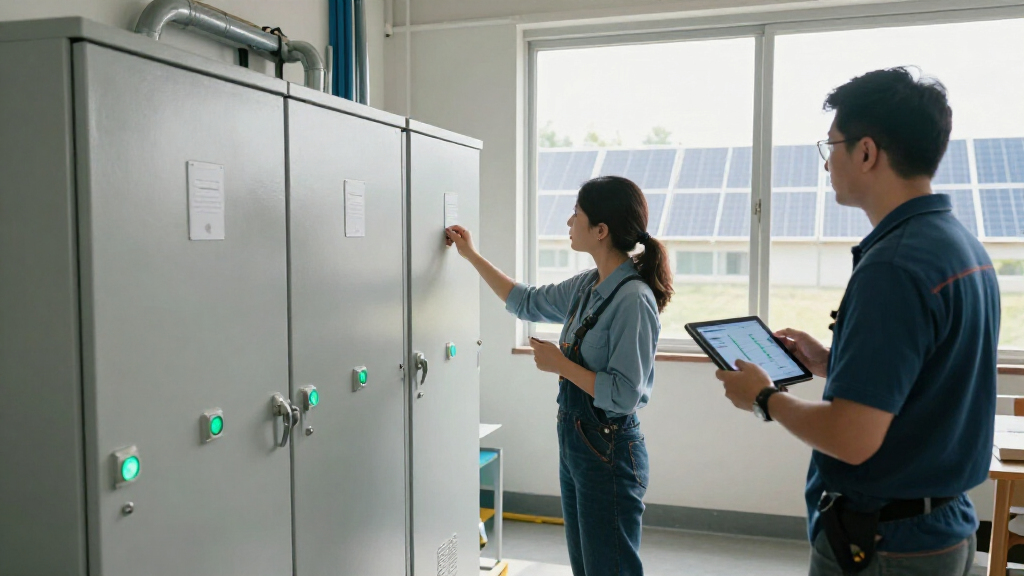
I ranked these systems by how clearly their stated design matches real commercial storage needs: usable capacity, inverter power and type, system integration, and the ability to fit different site layouts. I gave more weight to complete configurations when they reduce the burden of sourcing compatible components, while standalone batteries remain strong choices for buyers with an experienced installer and a defined inverter plan.
The ranking also reflects the limits of the available product information. A large capacity figure does not establish runtime, usable energy, or suitability for a particular service, so I favored options with more explicit system-level specifications without treating stated ratings as proof of field performance. Buyers should verify certifications, warranty terms, monitoring, battery communication protocols, expansion limits, and local electrical-code requirements before treating any of these products as a commercial-ready installation.
Factors to Consider When Choosing Best Commercial Energy Storage Systems
Commercial storage selection starts with the job the system must do, not the largest battery number on the product page. I would define the site’s loads, operating schedule, and electrical service first, then compare battery capacity and inverter capability against those requirements.
Size Storage Around Loads and Runtime
List the equipment that must stay on during an outage or peak-demand period, then estimate its power draw and operating hours. Battery capacity is energy, while inverter capacity is the rate at which the system can supply power; confusing the two can lead to a system that has enough stored energy but cannot start or run the required equipment. Account for motor-starting surges, simultaneous loads, and reserve capacity rather than sizing to a typical quiet hour. Ask vendors for usable energy and operating limits, not only nominal battery capacity. A load profile from the site is more useful than a rough estimate based on floor area. If a business expects to add equipment, check the expansion path before buying a fixed bundle.
Match the Inverter to the Site’s Electrical Service
Confirm whether the building uses single-phase or three-phase service and whether the system can connect to that arrangement. A three-phase inverter can be a strong fit for compatible commercial equipment, but it does not automatically make every battery bank suitable for a particular building. Verify voltage, frequency, grid-interconnection requirements, and how the inverter handles unbalanced loads. Buyers choosing a battery-only product should have the inverter model selected before ordering, including confirmation of battery communication support. Avoid assuming that matching 48V labels guarantee compatibility. Have a qualified electrical professional review the one-line diagram and interconnection plan.
Choose Between an Integrated Bundle and Separate Components
An integrated battery-and-inverter package can reduce the coordination work of pairing major components, which may help a buyer seeking a more direct procurement path. Separate batteries offer more freedom to select inverter functions, monitoring, and service arrangements, but that flexibility places more responsibility on the system designer. Before buying a bundle, check whether its inverter has the modes and controls the site needs, such as backup behavior or scheduled operation. For a component-based design, confirm approved battery pairings and communication protocols in writing. Compare the support path for the complete system, since multiple suppliers can complicate fault diagnosis. The lower-friction choice is not always the better fit if it lacks a required electrical feature.
Check Expansion Limits and Battery-Bank Design
Rack batteries and multi-battery bundles can make capacity growth easier, but expansion depends on more than adding another unit. Confirm maximum parallel quantity, cable and busbar requirements, battery balancing guidance, and whether mixed production batches are supported. Ask how the system behaves if one battery reports a fault or reaches a different state of charge from the rest. Plan room for safe access, ventilation where required, and service clearance before choosing a rack layout. A larger bank can also increase installation and protection requirements. Buy for a realistic growth plan rather than assuming every listed battery can be added later without redesign.
Verify Protection, Compliance, and Service
A battery management system rating is only one part of the protection picture; the installation also needs suitable overcurrent protection, disconnects, grounding, and equipment coordination. Request documentation for applicable safety certifications and grid-interconnection approvals, then confirm that the documents cover the exact model and configuration being purchased. Check warranty duration, cycle or throughput limits, exclusions, and the process for replacement or technical support. Commercial operators should ask who handles commissioning and what monitoring information is available after installation. Do not rely on a product listing alone to establish code compliance. Local permitting and utility rules may affect both equipment choice and installation schedule.
Compare Total Project Fit, Not Just Battery Capacity
The purchase decision includes the battery, inverter, electrical protection, installation labor, commissioning, and any site changes. A bundled system may reduce component-selection effort, while a standalone battery may fit an existing inverter investment and avoid replacing compatible equipment. Compare warranties and support across the full configuration, since a battery and inverter from different suppliers may have separate service channels. Check monitoring, remote diagnostics, and maintenance access if the system supports business operations. Consider whether the system is intended for backup, peak reduction, renewable-energy shifting, or several jobs at once; those use cases can demand different controls. A well-matched smaller system can serve a site better than a larger bank with unsuitable power electronics.
Frequently Asked Questions
Can a 48V battery system serve a commercial building?
It can serve some commercial applications, but the voltage label alone does not determine suitability. The inverter must match the building’s service, load profile, and interconnection requirements, and the battery bank must support the inverter’s current demands. Larger projects may need multiple batteries, carefully designed cabling, and coordinated protection. Ask an electrical professional to confirm the design against the site’s one-line diagram and local rules. These products should not be treated as interchangeable with every commercial storage installation.
Should I buy a complete battery-and-inverter system or a standalone battery?
A complete system can reduce the work of selecting compatible major components and may suit buyers who want a defined package. A standalone battery can make more sense when the site already has a compatible inverter or an installer has chosen the power electronics for specific operating needs. In either case, confirm communication compatibility, supported operating modes, and warranty coverage for the combined installation. Ask who is responsible if a fault involves more than one manufacturer. The right choice depends on whether integration simplicity or component flexibility matters more for the project.
Is a 16kWh battery enough for my business?
Capacity alone cannot answer that question because runtime depends on the loads running at the same time and the usable portion of the battery. A 16kWh-class battery may suit a limited backup circuit or a defined operating window, but it may fall short for long-duration or high-power loads. Calculate expected energy use over the required hours and check inverter output and surge capability separately. Include reserve capacity for unexpected demand and battery operating limits. A load study is a better basis for sizing than comparing nominal capacity figures across listings.
What should I verify before expanding a multi-battery system?
Confirm the manufacturer’s supported parallel count and whether the new battery model and firmware can operate with the existing bank. Check busbar and cable sizing, overcurrent protection, communication wiring, and commissioning steps before adding capacity. Batteries at different states of health or charge can affect how the bank shares current, so ask for the vendor’s mixing and balancing guidance. Confirm that the inverter supports the resulting battery capacity and current. Expansion should be treated as an electrical redesign, not simply adding another rack unit.
Does a three-phase inverter make a system suitable for any commercial site?
No. Three-phase output is relevant only when it matches the site’s electrical service and the loads the system must support. Confirm voltage, phase configuration, load balance, grid-interconnection rules, and whether the inverter can handle the site’s starting surges. A three-phase specification does not establish certification, backup capability, or compatibility with a particular battery bank. Have the installer verify the complete system design and applicable approvals. For a single-phase site, a three-phase inverter may add complexity without providing a useful benefit.
Conclusion
For an integrated, commercial-style configuration, I would start with the ECO-WORTHY Powermega system with the 18kW three-phase inverter, provided the site’s service and engineering plan match its design. The Cubix100 battery-and-12,000W-inverter system is my alternative for buyers prioritizing a larger integrated 48V setup, while the Cubix100 6-pack suits projects built around rack storage and planned capacity. For value-minded buyers, I would compare the standalone 16.07kWh batteries from Wirentech, Powermega, and AOUSK against an existing inverter and the full installation cost rather than choosing by capacity label alone. Beginners are better served by a complete backup bundle, such as the ECO-WORTHY 10,240Wh/5000W system, if its output fits their defined loads and a qualified installer can validate the setup. For three-phase requirements, prioritize the 18kW Powermega configuration; for a flexible component-based design, focus on a standalone battery only after compatibility and support are confirmed.