
Managing a freezer backup can become tricky faster than you think because clutter, overstuffing, and poor organization disrupt airflow and reduce efficiency. When your freezer is too full or messy, it’s harder to keep the right temperatures, risking spoilage and higher energy costs. Regular maintenance, proper storage, and smart planning are essential. If you want to avoid these pitfalls and keep your freezer running smoothly, more tips are just ahead.

Get backup power and energy gear delivered free with Prime
- Fast, free delivery on millions of items
- Prime Video, Amazon Music and more included
- Member-only deals all year
Key Takeaways
- Modern backup systems require regular maintenance and strategic planning to ensure reliability and efficiency.
- Overstuffed or cluttered freezers hinder airflow, causing backup systems to work harder and complicate temperature management.
- Upgrading to better-insulated or secondary freezers involves additional costs and ongoing upkeep.
- Proper organization and routine defrosting are essential to prevent ice buildup that can disrupt backup performance.
- Continuous monitoring and adjustments are necessary to keep backup systems effective amid changing storage needs.

When it comes to safeguarding your frozen essentials, what once seemed straightforward has now become more complicated. You might have thought that simply keeping food in the freezer and periodically defrosting it was enough, but today’s storage needs demand a more strategic approach. As you try to protect your food and optimize your energy efficiency, you realize that maintaining a backup system isn’t just about having extra space; it’s about smarter storage organization and energy-conscious choices. With rising energy costs and the need to preserve food longer, you’re faced with balancing convenience against efficiency. This means paying attention to how your freezer is organized, ensuring items are easy to access and don’t block airflow, which can compromise both energy efficiency and food safety.
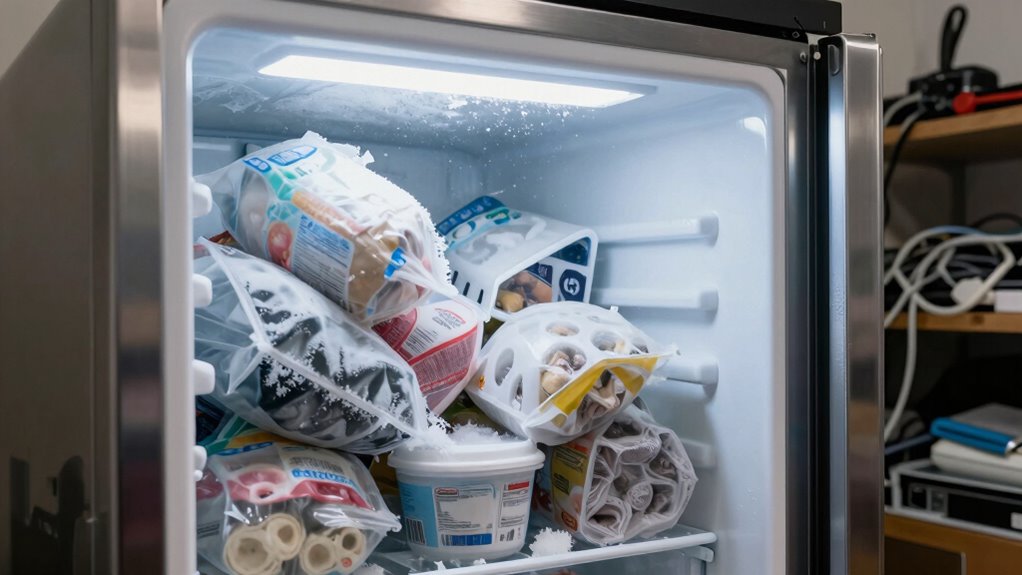
In your effort to improve storage organization, you learn that stacking items haphazardly leads to cold spots and uneven temperature distribution. This not only wastes energy but also risks spoilage if certain areas aren’t properly cooled. You start to see that a well-structured layout—using clear bins, labeling, and designated zones—helps maintain consistent temperatures and makes it easier to find what you need quickly. When your freezer is cluttered, it’s tempting to overstuff it, but this actually works against your goal of energy efficiency. Overfilled freezers struggle to maintain consistent temperatures, leading to longer running times and higher energy bills. You realize that a more thoughtful organization, with space left for proper airflow, ensures your freezer runs efficiently and keeps your food safe longer. Additionally, implementing smart storage solutions can further optimize organization and energy use.
Adding to the complication is the fact that backup options aren’t just about having a second freezer or extra storage. You need to consider how to keep your backup energy-efficient, whether that means investing in a more modern appliance with better insulation or using methods to reduce power consumption. You might also explore strategies like regularly defrosting to prevent ice buildup, which can hinder energy efficiency. Proper freezer insulation can significantly impact energy use, helping to keep your food cold without excessive power. Proper maintenance of your freezer, such as cleaning coils and checking seals, also plays a crucial role in sustaining energy efficiency. Additionally, understanding how to implement energy-efficient practices can further reduce ongoing costs and environmental impact. Being aware of the importance of proper airflow and avoiding overstuffing can make a significant difference in overall efficiency. As you navigate these choices, it becomes clear that maintaining a backup isn’t just a one-time task but an ongoing process involving careful planning and adjustment.
In the end, safeguarding your frozen essentials involves more than just stacking boxes and hitting the switch. It’s about understanding how to organize your storage, optimize energy use, and ensure your backup system is reliable and efficient. This makes the process more complicated than most shoppers expect, but with a clear plan, you can protect your food, save money, and keep your freezer running smoothly for the long haul.
As an affiliate, we earn on qualifying purchases.
Frequently Asked Questions
How Often Should I Perform Freezer Maintenance Checks?
You should perform freezer maintenance checks every 3 to 6 months to maintain energy efficiency and guarantee proper storage organization. Regularly defrost, clean, and inspect for frost buildup or leaks. This helps your freezer run efficiently, saving energy and preventing spoilage. Keeping an organized space makes it easier to spot issues early. Consistent checks keep your freezer functioning at its best, extending its lifespan and ensuring your food stays fresh longer.
What Are the Signs of Freezer Compressor Failure?
You’ll notice your freezer’s compressor fails when it suddenly becomes noisier than a rock concert, with rattling or buzzing sounds. Sometimes, you’ll spot refrigerant leaks, which cause temperature fluctuations and strange smells. Ironically, these signs often appear before the compressor completely dies, giving you a brief warning. Ignoring these clues speeds up failure, so listen for unusual compressor noise and check for refrigerant leaks to prevent total breakdown.
Can Freezer Backups Cause Food Safety Issues?
Yes, freezer backups can cause food safety issues. When your freezer isn’t working properly, temperature fluctuations occur, risking foodborne risks. If the freezer warms up, bacteria can grow on perishable items, making them unsafe to eat. Regularly check for signs of backup and keep your freezer at the right temperature to prevent these hazards. Prompt maintenance helps you avoid food spoilage and potential health risks.
What Tools Are Best for Defrosting a Freezer?
You should use a hairdryer or a heat gun for quick defrosting, but make sure you monitor temperature regulation to prevent damage. A plastic or rubber spatula helps remove ice gently, avoiding damage. Don’t forget to clean the drain to prevent future buildup. Unplug the freezer before starting, and place towels to catch melting water. These tools and steps make defrosting safer and more efficient, reducing the risk of freezer backup issues.
How Do I Prevent Freezer Backups During Power Outages?
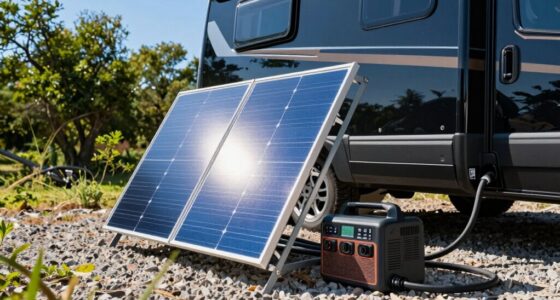
To prevent freezer backups during power outages, you need to act fast—ice buildup can turn a simple outage into a messy, costly problem. Keep the freezer full with frozen water bottles, which helps maintain energy efficiency and prevents air from circulating, reducing ice formation. Also, consider investing in a generator or backup power source to keep your freezer running smoothly, avoiding spoilage and complicated defrosting later.
As an affiliate, we earn on qualifying purchases.
Conclusion
So, when it comes to freezer backup, expect complexity to grow, expect plans to shift, and expect challenges to arise. You’ll need to stay organized, stay adaptable, and stay prepared for surprises. Because freezer backup isn’t just about storage; it’s about strategy. Embrace the process, anticipate the twists, and remember: your preparedness depends on your willingness to navigate the complications. In the end, your resilience, your flexibility, your foresight will determine your success.
As an affiliate, we earn on qualifying purchases.
As an affiliate, we earn on qualifying purchases.
Fall Picks
fall essentials
As an affiliate, we earn on qualifying purchases.