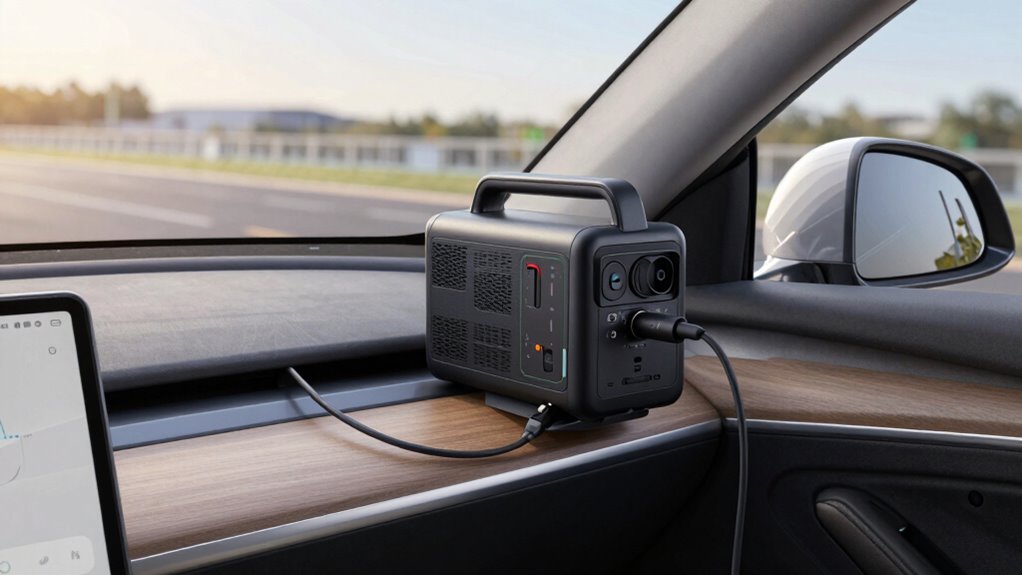

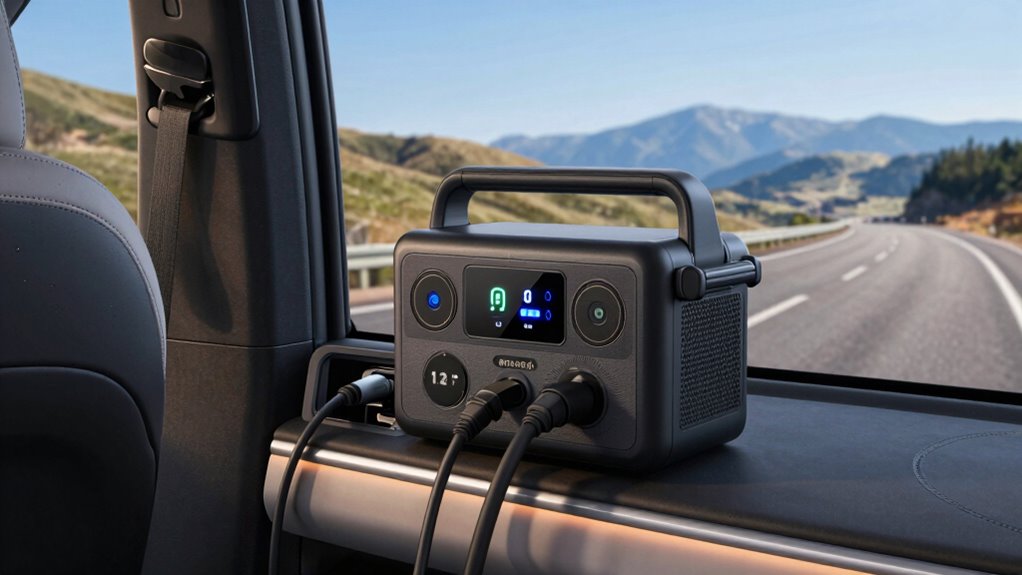
While driving, you can charge your portable power station using your vehicle’s DC outlets, but keep in mind that these outlets offer limited charging speeds. To get the most efficient recharge, choose a power station compatible with your vehicle’s voltage and wattage and look for models with built-in MPPT charge controllers. Combining vehicle charging with solar panels or larger batteries can boost reliability. If you’re curious about maximizing your setup, there’s more to explore.

Get backup power and energy gear delivered free with Prime
- Fast, free delivery on millions of items
- Prime Video, Amazon Music and more included
- Member-only deals all year
Key Takeaways
- Vehicle DC outlets can top off power stations during drives, but charging speed is limited.
- Ensure the power station’s input voltage and wattage match the vehicle’s DC outlet specifications.
- Combining vehicle charging with solar panels or AC outlets maximizes recharge options and efficiency.
- Using built-in MPPT controllers improves charging efficiency from vehicle DC outlets.
- Properly matching capacity and charging methods ensures reliable power management during travel.
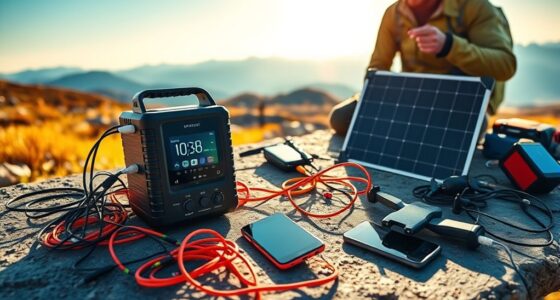
When you’re on the road, keeping your portable power station charged can be a game-changer for staying connected and powering your devices. One effective way to do this is through solar panel integration, which allows you to harness sunlight and recharge your station without relying solely on your vehicle’s power outlets. Solar panels are especially handy when you’re camping or traveling in remote areas, giving you a sustainable and silent charging option. Before you set out, consider the solar panel compatibility with your power station, ensuring it can handle the input voltage and wattage. This integration not only extends your power source but also reduces dependency on your vehicle’s electrical system, which can fluctuate or be limited.
Using solar panels with your power station ensures sustainable, silent charging during remote adventures.
Another crucial aspect to focus on is battery capacity considerations. The size of your power station’s battery determines how long you can run your devices before needing a recharge. If you plan on using high-power appliances or multiple devices simultaneously, you’ll want a station with a larger capacity—measured in watt-hours. Smaller batteries might suffice for charging phones or small gadgets, but if you’re camping or working remotely for extended periods, a higher capacity station becomes essential to meet your energy needs. Keep in mind that the battery’s capacity impacts how effective solar panel integration will be, as larger batteries require more energy to recharge fully.
When driving, you can also take advantage of your vehicle’s DC power outlets to top off your portable power station. However, this method offers limited charging speed compared to solar panels or dedicated AC outlets. Combining these methods—using your vehicle’s power when available, solar panels when parked, and choosing a power station with appropriate battery capacity—gives you flexibility and reliability.
It’s worth noting that some portable power stations come with built-in MPPT charge controllers, which optimize solar charging efficiency, making solar panel integration more effective, especially in variable sunlight conditions. This feature can significantly shorten recharge times and maximize energy harvesting during your travels. Always check the wattage input specifications to ensure your solar panels match the station’s requirements.
Products Worth Considering

Bose SoundLink Plus Portable Bluetooth Speaker, Black

Blueair Blue Pure 311i Max Smart Air Purifier

Dyson Cyclone V10 Origin Cordless Vacuum
As an affiliate, we earn on qualifying purchases.
Frequently Asked Questions
Can I Charge a Portable Power Station With a Cigarette Lighter Socket?
Yes, you can charge a portable power station with a cigarette lighter socket, provided it’s compatible. Check the power station’s charging compatibility and battery capacity to confirm it matches the socket’s output. Use a suitable car charger cable designed for your power station. Keep in mind that charging times depend on battery capacity; larger capacity stations will take longer to charge via your vehicle’s lighter socket.
What Is the Maximum Charging Speed While Driving?
While driving, you can generally charge your portable power station at up to 100W, depending on your car’s power outlet. That’s enough to replenish large capacity stations efficiently. To maximize this, make sure your charging cable is compatible with your power station’s input port. Keep in mind, higher capacity power stations take longer to charge, so check your station’s specifications and use a compatible cable to guarantee safe, ideal charging speeds.
Is It Safe to Leave the Power Station Charging Unattended?
You should avoid leaving your portable power station charging unattended to guarantee battery safety and prevent overcharge risks. While many units have built-in protections, unattended charging increases the chance of overheating or malfunctioning. Always stay nearby, monitor the charging process, and unplug once fully charged. This approach minimizes risks, prolongs your device’s lifespan, and keeps you safe while powering your devices on the go.
Do All Vehicles Support Portable Power Station Charging?
Not all vehicles support portable power station charging, so you need to check vehicle compatibility first. Many cars with a 12V outlet or USB ports can safely charge your power station while driving, but some may lack the necessary connections or power capacity. Always prioritize charging safety by following manufacturer instructions and avoiding overloading your vehicle’s electrical system. This way, you guarantee safe, efficient charging during your journey.
How Does Driving Speed Affect Charging Efficiency?
Driving speed considerably impacts charging efficiency through driving dynamics and power transfer. When you drive faster, your vehicle’s alternator works harder, increasing power transfer but often reducing steady, efficient charging. Conversely, slower speeds promote stable power flow, enhancing charging efficiency. Maintaining moderate speeds balances driving dynamics and power transfer, maximizing your portable power station’s charge while minimizing strain on your vehicle’s electrical system. Always monitor your vehicle’s performance to optimize charging during drives.
Conclusion
Charging your portable power station while driving is like giving it a steady stream of life, keeping your gadgets alive and ready for action. Just remember to set up your connections safely and choose the right method to avoid any mishaps. With a little planning, you’ll have a reliable energy source riding shotgun on every adventure, turning your vehicle into a mobile power hub. Stay prepared, stay powered—your journey’s best companion!