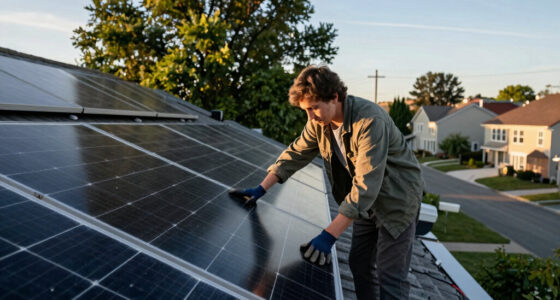
In 2025, solar design seamlessly integrates thin-film and bifacial panels into architecture, making rooftops and facades both stylish and highly functional. You’ll see these sleek, lightweight panels blending into building features, creating a modern aesthetic without sacrificing energy efficiency. Thin-film technology offers flexible, discreet solutions, while bifacial panels maximize power from both sides. Keep exploring, and you’ll discover how these innovations are transforming the way we combine design and sustainable energy.
Key Takeaways
- Thin-film panels are increasingly integrated into building facades and curved surfaces for sleek, unobtrusive energy solutions.
- Bifacial panels are favored for their higher efficiency and ability to blend seamlessly into architectural designs.
- Advanced mounting systems enable flush, concealed installations that enhance aesthetic appeal.
- Design trends focus on combining renewable energy performance with architectural harmony and visual integration.
- Future innovations emphasize sustainability-driven aesthetics, making solar panels an integral part of building aesthetics by 2025.
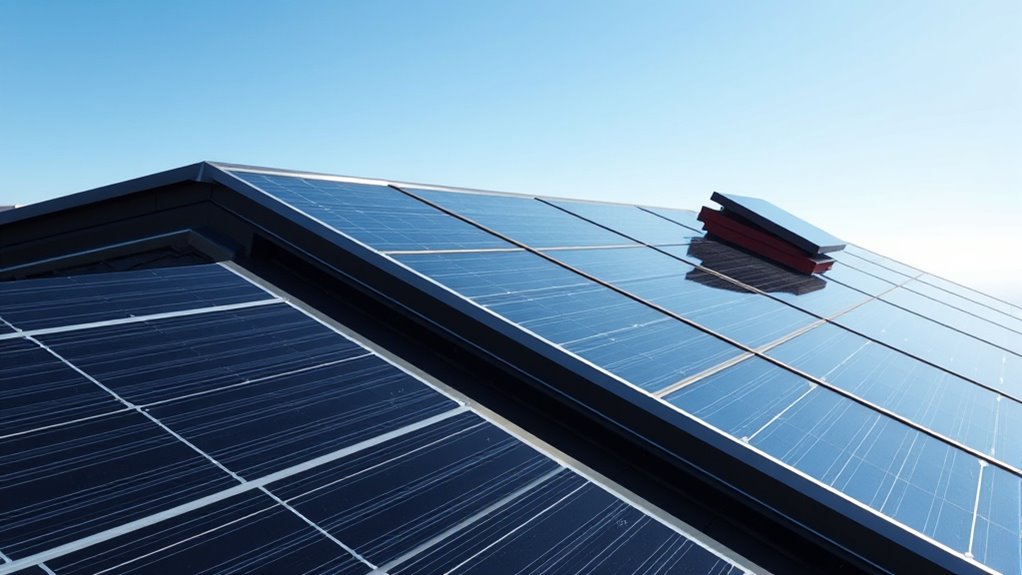
Have you noticed how solar design is evolving rapidly, shaping the future of sustainable architecture? It’s no longer just about installing panels on rooftops; it’s about integrating them seamlessly into building aesthetics. The latest trends focus on enhancing solar aesthetics—making solar panels less obtrusive and more visually appealing. With advancements in materials and design, solar panels are now designed to blend into the architecture, turning what used to be an eyesore into a stylish feature. Thin-film solar panels exemplify this shift. Their sleek, lightweight profile allows for more flexible installation options, including on curved surfaces and facades, without compromising visual harmony. Instead of bulky, traditional panels, these ultra-thin options can be integrated into windows, skylights, or even cladding, creating a unified look that complements the building’s design intent. As you consider panel installation, it’s clear that aesthetics play a *vital* role in encouraging wider adoption, especially in urban environments where visual impact matters. Additionally, the development of solar panel materials that are more durable and less obtrusive further supports this trend toward aesthetic integration. The move towards more discreet panel installation isn’t just about looks; it’s also about maximizing efficiency and durability. Bifacial panels, for example, capture sunlight from both sides, *considerably* boosting energy output without needing additional surface area. When installed thoughtfully, these panels can be integrated into building facades, roofs, or even ground-mounted systems, all while maintaining a sleek appearance. Their design allows them to be embedded into the building envelope, reducing visual clutter and creating a cleaner, more modern look. This approach appeals especially to architects and property owners who want high-performance solar solutions without sacrificing aesthetic quality. With bifacial technology, you get the benefit of increased energy generation while preserving the visual integrity of the building. As these trends continue, the emphasis on panel installation techniques evolves too. Builders are exploring innovative mounting systems that minimize visual disruption and enhance the overall solar aesthetics. For example, flush-mounted systems or concealed mounting hardware make panels appear as part of the building’s design rather than an afterthought. This shift not only improves the visual appeal but also contributes to better aerodynamics and durability against weather conditions. The integration of solar design into architecture is becoming more sophisticated, allowing you to harness renewable energy without compromising style. Overall, the focus on thin-film and bifacial panels, along with advanced installation methods, indicates a future where sustainability and aesthetics go hand in hand, making solar-powered buildings more attractive and functional for everyone.

Hyperion Solar Film Sheets by Seymour Solar – ND5 Rating – Sun and Eclipse Photography or Viewing (9" x 12")
Hyperion Solar Film reduces the Sun’s brightness and harmful rays by 99.999%, allowing you to see the Sun’s…
As an affiliate, we earn on qualifying purchases.
As an affiliate, we earn on qualifying purchases.
Frequently Asked Questions
How Do Thin-Film Panels Perform in Low-Light Conditions?
You’ll find that thin-film panels perform relatively well in low-light conditions, maintaining decent solar efficiency even on cloudy days or early mornings. This makes them a reliable choice for consistent energy generation. Plus, their panel longevity often exceeds traditional panels, thanks to their flexible and durable design. So, if you’re looking for a solution that offers steady performance in varying light, thin-film panels could be a smart investment.
What Are the Recycling Options for Bifacial Panels?
You can recycle bifacial panels through specialized recycling processes that recover valuable materials like silicon, glass, and metals, reducing environmental impact. These processes involve disassembling the panels, safely separating components, and reprocessing materials for new products. By choosing recycling options, you help minimize waste and support sustainability efforts, ensuring that the environmental benefits of bifacial technology are maximized throughout their lifespan.
Are Bifacial Panels Suitable for Residential Rooftops?
Think of bifacial panels like a twin engine airplane—powerful and efficient. They’re suitable for residential rooftops if you’re ready to tackle installation challenges and weigh aesthetic considerations. These panels can boost energy output, but their size and mounting requirements might cause some fitment issues. If you prioritize maximum efficiency and have a roof suited for their design, bifacial panels could be an excellent choice for your home solar system.
How Do Thin-Film Panels Impact Overall System Cost?
Thin-film panels can lower your overall system cost because they typically have reduced installation costs due to lighter weight and flexibility. Their manufacturing processes, which often require less material, also contribute to lower production expenses. However, keep in mind that they usually have slightly lower efficiency compared to crystalline panels, so you might need more space to generate the same power, impacting your long-term costs.
What Are the Durability Differences Between Thin-Film and Crystalline Panels?
You’ll find that crystalline panels generally have longer material longevity and better manufacturing resilience compared to thin-film panels. Crystalline modules can last 25-30 years with minimal efficiency loss, thanks to their robust silicon structure. Thin-film panels, while more lightweight and flexible, tend to degrade faster due to less durable materials, often losing efficiency after 10-15 years. So, if durability is your priority, crystalline panels might serve you better long-term.

400w solar panel,2pcs 200 Watt Solar Panel,12V 18BB N-Type A+ Monocrystalline Cell 25% High Efficiency Bifacial Solar Panels for Rooftop RV Farm Trailer Marine Home Off-Grid System(200W*2PCS Bifacial)
【Grade A+ Cells, Up to 25% Efficiency】200 watt solar panel utilizes advanced N-Type A+ Grade solar cells and…
As an affiliate, we earn on qualifying purchases.
As an affiliate, we earn on qualifying purchases.
Conclusion
As you explore the future of solar design, you’ll notice that thin-film and bifacial panels are leading the way. Remarkably, bifacial panels can boost energy production by up to 30%, making them a game-changer. Embracing these trends means you’ll benefit from more efficient, cost-effective solar solutions in 2025. Staying ahead of the curve ensures you’re leveraging the latest innovations for a greener, smarter energy future.

Solar Panel Mounting Bracket Kit, 10Pcs Upgraded Longer Stronger 6 inch Rails Solar Panel Mount for 1-4pcs Thickness 1.4” Solar Panels, w/ Water Drain Clips for Shingle,Slate,Metal and Tin roof
[Roof Solar Mounting Brackets] Suitable for metal roof, shingle roof. 10 set of solar mounting brackets can hold…
As an affiliate, we earn on qualifying purchases.
As an affiliate, we earn on qualifying purchases.

Renogy Flexible Solar Panel 100 Watt 12 Volt Monocrystalline Semi-Flexible Bendable Mono Off-Grid Charger for Marine RV Cabin Van Car Uneven Surfaces
[Extremely Flexible] This flexible solar panel is capable of meeting a wide range of applications where standard panels…
As an affiliate, we earn on qualifying purchases.
As an affiliate, we earn on qualifying purchases.