To choose a solar generator for your refrigerator, first determine its startup (surge) and running wattages from the label or manual, then select a generator with enough capacity to handle both comfortably, adding a margin for reliability. Consider your battery needs based on how long you want to operate without sunlight, balancing capacity with portability. Make sure the system is scalable for future needs, and optimize efficiency for consistent performance. Continuing will help you understand key factors for the perfect setup.
Key Takeaways
- Determine the refrigerator’s startup (surge) and running wattages and select a solar generator with sufficient capacity.
- Consider battery capacity to ensure enough runtime during cloudy days or nighttime.
- Choose a portable or stationary generator based on your mobility needs and installation environment.
- Optimize system performance by matching generator size and solar input to the refrigerator’s energy consumption.
- Ensure the solar generator system is scalable for future expansion or increased power demands.
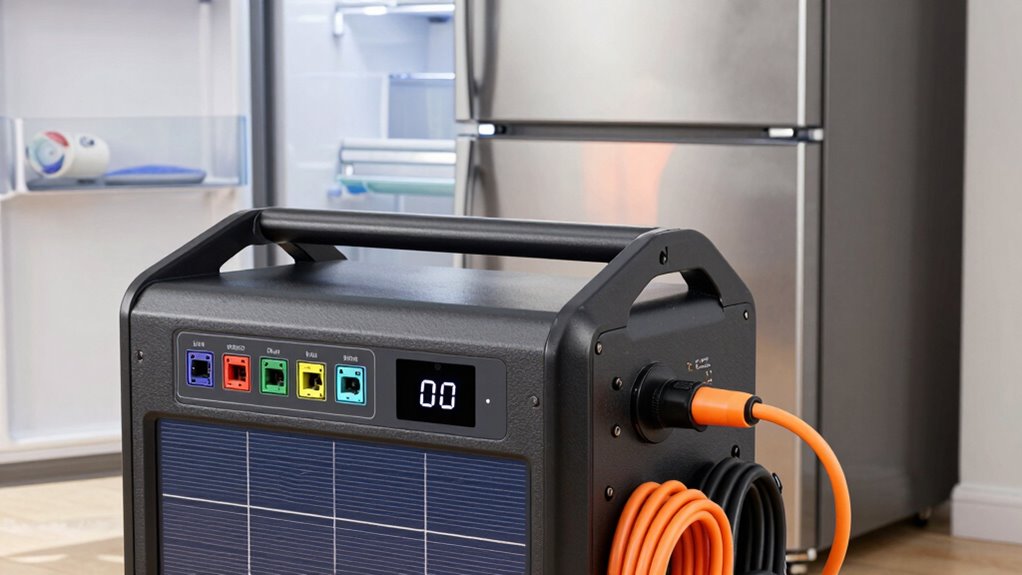
When selecting a solar generator for your refrigerator, understanding your appliance’s power needs is essential. Your refrigerator’s wattage and running time determine the size of the solar generator you should choose. Most refrigerators require a surge of power to start up, often higher than their running wattage, so it’s important to account for this initial spike. Check the appliance’s label or manual to find its startup wattage and running wattage, then add some margin to ensure reliable operation. Once you know the power requirements, focus on the battery capacity. A larger battery allows your refrigerator to run longer without sunlight, which is especially important during cloudy days or at night. Aim for a solar generator with enough capacity to sustain your fridge for the duration you need, whether that’s a few hours or several days. Keep in mind that increasing battery capacity usually adds weight and size, impacting portability considerations. If portability is important, you’ll want a model that’s lightweight and compact enough for easy transport, but still offers enough battery capacity to meet your needs. Conversely, if you’re setting up a stationary system, size and weight may matter less, allowing you to choose a larger, more powerful generator. Additionally, understanding your power consumption and how it fluctuates can help you select the most efficient setup for your situation. A clear understanding of your energy requirements can also assist in optimizing your system’s overall performance. Proper sizing of your solar system is crucial to ensure it can meet your refrigerator’s demands consistently, regardless of weather conditions. Considering solar panel efficiency can help maximize energy collection and system reliability. Remember, the goal is to match the generator’s capacity and portability with your specific needs, balancing power, weight, and ease of transport. A well-designed system will also take into account system expandability, allowing you to upgrade or extend your setup as your energy needs grow.

Jackery Solar Generator 1000 v2 with 200W Solar Panel,1070Wh Portable Power Station LiFePO4 Battery,1500W AC/100W USB-C Output, 1Hr Fast Charge for Outdoor,Off-Grid Living,RV,Emergency
Powerful yet Compact: Boasting a 1,500W AC output and a 3,000W surge peak, the Solar Generator 1000 V2…
As an affiliate, we earn on qualifying purchases.
As an affiliate, we earn on qualifying purchases.
Frequently Asked Questions
Can a Solar Generator Run Multiple Appliances Simultaneously?
Yes, a solar generator can run multiple appliances simultaneously if it has enough portable capacity and energy efficiency. You need to check the generator’s wattage and guarantee it can handle the combined power draw of your appliances. Opt for a model with a high capacity and good energy efficiency, so it can support multiple devices without draining quickly. This way, you’ll keep everything running smoothly during outages or off-grid adventures.
How Long Can a Solar Generator Power a Refrigerator?
You can expect your solar generator to power your refrigerator for several hours, depending on its energy capacity and your fridge’s power consumption. Imagine a steady stream of sunlight stored in batteries, fueling your fridge through a hot day or a power outage. Typically, with a high-capacity generator, you’ll get around 8-12 hours, but this varies based on size and efficiency. Keep an eye on energy needs to maximize runtime.
What Is the Maintenance Required for a Solar Generator?
You need to perform regular maintenance routines to keep your solar generator in top shape. Focus on monitoring battery longevity by checking for any signs of deterioration or uneven charging. Keep the solar panels clean and free of debris to maximize efficiency. Additionally, inspect connections and fuses periodically for corrosion or damage. Proper maintenance routines guarantee your solar generator operates reliably, extending its lifespan and maintaining peak performance for powering your refrigerator.
Are Solar Generators Safe for Sensitive Electronic Devices?
Solar generators are generally safe for sensitive electronic devices when they have adequate battery capacity and proper charging methods. Look for models with pure sine wave inverters, which provide clean power similar to grid electricity. Confirm the generator’s charging methods, like sunlight or grid connection, are compatible with your devices. Proper venting and quality components also minimize risks, making solar generators a reliable, eco-friendly option for protecting sensitive electronics.
How Does Weather Affect Solar Generator Performance?
Weather patterns and sunlight variability are like unpredictable weather waves that can impact your solar generator’s performance. Overcast skies and rain can dim the sun’s rays, turning your solar power into a flickering flame. Cloud cover and seasonal changes reduce sunlight exposure, so your generator might produce less energy when you need it most. Staying aware of weather conditions helps you plan better, ensuring your refrigerator stays powered, rain or shine.

MARBERO Portable Power Station 88Wh Camping Lithium Battery Solar Generator Fast Charging with AC Outlet 120W Peak Power Bank(Solar Panel Optional) for Home Backup Outdoor Emergency RV Van Hunting
EFFICIENT CHARGING: Use the adapter included in the package to charge the power station from 0 to 80%…
As an affiliate, we earn on qualifying purchases.
As an affiliate, we earn on qualifying purchases.
Conclusion
Choosing the right solar generator for your refrigerator guarantees you stay powered during outages or off-grid adventures. Remember, “a stitch in time saves nine”—by investing in the right size and features now, you’ll avoid hassle later. Prioritize capacity, efficiency, and portability to match your needs. With the right choice, you’ll keep your fridge running smoothly and enjoy peace of mind, no matter where life takes you. Stay prepared and enjoy the journey ahead!

Jackery HomePower 3000 Portable Power Station with 2X 200W Solar Panels, 3600W (Surge 7200W) Output, 3072Wh LFP Battery Solar Generator, Essential Backup for Home Use, Power Outage, RV, Emergencies
Essential Home Backup: With a robust 3600W output (7200W surge) and a 3072Wh capacity, the Jackery HomePower 3000…
As an affiliate, we earn on qualifying purchases.
As an affiliate, we earn on qualifying purchases.

Portable Solar Generator, 300W Portable Power Station with Foldable 60W Solar Panel, 110V Pure Sine Wave 296Wh 80000mAh Lithium Battery Pack for Home Use RV Van Outdoor Camping-Panel included
PORTABLE GENERATOR 80000mAh Lithium Battery With 60W SOLAR PANEL INCLUDED: With a superior lithium-ion battery pack, 300W power…
As an affiliate, we earn on qualifying purchases.
As an affiliate, we earn on qualifying purchases.