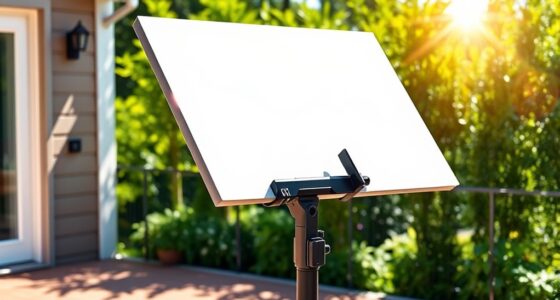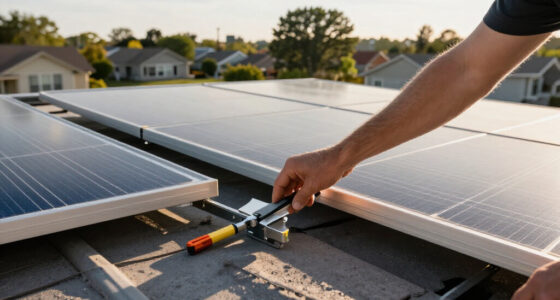

When evaluating waterproof claims on portable panels, you should dig deeper than marketing language. Not all claims mean the same—some may only withstand light drizzles, while others are fully waterproof for heavy rain. Check what standards or tests back up these claims and review user feedback for real-world performance. Manufacturers’ warranties and design features also offer clues about true water resistance. Keep exploring to learn how to truly verify if a panel can handle wet conditions confidently.

Get backup power and energy gear delivered free with Prime
- Fast, free delivery on millions of items
- Prime Video, Amazon Music and more included
- Member-only deals all year
Key Takeaways
- Not all waterproof claims are equal; verify manufacturer standards and testing methods for real-world reliability.
- Material quality and durability significantly influence a panel’s resistance to water ingress over time.
- Review warranty coverage to gauge manufacturer confidence in the product’s waterproof performance.
- Design features like sealed edges and protective coatings enhance moisture resistance beyond basic claims.
- User reviews and third-party certifications provide practical validation of waterproof performance in outdoor conditions.

When evaluating portable panels, understanding waterproof claims is essential, especially if you plan to use them outdoors or in damp environments. Manufacturers often advertise their panels as waterproof, but it’s crucial to dig deeper into what that really means. Not all claims are created equal, and superficial assurances can be misleading. To make an informed decision, you need to examine the material durability of the panels. The quality of the materials used directly impacts how well the panels resist water ingress and endure weather conditions over time. For example, panels made with high-grade, waterproof materials like certain plastics, coated metals, or specialized composites tend to perform better in wet environments. These materials are less likely to crack, warp, or degrade when exposed to moisture, which is essential for longevity and consistent performance.
Beyond material quality, you should also scrutinize warranty coverage. Reliable manufacturers often back their waterproof claims with extensive warranties that cover water damage or failure due to moisture. A robust warranty provides peace of mind, signaling that the company stands behind their product’s waterproof integrity. If a panel claims to be waterproof but doesn’t include warranty coverage for water-related issues, it’s a red flag. It suggests that the manufacturer may not be confident in the durability of the product or that the waterproofing might not hold up under real-world conditions. Carefully review the warranty terms—look for specifics about what’s covered, the duration of coverage, and whether there are any exclusions. A longer, more detailed warranty typically indicates a higher level of confidence in the product’s material durability and waterproof performance.
Additionally, understanding the waterproofing standards used by manufacturers can help you assess the true level of protection offered by portable panels. Features like sealed edges, protective coatings, and secure fittings can add to their water resistance. These design elements, combined with high-quality materials, greatly improve the panels’ ability to withstand moisture. It’s also beneficial to consider the testing methods that manufacturers employ, as these can provide a clearer picture of how panels perform in real-world conditions. Keep in mind that a waterproof claim might be based on lab testing under ideal conditions, but actual outdoor use exposes panels to varying humidity, rain, and temperature swings. That’s why verifying the manufacturer’s claims with real-world testing, user reviews, and warranty support becomes essential. Moreover, researching independent testing or third-party certifications can give additional assurance about the waterproof capabilities of the products. Conducting field testing or looking for user experiences can also help evaluate how well a panel holds up in actual outdoor environments. Ensuring that the waterproofing features are properly implemented can make a significant difference in long-term durability and performance.
As an affiliate, we earn on qualifying purchases.
Frequently Asked Questions
How Is Waterproof Tested on Portable Panels?
You test waterproof on portable panels by exposing them to water under controlled conditions that follow strict testing standards. You typically use methods like submersion or water spray tests to assess panel durability. These tests guarantee the panels can withstand moisture without damage, confirming their waterproof claims. By adhering to recognized testing standards, you verify that the panels maintain their performance even in wet environments, giving you confidence in their waterproof capabilities.
Are Waterproof Ratings Consistent Across Different Brands?
Think of waterproof ratings like different ships sailing the same sea; their durability depends on the craftsmanship and the brand’s reliability. Unfortunately, ratings aren’t always consistent across brands because testing standards and quality control vary. You need to take into account each brand’s reputation and specific waterproof claims, as some may overstate durability. Always check independent reviews and standardized tests to verify the waterproof durability meets your expectations.
What Does “Waterproof” Really Mean for Panels?
When you see “waterproof” on panels, it means they should resist water penetration under specific conditions, guaranteeing panel durability. However, water resistance standards vary, so it’s vital to check the specific testing criteria used by manufacturers. Don’t assume all waterproof claims are equal; some panels might handle splashes, while others can withstand full submersion. Always verify the standards to confirm your panel meets your water exposure needs.
Can Waterproof Panels Be Submerged Fully?
Waterproof panels can often be fully submerged, but it depends on their water resistance rating. Think of a panel rated IP68—it’s designed to withstand immersion in water, preventing water damage even when submerged. However, not all waterproof claims mean complete submersion is safe; some may only resist splashes or rain. Always check the specific water resistance level to guarantee your panel’s protection against water damage during full immersion.
How Long Do Waterproof Coatings Last?
Waterproof coatings typically last between 2 to 10 years, depending on the material and usage. You should consider durability testing results and potential material degradation over time. Factors like exposure to sunlight, temperature fluctuations, and physical wear can shorten their lifespan. Regular inspections help you identify when reapplication or touch-ups are needed, ensuring your portable panels remain protected and functional longer.
water-resistant outdoor power bank
As an affiliate, we earn on qualifying purchases.
As an affiliate, we earn on qualifying purchases.
Conclusion
As you pack your portable panel for your next outdoor adventure, remember to scrutinize its waterproof claims. Imagine it standing resilient against a sudden downpour, droplets beading on its surface like tiny glass marbles. But don’t just rely on the label—test it yourself or seek real-world reviews. Only then can you confidently trust it to shield your gear from the relentless rain, keeping your journey smooth and your tech dry amidst nature’s unpredictable mood swings.
As an affiliate, we earn on qualifying purchases.
As an affiliate, we earn on qualifying purchases.
Fall Picks
fall essentials
As an affiliate, we earn on qualifying purchases.