
To prepare your solar gear for winter, start by inspecting and cleaning your panels to remove dirt, snow, and ice, ensuring maximum sunlight absorption. Insulate batteries and consider placing them indoors or in heated enclosures to prevent capacity loss. Check wiring and connections for corrosion or damage, and seal enclosures against moisture. Install snow guards or tilt panels to shed snow and monitor system performance closely. Keep up with maintenance to keep your system running smoothly all winter long.
Key Takeaways
- Clean solar panels regularly to remove dirt, snow, and ice, ensuring maximum sunlight absorption.
- Insulate batteries and consider indoor placement or heated enclosures to maintain optimal temperature.
- Check and tighten wiring and connections to prevent corrosion and power issues in cold, moist conditions.
- Install snow guards or tilt panels to facilitate snow sliding off and prevent buildup.
- Use system monitors to track performance and perform proactive maintenance for consistent energy output.

As winter approaches, it’s essential to prepare your solar gear to guarantee it continues to perform efficiently in colder, often harsher conditions. Cold temperatures can reduce the efficiency of your solar panels, so taking steps to maintain them is necessary. Start with solar panel maintenance by inspecting your panels for dirt, snow, or ice buildup. Clean off any debris with a soft brush or cloth, making sure not to scratch the surface. If snow accumulates, gently remove it to maximize sunlight absorption. You might also consider installing a snow guard or tilt your panels at an angle that helps snow slide off more easily. Regular inspections before winter set in help identify any damage or loose connections that could worsen in colder weather. Extension cord standards can also help ensure your system remains safe and reliable during winter use. Additionally, understanding the performance impact of cold temperatures can help you better anticipate and address potential issues. Properly sealing enclosures can prevent moisture intrusion that might cause corrosion or short circuits, further protecting your equipment.
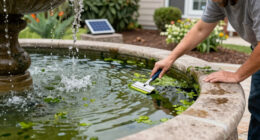
Prepare your solar panels for winter by keeping them clean and inspecting for damage before cold weather sets in.
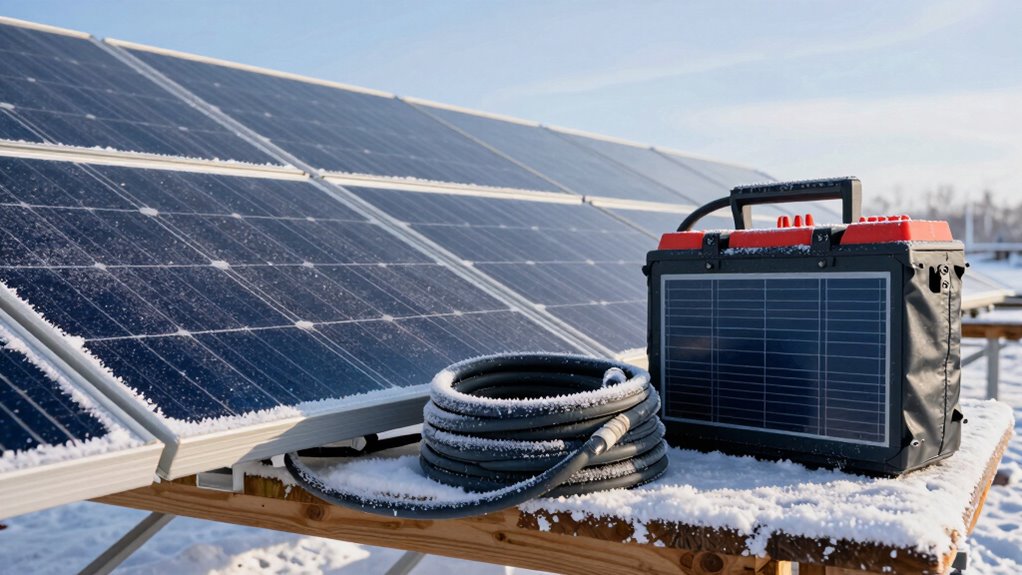
Battery insulation is equally essential during winter months. Cold temperatures greatly impact battery performance, leading to decreased capacity and faster drain. To counter this, insulate your batteries using foam or specialized battery blankets. These materials help retain heat and keep the batteries at an ideal operating temperature. If your system is in a cold environment, consider placing the batteries indoors or in a heated enclosure. Make sure the insulation isn’t blocking ventilation, which is critical to prevent overheating or moisture buildup. Proper insulation not only prolongs battery life but also guarantees consistent power output, even in freezing conditions.
Additionally, check your wiring and connections for any signs of wear or corrosion, especially since moisture and freezing temperatures can worsen existing issues. Tighten loose connections and replace damaged wires to prevent power loss or short circuits during winter. Keep an eye on your charge controller and inverter, ensuring they’re clean and functioning correctly. Cold weather can sometimes cause condensation inside enclosures, so make sure these components are well-sealed and ventilated. Maintaining proper ventilation and sealing of these components is vital for optimal performance and longevity during the winter months.
Finally, consider monitoring your system’s performance more closely during winter. Install a system monitor if you haven’t already, so you can keep track of voltage, current, and battery levels. This way, you’ll quickly notice if something’s off and can address issues before they escalate. Planning ahead by performing solar panel maintenance, insulating batteries, and reinforcing your system’s protection helps you maximize energy production. With proper preparation, you’ll guarantee your solar gear operates reliably through the winter months, providing consistent power even in the coldest weather.

30FT Reach Solar Panel Cleaning Brush Kit with 5-24FT Telescoping Pole, 40FT Hose, 20" Water Fed Brush, Soap Dispenser, Cobweb Duster, Squeegee & High Ceiling Duster for Roof, RV, Gutter, Boat, Deck
Large Water Fed Pole Cleaning System:Featuring a wide 20" solar panel cleaning brush for greater coverage per pass…
As an affiliate, we earn on qualifying purchases.
As an affiliate, we earn on qualifying purchases.
Frequently Asked Questions
How Often Should I Inspect My Solar Gear During Winter?
You should inspect your solar gear weekly during winter to guarantee it remains in top condition. Regular solar gear maintenance helps prevent snow buildup, ice formation, or damage from cold temperatures. Check for loose connections, clean the panels, and clear away any debris or snow. Staying vigilant with winter preparedness ensures your solar system stays efficient and reliable, even in harsh conditions. Consistent inspections keep your gear functioning at its best all season long.
Can I Use My Solar Panels Immediately After Snowfall?
Yes, you can use your solar panels immediately after snowfall. Just remove the snow carefully using a soft brush or snow removal tool to prevent damage, and guarantee your panels are clear of any ice or snow buildup. Applying a panel coating before winter helps prevent snow from sticking, making removal easier. Regularly inspect your panels for snow accumulation and promptly clear it to maintain peak efficiency.
What Temperature Range Can My Solar Gear Safely Operate In?
Your solar gear generally operates safely within a temperature range of -20°C to 50°C, thanks to its temperature resilience and material durability. Extreme cold can reduce efficiency temporarily, but most panels are designed to withstand winter conditions. Keep your gear clean and free of snow or ice to maintain peak performance. If temperatures drop below the recommended range, consider additional insulation or protective covers to guarantee continued functionality.
How Do I Prevent Ice Buildup on Solar Panels?
Think of ice buildup as a silent thief stealing your solar power. To stop it, regularly perform ice removal with a soft brush or scraper, gently lifting ice without damaging panels. Keep your panels clean by removing snow and dirt, which can accelerate ice formation. Applying a hydrophobic coating can also help shed moisture, preventing ice from sticking. Stay vigilant, and your panels will stay clear, soaking up winter’s sunlight.
Are There Specific Storage Tips for Solar Batteries in Winter?
In winter, you should store your solar batteries in a cool, dry place and insulate them with battery insulation to prevent temperature extremes. Keep the batteries charged, as a full charge helps prevent freezing and damage. Avoid letting the batteries sit completely discharged, and check their charge regularly during winter months. Proper storage and maintenance guarantee your batteries stay healthy and perform well when you need them most.

EcoBrisa 40"x7" Battery Insulation Kit, Universal Car Battery Insulation Blanket, Anti-Conductive Truck Battery Thermal Heat Shield Cover for Cold Weather Battery Protection (Thickness 5mm, 1PCS)
High Quality Materials: EcoBrisa Battery insulation kit made from high-quality fire-withstand and insulating materials, ensuring it can endure…
As an affiliate, we earn on qualifying purchases.
As an affiliate, we earn on qualifying purchases.
Conclusion
As winter approaches, making sure your solar gear is ready is essential. Proper maintenance can boost efficiency by up to 25% during colder months, ensuring you get the most out of your system. Remember to clean panels regularly, protect batteries from cold damage, and store equipment properly. Staying proactive not only prolongs your gear’s lifespan but also keeps your energy supply steady. With these tips, you’ll stay powered up all winter long and enjoy the sunshine even on the coldest days.

Shophubio Solar Panel Snow Guard, Photovoltaic Snow Clip, High-Quality Plastic Snow Removal Hook for Winter Snow Accumulation, Tool-Free Installation Kit (10PCS)
[10-PIECE SET] Includes 10 solar panel snow guide clips designed specifically for effective snow removal from photovoltaic panels.
As an affiliate, we earn on qualifying purchases.
As an affiliate, we earn on qualifying purchases.

Yunsailing 2 Pcs 200A High Precision Watt Meter Power Analyzer Battery Consumption Performance Monitor Amp Meter Monitor with Backlight Digital LCD Screen for RC Solar Voltage Current Power (100V)
Simple to Read: each watt meter power analyzer is designed with a bright blue backlit LCD display for…
As an affiliate, we earn on qualifying purchases.
As an affiliate, we earn on qualifying purchases.