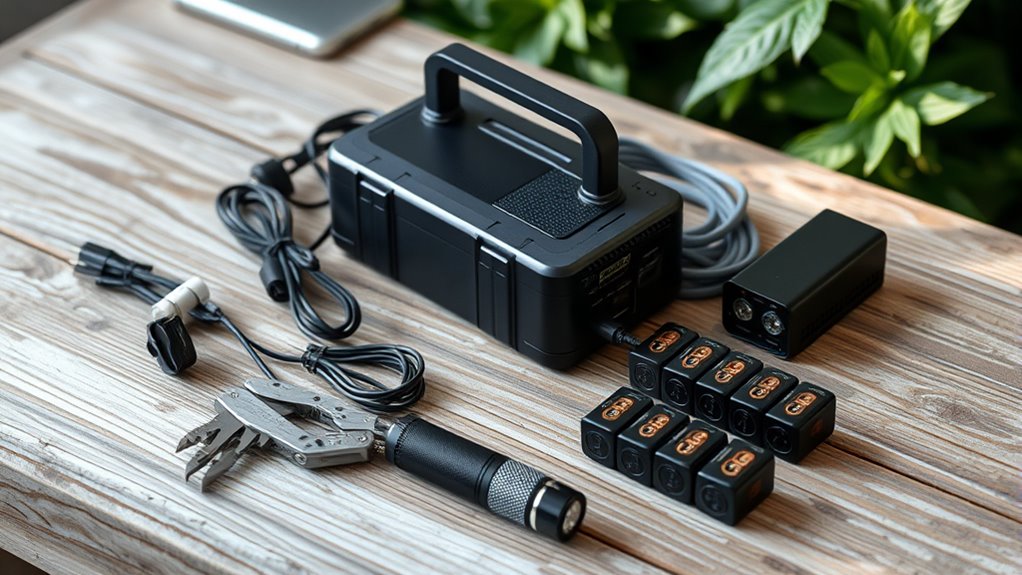
To build a DIY portable power station for emergencies, gather high-capacity batteries, solar panels, and a charge controller, ensuring compatibility. Position panels for maximum sunlight and connect them properly for safe charging. Use protective enclosures and secure wiring to prevent damage. Always follow safety tips, like wearing gear and inspecting batteries regularly. Properly maintaining and securing components keeps your power source reliable. Stay with us to learn the complete steps and safety essentials for your survival pack.

Get backup power and energy gear delivered free with Prime
- Fast, free delivery on millions of items
- Prime Video, Amazon Music and more included
- Member-only deals all year
Key Takeaways
- Select high-capacity batteries and compatible solar panels to store and generate reliable emergency power.
- Integrate charge controllers to regulate voltage and connect panels securely for optimal sunlight exposure.
- Ensure wiring is neat, protected, and safely connected to prevent short circuits or damage.
- Include safety gear, such as gloves and fire extinguishers, and regularly inspect batteries for damage.
- Store components in a weatherproof enclosure, and test the system periodically to ensure readiness during emergencies.
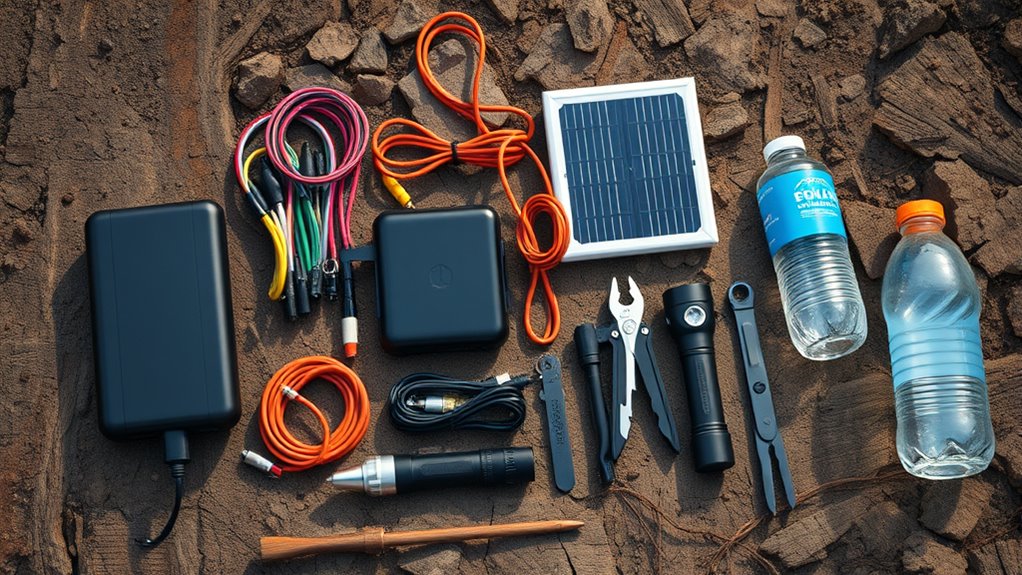
Have you ever thought about what you’d do if an emergency suddenly struck? When disaster hits, having a reliable power source can be a game-changer. Building a DIY emergency kit that includes a portable power station can keep your essential devices charged and operational. One effective way to do this is through solar panel integration, which allows you to harness sunlight and generate power independently of the grid. This setup not only provides renewable energy but also guarantees you have a sustainable power supply during prolonged outages. When setting up your portable power station, make sure to include a high-capacity battery that can store enough energy for your needs. But safety is paramount, especially when dealing with batteries, so learning battery safety tips is vital. Always use batteries that are designed for your specific setup, and never mix different types or brands, as this can increase the risk of overheating or malfunction.
Before integrating solar panels, check their compatibility with your battery system. Proper solar panel integration involves connecting the panels to a charge controller, which regulates the voltage and current going into your batteries. This prevents overcharging and extends the lifespan of your power source. Position your solar panels in a location that receives maximum sunlight—ideally, a south-facing spot free of shade during peak hours. Secure the panels properly to withstand wind or rough weather, and keep the wiring neat and protected from the elements to avoid shorts or damage. Additionally, researching battery safety tips can help you prevent potential hazards and ensure the longevity of your emergency power setup.
When it comes to battery safety tips, always wear protective gear when working with batteries. Keep a fire extinguisher nearby, just in case, and never leave batteries unattended while charging. Avoid over-discharge, which can damage the battery, and never expose it to extreme temperatures. Regularly inspect your battery for signs of swelling, corrosion, or leaks, and replace any damaged units immediately. Use proper connectors and avoid fraying wires, as faulty wiring can lead to sparks or shorts. Additionally, store spare batteries in a cool, dry place away from direct sunlight and flammable materials.
high capacity portable power station
As an affiliate, we earn on qualifying purchases.
As an affiliate, we earn on qualifying purchases.
Frequently Asked Questions
What Are the Best Portable Power Station Brands?
When choosing the best portable power station brands, consider options like Jackery, Goal Zero, and Anker. They offer models with excellent battery capacity options and solar panel compatibility, making them versatile for emergencies or outdoor adventures. Look for brands that provide reliable performance, durable build quality, and good customer support. Your choice depends on your power needs and whether you want a compact unit or one with larger capacity for extended use.
How Long Can a DIY Power Station Last?
Your DIY power station’s lifespan depends on its battery capacity and recharge cycles. Typically, a well-built setup with quality batteries can last between 3 to 5 years, or around 300 to 500 recharge cycles. To maximize its longevity, avoid deep discharges and store it properly. Regular maintenance and using the right components can help guarantee your power station stays reliable during emergencies.
Can I Charge My Devices Simultaneously?
Imagine you’re camping and need to charge your phone and tablet at once. With your portable power station, you can do this easily if it has multiple output ports. Check your device’s power needs and your power station’s battery capacity options. Confirm your solar panel compatibility to keep the station charged. Most DIY stations support simultaneous charging, but verify your setup’s specs to avoid overloading.
Is a DIY Power Station Safe for All Devices?
You might wonder if a DIY power station is safe for all devices. While it can be convenient, consider battery safety and DIY risks. If you build it properly, using quality components and following safety guidelines, it can be safe for most devices. However, watch out for overloading and ensure your power station has proper voltage regulation. Always prioritize safety to avoid damage to your devices or potential hazards.
How Do I Maintain and Store My Power Station?
Ever wondered how to keep your power station ready when you need it most? Proper battery maintenance and storage tips are essential. You should regularly check the battery’s charge level, avoid deep discharges, and store it in a cool, dry place. Keep it away from extreme temperatures and make sure it’s fully charged every few months. These simple steps help prolong your power station’s lifespan and ensure it’s always prepared for emergencies.
As an affiliate, we earn on qualifying purchases.
Conclusion
Don’t let the idea of building a portable power station scare you—it’s simpler than you think and totally worth it. With just a few basic supplies, you can create a reliable survival pack that keeps you powered during emergencies. Plus, you’ll gain confidence and peace of mind knowing you’re prepared. So, go ahead, take action now—your preparedness could make all the difference when it matters most. You’ve got this!
As an affiliate, we earn on qualifying purchases.
As an affiliate, we earn on qualifying purchases.
Halloween Picks
halloween
As an affiliate, we earn on qualifying purchases.