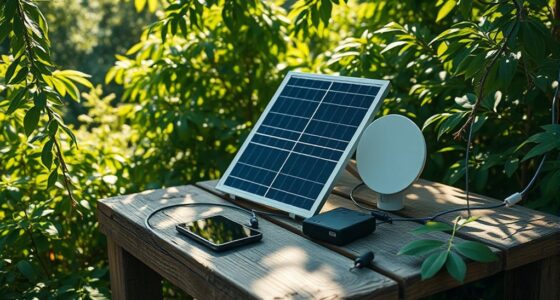
When planning solar systems for cold climates, you should optimize panel tilt to match seasonal sunlight angles and reduce snow buildup. Incorporate features like snow guards and adjustable mounts for easier snow removal. Guarantee your system includes reliable storage options that perform well in low temperatures and plan for regular maintenance to keep panels clear. Considering these factors helps maximize energy production during winter. Keep exploring how to tailor your system for peak performance amid winter challenges.

Get backup power and energy gear delivered free with Prime
- Fast, free delivery on millions of items
- Prime Video, Amazon Music and more included
- Member-only deals all year
Key Takeaways
- Optimize panel tilt angle seasonally or fixed to maximize sunlight absorption during winter.
- Incorporate snow guards and adjustable mounts to facilitate snow shedding and prevent buildup.
- Select batteries and components rated for low temperatures to ensure reliable energy storage.
- Plan for regular snow removal and panel cleaning to maintain efficiency in winter conditions.
- Use smart energy management systems to balance supply and demand during limited winter sunlight.

Are you wondering how to effectively plan a solar system that meets your energy needs? When dealing with cold climates, this question becomes even more important because the environment presents unique challenges and opportunities. One of the critical factors to consider is the solar panel tilt. In colder regions, you’ll want to optimize the angle of your solar panels to maximize sunlight absorption throughout the year. Since the sun sits lower in the sky during winter, adjusting the tilt angle accordingly helps ensure your panels capture as much sunlight as possible. Typically, a steeper tilt that aligns with your latitude can improve winter performance, but you might also consider seasonal adjustments or a fixed tilt optimized for winter sunlight. Proper tilt not only boosts energy production during the short winter days but also reduces snow accumulation, which can block sunlight and diminish your system’s efficiency. Regular maintenance, including panel cleaning and snow removal, is also essential to maintain peak performance. Additionally, planning for the specific winter conditions of your location helps improve your system’s resilience. Consider snow and ice buildup, which can block sunlight and reduce energy production. Incorporate features like adjustable tilt mounts or snow guards to facilitate snow shedding and keep your panels clear. Effective snow removal techniques can further enhance your system’s reliability in winter weather. Moreover, integrating a smart energy management system can optimize how you use stored power, balancing your energy needs with the available sunlight and storage capacity. By paying close attention to solar panel tilt, ensuring your battery storage is suited for low temperatures, and preparing for winter weather challenges, you set yourself up for a reliable, efficient solar system that meets your needs all year round.
As an affiliate, we earn on qualifying purchases.
Frequently Asked Questions
How Do Snow and Ice Affect Solar Panel Efficiency?
Snow accumulation and ice shedding can substantially impact your solar panel efficiency. Snow buildup blocks sunlight, reducing energy production, while ice can cause damage or create shading issues. Regularly clearing snow and ensuring panels are angled for effective ice shedding helps maintain peak performance. You should also consider heated panels or anti-ice coatings to minimize snow and ice buildup, ensuring your system operates efficiently even in cold, snowy conditions.
What Are the Best Panel Types for Cold Climates?
Imagine revealing the secret to reliable energy in harsh winters—your best bet is using panels with high durability, like monocrystalline or bifacial types, designed to withstand snow and ice. These panels maintain efficiency longer, especially when paired with robust energy storage systems that capture sunlight during clear days. Don’t settle for less; choosing durable panels guarantees your system keeps working, even when the coldest months hit hardest.
How Can I Prevent Snow Buildup on Panels?
To prevent snow buildup on panels, you should implement snow removal strategies like gently brushing panels with a soft broom or using a roof rake. Regular panel cleaning methods, such as rinsing with water during milder days, help keep snow from accumulating. Consider installing panels at a steeper angle to encourage snow to slide off naturally. These techniques ensure your solar system stays efficient even in cold, snowy conditions.
What Is the Optimal Tilt Angle in Cold Regions?
If you want to maximize your solar gains, aim for a tilt angle around your latitude plus 10 to 15 degrees in cold regions. This ideal panel orientation helps catch more sunlight during winter. Consider seasonal adjustments—slightly increasing the tilt in winter for better snow shedding and sun exposure, then adjusting back in summer. These tweaks ensure your system performs efficiently year-round, even amid chilly conditions.
How Does Temperature Impact Solar Panel Performance?
Temperature crucially impacts your solar panel performance. As temperatures rise, panels become less efficient due to increased solar panel degradation and the effects of temperature coefficients, which indicate how much power output drops with higher heat. Cold climates actually help maintain ideal efficiency since lower temperatures reduce degradation and keep the panels operating closer to their maximum capacity. Keep in mind, high temperatures can negatively affect your system’s overall energy production.
As an affiliate, we earn on qualifying purchases.
Conclusion
As you plan your solar system in cold climates, remember that harnessing the sun’s energy is like catching fleeting sunlight in a jar — it’s possible if you’re strategic. By optimizing panel placement and choosing the right technology, you can turn winter’s challenge into an opportunity. Don’t let the cold dim your solar ambitions; instead, let it spark your ingenuity. After all, every winter’s sunset holds the promise of a brighter, sustainable future.
As an affiliate, we earn on qualifying purchases.
As an affiliate, we earn on qualifying purchases.
Halloween Picks
halloween
As an affiliate, we earn on qualifying purchases.