Understanding inverter ratings is key to choosing the right type for your needs. A pure sine wave inverter provides smooth, consistent power similar to grid electricity, making it ideal for sensitive electronics. Modified sine wave inverters are less expensive but generate choppier signals, which can cause stress and damage over time. To guarantee your system’s efficiency and longevity, you need to know how these waveforms affect your devices—more details are just a step away.
Key Takeaways
- Pure sine wave inverters produce smooth, consistent power similar to grid supply, ideal for sensitive electronics.
- Modified sine wave inverters generate a choppier, less uniform signal, which may cause device stress and reduced efficiency.
- Pure sine inverters are generally more efficient and extend the lifespan of connected devices and batteries.
- Modified sine inverters are cheaper but can cause increased heat, noise, and potential damage to sensitive equipment.
- Choosing the right waveform depends on device sensitivity, with pure sine wave preferred for critical or delicate electronics.

An inverter’s ratings are vital for determining whether it can handle your power needs. When selecting an inverter, understanding its ratings helps you guarantee compatibility with your appliances and overall system. These ratings include factors such as continuous power output, surge capacity, and efficiency. One often overlooked aspect is how these ratings impact battery efficiency and inverter lifespan. A higher-quality inverter with accurate ratings can maximize your battery’s runtime, meaning you get more use out of each charge, and extend the inverter’s overall lifespan by reducing stress on its internal components. Additionally, understanding inverter ratings helps prevent overloading and ensures your system operates safely and efficiently.
Choosing the right inverter involves paying close attention to its continuous power rating. This figure indicates the maximum power the inverter can sustain over an extended period without overheating or experiencing damage. If your appliances demand more power than the inverter can provide, it might shut down or reduce performance, wasting energy and decreasing battery efficiency. Conversely, an inverter with a higher rating than your needs can operate more reliably, often translating into better battery efficiency because it doesn’t have to work as hard. Overworking an inverter not only shortens its lifespan but also causes it to draw more power from your batteries, consequently reducing overall efficiency and increasing the frequency of replacements or repairs.
Choosing an inverter with the right continuous power rating ensures reliability and maximizes battery efficiency.
Understanding the difference between pure sine wave and modified sine wave inverters also plays a vital role in ratings. Pure sine wave inverters produce a smooth, consistent power signal that closely resembles grid power. This type of inverter is generally more efficient, which means less energy is wasted, and it’s gentler on sensitive electronics, thereby preserving battery efficiency. Modified sine wave inverters, while typically more affordable, generate a choppier signal that can cause increased heat and stress on connected devices. This stress can degrade the inverter’s components over time, shortening its lifespan, and may lead to decreased battery efficiency because the system works harder to compensate for the lower-quality waveform.
In essence, understanding the ratings of an inverter helps you make smarter choices that safeguard your investment. Selecting an inverter with appropriate ratings guarantees you maximize battery efficiency and extend its lifespan. It also guarantees your appliances run smoothly without interruption or damage. Whether you’re powering critical systems or just need a reliable backup, paying attention to these ratings guarantees you get the most out of your inverter and avoid unnecessary costs down the line.

BELTTT 3000W Pure Sine Wave Inverter 12V DC to 120V AC for Solar, Off-Grid, RV, Truck, Home, Power Inverter with Dual AC, 20A Socket, 5V 2.1A USB, Hardwire Port, Remote Controller 23Ft Cable
【PURE SINE WAVE INVERTER】: The power inverter output waveform is consistent with the AC waveform of the utility…
As an affiliate, we earn on qualifying purchases.
As an affiliate, we earn on qualifying purchases.
Frequently Asked Questions
How Do Inverter Ratings Impact Device Compatibility?
Your inverter’s ratings directly impact device compatibility. The power rating determines how much wattage your inverter can safely supply, so exceeding it risks damage. The efficiency comparison shows how well the inverter converts DC to AC power, affecting runtime and energy use. Choosing an inverter with suitable ratings guarantees your devices run smoothly without overloads or inefficiencies, making your setup safer and more reliable.
Can Modified Sine Inverters Power Sensitive Electronics?
You can power sensitive electronics with a modified sine inverter, but beware of issues like harmonic distortion and noise interference. These inverters produce a stepped waveform that might cause your devices to malfunction, overheat, or produce unwanted noise. While they work for simple appliances, for delicate electronics, a pure sine inverter is preferable to guarantee smooth operation and avoid potential damage caused by waveform irregularities.
Are Higher Inverter Ratings Always Better?
Like a race car with a turbo boost, higher inverter ratings might seem better, but they’re not always the right choice. You’ll want to contemplate power efficiency and cost implications. A higher rating can handle more devices, but if you don’t need that capacity, it could waste energy and money. Choose an inverter that matches your actual power needs, ensuring efficiency without overspending on extra capacity.
How Do Inverter Ratings Relate to Surge Power?
Inverter ratings directly relate to surge power because higher ratings mean greater surge capacity, allowing your inverter to handle transient power spikes from devices starting up. When choosing an inverter, you want one with enough surge capacity to manage these brief, high-demand moments without shutting down. So, always check the surge power rating, ensuring it matches or exceeds your device’s peak power needs, for smooth operation.
What Safety Considerations Are Linked to Inverter Ratings?
You need to consider safety when selecting an inverter rating. Make certain proper grounding requirements are met to prevent shock hazards, and use overload protection to avoid damage or fire risks. Always match the inverter’s capacity to your device’s power demands, and avoid exceeding its surge power. Regularly inspect connections and follow manufacturer guidelines to keep your setup safe and reliable.
BELTTT 3000W Pure Sine Wave Inverter 12V DC to 120V AC for Solar, Off-Grid, RV, Truck, Home, Power Inverter with Dual AC, 20A Socket, 5V 2.1A USB, Hardwire Port, Remote Controller 23Ft Cable
【PURE SINE WAVE INVERTER】: The power inverter output waveform is consistent with the AC waveform of the utility…
As an affiliate, we earn on qualifying purchases.
As an affiliate, we earn on qualifying purchases.
Conclusion
Understanding inverter ratings helps you choose the right power source for your needs. Did you know that over 60% of home backup systems prefer pure sine wave inverters for sensitive electronics? This highlights the importance of selecting the right type to protect your devices and guarantee ideal performance. By understanding the differences between pure sine and modified sine inverters, you can make smarter decisions and avoid costly damages or inefficiencies in your power setup.
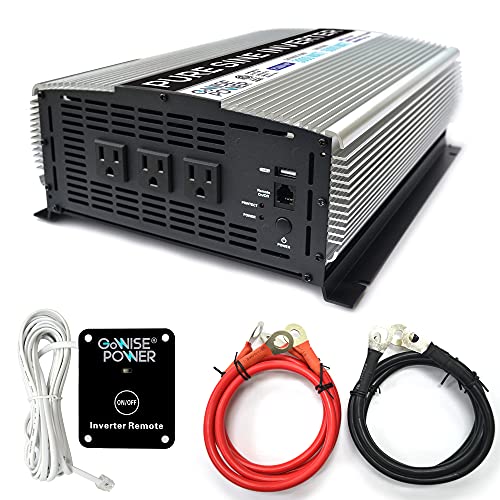
GoWISE Power PS1004 3000W Continuous 6000W Surge Peak Power Pure Sine Wave Inverter with Starter Cables and 4 Output Sockets, Updated Model, Grey, Standard
GoWISE Power PURE SINE Power Inverter 3000W Continuous/6000W Surge, 12V DC to 120V AC w/ Black and Red…
As an affiliate, we earn on qualifying purchases.
As an affiliate, we earn on qualifying purchases.

Azocek 220W Power Inverter Compatible with Dewalt 20V Battery(Battery not Included), DC 20V to AC 110V, 2 USB Ports & 1 Type-C Fast Charging, 400LM LED Work Light
Compatible with De-Walt 20V Batteries: This Azocek inverter is specially designed Compatible with De-Walt 18V/20V batteries (e.g., DCB206,…
As an affiliate, we earn on qualifying purchases.
As an affiliate, we earn on qualifying purchases.