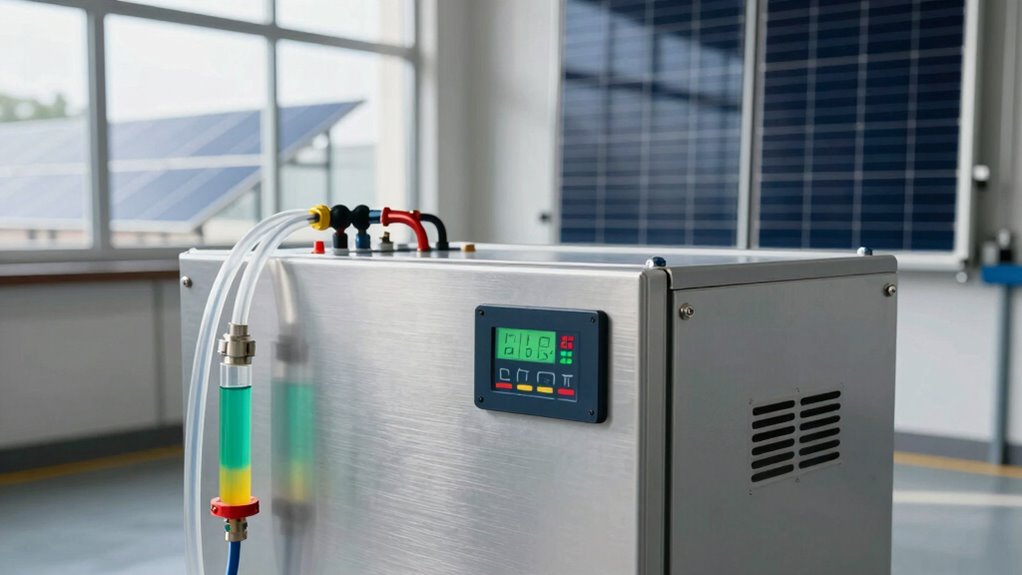

Depth of discharge (DoD) for solar batteries shows how much of the battery’s energy you use before recharging. Using a high DoD, like 80% or more, puts more stress on your battery and can shorten its lifespan. Keeping the DoD lower, around 20-50%, helps extend battery life and improves efficiency. Understanding your battery’s specific DoD limits and managing them properly can maximize your system’s performance. If you want to discover more tips, continue exploring how DoD impacts your solar setup.
Key Takeaways
- Depth of Discharge (DoD) indicates the percentage of a solar battery’s capacity used before recharging.
- Higher DoD (e.g., 80%) means more energy is drawn, increasing battery wear and reducing lifespan.
- Lower DoD (e.g., 20-50%) is gentler on batteries, extending their operational life.
- Proper DoD management optimizes efficiency and reduces the frequency of recharges.
- Different battery types have specific DoD tolerances affecting their performance and longevity.

Have you ever wondered how deeply you should use your solar battery before needing to recharge it? Understanding the depth of discharge (DoD) is vital because it directly impacts your battery’s lifespan and overall efficiency. The DoD refers to the percentage of the battery’s capacity that you use before recharging. For example, if you use half of your battery’s total capacity, you’re operating at a 50% DoD. The deeper you discharge your battery, the more stress you put on its cells, which can shorten its lifespan over time. Conversely, keeping the DoD shallow—meaning you only use a small portion of the stored energy—helps preserve the battery’s health and prolongs its usable years.
Using your solar battery wisely by avoiding deep discharges extends its lifespan and maintains efficiency.
When it comes to battery lifespan, avoiding deep discharges is often recommended. Deep discharges, such as using 80% or more of your battery’s capacity regularly, can accelerate wear and reduce the number of charge cycles your battery can handle. Shallow discharges, like operating at 20% to 50% DoD, tend to be gentler, allowing the battery to endure more cycles before needing replacement. This balance ensures you get the most out of your investment, saving you money and hassle in the long run. It’s worth noting that different types of batteries, such as lithium-ion versus lead-acid, have varying tolerances for depth of discharge, so understanding your specific battery’s specifications is key. Monitoring battery health regularly can also help you optimize your usage and extend its lifespan. Additionally, proper battery management systems can assist in maintaining optimal discharge levels and prevent accidental deep discharges that could harm the battery. Knowing your battery’s performance characteristics can help in planning your usage and avoiding unnecessary wear.
Charging efficiency also plays a role in how you manage your battery’s DoD. When you discharge your battery deeply, you often need to recharge it more frequently or for longer periods, which can reduce overall charging efficiency. Shallow discharges mean less energy is required to bring the battery back to full capacity, making the process more efficient and less taxing on your system. Proper management of the DoD also involves considering battery chemistry, as different chemistries respond differently to discharge levels and have unique lifespan characteristics. This efficiency not only conserves energy but also reduces wear on the battery, helping maintain peak performance over time. Properly managing your DoD ensures you aren’t wasting energy during recharges or pushing your system beyond its recommended limits.

12V 100Ah LiFePO4 Solar Battery – Deep Cycle Lithium Battery for Solar Systems, Off-Grid, RV, Marine, and Backup Power with 15000+ Cycles, Lightweight, Maintenance-Free
Reliable 12V Solar Battery for Solar Systems: This 12V 100Ah LiFePO4 solar battery is designed specifically for solar…
As an affiliate, we earn on qualifying purchases.
As an affiliate, we earn on qualifying purchases.
Frequently Asked Questions
How Does Depth of Discharge Affect Battery Lifespan?
You’ll find that a higher depth of discharge (DoD) reduces your solar battery’s lifespan because it stresses the battery chemistry more. Each time you discharge more deeply, you use up more of its charging cycles, which accelerates wear. Keeping the DoD lower helps preserve battery health, extending its overall lifespan and maintaining ideal performance over time. So, managing DoD carefully is key to getting the most out of your solar storage.
What Is the Optimal Depth of Discharge for Solar Batteries?
You should aim for a depth of discharge around 20-50% for solar batteries, depending on the battery chemistry. This range balances maximizing capacity and minimizing wear, as deeper discharges reduce lifespan due to increased stress on the battery during charging cycles. By keeping the discharge shallow, you extend the number of charging cycles, ensuring your solar battery remains efficient and durable over time.
Can Deep Discharges Damage Solar Batteries?
Deep discharges are like pushing a battery to its limit, which can harm solar batteries over time. They strain the battery chemistry and reduce the number of charging cycles it can handle. When you regularly deep discharge your battery, it accelerates wear and shortens its lifespan. To keep your solar system running smoothly, avoid deep discharges and stick to recommended Depth of Discharge levels.
How Does Depth of Discharge Influence Battery Warranty?
The depth of discharge (DoD) markedly affects your battery warranty because deeper discharges accelerate battery wear. Different battery chemistries have varying tolerances; for example, lithium-ion batteries handle higher DoD better than lead-acid ones. Frequent deep discharges increase the number of charging cycles, shortening your warranty period. To maximize warranty benefits, try to keep your DoD within recommended limits, reducing strain on your battery’s chemistry and extending its lifespan.
Is It Better to Limit Discharge for Better Performance?
Yes, limiting discharge improves performance and longevity. By keeping your battery’s depth of discharge (DOD) lower, you reduce stress on the battery chemistry, which helps it maintain capacity longer. This also extends the number of charging cycles your battery can handle before degradation. So, to maximize your solar battery’s lifespan and efficiency, it’s better to avoid deep discharges and stick to shallow cycles regularly.

Solar Charger, 38800mAh Solar Power Bank, Waterproof External Backup Battery Power Pack with USB C Input/Output/LED Flashlights Compatible with iPhone, Samsung, iPad, Suitable for Outdoor, Camping
【Ultra-light Solar Charger】Built in 38800mAh high-quality mobile battery, Compatible with iPhone, iPad, Android, and 99% of USB devices….
As an affiliate, we earn on qualifying purchases.
As an affiliate, we earn on qualifying purchases.
Conclusion
So, next time you’re checking your solar battery, remember that depth of discharge isn’t just a technical term—it’s the silent partner in your energy journey. Like a good story, it’s all about balance; too deep, and you might wear out your battery too soon. But when you find that sweet spot, your solar power system works smoothly, almost like a coincidence of perfect timing. After all, understanding DOD helps you make smarter energy choices every day.

Weize Deep Cycle AGM 12 Volt 100Ah Battery, Maintenance-Free, 3% Self-Discharge Rate, 1150A Max Discharge Current, Perfect for RV, Solar, Trolling Motor, Wind, Marine, Camping and Off-Grid System
MAINTENANCE FREE: 12.99x 6.73x 8.43 inches. Weize 12v 100Ah sealed lead acid battery is manufactured with absorbent glass…
As an affiliate, we earn on qualifying purchases.
As an affiliate, we earn on qualifying purchases.
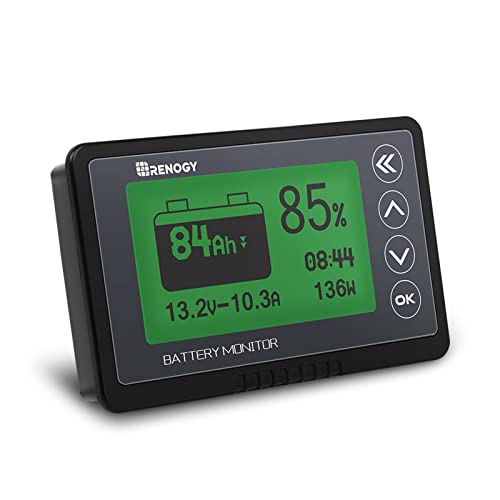
Renogy 500A Battery Monitor with Shunt, High and Low Voltage Programmable Alarm, Range 10V-120V up to 500A, 20ft Shielded Cable, Compatible 12V Lithium Sealed, Gel, Flooded Batteries,Black
1% Accuracy Measurement: Shunt-type battery monitor design provides much more accurate real-time voltage and current draw measurement.
As an affiliate, we earn on qualifying purchases.
As an affiliate, we earn on qualifying purchases.