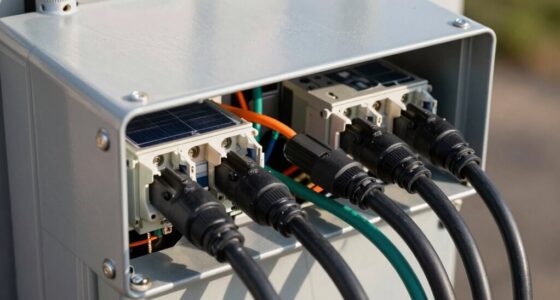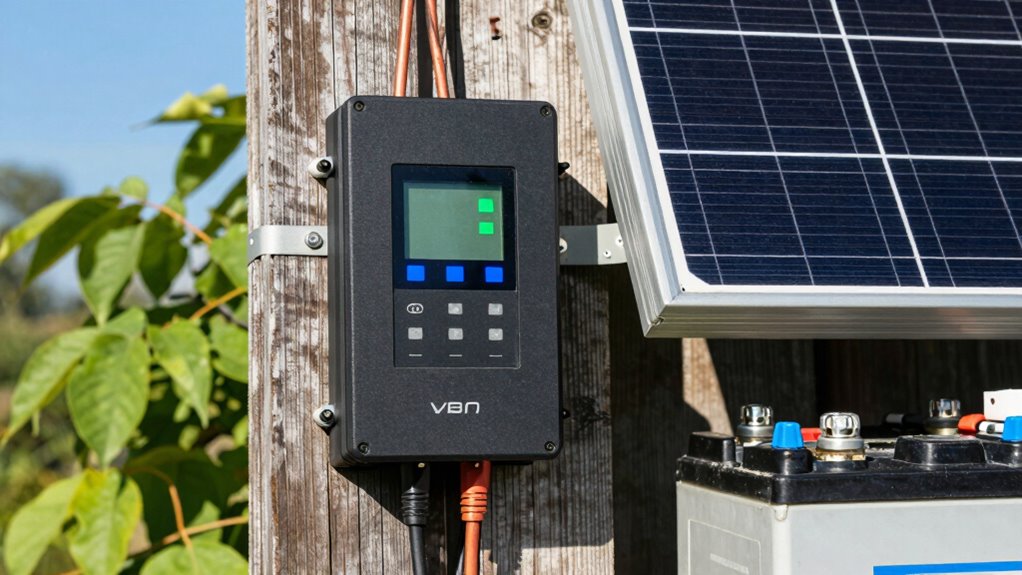

A solar charge controller manages the flow of energy from your solar panels to your batteries, ensuring they charge safely and efficiently. It prevents overcharging, which can cause battery damage, overheating, or leaks, and balances individual cells to extend battery life. The controller also monitors system performance, identifying issues early and optimizing energy capture. By maintaining safe voltage levels and protecting your system components, it keeps your off-grid setup reliable. Continue to explore how it enhances your solar system’s performance.

Get backup power and energy gear delivered free with Prime
- Fast, free delivery on millions of items
- Prime Video, Amazon Music and more included
- Member-only deals all year
Key Takeaways
- Regulates solar energy flow to prevent overcharging and protect batteries.
- Monitors system performance, including voltage, current, and battery status.
- Ensures safe and efficient charging, extending battery lifespan.
- Balances battery cells and adjusts for temperature variations.
- Optimizes energy capture and system efficiency for reliable off-grid power.
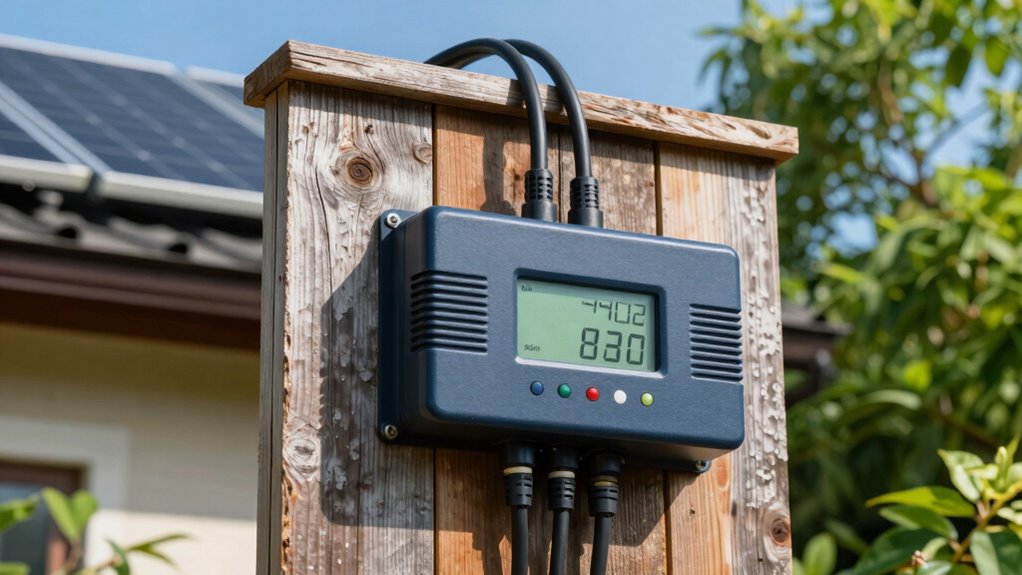
A solar charge controller is indispensable in off-grid solar kits because it manages the flow of energy from your solar panels to your batteries, preventing overcharging and damage. Without this device, your batteries could be exposed to excessive voltage, which can lead to overheating, capacity loss, or even complete failure. By controlling the voltage and current coming from the panels, the charge controller guarantees your batteries charge safely and efficiently, extending their lifespan and maintaining peak performance.
A solar charge controller prevents overcharging, extends battery life, and ensures safe, efficient energy flow in off-grid solar systems.
When it comes to battery maintenance, the charge controller plays a fundamental role. It prevents overcharging, which can cause batteries to swell, leak, or deteriorate prematurely. Many controllers include features like equalization, which balances individual cells within the battery bank, ensuring uniform charge levels and maximizing capacity. Some advanced models also incorporate temperature compensation, adjusting charging parameters based on battery temperature to avoid undercharging or overcharging in varying weather conditions. Proper battery maintenance through the charge controller helps you avoid costly replacements and keeps your system running reliably over time.
System monitoring is another essential aspect that a solar charge controller provides. Many modern controllers come equipped with display screens or connectivity options that allow you to observe real-time data about your system’s performance. You can track parameters like voltage, current, energy production, and battery state of charge at any moment. This level of system monitoring helps you identify issues early, such as shading problems, panel dirt, or wiring faults, so you can address them before they affect your energy output. It also helps you optimize your system’s operation, ensuring you’re making the most of your sunlight and energy resources. Additionally, understanding solar protocols can help you ensure compatibility and maximize efficiency in your setup.
In addition to safeguarding your batteries and providing system insights, the charge controller can improve overall efficiency. By regulating the charging process, it minimizes energy loss and guarantees your batteries are charged as quickly and safely as possible. This efficiency is especially essential in off-grid setups, where maximizing every bit of sunlight is key to maintaining power supply. Properly selecting and configuring your charge controller based on the system components can further enhance the overall performance of your solar energy system. Moreover, understanding battery characteristics can help you tailor your system for optimal longevity and performance.
Products Worth Considering

Ring Alarm 8-Piece Kit (2nd Gen) Home Security System

Ring Alarm 14-Piece Wireless Security System

LG 75-Inch QNED73B Mini LED 4K Smart TV (2026)
As an affiliate, we earn on qualifying purchases.
Frequently Asked Questions
How Do I Choose the Right Solar Charge Controller for My System?
To choose the right solar charge controller, first consider your battery compatibility—ensure it matches your battery type and capacity for safe, efficient charging. Next, look at load management features; select a controller that can handle your system’s power demands and prevent overloads. Match the controller’s voltage and current ratings with your solar panel and battery setup, and opt for one with good efficiency and reliability to keep your off-grid system running smoothly.
What Maintenance Is Required for a Solar Charge Controller?
Did you know proper maintenance extends your solar charge controller’s lifespan by up to 20%? You should regularly check for dust and debris, guarantee battery protection features are functioning, and verify voltage regulation to prevent overcharging or discharging. Inspect wiring for corrosion or damage, and keep vents clear for cooling. These simple steps help maintain peak performance, safeguard your batteries, and ensure your off-grid system stays efficient and reliable.
Can a Solar Charge Controller Handle Multiple Battery Types?
Yes, a solar charge controller can handle multiple battery types if it offers versatile battery compatibility and adjustable charging algorithms. You can select different settings to match the specific requirements of lead-acid, lithium-ion, or other batteries. This flexibility guarantees safe and efficient charging, preventing damage and prolonging battery life. Always check your controller’s specifications to confirm it supports your batteries’ types and configure the charging algorithms accordingly.
How Long Do Solar Charge Controllers Typically Last?
You might worry about how long your solar charge controller will last, but generally, they last 10-15 years if you choose a quality model. Their lifespan depends on battery capacity and system compatibility; larger systems or higher capacities may wear them out faster. Regular maintenance and proper ventilation can extend their life. Trust in durable materials and reputable brands to guarantee your controller keeps working reliably for many years.
Are There Safety Features Included in Modern Charge Controllers?
Yes, modern solar charge controllers include safety features like battery protection and overcurrent regulation. These features prevent your batteries from overcharging, overheating, or suffering damage due to excessive current. You’ll appreciate how these safety mechanisms keep your off-grid system secure and efficient, giving you peace of mind while ensuring your batteries stay in peak condition. With these protections, your solar setup becomes more reliable and easier to maintain.
Conclusion
So, now you see, a solar charge controller isn’t just a tiny part of your off-grid kit—it’s the superhero that saves your batteries from chaos, keeps your system running smoothly, and prevents disasters from solar surges! Without it, your setup’s like a wild rollercoaster with no brakes—dangerous and unpredictable. With this little device, you’re in control, powering up confidently, knowing your solar adventure is safe, efficient, and unstoppable!