
TL;DR
As solar panel waste approaches, silver recovery emerges as a critical factor for recycling economics. Industry faces technical barriers and lack of standards, but silver’s high value makes it a focus for future recycling efforts.
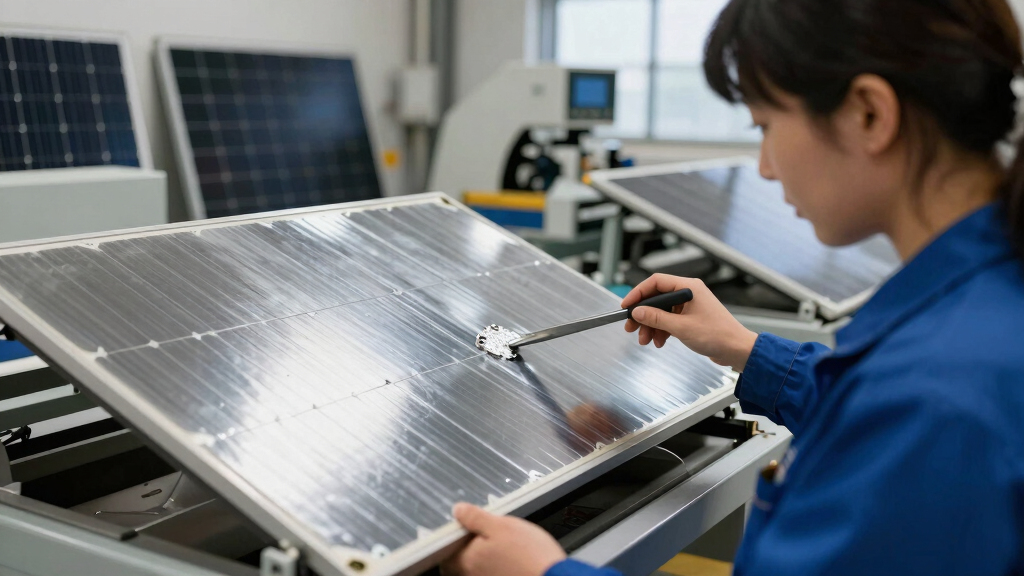
Recycling of solar panels is increasingly focused on recovering silver, which holds significant economic value, as a wave of end-of-life modules approaches in Europe, Australia, and globally. Experts warn that technical barriers and the absence of industry-wide purity standards are slowing progress, but silver’s high worth makes it a critical lever for improving recycling economics.

Get backup power and energy gear delivered free with Prime
- Fast, free delivery on millions of items
- Prime Video, Amazon Music and more included
- Member-only deals all year
According to Dr. Andreas Obst of Fraunhofer CSP, silver in crystalline silicon modules, though comprising only 0.03% of the module’s weight, can be worth over EUR 600 ($650) per module at current prices, far surpassing the value of glass, aluminum, and silicon combined. This makes silver recovery a key focus for enhancing the economic viability of PV recycling.
With Europe and Australia facing large volumes of PV waste—up to 600,000 MT annually in Germany alone by the early 2030s and an estimated 1 million MT in Australia by 2035—industry stakeholders emphasize the importance of developing effective recycling infrastructure. However, current capacity is limited, primarily targeting aluminum and glass, with silver recovery still in early stages.
Silver prices have risen from around $20 to over $68 per troy ounce in recent years, driven by demand from PV manufacturing and limited recycling. The global PV industry consumed approximately 6,000 MT of silver in 2023, even as per-unit silver use has declined significantly since 2006, highlighting the importance of recycling to conserve reserves. Recovery techniques, such as hydrometallurgical and pyrometallurgical processes, are complex and not yet widely commercialized, with industry experts citing technical and economic challenges.
Economic and Environmental Impact of Silver Recovery
Recovering silver from end-of-life solar panels is vital for improving recycling economics and reducing reliance on finite mineral reserves. As PV deployment accelerates globally, effective silver recovery can lower material costs, extend resource sustainability, and mitigate environmental impacts of waste accumulation.
Products Worth Considering

Ring Alarm 14-Piece Kit

Ring Alarm 8-Piece Kit (Newest Model) – Home Security System

Philips Hue Bridge Pro Starter Kit with 4 A19 E26 Color Smart Bulbs
As an affiliate, we earn on qualifying purchases.
Growing PV Waste and the Need for Advanced Recycling
Modules installed during Europe’s late 2000s subsidy-driven expansion are now reaching end-of-life, with projections indicating millions of metric tons of PV waste globally by 2030. While current recycling infrastructure mainly handles glass and aluminum, the high value of silver presents an economic incentive to develop dedicated recovery processes. Industry estimates suggest that without improved recycling techniques, a significant portion of silver reserves could be depleted within 25 years.
“When you’re talking about recycling of solar modules, you should talk about silver recovery. The silicon just accounts for roughly 2.7% of the weight of an individual module – it’s really not that much money which would come out of the solar cells itself.”
— Dr. Andreas Obst, Fraunhofer CSP
Technical and Industry Standard Challenges in Silver Recycling
Industry experts agree that recovering silver efficiently remains technically complex, requiring advanced hydrometallurgical or pyrometallurgical processes. Commercial-scale solutions are not yet established, and industry-wide purity standards for recycled PV silicon are lacking, complicating downstream reuse.
Development of Recycling Technologies and Standards
Researchers and industry players are expected to focus on scaling up advanced recovery techniques and establishing industry standards for recycled silicon purity. Policy incentives and investment in dedicated recycling infrastructure could accelerate progress, with significant developments anticipated within the next three to five years.
Key Questions
Why is silver recovery important for PV recycling?
Silver in solar panels has high economic value and is critical for making recycling financially viable, especially as large volumes of panels reach end-of-life.
What are the main technical barriers to silver recovery?
Recovering silver requires complex hydrometallurgical or pyrometallurgical processes due to its fine dispersion and encapsulation in the module laminate, which are not yet widely commercialized.
How much PV waste is expected globally by 2030?
Estimates suggest between 1.7 million and 8 million metric tons of PV waste worldwide, with significant volumes in Europe and Australia alone.
What are the economic benefits of improved silver recycling?
Enhanced recovery can reduce material costs for manufacturers, extend the lifespan of finite silver reserves, and improve the overall sustainability of PV supply chains.
When might we see large-scale commercial silver recycling facilities?
Industry projections indicate that dedicated hydrometallurgical recycling lines could become viable within three to five years, depending on technological and policy developments.
Source: PV Magazine