To monitor your solar system’s performance, install a reliable monitoring system that provides real-time data on energy production. Use dashboards or apps to track output versus capacity and look for unusual drops that aren’t weather-related. Keep an eye on your energy consumption alongside system data to spot inefficiencies. Regularly review the performance metrics and alerts to catch issues early, helping you maintain peak efficiency and extend your system’s lifespan. Discover more tips below.
Key Takeaways
- Install a reliable solar monitoring system with user-friendly apps for real-time performance data.
- Regularly compare actual energy output to expected capacity to detect fluctuations.
- Use dashboards or mobile alerts to identify sudden drops or system issues promptly.
- Track energy consumption alongside production to optimize usage and identify inefficiencies.
- Review historical data regularly to assess system health and plan maintenance proactively.
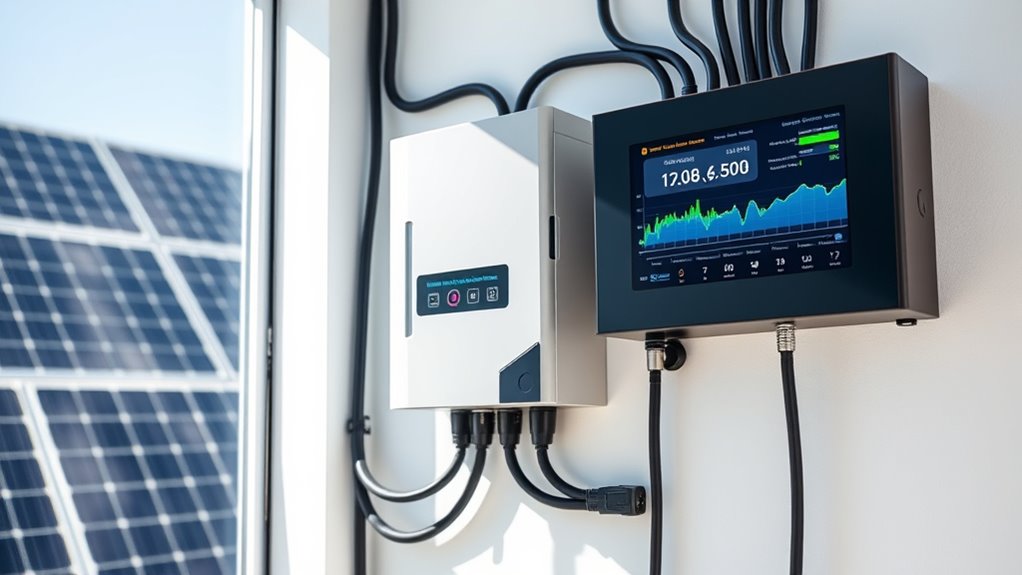
Are you making the most of your solar system’s efficiency? If you want to maximize your investment and reduce your energy bills, keeping a close eye on how well your system performs is essential. Solar panel efficiency can fluctuate due to dirt, shading, or aging components, which means regular monitoring is key to guaranteeing you’re getting the most out of your setup. One of the best ways to do this is through energy consumption tracking, which allows you to see exactly how much energy your system produces and uses in real-time. By staying informed, you can identify issues early and make adjustments that keep your system functioning at its best. Implementing a comprehensive performance analysis approach can further help you understand your system’s overall health and efficiency. When it comes to solar panel efficiency, understanding the output of your panels compared to their rated capacity is fundamental. Many modern solar monitoring systems offer real-time data on how much power your panels are generating at any given moment. This data helps you spot drops in performance that might indicate dirt buildup, shading problems, or equipment malfunctions. For example, if your system was producing 10 kilowatt-hours (kWh) per day but suddenly drops to 7 kWh without weather changes, it’s a sign you should investigate further. Monitoring tools often include dashboards or apps that display this information clearly, making it easy to keep tabs on your system’s health effortlessly. Energy consumption tracking complements solar panel efficiency monitoring by showing how your energy usage aligns with your system’s output. It helps you identify when you’re consuming more power than your panels generate, so you can adjust your habits accordingly or consider adding batteries or other storage solutions. This tracking also enables you to analyze patterns over days, weeks, or months, revealing peak usage times and potential inefficiencies. With accurate data, you can fine-tune your energy consumption habits—like running high-power appliances during peak sunlight hours—to maximize savings and reduce reliance on grid power. To make monitoring easier, you should consider installing a reliable solar monitoring system. Many come with user-friendly apps that provide instant access to performance metrics, alerts for potential issues, and historical data. These tools often connect directly to your inverter or the main system components, giving you a holistic view of your solar setup. Regularly reviewing this data ensures you catch problems early, prolong the lifespan of your panels, and optimize energy production. Remember, consistent tracking and analysis help you take proactive steps to maintain peak efficiency, ensuring your solar investment continues paying off for years to come.

1200W 25.6V 2.56KWH Lithium Battery Solar System Off Grid with App Monitoring, 6pcs 200W High-Efficiency Panels+25.6V 100Ah Lithium Battery+3600W Inverter+120A MPPT Charge Controller for Cabin & RV
OFF-GRID POWER MADE SMARTER: This Lithium Battery Solar System delivers reliable energy for off-grid cabins, RVs, and remote…
As an affiliate, we earn on qualifying purchases.
As an affiliate, we earn on qualifying purchases.
Frequently Asked Questions
What Are Common Signs of Solar System Malfunctions?
You might notice a drop in energy output, which could signal solar panel degradation or inverter errors. Watch for warning lights on the inverter or irregular system alerts. If your panels seem dirty or shaded, that’s another sign of reduced efficiency. Unusual spikes or dips in your energy bills also hint at potential malfunctions. Regularly inspect your system and consult a technician if you see these signs to keep everything running smoothly.
How Often Should I Check My Solar System’s Performance?
You should check your solar system’s performance at least once a month. During these checks, make certain your solar panel cleaning is up to date to maximize efficiency, and inspect your inverter for any warning signs or error messages. Regular monitoring helps catch issues early, keeping your system running smoothly. If you notice a drop in performance, perform additional checks and consult a professional if needed.
Can I Monitor My Solar System Remotely?
Imagine holding a magic window into your solar system—yes, you can monitor your solar system remotely with ease. Solar panel monitoring tools offer remote system access, allowing you to track performance from anywhere. This means you don’t need to be physically present; you can check energy production, troubleshoot issues, and optimize efficiency using your smartphone or computer, giving you peace of mind and control at your fingertips.
What Tools Are Best for Diagnosing Solar Panel Issues?
You should use a reliable solar inverter with built-in diagnostics to spot issues quickly. Conduct shading analysis to identify obstructions that reduce efficiency. Additionally, tools like infrared cameras can detect hot spots or damaged panels. Regularly check system data through your monitoring app to catch performance dips early. Combining inverter diagnostics, shading analysis, and visual inspections helps you effectively diagnose and address solar panel issues.
How Does Weather Affect Solar System Performance?
Weather wields a wild wand over your solar system’s success. Sunlight soars with strong solar radiation on clear days, maximizing your system’s output. But clouds, rain, and snow cause atmospheric interference, dulling solar radiation and diminishing performance. Wind can also shake panels, causing subtle shifts. So, you see, weather’s whims directly influence your solar system’s efficiency, with bright, sunny days boosting output and gloomy, cloudy days dampening it.

Proshopping 200A 100V Power Analyzer Multi Meter, High Precision DC Watt Meter Voltage Amp Tester, Battery Consumption Performance Monitor with Digital LCD Display for RC,Solar Panel, Wind Power
8 in 1 multi-function rc watt meter energy monitor: automatic detect and continuously display a real-time of Current…
As an affiliate, we earn on qualifying purchases.
As an affiliate, we earn on qualifying purchases.
Conclusion
Monitoring your solar system is like keeping an eye on a trusted friend—you catch issues early and keep things running smoothly. Regularly check your system’s data, use monitoring apps, and stay attentive to any drops in performance. By doing so, you guarantee your solar setup shines bright for years to come. Think of it as tending a garden; with care and attention, your solar investment will flourish and keep powering your life effortlessly.

Golden Fidget Spinner Solar Energy Toy, Car Air Freshener Dashboard Decoration Powered by Sunshine, Cool Science Kit Spinning Ball Toy with Solar Panels, Premium Gift for Boyfriend Men Women
Solar-Powered Magic: This innovative air freshener rotates solely on solar power, creating a mesmerizing effect on your dashboard….
As an affiliate, we earn on qualifying purchases.
As an affiliate, we earn on qualifying purchases.

YTFRL Tire Pressure Monitoring System, Tire Monitoring System with Solar & USB Charger, 4 External Sensors, 6 Alarm Modes, Auto On/Off Real-time LCD Display Tyre Pressure Monitor
Accurate Monitoring: The tool can synchronously monitor four tires' temperature and pressure, allowing you to know the condition…
As an affiliate, we earn on qualifying purchases.
As an affiliate, we earn on qualifying purchases.