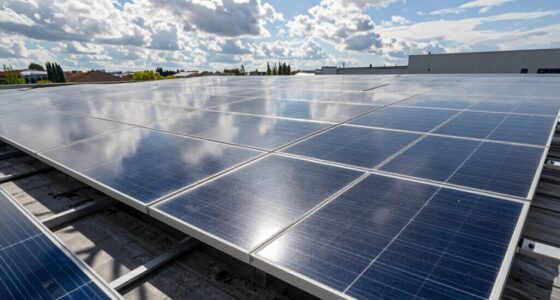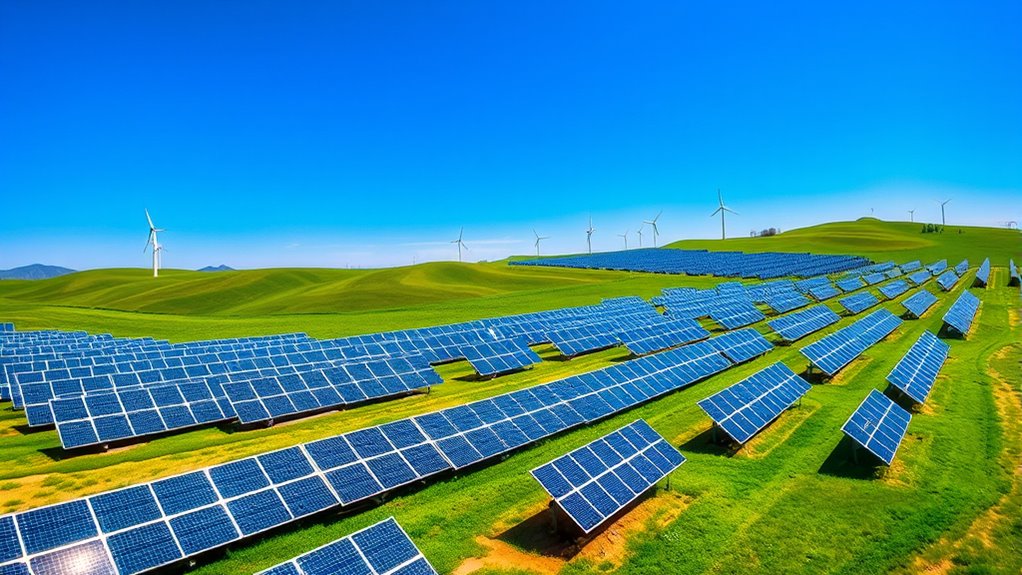

Solar farming combines agricultural use with solar energy, allowing you to produce power while farming crops or raising livestock. You should consider the efficiency of your solar panels, land use planning, and how crops thrive under or away from the panels. Proper panel orientation and maintenance are essential for maximum output. Getting these basics right helps maximize land and energy production, and exploring further reveals how to create a sustainable, dual-purpose farm.
Key Takeaways
- Integrates land use for crops or livestock with solar energy production to maximize land efficiency.
- High-efficiency solar panels generate more power, reducing land requirements and enhancing system performance.
- Land planning considers sun angles, shading, and soil conditions to optimize both agriculture and solar output.
- Compatibility of crops and livestock influences panel placement, orientation, and shading considerations.
- Proper panel orientation, tilt, and maintenance are essential for maximizing efficiency and facilitating future expansion.
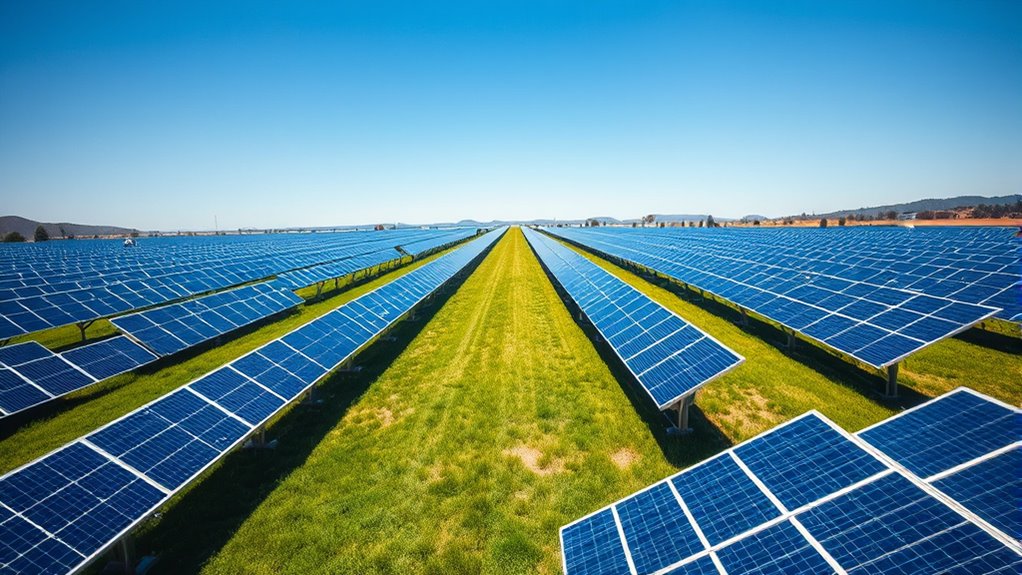
Solar farming is transforming the way we generate clean energy by combining agriculture with solar power production. This innovative approach allows you to maximize land use by integrating solar panels into farming landscapes, making it possible to produce electricity while still cultivating crops or grazing livestock. When considering solar farming, one of the most critical factors you need to focus on is solar panel efficiency. High-efficiency panels can generate more electricity from the same amount of sunlight, which means you don’t need as much land to meet energy goals. This helps you optimize your land use, balancing energy production with agricultural needs.
Effective land use planning becomes essential when setting up a solar farm. You want to carefully map out your land to ensure that solar panels are positioned to receive maximum sunlight while leaving enough space for farming activities. Proper planning involves analyzing sun angles, shading patterns, and soil conditions. By doing this, you prevent panels from casting shadows on each other or on crops, which could reduce their efficiency and affect your overall returns. A well-devised land use plan ensures that you’re making the most of every square foot—boosting both energy output and agricultural productivity. Additionally, understanding the expiration of equipment such as solar panels and other components can help in scheduling maintenance and replacements to maintain optimal efficiency.
You also need to think about the type of crops or livestock that will coexist with your solar installation. Some crops thrive under partial shade, which solar panels provide, while others may require full sun. Your land use planning should take these needs into account, so you can design a system that supports both energy generation and agriculture without one compromising the other. Additionally, integrating solar farming into existing farm operations can help you reduce land costs and increase your overall farm income, provided you plan carefully.
Another consideration is the orientation and tilt of the solar panels. Properly aligned panels can considerably improve solar panel efficiency, especially when combined with strategic land use planning. You want to position panels to capture the maximum sunlight during peak hours, which varies with your geographic location. Adjusting the tilt and angle of the panels ensures they operate at peak efficiency, translating to higher energy yields. When you plan your layout, consider future expansion possibilities and maintenance access so that your solar farm remains efficient and cost-effective over time.
In essence, successful solar farming hinges on balancing solar panel efficiency with thoughtful land use planning. By doing so, you create a sustainable system that maximizes energy output without sacrificing agricultural productivity. It’s about making smart choices upfront—selecting high-efficiency panels, designing ideal layouts, and choosing compatible crops—that set the foundation for a resilient, productive, and environmentally friendly farm.

Jackery Portable Power Station Explorer 300, 292Wh Backup LiFePO4 Battery, Solar Generator for Outdoors Camping Travel Hunting Blackout (Solar Panel Optional)
Ultra-Lightweight: At only 7.5 lbs, the Explorer 300 delivers a robust 292Wh capacity while remaining 17% lighter than...
As an affiliate, we earn on qualifying purchases.
Frequently Asked Questions
How Does Solar Farming Impact Local Wildlife Habitats?
Solar farming can impact local wildlife habitats by causing wildlife disturbance and habitat fragmentation. As you establish solar panels, you might disrupt animal movement and nesting areas, which can threaten local species. To minimize these effects, you should carefully choose sites, create buffer zones, and incorporate wildlife corridors. This approach helps protect ecosystems while allowing solar energy development, ensuring a balanced coexistence with local wildlife.
What Are the Long-Term Maintenance Costs for Solar Farms?
You might think solar farms are a set-and-forget deal, but long-term maintenance costs actually sneak up on you. You’ll need to budget for regular cleaning, inverter replacements, and panel repairs, all part of your financial planning. Equipment lifespan varies, but most components last 20-25 years, meaning you’ll face replacement costs down the line. Ironically, neglecting upkeep can shorten your system’s life and inflate costs.
Can Solar Farms Be Integrated With Existing Agricultural Activities?
Yes, you can integrate solar farms with existing agricultural activities by focusing on agricultural integration and crop compatibility. You’ll need to design the layout to allow enough sunlight for crops while accommodating solar panels. Consider shade-tolerant crops and adjustable panel heights to maximize land use. With proper planning, you’ll create a sustainable system that balances renewable energy generation with productive farming, benefiting both your energy needs and agricultural output.
What Incentives or Subsidies Are Available for Solar Farm Development?
Imagine your solar farm glowing with opportunity—you’re likely to find financial incentives and government subsidies that make your project more affordable. Many regions offer tax credits, grants, and rebates to encourage renewable energy development. These incentives can considerably reduce upfront costs and boost your return on investment. Check local, state, or federal programs to discover specific subsidies available for solar farm development, helping you turn your green energy vision into reality.
How Does Climate Change Affect Solar Farm Efficiency?
Climate change impacts your solar farm’s efficiency by affecting climate resilience and increasing temperature effects. Higher temperatures can reduce panel performance, causing energy output to decline. Extreme weather events also threaten infrastructure and operation stability. To maintain efficiency, you should consider integrating climate-resilient designs and cooling solutions, ensuring your solar farm adapts to changing climate conditions. This helps optimize energy production and safeguards your investment long-term.

Portable Solar Generator, 300W Portable Power Station with Foldable 60W Solar Panel,110V Pure Sine Wave 280Wh Battery Power Pack with USB DC AC Outlet for Camping Smart Devices RV Van Outdoor-Orange
Portable Generator with 60W Solar Panel Included: with a big battery pack, ZeroKor 300W power stations Generator are...
As an affiliate, we earn on qualifying purchases.
Conclusion
Think of solar farming as tending a mighty garden of light, where each panel is a seed that promises a brighter future. By carefully planning and nurturing this garden, you become the gardener of our planet’s hope, transforming sunlight into sustainable energy. Your efforts plant the roots for a cleaner, greener tomorrow—an orchard of change that will flourish long after today. Embrace this journey, and watch your vision grow into a powerful legacy.

Jackery Solar Generator 1000 v2 with 200W Solar Panel,1070Wh Portable Power Station LiFePO4 Battery,1500W AC/100W USB-C Output, 1Hr Fast Charge for Outdoor,Off-Grid Living,RV,Emergency
Powerful yet Compact: Boasting a 1,500W AC output and a 3,000W surge peak, the Solar Generator 1000 V2...
As an affiliate, we earn on qualifying purchases.

EF ECOFLOW Portable Power Station DELTA 2, 1024Wh LiFePO4 (LFP) Battery, 1800W AC/100W USB-C Output, Solar Generator(Solar Panel Optional) for Home Backup Power, Camping & RVs
7 X Faster Charging. 0-80% in just 50 mins and 0-100% in 80 mins with AC input. That's...
As an affiliate, we earn on qualifying purchases.