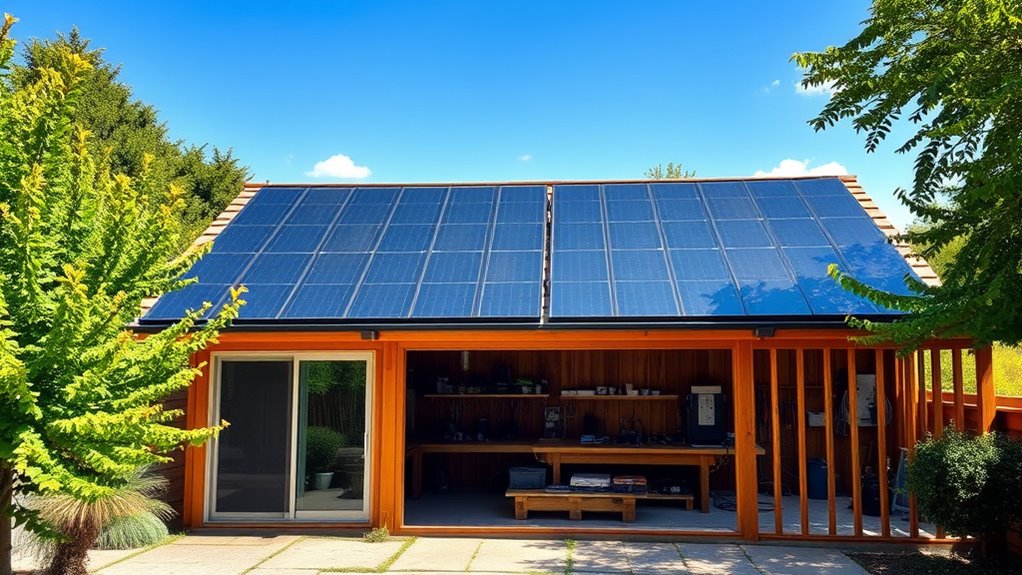

To build a solar‑powered workshop, start by evaluating your energy needs and choosing high-quality solar panels placed in a sunny, unobstructed area. Install durable mounting hardware and consider integrating energy storage to keep power steady during cloudy days or nighttime. Regular maintenance ensures panels stay clean and efficient. Planning for future upgrades can maximize system performance. Keep learning about advancements in solar tech to enhance your setup — you’ll find useful information ahead.
Key Takeaways
- Assess your workshop’s energy needs and select appropriately rated solar panels and energy storage solutions.
- Choose a suitable location with maximum sun exposure and minimal shading for installing solar panels.
- Install panels securely using high-quality mounting hardware and ensure proper wiring and grounding.
- Regularly inspect, clean, and maintain panels to ensure optimal performance and longevity.
- Plan for system upgrades and incorporate energy management strategies to enhance sustainability and efficiency.
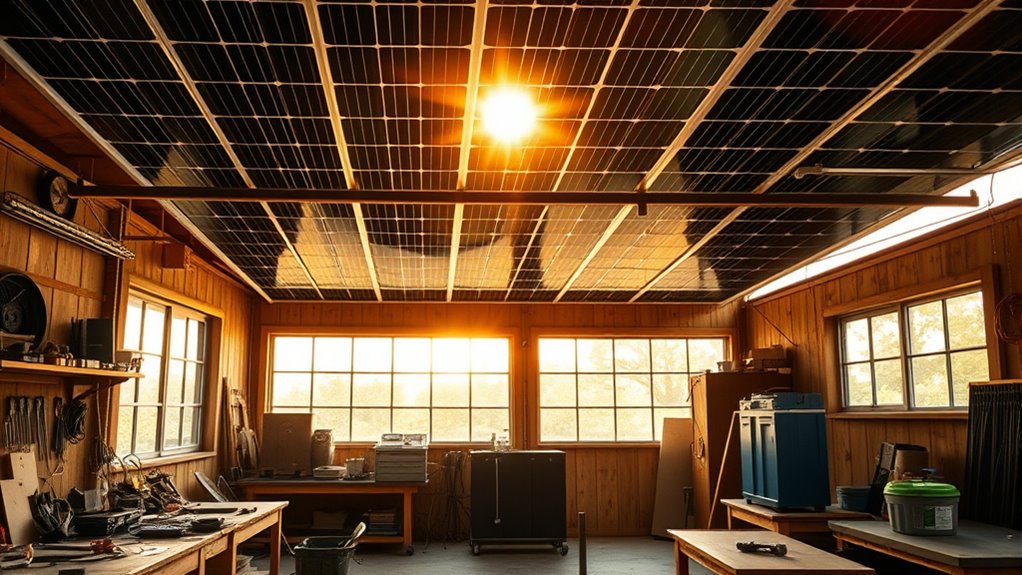
Building a solar-powered workshop is an excellent way to reduce energy costs and increase sustainability for your projects. When you choose to install solar panels, you’re investing in a renewable energy source that can power your tools, lighting, and equipment while lowering your utility bills. To maximize the benefits, you’ll need to consider energy storage solutions. Energy storage allows you to store excess solar energy generated during the day for use during nights or cloudy days. This guarantees your workshop remains powered consistently, even when the sun isn’t shining. Incorporating batteries or other storage methods lets you maintain a stable energy supply, giving you independence from the grid and reducing your overall reliance on external power sources.
Building a solar-powered workshop ensures reliable, cost-effective energy with sustainable storage solutions.
As you plan your solar setup, keep in mind that proper solar panel maintenance is vital for long-term performance. Regular inspection helps you identify dirt, debris, or shading issues that can diminish efficiency. Cleaning the panels with gentle water and a soft brush can remove dust and grime that block sunlight. Check for any loose connections, corrosion, or physical damage, and address these issues promptly to prevent reduced output or system failure. Maintaining your panels ensures they operate at peak efficiency, saving you money and extending their lifespan. Additionally, monitoring your system’s performance through a dedicated app or inverter display can alert you to potential problems early, so you can take corrective action without delay.
When installing your solar panels, position them in an area with maximum sun exposure, ideally facing south if you’re in the northern hemisphere. Avoid shading from trees, buildings, or other obstructions, especially during peak sunlight hours. Use high-quality mounting hardware to keep panels secure against wind or weather. Integrate your energy storage system seamlessly so that excess power can be stored efficiently. This setup allows you to run power-hungry tools and lighting even when the sun isn’t shining, making your workshop more reliable and energy-efficient. Considering the efficiency of solar panels can help you select the best options for your specific needs and maximize energy output.
In addition to installation, consider future upgrades, such as adding more panels or expanding your energy storage capacity. Keep your system well-maintained, and stay informed about advancements in solar technology, which can help you optimize your setup over time. Building a solar-powered workshop isn’t just about initial installation; it’s an ongoing process of maintenance and improvement. When you prioritize regular solar panel maintenance and carefully manage your energy storage, you’ll enjoy a sustainable workspace that saves money, reduces environmental impact, and enhances your productivity.
Frequently Asked Questions
What Is the Typical Cost to Set up a Solar-Powered Workshop?
Setting up a solar-powered workshop typically costs between $10,000 and $30,000, depending on your energy needs. You’ll want high-efficiency solar panels to maximize output, which can influence costs. Don’t forget battery storage; larger or more advanced batteries increase expenses but guarantee power during cloudy days or at night. Overall, investing in efficient solar panels and quality batteries helps you save long-term on energy bills.
How Long Does It Take to Install a Complete Solar System?
They say “patience is a virtue,” and it applies to solar panel installation. Typically, installing a complete solar system, including energy storage solutions, takes about 1 to 3 days, depending on the system’s size and complexity. The process involves site assessment, permitting, and actual installation. Rushing can lead to mistakes, so taking your time guarantees everything’s properly set up for efficient energy production and long-term performance.
Can Existing Workshops Be Converted to Solar Power Easily?
Yes, you can convert your existing workshop to solar power, but it depends on your current setup. You’ll need to assess your space for solar panel efficiency and consider upgrading your energy storage solutions to store excess power. A professional evaluation helps determine if your roof can support panels and if your electrical system needs modifications. With proper planning, the shift can be smooth and efficient.
What Are the Maintenance Requirements for Solar Panels?
You need to follow a regular cleaning schedule to keep your solar panels functioning efficiently, typically cleaning them every 6 to 12 months to remove dirt and debris. Keep an eye on your inverter, as its lifespan usually ranges from 5 to 15 years; replacing it when necessary guarantees your system stays ideal. Also, check for any shading or damage that could affect performance and perform routine inspections to maintain your solar setup.
How Do I Ensure My Workshop Has Enough Energy During Cloudy Days?
To guarantee your workshop has enough energy during cloudy days, you should invest in good battery storage to hold excess energy generated on sunny days. Increase your energy efficiency by using LED lighting, insulating well, and choosing energy-efficient tools. Consider adding a backup generator as a safety net. Regularly monitor your energy usage and storage levels to optimize performance, assuring your workshop stays powered regardless of weather conditions.
Conclusion
Building a solar-powered workshop not only reduces your carbon footprint but can also cut energy costs markedly. Did you know that installing solar panels can save you up to 70% on electricity bills over their lifespan? By choosing solar, you’re investing in a sustainable future and making a smart financial decision. Start planning today, and you’ll enjoy the benefits of clean energy while powering your projects efficiently for years to come.