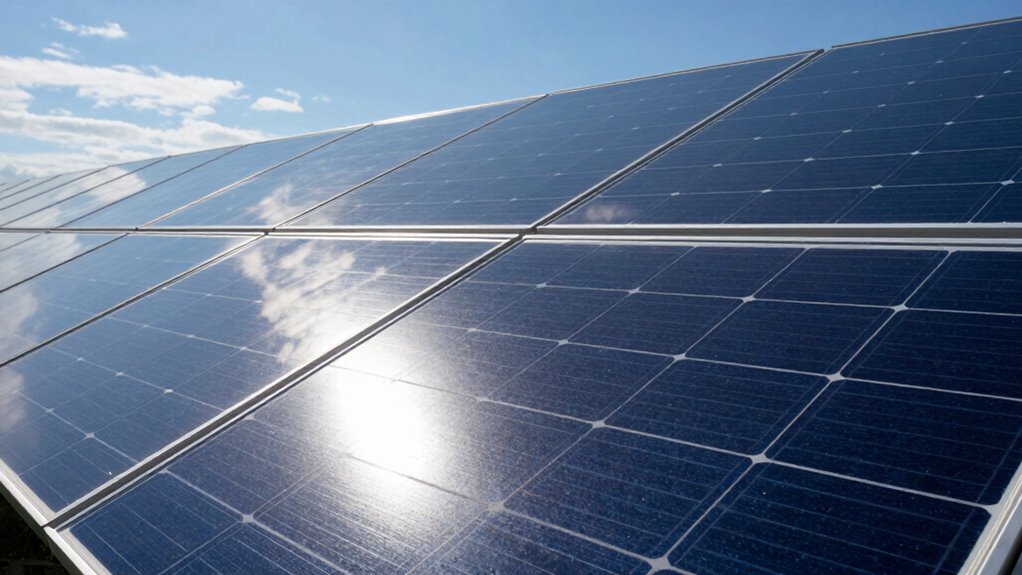

Solar panels have shiny, reflective surfaces designed to maximize sunlight absorption, but this can cause glare that affects drivers, residents, and pilots. The level of glare depends on factors like panel design, materials, and installation angles. Manufacturers are working on eco-friendly solutions, such as anti-reflective coatings, to reduce glare while maintaining efficiency. Understanding how these factors interact helps you better assess solar energy’s benefits and challenges—exploring further reveals even more sustainable ways to manage glare effectively.

Get backup power and energy gear delivered free with Prime
- Fast, free delivery on millions of items
- Prime Video, Amazon Music and more included
- Member-only deals all year
Key Takeaways
- Solar panels’ reflective surfaces can cause glare that impacts residents, drivers, and pilots.
- Anti-reflective coatings and textured surfaces help reduce glare and improve energy absorption.
- Proper siting and panel angles are essential to minimize glare in sensitive areas like airports and neighborhoods.
- Eco-friendly manufacturing practices aim to produce less reflective panels without sacrificing efficiency.
- Advances in materials and installation techniques continue to enhance solar panel performance while managing glare.
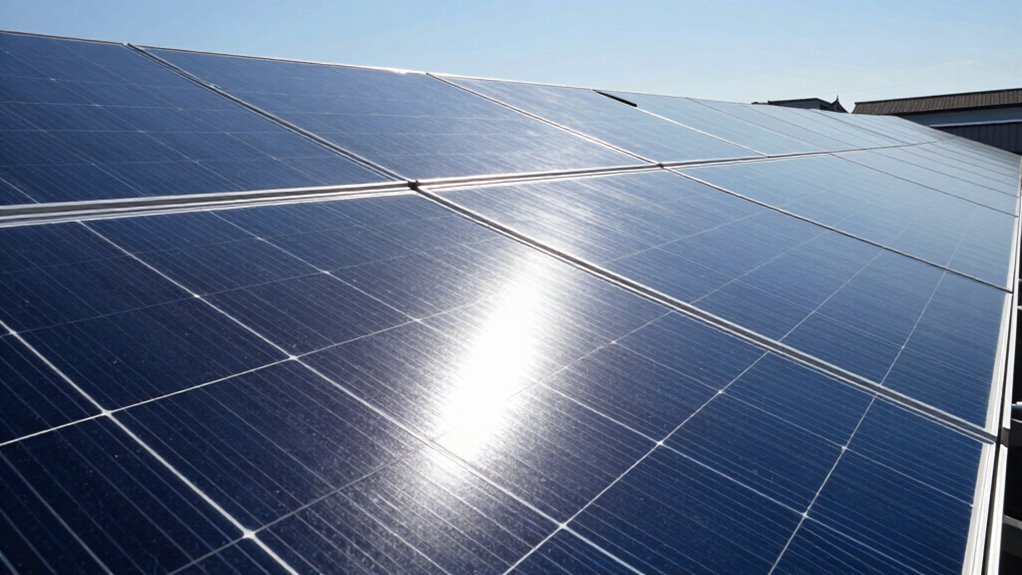
Solar panels are an essential part of renewable energy solutions, but their reflective surfaces can sometimes cause glare that impacts nearby residents, drivers, and pilots. This glare results from the shiny, glassy surfaces designed to maximize sunlight absorption. While these surfaces are highly effective at capturing solar energy, they can also reflect sunlight directly into the eyes of passersby or into the cockpit of an aircraft. Understanding the causes and solutions for solar panel glare helps you appreciate both their energy benefits and the efforts to reduce any negative effects.
Solar panel glare can impact residents, drivers, and pilots due to reflective, glassy surfaces designed to maximize sunlight absorption.
One key factor influencing glare is the manufacturing process. Eco friendly manufacturing practices focus on reducing environmental impact while improving the durability and performance of solar panels. Manufacturers are increasingly adopting sustainable techniques that minimize reflective surfaces or incorporate anti-reflective coatings. These coatings help to diffuse sunlight rather than reflect it directly, significantly reducing glare without compromising the panels’ ability to generate electricity. This approach aligns with the broader goal of enhancing the energy efficiency benefits of solar technology while maintaining environmental responsibility. Additionally, ongoing research into new materials aims to further decrease reflectivity and improve overall sustainability.
The energy efficiency benefits of solar panels depend heavily on their ability to absorb as much sunlight as possible. High-quality solar panels with anti-reflective coatings or textured surfaces are designed to optimize light absorption and minimize reflection. When glare is reduced, the panels operate more efficiently because less sunlight is reflected away and more is converted into usable electrical energy. This efficiency boost means you get more power from fewer panels, which can lower installation costs and improve the overall viability of solar projects. Additionally, advancements in eco friendly manufacturing are helping to make solar energy a more sustainable option for communities worldwide. Proper installation and maintenance also play a vital role in minimizing glare and maximizing performance.
However, glare can still be an issue in certain situations, especially in densely populated areas or near airports. In these cases, proper siting and design are crucial. Engineers and planners consider the angle of the panels, the type of reflective surface, and local environmental factors to mitigate glare. Some regions implement guidelines or regulations to ensure solar installations do not cause safety hazards or disturbances. As a homeowner or developer, understanding these measures helps you make informed decisions about where and how to install solar panels to balance energy efficiency benefits with community safety and comfort.
Ultimately, the goal is to harness the Earth’s renewable energy with minimal disruption. Advances in eco friendly manufacturing and thoughtful design are making solar panels less reflective and more sustainable. By choosing panels with anti-reflective features and collaborating with knowledgeable installers, you can enjoy the advantages of solar power while reducing glare-related concerns. This balanced approach ensures that solar remains a safe, effective, and environmentally friendly energy solution for everyone involved. Promoting sustainable manufacturing practices is essential for the continued growth and acceptance of solar technology worldwide.
solar panel anti-reflective coating
As an affiliate, we earn on qualifying purchases.
As an affiliate, we earn on qualifying purchases.
Frequently Asked Questions
How Do Weather Conditions Affect Solar Panel Glare?
Weather variability directly impacts solar panel glare by changing sunlight conditions. On clear, sunny days, glare intensity is at its highest, making reflection more noticeable. Cloud cover and precipitation reduce sunlight, lessening glare and reflection. Wind and temperature shifts can also alter panel angles, affecting glare. You’ll notice less glare during overcast weather, but on bright, sunny days, glare can become quite intense, especially if panels are tilted toward the sun.
Can Solar Panel Glare Impact Nearby Residential Areas?
While solar panel glare might seem harmless, it can impact nearby residential areas, especially in urban settings. The reflection can cause discomfort or visual hazards for residents and motorists. Urban planning should consider this glare to balance renewable energy goals with community comfort. Additionally, glare might disturb local wildlife, disrupting their natural behaviors. Thoughtful placement and design of solar panels can minimize these effects, ensuring harmony between solar energy and community well-being.
Are There Regulations for Managing Solar Glare?
Regulatory standards for managing solar glare do exist in many regions. These standards aim to minimize glare impacts on nearby residents and pilots, often requiring glare mitigation strategies like panel coatings or strategic placement. You should check local regulations, as they vary by area, to guarantee your solar installation complies. Proper planning and adherence to these standards help reduce glare issues, making solar energy safer and more acceptable in your community.
How Do Different Solar Panel Types Vary in Glare Production?
Different solar panel types dance with sunlight uniquely, like a symphony of reflections. Monocrystalline panels often glisten more, with shiny surfaces that bounce glare brightly, while thin-film panels tend to absorb light, whispering less glare. Solar panel coatings play a role, acting as shields to reduce reflection, and glare reduction techniques like textured surfaces or anti-reflective coatings help keep the sunlight in check. You can choose wisely based on how much glare you want to tame.
What Mitigation Technologies Exist for Solar Glare?
You can reduce solar glare with mitigation technologies like spectral reflection management and surface coatings. Spectral reflection controls how much sunlight bounces off panels, minimizing glare. Surface coatings, such as anti-reflective layers, further absorb excess light, decreasing reflection. These technologies help prevent glare-related issues for nearby residents and pilots, making solar installations safer and more environmentally friendly. Employing these methods guarantees your solar panels operate efficiently without causing undue glare.
solar panel glare reduction film
As an affiliate, we earn on qualifying purchases.
As an affiliate, we earn on qualifying purchases.
Conclusion
Understanding solar panel reflection and glare helps you navigate sunlight’s dance with modern tech. By staying aware and choosing wisely, you can enjoy the benefits of solar energy without turning into a modern-day Narcissus. Think of it as wielding a flashlight in a dark cave — you control the beam, not the other way around. So, keep these tips in mind, and let your solar setup shine brightly without blinding your neighbors or yourself.
As an affiliate, we earn on qualifying purchases.
solar panel installation angle adjuster
As an affiliate, we earn on qualifying purchases.
As an affiliate, we earn on qualifying purchases.
Halloween Picks
halloween
As an affiliate, we earn on qualifying purchases.