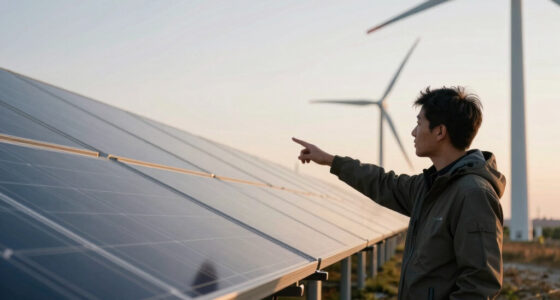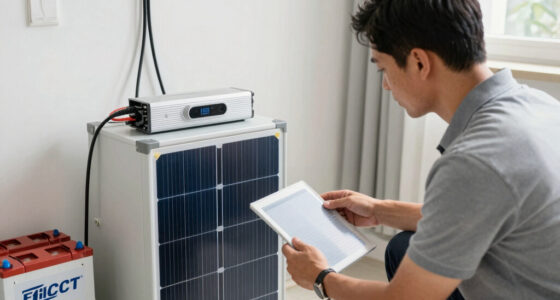
Certificates like IEC and UL show that your solar panels meet strict safety, durability, and performance standards. IEC certification, recognized globally, confirms the panels can withstand harsh weather and follow industry installation practices. UL certification, important in North America and beyond, ensures safety from fire hazards and electrical issues. Knowing these certifications helps you choose reliable, long-lasting panels. Keep exploring to discover how these standards can give you confidence in your solar investment.
Key Takeaways
- IEC and UL certifications verify solar panels meet international safety, durability, and performance standards for reliable long-term operation.
- IEC certification is globally recognized, focusing on weather resistance and compliance with international standards.
- UL certification, primarily in North America, emphasizes safety, fire resistance, and electrical safety compliance.
- Both certifications ensure panels undergo rigorous testing to withstand real-world environmental conditions.
- Certified panels offer assurance of quality, safety, and adherence to industry benchmarks, supporting informed purchasing decisions.
Are you aware of what certifications your solar panels should have before making a purchase? Understanding these certifications is essential because they serve as proof that your panels meet specific safety, durability, and performance benchmarks. The two most recognized certifications are IEC and UL, and they play a significant role in guaranteeing your solar investment is reliable. When shopping for solar panels, you should prioritize products that adhere to strict installation standards and quality assurance protocols. These certifications are not just formalities; they guarantee that the panels have undergone rigorous testing and comply with industry-wide safety and performance criteria.
IEC, or International Electrotechnical Commission, certifications are recognized globally and focus on establishing standards for solar panel safety, efficiency, and durability. When a panel bears the IEC certification, it means it has met internationally accepted testing procedures for factors like electrical safety, mechanical strength, and environmental resilience. This certification assures you that the panel can withstand harsh weather conditions, such as high winds, hail, or heavy rain, without compromising its functionality. It also indicates that the manufacturer has followed precise installation standards, ensuring the product’s safety during installation and long-term operation. Having IEC certification is a mark of quality assurance that your panels will perform efficiently over time, reducing the risk of early failures.
UL certification, issued by Underwriters Laboratories, is primarily recognized in North America but has gained credibility worldwide. UL standards emphasize safety, quality, and performance, verifying that the solar panels meet strict safety protocols and electrical standards. When a panel is UL listed, it has undergone comprehensive testing for fire safety, electrical shock hazards, and mechanical integrity. This certification ensures that the product adheres to industry-leading installation standards, minimizing risks during installation and throughout its lifespan. UL certification also reflects a strong commitment from manufacturers to maintain quality assurance, meaning you can trust the panels to operate safely and efficiently in your specific environment.
Both IEC and UL certifications serve as indicators that a solar panel manufacturer prioritizes safety, performance, and compliance with industry standards. When you invest in solar technology with these certifications, you’re choosing products that have been tested to withstand real-world conditions and meet high safety benchmarks. This peace of mind is indispensable because it reduces potential hazards and ensures your solar system operates at optimal efficiency for years to come. Ultimately, looking for panels with recognized certifications helps you make an informed decision, securing your investment with confidence that the product aligns with global safety and quality assurance standards. Additionally, certification standards ensure that panels are designed with consistent quality, making your solar system more reliable over its lifespan.
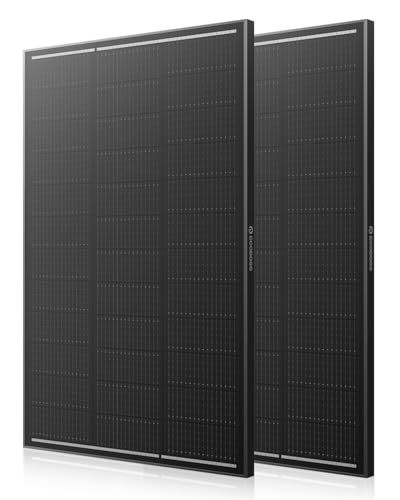
200W TÜV Certification Solar Panel, 2PC 100 Watt N-Type 25.8% Solar Panels
- Certification Standards: TÜV, IEC, UL certified for safety and durability
- Expandable Power: Includes two 100W panels for 200W total output
- High Efficiency: Up to 25.6% N-Type monocrystalline efficiency
As an affiliate, we earn on qualifying purchases.
As an affiliate, we earn on qualifying purchases.
Frequently Asked Questions
How Do Certifications Impact Solar Panel Warranty Periods?
Certifications directly influence the warranty duration you get with your solar panel, as they signify quality and safety standards. When a panel is certified, manufacturers often offer longer warranties because they trust the product’s durability. The certification significance lies in ensuring your investment’s protection; it confirms the panel meets strict standards, giving you peace of mind that your panel is reliable and backed by a solid warranty.
Are Certified Solar Panels More Durable in Extreme Weather?
Yes, certified solar panels tend to be more durable in extreme weather because they undergo rigorous durability testing and weather resistance evaluations. These certifications guarantee panels can withstand harsh conditions like heavy winds, snow, or hail. By choosing certified panels, you’re investing in products that are tested for resilience, giving you confidence that they’ll perform reliably despite extreme weather challenges.
Can Uncertified Panels Be Safely Used in Residential Setups?
You can use uncertified panels in your residential setup, but proceed with caution. Certification standards ensure panel safety, durability, and reliability, giving you peace of mind. Without certification, panels may lack essential safety features, increasing risks of electrical faults or damage during storms. To protect your home and loved ones, it’s smarter to select certified panels that meet recognized standards, ensuring safer, sturdier solar solutions that stand the test of time.
Do Certifications Vary by Country or Region?
Yes, certifications do vary by country or region. You need to check regional standards to confirm your solar panels meet local safety and quality requirements. Certification validity can differ, so it’s crucial to verify that the certifications are recognized in your area. This guarantees your panels are compliant, safe, and perform effectively, avoiding future issues or legal complications. Always prioritize certified panels that meet your region’s specific standards for peace of mind.
How Often Are Solar Panel Certifications Updated or Re-Evaluated?
You should know that solar panel certifications are typically renewed every 3 to 5 years, depending on the certifying body. The testing frequency for renewal involves re-evaluating the panels’ safety, durability, and performance standards. Manufacturers submit updated documentation and undergo new testing to maintain certification. Staying current guarantees your panels meet evolving safety and efficiency requirements, giving you confidence in their long-term reliability and compliance with regional regulations.

JJN Bifacial 425 Watt Solar Panel, N-Type UL 61730 16BB Solar Panels, 25% High Efficiency Monocrystalline Solar Module for 12V/24V/48V PV System for Homes Rooftop Farm RV and Off-Grid Applications
- Bifacial Technology for Higher Efficiency: Generates power from both sides, up to 25% more
- N-Type 16BB Cells: Enhanced efficiency and shading resistance
- Weather-Resistant Construction: Corrosion-resistant frame, waterproof junction box
As an affiliate, we earn on qualifying purchases.
As an affiliate, we earn on qualifying purchases.
Conclusion
Understanding solar panel certifications like IEC and UL is like having a trusted map in a new city—guiding you to safe, reliable choices. They’re not just labels, but a promise of quality and safety that shields you from surprises. So, before you invest, remember: certifications are your lighthouse in the stormy sea of options. Trust them, and let your solar journey shine brighter, knowing you’ve made a smart, informed decision.
200W TÜV Certification Solar Panel, 2PC 100 Watt N-Type 25.8% Solar Panels
- Certification Standards: TÜV, IEC, UL certified for safety and durability
- Expandable Power: Includes two 100W panels for 200W total output
- High Efficiency: Up to 25.6% N-Type monocrystalline efficiency
As an affiliate, we earn on qualifying purchases.
As an affiliate, we earn on qualifying purchases.

ECO-WORTHY 400W Solar Panels N-Type 4pcs 100 Watt 18V Monocrystalline
- High Efficiency: Up to 25% conversion efficiency with N-type cells
- Durable Low-Light Performance: Pre-installed bypass diodes for shade resilience
- Versatile Compatibility: Suitable for 12V/24V systems and various applications
As an affiliate, we earn on qualifying purchases.
As an affiliate, we earn on qualifying purchases.