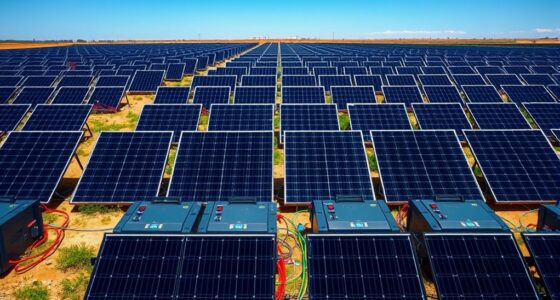
When choosing between pure sine and modified sine wave inverters for your solar generator, you should know that pure sine inverters produce clean, smooth power similar to grid supply, making them ideal for sensitive electronics and ensuring better efficiency. Modified sine models are cheaper but can cause appliances to operate less smoothly or even get damaged over time. To maximize system performance, investing in a pure sine inverter could be more beneficial. Keep exploring to understand which option best suits your needs.

Get backup power and energy gear delivered free with Prime
- Fast, free delivery on millions of items
- Prime Video, Amazon Music and more included
- Member-only deals all year
Key Takeaways
- Pure sine wave inverters produce smooth, utility-like AC power, ensuring compatibility with sensitive electronics and appliances.
- Modified sine wave inverters are cheaper and simpler but may cause inefficiency and malfunction in sensitive devices.
- Pure sine wave inverters improve battery efficiency and extend system lifespan by reducing stress on components.
- Modified sine wave inverters can lead to increased wear and shorter lifespan of both the inverter and connected devices.
- Choosing a pure sine wave inverter offers better long-term reliability despite higher initial costs.

Solar generator inverters are essential components that convert the direct current (DC) produced by solar panels into the alternating current (AC) needed to power your household devices. When choosing between pure sine wave and modified sine wave inverters, understanding how each impacts battery efficiency and inverter lifespan is vital. Your choice affects not only how smoothly your devices run but also the overall longevity of your system.
Pure sine wave inverters produce a smooth, consistent AC signal that closely mimics the power supplied by utility companies. This type of inverter allows your appliances to operate efficiently, reducing strain on both the inverter and your batteries. Because the waveform is cleaner, your batteries work more efficiently—they don’t have to compensate for irregularities, leading to better battery efficiency over time. Additionally, the gentle wave reduces stress on sensitive electronics, which can prolong the inverter’s lifespan and minimize maintenance needs. This means you get a more durable unit that can handle frequent use and longer operating periods, making it a solid investment for a reliable solar setup.
On the other hand, modified sine wave inverters generate a stepped, less smooth waveform. They are typically cheaper and easier to install, but their waveform can cause certain appliances to run less efficiently. This irregular waveform may lead to increased power losses and decreased battery efficiency because your batteries have to work harder to provide stable power. Over time, this added effort can wear down your batteries faster, reducing their overall lifespan and necessitating more frequent replacements. Additionally, sensitive electronics—like laptops, medical devices, or audio equipment—may not operate correctly or could be damaged by the subpar waveform. The increased strain on the inverter itself can also lead to a shorter lifespan, especially if it’s used with high loads or continuously. Moreover, understanding the role of automation and real-time data analysis can help optimize system performance and extend component longevity.
Products Worth Considering

Blueair Blue Pure 311i Max Smart Air Purifier

Ring Alarm 8-Piece Kit (Newest Model) – Home Security System

Blueair Blue Pure 211i Max Smart Air Purifier for Large Rooms
As an affiliate, we earn on qualifying purchases.
Frequently Asked Questions
Can Modified Sine Inverters Run Sensitive Electronics Effectively?
Modified sine inverters can run sensitive electronics, but waveform compatibility is a concern. They produce a rougher, stepped wave that may cause issues with certain devices, especially those with motors or delicate electronics. While they’re more affordable, consider cost considerations versus potential performance problems. If you want reliable operation for sensitive electronics, a pure sine inverter is usually the better choice, even if it costs more.
Which Inverter Type Offers Better Energy Efficiency?
You might think pure sine wave inverters are always more efficient, but that’s not entirely true. Waveform purity impacts inverter efficiency, with pure sine inverters typically offering better energy transfer because they closely mimic grid power. Although they may consume slightly more energy during conversion, their overall efficiency often results in less power loss, especially when powering sensitive electronics. So, for peak efficiency, pure sine wave inverters are generally the better choice.
Are Pure Sine Inverters More Durable Than Modified Sine?
Pure sine inverters tend to be more durable than modified sine ones, mainly because they are built with higher-quality components, which can better withstand electrical stresses. However, this increased durability often comes with higher manufacturing costs. You’ll find that pure sine inverters are more reliable over time, especially for sensitive electronics, making them a worthwhile investment if durability is a priority.
Do Inverter Waveforms Affect Battery Life?
Yes, inverter waveforms can affect your battery life. Pure sine wave inverters provide waveform stability, guaranteeing smooth power delivery, while modified sine wave inverters can cause power fluctuations. These fluctuations strain the battery and inverter components, leading to faster wear and reduced lifespan. To maximize your battery’s longevity, choose an inverter with a stable waveform, typically a pure sine wave, which minimizes stress and ensures efficient, long-term performance.
Is Maintenance Different Between Pure and Modified Sine Inverters?
You’ll find maintenance needs are similar for both pure sine and modified sine inverters, but pure sine inverters tend to produce less inverter noise, making them quieter and possibly easier to monitor. They also generally cost more upfront, so consider the cost comparison carefully. Regular checks for loose connections and cleanings are essential for both types, but pure sine inverters may require slightly less frequent maintenance due to their higher quality components.
Conclusion
Choosing between pure sine and modified sine inverters can feel like deciding between a luxury sports car and a rugged off-road vehicle. But remember, the inverter you pick could make or break your entire solar setup—turning your peaceful backyard into a chaos of flickering appliances or delivering smooth, flawless power that feels almost magical. Don’t settle for less; pick the inverter that turns your solar dreams into a powerhouse reality—because your energy deserves nothing but the best!