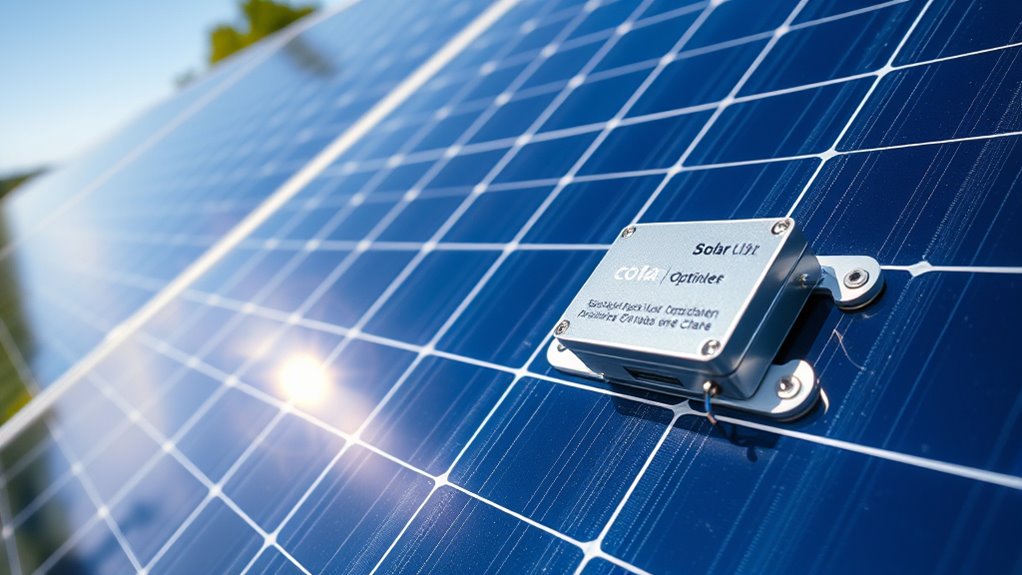
Solar optimizers work directly with each panel, monitoring its performance in real-time. They adjust electrical parameters to maximize energy output, even if some panels are shaded or mismatched. This prevents shading from dragging down the entire system’s efficiency and allows each panel to operate independently. By doing so, they boost overall energy production and extend the lifespan of your solar setup. Keep exploring to discover how these tools can make your system more resilient and productive.

Get backup power and energy gear delivered free with Prime
- Fast, free delivery on millions of items
- Prime Video, Amazon Music and more included
- Member-only deals all year
Key Takeaways
- Solar optimizers connect directly to each panel to monitor and control their individual performance in real-time.
- They communicate with the inverter to optimize energy output for each panel independently.
- Optimizers adjust electrical parameters to mitigate shading and mismatch effects without affecting other panels.
- They enable panels on different roof angles or locations to operate efficiently, increasing overall system resilience.
- By optimizing each panel’s performance, they maximize energy generation and improve long-term system reliability.
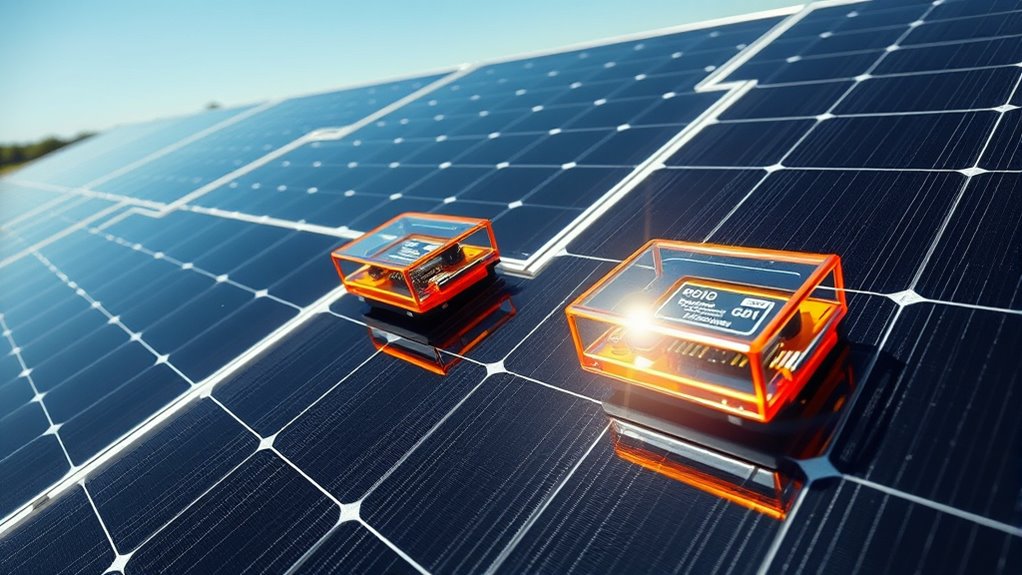
Are you getting the most out of your solar panels? If not, solar optimizers might be just what you need to boost your system’s performance. These devices are designed to improve efficiency enhancement by maximizing the energy your panels produce. They work directly with each panel, allowing you to get the most from your investment, especially when facing challenges like shading or panel mismatches.
When panels are shaded by trees, buildings, or debris, their output often drops considerably. This is where shading mitigation becomes critical. Without optimizers, the entire string of panels can underperform because the shaded panel limits the flow of electricity for the whole system. Solar optimizers address this issue by constantly monitoring and adjusting the performance of each individual panel. They allow shaded panels to operate independently, preventing their reduced output from dragging down the entire array. This targeted approach ensures that even if one panel is partially shaded, your overall system continues to operate efficiently, maximizing energy capture throughout the day.
The way solar optimizers work is straightforward yet powerful. They connect directly to each panel and communicate with your inverter, providing real-time data about how each panel is performing. If a panel underperforms due to shading, dirt, or hardware issues, the optimizer adjusts the electrical parameters to optimize its output without affecting the rest of the system. This not only enhances efficiency but also prolongs the lifespan of your panels by preventing hotspots and uneven wear caused by partial shading or other factors.
Installation of these devices is relatively simple and adds a layer of flexibility to your solar setup. Unlike traditional string inverters, which process the combined output of all panels, optimizers allow each panel to operate at its ideal level independently. This means you can position panels in less-than-ideal locations or on different roof angles without sacrificing overall system performance. By reducing losses caused by shading and mismatch, your solar energy system becomes more resilient and productive.
In essence, solar optimizers are a smart upgrade for anyone looking to get the most out of their solar investment. They enhance efficiency by ensuring each panel performs at its best, regardless of shading or other obstacles. If you want a more reliable, effective, and long-lasting solar setup, integrating optimizers can make a considerable difference, turning potential limitations into opportunities for greater energy generation. Additionally, the use of high-quality airless paint sprayers can simplify the maintenance and upgrade process of your solar system components, ensuring optimal performance and longevity.
Frequently Asked Questions
Can Solar Optimizers Increase Overall System Efficiency?
Yes, solar optimizers can increase your overall system efficiency by providing efficiency gains through real-time panel performance monitoring. They mitigate shading issues, ensuring each panel operates at its best, even when parts of your system are partially shaded. This dynamic adjustment helps maximize energy production, reducing waste and boosting your system’s output. With optimizers, you get more reliable, consistent energy generation, especially in challenging conditions.
Do Optimizers Work With All Types of Solar Panels?
You might wonder if all solar panels work seamlessly with optimizers, but the answer isn’t straightforward. While most modern panels are compatible, panel compatibility varies, and optimizer limitations can affect performance. Some older or specialized panels may not benefit fully. Before installing, check your panel type and verify your optimizer supports it to maximize efficiency and avoid potential issues down the line.
Are Solar Optimizers Suitable for Off-Grid Installations?
Yes, solar optimizers are suitable for off-grid installations. They help you maximize energy production by mitigating shading issues and optimizing each panel’s performance, which is especially important when you rely on battery storage. By improving efficiency and ensuring consistent power output, optimizers make your off-grid system more reliable, allowing you to store more energy and reduce the impact of shading or panel mismatch.
How Do Optimizers Affect System Maintenance Requirements?
Think solar optimizers are a set-it-and-forget-it miracle? Not quite. They actually reduce your system troubleshooting and maintenance costs by pinpointing issues quickly and improving panel performance. This means fewer visits from technicians and less time spent on repairs. While they simplify monitoring, they still require occasional checks to make certain everything runs smoothly. So, your system stays efficient without turning into a maintenance nightmare, saving you time and money.
What Is the Typical Lifespan of a Solar Optimizer?
You can expect a solar optimizer to last around 25 years, but durability factors like weather, quality, and maintenance can influence its lifespan. Properly maintained optimizers tend to perform longer, reducing replacement costs over time. Keep an eye on performance and address any issues promptly, as neglect can shorten their lifespan. Investing in high-quality optimizers pays off by minimizing future replacement costs and ensuring consistent energy production.
Conclusion
So, next time you’re installing solar panels, remember how solar optimizers silently boost your system’s efficiency. It’s almost like they’re working behind the scenes just when you need them most—turning cloudy days into bright savings. Coincidentally, many users find their energy output improves unexpectedly, proving these devices do more than just optimize; they transform your solar experience. Embrace the power of optimizers, and watch your panels perform at their best, even when you least expect it.
Halloween Picks
halloween
As an affiliate, we earn on qualifying purchases.