
TL;DR

Get backup power and energy gear delivered free with Prime
- Fast, free delivery on millions of items
- Prime Video, Amazon Music and more included
- Member-only deals all year
A Green Building Advisor Q&A examines an owner-builder’s plan to insulate 2×8 walls with either dense-packed insulation or R-30 batts. Forum participants generally favored the simpler batt approach, while the available report says dense-packing requires specialized equipment and experience; it does not provide a full account of the experts’ recommendations.
Green Building Advisor published a Q&A on October 19, 2026, weighing dense-pack insulation against batts for an owner-builder planning to insulate 2×8 walls framed 24 inches on center. The report says forum participants generally favored batts as the easier approach, while warning that dense-packing requires experience and specialized equipment to achieve consistent density.
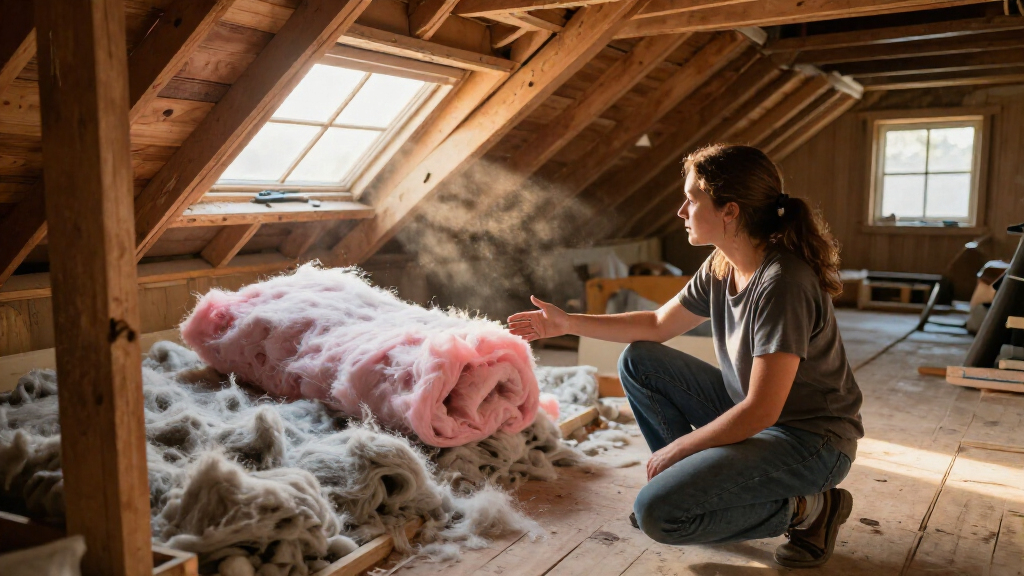
The owner-builder, a GBA member identified as “AKZach,” asked whether a rented insulation blower could be used to dense-pack cellulose or fiberglass in his walls. He had heard that reducing the hose diameter could raise pressure and help achieve the desired density. The source presents this as a question, not a validated technique or recommendation.
His alternative is to install R-30 batts. He said a local insulation contractor charges a high price and that doing the work himself could save money. The report identifies cost and installation difficulty as the practical trade-off, but does not give a price comparison, project budget or detailed labor estimate.
GBA says cellulose and fiberglass can fill irregular spaces and work around obstructions. It gives cellulose a typical thermal resistance of about R-3.5 to R-3.8 per inch and describes it as having relatively low embodied carbon. Fiberglass performance varies by product and installed density. The report says dense-packing can help reduce air movement through insulation, but stresses that consistent installation density takes skill and suitable equipment.
DIY Cost Versus Installation Quality
The choice affects both the cost of the project and the likelihood that insulation will perform as intended. A rental machine may appear to offer a way to avoid a contractor’s bill, but the source cautions that dense-packing is not simply a matter of feeding loose material into a cavity. If density is inconsistent, the result may not match the intended installation.
Batts present a different set of trade-offs: the report’s forum summary characterizes them as the easier option, but it does not establish how well a particular batt product would fit these walls or whether the proposed R-30 material is suitable for every cavity and assembly detail. For readers planning similar work, the article’s central point is that installation method matters alongside the insulation material. Product specifications, cavity dimensions and the quality of the work all shape the decision.
rental insulation blower for dense packing
As an affiliate, we earn on qualifying purchases.
As an affiliate, we earn on qualifying purchases.
The Wall Assembly in Question
The question concerns 2×8 framing at 24-inch centers, not a general comparison for every wall. AKZach was considering blown cellulose or fiberglass installed by dense-packing, versus R-30 batts. The report does not provide a full wall section, climate zone, exterior sheathing details or moisture-control strategy, all of which could affect insulation choices in a real building.
Blown insulation has a longer history than modern batts: the article notes that loose-fill materials have included straw, mud, horsehair and corncobs, followed by vermiculite, cellulose and fiberglass. It points readers to earlier GBA discussions of cellulose and fiberglass, but the news development here is the member’s specific DIY question and the forum’s preference for a simpler approach—not a new product or building-code change.
““The local insulation contractor here charges a fortune, so anything I can do will save significant money.””
— GBA member “AKZach,” as quoted in the report
R-30 batt insulation for 2×8 walls
As an affiliate, we earn on qualifying purchases.
As an affiliate, we earn on qualifying purchases.
What the Published Summary Leaves Open
The provided report excerpt does not include the full forum discussion or the detailed advice from individual experts. It states that the general consensus favored batts, but does not give the full reasoning, identify each participant or specify the exact batt product and installation steps recommended. The article is also marked as available to GBA Prime members, limiting the details visible in the supplied material.
It is not clear whether a particular rental blower could achieve suitable density in these specific 2×8 cavities, whether the suggested hose modification is appropriate, or how the two options compare in installed cost. The source offers no measured energy savings or project outcome. Its general comments on thermal resistance do not establish the performance of a completed wall assembly.
As an affiliate, we earn on qualifying purchases.
Check the Assembly Before Choosing
The immediate next step for a homeowner facing the same choice is to confirm the wall details and the insulation manufacturer’s installation requirements before buying material or renting equipment. The GBA report’s available summary points toward batts as the less complicated option, but does not replace project-specific advice from a qualified insulation professional.
Further detail would be needed to resolve the owner-builder’s original question: the actual installed density a rental machine can achieve, the equipment setup, the batt dimensions and fit, and a comparable labor-and-material cost. The supplied report does not say whether AKZach proceeded with either method or describe a completed installation.
As an affiliate, we earn on qualifying purchases.
Key Questions
What was the owner-builder deciding between?
He was weighing dense-packed cellulose or fiberglass, installed with a rented blower, against R-30 batts in 2×8 walls framed 24 inches on center.
What approach did forum participants generally favor?
The report says the general consensus favored batts as the easier approach. The available excerpt does not include the full discussion or detailed recommendations.
Can a rental blower reliably dense-pack these walls?
The supplied report does not answer that for this specific project. It says consistent dense-packing requires specialized equipment and experience, and does not verify the proposed hose modification.
What thermal performance does the article give for cellulose?
It says cellulose typically provides about R-3.5 to R-3.8 per inch. That figure does not by itself determine the performance of a complete wall assembly.
Did the owner-builder complete the insulation work?
The supplied material does not report a final decision or installation outcome. It remains unclear whether he used batts, dense-packed insulation or a contractor.
Source: rss
Halloween Picks
halloween
As an affiliate, we earn on qualifying purchases.