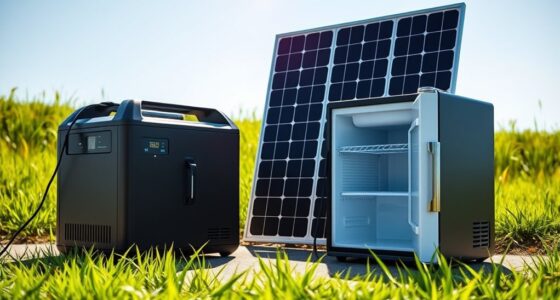
Solar-powered backup batteries pair a portable power station with a solar panel so you can keep phones, laptops, and small appliances running during outages or off-grid trips. The Jackery Solar Generator 1000 v2 stands out as the best overall pick thanks to its 1070Wh capacity and 1500W AC output — enough for real emergency backup, not just gadget charging. If you only need lightweight weekend power, the Anker SOLIX C300 and the Jackery Solar Generator 300 with 40W panel offer capable smaller bundles at friendlier prices. The main tradeoff in this category is capacity versus portability: sub-300Wh units are easy to carry but recharge slowly from small panels, while larger kits cost and weigh more. Keep reading for the full breakdown of how these six options compare.

Get backup power and energy gear delivered free with Prime
- Fast, free delivery on millions of items
- Prime Video, Amazon Music and more included
- Member-only deals all year
Complete the kit


Key Takeaways
- Capacity gap dominates this lineup: the Jackery 1000 v2 (1070Wh) holds roughly 3.5x the energy of any other pick here, making it the only true home-backup option among otherwise camping-focused units.
- Small 40W solar panels take 7-8 hours of good sun to recharge a 300Wh battery — buyers who want faster solar recovery should prioritize the kits with 60W or 200W panels.
- Several 300W-class bundles are nearly identical on paper; the real differentiators are battery chemistry, warranty length, and panel quality rather than headline wattage.
- The Anker SOLIX C300 competes directly with the Jackery Explorer 300 but typically wins on app control and outlet versatility, while Jackery wins on brand support and panel bundling.
- Buying a power station and panel as a bundle saved money in every matched comparison here — standalone units only make sense if you already own a compatible panel.
| Jackery Solar Generator 300 with 40W Solar Panel |  | Best Overall | Capacity: 292Wh | Rated Power: 300W (600W surge) | Battery Type: LiFePO4 | VIEW LATEST PRICE | See Our Full Breakdown |
| Portable Solar Generator with 300W Power Station and 40W Solar Panel |  | Best Value | Capacity: 220Wh (60,000mAh) | Power Output: 300W (600W peak) | Included Panel: 40W | VIEW LATEST PRICE | See Our Full Breakdown |
| Anker SOLIX C300 Portable Power Station, 288Wh |  | Best for Fast Recharging | Capacity: 288Wh | Power Output: 300W (600W surge) | Battery Type: LiFePO4 | VIEW LATEST PRICE | See Our Full Breakdown |
| Portable Solar Generator 300W with 60W Solar Panel | 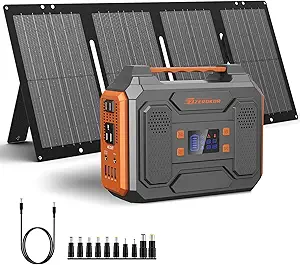 | Best Solar Charging Speed | Power Output: 300W | Included Panel: 60W foldable monocrystalline | Conversion Efficiency: 20.5% | VIEW LATEST PRICE | See Our Full Breakdown |
| Jackery Explorer 300 Portable Power Station, 292Wh |  | Best Station-Only Option for Panel Owners | Capacity: 292Wh | Rated Power: 300W (600W surge) | Battery Type: LiFePO4 | VIEW LATEST PRICE | See Our Full Breakdown |
| Jackery Solar Generator 1000 v2 with 200W Solar Panel |  | Best for Whole-Weekend Power | Capacity: 1070Wh | AC Output: 1500W (3000W surge peak) | Battery Type: LFP (lithium iron phosphate) | VIEW LATEST PRICE | See Our Full Breakdown |
| solar-powered backup batterie | Capacity | Ports | Battery Type | Included Panel |
|---|---|---|---|---|
| Jackery Solar Generator 300 wi | 292Wh | 2 AC, 1 USB-C PD (100W), 2 USB-A, car port | LiFePO4 | 40W solar panel |
| Portable Solar Generator with | 220Wh (60,000mAh) | 2 AC, 2 USB-C PD, 3 USB-A, 1 DC carport | — | 40W |
| Anker SOLIX C300 Portable Powe | 288Wh | 3 AC, 1 car socket, 2 USB-C, 1 USB-C (15W), 1 USB-A | LiFePO4 | — |
| Portable Solar Generator 300W | — | — | — | 60W foldable monocrystalline |
| Jackery Explorer 300 Portable | 292Wh | 2 AC, 1 USB-C PD, 2 USB-A, 1 car port | LiFePO4 | — |
| Jackery Solar Generator 1000 v | 1070Wh | 2 USB-C, 1 USB-A, 1 DC car port, 3 pure sine wave AC | LFP (lithium iron phosphate) | 200W solar panel (ships separately) |
More Details on Our Top Picks
Jackery Solar Generator 300 with 40W Solar Panel
This is the pick that makes the most sense for most buyers because it solves the one problem that plagues entry-level solar generators: the missing panel. Bundling the Explorer 300 with a 40W panel means the solar half of the equation is covered out of the box, unlike the standalone Jackery Explorer 300, which assumes you already own panels. The LiFePO4 chemistry rated for over 4,000 cycles outclasses the typical lithium-ion units in this class and means the battery will likely outlast several camping seasons. The tradeoff is patience: with the included 40W panel, expect roughly 7.5 hours to reach 80%, so a 100W panel upgrade is worth budgeting for if you camp for days at a time. At 300W of continuous output, a microwave or electric kettle is off the table.
Pros:- Complete kit with solar panel included
- LiFePO4 battery rated for over 4,000 charge cycles
- Lightweight at 7.5 lbs for genuine portability
- Versatile port selection including 100W USB-C PD
Cons:- 40W panel charges slowly at 7.5 hours to 80%
- Solar panel may ship separately from the station
Best for: Weekend campers and emergency-prep buyers who want a complete solar kit with battery longevity they won’t need to replace
Not ideal for: Anyone hoping to run kitchen appliances or power a work site — the 300W ceiling rules out anything with a heating element
- Capacity:292Wh
- Rated Power:300W (600W surge)
- Battery Type:LiFePO4
- Charge Cycles:Over 4,000
- Included Panel:40W solar panel
- Solar Charge Time:80% in 7.5 hrs (40W panel); 2.8 hrs (100W panel)
- Weight:7.5 lbs
- Ports:2 AC, 1 USB-C PD (100W), 2 USB-A, car port
Our verdict“The safest all-around choice for buyers who want a true solar generator — panel, durable battery, and trusted brand — without overspending.”
Portable Solar Generator with 300W Power Station and 40W Solar Panel
For buyers whose first question is price, this bundle delivers the same panel-plus-station formula as the Jackery Solar Generator 300 at a noticeably lower cost. You sacrifice capacity — 220Wh versus Jackery’s 292Wh — but gain a few things the pricier kit lacks: a built-in LED floodlight, three USB-A ports, and completely fanless, silent operation, which matters more than you’d think in a quiet tent at night. Compared with the Anker SOLIX C300, the port layout is actually more generous for small-device households. The real compromise is battery longevity and capacity; 220Wh runs out fast if you’re charging laptops nightly, and the chemistry isn’t rated for the multi-thousand-cycle lifespan Jackery and Anker advertise. Still, as a first solar setup or a car-camping starter kit, the value math works.
Pros:- Solar panel included at a lower price than brand-name bundles
- Built-in LED floodlight doubles as camp lighting
- Silent fanless operation
- Eight ports for charging many devices at once
Cons:- 220Wh capacity is the smallest in this lineup
- No published cycle-life or battery chemistry rating
Best for: Budget-conscious first-time buyers who want a complete silent solar kit for phones, lights, and occasional laptop charges
Not ideal for: Multi-day off-grid trips or anyone prioritizing long-term battery lifespan — 220Wh drains quickly and cycle life is unlisted
- Capacity:220Wh (60,000mAh)
- Power Output:300W (600W peak)
- Included Panel:40W
- Weight:5 lbs
- Ports:2 AC, 2 USB-C PD, 3 USB-A, 1 DC carport
- Dimensions:8.5 x 6.7 x 4.1 in
- Extras:Built-in LED floodlight
Our verdict“The most affordable complete solar generator here, best for light-duty use where silence and price matter more than capacity.”
Anker SOLIX C300 Portable Power Station, 288Wh
Where the Anker SOLIX C300 separates itself from every other option here is speed: 80% recharge in roughly 50 minutes from wall power. The Jackery Explorer 300, by comparison, needs around 4 hours for a full charge. That speed changes how you use it — topping up between uses becomes trivial rather than an overnight chore. The 3,000-cycle LiFePO4 battery trails Jackery’s 4,000-cycle claim but still means years of reliable service, and at 25dB it’s quiet enough for a bedside backup. The catches are real, though: the shoulder strap costs extra, solar panel compatibility is finicky (the SOLIX PS30 won’t work with it), and like everything else in this class, you’re capped at 300W. If you mostly recharge at home or in the car and only occasionally go solar, this is the stronger pick.
Pros:- 80% recharge in about 50 minutes
- 3,000-cycle LiFePO4 battery with 5-year-scale lifespan
- Whisper-quiet 25dB operation
- Generous port selection including 3 AC outlets
Cons:- Solar panel sold separately with limited compatibility
- Shoulder strap requires a separate purchase
Best for: Urban dwellers who want a fast-cycling emergency backup for home outage drills, CPAP machines, or desk gear, with solar as a secondary option
Not ideal for: Solar-first off-grid users — panel compatibility is limited and no panel is bundled, unlike the Jackery or value kits
- Capacity:288Wh
- Power Output:300W (600W surge)
- Battery Type:LiFePO4
- Cycle Life:3,000 cycles
- Recharge Time:80% in 50 minutes
- Noise Level:25dB
- Ports:3 AC, 1 car socket, 2 USB-C, 1 USB-C (15W), 1 USB-A
Our verdict“The best choice when wall-socket recharge speed matters more than included solar gear — ideal as a home backup that occasionally travels.”
Portable Solar Generator 300W with 60W Solar Panel
This kit’s defining advantage is its 60W foldable monocrystalline panel — 50% more solar input than the 40W panels bundled with the Jackery Solar Generator 300 or the budget generator kit. For anyone actually living off-grid for stretches, that difference compounds daily: faster midday top-ups mean less time repositioning the panel and more stored power by dusk. The included accessories are unusually complete too, with AC, car, and solar charging cables all in the box, plus an SOS flashlight for emergencies. The weaknesses are worth weighing. The junction box isn’t waterproof, so the panel needs careful placement in bad weather, and unlike the Jackery and Anker units, capacity, weight, and cycle-life specs aren’t published — a transparency gap that makes long-term value harder to judge.
Pros:- 60W panel is the largest bundled panel in this lineup
- 20.5% conversion efficiency monocrystalline cells
- Complete accessory kit including car-charging cable
- BMS protection and cooling fan for safe operation
Cons:- Junction box is not waterproof and needs dry storage
- Capacity, weight, and cycle life are not specified
Best for: Extended camping or van-life users who recharge almost entirely by sun and want the fastest bundled solar input at this price
Not ideal for: Buyers who want verifiable specs — unpublished capacity, weight, and cycle life make comparison shopping and longevity predictions difficult
- Power Output:300W
- Included Panel:60W foldable monocrystalline
- Conversion Efficiency:20.5%
- Outlets:2 AC, 1 DC, 3 USB, 1 quick-charge USB
- Safety:BMS protection with cooling fan
- Extras:SOS flashlight, AC adapter, car charging cable
Our verdict“The strongest pick for sun-powered charging speed, provided you can accept the missing spec sheet and protect the panel from rain.”
Jackery Explorer 300 Portable Power Station, 292Wh
This is the same well-regarded station found in the Jackery Solar Generator 300 bundle, sold on its own — and that’s precisely the point. If you already own compatible panels from a previous setup, paying again for another 40W panel wastes money; buying the station solo and pairing it with a 100W panel you choose gets you to 80% charge in under 3 hours instead of the bundled kit’s 7.5. The 4,000-cycle LiFePO4 battery remains the class benchmark, and the 100W USB-C PD port handles full-size laptops that the cheaper kits struggle with. The obvious limitation: as a bare station, it’s not actually solar-powered until you add hardware, and beginners comparing prices against all-in-one bundles may underestimate the true total cost. Compared with the Anker SOLIX C300, it charges slower from the wall but pairs more cleanly with third-party solar.
Pros:- Over 4,000 charge cycles from LiFePO4 chemistry
- 100W USB-C PD port charges power-hungry laptops
- Lightweight 7.5 lb build with carrying handle
- Broad compatibility with third-party solar panels
Cons:- No solar panel included
- 300W rated output limits appliance use
Best for: Buyers who already own solar panels or plan to buy a larger 100W panel separately for faster charging
Not ideal for: First-time solar buyers who don’t own panels — the all-in cost ends up higher than the complete bundles on this list
- Capacity:292Wh
- Rated Power:300W (600W surge)
- Battery Type:LiFePO4
- Charge Cycles:Over 4,000
- Weight:7.5 lbs
- Charge Time (AC):4 hours
- Ports:2 AC, 1 USB-C PD, 2 USB-A, 1 car port
- Dimensions:9.1 x 5.2 x 7.8 in
Our verdict“The smart buy for panel owners or upgraders who want Jackery’s battery longevity and freedom to choose faster solar input.”
Jackery Solar Generator 1000 v2 with 200W Solar Panel
Everything else in this roundup lives in the small-capacity camping class — the Jackery Explorer 300 and Anker SOLIX C300 both sit under 300Wh. This model quadruples that at 1070Wh, which changes what a solar generator can actually do: run a mini fridge overnight, keep a CPAP going through a multi-day outage, or power a camp kitchen instead of just phones and lights.
The other distinction is chemistry. The LFP battery here is rated for far more charge cycles than the smaller units, so it holds up better as a set-and-forget emergency backup. Fast charging to 80% in about an hour is a real advantage if you’re topping up between uses, and at 23.8 lbs it’s still car-portable despite the capacity gap. The tradeoffs are real: super fast charging requires app activation, the panel ships separately from the station, and 6 hours of solar charging is the slowest refill path — the 200W panel is a trickle, not a firehose.
Pros:- 1070Wh capacity and 1500W AC output can run real appliances, not just electronics
- LFP battery chemistry offers a much longer lifespan than the smaller units in this lineup
- 1-hour fast charge makes it practical for quick top-ups between uses
- Still reasonably portable at 23.8 lbs with a foldable handle
Cons:- Super fast charging must be activated through the companion app, an extra setup hurdle
- Solar recharging takes about 6 hours and the panel arrives in a separate shipment
- Meaningfully more expensive than the 300Wh-class alternatives here
Best for: Households wanting emergency backup for fridges, medical devices, or overnight outages, plus campers who need multi-day appliance power rather than gadget charging
Not ideal for: Ultra-light backpackers or anyone who only needs phone and headlamp top-ups — the smaller 300Wh-class units cost far less and weigh half as much
- Capacity:1070Wh
- AC Output:1500W (3000W surge peak)
- Battery Type:LFP (lithium iron phosphate)
- Charging Time:~1 hr fast charge, 3 hrs full (600W charger), ~6 hrs solar
- Ports:2 USB-C, 1 USB-A, 1 DC car port, 3 pure sine wave AC
- Weight:23.8 lbs
- App Control:Yes
- Included Panel:200W solar panel (ships separately)
Our verdict“Buy this if you need a solar generator that can carry a fridge or medical device through an outage — skip it if your needs stop at charging phones on a weekend trip.”

How We Picked
I evaluated these solar-powered backup batteries on four buyer-relevant criteria. First, usable capacity: I compared watt-hour ratings against what each unit can realistically run — a phone charges from anything, but a fridge or CPAP machine demands 300Wh minimum. Second, solar recharge performance: panel wattage, charge controller efficiency, and real-world recharge times mattered more than peak AC output, because a backup battery you cannot refill in an outage is a one-time use device. Third, portability and build quality: weight, handle design, battery chemistry, and cycle-life ratings separate units that survive camping trips from ones that feel fragile.
Fourth, value as a complete kit: since every product here is judged as a solar generator bundle, I compared bundle pricing against buying the station and panel separately, and weighed warranty length. The ranking reflects a simple logic — bigger capacity kits rank higher for backup value, while smaller kits earn their position through affordability and portability. Where two products were nearly identical, the tiebreaker went to solar input speed and included panel quality.
| solar-powered backup batterie | Battery Type |
|---|---|
| Jackery Solar Generator 300 wi | LiFePO4 |
| Portable Solar Generator with | — |
| Anker SOLIX C300 Portable Powe | LiFePO4 |
| Portable Solar Generator 300W | — |
| Jackery Explorer 300 Portable | LiFePO4 |
| Jackery Solar Generator 1000 v | LFP (lithium iron phosphate) |
Factors to Consider When Choosing Solar-powered Backup Batteries
Before settling on one of the six products above, it helps to understand the broader landscape of solar backup power — including the mistakes that catch out most first-time buyers.Match Capacity to What You Actually Need to Run
The most common mistake in this category is buying capacity based on price rather than load. A 288-300Wh station comfortably runs phones, tablets, cameras, and a laptop for a weekend, but it will power a mini-fridge for only 3-4 hours and a full-size refrigerator for under an hour. To size correctly, list the wattage of each device you need during an outage, multiply by the hours you need it, and add 20% for inverter losses. Most buyers discover they either overpaid for capacity they never use, or underestimated and bought twice — the second purchase being the more expensive path. As a rule of thumb, emergency medical devices or refrigeration push you toward the 1000Wh class, while camping and device charging stays comfortably in the 300Wh range.
Panel Wattage Determines How Fast You Recover
Buyers often fixate on battery capacity and ignore the panel, but the panel dictates whether your system is actually renewable. A 40W panel delivers roughly 30W in real conditions, meaning a full day of good sun adds about 200-240Wh — a partial recharge at best. A 200W panel can refill a 1000Wh battery in a single sunny day, which is the difference between a multi-day outage solution and a weekend toy. Also check the maximum solar input the station itself accepts; some budget units cap input at 60-80W regardless of what panel you attach. If fast recovery matters, budget for a bigger panel even if it means a smaller battery.
Battery Chemistry and Cycle Life Affect Long-Term Cost
Nearly all modern units use lithium iron phosphate (LiFePO4) or lithium-ion (NMC) cells, and the difference matters more than most spec sheets suggest. LiFePO4 batteries typically last 3,000+ charge cycles — roughly 8-10 years of regular use — while older NMC cells fade after 500-800 cycles. A cheaper station with short cycle life can cost more per usable year than a premium unit. Check the cycle-life rating and warranty length together: a 5-year warranty signals the manufacturer expects the chemistry to hold up. For a device you may use only a few times a year, chemistry is less critical, but for weekly off-grid use it should drive your decision.
Inverter Output Limits What You Can Plug In
The wattage rating of the AC inverter — not the battery capacity — determines which appliances you can run at all. A 300W inverter cannot start a 600W blender no matter how full the battery is, and some devices with motors or compressors draw 2-3x their rated wattage at startup. Look at both continuous output and surge/peak ratings when comparing units. The 1500W inverter in a larger unit covers nearly all kitchen and household appliances, while 300W-class units are limited to chargers, lights, fans, and small electronics. Underestimating this spec is the second most common reason buyers return solar generators.
Bundle Versus Separate Purchase
Across this category, manufacturer bundles almost always beat buying a station and third-party panel separately, once you factor in charge-controller compatibility and connector standards (MC4, 8mm, XT-60 variants are not interchangeable without adapters). However, bundles sometimes include the smallest panel the brand offers — fine for topping up, slow for full recharges. A smart middle path is buying a bundle, then adding a second panel later if the station’s input limit allows it. Verify the combined panel wattage stays within the station’s maximum solar input, and confirm the connectors match before expanding. Also compare bundle prices during sales events; solar generators see meaningful discounts several times a year.
Weight, Noise, and Everyday Usability
Unlike gas generators, these units are silent, but they are not all portable — capacity and weight scale together, and a 1000Wh kit with its panel can exceed 30 pounds combined. If you plan to move the unit between home backup duty and camping, check the handle design and total kit weight. Also consider the little things: a light-up display showing remaining runtime, USB-C Power Delivery for laptops, and pass-through charging (using the station while it recharges from solar). These usability details rarely appear in comparison charts but shape daily satisfaction far more than a few extra watt-hours.
Frequently Asked Questions
Can a 300Wh solar generator really power my home during an outage?
Not in any whole-home sense, but it covers targeted essentials well. A 300Wh unit will keep phones, a router, LED lights, and a laptop running for one to two days, or run a CPAP machine through a night or two. It cannot sustain a refrigerator, microwave, or any heating appliance for meaningful time — those draw more in an hour than the battery holds total. Treat sub-300Wh units as communication-and-comfort backup, and step up to a 1000Wh-class unit like the Jackery 1000 v2 if refrigeration or medical equipment is part of your plan.
How long does it take to recharge these batteries with solar?
Divide the battery capacity by about 75-80% of your panel’s rated wattage to get a rough recharge time in good sun. A 40W panel recharging a 292Wh battery takes roughly 7-9 hours — essentially one full sunny day. The 200W panel on the Jackery 1000 v2 refills its 1070Wh battery in a comparable or shorter time, which is why larger kits often recover faster despite bigger batteries. Cloud cover, panel angle, and shade can double these times, so build slack into your expectations. In practice, most owners use solar as a daytime top-up and wall charging for full preparation.
Is it better to buy a bundle or a power station and panel separately?
Bundles usually win on price and guaranteed compatibility, since manufacturers match connectors and charge controllers to their own stations. Buying separately only makes sense if you already own a compatible panel or want a higher-wattage panel than the bundle includes. Watch connector standards: Jackery uses its 8mm connector, Anker uses different inputs, and generic panels with MC4 connectors may need adapters. Before mixing brands, confirm the panel’s voltage stays within the station’s input range — exceeding it can damage the charge controller. When in doubt, the bundle removes the guesswork.
What can I actually run on a 1500W inverter like the Jackery 1000 v2’s?
Practically everything short of a whole-house HVAC system or electric water heater. A 1500W inverter handles refrigerators, microwaves, coffee makers, hair dryers on medium settings, power tools, and any electronics you own. The main caution is motor-driven appliances that surge at startup — a refrigerator rated at 700W may briefly draw 1500W when the compressor kicks in, which is why the peak/surge rating matters alongside continuous output. Runtime is the other constraint: a 1070Wh battery runs a 700W refrigerator for roughly 1.5 hours of actual compressor cycling, which stretches longer because compressors run intermittently.
Do these batteries lose charge while sitting in storage?
Yes, all lithium batteries self-discharge, typically losing a few percent per month. More importantly, storing a battery fully charged or fully empty degrades its cells over time, so manufacturers recommend storing at 50-80% charge in a cool, dry place. Check the battery every 2-3 months and top it back up if it drops below half. If you are buying for emergency preparedness, build a quarterly check into your routine — a neglected backup battery that is dead when the outage hits defeats the purpose. Some units also have an idle mode that minimizes background drain from displays and Bluetooth.
Conclusion
For best overall, the Jackery Solar Generator 1000 v2 is the clear pick — its 1070Wh capacity, 1500W inverter, and fast-recharging 200W panel make it the only option here suited to genuine home backup. For best value, the Portable Solar Generator 300W with 60W panel delivers the best capacity-to-price ratio with a meaningfully faster panel than the 40W bundles. The Jackery Solar Generator 300 with 40W Solar Panel earns best for beginners thanks to its intuitive interface, strong brand support, and beginner-proof connector system. For a compact everyday carry, the Anker SOLIX C300 stands out with its app control and versatile outlet selection — ideal for campers and remote workers rather than emergency preppers. The Jackery Explorer 300 (station only) suits buyers who already own a compatible panel, and the generic 300W/40W bundle is the budget floor for anyone willing to accept thinner support and unknown long-term durability. Match the pick to your real load list, and remember: in this category, panel speed and battery chemistry matter as much as the headline watt-hours.