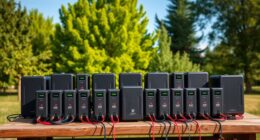
When it comes to the best home battery energy storage systems, the decision usually comes down to three things: how much usable capacity you need, whether the chemistry and build are certified for safe indoor installation, and how cleanly the battery integrates with an inverter and solar array. My top pick, the ECO-WORTHY Powermega 30kWh Home Energy Storage System, wins on completeness — it bundles a 10kW hybrid inverter with two UL1973-certified 314Ah batteries, so you are buying a matched system rather than assembling one. For whole-home backup at serious scale, the Dawnice 40kWh stacked battery stands out, while the GROWATT 48V 100Ah expandable platform makes the most sense for buyers who want to start small and grow later. The main tradeoff in this category is upfront cost and installation complexity versus capacity and expandability. Read on for the full breakdown of all 14 systems.

Get backup power and energy gear delivered free — and shop member deals
- Fast, free delivery on millions of items
- Access to Prime Big Deal Days deals on October 6–7
- Prime Video, Amazon Music and more included
Key Takeaways
- Bundled systems that pair batteries with a matched hybrid inverter (like the Powermega 30kWh and Cubix100 600Ah kit) consistently deliver a smoother, safer installation than piecing together separate batteries and inverters.
- UL1973 and UL9540A certifications appeared on the strongest picks — GROWATT and ECO-WORTHY both hold them — and they matter for homeowner’s insurance, permitting, and safe indoor rack mounting.
- The 314Ah LiFePO4 cell format has become the 2026 standard for whole-home storage, appearing in five of the fourteen systems reviewed, because it hits a capacity sweet spot of roughly 16kWh per module.
- Expandability separates future-proof picks from dead-end ones: GROWATT scales from 5kWh to 40kWh, while fixed-capacity kits like the 10240Wh backup bundles lock you into a smaller ceiling.
- Monitoring and BMS quality varied more than capacity did — options with active balancing, Bluetooth, and LCD touchscreens (HumsiENK, VPauexii) protect long-term cell health better than basic passive-BMS alternatives.
| ECO-WORTHY Powermega 48V 314Ah LiFePO4 Battery (2 Pack), UL1973 Certified |  | Best Overall | Voltage: 51.2V (48V nominal) | Capacity: 314Ah per battery, 2 pack | Energy: 16.07kWh per battery | VIEW LATEST PRICE | See Our Full Breakdown |
| HumsiENK 48V 628Ah LiFePO4 Lithium Battery with Bluetooth, Active Balancing, 200A BMS & LCD Monitor |  | Best Premium Single-Unit Whole-Home Storage | Voltage: 48V | Capacity: 628Ah (32.15kWh) | Continuous Power: 10.24kW | VIEW LATEST PRICE | See Our Full Breakdown |
| WattCycle Dual 48V 100Ah LiFePO4 Server Rack Batteries with 12kW Split-Phase Inverter |  | Best Complete Kit for Whole-Home Backup | Battery Capacity: 2x 100Ah (10.24kWh total) | Inverter Output: 12000W, 120V/240V split-phase pure sine wave | Solar Input: Up to 24kW (dual MPPT, >98% efficiency) | VIEW LATEST PRICE | See Our Full Breakdown |
| VPauexii 51.2V 314Ah LiFePO4 Battery with 16076.8Wh Capacity, 200A BMS, LCD Touchscreen, Bluetooth/WiFi Monitoring |  | Best Capacity-Per-Dollar for Expansion-Minded Buyers | Voltage: 51.2V | Capacity: 314Ah (16,076.8Wh) | Chemistry: LiFePO4 (automotive-grade A cells) | VIEW LATEST PRICE | See Our Full Breakdown |
| ECO-WORTHY Solar Panel Kit LiFePO4 Energy Storage System for Home Backup |  | Best All-in-One Solar Plus Storage Bundle | Solar Array: 6x 590W N-type panels (3.54kW total) | Inverter: 10kW hybrid | Battery Configuration: 2x 48V 314Ah LiFePO4 | VIEW LATEST PRICE | See Our Full Breakdown |
| Dawnice 40kWh Home Energy Storage Battery, 51.2V 206Ah LiFePO4 Stacked Battery for Solar Systems |  | Best High-Capacity Value | Brand: Dawnice | Battery Type: LiFePO4 (Lithium Iron Phosphate) | Voltage: 51.2V | VIEW LATEST PRICE | See Our Full Breakdown |
| ECO-WORTHY Cubix100 48V 600Ah LiFePO4 Home Backup Power Kit with 10000W AC Inverter and V3 Rack Cabinet |  | Best Complete Turnkey System | Brand: ECO-WORTHY | Total Capacity: 30720Wh (6 x 51.2V 100Ah rack batteries) | System Voltage: 48V (51.2V DC) | VIEW LATEST PRICE | See Our Full Breakdown |
| GROWATT 48V 100Ah LiFePO4 Lithium Battery, 5120Wh Expandable to 40kWh, UL1973 UL9540A Certified (4 Pack) |  | Best Ecosystem Pick for Growatt Owners | Brand: GROWATT | Model: ALP 5.0L-E2 US | Voltage: 48V | VIEW LATEST PRICE | See Our Full Breakdown |
| 48V 314Ah LiFePO4 Lithium Battery (16.07kWh) |  | Best Single-Unit Powerhouse | Voltage: 48V | Capacity: 314Ah (16.07kWh) | Chemistry: LiFePO4, Grade A cells | VIEW LATEST PRICE | See Our Full Breakdown |
| ECO-WORTHY Cubix100 48V 100Ah LiFePO4 Server Rack Battery |  | Best Scalable Building Block | Voltage: 48V (51.2V nominal) | Capacity: 100Ah (5.12kWh) | Chemistry: LiFePO4, Grade A cells | VIEW LATEST PRICE | See Our Full Breakdown |
| ECO-WORTHY Powermega 30kWh Home Energy Storage System with 10kW Hybrid Inverter and 2x 48V 314Ah UL1973 LiFePO4 Batteries |  | Best Whole-Home Backup | System Capacity: 30kWh+ | Inverter Power: 10kW hybrid | Battery Configuration: 2x 48V 314Ah LiFePO4 | VIEW LATEST PRICE | See Our Full Breakdown |
| ECO-WORTHY 48V Home Backup Power Kit – 10240Wh LiFePO4 Battery (2x 51.2V 100Ah) with 5000W Off-Grid Inverter |  | Best Scalable Starter System | Total Capacity: 10240Wh (2x 51.2V 100Ah) | Inverter Output: 5000W (10000W peak) | MPPT Controller: 100A | VIEW LATEST PRICE | See Our Full Breakdown |
| ECO WORTHY 10000W Complete Off-Grid Solar Panel Kit for Home with 48V 314Ah Battery |  | Best Complete Off-Grid Setup | Power Output: 10000W continuous (20000W peak) | Solar Array: 5x 590W monocrystalline (2950W) | Battery Capacity: 48V 314Ah LiFePO4 (16.076kWh) | VIEW LATEST PRICE | See Our Full Breakdown |
| ECO-WORTHY 48V Home Backup Power Kit with 10240Wh Battery and Liber 10KP 10KW Inverter |  | Best Power-Dense Backup Kit | Total Capacity: 10240Wh (2x 51.2V 100Ah) | Output Power: 10000W (20000W peak) | Output Voltage: 120V single-phase; 240V with parallel units | VIEW LATEST PRICE | See Our Full Breakdown |
| home battery energy storage system | Voltage | Chemistry | BMS |
|---|---|---|---|
| ECO-WORTHY Powermega 48V 314Ah | 51.2V (48V nominal) | LiFePO4 | 200A smart BMS with active balancing |
| HumsiENK 48V 628Ah LiFePO4 Lit | 48V | LiFePO4 (EVE automotive-grade cells) | 200A with 3A active balancing |
| WattCycle Dual 48V 100Ah LiFeP | — | LiFePO4 (BYD cells) | 100A smart BMS with 3A active balancing |
| VPauexii 51.2V 314Ah LiFePO4 B | 51.2V | LiFePO4 (automotive-grade A cells) | 200A with 250A breaker |
| ECO-WORTHY Solar Panel Kit LiF | — | — | — |
| Dawnice 40kWh Home Energy Stor | 51.2V | — | 100A built-in |
| ECO-WORTHY Cubix100 48V 600Ah | — | — | — |
| GROWATT 48V 100Ah LiFePO4 Lith | 48V | LiFePO4 Lithium | — |
| 48V 314Ah LiFePO4 Lithium Batt | 48V | LiFePO4, Grade A cells | 200A with six-layer protection |
| ECO-WORTHY Cubix100 48V 100Ah | 48V (51.2V nominal) | LiFePO4, Grade A cells | — |
| ECO-WORTHY Powermega 30kWh Hom | — | — | — |
| ECO-WORTHY 48V Home Backup Pow | — | — | — |
| ECO WORTHY 10000W Complete Off | — | — | PACE 200A with dual breakers |
| ECO-WORTHY 48V Home Backup Pow | — | — | — |
More Details on Our Top Picks
ECO-WORTHY Powermega 48V 314Ah LiFePO4 Battery (2 Pack), UL1973 Certified
This two-pack stands out as the most well-rounded foundation for a serious home battery system. Each unit delivers 16.07kWh (32kWh combined), and the UL 1973 certification plus 10-year warranty is a level of accountability that most rivals here can’t match — the VPauexii 314Ah battery offers similar capacity but only a 5-year warranty. The 7-inch touchscreen with cell-level data is more informative than the basic LCD screens on cheaper options, and scaling to 241kWh means buyers won’t outgrow it. Compared with the WattCycle rack kit, this is battery-only, so you supply your own inverter — but that flexibility suits anyone standardizing on Victron, Sol-Ark, or EG4.
The tradeoff is logistical: pallet freight, heavy units, and post-purchase coordination with customer service make this a commitment rather than a casual purchase.
Pros:- UL 1973 certified with an unusually long 10-year warranty
- 32kWh combined capacity, expandable to 241kWh with 15 parallel units
- Multi-layer safety: active balancing BMS, aerosol fire suppression, and external breaker
- Cell-level monitoring via 7-inch touchscreen, WiFi, and Bluetooth
Cons:- Palletized truck freight requires delivery coordination and a suitable address
- Very large and heavy, demanding dedicated installation space
- Inverter sold separately, adding cost and planning complexity
Best for: Homeowners building a whole-home backup or off-grid system who want certified, warrantied capacity they can expand over a decade
Not ideal for: Renters or anyone without a truck-accessible delivery address and space for palletized, heavyweight batteries
- Voltage:51.2V (48V nominal)
- Capacity:314Ah per battery, 2 pack
- Energy:16.07kWh per battery
- Chemistry:LiFePO4
- Certification:UL 1973
- Warranty:10 years
- BMS:200A smart BMS with active balancing
- Expandability:Up to 15 parallel units (241kWh)
Our verdict“If you want certified, long-warrantied storage capacity that can grow with your household, this is the pick to build around.”
HumsiENK 48V 628Ah LiFePO4 Lithium Battery with Bluetooth, Active Balancing, 200A BMS & LCD Monitor
Where the ECO-WORTHY Powermega splits capacity across two cabinets, the HumsiENK packs 32.15kWh into one slim wall-mount unit — roughly 30% slimmer than traditional floor-standing systems. That single-cabinet approach means fewer cables, less commissioning, and a cleaner install. The 10.24kW continuous output is enough to start and run central air conditioning, something smaller 100Ah rack batteries like the WattCycle pair simply can’t do without paralleling more units. EVE automotive-grade cells rated for 6,000+ cycles and 15+ years give it the longest projected lifespan in this batch.
The compromises are real: this is a big-ticket purchase, freight shipping demands a truck-accessible address, and professional installation is realistic given the power levels involved. Buyers pay a premium for consolidation and top-tier cells.
Pros:- Massive 32.15kWh capacity and 10.24kW continuous output in one unit
- EVE EV-grade cells rated for 6,000+ cycles and 15+ year lifespan
- Slim wall-mount design saves floor space versus stacked systems
- Works with 25+ inverter brands including Victron, Growatt, Deye, and Sol-Ark
Cons:- High upfront cost typical of large-capacity home batteries
- Heavy freight shipping requires truck-accessible delivery
- Professional installation likely required at this power level
Best for: Homeowners wanting whole-home backup, including central AC, from a single wall-mounted unit rather than a battery bank
Not ideal for: Budget-conscious buyers or those with modest backup needs — a 100Ah rack setup covers essentials for far less
- Voltage:48V
- Capacity:628Ah (32.15kWh)
- Continuous Power:10.24kW
- Chemistry:LiFePO4 (EVE automotive-grade cells)
- Cycle Life:6000+ cycles at 80% DoD
- BMS:200A with 3A active balancing
- Mounting:Wall-mount, 30% slimmer than traditional systems
Our verdict“This is the one-box answer for whole-home backup if you’d rather mount a single slim cabinet than wire a rack of batteries.”
WattCycle Dual 48V 100Ah LiFePO4 Server Rack Batteries with 12kW Split-Phase Inverter
This is the only entry in this batch that arrives as a turnkey system: batteries, a 12kW split-phase inverter, and dual MPPT solar controllers in one purchase. That matters for buyers who don’t want to match batteries to inverters themselves — the ECO-WORTHY Powermega and VPauexii units leave that research entirely to you. The sub-10ms UPS transfer keeps computers and medical equipment running through outages without a flicker, and 24kW of solar input capacity makes this genuinely off-grid capable rather than just a backup. Scalability is a strong suit: six parallel inverters and twenty batteries mean the initial 10.24kWh can grow to 102.4kWh.
The catch is capacity per dollar — two 100Ah batteries is modest storage for a 12kW inverter, and the rack form factor plus split-phase wiring realistically demands professional installation.
Pros:- Complete kit: 12kW split-phase inverter, dual MPPT controllers, and two rack batteries
- Sub-10ms UPS transfer protects sensitive electronics during outages
- 24kW solar input with over 98% MPPT efficiency
- Scalable to 72kW of inverter power and 102.4kWh of storage
Cons:- 10.24kWh of storage is modest relative to the inverter’s 12kW output
- Rack form factor requires dedicated installation space and professional wiring
Best for: Buyers who want everything in one box — inverter, solar controllers, and batteries — for a whole-home system they can expand later
Not ideal for: DIY beginners without an electrician, since split-phase 120V/240V household wiring is not a casual weekend project
- Battery Capacity:2x 100Ah (10.24kWh total)
- Inverter Output:12000W, 120V/240V split-phase pure sine wave
- Solar Input:Up to 24kW (dual MPPT, >98% efficiency)
- UPS Transfer Time:<10ms
- Chemistry:LiFePO4 (BYD cells)
- BMS:100A smart BMS with 3A active balancing
- Scalability:Up to 6 inverters (72kW) and 20 batteries (102.4kWh)
Our verdict“If coordinating separate batteries and inverters sounds like a headache, this all-in-one kit trades some capacity for plug-together simplicity.”
VPauexii 51.2V 314Ah LiFePO4 Battery with 16076.8Wh Capacity, 200A BMS, LCD Touchscreen, Bluetooth/WiFi Monitoring
The VPauexii matches the ECO-WORTHY Powermega almost spec for spec — same 314Ah, 51.2V format, 200A BMS, and 241kWh parallel ceiling — but its edge is claimed longevity: 10,000+ cycles against the Powermega’s standard rating. It also adds RS232 communication alongside RS485/CAN, and the built-in aerosol fire-suppression canister that activates above 170°C is a reassuring feature for a battery living in your garage. With 99%+ inverter compatibility including EG4, Victron, and Sol-Ark, it slots into most existing setups without fuss.
The main hesitation is trust: this brand has very little long-term user feedback, and the 5-year warranty is half of what ECO-WORTHY offers on an equivalent battery. For a purchase this size, that backing gap is the deciding factor for cautious buyers.
Pros:- 16kWh capacity expandable to 241kWh with 15 parallel units
- 10,000+ cycle rating with 12+ year projected lifespan
- Built-in auto fire suppression activates above 170°C
- 99%+ inverter compatibility with closed-loop CAN/RS485 communication
Cons:- Only a 5-year warranty, half of what comparable certified options offer
- Very little long-term user feedback for a major purchase
- Heavy, high-capacity unit requiring significant installation space
Best for: Value-focused buyers who want a 16kWh cell with huge expansion potential and strong spec-sheet numbers from a newer brand
Not ideal for: Risk-averse buyers who prioritize proven track records and long manufacturer warranties on five-figure purchases
- Voltage:51.2V
- Capacity:314Ah (16,076.8Wh)
- Chemistry:LiFePO4 (automotive-grade A cells)
- BMS:200A with 250A breaker
- Cycle Life:10,000+ cycles (80% DoD)
- Expandability:Up to 15 units (241kWh)
- Connectivity:Bluetooth, WiFi, LCD touchscreen; RS485/CAN/RS232
- Warranty:5 years
Our verdict“A spec-rich alternative to the big names if you accept a shorter warranty and thinner track record in exchange for aggressive numbers.”
ECO-WORTHY Solar Panel Kit LiFePO4 Energy Storage System for Home Backup
This bundle goes one step beyond the WattCycle kit by including solar generation, not just storage: six 590W N-type panels feed a 10kW hybrid inverter, which charges two 48V 314Ah batteries holding over 30kWh of usable energy. For anyone starting from zero, that eliminates the compatibility guesswork of sourcing panels, inverter, and batteries separately — the main reason buyers choose it over battery-only options like the Powermega or HumsiENK. Battery wheels are a small but genuinely practical touch during installation, and the 9,000+ cycle rating suggests a long service life.
Two caveats temper the enthusiasm: the inverter version is reportedly randomly selected at fulfillment, which is a real problem if you have specific wiring requirements, and the whole package demands significant roof/ground space plus complex installation that most DIYers shouldn’t attempt alone.
Pros:- Complete ecosystem: 3.54kW of N-type solar, 10kW hybrid inverter, and 30kWh of storage
- 9,000+ cycle battery rating for long service life
- Batteries have built-in wheels, easing placement during install
- Smart monitoring via Bluetooth, WiFi, and LCD screen
Cons:- Inverter version randomly selected, which may not match your household’s requirements
- Complex installation beyond most DIY skill levels
- Truck delivery and substantial space needed for panels and batteries
Best for: Homeowners starting from scratch who want panels, inverter, and 30kWh of storage sourced together as one system
Not ideal for: Anyone who already owns solar or an inverter — the bundled hardware is redundant and hard to return
- Solar Array:6x 590W N-type panels (3.54kW total)
- Inverter:10kW hybrid
- Battery Configuration:2x 48V 314Ah LiFePO4
- Usable Storage:30+ kWh
- Cycle Life:9000+ cycles (80% DoD)
- Monitoring:Bluetooth, WiFi, LCD screen
- Battery Mobility:Built-in wheels (100kg capacity)
Our verdict“The fastest route from empty garage to solar-powered 30kWh backup, provided you hire an installer and confirm which inverter you’ll receive.”
Dawnice 40kWh Home Energy Storage Battery, 51.2V 206Ah LiFePO4 Stacked Battery for Solar Systems
For buyers chasing maximum stored energy per dollar, this Dawnice stack is hard to beat. At 40kWh out of the box with expansion to 80kWh, it delivers roughly 30% more capacity than the ECO-WORTHY Cubix100 kit — and unlike that kit, the Dawnice doesn’t include inverters, which is exactly why it costs less. You bring your own inverter, and the Grade A cells rated for 6000+ cycles should outlast a decade of daily cycling. The stacked design on wheels makes repositioning during installation realistic, though each module is genuinely heavy and this is not a one-person job. Compared with the single-block 48V 314Ah battery, the modular approach gives far more flexibility to start small and grow. Packaging consistency at shipping is a minor annoyance rather than a dealbreaker.
Pros:- 40kWh of storage expandable to 80kWh with additional modules
- Grade A cells rated for 6000+ cycles for 10+ year service life
- Modular stacking design with wheels simplifies installation and future expansion
- 10-year limited warranty with lifetime tech support
Cons:- Very heavy and large even with wheels, making placement a challenge
- No inverter included, so total system cost and complexity rise
- Inconsistent shipping packaging between carton and wooden crate
Best for: Homeowners with an existing solar inverter who want serious whole-home backup capacity without paying for a bundled kit
Not ideal for: Buyers who want a turnkey system — no inverter is included, so this requires separate components and professional integration
- Brand:Dawnice
- Battery Type:LiFePO4 (Lithium Iron Phosphate)
- Voltage:51.2V
- Total Capacity:206Ah (40kWh, 4 x 10kWh modules)
- Max Expandable Capacity:80kWh (up to 8 modules in parallel)
- Cycle Life:6000+ cycles
- BMS:100A built-in
- Warranty:10-year limited
Our verdict“This is the pick for capacity-focused buyers who already have (or will source) an inverter and want the most expandable kWh on a budget.”
ECO-WORTHY Cubix100 48V 600Ah LiFePO4 Home Backup Power Kit with 10000W AC Inverter and V3 Rack Cabinet
This is the only option in this batch that arrives as a genuinely complete whole-home system: six rack batteries, two 5000W hybrid inverters, and the V3 rack cabinet to house it all. Where the Dawnice 40kWh stack leaves you to source and match an inverter, the Cubix100 removes that compatibility guesswork entirely, and its 10000W combined output can start heavy loads like well pumps that smaller systems can’t touch. The ETL certification to UL9540 and UL1741, plus CEC compliance, also matters for permits and insurance in jurisdictions that enforce North American standards — something uncertified budget batteries can’t offer. The tradeoff is real: components ship separately, and safe home integration demands professional-level electrical knowledge. Compared with the standalone ECO-WORTHY rack battery, you’re paying for integration, not just cells.
Pros:- Complete kit with batteries, dual hybrid inverters, and rack cabinet included
- UL9540, UL1741, and CEC certifications for permitting and insurance
- 30720Wh capacity with 10000W combined output handles whole-home loads
- Bluetooth/WiFi app monitoring and closed-loop CAN/RS485 communication
Cons:- Items ship separately, complicating delivery and setup coordination
- Requires professional installation knowledge for safe home integration
- High upfront cost typical of full whole-home ESS installs
Best for: Homeowners who want batteries, inverters, and rack delivered as one coordinated, certified whole-home backup package
Not ideal for: DIY beginners or casual backup users — the cost, complexity, and electrical work required go well beyond plug-and-play
- Brand:ECO-WORTHY
- Total Capacity:30720Wh (6 x 51.2V 100Ah rack batteries)
- System Voltage:48V (51.2V DC)
- Inverters:2 x 5000W pure sine wave hybrid
- Combined Output Power:10000W at 120V AC
- MPPT Charge Controller:100A per inverter
- Communication:CAN/RS485, Bluetooth, WiFi
- Certifications:ETL UL9540, UL1741, CEC compliant
Our verdict“If you want one purchase that covers storage, inversion, and housing for a whole-home backup build, this is the most complete package here.”
GROWATT 48V 100Ah LiFePO4 Lithium Battery, 5120Wh Expandable to 40kWh, UL1973 UL9540A Certified (4 Pack)
These four GROWATT modules shine when they’re part of a matching Growatt ecosystem — the plug-and-play stacking design talks to Growatt inverters natively, so setup is a matter of minutes rather than an afternoon of protocol configuration. That’s a sharper contrast than it sounds: the ECO-WORTHY rack battery requires matching communication settings to third-party inverters, while the Dawnice stack leaves inverter pairing entirely to you. The IP66 weatherproof rating is unique in this lineup, opening up garage-exterior or covered-outdoor installations no competitor here can match, and the UL1973/UL9540A certifications plus 10-year warranty with US after-sales support provide peace of mind. The catch is vendor lock-in — outside Growatt inverters, these batteries lose much of their appeal. Freight delivery with signature over 7–10 days also demands planning.
Pros:- Native plug-and-play integration with Growatt inverters and energy systems
- IP66 weatherproof rating permits safe outdoor installation
- UL1973, UL9540A, FCC, UN38.3, and RoHS safety certifications
- 10-year warranty with local US after-sales support
Cons:- Only compatible with Growatt inverters and energy storage systems
- Palletized truck freight requires signature and 7-10 business days
- Very limited market track record compared with established rivals
Best for: Homeowners already running or planning a Growatt inverter who want seamless stackable expansion to 40kWh, indoors or out
Not ideal for: Households with Victron, Schneider, or other inverter brands — compatibility is effectively Growatt-only, limiting flexibility
- Brand:GROWATT
- Model:ALP 5.0L-E2 US
- Voltage:48V
- Capacity:100Ah (5120Wh per unit, 4 pack)
- Expandable Capacity:Up to 40kWh
- AC Output Support:10kW
- Chemistry:LiFePO4 Lithium
- Certifications:UL1973, UL9540A, FCC, UN38.3, RoHS
- Warranty:10 Years
Our verdict“Growatt households get a polished, certified, outdoor-capable stack here — everyone else should choose a brand-agnostic battery instead.”
48V 314Ah LiFePO4 Lithium Battery (16.07kWh)
Where most options here split capacity across many modules, this 16.07kWh monolith delivers big storage in one box — fewer connections, fewer points of failure, and simpler wiring than the six-battery ECO-WORTHY Cubix100 configuration. Its 200A BMS with six-layer protection and dual breakers is the most robust safety architecture in this batch, and the monitoring flexibility (color display, Bluetooth/WiFi app, or RS232 to a PC) suits both casual owners and data-obsessed tinkerers. Scalability is exceptional too: up to 15 parallel units means 241kWh is theoretically reachable, dwarfing the Dawnice’s 80kWh ceiling. It also plays nicely with Victron, Schneider, and Growatt inverters via RS485/CAN — no ecosystem lock-in like the GROWATT pack. The flip side is raw heft; even with handles and wheels, moving and mounting a single unit of this capacity is a two-person job at minimum.
Pros:- 16.07kWh in a single unit, expandable to 241kWh with 15 parallel batteries
- 200A BMS with six-layer protection and dual breakers on both poles
- Display, app, and PC-based monitoring options for any user style
- Closed-loop compatibility with Victron, Schneider, and Growatt inverters
Cons:- High capacity means heavy weight despite handles and wheels
- Premium Grade A cells and large capacity carry a high price per unit
Best for: Buyers who want maximum capacity and safety engineering in one unit and plan to scale toward very large off-grid systems
Not ideal for: Small backup setups or tight installation spaces — one 16kWh block is heavy and awkward where modular stacks fit more flexibly
- Voltage:48V
- Capacity:314Ah (16.07kWh)
- Chemistry:LiFePO4, Grade A cells
- BMS:200A with six-layer protection
- Cycle Life:Up to 6,000 cycles at 80% SOH
- Max Parallel Units:15 (up to 241kWh)
- Communication:RS485, CAN, RS232, Bluetooth, Wi-Fi
- Breakers:Dual breakers, positive and negative poles
Our verdict“One-and-done buyers building toward massive storage will appreciate this single-box approach and its class-leading safety hardware.”
ECO-WORTHY Cubix100 48V 100Ah LiFePO4 Server Rack Battery
Think of this as the base unit of a system you grow into. One battery delivers a modest 5.12kWh, but the ability to parallel up to 32 units for 163.8kWh makes it the most scalable option in this roundup — more than double the Dawnice stack’s ceiling. The UL9540, UL1973, and CEC listings put it in rare company among rack batteries and matter for permits in strict jurisdictions, while Bluetooth/WiFi app monitoring and closed-loop CAN/RS485 communication with major inverter brands mean it works as happily in a Victron build as a Growatt one. Compared with buying the full Cubix100 kit, starting here lets you add capacity and inverters on your own timeline rather than paying for everything at once. The sharp edge is the return policy — non-returnable with replacement only — so verify inverter compatibility before ordering.
Pros:- UL9540, UL1973, and CEC safety listings for permitting peace of mind
- Parallels up to 32 units for 163.8kWh of scalable capacity
- Closed-loop CAN/RS485 communication with major inverter brands
- Plug-and-play kit includes cables, terminal covers, and accessories
Cons:- Non-returnable on Amazon — 30-day replacement only for verified technical issues
- Requires a compatible inverter to unlock closed-loop communication features
Best for: DIY solar builders who want certified, inverter-agnostic rack batteries they can scale one unit at a time
Not ideal for: Buyers who expect easy returns or need a complete backup system today — it’s a single component, not a kit, and returns are restricted
- Voltage:48V (51.2V nominal)
- Capacity:100Ah (5.12kWh)
- Chemistry:LiFePO4, Grade A cells
- Certifications:UL9540, UL1973, CEC Listed
- Communication:CAN/RS485, Bluetooth, WiFi
- Max Parallel Units:32 (up to 163.8kWh)
- Mounting:Server rack, vertical mounting supported
- Warranty:10-year limited
Our verdict“For certified, brand-flexible rack batteries you can expand over years, this is the cleanest starting block in the lineup — just confirm compatibility before buying.”
ECO-WORTHY Powermega 30kWh Home Energy Storage System with 10kW Hybrid Inverter and 2x 48V 314Ah UL1973 LiFePO4 Batteries
For buyers who want true whole-home coverage in a single purchase, this Powermega kit is the strongest complete package in this lineup. With 30kWh+ of storage and a 10kW hybrid inverter driving both 120V and 240V output from day one, it can run well pumps, HVAC compressors, and kitchen circuits simultaneously — something the smaller ECO-WORTHY 48V Backup Kit (10240Wh) simply can’t touch without adding three times the batteries. Compared with the Dawnice 40kWh stacked battery, the Powermega trades a bit of raw capacity for something Dawnice doesn’t include: a matched inverter and plug-and-play wiring. The active balancing BMS plus aerosol fire suppression adds a layer of safety most budget kits skip. The tradeoffs are logistical — palletized truck freight, possible split shipments, and an inverter whose exterior varies with inventory.
Pros:- 30kWh+ capacity covers whole-home loads including 240V appliances
- 9000+ cycle LiFePO4 cells with UL1973 certification for long service life
- Aerosol fire suppression and active balancing BMS exceed typical safety at this tier
- Bluetooth/WiFi app monitoring with LCD screen for real-time visibility
Cons:- Truck-only pallet delivery requires suitable freight access and may split across shipments
- Inverter version ships randomly based on inventory, so exterior appearance can vary
Best for: Homeowners in outage-prone areas who need 240V appliances powered through multi-day blackouts without piecing together components
Not ideal for: Buyers without a driveway or loading access, since freight delivery is the only shipping option and packages may arrive separately
- System Capacity:30kWh+
- Inverter Power:10kW hybrid
- Battery Configuration:2x 48V 314Ah LiFePO4
- Certification:UL1973
- Cycle Life:9000+ cycles at 80% DoD
- Output:Split-phase 240V / single-phase 120V
- MPPT Efficiency:99.9%
- Communication:RS485 / CAN / RS232, Bluetooth, WiFi
Our verdict“If a single order that backs up your entire house is the goal, this is the kit that gets there without expansion math.”
ECO-WORTHY 48V Home Backup Power Kit – 10240Wh LiFePO4 Battery (2x 51.2V 100Ah) with 5000W Off-Grid Inverter
This kit earns its spot as the smartest entry point into expandable home storage. Where the Powermega 30kWh system asks you to commit upfront, this setup starts at 10240Wh and 5000W — enough for refrigeration, lighting, and electronics — then grows to 30kW of output and 163.84kWh of storage as needs and budget allow. Its 3-in-1 inverter design means one box handles inversion, MPPT solar charging, and AC charging, which keeps the wiring simpler than the component-mix route buyers take with standalone batteries like the WattCycle dual-battery kit. The UL1973 and UL1741 dual certification also makes it friendlier for permitted installations than uncertified alternatives. The compromises: 120V-only output until you parallel a second inverter, split shipments, and a learning curve well beyond a portable power station.
Pros:- Expandable to 30kW output and 163.84kWh storage without replacing the starter components
- 3-in-1 inverter combines pure sine wave output, 100A MPPT, and battery charger
- UL1973 and UL1741 certified with thermal runaway management
- Closed-loop CAN/RS485 communication with major solar inverter brands
Cons:- Batteries and inverter ship separately, requiring coordinated delivery and assembly
- Whole-home integration realistically demands professional installation
Best for: DIY-minded homeowners who want to start small with essentials coverage and expand toward whole-home capacity over time
Not ideal for: Anyone wanting 240V output out of the box — a single inverter here delivers 120V only until paralleled
- Total Capacity:10240Wh (2x 51.2V 100Ah)
- Inverter Output:5000W (10000W peak)
- MPPT Controller:100A
- PV Input Range:120–500V DC
- Certifications:UL1973, UL1741 (Intertek), CEC compliant
- Max Expansion:6 inverters (30kW) / 32 batteries (163.84kWh)
- Communication:CAN/RS485, Bluetooth, WiFi
Our verdict“The most flexible growth path in the roundup — buy the essentials now, scale to a full off-grid system later without starting over.”
ECO WORTHY 10000W Complete Off-Grid Solar Panel Kit for Home with 48V 314Ah Battery
This is the only pick in the roundup that arrives with solar panels included, which changes the buying math entirely. Five 590W monocrystalline panels feeding a 10kW split-phase inverter means you’re not just storing power — you’re generating up to 11.8kWh daily under good sun, making genuine off-grid living plausible. The 16.1kWh battery sits between the 10240Wh backup kits and the Powermega 30kWh system in capacity, but its scalability to 241kWh across 15 parallel units outstrips both. The 7-inch color display and PC connectivity give more monitoring depth than app-only rivals. The catch is everything the panels add: heavy pallet freight, roof or ground mounting labor, and an installation complexity that firmly rules out novices. Compared with buying panels separately, though, the matched compatibility is real value.
Pros:- Includes 2950W of solar panels, removing panel-matching guesswork
- 10kW continuous split-phase output handles whole-home loads
- Battery scales to 241kWh across 15 parallel units
- 7-inch display plus Bluetooth, WiFi, and PC monitoring options
Cons:- Professional installation strongly recommended given the wiring and mounting scope
- Truck-only pallet shipping requires adequate delivery access
Best for: Remote-property owners and off-grid builders who want generation, storage, and inversion engineered to work together from one order
Not ideal for: First-time solar buyers — mounting five panels and wiring a split-phase inverter is firmly professional-territory work
- Power Output:10000W continuous (20000W peak)
- Solar Array:5x 590W monocrystalline (2950W)
- Battery Capacity:48V 314Ah LiFePO4 (16.076kWh)
- Daily Generation:Up to 11.8kWh under optimal conditions
- Battery Scalability:Up to 15 units (241kWh)
- BMS:PACE 200A with dual breakers
- MPPT Charging:Dual controllers, up to 200A
Our verdict“The only single-order path to true off-grid living here — if you have the installer and the sunlight to match.”
ECO-WORTHY 48V Home Backup Power Kit with 10240Wh Battery and Liber 10KP 10KW Inverter
Think of this as the muscle version of the 5000W backup kit: same 10240Wh battery pair, same UL1973/UL1741 certification, but double the inverter headroom at 10000W. That matters for buyers whose loads are spiky — well pumps, power tools, garage equipment — where a 5000W unit trips even when total energy use is modest. Compared with the Powermega 30kWh system, you give up two-thirds of the storage but gain a much lower entry cost and a slimmer footprint, while still matching its expansion ceiling of 6 parallel inverters and 163.84kWh of batteries. The 200A hybrid charging also refills the bank meaningfully faster than the smaller kit’s 100A. The notable catch: one inverter alone delivers only 120V, so 240V split-phase requires buying a second unit — a real cost and space consideration the Powermega avoids.
Pros:- 10000W continuous output with 20000W surge handles demanding appliances
- 200A hybrid charging replenishes the battery bank quickly
- UL1973 and UL1741 certified by Intertek for permitted installs
- Expandable to 60kW across 6 parallel inverters and 163.84kWh of storage
Cons:- Single inverter is 120V-only; 240V requires two or more units in parallel
- Multi-box shipments and complex wiring make professional installation practical necessity
Best for: Homeowners with high-surge 120V loads who want serious inverter headroom now and 240V capability later
Not ideal for: Buyers who need 240V output immediately — a single unit won’t deliver it without a second parallel inverter
- Total Capacity:10240Wh (2x 51.2V 100Ah)
- Output Power:10000W (20000W peak)
- Output Voltage:120V single-phase; 240V with parallel units
- Battery Charger:Max 200A (AC 120A / PV 200A / hybrid 200A)
- Certifications:UL1973, UL1741 (Intertek)
- Max Expansion:6 inverters (60kW) / 32 batteries (163.84kWh)
- Communication:CAN/RS485, Bluetooth, WiFi
Our verdict“The right pick when wattage matters more than watt-hours — big inverter power today, big expansion ceiling tomorrow.”

How We Picked
I evaluated each system against five buyer-relevant criteria: usable capacity relative to household loads, safety certifications (UL1973, UL9540A), expandability, inverter integration, and monitoring and BMS sophistication. Capacity alone was not enough — a 40kWh stack with a weak BMS ranks below a smaller, actively balanced battery with a robust 200A management system. Systems that arrive pre-matched with a hybrid inverter scored higher on integration because mismatched inverter-to-battery communication is one of the most common failure points in DIY storage builds.
The ranking also reflects total cost of ownership logic rather than sticker appeal. Kits that include solar panels, racking, or cabinets were judged on whether those inclusions genuinely reduce installation friction or just inflate the package. Finally, I weighted brand support and modularity heavily, because a home battery is a 10-15 year purchase and the ability to add modules — as GROWATT and the ECO-WORTHY rack ecosystems allow — protects your original investment as your energy needs grow.
| home battery energy storage system | Chemistry |
|---|---|
| ECO-WORTHY Powermega 48V 314Ah | LiFePO4 |
| HumsiENK 48V 628Ah LiFePO4 Lit | LiFePO4 (EVE automotive-grade cells) |
| WattCycle Dual 48V 100Ah LiFeP | LiFePO4 (BYD cells) |
| VPauexii 51.2V 314Ah LiFePO4 B | LiFePO4 (automotive-grade A cells) |
| ECO-WORTHY Solar Panel Kit LiF | — |
| Dawnice 40kWh Home Energy Stor | — |
| ECO-WORTHY Cubix100 48V 600Ah | — |
| GROWATT 48V 100Ah LiFePO4 Lith | LiFePO4 Lithium |
| 48V 314Ah LiFePO4 Lithium Batt | LiFePO4, Grade A cells |
| ECO-WORTHY Cubix100 48V 100Ah | LiFePO4, Grade A cells |
| ECO-WORTHY Powermega 30kWh Hom | — |
| ECO-WORTHY 48V Home Backup Pow | — |
| ECO WORTHY 10000W Complete Off | — |
| ECO-WORTHY 48V Home Backup Pow | — |
Factors to Consider When Choosing Best Home Battery Energy Storage Systems
Before committing to any of the fourteen systems above, it helps to understand the bigger picture — how capacity math works, why certifications carry legal weight, and where buyers most often overspend or underbuy.Calculate Your Real Capacity Need, Not Your Dream Capacity
The most common mistake in this category is buying capacity based on peak imagination rather than measured consumption. Pull twelve months of utility bills and identify your average daily kilowatt-hour usage — most American homes land between 20 and 35kWh per day, which means a 16kWh battery covers essential loads (refrigeration, lighting, internet, a well pump) through an outage but will not run air conditioning all night. A 30-40kWh system like the Dawnice stack or Powermega kit approaches true whole-home coverage, but only justifies its cost if you actually experience frequent outages or high time-of-use arbitrage savings. Also remember that nameplate capacity differs from usable capacity: depth-of-discharge limits and inverter efficiency typically shave 10-15% off what the label promises. Buyers who skip this math either waste thousands on unused capacity or end up dark halfway through an outage.
Why Certifications Are Non-Negotiable
UL1973 and UL9540A are not marketing badges — they are often requirements. Many building departments will not issue a permit for a non-certified battery installation, and homeowner’s insurance policies may deny claims involving non-listed equipment, especially for indoor or garage-mounted systems. LiFePO4 chemistry is inherently more thermally stable than older NMC lithium-ion, but certification testing verifies the specific enclosure, BMS, and cell combination actually behave safely under fault conditions. The GROWATT and ECO-WORTHY UL-certified units in this roundup clear that bar; unbranded 48V rack batteries frequently do not. If a listing vaguely says ‘tested to standards’ without a certificate number you can verify, treat that as a red flag rather than a footnote. Saving a few hundred dollars here risks far more than that in liability and permitting delays.
Battery-Only Versus Bundled Systems
Deciding between a standalone battery and a full kit changes everything about your installation experience. Standalone batteries like the VPauexii 314Ah or the unbranded 16kWh module assume you already own or will separately source a compatible inverter, charge controller, and communications setup — and getting the CAN/RS485 protocol handshake right between mismatched brands is where DIY builds go sideways. Bundled kits such as the WattCycle split-phase package or the Powermega 30kWh system remove that compatibility risk because the components ship pre-configured. The tradeoff is flexibility: bundles lock you into one inverter ecosystem, which matters if you later want to upgrade to a larger hybrid unit. My general guidance: beginners and anyone without an electrician on call should lean toward bundles, while experienced builders can save money mixing components they understand.
BMS Quality and Monitoring Decide Longevity
A battery pack is only as durable as its battery management system, and this is where cheap systems quietly fail. Passive balancing — common on budget modules — lets cells drift out of sync over years, progressively shrinking effective capacity even when the label says 314Ah. Active balancing, like the HumsiENK system provides, redistributes charge between cells continuously and typically preserves more usable capacity across a ten-year horizon. Monitoring access matters just as much: Bluetooth and WiFi apps let you spot a weakening cell or a stuck relay before it becomes an outage-day surprise, whereas blind batteries only reveal problems when they fail. Touchscreen and app-based units also simplify commissioning and troubleshooting, reducing dependence on installer support. Treat the BMS spec as a longevity investment, not a feature checkbox.
Split-Phase Power and 120/240V Compatibility
If your home has a 240V well pump, electric dryer, or central air compressor, a single 120V inverter will not run it — and this catches many first-time buyers off guard. Split-phase output, which the WattCycle 12kW system delivers natively, produces both legs of a standard 240V service and is effectively mandatory for whole-home backup in North America. Many of the 5000W and 10000W inverters bundled in these kits support 120/240V output or parallel operation, but you need to verify before purchase, not during installation. Also confirm the inverter’s surge rating covers motor startup loads, which can briefly draw two to three times running wattage. Undersizing here is the second most common post-purchase regret after capacity shortfalls.
Rack Cabinets, Stacking, and Physical Installation
Physical integration is the underrated cost center of home storage. Bare server-rack batteries like the Cubix100 100Ah module assume you already own a compatible 19-inch rack, and building or buying one adds expense plus floor-space planning. Stacked tower designs like the Dawnice and the Cubix100 600Ah kit with its V3 cabinet consolidate everything into a footprint that fits in a garage corner, which simplifies cable management and looks far cleaner. Weight is a real constraint too — a single 314Ah module can exceed 250 pounds, meaning you need a dolly, a helper, and a reinforced floor plan decided before delivery day. If your installation space is a tight utility closet, measure the assembled dimensions including the cabinet and ventilation clearance, not just the battery module alone.
Frequently Asked Questions
Is a 16kWh battery enough to run my whole house during an outage?
For most homes, 16kWh covers essentials but not everything. A refrigerator, lights, internet, phone charging, and a furnace fan together draw roughly 3-5kWh per day, so a single 314Ah module like the VPauexii or unbranded 16kWh unit can stretch three to four days of essential-only use. Add air conditioning, an electric water heater, or laundry, and that same battery depletes in under a day. True whole-home backup for a typical American house generally lands in the 30-40kWh range, which is why the Dawnice stack and Powermega 30kWh kit exist. The honest approach is to list your must-run loads, sum their daily consumption, and buy capacity against that number rather than guessing.
Can I mix a battery from one brand with an inverter from another?
Technically yes, practically it depends on communication protocol compatibility. Most 48V LiFePO4 batteries in this roundup expose RS485, CAN, or RS232 ports, and the inverter must speak the same protocol with matching settings for charge voltage, current limits, and low-voltage cutoff. Without that handshake, the inverter runs on generic voltage assumptions, which works but sacrifices accuracy and can shorten battery life through improper charging. Bundled kits like the WattCycle split-phase package or Powermega 30kWh system eliminate this risk by shipping pre-configured pairs. If you do mix brands, download both communication protocol documents before buying and confirm the IDs match — this single step prevents the most common DIY storage failure.
Do I need solar panels for a home battery to be worth it?
No, but solar changes the economics substantially. A battery alone works as outage insurance — you charge it from the grid and draw it down during blackouts or expensive peak-rate windows, which can still save money on time-of-use tariffs. Pairing with solar, as the ECO-WORTHY complete kits do, lets you charge free every day and cycle the battery daily, which is where the payback math actually works in most regions. Without solar, a large 30-40kWh system may sit mostly idle for years, which is poor value per kilowatt-hour. If outages are rare in your area and you have flat-rate billing, start with a smaller 10-16kWh system and expand later rather than overbuying capacity that never cycles.
What is the difference between passive and active balancing, and does it matter?
Balancing keeps individual cells within a battery at matched voltages, and the difference compounds over years of ownership. Passive balancing burns off excess energy from stronger cells as heat, which works but is slow and wasteful; over time, slight mismatches still creep in and usable capacity shrinks. Active balancing, like the HumsiENK 628Ah system uses, moves charge from stronger cells to weaker ones, keeping the pack tighter and preserving more of the rated capacity across a ten-plus-year lifespan. For a large investment like a 628Ah or 40kWh bank, that retained capacity is worth real money. On small expandable stacks like a single GROWATT 100Ah module, passive balancing is more forgivable because replacement cost is lower.
How many years will a LiFePO4 home battery realistically last?
Quality LiFePO4 chemistry is rated for 4,000 to 6,000 full charge cycles, which translates to roughly 10-15 years of daily cycling before capacity fades to about 80% of original. That assumes proper management: a robust BMS, correct charge parameters from a communicating inverter, and operating temperatures between roughly 32°F and 113°F. Batteries installed in unconditioned garages in extreme climates will age faster regardless of chemistry. Depth of discharge also matters — cycling to 80% rather than 100% daily measurably extends life, which is another argument for buying slightly more capacity than your loads require. The certified units from GROWATT and ECO-WORTHY typically publish cycle-life data, while unbranded modules often overstate it, so weight manufacturer documentation accordingly.
Conclusion
The right pick from this lineup depends less on which battery has the biggest number and more on what kind of buyer you are. For the best overall system, the ECO-WORTHY Powermega 30kWh kit is my recommendation — it pairs two UL1973-certified 314Ah batteries with a matched 10kW hybrid inverter, hitting whole-home territory without compatibility risk. The best value choice is the ECO-WORTHY 48V Home Backup Power Kit with 10240Wh of storage and a 5000W inverter, which covers essential-load backup at the lowest entry point in the group. For best premium, the Dawnice 40kWh stacked battery offers the largest capacity here and a modular tower design built for serious off-grid or long-outage resilience.
Beginners should look at the GROWATT 48V 100Ah expandable platform — its UL certifications, gradual scaling from 5kWh to 40kWh, and established support ecosystem remove the scariest parts of a first storage purchase. For specific needs: the WattCycle dual-battery kit with 12kW split-phase inverter is the pick for 240V whole-home power, the HumsiENK 628Ah battery with active balancing suits buyers prioritizing maximum capacity in a single managed module, and the ECO-WORTHY complete solar kits make sense for anyone starting from zero who wants panels, battery, and inverter sourced together. Whatever you choose, size against measured consumption, insist on certifications, and buy expandability you will not regret in five years.
Halloween Picks
halloween
As an affiliate, we earn on qualifying purchases.