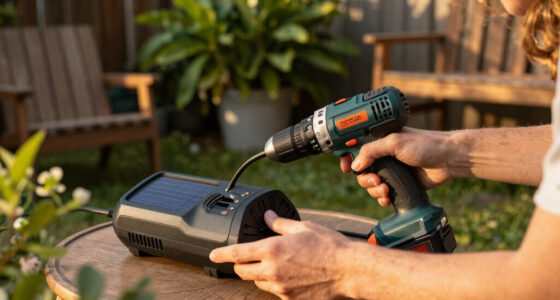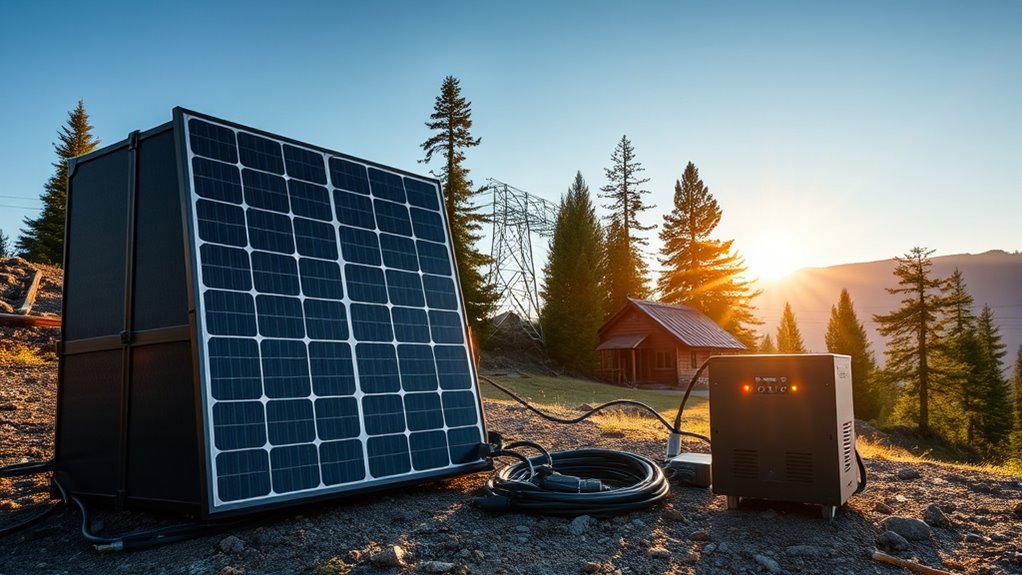

A solar generator bundle with 240V can run compatible well pumps, larger appliances, or other split-phase loads, but the right choice depends on more than its headline wattage. My best overall pick is the OSCAL PowerMax 6000 with three 400W panels, which pairs 120V/240V output with the largest listed solar array in this group. The PowerMax 6000 expandable system stands out for buyers planning to add substantial storage, while PECRON’s paired-unit systems offer a different route to 240V through a double voltage hub. The tradeoffs are solar input, usable capacity, system setup, and whether 240V is available from the included configuration. Read on for the full comparison and a guide to matching a bundle to your loads.

Get backup power and energy gear delivered free with Prime
- Fast, free delivery on millions of items
- Prime Video, Amazon Music and more included
- Member-only deals all year
Complete the kit


Key Takeaways
- The OSCAL PowerMax 6000 bundle with three 400W panels has the largest listed panel array here, making it the strongest starting point for buyers who want bundled solar input alongside 120V/240V output.
- The two OSCAL bundles list the same 120V/240V capability but differ in included solar capacity: one has three 400W panels and the other three 200W panels.
- The expandable PowerMax 6000 lists growth to 57.6kWh, giving it a clearer path for buyers who expect backup needs to expand beyond its 3600Wh base capacity.
- PECRON’s E3800 and E3600LFP options use two power stations with a 240V double voltage hub; buyers should compare their listed capacity and included configuration rather than treating them as single-unit split-phase systems.
- The 3600Wh PowerMax bundle with two 200W panels is a simpler, lower-solar-input package than the three-panel OSCAL bundles, while the PECRON E3600LFP listing specifies 3072Wh and makes a more compact capacity choice.


| solar generator bundle with 240v | Battery capacity | Battery type | Weight | Voltage |
|---|---|---|---|---|
| OSCAL PowerMax 6000 Solar Gene | 3600Wh | LiFePO4 | 45.5 kg | 120V/240V split phase |
| PowerMax 6000 Solar Generator | 3600Wh | LiFePO4 | — | — |
| PECRON Portable Power Station | 3840Wh | LiFePO4 | 87.3 lb | — |
| PowerMax 6000 Solar Generator | — | LiFePO4 | 101 lb | 120/240V |
| OSCAL PowerMax 6000 Solar Gene | 3600Wh | LiFePO4 | 45.5 kg | 120/240V dual voltage |
| PECRON 2xE3600LFP Portable Pow | 3072Wh per E3600LFP | — | — | — |
More Details on Our Top Picks
OSCAL PowerMax 6000 Solar Generator with 3x400W Solar Panels, 6000W AC Outlets, 120V/240V Split Phase, Battery Backup for Home & Emergency
The OSCAL PowerMax 6000 with three 400W panels is my strongest all-in-one pick for buyers who want substantial 240V capability and a solar array included. Its 6000W continuous output, 9000W surge rating, and 3600Wh LiFePO4 battery suit backup loads that need more than a small portable station can offer. Compared with the PowerMax 6000 listing that bundles two 200W panels, this version provides more than triple the listed panel wattage, giving solar recharging a stronger starting point in good conditions. The tradeoff is its 45.5 kg weight: it is portable in the broad sense, but not a casual carry. I’d also verify the exact 240V setup and supported loads before buying, since the product data lists split-phase output but does not detail every connection.
Pros:- Includes three 400W solar panels, the largest listed panel bundle among these PowerMax options.
- 6000W continuous output with 9000W surge capacity supports demanding loads.
- 3600Wh LiFePO4 battery is suited to repeated backup use.
- UPS capability can help keep connected equipment powered during an outage.
Cons:- At 45.5 kg, moving the power station is difficult for one person.
- A 3600Wh battery still limits how long high-draw appliances can run.
- Buyers should confirm how the 120V/240V split-phase output connects to their intended equipment.
Best for: Homeowners seeking a high-output 240V-capable backup system with a substantial solar panel bundle included.
Not ideal for: Campers who frequently move their power station or buyers who need a lightweight setup; the unit weighs 45.5 kg.
- Battery capacity:3600Wh
- Battery type:LiFePO4
- Continuous output:6000W
- Surge output:9000W
- Voltage:120V/240V split phase
- Included solar panels:3 × 400W
- Total power outlets:14
- Weight:45.5 kg
- Dimensions:23.2 × 13.8 × 17.3 in
Our verdict“Choose this bundle if you want the strongest included solar array and high-output backup, and can accommodate a heavy power station.”
PowerMax 6000 Solar Generator with 3600Wh Capacity and 2x200W Portable Solar Panels
This PowerMax 6000 bundle keeps the same 3600Wh capacity and 6000W output as the more heavily paneled OSCAL version, but includes just two 200W solar panels. That makes it a fit for buyers who value a bundled solar starting point without prioritizing rapid off-grid replenishment. Its 2200W AC input and listed 1.96-hour full charge time provide another route to refill the battery when grid power is available. Compared with the three-panel, 400W OSCAL bundle, the smaller panel array is the clearest compromise; sunlight-dependent charging will be more limited. The product data lists 110V, not 120V/240V split phase, so I would not select it for a 240V appliance or connection unless the seller confirms compatible output hardware. Its size and weight also make it better for a fixed backup spot than frequent carrying.
Pros:- 3600Wh LiFePO4 battery offers substantial stored energy for a portable unit.
- 6000W output and 9000W surge rating provide considerable load capacity.
- 2200W AC input supports fast recharging when grid power is available.
- Includes two 200W portable solar panels rather than requiring a separate panel purchase.
Cons:- The listed 110V output does not establish 240V split-phase capability.
- Its 400W panel bundle is much smaller than the three 400W OSCAL bundle.
- Large dimensions and high capacity make it less convenient to carry regularly.
Best for: Buyers wanting a high-capacity PowerMax with a modest solar bundle and access to wall charging, who do not require confirmed 240V output.
Not ideal for: Anyone whose defining requirement is a ready-to-connect 240V split-phase output or faster solar recharging; the listed voltage is 110V and the bundle has 400W of panels.
- Battery capacity:3600Wh
- Battery type:LiFePO4
- Output:6000W
- Surge power:9000W
- Listed voltage:110V
- Included solar panels:2 × 200W
- AC input:2200W
- Solar input:2400W
- Outlets:14
Our verdict“Pick this for high-capacity backup with a basic panel bundle, but skip it for a purchase that must provide verified 240V output.”
PECRON Portable Power Station 2xE3800 LFP with 240V Double Voltage Hub
The PECRON 2xE3800 LFP with 240V double-voltage hub makes the most sense for buyers who want a purpose-built route to 240V and room to expand. Its 3840Wh battery and listed 4200W AC output are below the PowerMax 6000 models’ 6000W continuous rating, but PECRON counters with expansion up to 53.76kWh—far beyond the fixed starting capacity of the OSCAL bundles. The 3000W solar input and stated 1.4-hour AC charge time also support faster replenishment when the needed power source is available. This is less of a simple grab-and-go bundle: at 87.3 lb, it is heavy, and the power station and 240V hub ship separately and require assembly. I’d confirm hub compatibility and included components before ordering, especially if the goal is a ready-to-use 240V connection.
Pros:- Includes a dedicated 240V double-voltage hub in the product configuration.
- Expandable capacity reaches 53.76kWh, well beyond the listed PowerMax starting capacities.
- 3000W solar input supports a substantial solar charging setup.
- UPS switch time is listed at 8–20ms for connected critical devices.
Cons:- At 87.3 lb, the unit is heavy to move.
- The power station and 240V hub ship separately and require assembly.
- Its 4200W AC output is lower than the 6000W rating of the PowerMax options.
Best for: RV owners and home-backup buyers who need 240V through a dedicated hub and expect to expand storage over time.
Not ideal for: Shoppers who want a lighter, ready-to-use kit with minimal setup or a 6000W continuous rating.
- Battery capacity:3840Wh
- Battery type:LiFePO4
- Maximum AC output:4200W
- Solar input:3000W
- AC charging:Up to 3200W; 0–100% in 1.4 hours
- 240V equipment:Double-voltage hub; ships separately
- UPS switch time:8–20ms
- Expandable capacity:Up to 53.76kWh
- Weight:87.3 lb
Our verdict“Choose PECRON if modular expansion and a dedicated 240V hub matter more than a lighter setup or higher continuous output.”
PowerMax 6000 Solar Generator, 6000W Continuous Power, 3600Wh Capacity, Expandable to 57.6kWh, Emergency Backup for Home and Outdoors
For buyers planning a home backup system that may grow, this PowerMax 6000 stands out for its stated expansion ceiling of 57.6kWh, the largest listed here. It combines 3600Wh of starting capacity, 6000W continuous output, and 120/240V capability, giving it a stronger 240V case than the PowerMax listing that specifies only 110V. Compared with the PECRON 2xE3800, its listed output is higher, while PECRON provides a dedicated double-voltage hub and a faster stated AC charge time. The main catch for solar buyers is that panels are not included, unlike the OSCAL bundles. At 101 pounds, it is also a stationary-backup choice rather than an easy camping companion. The listing says four AC outlets, so check whether that is enough for your setup.
Pros:- 120/240V capability is explicitly listed.
- 6000W continuous output and 9000W peak power suit substantial backup loads.
- Expansion up to 57.6kWh offers significant room to add capacity.
- Built-in UPS and stated 3,500-plus charge cycles support backup-focused use.
Cons:- Solar panels are not included, so the listing is not a complete solar bundle.
- The 101-pound weight makes movement difficult.
- Only four AC outlets are listed, which may require a distribution plan for several devices.
Best for: Homeowners who want 120/240V capability and a system with substantial stated expansion headroom, and can source solar panels separately.
Not ideal for: Buyers seeking a complete solar bundle, frequent portability, or a large number of built-in AC outlets.
- Starting battery capacity:3600Wh
- Battery type:LiFePO4
- Continuous output:6000W
- Peak power:9000W
- Voltage:120/240V
- Expandable capacity:Up to 57.6kWh
- AC outlets:4
- Weight:101 lb
- Warranty:5 years
Our verdict“Choose this for expandable 120/240V home backup if you are comfortable buying panels separately and leaving the heavy unit mostly in place.”
OSCAL PowerMax 6000 Solar Generator with 3x200W Solar Panel, 120V/240V
This OSCAL PowerMax 6000 bundle pairs the familiar 3600Wh capacity and 6000W output with three 200W solar panels and app control. Its 600W of included panel capacity is a middle ground: more solar hardware than the two-panel PowerMax bundle, but less than the three 400W-panel OSCAL package. That makes it a reasonable fit for buyers who want a bundled way to start solar charging without the largest panel array. The listing identifies 120/240V dual voltage, which is more aligned with this roundup than the 110V-only specification on the other PowerMax bundle. Still, buyers should verify the exact 240V connection and supported loads. The unit weighs 45.5 kg, and its listed runtime of zero minutes is not useful for planning; actual runtime depends on load and usable battery energy.
Pros:- Lists 120/240V dual-voltage capability.
- Includes three 200W solar panels for a 600W bundled array.
- App control offers remote monitoring and operation.
- 3600Wh capacity and 6000W output provide substantial power for a portable system.
Cons:- The 600W panel bundle is smaller than the three 400W OSCAL bundle.
- At 45.5 kg, the power station is difficult to carry routinely.
- The listed runtime of zero minutes does not provide a usable estimate for planning loads.
Best for: Buyers who want an OSCAL 120/240V-capable unit, app monitoring, and a moderate three-panel solar bundle.
Not ideal for: People who need the strongest included solar array or clear runtime estimates before purchasing.
- Battery capacity:3600Wh
- Battery type:LiFePO4
- Output:6000W
- Surge output:9000W
- Voltage:120/240V dual voltage
- Included solar panels:3 × 200W
- Total power outlets:14
- Weight:45.5 kg
- Dimensions:23.2 × 13.8 × 17.5 in
Our verdict“Pick this OSCAL if app monitoring and a moderate solar bundle suit your needs, but verify the 240V connection and calculate runtime for your actual loads.”
PECRON 2xE3600LFP Portable Power Station, 240V Double Voltage Hub 3072Wh
This PECRON bundle makes the most sense for buyers who want two power stations, a 240V hub, and eight 300W solar panels together. Its listed capacity is 3072Wh, with 3600W rated output per E3600LFP unit; the hub provides the 240V configuration, so check its supported loads and setup requirements before planning to run 240V equipment. Compared with the OSCAL PowerMax 6000 with three 400W panels, this package supplies more panel wattage on paper, while OSCAL lists 6000W output. PECRON also supports expansion up to 15360Wh with the EP3800-48V. Fast AC charging and a broad set of ports add flexibility, but this is a substantial multi-piece setup: the power stations, hub, and panels ship separately, and solar charging depends on suitable conditions and setup.
Pros:- Includes eight 300W solar panels, providing 2400W of listed panel capacity
- Two E3600LFP units and a 240V double-voltage hub form a bundled dual-voltage setup
- Each unit lists 3072Wh capacity and 3600W rated output
- Supports expansion to 15360Wh with the EP3800-48V
Cons:- Power stations, hub, and panels ship separately, so delivery and setup may take coordination
- The 240V hub’s load limits and operating details are not specified in the supplied product information
- Eight panels and two power stations make this a bulky, multi-piece system rather than a grab-and-go option
Best for: Buyers building a home or RV backup setup who want a bundled high-wattage solar array, two power stations, and a 240V hub.
Not ideal for: Travelers prioritizing a compact, simple-to-carry system, or buyers who need a clearly stated 240V output rating before checking hub compatibility.
- Battery capacity:3072Wh per E3600LFP
- Voltage setup:240V double-voltage hub included
- Solar panels:8 × 300W panels; 2400W total panel rating
- AC charging:Up to 3200W input; claimed full charge in 1.3 hours
- Solar charging:Claimed 1.5 hours with 8 × 300W panels
- AC outlets:4 per E3600LFP
- USB-C ports:2 × 100W per E3600LFP
- Expansion:Up to 15360Wh with EP3800-48V
Our verdict“Choose this PECRON bundle if an included high-wattage solar array and expandable dual-voltage setup matter more than portability and a simpler, single-box purchase.”

How We Picked
I ranked these bundles around the specific job implied by 240V solar backup: supplying compatible 240V loads, supporting useful solar charging, and giving buyers a clear picture of what is included. I weighed stated output configuration, battery capacity, panel wattage and count, expandability, and whether the 240V setup relies on paired units and a hub. A 240V label alone does not establish that a system can start or continuously run every appliance, so I treated the listed configuration—not assumptions about performance—as the basis for comparison.
The OSCAL bundle with three 400W panels ranks first for its combination of stated split-phase output and the largest bundled array. The expandable PowerMax ranks strongly for future storage needs, while the lower-panel PowerMax bundle suits buyers who prioritize a simpler package. PECRON’s paired-unit options remain relevant for buyers specifically seeking a hub-based 240V arrangement, but their two-unit setup makes configuration and load planning more involved. I do not infer unstated runtimes, charging speeds, or compatibility.
Factors to Consider When Choosing Solar Generator Bundle With 240v
Choosing a 240V solar generator bundle starts with the appliance and wiring requirements, not the bundle name. These broader checks can prevent a mismatch between a generator’s advertised voltage and the way you intend to use it.
Confirm the appliance needs split-phase 240V
Some equipment labeled 240V requires two hot legs in a split-phase supply, while other devices may use a different electrical arrangement. Check the appliance nameplate and manual for voltage, phase, frequency, and connection requirements before choosing a generator. Also confirm whether the intended connection is a standard receptacle, a transfer switch, or hardwired installation. A 240V outlet does not automatically make a unit suitable for a whole-home connection. For home wiring, use a qualified electrician and follow local electrical rules.
Separate starting watts from running watts
Motors in pumps, compressors, and some workshop equipment can draw a brief surge when they start. The continuous output rating alone may not show whether a generator can handle that startup demand. Find both the running and surge requirements for each intended load, then compare them with the generator’s stated limits. Avoid planning around several high-draw appliances operating at once unless their combined demand fits the system. If the manufacturer does not publish a needed rating, ask before relying on the unit for that load.
Treat battery capacity and output as separate limits
Watt-hours describe stored energy, while watts describe how much power a system can supply at a given moment. A large battery may run a modest load for longer without being able to start a high-demand appliance. Estimate energy needs by multiplying each device’s wattage by the hours you expect to use it, then allow room for conversion losses and changing usage. Do not interpret a listed battery capacity as a guaranteed runtime. This distinction matters especially when comparing the 3600Wh PowerMax options with the PECRON E3600LFP’s listed 3072Wh.
Compare bundled solar by total panel wattage and conditions
Panel count can be misleading unless you compare the wattage of each panel and the total array. The OSCAL bundles include either three 400W panels or three 200W panels, while the PowerMax portable bundle lists two 200W panels. Higher panel wattage can provide more charging potential in suitable conditions, but actual output varies with sunlight, angle, temperature, shading, and the station’s input limits. Check the generator’s solar input specifications and connector compatibility before adding or replacing panels. A bundle’s panel rating is not a promise of a fixed daily energy yield.
Plan for the installation method and system complexity
A portable outlet setup and a connection to household circuits are different projects. Paired power stations and a double voltage hub may provide a 240V path, but buyers should verify which cables, hub, and operating steps are included. A home transfer switch or hardwired connection calls for compatible equipment and professional installation, not a simple plug-in assumption. Think through where the units will sit, how cables will reach loads, and whether the setup must be moved often. Simpler configurations can be easier to deploy, while modular systems can add flexibility at the cost of more planning.
Pay for expandability only if future capacity matters
An expandable system can make sense when backup plans may grow to include more appliances or longer outages. Its stated expansion ceiling is not the same as storage included in the base package, so verify what must be purchased separately and whether additional batteries retain the same operating limits. If your expected loads are modest, extra expansion capability may add complexity without improving day-to-day usefulness. Compare the included capacity with your actual energy estimate before choosing based on a maximum figure. For the PowerMax 6000, the listed 57.6kWh expansion potential is most relevant to buyers who have a defined reason to scale.
Frequently Asked Questions
Can I connect a 240V solar generator directly to my home electrical panel?
Not by assuming that a 240V outlet is a panel connection. Home circuits generally require a compatible transfer switch or other approved connection method, and the generator must match the electrical requirements of the loads and installation. Have a qualified electrician verify the wiring arrangement, generator configuration, and permitted connection method. Never backfeed a household circuit through an ordinary outlet. Check the product documentation for approved home integration equipment before buying.
How do I know whether a 240V generator can run my well pump or air conditioner?
Check the appliance label or manual for both running watts and startup or locked-rotor demand, along with its voltage and phase requirements. Compare those figures with the generator’s continuous and surge output ratings for the exact 240V configuration. For systems made from paired stations and a hub, confirm the relevant ratings apply to the combined setup. If the appliance documentation is unclear, ask its manufacturer or an electrician to interpret it. Voltage by itself is not enough to establish compatibility.
Is a bundle with more solar panels always the better choice?
No; more bundled panel wattage can help replenish the battery in good conditions, but only if the generator accepts that input and the panels can be positioned in useful sun. Shade, weather, orientation, and seasonal daylight all affect energy production. A larger array may also require more space and setup time. Compare total panel wattage with the station’s solar input limits and your expected daily energy use. If charging speed is a priority, verify the supported input specifications rather than relying on panel count alone.
What should I check before choosing a PECRON double voltage hub system?
Confirm that the bundle includes the two compatible power stations, the double voltage hub, and any cables needed for the intended configuration. Read the documentation for how the units must be connected and whether the combined system supports your specific 240V load. Compare the total listed battery capacity with your energy needs, while remembering that capacity and output power are separate limits. Also check whether each component must be charged or managed separately. This extra setup can suit buyers who value a paired-unit arrangement, but it may be less convenient than a single integrated system.
Should I choose an expandable 3600Wh system or a larger bundled solar array?
Choose based on the limitation you are more likely to encounter: stored energy during an outage or the ability to recharge from sunlight. Expandability is useful when you expect longer backup periods or plan to add loads, but added batteries may be separate purchases. A larger solar array can help restore energy when sunlight and input limits allow, though it cannot add storage capacity. Estimate your daily watt-hour use and how often you can recharge before deciding. The expandable PowerMax addresses future storage growth, while the three-panel OSCAL 400W bundle emphasizes more bundled solar collection.
Conclusion
For the strongest all-around match to this roundup’s 240V brief, I’d start with the OSCAL PowerMax 6000 and three 400W panels: it pairs stated 120V/240V output with the largest included solar array. The best value in configuration is the PowerMax 6000 with two 200W panels for buyers who want a more modest bundled array and do not need the larger OSCAL panel package. For a premium, growth-minded setup, the expandable PowerMax 6000 is the clearest pick for buyers who have a real plan to add storage. Beginners may prefer a straightforward single PowerMax package, after confirming its exact 240V capability and included accessories; PECRON is better for buyers comfortable setting up two stations with a double voltage hub. For specific hub-based 240V needs, compare the PECRON E3800 pair with the E3600LFP pair’s listed 3072Wh capacity, and verify the exact bundle contents and load ratings before purchase.