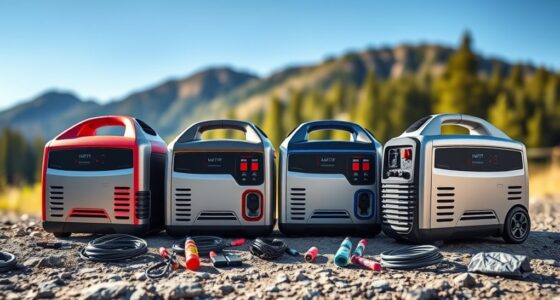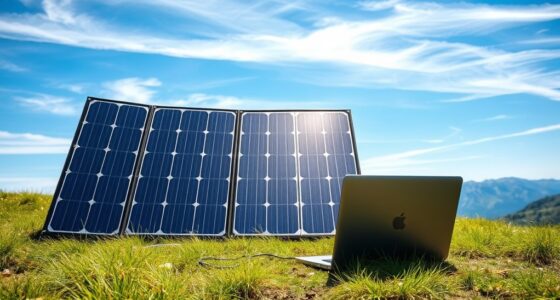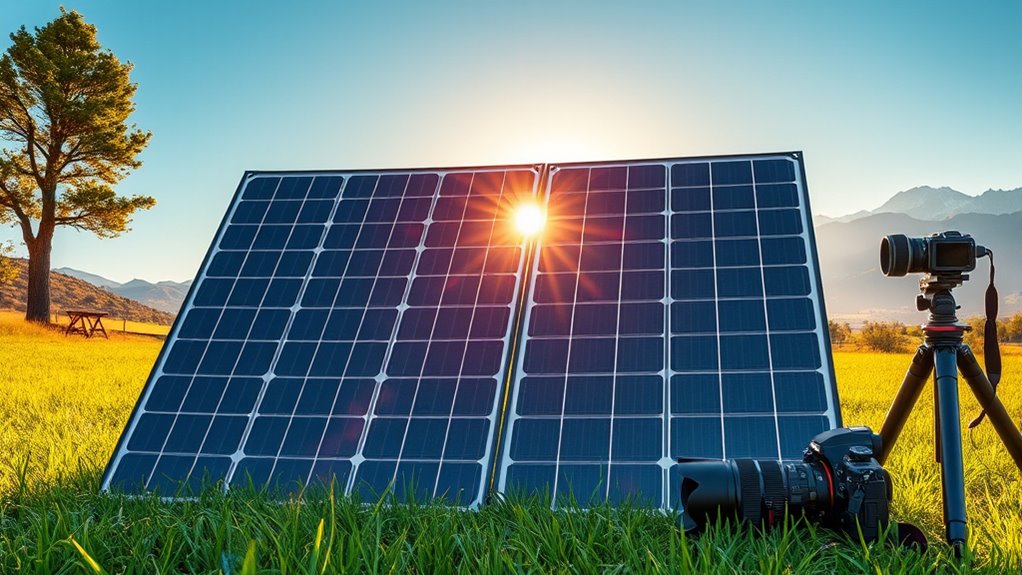
For photography trips, I’d choose the Renogy 200W Portable Solar Panel as the best overall balance of power and portability, while the FlexSolar 100W is a better fit for lighter camera kits and the Renogy 400W suits longer shoots with a power station. A folding solar panel for photography can keep batteries, phones, and other gear charged, but panel wattage alone does not tell you how easily it will fit in your vehicle, connect to your power station, or perform when clouds pass. The main tradeoff is between carrying a smaller, simpler panel and choosing more output at the cost of bulk and setup effort. I compare those differences below so you can match a panel to your camera kit, shoot length, and charging plan.

Get backup power and energy gear delivered free — and shop member deals
- Fast, free delivery on millions of items
- Access to Prime Big Deal Days deals on October 6–7
- Prime Video, Amazon Music and more included
Key Takeaways
- The 200W options form the most practical middle ground: Renogy, BougeRV, BALDR, IBCPOWER, and SOKIOVOLA suit power-station users who need more than direct USB charging, but their connector and compatibility details matter.
- Direct-device charging and power-station charging are different jobs: the SOKIOVOLA 50W and ELECAENTA 60W emphasize USB outputs, while MC4-equipped options such as the Ecosonique 200W and SOKIOVOLA 120W are oriented toward power stations.
- Higher wattage does not automatically make a better field kit: the 300W, 400W, and 600W panels can support larger loads, but add transport and setup demands that may be excessive for a camera-and-battery workflow.
- Weather protection varies across the lineup: the FlexSolar lists IP67 protection, the ZOUPW lists IP67, and the SOKIOVOLA N-Type 200W lists IP68, but ratings do not remove the need to protect cables and connected electronics.
- Photography buyers should rank compatibility and portability alongside output: a panel that works with the existing power station and can be positioned near a safe, stable shooting location may be more useful than a higher-wattage panel with awkward connections.


| folding solar panel for photography | Maximum power | Weight |
|---|---|---|
| FlexSolar 100W Foldable Portab | — | — |
| SOKIOVOLA Upgraded Foldable 50 | — | — |
| Renogy 400W Portable Solar Pan | — | — |
| BALDR 200W Foldable Solar Pane | — | — |
| ELECAENTA 60W Portable Solar P | — | — |
| BougeRV 200W Portable Solar Pa | 200W | — |
| IBCPOWER 200W Foldable Solar P | 200W | — |
| DOKIO 100W Foldable Solar Pane | 100W | 10.1 lb |
| SOKIOVOLA 120W Foldable Solar | 120W | 5.16 lb |
| Ecosonique 200W Portable Folda | 200W | 11 lb |
| DOKIO 300W Portable Foldable S | 300 watts | 15.2 pounds |
| EYONGPV 600W Foldable Solar Pa | 600 watts | 28.7 pounds |
| ZOUPW 220W Portable Foldable S | 220 watts | 15.9 pounds |
| SOKIOVOLA N-Type 16BB 200W Por | 200 watts | 16.3 pounds |
| Renogy 200W Portable Solar Pan | 200 watts | 13.9 pounds |
More Details on Our Top Picks
FlexSolar 100W Foldable Portable Solar Panel Charger IP67 Waterproof
The FlexSolar 100W makes a strong middle-ground choice for photographers who want to top up camera batteries through a compatible power station while keeping USB charging close at hand. Its 45W USB-C PD can serve compatible devices directly, while the 100W DC output and included multi-connector cable offer more flexibility than the ELECAENTA 60W’s lower-rated panel. At 4.1 pounds, it is also much easier to carry to a shoot than the BALDR 200W or Renogy 400W. Its IP67 rating is a welcome safeguard around dusty trails or sudden rain, though the panel’s junctions and connected gear still need sensible protection. The tradeoff is a broad unfolded footprint and output that depends on strong sun; it is not a battery, and its rated wattage is not a promise of steady field charging.
Pros:- 100W DC output and included four-connector cable broaden power-station compatibility
- 45W USB-C PD and USB-A ports support direct charging of compatible devices
- IP67-rated panel is suited to dusty and wet outdoor conditions
- 4.1-pound weight is more carry-friendly than the higher-wattage BALDR and Renogy panels
Cons:- The 45.47 x 26.18-inch unfolded panel takes space at a compact shooting location
- No built-in battery, so charging depends on sunlight or a connected power station
- Rated output can fall with clouds, shade, or poor panel angle
Best for: Photographers who want a manageable panel for a power station plus direct USB charging of phones or compatible camera accessories on day trips.
Not ideal for: Backpackers prioritizing the smallest packed kit, or photographers who need high-energy output to run several devices through long cloudy stretches.
Our verdict“Choose the FlexSolar for a portable 100W balance of direct USB charging, power-station connections, and weather protection.”
SOKIOVOLA Upgraded Foldable 50W Portable Solar Panel Charger with 3 Output Ports (USB-A, USB-C, DC)
For a photographer carrying a small mirrorless kit, the SOKIOVOLA 50W puts portability ahead of fast replenishment. At 2.1 pounds, it is the lightest option in this group with stated weight data, and its USB-A, USB-C, and DC ports give it more direct-device flexibility than the Renogy 400W, which uses MC4 output and requires a compatible controller. The stated conversion efficiency of up to 24.8% is attractive on paper, but the 50W ceiling still sets a modest pace: this is better for a phone, small power bank, or occasional camera-battery charging through suitable gear than for keeping a power station ready for a full production day. Waterproof and UV-resistant construction suits outdoor use, but shade and cloud cover can cut charging sharply.
Pros:- At 2.1 pounds, it is easier to carry than the other listed panels with known weights
- USB-A, USB-C, and DC ports cover several charging approaches
- Up to 24.8% stated conversion efficiency
- Waterproof and UV-resistant construction is suited to outdoor shoots
Cons:- 50W maximum output is slower for replenishing larger power stations
- No built-in battery, so energy is unavailable when the panel is not generating
- Clouds, obstructions, and changing sun angle can reduce useful charging
Best for: Photographers with a lightweight mirrorless or action-camera setup who want a small panel for phones, power banks, or modest charging needs.
Not ideal for: Shooters relying on a power station to run laptops, lighting, or multiple camera batteries; 50W is a limited replenishment rate.
Our verdict“Pick the SOKIOVOLA when a low-carry-weight panel matters more than fast charging or running a substantial photography setup.”
Renogy 400W Portable Solar Panel
The Renogy 400W is the high-output choice for photographers working from an RV or established base camp, where its larger panel can feed a compatible power setup rather than ride in a daypack. Compared with the FlexSolar 100W, it offers far more rated capacity for replenishing a power station, but its MC4 connection and requirement for a compatible charge controller add setup steps. That makes it less convenient for direct camera-accessory charging than the BALDR 200W, which includes USB-C and USB-A outputs. Renogy lists a 23% efficiency rating, fiberglass construction, and support for partial shading, although any shaded panel can still lose useful generation. Its folded dimensions and limited adapter inclusion also make it a poor match for photographers who value quick deployment and compact storage over camp-level output.
Pros:- 400W maximum power is the highest stated output among these five products
- 23% stated efficiency supports substantial generation when conditions are favorable
- Fiberglass and ETFE construction is intended for outdoor use
- Carry case supports transport between vehicle and base-camp locations
Cons:- Requires a compatible solar charge controller, which is not included
- MC4 output cables may need an additional adapter for a power station
- Folded dimensions are bulky for small vehicles or portable photography kits
Best for: RV-based photographers and location crews who need substantial solar input for a compatible power station and can accommodate a larger panel.
Not ideal for: Hikers, minimalist photographers, or buyers seeking simple direct USB charging without a separate controller or adapter planning.
Our verdict“Choose the Renogy for vehicle-supported base camps where high solar input outweighs its controller and storage demands.”
BALDR 200W Foldable Solar Panel, Portable Charger for Power Stations
The BALDR 200W stands apart by pairing power-station connections with a removable charge controller and direct 60W USB-C PD and 24W USB-A outputs. For photographers who want to charge a phone, tablet, or compatible camera accessory without routing every device through a power station, that arrangement is more immediately useful than the Renogy 400W’s MC4-only setup. Its 200W rating also gives it more headroom than the ELECAENTA 60W for feeding a larger storage system. The cost of that versatility is carry weight: at 9.26 pounds, it is better carried from a vehicle than strapped to a long-distance hiking pack. The IP65 rating applies to the panel, but the junction box is not waterproof, so wet-weather placement needs care.
Pros:- 200W maximum output suits larger power-station charging needs
- 60W USB-C PD and 24W USB-A allow direct charging of compatible devices
- Included 6-in-1 cable supports a range of power-station connections
- Up to 23.5% stated conversion efficiency and IP65 panel rating
Cons:- 9.26-pound weight is substantial for hiking or walk-in shoots
- Junction box is not waterproof despite the panel’s IP65 rating
- A 200W panel still depends on adequate sunlight for meaningful charging
Best for: Photographers traveling by car or RV who want a 200W panel with both power-station compatibility and direct USB charging.
Not ideal for: Backpackers or photographers who need a panel that can be left exposed to rain at every connection point.
Our verdict“Choose the BALDR if you want higher output and direct USB ports for vehicle-supported photography, not a light backpacking panel.”
ELECAENTA 60W Portable Solar Panel with USB-C, QC 3.0 & DC Outputs
The ELECAENTA 60W suits photographers who want a modest panel for direct device charging without stepping up to the FlexSolar 100W’s larger rated output. Its USB-C and QC 3.0 ports offer convenient options for compatible phones and accessories, while the DC output can serve compatible equipment or a power station. The stated 25% conversion efficiency is the highest listed in this five-product group, but it does not erase the practical limit of 60W maximum power or the effect of changing sunlight. At 3.5 pounds, it is heavier than the SOKIOVOLA 50W despite its similarly compact role, so the lighter panel may suit walkers better. Water-resistant construction helps outdoors, but this is not a substitute for a battery when charging needs continue after sunset.
Pros:- 25% stated conversion efficiency
- USB-C, QC 3.0, and DC outputs support varied compatible devices
- Foldable, water-resistant design is suited to outdoor carrying
- Included DC cable and connectors help with compatible power stations
Cons:- 60W maximum output limits charging speed for larger power stations
- At 3.5 pounds, it is heavier than the SOKIOVOLA 50W
- No built-in storage, and performance depends on available sunlight
Best for: Photographers who need USB-C or QC 3.0 charging for phones and small accessories, with occasional DC charging in a compact field setup.
Not ideal for: Photographers powering a high-draw laptop or replenishing a large power station quickly; its 60W ceiling is better suited to smaller loads.
Our verdict“Choose the ELECAENTA for direct charging of smaller photography accessories when its port mix matters more than high output or minimum weight.”
BougeRV 200W Portable Solar Panel, N-Type Foldable Solar Charger Fiberglass
I’d shortlist the BougeRV 200W for photographers who want a higher-output panel for recharging a power station between shoots and expect frequent packing and setup. Its fiberglass-reinforced construction is intended to resist cracking and surface abrasion, while IP65 protection helps with dust and light rain exposure. The included 8.2-foot cable gives you more freedom to place the panel in sun while keeping a camera battery station or other gear in shade. Compared with the lighter, lower-output SOKIOVOLA 120W, BougeRV has more stated wattage but is less clearly suited to photographers prioritizing a compact carry. XT60 and DC7909 connectors are useful, though compatibility still depends on your power station. The tradeoff is a lack of listed weight and folded dimensions, making pack planning harder.
Pros:- 200W stated output suits charging a compatible power station between shooting sessions.
- Fiberglass reinforcement is designed to resist cracking and abrasion during repeated transport.
- 8.2-foot extension cable allows more flexible panel and power-station placement.
- IP65 dust and water resistance offers protection against outdoor exposure.
Cons:- Weight and folded dimensions are not provided, complicating decisions about carrying and storage.
- XT60 and DC7909 connectors do not guarantee compatibility with every power station.
- IP65 protection is less extensive than the IP67 or IP68 ratings stated for some competing panels.
Best for: Photographers at car camps or RV sites who want a rugged 200W panel and already own a compatible power station.
Not ideal for: Backpackers and photographers who need a known, very small packed size or a lightweight panel; the listed product details do not provide its weight or folded dimensions.
- Maximum power:200W
- Solar cell type:N-type
- Claimed conversion efficiency:Up to 25%
- Connectors:XT60 and DC7909
- Extension cable:8.2 ft
- Water and dust resistance:IP65
- Construction:Fiberglass-reinforced
- Carry features:Foldable design with built-in side handles
Our verdict“Choose the BougeRV if you want a rugged 200W panel for car-based photography trips and can confirm its size and connector compatibility first.”
IBCPOWER 200W Foldable Solar Panel – Compatible with DJI Power 2000/1000 V2/1000
The IBCPOWER 200W makes the most sense for photographers already using a compatible DJI Power station: its included MC4-to-XT60 cable and adjustable stand simplify positioning at a shoot, and IP67 protection gives it a stronger stated dust-and-water rating than the BougeRV’s IP65. Its 45 mm folded thickness is a useful packing detail for vehicle kits, though the supplied dimensions and cables still deserve a fit check before buying. There’s a compatibility catch: the description says a separate MPPT adapter module is required for DJI stations, so this is not a complete plug-and-play charging setup on its own. The stated 400W combined-output limit with DJI Power 1000 also matters if you plan to expand your array. Compared with the broader-connector SOKIOVOLA 120W, this pick is more targeted, not more universal.
Pros:- 200W maximum output is suited to replenishing compatible portable power stations.
- Built-in adjustable stand helps angle the panel without separate supports.
- IP67 rating provides dust and water protection.
- Includes MC4-to-XT60 and MC4 extension cables.
Cons:- A separate MPPT adapter module is required for connection to DJI power stations.
- The stated combined panel output is limited to 400W with DJI Power 1000.
- Its targeted compatibility makes it less flexible than the SOKIOVOLA 120W’s multi-connector setup.
Best for: Photographers who own a compatible DJI Power 2000, Power 1000 V2, or Power 1000 and want an adjustable 200W panel for vehicle-based shoots.
Not ideal for: Buyers seeking a ready-to-connect solution or a panel for a power station outside the stated DJI compatibility; the required MPPT adapter may add another purchase and setup step.
- Maximum power:200W
- Efficiency:High efficiency; numeric figure not specified
- Dimensions:24 × 23.9 × 1.77 in
- Folded thickness:45 mm
- Included connectors:MC4-to-XT60 cable
- Extension cables:2 × MC4, 0.9 m each
- Stand:Built-in angle-adjustable stand
- Water and dust resistance:IP67
Our verdict“Pick the IBCPOWER if DJI Power compatibility is your priority and you are comfortable adding the required MPPT adapter.”
DOKIO 100W Foldable Solar Panel Suitcase with 10A Controller
I’d rank the DOKIO 100W suitcase for photographers who want a modest, self-contained 12V setup rather than the strongest output in this group. Its integrated 10A PWM controller and USB port give it a more direct route to small-device charging than the higher-output Ecosonique 200W, while the aluminum frame and adjustable bracket suit stationary use at a campsite or vehicle. That convenience comes with a defined ceiling: its stated 12V output is not a fit for high-voltage systems, and 100W is slower for replenishing a power station used to run several camera accessories. At 10.1 pounds, it is also heavier than the 5.16-pound SOKIOVOLA 120W, despite offering less wattage. I’d choose it for controlled camp setups, not long walks between locations.
Pros:- Integrated 10A PWM controller reduces the need to source a separate controller for compatible setups.
- USB port offers a direct charging option for small electronics.
- Aluminum frame and adjustable bracket support stationary outdoor placement.
- Foldable suitcase format is convenient for vehicle storage and camp setup.
Cons:- At 10.1 pounds, it is heavier than the 5.16-pound SOKIOVOLA 120W despite its lower output.
- 12V output limits suitability for higher-voltage power systems.
- 100W maximum power can mean slower recharging than the 200W options.
Best for: Photographers who shoot from a campsite, boat, or RV and want a framed 12V panel with an integrated controller and USB charging.
Not ideal for: Hikers, location scouts, and users of high-voltage power systems; its 10.1-pound weight and 12V output limit portability and system fit.
- Maximum power:100W
- Output voltage:12V
- Controller:10A PWM
- Dimensions:23.8 × 19.3 × 1.3 in
- Weight:10.1 lb
- Frame material:Aluminum
- Charging feature:Integrated USB port
- Warranty:10 years
Our verdict“Choose the DOKIO if you need a framed 12V panel with an included controller for stationary camp or RV charging, not a lightweight field kit.”
SOKIOVOLA 120W Foldable Solar Panel with MC-4 Connector Portable Solar Panel for Camping Folding Solar Panel Charger for Portable Power Station Laptops RV
For photographers carrying gear between a vehicle and a nearby shooting spot, the SOKIOVOLA 120W has the clearest portability case here: the listing gives a 5.16-pound weight and a folded size of 11.82 × 11.23 × 2.17 inches. Its four-in-one cable supports XT60, DC5521, DC7909, and Anderson connections, making it broader in stated connector choice than the DJI-focused IBCPOWER 200W. The tradeoff is output: at 120W, it gives up charging capacity to the BougeRV and Ecosonique 200W panels. The 7.2-foot cable and included bag help with carry and placement, but a power station’s input limit can cap actual charging. I’d favor this model when reduced carry burden matters more than recovering power quickly after a long day of camera and laptop use.
Pros:- Listed weight of 5.16 pounds makes it easier to carry than the 10.1-pound DOKIO 100W.
- Compact stated folded dimensions and included storage bag simplify packing.
- Four-in-one cable supports XT60, DC5521, DC7909, and Anderson connectors.
- 7.2-foot cable allows some separation between panel and power station.
Cons:- 120W maximum output is lower than the 200W BougeRV, IBCPOWER, and Ecosonique panels.
- Actual charging can be limited by the connected power station’s maximum solar input.
- The listing does not provide a numeric conversion-efficiency figure.
Best for: Photographers who need a lighter panel for short carries and want one cable with several common power-station connector options.
Not ideal for: Photographers running high-draw gear or trying to recharge a large power station quickly; 120W provides less stated capacity than the 200W alternatives.
- Maximum power:120W
- Weight:5.16 lb
- Folded dimensions:11.82 × 11.23 × 2.17 in
- Connector options:XT60, DC5521, DC7909 (8 mm), and Anderson
- Extension cable:7.2 ft
- Panel surface material:ETFE
- Water resistance:Water-resistant; numeric rating not specified
- Included accessories:Storage bag, adapters, and mountaineering buckles
Our verdict“Pick the SOKIOVOLA 120W when low carry weight and broad connector options matter more than 200W-class charging speed.”
Ecosonique 200W Portable Foldable Solar Panel with MC4 Output for Power Stations
The Ecosonique 200W stands out for photographers who want one folding panel to serve both a power station and smaller electronics: it lists MC4 and DC outputs plus USB-A and USB-C. Its stated 23.5% efficiency and adjustable kickstands make it a capable choice for a campsite where panel angle and several charging routes matter. Compared with the BougeRV, Ecosonique offers more listed output types, while BougeRV emphasizes fiberglass reinforcement and an 8.2-foot extension cable. The Ecosonique’s 11-pound weight is a real portability cost, especially beside the 5.16-pound SOKIOVOLA 120W. Its 200W ceiling also sets a limit for high-draw kits, and the listing calls it waterproof without giving an IP rating. I’d favor it for car-based shoots, not photographers carrying a panel far from their vehicle.
Pros:- 200W maximum power provides more stated output than the SOKIOVOLA 120W.
- USB-A, USB-C, DC, and MC4 outputs offer several charging paths.
- 23.5% listed efficiency and adjustable kickstands support practical outdoor placement.
- Folded dimensions are provided for storage planning.
Cons:- At 11 pounds, it is the heaviest clearly specified portable option in this batch.
- Waterproof protection is stated without an IP rating.
- The 200W maximum may not meet the needs of high-draw equipment or larger power setups.
Best for: Photographers at vehicle-accessible locations who want 200W-class charging and direct USB-A or USB-C options for smaller devices.
Not ideal for: Backpackers or photographers who need a defined IP rating and a lighter carry; it weighs 11 pounds and its waterproof specification is not quantified.
- Maximum power:200W
- Conversion efficiency:23.5%
- Maximum voltage:20V
- Amperage capacity:10A
- Material:Monocrystalline silicon
- Folded dimensions:18.04 × 16.35 × 2.95 in
- Weight:11 lb
- Connector types:DC, MC4, USB-A, and USB-C
- Warranty:12 months
Our verdict“Choose the Ecosonique for a vehicle-based photography kit that benefits from 200W output and direct USB charging, provided its weight is manageable.”
DOKIO 300W Portable Foldable Solar Panel Kit with Charge Controller
The DOKIO suits photographers who want a higher-capacity folding panel and useful charging options in one kit. Its separate PWM controller helps manage charging to a compatible 12V battery, while the USB ports and included adapters give you ways to charge smaller devices without relying only on a power station. At 15.2 pounds, it is lighter than the EYONGPV 600W, though that model offers far more rated output for photographers carrying a larger power system. The DOKIO’s listed 300W capacity may exceed the solar input limit of some power stations, so check compatibility before relying on its full output. Its surface also needs protection from heavy rain and prolonged strong sun, making it less carefree outdoors than the IP67-rated ZOUPW 220W. I’d choose it for flexible campsite charging, not rough-weather exposure.
Pros:- Rated 300W output offers more headroom than the 200W SOKIOVOLA and Renogy panels.
- Separate PWM charge controller supports charging a compatible 12V battery.
- USB ports and included adapters give photographers multiple charging routes.
- Folds to 19.3 by 37.4 by 1.1 inches and weighs 15.2 pounds.
Cons:- Some power stations may cap solar input well below the panel’s 300W rating.
- The panel surface should be protected from heavy rain and prolonged strong sunlight.
- A one-year warranty provides less coverage than the Renogy 200W panel’s two-year warranty.
Best for: Photographers using a compatible 12V battery or power station who want USB charging and adapter options in a foldable kit.
Not ideal for: Photographers who need a weather-sealed panel for exposed shoots or whose power station accepts only 100–200W of solar input.
- Maximum power:300 watts
- Output voltage:12 volts DC
- Maximum voltage:18 volts
- Amperage capacity:16.67 A
- Cell material:Monocrystalline silicon
- Dimensions:37.4 x 19.3 x 1.1 inches
- Weight:15.2 pounds
- Warranty:1 year
Our verdict“Choose the DOKIO for a versatile 300W kit with direct USB charging, provided your power system can use its output and you can shelter it from harsh exposure.”
EYONGPV 600W Foldable Solar Panel, Portable Charger
The EYONGPV is the high-output choice here: its 600W rating is aimed at photographers powering a substantial station for camera batteries, a laptop, and other gear between shoots. Its listed 26% efficiency and adjustable kickstands support positioning the panel toward the sun, which can help when a campsite has limited clear ground. The tradeoff is portability: at 28.7 pounds, it is much heavier than the 13.9-pound Renogy 200W and is better carried from a vehicle than packed between locations. Its 36V output and 30A Anderson connector also call for careful power-station compatibility checks; a high wattage rating alone does not guarantee your station can accept it. I’d shortlist this over the DOKIO 300W when high capacity matters more than easy handling, but skip it for lightweight field kits.
Pros:- 600W rated maximum power exceeds the 300W DOKIO and 200W options in this batch.
- Listed 26% conversion efficiency and adjustable kickstands support sun-facing setup.
- Waterproof construction is intended for outdoor use.
- A 4.5-meter cable allows some separation between the panel and power station.
Cons:- At 28.7 pounds, it is substantially heavier than the Renogy 200W and DOKIO 300W.
- 36V output and a 30A Anderson connector require a compatible power system.
- Warranty coverage is not detailed in the provided product information.
Best for: Vehicle-based photographers with a high-input power station who need to replenish a large battery bank at a fixed campsite.
Not ideal for: Photographers hiking between locations, traveling light, or using a power station that cannot accept its 36V output and Anderson connection.
- Maximum power:600 watts
- Efficiency:26%
- Output voltage:36 volts
- Maximum voltage:36 volts
- Amperage capacity:16.7 A
- Connector:30A Anderson
- Cable length:4.5 meters
- Weight:28.7 pounds
Our verdict“Pick the EYONGPV when your power station supports its connection and high rated output matters more than carrying weight.”
ZOUPW 220W Portable Foldable Solar Panel for Power Stations, IP67 Waterproof, 25.6% Efficiency
For photography trips where damp ground or changing weather is part of the plan, the ZOUPW’s IP67 panel rating gives it a clear role beside less-protected choices such as the DOKIO 300W. Its 25.6% cell efficiency and 220W rating offer a practical middle ground: more rated power than the 200W Renogy, without moving to the much heavier 600W EYONGPV. USB ports can charge smaller devices directly, while a compatible power station is still the better route for camera-battery chargers and laptop loads. There is an important limitation: the junction box is not waterproof, so the rating does not mean every part of the setup can be left exposed. Its 15.9-pound weight is also substantial for a panel at this capacity. I’d favor it for vehicle-based outdoor shoots, with the connection area kept protected.
Pros:- IP67-rated panel protection is suited to more exposed conditions than the DOKIO’s surface guidance.
- 25.6% stated efficiency and 220W output exceed the Renogy 200W panel’s rated capacity.
- USB ports provide a direct charging option for smaller devices.
- ETFE-coated monocrystalline cells are specified for the panel.
Cons:- The junction box is not waterproof and needs protection from moisture.
- At 15.9 pounds, it is heavier than the 13.9-pound Renogy 200W.
- Full use requires a compatible power station or suitable additional cables.
Best for: Photographers who shoot outdoors in damp conditions and want a foldable panel to pair with a compatible power station.
Not ideal for: Backpack photographers seeking the lightest 200W-class setup or anyone who needs the junction box itself to be waterproof.
- Maximum power:220 watts
- Efficiency:25.6%
- Output voltage:19.8 volts
- Maximum voltage:22.74 volts
- Amperage capacity:11.77 A
- Cell material:A+ monocrystalline solar cells with ETFE coating
- Weight:15.9 pounds
Our verdict“Choose the ZOUPW for a higher-output, weather-oriented panel, but keep its junction box dry and plan around its weight.”
SOKIOVOLA N-Type 16BB 200W Portable Solar Panel for EF/Jackery/Bluetti/Anker Power Station Foldable Solar Panel 25% High Efficiency IP68 Waterproof for Outdoor Trip RV Camping Blackout Off Grid
The SOKIOVOLA makes sense for photographers who already own a power station and want a panel kit built around connection flexibility. Its included five-in-one extension cable covers several common input types, including XT60, Anderson, and DC connectors, whereas the Renogy 200W requires a separately purchased 4-in-1 adapter for MC4 output. The panel also lists IP68 protection, ETFE coating, and a magnetic handle, making it a compelling travel and campsite option. That versatility does not remove the need to check your station’s solar input limit, and the panel’s 16.3-pound weight is a burden for long walks. Its 200W rating is lower than the ZOUPW 220W and far below the EYONGPV 600W, so it suits moderate charging needs rather than rapid replenishment of a large battery bank. I’d choose it for connector convenience, not maximum output.
Pros:- Included five-in-one cable supports several common power-station connector types.
- IP68 rating and ETFE coating are specified for outdoor protection.
- Folded dimensions of 21 by 23 inches and a magnetic handle support transport and storage.
- 25% efficiency and 200W output suit moderate campsite charging.
Cons:- At 16.3 pounds, it is heavier than the Renogy 200W despite the same rated output.
- Its 200W capacity is lower than the ZOUPW 220W and DOKIO 300W.
- Power-station input limits can prevent the panel from reaching its rated output.
Best for: Photographers with a compatible Jackery, Bluetti, Anker, EcoFlow, or other listed power station who want multiple connector options in the box.
Not ideal for: Photographers seeking the highest wattage in this group or carrying gear on long hikes where 16.3 pounds is too much.
- Maximum power:200 watts
- Efficiency:25%
- Maximum voltage:18 volts
- Output voltage:20 volts
- Connector:MC4; included five-in-one cable supports XT60, DC5521, DC7909, DC8020, and Anderson
- Folded size:21 x 23 inches
- Weight:16.3 pounds
Our verdict“Pick the SOKIOVOLA if connector flexibility and a stated IP68 rating matter more than minimizing weight or maximizing wattage.”
Renogy 200W Portable Solar Panel for Power Stations, 25% Efficiency
The Renogy is the lightest panel in this batch, at 13.9 pounds, making it a sensible choice for photographers moving gear from a vehicle to a shooting location. Its 200W output and 25% efficiency fit a compact power-station setup, while USB-C PD 45W and dual USB-A ports provide direct charging options for compatible devices. Compared with the SOKIOVOLA 200W, the Renogy is lighter and has a longer stated warranty, but the SOKIOVOLA includes a multi-connector cable and lists IP68 protection. Renogy’s MC4 output needs a separately purchased 4-in-1 adapter for some power stations, and its included setup is less ready for varied connections. The 200W capacity also trails the ZOUPW 220W and DOKIO 300W. I’d pick this for manageable carry weight and direct USB charging over maximum solar input.
Pros:- At 13.9 pounds, it is lighter than the SOKIOVOLA 200W and ZOUPW 220W.
- USB-C PD 45W and dual USB-A ports support direct charging of compatible devices.
- 25% efficiency and 200W output suit a compact power-station kit.
- Two-year material and workmanship warranty is longer than the DOKIO’s one-year term.
Cons:- A 4-in-1 adapter for MC4 output must be purchased separately.
- No mounting or extended-setup accessories are specified as included.
- Its 200W rating is below the ZOUPW 220W, DOKIO 300W, and EYONGPV 600W.
Best for: Photographers who want a lighter 200W panel with direct USB-C and USB-A charging for compatible devices.
Not ideal for: Buyers who need a multi-connector adapter included, stronger specified water protection, or more than 200W of rated output.
- Maximum power:200 watts
- Efficiency:25%
- Amperage capacity:11.3 A
- Maximum voltage:21.6 volts
- Number of cells:16
- Connector types:MC4 and USB
- Weight:13.9 pounds
- Warranty:2-year material and workmanship
Our verdict“Choose the Renogy for a lighter 200W camera-power setup with direct USB charging, as long as you have the right adapter for your station.”

How We Picked
I ranked these panels for photography field use rather than for maximum wattage alone. The main criteria were useful output for charging camera batteries and a power station, portability between the vehicle and shooting location, connection options, weather protection claims, and how clearly each product’s stated use fits a photo workflow. Models with USB outputs can suit direct charging for smaller devices, while MC4 or other power-station-oriented connections can make more sense when camera chargers plug into a separate battery station.
The ordering favors practical versatility for a typical photographer first, then separates lighter direct-device options from larger-output panels and specialized compatibility picks. I did not treat advertised efficiency or peak wattage as a guarantee of real-world charging speed; sunlight, panel angle, shade, temperature, and the connected device all affect results. Where product names identify a specific connector, controller, rating, or compatibility target, I use that detail as a selection cue rather than assuming every power station or camera charger will work.
Factors to Consider When Choosing Folding Solar Panel For Photography
Choosing a panel for photography starts with your charging chain: sunlight feeds the panel, the panel feeds a compatible power station or device, and that source charges your camera batteries. I’d map the whole chain before comparing wattage, because a panel that cannot connect to your equipment may need adapters or a different charging plan.
Match the Panel to Your Charging Chain
Write down what you plan to charge: camera batteries, a laptop, a phone, or a power station that runs several devices. Then check the input requirements for the device that will receive power, including connector type and acceptable voltage range. USB outputs can be convenient for phones and some small electronics, but they do not automatically replace a dedicated camera-battery charger. MC4 connections are common in power-station setups, though you may still need a compatible cable. Avoid buying based on a connector photo alone; verify the exact panel-to-station connection path before a trip. This step often matters more than a modest difference in advertised panel efficiency.
Estimate Energy for a Full Shoot, Not One Battery
Think in terms of a whole day’s energy needs rather than how quickly one battery might charge. Count the camera batteries you expect to use, then add power for a phone, laptop, monitor, or other field equipment. A power station can buffer energy for cloudy periods and charge devices after sunset, but it adds weight and becomes another item to recharge. A smaller panel may be enough for a short shoot with limited electronics, while a longer assignment or multiple cameras can justify a larger panel. Leave room for imperfect sun: shade, changing angles, and broken cloud cover can reduce the energy collected. Avoid treating the panel’s rated wattage as a promise of constant output.
Balance Output Against Carrying and Setup Time
A panel that stays in the car can be larger than one you carry to a remote location. Larger folding kits can offer more collection area, but they take up more storage space and can require more time to position and secure. For location work, consider the walk from parking, the ground available for setup, and whether you can keep the panel in direct sun while working in shade. A compact panel may collect less energy but be easier to bring along and reposition as the light changes. If your shoots involve frequent moves, portability can matter more than peak output. Choose a size you will realistically deploy, not only one that looks capable on paper.
Treat Weather Ratings as One Part of Field Protection
An IP rating can provide useful information about a panel’s resistance to water or dust, but it does not mean the full charging setup is weatherproof. The power station, camera chargers, cable joints, and exposed ports may have different protection limits. Rain can also make a panel harder to position safely and may increase the risk of water reaching connected equipment. Check the manufacturer’s instructions for the panel and every connected device, and keep sensitive electronics sheltered even when the panel has a stated rating. Wind is another field concern: a broad unfolded panel can catch gusts or tip over. Use a stable setup and pack the panel away when conditions exceed its intended use.
Check Compatibility Before Paying for More Output
Higher wattage is useful only when the receiving power station can accept it and your cables support the connection. Compare the panel’s output specifications with the station’s solar input limits, including any limits on voltage, current, or total input. Some products name particular power-station families, which can narrow the guesswork, but that wording is not a substitute for checking the exact model. If you already own a station, buying a panel that matches its input can be simpler than building an adapter-heavy setup. If you have not chosen a station yet, select the station and panel as a system. Paying for capacity that your station cannot use may add bulk without shortening your charging routine.
Decide Whether Direct USB or a Power Station Fits Your Work
Direct USB charging keeps a lightweight kit simple when your needs are limited to small electronics and compatible chargers. A power station adds storage and can support a wider set of devices, but it increases the weight, cost of transport, and number of connections to manage. Camera-battery charging can depend on the charger’s input method, so confirm whether it accepts USB power or needs an AC outlet supplied by a station. For a multi-day assignment, stored energy may help bridge periods without good sun. For a short outdoor session, carrying a station may be unnecessary. Build the choice around your camera charging equipment rather than assuming every camera battery can charge directly from a panel.
Frequently Asked Questions
Can I charge camera batteries directly from a folding solar panel?
Sometimes, but it depends on the battery charger, not just the panel. If your charger accepts USB input, a panel with a compatible USB output may work when sunlight is steady and the charger’s power needs are within the port’s limits. Many camera chargers instead require AC power or a particular DC input, in which case a compatible power station or battery system may be needed. Check the charger’s input label and the panel’s output specifications before connecting them. For a reliable shoot-day plan, test the complete setup at home rather than discovering a mismatch in the field.
Is a 200W panel enough for a photography trip?
A 200W panel can be a sensible middle ground for a power-station-based camera kit, but it cannot guarantee a set amount of charging in every location. Sun exposure, panel angle, shade, weather, and the power station’s input limits all affect the energy collected. A short shoot with a few batteries may need less capacity, while a multi-day trip with a laptop or several cameras may need more collection area or a larger energy reserve. Check the total daily energy needs of your gear and the station’s solar input limit together. Use wattage as a comparison point, not as a stand-alone prediction of charging time.
Should I choose a panel with USB outputs or MC4 connectors?
Choose based on the device that will receive power. USB outputs can simplify charging for phones and compatible small devices, while MC4 connectors are commonly used to connect a panel to a power station or solar input system. Neither option is automatically better for camera batteries: the battery charger may require a different power source. Confirm cable compatibility, voltage limits, and the receiving device’s input requirements before purchase. If you already own a power station, its solar input specification should guide the decision.
Do waterproof ratings mean I can leave the panel out in rain?
No. A panel’s stated water-resistance rating applies to the product under specified conditions, not necessarily to the cables, connectors, power station, or camera gear attached to it. Rain can also create unsafe or unreliable conditions for setting up electrical equipment outdoors. Read the manufacturer’s care and operating instructions, and keep connected electronics protected from moisture. A weather-resistant panel can offer extra tolerance during outdoor use, but it is not a reason to leave the whole charging system exposed.
Is a higher-wattage panel better for photography?
Not by itself. Higher rated output can be useful for larger power stations or heavier daily loads, but the panel must still match the receiving device’s input limits and your transport needs. A 300W, 400W, or 600W panel may be cumbersome for a photographer who moves between locations or only needs to recharge a few camera batteries. A smaller panel may be easier to carry and position, even if it collects less energy. Choose the lowest practical size that fits your real workload, charging window, and storage plan.
Conclusion
For most photographers with a compatible power station, I’d start with the Renogy 200W Portable Solar Panel as the best overall balance in this lineup. The FlexSolar 100W is my best value-style choice for photographers who want a more manageable panel and do not need high daily output, while the Renogy 400W is the best premium pick for larger gear loads and longer shoots where its added size makes sense. Beginners who want a simpler, lower-output starting point can compare the SOKIOVOLA 50W and ELECAENTA 60W, checking that their camera charging gear accepts the listed USB outputs. For specific needs, choose the ZOUPW 220W or SOKIOVOLA N-Type 200W if their stated weather protection and power-station compatibility suit your setup, or the IBCPOWER 200W when its named DJI Power compatibility matches your equipment. Before ordering, confirm connector fit and the receiving device’s input limits; those details can matter more than a small wattage difference.
Halloween Picks
halloween
As an affiliate, we earn on qualifying purchases.