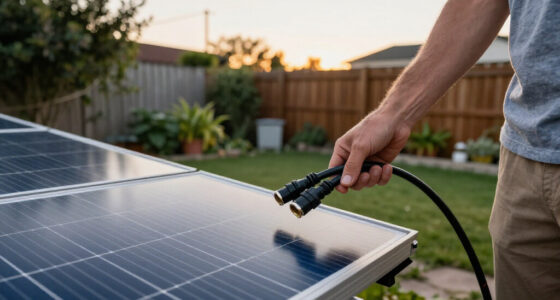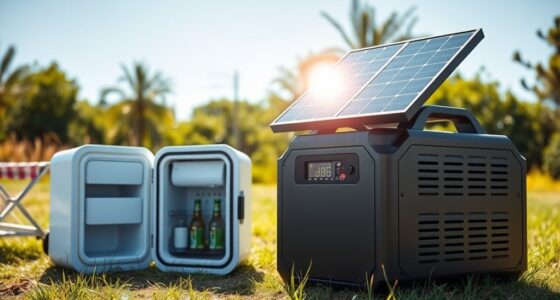

For a battery backup for a storm, my best overall pick is the EF ECOFLOW Delta 3 Classic: its 1,024Wh capacity and 1,800W AC output offer a useful middle ground for household essentials. The Jackery HomePower 3600 Plus is better suited to longer outages and larger loads, while the CyberPower CP1500PFCLCD is a focused choice for keeping a computer or network equipment powered through interruptions. The main tradeoff is between compact units that are easy to store and carry, UPS models that switch over automatically, and larger stations that can run more devices but take more space. Your appliances’ startup demands and the length of an outage matter as much as battery capacity. Read on for the full breakdown and guidance on matching a backup to your storm plan.

Get backup power and energy gear delivered free with Prime
- Fast, free delivery on millions of items
- Prime Video, Amazon Music and more included
- Member-only deals all year
Key Takeaways
- The Delta 3 Classic is the roundup’s balanced pick: its 1,024Wh capacity and 1,800W output suit many essential-device plans without the footprint of the largest stations.
- The Jackery HomePower 3600 Plus is the capacity leader here: its 3,584Wh battery and 3,600W output are aimed at longer outages and higher household loads, with more storage and weight to manage.
- UPS models serve a different job from portable power stations: the CyberPower ST425 and CP1500PFCLCD are designed for automatic backup of connected electronics, not extended whole-home power.
- Small stations trade runtime for portability: the MARBERO 88Wh and 192Wh 300W unit are easier to move, but their limited energy calls for careful device prioritization.
- Capacity alone does not decide whether a device will run: output limits, surge needs, and the type of load separate mid-sized options such as the BLUETTI Elite 100 V2 from larger stations.


| battery backup for storm | Weight | Dimensions |
|---|---|---|
| CyberPower ST425 Standby UPS B | — | — |
| MARBERO Portable Power Station | 1.04 kg | 6.5 x 4.6 x 3.1 inches |
| Anker SOLIX C2000 Gen 2 Portab | 18.9 kg | — |
| BLUETTI Elite 30 V2 Portable P | 9.4 lb | 9.8 x 7 x 6.6 inches |
| EF ECOFLOW Portable Power Stat | — | — |
| Jackery HomePower 3600 Plus Po | 77.2 pounds | 15.2 x 12.2 x 19.3 inches |
| Anker SOLIX C300 DC Portable P | — | — |
| Portable Power Station 300W | 5.5 pounds | 5.1 x 8.66 x 7.2 inches |
| CyberPower CP1500PFCLCD PFC Si | 24.9 pounds | 14 x 3.9 x 11 inches |
| Jackery Explorer 300 Portable | 7.5 pounds | 9.1 x 5.2 x 7.8 inches |
| Anker SOLIX S2000 Portable Pow | 35.7 lb | 8.19 × 11.1 × 12.7 in |
| EnginStar Portable Power Stati | — | 9.1 × 5 × 7 in |
| BLUETTI Elite 100 V2 Portable | 25 lb | 12.6 × 8.5 × 9.8 in |
More Details on Our Top Picks
CyberPower ST425 Standby UPS Battery Backup and Surge Protector
I’d choose the CyberPower ST425 for keeping a modem, router, or small desk setup powered through brief interruptions—not for running household appliances through a long storm outage. Its 425VA/260W output and eight outlets combine battery backup with surge protection in a compact unit, which suits equipment that needs a short bridge through a flicker or time to shut down cleanly. Compared with the portable MARBERO 88Wh, the ST425 is designed as a plug-in UPS rather than a grab-and-go charging station; compared with the BLUETTI Elite 30 V2, it lacks the flexibility of a portable battery and solar charging. The tradeoff is limited runtime: the supplied data lists one minute, so I would not count on it for extended connectivity during a prolonged outage. Its lead-acid battery also needs eventual replacement.
Pros:- Eight outlets accommodate several small devices in one compact unit
- Provides both battery backup and surge protection for connected equipment
- 260W output suits low-power electronics and orderly shutdowns
- Three-year warranty is included in the product description
Cons:- Listed runtime is only one minute, limiting usefulness during longer outages
- Lead-acid battery requires replacement after several years
- Not a portable power source for appliances or use away from an outlet
Best for: Home-office users who want a compact, always-plugged-in backup for a router, modem, or small electronics during short outages
Not ideal for: Households seeking hours of power for appliances, medical equipment, or multiple high-wattage devices during an extended storm
- Maximum output:260W
- Outlets:8
- Input voltage:120V
- Listed runtime:1 minute
- Battery type:Lead acid
- Battery average life:3 years
- Form factor:Compact
Our verdict“Choose the ST425 for brief backup of a router or desk electronics, not for sustained storm power.”
MARBERO Portable Power Station 88Wh, 120W Surge, Solar Generator
The MARBERO 88Wh is the pick I’d keep for phones, small USB devices, and light during a short outage, especially if portability matters more than appliance power. At about 1.04 kg, it is much easier to carry than the Anker SOLIX C2000 Gen 2, but its 88Wh capacity is a small fraction of that larger station’s 2,048Wh reserve. The built-in LED flashlight with SOS mode adds a practical storm-use feature, while AC, USB, and car outlets give it more flexibility than a basic power bank. Its limits are just as clear: 80W output and 120W surge capacity rule out most demanding appliances, and running several devices will draw down the battery quickly. I’d treat the stated up-to-90-hour runtime as device-dependent, not a promise for mixed loads.
Pros:- Lightweight 1.04 kg design is easy to store and carry
- AC, USB, and car outlets cover several small-device charging needs
- Built-in flashlight includes adjustable levels and SOS mode
- Solar-panel compatibility offers a recharge option away from wall power
Cons:- 88Wh capacity is too limited for sustained use of multiple devices
- 80W output cannot support many household appliances
- No app or Wi-Fi control for remote status checks
Best for: People in apartments or cars who want a light, portable reserve for phones, small electronics, and emergency illumination
Not ideal for: Families who need to run a refrigerator, medical device, or several electronics for many hours without recharging
- Capacity:88Wh
- Output wattage:80W
- Surge power:120W
- Output ports:8
- Weight:1.04 kg
- Dimensions:6.5 x 4.6 x 3.1 inches
- Input charging time:2 hours to 80%
- Battery type:Cylindrical batteries
Our verdict“Pick the MARBERO for portable lighting and small-device charging, but choose a larger station for essential appliances.”
Anker SOLIX C2000 Gen 2 Portable Power Station, 2,048Wh, 2,400W, Camping
For a storm plan built around keeping larger essentials running, the Anker SOLIX C2000 Gen 2 brings the most capacity in this batch: 2,048Wh, expandable to 4kWh, with 2,400W continuous output and 4,000W peak power. That puts it in a different class from the BLUETTI Elite 30 V2 and its 288Wh reserve; the BLUETTI is easier to carry, while the Anker is better suited to longer backup windows and higher loads. The stated fridge runtime of up to 32 hours gives buyers a useful reference, though actual time depends on the appliance and conditions. Fast AC or solar recharging can help between outages, but the station still weighs 18.9 kg. The supplied specs list only one outlet, a notable practical drawback for a station intended to serve multiple devices.
Pros:- 2,048Wh capacity can support substantially longer use than the smaller stations in this batch
- Expandable capacity reaches up to 4kWh for greater outage reserve
- 2,400W continuous and 4,000W peak power support higher-demand loads
- Listed 58-minute recharge and five-year warranty
Cons:- At 18.9 kg, it is cumbersome to move during an emergency
- Product data lists only one outlet, limiting connection convenience
- Large capacity may be excessive for buyers who only need phone or router backup
Best for: Households prioritizing refrigerator and other essential-device backup, with space to store and lift a nearly 19 kg power station
Not ideal for: Buyers who need a lightweight grab-and-go unit, many listed outlets, or a small backup just for phones and a router
- Battery capacity:2,048Wh
- Battery chemistry:LiFePO4
- Continuous output:2,400W
- Peak power:4,000W
- Expandable capacity:Up to 4kWh
- Listed recharge time:58 minutes
- Weight:18.9 kg
- Listed outlets:1
- Warranty:5 years
Our verdict“Choose the C2000 Gen 2 when longer appliance backup matters more than low weight and outlet flexibility.”
BLUETTI Elite 30 V2 Portable Power Station 288Wh 600W LFP Solar Generator
I’d favor the BLUETTI Elite 30 V2 when a storm backup needs to be portable but also protect a small setup from a brief interruption. Its ≤10ms UPS backup is a point of difference from the MARBERO 88Wh, which is framed more as a portable charger and light; nine outlets and 600W continuous output also give the BLUETTI broader connection options. At 9.4 pounds, it is far easier to move than the Anker SOLIX C2000 Gen 2, though its 288Wh capacity cannot match the Anker for extended appliance use. The 1,500W surge rating helps with brief startup demands, but it does not turn this compact station into a long-running refrigerator backup. Fast wall charging and LFP battery chemistry make it useful for shorter outages, with frequent recharging likely during a prolonged one.
Pros:- ≤10ms UPS backup supports quick changeover for connected equipment
- Nine outlets offer more connection flexibility than the listed Anker C2000 Gen 2
- 600W continuous output and 1,500W surge cover a range of modest loads
- 9.4-pound weight and fast wall charging suit portable emergency use
Cons:- 288Wh capacity is limited for extended storm outages
- Frequent recharging may be needed when powering multiple devices
- Standby consumption is listed at 4.5W, which draws from stored energy
Best for: People who want a portable, UPS-capable reserve for networking gear, laptops, CPAP use, and other modest loads
Not ideal for: Households expecting to run a refrigerator or several appliances for an extended outage without recharging
- Capacity:288Wh
- Continuous output:600W
- Surge power:1,500W
- Battery technology:LFP
- Weight:9.4 lb
- Dimensions:9.8 x 7 x 6.6 inches
- Number of outlets:9
- Fast wall charge:380W
- UPS backup time:≤10ms
Our verdict“Choose the Elite 30 V2 for portable short-term backup with UPS functionality, not whole-room or long-duration power.”
EF ECOFLOW Portable Power Station Delta 3 Classic, 1024Wh, 1800W AC
The EcoFlow DELTA 3 Classic strikes a practical middle ground for storm outages: its 1,024Wh capacity and 1,800W output offer a much stronger reserve than the BLUETTI Elite 30 V2, without the larger Anker C2000 Gen 2’s 2,048Wh capacity and 18.9 kg carry weight. I’d shortlist it for households that want to power a mix of electronics and selected appliances, then recharge quickly when utility power returns. The listed charge time reaches 80% in 45 minutes, and solar input is specified at 2.5 hours with a 500W panel. Its LiFePO4 battery is rated for 10+ years, while UPS protection and app control add useful monitoring and backup functions. One compatibility limit matters for expansion plans: it does not work with certain Delta 2 or Delta 3 series extra batteries.
Pros:- 1,024Wh capacity and 1,800W output cover more than small-device charging
- Fast charging reaches 80% in 45 minutes according to the supplied data
- Solar recharging is listed at 2.5 hours with a 500W panel
- LiFePO4 battery life is specified as 10+ years, with UPS protection and app control
Cons:- Not compatible with certain Delta 2 or Delta 3 series extra batteries
- Less stored energy than the Anker SOLIX C2000 Gen 2 for prolonged outages
- The supplied data does not specify outlet count or unit weight
Best for: Households seeking a mid-size station for electronics and selected appliances, with fast recharging and app-based monitoring
Not ideal for: Buyers who require compatibility with the excluded Delta 2 or Delta 3 extra batteries, or who need the largest available reserve
- Capacity:1,024Wh
- Output power:1,800W
- Surge power:3,600W
- Battery type:LiFePO4
- Battery life:10+ years
- AC charging time:45 minutes to 80%
- Solar recharging:2.5 hours with a 500W panel
- Additional feature:UPS protection and smart app control
Our verdict“Pick the DELTA 3 Classic for a balanced home backup with fast recharging, unless you need broader expansion compatibility or maximum capacity.”
Jackery HomePower 3600 Plus Power Station, 3584Wh, 3600W AC Output
For storm outages that call for more than keeping phones charged, I rank the Jackery HomePower 3600 Plus first in this group. Its 3,584Wh capacity and 3,600W output give it far more headroom for household devices than the compact Anker SOLIX C300 DC or Jackery Explorer 300, though actual runtime depends on what you connect. It can recharge from AC, solar, or a gas generator, giving buyers more ways to replenish power during an extended outage. The wheeled design and telescopic handle make its 77.2-pound weight easier to manage than a carry-only unit, but it still needs dedicated storage space. Its two listed outlets may also limit how many AC appliances can connect at once without suitable distribution. I’d choose it for capacity and recharge flexibility, not for a lightweight grab-and-go kit.
Pros:- 3,584Wh capacity provides substantially more stored energy than the small portable units in this roundup.
- 3,600W continuous output offers more appliance headroom than the 300W Jackery Explorer 300.
- AC, solar, and gas-generator charging options offer flexibility during prolonged outages.
- LFP battery is specified for 6,000 cycles and 10-year durability.
Cons:- At 77.2 pounds, it is difficult to carry manually despite the wheels and telescopic handle.
- Its size requires more storage space than compact emergency power stations.
- Only two outlets are listed, which can restrict simultaneous AC connections.
Best for: Households seeking a high-capacity backup source for several essential appliances and able to store and move a wheeled, 77.2-pound unit.
Not ideal for: People who need a small, easily carried backup for phones and laptops, or buyers whose main concern is powering many AC devices at once through the listed outlets.
- Capacity:3,584Wh
- Continuous output:3,600W
- Voltage:120V; 240V in parallel
- Battery type:LFP (Lithium Iron Phosphate)
- Weight:77.2 pounds
- Dimensions:15.2 x 12.2 x 19.3 inches
- AC charge time:2.5 hours
- Solar charge time:4 hours
- Number of outlets:2
Our verdict“Choose the HomePower 3600 Plus if you need substantial storm-backup capacity and can accommodate its size, weight, and limited listed outlet count.”
Anker SOLIX C300 DC Portable Power Station, 288Wh, 300W, Outdoor Camping
The Anker SOLIX C300 DC is the most compelling choice here for keeping phones, tablets, and compatible laptops running through a short outage. Its seven ports, including two 140W USB-C ports, make it more suited to direct device charging than the Jackery Explorer 300, whose listed mix also includes AC outlets and a car port. That DC-focused setup can avoid spending limited battery capacity on an AC adapter, but the C300’s 288Wh and 300W output are not a substitute for the HomePower 3600 Plus when an outage calls for appliance power or longer runtimes. The stated 1.5-hour recharge is useful between interruptions, although a wall charger is not included and the product data does not specify weight. I’d pick it for a device-first emergency kit, not for powering household equipment.
Pros:- Seven ports provide several ways to charge devices at once.
- Two 140W USB-C ports support high-power charging for compatible devices.
- LiFePO4 battery chemistry is suited to repeated recharging.
- Stated recharge time of 1.5 hours can help between outages.
Cons:- 288Wh capacity is modest for prolonged storm backup or appliance use.
- 300W output limits the devices it can run.
- A wall charger is not included, and weight is not specified in the provided product data.
Best for: People who want to recharge several USB-C phones, tablets, or compatible laptops during a short storm outage, especially without relying on AC outlets.
Not ideal for: Households looking to run appliances or maintain power for an extended outage; its 288Wh capacity and 300W output are limited compared with larger stations.
- Battery capacity:288Wh
- Power output:300W
- Battery type:LiFePO4
- Number of ports:7
- USB-C ports:2 x 140W, 1 x 100W, 1 x 15W
- USB-A ports:2 x 12W
- Car socket:1
- Stated recharge time:1.5 hours
- Warranty:Limited
Our verdict“Choose the C300 DC for a compact, USB-C-centered device-charging kit, but skip it if your storm plan depends on household appliances.”
Portable Power Station 300W (600W Surge), 192Wh LiFePO4 Battery Solar Generator with Carry Bag & 2 AC Outlets
At 5.5 pounds, this 192Wh station is the easiest option in this group to move quickly from a shelf to a storm-shelter room or car. Its carry handle and included backpack give it a portability advantage over the heavier Jackery Explorer 300, though the Jackery stores more energy at 292Wh. Two AC outlets offer a route to power small compatible devices, while the 300W rating and 600W starting figure should not be read as a promise to run larger appliances; the listed runtime is about four hours, with actual results depending on load. Wall, car, and solar charging add flexibility, but the solar panel is not included. I’d treat this as a light-duty backup for short outages and device essentials rather than a source for sustained household power.
Pros:- 5.5-pound weight and included carry bag make it easy to transport.
- LiFePO4 battery includes battery-management protection according to the product description.
- Supports wall, car, and solar charging.
- Two AC outlets complement its DC and USB charging options.
Cons:- 192Wh capacity and approximately four-hour stated runtime limit sustained use.
- 300W output is insufficient for many high-wattage household appliances.
- Solar panel is required for solar charging but is not included.
Best for: People who want a light, bag-ready station for charging small devices or running low-wattage equipment during brief outages.
Not ideal for: Families seeking extended backup or power for high-wattage appliances; its 192Wh capacity and 300W output are restrictive.
- Battery capacity:192Wh
- Output wattage:300W
- Starting wattage:600W
- Battery type:LiFePO4
- Weight:5.5 pounds
- Dimensions:5.1 x 8.66 x 7.2 inches
- AC outlets:2
- Stated runtime:Approximately 4 hours
- Voltage:110V
Our verdict“Choose this station for portable, short-duration backup of small devices, not for keeping major household equipment running.”
CyberPower CP1500PFCLCD PFC Sinewave UPS Battery Backup and Surge Protector
The CyberPower CP1500PFCLCD serves a different storm-backup job from the portable stations: it keeps a desktop computer, router, or entertainment setup protected through brief interruptions and voltage changes. Its sine-wave output and automatic voltage regulation are a strong fit for sensitive electronics, while the LCD shows operating status. Compared with the Jackery Explorer 300, this UPS is designed to stay connected to equipment rather than travel or recharge devices around the home. The distinction matters: its 1,000W capacity is not paired with a stated watt-hour figure or runtime here, so I wouldn’t choose it for extended outages or appliances. Six outlets have battery backup, while six more provide surge protection only. At 24.9 pounds, it is also a stationary desktop unit, and its batteries may need replacement after the warranty period.
Pros:- Sine-wave output suits equipment with active PFC power supplies.
- Automatic voltage regulation helps handle voltage fluctuations without relying only on battery power.
- Six battery-backed outlets plus six surge-only outlets provide multiple connection points.
- Color LCD displays UPS status and alerts.
Cons:- No watt-hour capacity or runtime is provided in the supplied product data, making outage duration hard to plan.
- Only six of the twelve outlets provide battery backup.
- At 24.9 pounds, it is less convenient to relocate than compact portable power stations, and its batteries may need replacement.
Best for: Desktop-computer owners and home-network users who need short-term backup and voltage regulation for sensitive electronics during storm interruptions.
Not ideal for: People who need portable power, long runtimes, or backup for household appliances; this UPS is intended for connected electronics, not extended off-grid use.
- Capacity:1500VA / 1000W
- Outlets:12 NEMA 5-15R: 6 battery backup and surge protected, 6 surge protected
- Batteries:2 x 12V
- Input plug and cord:NEMA 5-15P right-angle plug; 5-foot cord
- Dimensions:14 x 3.9 x 11 inches
- Weight:24.9 pounds
- Display:Color LCD, tilts up to 22 degrees
- USB ports:1 Type-A, 1 Type-C
- Warranty:3 years, including batteries
Our verdict“Choose the CyberPower UPS to bridge brief outages and protect a computer or network setup, not to supply portable or long-duration storm power.”
Jackery Explorer 300 Portable Power Station, 292Wh
The Jackery Explorer 300 is a balanced small station for buyers who want a little more flexibility than a USB-focused backup bank. At 7.5 pounds and 292Wh, it remains easy to move while offering two AC outlets, USB ports, and a car port; that makes it more versatile for mixed devices than the DC-only Anker SOLIX C300 DC. The tradeoff is that its 300W continuous output still limits it to small loads, and 292Wh won’t carry a household through a long outage. Compared with the lighter 192Wh station in this group, the Explorer 300 stores more energy but weighs more and does not include a solar panel. Its listed LiFePO4 chemistry and over 4,000 charge cycles support repeated use, while the stated solar recharge time assumes a 100W panel. I’d pick it for portability and varied connections, not appliance backup.
Pros:- 7.5-pound weight and compact dimensions make it easy to store and carry.
- Two AC outlets, USB-C, USB-A, and a car port support a varied mix of devices.
- LiFePO4 battery is specified for over 4,000 charge cycles.
- Supports solar charging, with a stated charge time using a 100W panel.
Cons:- 300W continuous output rules out many high-wattage appliances.
- 292Wh capacity is suited to small devices and short outages, not extended home backup.
- Solar panel is not included.
Best for: Campers and households wanting a portable emergency station for phones, laptops, and other small devices with both AC and USB connections.
Not ideal for: Buyers who need to run high-wattage appliances or maintain power for a long outage; 300W continuous output and 292Wh capacity are limited.
- Capacity:292Wh
- Output power:300W continuous; 600W peak
- Weight:7.5 pounds
- Dimensions:9.1 x 5.2 x 7.8 inches
- Battery chemistry:LiFePO4
- Outlets:2 AC, 1 USB-C PD, 2 USB-A, 1 car port
- Charge cycles:Over 4,000
- Solar charging time:Approximately 2.8 hours with a 100W solar panel
Our verdict“Choose the Explorer 300 for a portable, mixed-port backup kit, but look to a larger station if you need appliance power or longer runtimes.”
Anker SOLIX S2000 Portable Power Station, 2,010Wh, 1,500W
For a storm outage where keeping a refrigerator cold is the main goal, the Anker SOLIX S2000 stands out for its 2,010Wh capacity and claimed fridge runtime of up to 35 hours. That gives it a much longer reserve than the BLUETTI Elite 100 V2, whose 1,024Wh battery is easier to carry but holds roughly half the energy. The S2000 also has 1,500W continuous output and a 3,000W peak rating, giving it room for several household essentials, subject to each appliance’s startup and running demands. Its 35.7-pound weight is comparatively manageable for a unit of this capacity, and six charging methods offer flexibility if grid power is unavailable. The tradeoff is its lack of a 12V DC port and a 400W maximum solar input, which can limit direct DC use and solar replenishment speed. Actual fridge runtime varies by appliance and conditions.
Pros:- 2,010Wh capacity and claimed fridge runtime of up to 35 hours provide a substantial outage reserve.
- 1,500W continuous output and 3,000W peak output support a broad range of household essentials.
- Six charging methods include AC, solar, generator, alternator charger, and car outlet options.
- 35.7-pound weight is relatively portable for a station with this capacity.
Cons:- No 12V DC port for appliances or accessories that require direct DC power.
- Maximum 400W solar input can constrain recharging from panels during a prolonged outage.
- At 35.7 pounds, it is less convenient to move frequently than the 25-pound BLUETTI Elite 100 V2.
Best for: Households prioritizing refrigerator backup and a larger reserve for several essential devices during an overnight or day-long outage.
Not ideal for: Buyers who need a 12V DC output, want faster solar replenishment than 400W allows, or need a lightweight station for frequent carrying.
- Battery capacity:2,010Wh
- Battery chemistry:LiFePO4
- Continuous output:1,500W
- Peak output:3,000W
- Maximum solar input:400W
- Weight:35.7 lb
- Dimensions:8.19 × 11.1 × 12.7 in
- Outlets:8
- UPS switchover:Less than 10 ms
Our verdict“Choose the S2000 if refrigerator runtime and a large household backup reserve matter more than a 12V port or lighter carry weight.”
EnginStar Portable Power Station 300W 296Wh Solar Generator
The EnginStar 296Wh is best treated as a compact reserve for phones, laptops, lights, and other modest loads—not as a way to run a refrigerator through a storm. Its 300W AC output rules out many high-wattage appliances, and the small capacity means runtimes shrink quickly when several devices are connected. Compared with the BLUETTI Elite 100 V2, it stores far less energy and has much lower output, but its portable format suits someone who wants a limited backup source that is easier to move or pack. Pure sine wave AC output is a useful fit for compatible sensitive electronics, while wall, car, and solar charging give it more than one recharge path. The solar panel is not included, and the supplied details do not state weight or charging time, so buyers should not assume it can be replenished quickly during a prolonged outage.
Pros:- 296Wh capacity offers a portable reserve for small electronics and lighting.
- Pure sine wave inverter is suited to compatible sensitive electronic devices.
- Can recharge from a wall outlet, car socket, or solar source.
- Digital display, flashlight, and overload protection add useful emergency features.
Cons:- 300W output cannot support many high-wattage household appliances.
- 296Wh capacity is a limited reserve for a long storm outage or multiple devices.
- Solar panel is not included, and the provided product data does not specify recharge time or weight.
Best for: Apartment residents or campers seeking backup for phones, a laptop, LED lights, and other low-draw essentials.
Not ideal for: Households expecting to power a refrigerator, space heater, kettle, or several devices for an extended outage; its 300W output and 296Wh capacity are limiting.
- Battery capacity:296Wh
- AC output:300W
- Starting wattage:300W
- Voltage:110V
- Frequency:60Hz
- Dimensions:9.1 × 5 × 7 in
- Battery material:Lithium-ion
- Charging options:Wall outlet, car socket, or solar
Our verdict“Pick the EnginStar for a compact electronics-and-lighting reserve, not for refrigerator backup or high-draw appliances.”
BLUETTI Elite 100 V2 Portable Power Station for Camping 1024Wh 1800W
The BLUETTI Elite 100 V2 sits between small electronics-focused stations and the larger Anker SOLIX S2000: its 1,024Wh battery offers a useful reserve without the S2000’s 35.7-pound carry weight. At 25 pounds, it is easier to relocate around the home, while 1,800W continuous output and 3,600W surge power give it higher stated output than the S2000, though its battery holds about half as much energy. That distinction matters in a storm: it may handle more demanding connected loads, but it cannot sustain them as long. A claimed 45-minute recharge to 80% can help when power returns briefly, and 30dB operation is suited to indoor use. Its listed four outlets and 1,024Wh capacity still call for careful load planning, and full remote control depends on the app.
Pros:- 1,024Wh capacity balances useful backup energy with a manageable 25-pound weight.
- 1,800W AC output and 3,600W surge rating accommodate a range of household loads.
- Listed recharge time reaches 80% in 45 minutes.
- LiFePO4 battery and quiet 30dB operation suit indoor emergency use.
Cons:- Its 1,024Wh capacity is about half the S2000’s, limiting runtime for appliances such as refrigerators.
- Four outlets restrict how many AC devices can be connected at once.
- Full remote-control functionality requires the app.
Best for: People who want a carryable, mid-capacity station for lights, communications, electronics, and selected household loads, with relatively quick grid recharging.
Not ideal for: Buyers seeking multi-day refrigerator backup or extensive appliance coverage; the S2000 offers a larger energy reserve, and the Elite’s four outlets limit simultaneous connections.
- Battery capacity:1,024Wh
- Battery chemistry:LiFePO4
- Surge power:3,600W
- Weight:25 lb
- Dimensions:12.6 × 8.5 × 9.8 in
- AC outlets:4
- Recharge time:45 minutes to 80%
- Operating noise:30dB
Our verdict“Choose the Elite 100 V2 when portability and fast recharging outweigh the longer appliance runtime available from the larger S2000.”

How We Picked
I compared these 13 products as storm backup tools, not as interchangeable power banks. The main criteria were battery capacity for outage runtime, continuous and surge output for device compatibility, and whether a model’s format fits short interruptions or longer periods without grid power. I also weighed portability, charging flexibility, and the practical difference between a UPS that switches connected electronics over automatically and a power station that must be managed as a separate source.
The ranking favors products that cover a useful range of storm needs without asking buyers to accept an extreme compromise in capacity, output, or usability. That puts the 1,024Wh EF ECOFLOW Delta 3 Classic near the top as a balanced household option, while the Jackery HomePower 3600 Plus earns its place for buyers who prioritize more stored energy. Smaller units rank as targeted picks for light loads, and the CyberPower UPS models are judged by their specific role protecting electronics during outages rather than by power-station capacity.
Factors to Consider When Choosing Battery Backup For Storm
I recommend planning around the loads you actually need to keep running, then choosing a battery format that suits the outage. These broader checks can prevent common mismatches, such as buying a large station that cannot start a motor or expecting a small power bank to cover overnight household use.
Start With Essential Loads and Runtime
List the devices you would keep powered during a storm, separating must-haves from conveniences. A modem, phone, and LED lamp require a different plan from a refrigerator, medical device, or several appliances at once. Estimate each device’s watts and the number of hours you want it to run, then add the energy needs together as a rough planning figure. Real runtime can be lower than the battery’s stated capacity because conversion and operating losses use some stored energy. A common mistake is buying by capacity alone without deciding what gets priority when the battery runs down. If your needs vary, plan a short essential-load list and a second list for optional devices.
Check Continuous Output and Startup Surge
Battery capacity tells you how much energy is stored; output ratings tell you what the station can power at one time. Compare the continuous wattage with the combined draw of devices you expect to use simultaneously. Motors and compressors can briefly demand more power when starting than they use while running, so check startup requirements rather than relying only on normal operating watts. This matters for refrigerators, pumps, and some tools, even when their average consumption seems modest. A larger battery will not fix an output limit that prevents an appliance from starting. When a device’s surge demand is unclear, consult its manual or manufacturer before relying on a backup.
Choose Between a UPS and a Portable Power Station
A UPS is designed to keep connected electronics running through a brief interruption and usually switches over without requiring someone to plug equipment in after the power fails. That makes it a natural fit for a computer, router, or other sensitive setup that should stay on during a momentary outage. Portable power stations are better suited to carrying power to different devices and extending backup beyond a short handoff, but they may require manual setup. These categories should not be compared only by battery size: their response and intended use differ. A UPS can complement a power station if uninterrupted electronics and longer emergency power are both priorities. Before buying, confirm the UPS model’s capacity and intended connected load fit your equipment.
Decide How Much Portability You Need
Small stations are easier to store, carry upstairs, or move between rooms, but lower capacity can restrict how many devices you can support and for how long. High-capacity models provide more energy for an extended outage, yet take more room and may be less convenient to reposition. Think about where the unit will live, who may need to move it, and whether it has to travel with you during an evacuation. A battery that stays accessible is more useful than a larger one that is difficult to deploy. Do not assume that a portable form means effortless handling; check the product’s dimensions and weight before choosing a storage location. Match portability to your household’s real use rather than treating it as a bonus feature.
Plan for Recharging During a Long Outage
A battery’s stored energy only covers the first part of a prolonged outage unless you have a way to recharge it. Check the charging methods supported by the exact model and how they fit your situation, such as access to a vehicle, safe generator use, or compatible solar panels. Solar charging can help extend an outage plan, but available sunlight, panel compatibility, and charging speed affect how useful it is. Do not assume that a station includes panels just because it is described as solar-compatible. Recharging also competes with power use: a station may be gaining energy while your devices draw it down. If storms in your area can last several days, plan both your consumption and your recharge routine before the grid fails.
Compare Total System Fit, Not Just Battery Size
Ports, charging speed, device compatibility, and the ability to monitor remaining charge all affect how practical a backup is during a stressful outage. Count the devices you may need to connect at once and check that the available port types match their cables or adapters. Consider whether equipment needs a stable power source or a particular waveform, especially for sensitive electronics or appliances with motors. A larger station can be a poor fit if its outlets or output do not match your loads. On the other hand, extra features have little value if your plan only covers a router and phone. Buy for the complete backup system you will actually use, including cables and any separate charging equipment.
Frequently Asked Questions
Should I buy a UPS or a portable power station for storm outages?
Choose a UPS when your priority is keeping connected electronics on through a brief power interruption without having to reconnect them manually. It is a practical fit for a computer, modem, or router, but it is not a substitute for a large energy reserve during a long outage. A portable power station offers a broader way to power devices around the home, though you may need to set it up after the outage begins. Some households may benefit from both: a UPS for uninterrupted handoff and a station for longer-term power. Base the choice on which devices must remain on instantly and which can be connected later.
Can a 1,000Wh power station keep a refrigerator running overnight?
It may, but the battery capacity alone cannot give a reliable yes-or-no answer. Refrigerator energy use varies with the model, age, room temperature, door openings, and how often the compressor cycles. The compressor can also require a surge at startup, so compare its startup demand with the station’s output rating. Check the refrigerator’s energy label or measure its use if you can, then allow for power-conversion losses and other devices sharing the battery. For a storm plan, test the specific pairing before an emergency rather than counting on a general capacity estimate.
Is a higher-wattage station always the better storm backup?
No: output determines which devices can run at once, while capacity affects how long the stored energy lasts. A powerful station with limited capacity can run demanding equipment but may empty sooner than expected. A smaller-output station with more energy may last longer for modest loads yet fail to start an appliance with a high surge demand. Compare both ratings against your priority devices, and account for simultaneous use. Paying for output you will never use may make less sense than adding capacity or a suitable recharge plan.
Do I need solar panels with a battery backup?
Solar panels are most useful when you need a way to replenish a station during an outage that may last beyond its initial charge. They are not required for every storm plan, especially if your goal is brief backup for a router, computer, or phone. Check whether the station accepts solar input, which panels are compatible, and the supported charging limits before buying panels separately. Cloud cover, daylight hours, and panel placement can slow charging, so solar should not be treated as a guaranteed replacement for grid power. Decide based on how long outages tend to last where you live and what other safe charging options you have.
How should I choose between a compact station and a large one for a household emergency?
Choose a compact station if your plan centers on phones, lights, and a few low-draw devices, or if you need a unit that is easy to move and store. A larger station makes more sense when you need longer runtime or have higher-demand essentials, provided its output can handle those devices. Think through where the battery will sit, how you will transport it, and which household member may need to operate it. Also check whether the larger unit can be recharged in the conditions you expect during an outage. The right size is the smallest system that can reliably cover your essential loads for the duration you are planning for.
Conclusion
For most households seeking one versatile option, I recommend the EF ECOFLOW Delta 3 Classic as best overall because its 1,024Wh capacity and 1,800W output strike a practical balance. For a lower-capacity entry point, the EnginStar 300W 296Wh is my best value-style pick for lighter loads, while the Jackery HomePower 3600 Plus is the best premium choice for buyers who need much more stored energy and output. Beginners focused on a computer or home network may find the CyberPower CP1500PFCLCD easier to match to a defined electronics setup, while the compact MARBERO 88Wh suits simple phone and light charging needs. For specific needs, choose the CyberPower ST425 for basic UPS backup, the BLUETTI Elite 100 V2 for a mid-sized station, or a small portable model when carrying convenience matters most. My final recommendation is to match your essential devices’ runtime and surge needs first, then select the model whose capacity and format fit that plan.