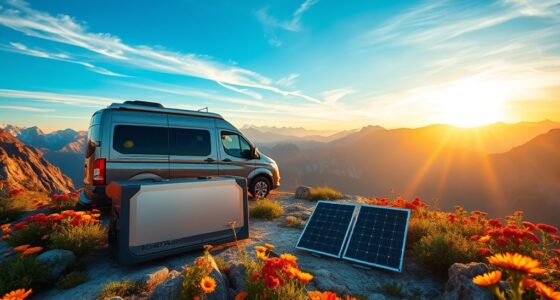
The best battery backup for camping depends on whether you need to keep a phone and headlamp charged or run power-hungry gear away from an outlet. I’d start with the BLUETTI AC180 as the best overall pick for campers who want substantial capacity and strong AC output; the Anker SOLIX C300 is a more portable choice for lighter loads, while the Jackery Explorer 1000 v2 suits longer trips with greater energy needs. The main tradeoff is between capacity and portability: more watt-hours support more devices for longer, but usually mean a larger, heavier unit. Output limits and charging options matter too, especially if you plan to power appliances or recharge from solar. Read on for how all 15 options compare and which one fits your kind of camping.

Get backup power and energy gear delivered free with Prime
- Fast, free delivery on millions of items
- Prime Video, Amazon Music and more included
- Member-only deals all year
Complete the kit


Key Takeaways
- The AC180 stands apart for high-demand camping: its 1,152Wh capacity and 1,800W AC output offer more room for larger loads than the compact stations in this lineup.
- The 288Wh class is the clearest portability-versus-capability middle ground: options such as the Anker SOLIX C300, BLUETTI Elite 30 V2, and Jackery Explorer 300 serve lighter trips without moving up to a large station.
- Capacity and output solve different problems: watt-hours indicate how long a battery may run a load, while wattage limits which devices it can power.
- Smallest does not mean suitable for every camping plan: the 88Wh MARBERO and 120W HOWEASY are better matched to basic electronics than sustained appliance use.
- The lineup spans very different trip lengths: stations from 192Wh to 2,010Wh can’t be compared by capacity alone; weight, recharge access, and the devices you plan to run should guide the choice.


| battery backup for camping | Weight | Battery type | Dimensions | Capacity |
|---|---|---|---|---|
| Anker SOLIX C300 Portable Powe | 4.13 kg | LiFePO4 | — | 288Wh |
| DaranEner Portable Power Stati | 5.73 lb | LiFePO4 | — | 192Wh |
| Anker 521 Portable Power Stati | — | LiFePO4 | — | — |
| BLUETTI Portable Power Station | 37.4 lb | LiFePO4 | — | — |
| EnginStar Portable Power Stati | — | — | 9.1 × 5 × 7 in | 296Wh |
| Anker SOLIX C300 DC Portable P | — | LiFePO4 | — | — |
| HOWEASY Portable Power Station | 2.3 pounds | — | 6.6 x 3 x 4 inches | — |
| Anker SOLIX S2000 Portable Pow | 35.7 pounds | LiFePO4 | 8.2 x 11.1 x 12.7 inches | — |
| Jackery Explorer 300 Portable | 7.5 pounds | — | 9.1 x 5.2 x 7.8 inches | — |
| BLUETTI Elite 30 V2 Portable P | 9.4 pounds | — | 9.8 x 7 x 6.6 inches | — |
| MARBERO Portable Power Station | 1.04 kg | — | 6.5 x 4.6 x 3.1 inches | 88Wh |
| Jackery Explorer 500 v2 Portab | 13.3 pounds | LiFePO₄ | 11.8 x 7.6 x 9.5 inches | 512Wh |
| ALLWEI Portable Power Station | 6.4 pounds | LiFePO₄ | 9.25 x 5 x 6.81 inches | 256Wh |
| BLUETTI Elite 100 V2 Portable | 25 pounds | LiFePO₄ | 12.6 x 8.5 x 9.8 inches | 1,024Wh |
| Jackery Explorer 1000 v2 Porta | 23.8 pounds | LFP | 12.87 x 8.82 x 9.72 inches | 1,070Wh |
More Details on Our Top Picks
Anker SOLIX C300 Portable Power Station, 288Wh Solar Generator for Camping
The Anker SOLIX C300 is my strongest all-around pick for campers who want a useful mix of capacity, portability, and charging flexibility. Its 288Wh battery is larger than the DaranEner’s 192Wh, giving you more reserve for phones, lights, and other modest loads, while its 4.13 kg weight keeps it easier to carry than the much larger BLUETTI AC180. Three AC outlets and USB-C ports also make it practical for a small group with several devices. The tradeoff is its 300W output and limited capacity: it is not the choice for high-draw appliances or several days away from charging. Solar compatibility also needs checking, since the listed Anker SOLIX PS30 panel is not compatible. I’d choose it for car camping, not ultralight trips where every kilogram counts.
Pros:- 288Wh capacity offers more reserve than the DaranEner’s 192Wh battery.
- At 4.13 kg, it is far easier to carry than the 37.4-pound BLUETTI AC180.
- AC, USB-C, USB-A, and car-socket outputs cover a range of camping devices.
- LiFePO4 battery is rated for 3,000 cycles, and AC recharging reaches 80% in 50 minutes.
Cons:- 300W continuous output rules out many high-draw appliances.
- Capacity is limited for extended trips or powering multiple devices over several days.
- Some solar panels, including the listed Anker SOLIX PS30, are incompatible; shoulder strap is sold separately.
Best for: Car campers who want a portable station for phones, lights, cameras, and other modest-power gear, with the option to recharge from a wall, car, or compatible solar source.
Not ideal for: Campers planning to run high-wattage appliances or power a group for several days without recharging; its 288Wh capacity and 300W output set clear limits.
- Capacity:288Wh
- Continuous output:300W
- Surge output:600W
- Battery type:LiFePO4
- Weight:4.13 kg
- Charging ports:3 AC outlets, 2 USB-C, 1 USB-A, 1 car socket
- Charging options:Wall, car, or 100W solar input
- AC recharging:80% in 50 minutes
Our verdict“Choose the C300 for a portable, versatile camp power source for everyday electronics, but skip it if your setup needs appliance-level output or a large energy reserve.”
DaranEner Portable Power Station, 192Wh LiFePO4 Battery Backup Solar Generator with 2 300W AC Outlets, USB-C PD 60W Fast Charge, for Camping, Outdoor, Home, Emergency
The DaranEner 192Wh suits campers who want backup for essential electronics without carrying a larger station. It provides two AC outlets and a 60W USB-C port, so you can charge a laptop or several smaller devices without relying only on USB-A. Compared with the Anker SOLIX C300, it gives up 96Wh of capacity, but retains a 300W AC rating and adds a built-in LED flashlight—useful when a separate light is easy to forget. Its LiFePO4 battery is rated for more than 3,500 cycles, a strong fit for regular outings. The main compromise is endurance: 192Wh leaves less room for repeated charging or several users. Solar and car charging are supported, but the relevant cables and panel are not included, so this is best for campers who already have compatible gear.
Pros:- LiFePO4 battery is rated for more than 3,500 charge cycles.
- 60W USB-C PD output can serve compatible laptops and other higher-demand USB-C devices.
- Two AC outlets and two USB-A ports allow several devices to connect at once.
- Built-in LED flashlight adds a practical camp utility without another item to pack.
Cons:- 192Wh capacity provides less energy reserve than the Anker SOLIX C300 or Anker 521.
- 300W output is not suitable for high-power appliances.
- Solar panel and car charging cables are not included.
Best for: Solo campers or couples who mainly need to top up phones, a laptop, and small electronics, and who value a built-in flashlight and a compact power source.
Not ideal for: Groups or campers who need repeated charging across a multi-day trip; its 192Wh capacity is smaller than the Anker SOLIX C300 and Anker 521.
- Capacity:192Wh
- AC output:300W, 600W peak
- AC outlets:2
- USB-C output:60W PD
- USB-A outputs:2 × 18W QC3.0
- Battery type:LiFePO4
- Weight:5.73 lb
Our verdict“Pick the DaranEner for a compact essentials kit with useful ports and a built-in light, but choose a higher-capacity model for longer trips or more users.”
Anker 521 Portable Power Station with LiFePO4 Battery, 256Wh, 6 Ports, 300W (Peak 600W), Solar Generator (Optional)
The Anker 521 is a sensible pick for campers who want a familiar, mid-capacity station backed by a stated five-year warranty. At 256Wh, it holds more energy than the DaranEner but less than the Anker SOLIX C300, making it a middle-ground choice for charging electronics without stepping up to the bulky BLUETTI AC180. Its 60W USB-C output is useful for compatible laptops, while two AC outlets provide flexibility for small plug-in devices. The listed eight-port count also suits a camp setup with several electronics, though the supplied data does not detail every port type. The main uncertainty is practical portability: weight and dimensions are not provided, so I can’t rank it as confidently as the C300 for carrying. Solar compatibility details are also limited, and its 300W continuous output remains unsuitable for larger appliances.
Pros:- 256Wh capacity is a step up from the DaranEner’s 192Wh.
- 60W USB-C output supports compatible fast-charging devices, including some laptops.
- Two AC outlets and eight listed ports offer connection flexibility.
- Five-year warranty is specified in the product data.
Cons:- Weight and dimensions are not provided, making carry suitability harder to judge.
- Solar panel compatibility details are limited.
- 300W continuous output and 256Wh capacity restrict use with demanding appliances and long off-grid stays.
Best for: Campers who prioritize a 256Wh LiFePO4 battery, multiple connection points, and a five-year warranty for recurring trips with electronics and small devices.
Not ideal for: Buyers who need verified weight and dimensions before choosing a packable station, or campers seeking clear solar compatibility and enough output for high-power equipment.
- Battery capacity:256Wh
- Battery type:LiFePO4
- Number of ports:8
- AC outlets:2
- Continuous power:300W
- Peak power:600W
- USB-C output:60W
- Warranty:5 years
Our verdict“Choose the Anker 521 if its stated warranty and mid-range capacity fit your camp setup, but favor the C300 for better-documented portability or the AC180 for appliance-level power.”
BLUETTI Portable Power Station AC180, 1152Wh LiFePO4 Battery Backup with 2 1800W (2700W peak) AC Outlets, Fast Charging, Solar Generator for Camping and Emergency
For a fixed campsite where capacity matters more than easy carrying, the BLUETTI AC180 is in a different class from the compact Anker SOLIX C300 and Anker 521. Its 1,152Wh battery and 1,800W continuous output can support a broader range of equipment and provide a much larger reserve for a group’s electronics. AC charging is listed at one hour, while solar input supports off-grid replenishment when compatible panels and conditions are available. That capability comes with a substantial portability penalty: at 37.4 pounds, it is better suited to a vehicle-based base camp than a long walk from the parking area. It also has only two AC outlets, which may require a careful connection plan for several plug-in devices. I’d pick it when smaller stations’ capacity and output limits are the problem—not for minimalist camping.
Pros:- 1,152Wh capacity greatly exceeds the Anker SOLIX C300 and Anker 521.
- 1,800W continuous and 2,700W peak output support a wider range of equipment than 300W-class options.
- AC charging is listed at one hour, with solar charging also supported.
- Five-year warranty is specified.
Cons:- At 37.4 pounds, it is cumbersome for walk-in campsites and frequent carrying.
- Only two AC outlets may constrain setups with several plug-in devices.
- Its high capacity and output are unnecessary bulk for campers powering only phones and lights.
Best for: Car campers, RV users, and base-camp groups who need substantial stored energy and enough AC output for more demanding equipment.
Not ideal for: Backpackers, walk-in campers, and anyone prioritizing a light, compact station; the 37.4-pound unit is far heavier than the Anker SOLIX C300 or Anker 521.
- Battery capacity:1,152Wh
- Battery type:LiFePO4
- AC outlets:2
- Continuous output:1,800W
- Peak output:2,700W
- Weight:37.4 lb
- AC charging time:1 hour
- Solar charging time:2.8–3.3 hours
- Warranty:5 years
Our verdict“Choose the AC180 for a vehicle-accessible camp that needs substantial capacity and high AC output, and skip it if portability is a priority.”
EnginStar Portable Power Station 300W 296Wh Solar Generator
The EnginStar 296Wh is a straightforward choice for campers who want a near-300Wh reserve and the flexibility to recharge from a wall outlet, car socket, or solar source. Its 300W pure sine wave inverter is suited to modest AC loads and sensitive electronics, while the digital display and built-in flashlight give useful information and light at camp. Compared with the Anker SOLIX C300, it lists slightly more capacity, but the supplied data does not give a weight or battery chemistry, so its portability and long-term cycle life are harder to compare. It also falls well short of the BLUETTI AC180 for power-hungry equipment and extended group use. The solar panel is not included, and a 300W ceiling makes this a device-charging backup rather than an appliance station. I’d keep it on the shortlist when simple charging flexibility matters most.
Pros:- 296Wh capacity is slightly higher than the Anker SOLIX C300’s 288Wh.
- Supports charging from solar, a wall outlet, or a car socket.
- Pure sine wave inverter is suited to compatible sensitive electronics.
- Digital display, flashlight, and overload protection add practical camp features.
Cons:- 300W output limits use with high-demand appliances.
- Solar panel is not included.
- Weight and battery chemistry are not specified in the supplied data.
Best for: Car campers and travelers who need roughly 300Wh for small electronics and value multiple charging methods, a display, and a built-in flashlight.
Not ideal for: Campers who need appliance-level output, a verified lightweight design, or a specified LiFePO4 battery and cycle rating.
- Capacity:296Wh
- Output wattage:300W
- Voltage:110V
- Frequency:60Hz
- Charging options:Solar, wall outlet, or car socket
- Inverter:Pure sine wave
- Dimensions:9.1 × 5 × 7 in
- Additional features:Digital display, flashlight, LED indicators, overload protection
Our verdict“Choose the EnginStar for flexible recharging and basic camp electronics, but opt for the AC180 for demanding gear or the C300 when clearly documented portability matters more.”
Anker SOLIX C300 DC Portable Power Station, 288Wh, 300W for Outdoor Camping
The Anker SOLIX C300 DC pairs 288Wh of capacity with a 300W output in a compact format, making it a practical middle ground for campers who need more than a phone-sized power bank but do not want a large station. Its seven ports give a small group room to charge several personal devices, while the LiFePO4 battery is suited to repeated trips. Compared with the Jackery Explorer 300, it offers similar capacity and output, with a stated faster recharge time; however, this model’s package does not include a wall charger, and its strap is sold separately. The 300W ceiling also rules out many high-draw appliances. I’d choose it for phones, lights, and other modest loads, not as a cabin-style power source.
Pros:- 288Wh capacity supports more than brief phone top-ups.
- Seven ports accommodate multiple device types and users.
- LiFePO4 battery chemistry suits repeated charging cycles.
- Stated recharge time is 1.5 hours.
Cons:- Wall charger is not included.
- Portability strap is sold separately.
- 300W output limits the appliances it can run.
Best for: Campers packing several phones, lights, and small electronics who want a compact station with more ports than a basic charger.
Not ideal for: Campers who need to run high-wattage appliances or want a ready-to-charge kit with a wall charger and carrying strap included.
- Battery capacity:288Wh
- Power output:300W
- Battery type:LiFePO4
- Number of ports:7
- Recharging time:1.5 hours
- Voltage:120V
- Design:Compact; described as 30% smaller than similar models
Our verdict“Choose the C300 DC for compact, multi-device camping power, but skip it if you need appliance-level output or an all-in-one charging package.”
HOWEASY Portable Power Station, 120W (240W Peak) Solar Generator
At 2.3 pounds, the HOWEASY is the easy choice here for campers who count every ounce and mainly need to keep personal electronics charged. Its 88Wh capacity is far below the Anker SOLIX C300 DC’s 288Wh, so the difference is not just size: this station is better for short outings or light loads than for powering a group across a long weekend. Eight output ports, including two AC sockets, offer useful flexibility, but the continuous output is only 120W, and the listed four-hour runtime is at full load. Solar, car, and AC recharging options give it more ways to refill than a simple power bank, though the solar panel is not included. I’d leave it behind if your camping kit includes anything with a substantial power draw.
Pros:- Light 2.3-pound design is easy to carry.
- Eight output ports provide several connection options.
- Can recharge from solar, AC, or a car.
- Built-in LED light offers a useful campsite feature.
Cons:- 88Wh capacity is much smaller than the Anker SOLIX C300 DC’s 288Wh.
- 120W continuous output excludes many higher-draw devices.
- Solar panel is not included.
Best for: Solo backpackers and minimalist campers who want a very light backup for phones, headlamps, and other low-draw electronics.
Not ideal for: Families, multi-night campers, or anyone planning to run appliances, since its 88Wh capacity and 120W continuous output are limited.
- Battery capacity:88Wh
- Continuous output:120W
- Peak output:240W
- Output ports:8
- Weight:2.3 pounds
- Dimensions:6.6 x 3 x 4 inches
- Recharging options:Solar, AC, and car power
- Cycle life:1500+ cycles
Our verdict“Pick the HOWEASY for low-load camping where minimal weight matters more than long runtime or appliance support.”
Anker SOLIX S2000 Portable Power Station, 2010Wh, 1500W
The Anker SOLIX S2000 is the capacity-first choice in this group: its 2010Wh battery and 1500W continuous output can support a much broader camp setup than the 288Wh Anker SOLIX C300 DC. That extra reserve makes sense for longer stays, shared camps, and compatible higher-draw equipment, while up to 400W solar input can help replenish the battery when grid power is unavailable. The tradeoff is a 35.7-pound carry weight, which makes it a poor match for walking campsites or tight packing. It also has no listed 12V DC port, a meaningful limitation for campers with 12V gear, and the provided data does not specify the outlet types. I’d favor it when capacity matters more than easy transport, rather than for a simple overnight electronics backup.
Pros:- 2010Wh capacity offers far more reserve than the smaller stations in this group.
- 1500W continuous and 3000W peak output support a wider range of loads.
- Solar input supports up to 400W.
- LiFePO4 battery and stated 10,000 charge cycles are suited to extended use.
Cons:- At 35.7 pounds, it is cumbersome to carry far from a vehicle.
- No 12V DC port is listed for common camping accessories.
- Specific outlet types are not detailed in the supplied data.
Best for: Car campers staying off-grid for several days who need substantial capacity for multiple devices or compatible higher-draw equipment.
Not ideal for: Backpackers and campers relying on 12V accessories, since the unit weighs 35.7 pounds and no 12V DC port is listed.
- Battery capacity:2010Wh
- Continuous output:1500W
- Peak power:3000W
- Battery type:LiFePO4
- Weight:35.7 pounds
- Dimensions:8.2 x 11.1 x 12.7 inches
- Solar input:Up to 400W
- Charge cycles:10,000
Our verdict“Choose the S2000 for vehicle-based, extended camping where high capacity outweighs weight and the missing listed 12V port.”
Jackery Explorer 300 Portable Power Station, 292Wh
The Jackery Explorer 300 is a balanced pick for campers who want a manageable carry weight without dropping to the small capacity of the HOWEASY. Its 292Wh battery and 300W maximum output put it in the same general class as the Anker SOLIX C300 DC, with AC, USB-C, USB-A, and car-port connections for common campsite electronics. At 7.5 pounds, it is portable enough for car camping and short carries, though it is heavier than the HOWEASY and cannot match the S2000’s reserve for longer trips. The 300W limit keeps it focused on modest loads, and the solar panel is not included. The supplied data lists a four-hour charge time and LiFePO4 chemistry with over 4,000 cycles; I’d shortlist it for practical device charging, not powering a high-draw camp kitchen.
Pros:- 292Wh capacity is a useful step up from very small portable stations.
- Includes AC, USB-C, USB-A, and car-port outputs.
- 7.5-pound weight remains manageable for car camping.
- LiFePO4 chemistry is listed with over 4,000 charge cycles.
Cons:- 300W maximum output limits use with higher-power devices.
- Solar panel is not included.
- At 7.5 pounds, it is heavier than the 2.3-pound HOWEASY.
Best for: Car campers and weekend travelers who want a mid-size station for phones, camera gear, lights, and other modest electronics.
Not ideal for: Campers who need more than 300W output, a bundled solar panel, or the lightest possible option for carrying on foot.
- Battery capacity:292Wh
- Maximum power:300W
- Peak surge:600W
- Weight:7.5 pounds
- Dimensions:9.1 x 5.2 x 7.8 inches
- Outlets:2 AC outlets, 1 USB-C PD, 2 USB-A ports, 1 car port
- Charge time:4 hours
- Battery chemistry:LiFePO4
Our verdict“Choose the Explorer 300 for versatile, moderate-load camping power in a carryable package, but not for high-wattage appliances.”
BLUETTI Elite 30 V2 Portable Power Station 288Wh 600W LFP Solar Generator
The BLUETTI Elite 30 V2 stands apart from the similarly sized Anker SOLIX C300 DC and Jackery Explorer 300 by pairing 288Wh capacity with 600W continuous output. That higher output gives campers more headroom for devices the 300W models may not support, though it does not add extra stored energy: heavy loads can still drain a 288Wh battery quickly. At 9.4 pounds, it is heavier than the Jackery Explorer 300, and the fast wall charge—380W, with a stated 0–80% time of 45 minutes—depends on access to AC power. Solar charging requires a compatible panel. Its listed ≤10ms UPS feature is useful for backup applications, but matters less at a campsite than capacity and weight. I’d pick it when output flexibility beats minimizing pack weight.
Pros:- 600W continuous output exceeds the 300W limit of the Anker SOLIX C300 DC and Jackery Explorer 300.
- 1500W surge power provides additional short-term headroom.
- Fast wall charging is listed at 380W, reaching 80% in 45 minutes.
- Multiple charging modes include AC, solar, and car.
Cons:- 288Wh capacity still limits runtime with higher-draw equipment.
- At 9.4 pounds, it weighs more than the Jackery Explorer 300.
- Solar charging requires a compatible panel.
Best for: Car campers who need more output headroom for compatible devices but still want a compact station around 288Wh.
Not ideal for: Campers seeking long runtimes for heavy loads, the lightest carry, or solar charging without sourcing a compatible panel.
- Battery capacity:288Wh
- Continuous output:600W
- Surge power:1500W
- Weight:9.4 pounds
- Dimensions:9.8 x 7 x 6.6 inches
- Fast wall charging:380W; 0–80% in 45 minutes
- Charging modes:8, including AC, solar, and car
- UPS response:≤10ms
Our verdict“Choose the Elite 30 V2 if you need more output headroom than a typical 288Wh station, but not if extended runtime is your main goal.”
MARBERO Portable Power Station 88Wh, 120W Surge, Solar Generator 24,000mAh
For campers who mainly need to keep a phone, headlamp, or small USB device charged, the 88Wh capacity and 1.04 kg weight make the MARBERO easier to pack than the larger Jackery Explorer 500 v2. Its eight output ports offer flexibility for several small devices, while the flashlight’s SOS mode adds a useful emergency function at camp. AC, solar, and car charging give you options for topping it up, though solar charging requires a compatible panel. The tradeoff is limited reserve: its 120W surge rating rules out many appliances, and its advertised runtime figure should not be read as a promise for high-draw equipment. Choose it for light-duty charging and emergency signaling, not as a substitute for a larger station on a long trip.
Pros:- Light 1.04 kg body is easy to carry in a camping bag or vehicle kit.
- Eight output ports accommodate several small devices.
- Built-in LED flashlight includes an SOS mode for emergencies.
- Can recharge through AC, solar, or a car power source.
Cons:- 88Wh capacity is limited for multi-day use or appliance power.
- 120W surge rating excludes many higher-draw devices.
- No built-in wireless charging.
Best for: Solo campers and ultralight travelers who want a very small backup for phones, lights, and other low-power electronics.
Not ideal for: Campers who need to run appliances, recharge several power-hungry devices for multiple days, or rely on substantial AC output.
- Capacity:88Wh
- Surge power:120W
- Battery capacity:24,000mAh
- Weight:1.04 kg
- Dimensions:6.5 x 4.6 x 3.1 inches
- Output ports:8
- Input charging time:2 hours from 0% to 80%
- Charging options:AC, solar, and car power
Our verdict“Choose the MARBERO for lightweight device charging and an emergency light, but pick a larger station such as the Jackery Explorer 500 v2 for a meaningful appliance-power reserve.”
Jackery Explorer 500 v2 Portable Power Station, 512Wh, 500W AC
The Jackery Explorer 500 v2 sits between pocketable backups and the much larger BLUETTI Elite 100 V2: its 512Wh capacity and 500W AC output can support a more varied camp setup without moving into a 25-pound class. That balance suits trips where phones and lights are not the only loads, but portability still matters. The LiFePO₄ battery rated for 6,000 charge cycles is a strong fit for frequent seasonal use, and the listed recharge time of 52 minutes to 80% can help during a short stop near power. There is only one AC outlet, however, so simultaneous plug-in devices may require planning. Solar panels are sold separately, and the 500W output keeps this below the larger BLUETTI for demanding appliances.
Pros:- 512Wh capacity offers a larger reserve than compact 256–300Wh-class stations.
- 500W AC output supports more than basic USB-device charging.
- LiFePO₄ battery is specified for 6,000 charge cycles.
- Listed recharge time reaches 80% in 52 minutes.
Cons:- Only one AC outlet limits simultaneous plug-in use.
- Solar panels are sold separately.
- 500W output is not suited to many high-wattage appliances.
Best for: Car campers who want a mid-size battery for phones, lighting, and selected small appliances without carrying a larger high-capacity unit.
Not ideal for: Campers who need multiple AC outlets, want a complete solar setup in the box, or plan to run high-wattage appliances.
- Capacity:512Wh
- AC output:500W
- Surge power:1,000W
- Weight:13.3 pounds
- Dimensions:11.8 x 7.6 x 9.5 inches
- AC outlets:1
- Battery type:LiFePO₄
- Charge cycles:6,000
- Recharging time:52 minutes to 80%
Our verdict“Pick the Explorer 500 v2 for a portable middle ground between small device backups and the heavier BLUETTI Elite 100 V2.”
ALLWEI Portable Power Station 300W, 256Wh Solar Generator LiFePO4 Battery
The ALLWEI makes sense for campers who want more than a phone-sized backup but do not need the 512Wh reserve of the Jackery Explorer 500 v2. Its 256Wh capacity, 300W continuous output, and 6.4-pound weight give it a practical role in a car-camping setup for lights, phones, and other modest loads. Six output ports help when several small devices need charging, and the LiFePO₄ battery is a useful durability feature for regular trips. Recharging takes 3.5–4 hours by AC; a 100W solar panel is listed at 4–5 hours and must be obtained separately. Compared with the Jackery, this unit is lighter but has half the capacity, so it is less suitable for extended trips or appliances near its power ceiling.
Pros:- 6.4-pound weight keeps transport manageable for a 256Wh station.
- Six output ports support several devices at once.
- LiFePO₄ battery chemistry is suited to repeated use.
- Supports AC, solar, and car recharging methods.
Cons:- 300W continuous output excludes higher-power appliances.
- 256Wh capacity may run short on longer trips.
- Solar panel is sold separately.
Best for: Car campers on shorter trips who want a relatively light station for several low-wattage devices and occasional modest AC loads.
Not ideal for: Campers seeking multi-day appliance power, output above 300W, or solar charging without buying a compatible panel separately.
- Capacity:256Wh
- Continuous output:300W
- Peak surge:600W
- Battery type:LiFePO₄
- Weight:6.4 pounds
- Dimensions:9.25 x 5 x 6.81 inches
- Output ports:6
- AC charging time:3.5–4 hours
- Solar charging time:4–5 hours with a 100W panel
Our verdict“Choose the ALLWEI for a lighter, lower-capacity alternative to the Jackery Explorer 500 v2 when your camp loads are modest.”
BLUETTI Elite 100 V2 Portable Power Station
For campers who want a large reserve and substantial AC output without stepping up to the bulk of many larger stations, the BLUETTI Elite 100 V2 offers 1,024Wh capacity and 1,800W AC output in a 25-pound package. That is a major jump from the Jackery Explorer 500 v2: it can support a broader range of camp equipment and longer use between charges, while its 11 ports make it easier to serve several devices. Rapid charging to 80% in 45 minutes is useful when a campsite stop provides power, and the 30dB silent-mode rating suits quiet settings. The tradeoff is weight and size compared with the ALLWEI, and 1,800W still does not cover every high-wattage appliance. Maximum vehicle charging speed also calls for a specific BLUETTI Charger 1.
Pros:- 1,024Wh capacity provides substantially more reserve than the Jackery Explorer 500 v2.
- 1,800W AC output covers many more camp loads than compact stations.
- Eleven ports offer flexibility for multiple devices.
- Reaches 80% charge in 45 minutes and lists a 30dB silent mode.
Cons:- At 25 pounds, it is not suited to backpacking or frequent long carries.
- 1,800W AC output may not support high-wattage appliances.
- Maximum vehicle charging speed requires a specific BLUETTI Charger 1.
Best for: Car campers who need a large battery reserve, several connection options, and power for a wider range of equipment while valuing quiet operation.
Not ideal for: Backpackers, campers prioritizing the lightest possible setup, or anyone who needs to run appliances above its 1,800W AC limit.
- Capacity:1,024Wh
- AC output:1,800W
- Surge power:2,700W
- Weight:25 pounds
- Dimensions:12.6 x 8.5 x 9.8 inches
- Battery type:LiFePO₄
- Ports:11
- Charge time:45 minutes to 80%
- Noise level:30dB in silent mode
Our verdict“Choose the Elite 100 V2 when capacity and appliance flexibility matter more than the lighter carry of the Jackery Explorer 500 v2.”
Jackery Explorer 1000 v2 Portable Power Station, 1070Wh, 1500W
The Jackery Explorer 1000 v2 is aimed at campers who want roughly a kilowatt-hour of stored energy but prefer a slightly lighter carry than the BLUETTI Elite 100 V2. Its 1,070Wh capacity and 1,500W output suit a wider mix of campsite devices than the 512Wh Explorer 500 v2, while the listed 23.8-pound weight remains manageable for car camping. Seven outlets help distribute power across a group setup, and the LFP battery is described as having a lifespan of more than 10 years. The main compromise is output: the BLUETTI supplies 1,800W, so it has more headroom for demanding equipment. Solar input is limited to compatible Jackery panels, and the supplied runtime figure is not a dependable estimate for every device; actual use varies with load.
Pros:- 1,070Wh capacity supports longer use than the Explorer 500 v2.
- 1,500W AC output can handle a wider range of loads than compact stations.
- Seven outlets help serve multiple devices.
- LFP battery is described as having a lifespan of over 10 years.
Cons:- The 1,500W output is lower than the BLUETTI Elite 100 V2’s 1,800W.
- Solar charging is limited to compatible Jackery panels.
- At 23.8 pounds, it is better suited to vehicle transport than backpacking.
Best for: Car-camping groups and longer-trip travelers who need a substantial battery reserve, multiple outlets, and power for mixed device loads.
Not ideal for: Campers who need more than 1,500W AC output, want broad solar-panel compatibility, or need a lightweight station for carrying on foot.
- Capacity:1,070Wh
- AC output:1,500W
- Starting wattage:3,000W
- Weight:23.8 pounds
- Dimensions:12.87 x 8.82 x 9.72 inches
- Outlets:7
- Battery type:LFP
- Voltage:120V
- Solar compatibility:Compatible Jackery solar panels
Our verdict“Choose the Explorer 1000 v2 for longer car-camping trips and varied loads, but pick the BLUETTI Elite 100 V2 if you need more AC output.”
How We Picked
I ranked these stations around the needs of campers rather than treating the largest battery as the automatic winner. The main criteria were usable capacity and output, portability for transport and campsite setup, charging flexibility, battery chemistry where specified, and the kinds of loads each model appears suited to support. A higher AC output can make a station more versatile, but it does not tell you how long it will run a device; capacity helps answer that separate question.
The order favors a practical balance of camping utility, power headroom, and manageable size. Larger models rank well for extended stays or higher-demand gear, but they are not the right pick for every campsite. Compact options earn a place for lighter packing and simpler charging needs, while models with limited published specifications are framed more cautiously rather than assumed to outperform better-documented alternatives. I treat stated specifications as product claims, not as a promise of real-world runtime.
| battery backup for camping | Battery type |
|---|---|
| Anker SOLIX C300 Portable Powe | LiFePO4 |
| DaranEner Portable Power Stati | LiFePO4 |
| Anker 521 Portable Power Stati | LiFePO4 |
| BLUETTI Portable Power Station | LiFePO4 |
| EnginStar Portable Power Stati | — |
| Anker SOLIX C300 DC Portable P | LiFePO4 |
| HOWEASY Portable Power Station | — |
| Anker SOLIX S2000 Portable Pow | LiFePO4 |
| Jackery Explorer 300 Portable | — |
| BLUETTI Elite 30 V2 Portable P | — |
| MARBERO Portable Power Station | — |
| Jackery Explorer 500 v2 Portab | LiFePO₄ |
| ALLWEI Portable Power Station | LiFePO₄ |
| BLUETTI Elite 100 V2 Portable | LiFePO₄ |
| Jackery Explorer 1000 v2 Porta | LFP |
Factors to Consider When Choosing Battery Backup For Camping
Choosing a camping power station starts with your actual devices and trip routine, not a headline capacity number. These factors help translate specifications into a setup that won’t be unnecessarily heavy—or too limited once you reach camp.
Estimate Energy Use Across the Whole Trip
Make a list of the devices you plan to charge or run, then estimate their energy use over a full day rather than focusing on how many ports a station has. A phone may draw little energy compared with a cooler, CPAP machine, or laptop used for hours. Add a reserve for conversion losses and days when solar charging is weak. A common mistake is choosing a battery that matches one device’s power rating but not the total energy needed overnight or across several days. If you can recharge at the car or campsite, a smaller battery may work; if not, prioritize more watt-hours or a plan to reduce usage.
Match Output to Your Devices
Check both the device’s running wattage and any startup surge before relying on AC output. Motors and compressors can briefly demand more power when they start, so a station’s continuous rating alone may not tell the whole story. USB-C or DC outputs can be more convenient for compatible electronics because they avoid running an AC inverter for every small charge. Don’t assume that two AC outlets mean the station can power two high-draw appliances at once; the combined load still has to fit within its limits. For camping, confirm the exact requirements of medical gear and appliances before the trip.
Set a Realistic Portability Limit
Capacity often grows alongside size and weight, so decide how the station will travel before choosing a large model. A unit carried from a vehicle to a nearby picnic table has different demands from one packed into a canoe or hiked to a remote site. Think about storage space, lifting, and whether other heavy gear already fills the vehicle. Buyers sometimes choose extra capacity they rarely use, then find the bulk inconvenient on every trip. If portability matters more than appliance support, a compact station with enough capacity for your electronics may be the better camping companion.
Plan How You’ll Recharge Away From Home
Solar input can extend a trip, but it depends on panel compatibility, weather, available sun, and how much time you can leave the panel set up. Check the station’s supported solar input and connector requirements rather than assuming any panel will work. Car charging can be useful between campgrounds, while a wall outlet may be the fastest option when one is available. A common planning error is counting on solar to refill a battery every day without accounting for shade, clouds, or short winter daylight. Treat solar as part of a charging plan, not a guarantee of unlimited power.
Choose Battery Chemistry and Longevity With Your Use Pattern in Mind
Some models in this group specify LiFePO4 batteries, while other product names do not state the chemistry in the supplied details. Battery chemistry can affect expected cycle life, weight, and how the station suits frequent use, but it does not remove the need to check the manufacturer’s operating guidance. For occasional weekend trips, portability and enough capacity may matter more than maximizing cycle life. Frequent campers may value a battery designed for repeated charge cycles and a clear warranty. Compare the exact model documentation instead of assuming products from one brand share the same battery design.
Leave Headroom for Temperature and Changing Plans
Cold weather, long device run times, and unexpected extra gear can make a station feel smaller than its listed capacity suggests. Keep sensitive electronics within the maker’s temperature guidance, and avoid planning a trip around using every last watt-hour. If your camping style changes between a solo overnight and a longer group trip, flexible charging options can be more useful than buying the largest unit available. Also check whether the station’s weight and dimensions fit your vehicle or storage area. A modest reserve can matter more than a long feature list when conditions change.
Frequently Asked Questions
How do I know whether a camping power station has enough capacity for my trip?
Add the energy use of the devices you expect to run over the period between recharges, using watt-hours when available. For devices rated in watts, multiply the running wattage by the hours of use to estimate energy demand, then leave extra capacity for conversion losses and changing conditions. This estimate is more useful than counting ports or relying on a battery’s advertised capacity alone. If you can recharge every day, you may need less stored energy than on a remote trip. Check device manuals for actual consumption, especially for appliances that cycle on and off.
Can a portable power station run a cooler or other appliance overnight?
It depends on both the appliance’s startup and running power and the station’s available capacity. A cooler with a compressor may draw a surge when it starts, then use power intermittently, so a simple wattage comparison may overstate or understate its total energy needs. Look for the appliance’s consumption information and compare it with the station’s continuous output, surge rating, and watt-hours. Cold weather, ventilation, and the cooler’s settings can also affect demand. If overnight cooling is essential, leave a capacity margin rather than choosing a unit that only just meets the listed load.
Is solar charging dependable enough for a multi-day camping trip?
Solar can help extend a trip, but it is weather- and campsite-dependent rather than a guaranteed daily refill. Shade, clouds, panel angle, limited daylight, and the station’s own solar input limit all affect how much energy you recover. Check panel compatibility and supported input before buying, then estimate charging time under less-than-ideal conditions. Carrying a backup charging option or reducing power use can prevent a cloudy day from leaving you short. For remote trips, plan around the energy you can store, not only the energy you hope to generate.
Should I choose a high-wattage station or a high-capacity one?
Choose output according to the devices you need to run, and capacity according to how long you need to run them. A high-wattage station can support more demanding equipment, but it may still run out quickly if its battery is small and the load is sustained. A high-capacity station can store more energy but may not start or operate a device that exceeds its output limit. Write down both the largest load and your expected daily energy use before comparing models. Campers powering only phones and lights may not benefit from paying for appliance-level output.
Which features matter most for car camping versus backpacking?
Car campers can usually accommodate more weight and may value greater capacity, AC output, and multiple charging methods. Backpackers should put carried weight and compact dimensions ahead of appliance support, since a large station can be impractical far from the vehicle. Neither trip type benefits from unused capacity: match the battery to the devices and time away from a recharge. Check the complete packed setup, including any solar panel, cables, and protective case. If the plan includes both styles, pick the smallest station that meets the more demanding trip without making the lighter trips cumbersome.
Conclusion
For a balanced setup with substantial capacity and AC power, I’d choose the BLUETTI AC180 as the best overall; its size makes more sense for car camping than for carrying far from a vehicle. For best value in a compact, everyday-use class, compare the Anker SOLIX C300 and similarly sized stations against your device list and desired ports rather than choosing on capacity alone. The best premium choice for extended, higher-demand trips is the Anker SOLIX S2000, while the Jackery Explorer 1000 v2 offers another high-capacity option. For beginners with basic charging needs, the Jackery Explorer 300 or Anker 521 provides a more approachable capacity range than a large station. For specific needs, pick the MARBERO for minimal electronics backup, the C300 DC when DC-focused charging suits your gear, or the AC180 when appliance-level output matters; skip any model whose weight, output, or recharge plan does not fit your campsite routine.
Fall Picks
fall essentials
As an affiliate, we earn on qualifying purchases.