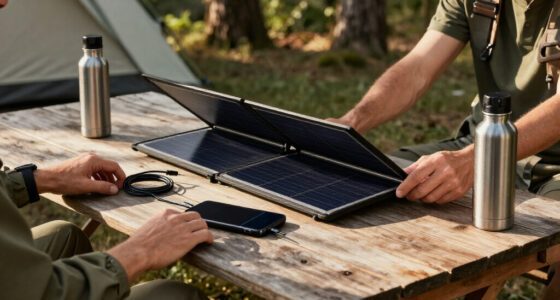
For most CPAP users seeking a balance of capacity and a purpose-built setup, I’d start with the BLUETTI CPAP Battery Backup X30; the Jackery Solar Generator 300 stands out for a bundled solar panel, while the EASYLONGER ES270 suits air travel with its 99.9Wh battery. The main tradeoff is between a compact pack that’s easier to carry and a larger station that can support longer outages but adds bulk. CPAP runtime also depends on your machine, humidifier, heated hose, and power settings, so capacity alone can’t promise a set number of nights. This roundup compares 14 options by CPAP suitability, portability, capacity, and included charging gear. Read on for the full breakdown and guidance on matching a bundle to your equipment and plans.

Get backup power and energy gear delivered free with Prime
- Fast, free delivery on millions of items
- Prime Video, Amazon Music and more included
- Member-only deals all year
Complete the kit


Key Takeaways
- The BLUETTI X30 is the most CPAP-focused pick. Its dedicated battery-backup positioning and included accessory set make it a stronger starting point for CPAP users than general-purpose stations.
- The Jackery Solar Generator 300 bundle emphasizes recharging flexibility. Its included 40W panel can help replenish the station when grid power is unavailable, though the small panel is not a quick refill solution.
- Similar capacity figures don’t mean similar CPAP fit. The 296–300Wh class includes general-purpose options and CPAP-specific packs, so output compatibility and connection accessories matter alongside watt-hours.
- The ES270 fills a distinct travel role. Its 99.9Wh capacity favors portability and air-travel planning over multi-night backup, making it a poor substitute for a larger home or campsite reserve.
- More capacity brings a real portability tradeoff. The 1190Wh UDPOWER and 1000 v2 Jackery bundle are better suited to extended backup needs than quick, lightweight trips, while compact stations are easier to pack.


| power station bundle for cpap | Capacity | Weight | Dimensions |
|---|---|---|---|
| LIPOWER Portable Power Station | 296Wh | 9.2 lb | 10.69 x 7.34 x 7.34 in |
| EnginStar Portable Power Stati | 296Wh | — | 9.1 x 5 x 7 in |
| Arkpax 300W Portable Power Sta | 192Wh | — | — |
| EASYLONGER ES720 CPAP Battery | 266.4Wh | — | — |
| MARBERO M823 Portable Power St | 237Wh | 4.6 lb | 8.15 x 5.83 x 3.90 in |
| ENOFLO 300W Portable Power Sta | 228Wh | 6.2 lbs | 12 x 7.5 x 8 inches |
| Jackery Solar Generator 300 wi | — | 7.5 lbs | — |
| BLUETTI CPAP Battery Backup X3 | 297Wh | 3.9 lbs | — |
| Jackery Solar Generator 1000 v | — | 23.8 lbs | — |
| HOWEASY Portable Power Station | 222Wh | 5.5 lbs | 8.25 x 4.7 x 5.8 inches |
| ALLWEI Portable Power Station | 256Wh | 6.4 lbs | — |
| EASYLONGER ES270 CPAP Battery | — | 1.3 lbs | 5.1 x 2.9 x 1.9 inches |
| UDPOWER S1200 1190Wh Solar Gen | — | 25.8 lbs | 13.7 x 9.53 x 9.72 inches |
| EASYLONGER CPAP Battery Backup | 297.6Wh | — | — |
More Details on Our Top Picks
LIPOWER Portable Power Station, 296Wh Battery Pack for CPAP Camping Backup
I rank the LIPOWER first for buyers who want a general-purpose station with a relatively large battery for overnight CPAP backup. Its 296Wh LiFePO4 battery matches the EnginStar’s stated capacity, while the listed 3,500+ charge cycles point to a longer-use design than a one-trip emergency pack. Fast recharging, pass-through power, and solar and car charging give it more ways to recover between nights than the Arkpax, whose smaller 192Wh capacity is a bigger limitation for repeated use.
The tradeoff is that 296Wh is still a finite reserve, especially if your CPAP uses heated humidification or a heated hose; actual runtime depends on the machine and settings. Its 300W continuous output also rules out higher-draw appliances. At 9.2 pounds, it is portable, but not as light as the 4.6-pound MARBERO. I’d choose it for capacity and battery-life claims, not remote monitoring, which it lacks.
Pros:- 296Wh LiFePO4 battery with a stated 3,500+ charge cycles
- Fast charging with solar and car charging support
- Pass-through power and a listed 0.2-second UPS switch-over
- Eight total power outlets and a built-in LED light
Cons:- A 300W continuous limit restricts use with higher-wattage appliances
- 296Wh may not cover extended CPAP use without recharging, particularly with heated accessories
- At 9.2 pounds, it is heavier than the MARBERO M823
Best for: CPAP users seeking a portable, general-purpose backup with solar or car recharge options and a larger listed battery capacity.
Not ideal for: People needing several nights of CPAP use without recharging, or buyers prioritizing the lightest carry-on setup or app monitoring.
- Capacity:296Wh
- Battery type:LiFePO4
- Continuous output:300W
- Maximum starting output:600W
- Total outlets:8
- Weight:9.2 lb
- Dimensions:10.69 x 7.34 x 7.34 in
- Charge cycles:3,500+
Our verdict“Choose the LIPOWER if you want a higher-capacity portable station with multiple recharge routes, but plan around your CPAP’s actual power draw.”
EnginStar Portable Power Station 300W 296Wh Solar Generator
The EnginStar makes sense for CPAP users who want a compact station with pure sine wave AC outlets and flexible charging, without moving up to a bulkier backup unit. Its 296Wh capacity is the same as the LIPOWER’s, and both are limited to 300W output; the EnginStar’s listed footprint of 9.1 x 5 x 7 inches makes it the more compact choice on the supplied dimensions. Pure sine wave output is a useful match for sensitive electronics, though buyers should check whether their CPAP can run efficiently from AC or needs a dedicated DC cable.
Compared with the CPAP-focused EASYLONGER ES720, this is a more general-purpose station: the ES720 lists adjustable DC outputs and compatibility with named CPAP models, while EnginStar does not provide that level of CPAP-specific detail. Its 296Wh capacity can still fall short for extended use, and the solar panel is not included. I’d pick it for compact AC use, not for a guaranteed model-specific CPAP connection.
Pros:- 296Wh capacity in a compact listed footprint
- Pure sine wave AC outlets for sensitive electronics
- Can recharge from wall, car, or solar sources
- Digital display, flashlight, and overload protection are listed
Cons:- Solar panel is not included
- No named CPAP compatibility or dedicated adjustable DC output is provided in the supplied data
- 300W output and 296Wh capacity limit high-draw or extended use
Best for: Travelers with a CPAP that accepts standard AC power who want a compact 296Wh station for occasional backup and general device charging.
Not ideal for: Buyers who need verified CPAP model compatibility, included solar charging, or a higher output ceiling than 300W.
- Capacity:296Wh
- AC output:300W
- Voltage:110V
- AC waveform:Pure sine wave
- Dimensions:9.1 x 5 x 7 in
- Charging methods:Wall, car, and solar
- Frequency:60Hz
- Listed features:Digital display, flashlight, LED indicators, overload protection
Our verdict“Pick the EnginStar for compact AC-powered CPAP backup, but choose the EASYLONGER ES720 if model-specific DC compatibility matters more.”
Arkpax 300W Portable Power Station with Accessory Kit
The Arkpax stands out for its included 180W AC adapter and stated recharge time of one hour to 80% from AC. That can suit a traveler who can plug in between outings but does not need a large reserve. Its 65W USB-C PD port also gives it a useful role beyond CPAP backup, such as powering a laptop alongside smaller devices. Against the LIPOWER and EnginStar, however, the Arkpax’s 192Wh capacity is substantially smaller than their 296Wh batteries, so I’d expect less headroom for overnight use and more frequent recharging.
It lists pure sine wave AC output and support for CPAP machines, but the supplied details do not name compatible CPAP models or include dedicated CPAP cables. The accessory kit is identified as an AC adapter, not a full CPAP connection bundle. Its 300W output is also not suited to high-wattage appliances. I’d select it for rapid AC recovery and mixed electronics, rather than for multi-night independence.
Pros:- Included 180W AC adapter supports a stated one-hour recharge to 80%
- 65W USB-C PD port can serve compatible laptops and tablets
- Pure sine wave output is listed for sensitive electronics
- Can power up to six devices at once, according to the product description
Cons:- 192Wh capacity is lower than the 296Wh LIPOWER and EnginStar
- Solar panels and car charger are not included
- Supplied data does not name compatible CPAP models or included CPAP cables
Best for: Campers and travelers who can recharge from AC between uses and want a small station for a CPAP plus USB-C devices.
Not ideal for: CPAP users seeking multi-night reserve, model-specific connection cables, or solar and car charging hardware included in the bundle.
- Capacity:192Wh
- AC output:300W
- Surge output:600W
- AC outlets:2
- USB-C output:65W PD
- Other ports:2 USB-A, 1 car outlet
- AC recharge:Stated 0–80% in 1 hour with included 180W adapter
- Included component:180W AC adapter
Our verdict“Choose the Arkpax when fast AC recharging and USB-C versatility matter more than the longer reserve offered by larger-capacity options.”
EASYLONGER ES720 CPAP Battery Backup, 266.4Wh Portable Power Supply
The EASYLONGER ES720 is my CPAP-first pick because its supplied details name compatibility with major machines, including ResMed AirSense 10/11, AirMini, Philips DreamStation, and Luna G3, and it includes DC cables for popular models. That is a more direct starting point than the general-purpose LIPOWER or MARBERO, where the buyer must confirm the right connection method separately. Its adjustable 12V, 16.5V, 20V, and 24V DC output can help match supported equipment while avoiding an AC conversion path.
At 266.4Wh, it sits between the 192Wh Arkpax and the 296Wh LIPOWER, but its CPAP-specific connections matter more than that capacity ranking for some buyers. It supports AC, USB-C PD, solar, and car recharging, with pass-through charging and an SOS light. There are limits: Luna G3 heated tubes are not supported, and using the cigarette-lighter port requires an external voltage converter. Check your exact machine and accessories before choosing it.
Pros:- Names compatibility with several popular CPAP models
- Includes DC cables for popular machines and adjustable DC voltage outputs
- Multiple recharge routes include AC, USB-C PD, solar, and car outlet
- BMS protection, pass-through charging, and an SOS LED light are listed
Cons:- Luna G3 heated tubes are not supported
- Cigarette-lighter port use requires an external voltage converter
- At 266.4Wh, it has less stated capacity than the 296Wh LIPOWER and EnginStar
Best for: Owners of a listed ResMed, Philips, or Luna CPAP who want included DC cables and a battery designed around CPAP connections.
Not ideal for: Luna G3 users who need heated-tube support, or buyers seeking a simple cigarette-lighter connection without an external converter.
- Capacity:266.4Wh
- Named compatibility:ResMed S9, AirSense 10/11, AirCurve 10/11, AirMini; Luna G3; Philips DreamStation
- Adjustable DC output:12V, 16.5V, 20V, and 24V
- Cigarette-lighter output:180W
- USB-C PD:60W
- Recharge options:AC adapter, USB-C PD, 100W solar panel, or car outlet
- Safety:BMS over-charge, over-discharge, over-current, and short-circuit protection
- Extras:Pass-through charging and LED light with SOS function
Our verdict“Choose the ES720 if your CPAP is among its listed compatible models and included DC connections are your priority.”
MARBERO M823 Portable Power Station 300W, 237Wh Solar Generator with Pure Sine Wave AC Outlet, USB-C, DC, and LED Lantern
At 4.6 pounds, the MARBERO M823 is the easiest option here to carry between a car, campsite, and bedside. It makes sense for a CPAP owner who values portability and also wants USB-C and USB-A charging for personal devices. Its two pure sine wave AC outlets provide a familiar connection for machines that run from AC, while the LIPOWER and EnginStar offer more battery capacity at 296Wh. That gap matters if you want more reserve, but the MARBERO’s compact build is the clearer advantage for short trips.
The 237Wh battery is still limited for extended CPAP use, and runtime will vary with the machine, pressure settings, and heated accessories. It is not a CPAP-specific bundle like the EASYLONGER ES720, so buyers should confirm cables and DC requirements. Recharging takes a listed six hours by AC and eight by car; solar is supported, but the panel is separate. I’d favor it for light packing, not the longest time between charges.
Pros:- Lightweight at 4.6 pounds with a compact listed footprint
- Two pure sine wave AC outlets
- USB-C PD, USB-A, and DC outputs support varied personal electronics
- Built-in LED lantern includes SOS mode
Cons:- 237Wh capacity is lower than the 266.4Wh EASYLONGER ES720 and 296Wh LIPOWER
- Solar panel is not included
- Listed car recharge time is eight hours, and AC recharge takes six hours
Best for: Solo campers and travelers who need a light, compact station for a CPAP that accepts AC power, plus phones or a laptop.
Not ideal for: Buyers who need named CPAP compatibility, a larger battery reserve, or fast car recharging with solar equipment included.
- Capacity:237Wh
- Output power:300W, 375W peak
- Weight:4.6 lb
- Dimensions:8.15 x 5.83 x 3.90 in
- Battery type:Lithium-ion
- AC outlets:2 pure sine wave
- USB ports:2 USB-A QC3.0, 2 USB-A, 1 USB-C PD
- Recharge time:6 hours AC; 8 hours car
Our verdict“Pick the MARBERO M823 when carrying weight matters more than battery reserve or CPAP-specific cables.”
ENOFLO 300W Portable Power Station with 228Wh Capacity
The ENOFLO earns this spot for CPAP users who also want to keep phones and other small electronics running from one compact unit. Its 300W pure sine wave AC output supports compatible CPAP machines, while nine types of connections make it more flexible for a shared campsite than the CPAP-focused BLUETTI X30. At 6.2 pounds, it is also easier to carry than the much larger Jackery Solar Generator 1000 v2.
The tradeoff is its 228Wh capacity: actual CPAP runtime depends heavily on the machine and settings, especially humidification, so this is better suited to shorter trips than extended backup. Solar panels are sold separately, and car charging takes 7–8 hours. I’d choose it for port versatility, not for the longest possible time between charges.
Pros:- Pure sine wave AC output is suitable for compatible sensitive electronics.
- Nine output options let users power or charge several device types.
- At 6.2 pounds, it is more portable than the Jackery Solar Generator 1000 v2.
- Built-in MPPT controller supports solar recharging when a compatible panel is added.
Cons:- 228Wh capacity can constrain CPAP runtime, depending on settings and accessories.
- Solar panel is not included, adding a separate item for off-grid recharging.
- Car charging takes 7–8 hours, and the battery needs periodic recharging during storage.
Best for: Campers who need AC-powered CPAP support alongside charging for several personal devices and can recharge between nights.
Not ideal for: People planning a long outage or several nights without a recharge; its 228Wh capacity may be limiting, particularly with heated humidification.
- Capacity:228Wh
- Continuous output:300W pure sine wave
- Surge output:600W
- Weight:6.2 lbs
- Dimensions:12 x 7.5 x 8 inches
- Battery type:Lithium-ion
- Ports:2 AC, 2 USB-A, 1 USB-C, 2 DC, 1 cigarette-lighter port, 1 wireless charging pad
- Recharge time:6–7 hours via AC or solar; 7–8 hours via car
Our verdict“Choose the ENOFLO for a lightweight, port-rich camping setup, but look to a higher-capacity station for longer CPAP backup.”
Jackery Solar Generator 300 with 40W Solar Panel
The Jackery Solar Generator 300 stands out here for pairing a 292Wh LiFePO4 battery with a solar panel in a portable package. Its listed battery chemistry and rating of over 4,000 charge cycles suit buyers who expect to use their backup regularly, rather than keep it only for occasional outages. Compared with the ENOFLO 228Wh, it offers more stored energy; unlike the Jackery Solar Generator 1000 v2, it is far lighter to carry at 7.5 pounds.
That smaller size also means a 300W output ceiling and less capacity for extended CPAP use. The included 40W panel can recharge the station, but the listed charging time is about 7.5 hours, so it is not a quick solar turnaround. I’d pick this bundle for short trips and repeat use, while buyers needing longer backup should consider the 1,070Wh Jackery instead.
Pros:- 292Wh capacity exceeds the ENOFLO 228Wh in this lineup.
- LiFePO4 battery is rated for over 4,000 charge cycles.
- The 40W solar panel provides an off-grid charging option in the bundle.
- 7.5-pound weight is more manageable for travel than the Jackery Solar Generator 1000 v2.
Cons:- 300W rated output rules out higher-draw appliances.
- The supplied 40W panel takes about 7.5 hours to recharge the station.
- Actual CPAP runtime varies with machine settings and may be shorter when humidification is used.
Best for: Frequent campers who want a relatively light station with a long-cycle-life battery and a panel for recharging between uses.
Not ideal for: CPAP users seeking multi-night backup without careful power management, or anyone who needs to run equipment above 300W.
- Battery capacity:292Wh
- Weight:7.5 lbs
- AC outlets:2
- USB-C:100W USB-C PD port
- Other ports:2 USB-A ports and 120W car port
- Peak surge power:600W
- Included solar panel:40W; listed recharge time is approximately 7.5 hours
Our verdict“Pick this Jackery for portable, repeat-use solar backup, but choose a larger-capacity option if your CPAP must run for longer stretches between charges.”
BLUETTI CPAP Battery Backup X30 297Wh Power Supply with Comprehensive Set
The BLUETTI X30 is the most directly CPAP-oriented pick in this group: it supplies 297Wh of capacity, weighs just 3.9 pounds, and includes a set of cables for connecting compatible machines. Its DC outputs make it a different proposition from the ENOFLO and HOWEASY, which add AC outlets and more general-purpose charging. For a CPAP user whose machine supports the X30’s output options, that focused setup can mean less gear to pack and a lighter carry.
The limitation is that the provided specifications list no AC outlet, so compatibility depends on the machine’s power input and the included cables. BLUETTI estimates 5–7 nights for most devices, but real runtime varies with settings and accessories. Charging speed is also unspecified, and the Jackery Solar Generator 300 offers a clearer solar-charging path with its bundled panel. I’d choose the X30 for compatible CPAP-only travel, not general backup versatility.
Pros:- At 3.9 pounds, it is the lightest product in this five-item group.
- 297Wh capacity is larger than the ENOFLO and HOWEASY stations.
- Includes cables and accessories aimed at CPAP and BiPAP connections.
- Three DC voltage options support a range of compatible device inputs.
Cons:- No AC outlet is listed, which limits compatibility with some CPAP setups.
- Charging methods and recharge times are not provided in the product data.
- A 5–7-night estimate may not apply to every device, setting, or humidifier use.
Best for: Travelers with a compatible CPAP or BiPAP who prioritize low carry weight and a CPAP-oriented cable set over AC power for other appliances.
Not ideal for: Owners whose CPAP requires AC power or does not match the listed DC outputs, and buyers who need documented fast or solar charging.
- Capacity:297Wh
- Weight:3.9 lbs
- 12V DC output:12V / 5A
- 15V DC output:15V / 4A
- 24V DC output:24V / 4A
- USB output:1 port, 5V / 2.5A
- Included accessories:Set of cables and accessories
- Estimated backup:5–7 nights for most devices, according to the product description
Our verdict“Choose the X30 for lightweight, CPAP-focused travel if your machine matches its DC outputs; skip it if you need AC or broader appliance support.”
Jackery Solar Generator 1000 v2 with 200W Solar Panel
For buyers who value backup duration over easy carrying, this is the clear capacity leader among these five options. The 1,070Wh LiFePO4 battery and 1,500W AC output give it far more headroom than the 292Wh Jackery Solar Generator 300, which can matter when CPAP use stretches across an outage and other household devices need power too. The included 200W solar panel also makes this a more substantial off-grid bundle than the smaller stations with panels sold separately or supplied at lower wattage.
The tradeoff is size: at 23.8 pounds, it is not the grab-and-go choice the BLUETTI X30 is. Its fastest charging mode requires manual activation in the app, and the products may ship separately. I’d rank it first for longer backup, but it is more station than a traveler needs for a single CPAP and short trips.
Pros:- 1,070Wh capacity is substantially higher than the other listed stations.
- 1,500W AC output can support more than a CPAP, within the station’s limits.
- Includes a 200W solar panel for recharging away from wall power.
- LiFePO4 battery is rated for 4,000+ charge cycles and includes a five-year warranty.
Cons:- At 23.8 pounds, it is much heavier than the CPAP-specific BLUETTI X30.
- Fastest charging mode must be activated manually through the app for each session.
- Station and panel may ship separately, complicating delivery timing.
Best for: Households preparing for extended outages who want substantial CPAP capacity, AC power, and a higher-output solar bundle.
Not ideal for: Air travelers, minimalist campers, or buyers who need a very light CPAP-only battery; the 23.8-pound station is much less portable than the BLUETTI X30.
- Battery capacity:1,070Wh
- AC output:1,500W
- Surge output:3,000W
- Weight:23.8 lbs
- Battery type:LiFePO4
- Ports:3 AC outlets, 2 USB-C, 1 USB-A, 1 DC car port
- Solar panel:200W included
Our verdict“Choose the Jackery 1000 v2 when extended CPAP backup and household power matter more than low weight or a compact footprint.”
HOWEASY Portable Power Station 300W, 222Wh Solar Generator
The HOWEASY is a sensible option for buyers who want a small station for a compatible CPAP plus everyday electronics, without carrying the heavier Jackery Solar Generator 1000 v2. At 5.5 pounds, it is the lightest general-purpose AC model here; the 65W USB-C port also gives laptops and phones a useful charging option alongside its pure sine wave AC sockets. Its folding handle and built-in light add practical value for packing and nighttime use.
Capacity is the compromise. At 222Wh, it is slightly below the ENOFLO 228Wh and well below the 297Wh BLUETTI X30, so it is better suited to short trips or limited backup than repeated nights without recharging. Solar panels are not included, and 300W maximum output restricts larger appliances. I’d choose it for a lighter, multi-device setup, not as the strongest option for extended CPAP runtime.
Pros:- 5.5-pound weight makes it the lightest general-purpose AC station in this group.
- Pure sine wave AC outlets support compatible sensitive electronics.
- 65W USB-C output can charge suitable laptops and other devices.
- Built-in multi-mode flashlight and folding handle suit campsite use.
Cons:- 222Wh capacity is lower than the ENOFLO and BLUETTI X30 listed here.
- Solar panel is not included, so solar charging requires an additional purchase.
- 300W maximum output limits use with higher-draw equipment.
Best for: Campers and travelers who want a lightweight AC power station for a compatible CPAP, phone, and laptop on short trips.
Not ideal for: People preparing for multi-night outages without recharging, or users whose CPAP setup and other equipment need more than 300W.
- Capacity:222Wh
- Output power:300W
- Weight:5.5 lbs
- Dimensions:8.25 x 4.7 x 5.8 inches
- AC output:2 x 110V three-pole pure sine wave sockets
- USB ports:2 QC 3.0, 1 USB-A (5V / 2.4A), 1 USB-C (65W)
- DC ports:3 x 12V / 10A
- Charging and warranty:AC wall adapter, car charger, or 18–24V solar panel; 24-month warranty
Our verdict“Pick the HOWEASY for a light, versatile short-trip setup, but choose a higher-capacity station for longer CPAP backup.”
ALLWEI Portable Power Station 300W, 256Wh Solar Generator with LiFePO4 Battery
The ALLWEI’s 6.4-pound weight makes it easier to pack for car camping or move between rooms than the 25.8-pound UDPOWER S1200. Its 256Wh LiFePO4 battery and pure sine wave AC output suit buyers who want a small station for a CPAP plus basic device charging, while the 300W continuous rating gives it more flexibility than the airline-focused EASYLONGER ES270. That flexibility does not make it a guaranteed all-night CPAP solution: actual runtime depends on the machine, pressure settings, and whether humidification or heated tubing is on. The solar panel is sold separately, so the listed solar recharge time requires a compatible panel. I’d choose it for portability and multipurpose use, but skip it if your priority is a bundled solar setup or several nights of CPAP backup.
Pros:- Light 6.4-pound body is easier to carry than the UDPOWER S1200.
- LiFePO4 battery is specified for 3,000 charge cycles.
- Pure sine wave AC output is suited to sensitive electronics.
- AC, car, and solar charging provide several recharge options.
Cons:- The 256Wh capacity may not cover a full night with power-hungry settings or heated accessories.
- Solar panel is sold separately.
- Only one AC outlet limits simultaneous AC-powered equipment.
Best for: Car campers and home users who want a lightweight power station for a CPAP and small electronics, and can verify their machine’s runtime needs.
Not ideal for: CPAP users seeking dependable multi-night backup without careful power-use planning, or buyers who want a solar panel included.
- Capacity:256Wh
- Battery type:LiFePO4
- Continuous / peak output:300W / 600W
- Weight:6.4 lbs
- Output ports:1 AC, 2 DC5521, 1 car outlet, 1 USB-A (18W), 1 USB-C PD (60W)
- AC recharge time:3.5–4 hours
- Solar recharge time:4–5 hours with a 100W panel
- Warranty:5 years
Our verdict“Choose the ALLWEI if you want a particularly light, versatile station for occasional CPAP backup and can confirm its capacity fits your setup.”
EASYLONGER ES270 CPAP Battery for Air Travel, 99.9Wh Power Bank
The 99.9Wh capacity is the defining advantage of the EASYLONGER ES270: it is listed as TSA- and FAA-compliant, making it a more suitable flight companion than the 297.6Wh EASYLONGER ES960 PRO, which exceeds the stated 160Wh limit. Its 1.3-pound size also slips into a backpack more readily than either full-size power station in this group. The tradeoff is limited reserve: the stated runtime is up to eight hours for compatible CPAP devices, but real use varies, and humidification or heated tubing can reduce it. The ES270 supports named machines including ResMed AirMini and AirSense models, though some setups need additional cables. I’d pick it for travel where carry-on battery rules matter, not as a roomy home outage backup.
Pros:- 99.9Wh capacity is listed as TSA- and FAA-compliant.
- Compact 1.3-pound design is easy to pack.
- Supports several named ResMed, Luna, and Philips CPAP models.
- USB-C charging and wireless charging add flexibility for compatible devices.
Cons:- Much less capacity than the ALLWEI and ES960 PRO, limiting backup time.
- High-power CPAP use may require disabling humidification and heating.
- Some CPAP setups need additional cables.
Best for: Air travelers with a compatible CPAP who need a compact battery within the stated airline capacity limit.
Not ideal for: People seeking multi-night home backup or users whose CPAP needs substantial power for humidification or heated tubing.
- Battery capacity:99.9Wh
- Weight:1.3 lbs
- Dimensions:5.1 x 2.9 x 1.9 inches
- Charging time:2 hours
- Input:PD 65W USB-C
- Output:USB-C 100W and wireless charging
- Listed compatibility:ResMed AirMini, AirSense 11/10, AirCurve 11/10, Luna TravelPAP, Philips DreamStation and DreamStation 2
- Listed CPAP runtime:Up to 8 hours for compatible devices
Our verdict“Pick the ES270 for compatible CPAP use on flights, but choose a larger battery for home outages or longer runtimes.”
UDPOWER S1200 1190Wh Solar Generator Kit with 210W Panel, Fast Solar Charging, 1200W Power Station for Home Backup RV Emergencies, CPAP Compatible
For buyers prioritizing reserve capacity over portability, the UDPOWER S1200’s 1190Wh battery is the strongest fit here for keeping a CPAP and other household essentials powered during an outage. Unlike the ALLWEI, it includes a 210W foldable solar panel, so the solar setup is part of the bundle, though the panel ships separately. Five AC outlets and a 1200W rated output also suit broader backup use better than the CPAP-focused EASYLONGER ES960 PRO, whose maximum device load is 180W. That capacity comes with a clear cost in convenience: at 25.8 pounds, it is far less appealing for frequent carrying, and runtime will fall quickly under heavy loads. I’d favor it for a home or RV base, not for air travel or lightweight overnight trips.
Pros:- 1190Wh capacity offers substantially more reserve than the 256Wh ALLWEI.
- Includes a foldable 210W solar panel for recharging away from an outlet.
- Five AC outlets and multiple USB and DC ports support several devices.
- UPS backup mode supports seamless power transfer according to the product data.
Cons:- At 25.8 pounds, it is much less portable than the smaller stations.
- Solar panel ships separately, which can complicate delivery and setup.
- The stated runtime at full load is approximately one hour, so heavy appliance use can consume capacity quickly.
Best for: Households and RV users who want a large-capacity CPAP backup with an included solar panel and power for other devices.
Not ideal for: Air travelers, frequent backpackers, or buyers who need a light battery dedicated to a single CPAP.
- Battery capacity:1190Wh
- Battery type:LiFePO4
- AC output:1200W rated / 1800W peak
- AC outlets:5
- USB-C ports:2, 100W each
- Solar panel:210W foldable panel included
- Weight:25.8 lbs
- Dimensions:13.7 x 9.53 x 9.72 inches
- Runtime at full load:Approximately 1 hour
Our verdict“Choose the UDPOWER S1200 when extended home or RV backup and bundled solar matter more than carrying weight.”
EASYLONGER CPAP Battery Backup ES960 PRO, 297.6Wh LiFePO4 Battery Pack
The 297.6Wh capacity gives the EASYLONGER ES960 PRO more CPAP-oriented reserve than the 99.9Wh ES270, while remaining much smaller than the UDPOWER S1200. Its 12V/19V/24V support and compatibility with major ResMed and Philips brands make it the more targeted choice for home or car-based CPAP backup, and its 100W USB-C output can also charge a laptop. The product describes it as supporting more than two nights, but that is not a fixed guarantee: machine choice, pressure, humidifier, and heated tubing all affect runtime. It also exceeds the stated 160Wh airline limit, so frequent flyers should favor the ES270 instead. The five-hour wall recharge and 180W maximum device load keep it focused on CPAP and smaller electronics rather than household appliances.
Pros:- 297.6Wh capacity provides far more reserve than the travel-sized ES270.
- LiFePO4 chemistry is specified for 3,000+ cycles.
- 12V, 19V, and 24V support broadens CPAP connection options.
- 100W USB-C output and six ports allow charging smaller electronics alongside a CPAP.
Cons:- Exceeds the stated 160Wh airline limit and is not TSA-approved for air travel.
- Actual CPAP runtime can fall substantially with humidification or heated tubing.
- Maximum device load of 180W is less suited to larger appliances than the UDPOWER S1200.
Best for: CPAP users who want a compact, rechargeable backup for home or road trips and do not need to carry it on a flight.
Not ideal for: Air travelers who need an onboard battery, or households seeking a high-output station for appliances and multiple AC loads.
- Capacity:297.6Wh
- Battery chemistry:LiFePO4
- Output ports:6 ports, including 100W USB-C
- Voltage support:12V / 19V / 24V
- Cycle lifespan:3,000+ cycles
- Wall recharge time:5 hours
- Car recharge time:6 hours
- Maximum device load:180W
- Airline status:Not TSA-approved; exceeds 160Wh limit
Our verdict“Choose the ES960 PRO for higher-capacity CPAP backup at home or on the road, but not for flights or appliance-level power.”

How We Picked
I ranked these bundles around the job they need to do: keep a CPAP powered reliably when mains electricity is unavailable. I gave weight to CPAP-specific connections and accessories, battery capacity, output options, and whether the package includes a charging source. Portability and practical use also mattered: a compact travel battery serves a different buyer from a high-capacity backup station, so I judged each within its intended role rather than treating the largest capacity as an automatic winner.
The order favors clear CPAP fit and a useful balance of runtime potential, usability, and bundle contents. Purpose-built CPAP packs rank ahead of general-purpose stations when they offer a more direct setup; solar bundles gain ground when their included panels add meaningful off-grid flexibility. I also accounted for tradeoffs such as limited capacity, added size, and the need to confirm device compatibility. Since actual runtime varies by CPAP model and settings, I avoid treating watt-hours as a guaranteed number of nights.
Factors to Consider When Choosing Power Station Bundle For Cpap
Choosing a power station bundle for CPAP starts with how and where you sleep, not with the biggest capacity number. The right choice may be a lightweight battery for a flight, a solar-ready kit for camping, or a larger reserve for home outages. These checks can help you avoid buying a bundle that is hard to connect, inconvenient to recharge, or too small for your setup.
Match Capacity to Your Actual CPAP Setup
Battery capacity offers a useful comparison, but it does not directly tell you how many nights your CPAP will run. Your machine’s power draw, pressure settings, humidifier, heated hose, and other features can change energy use considerably. Check your device’s manual and estimate runtime using its power requirements and the battery’s usable output, allowing a margin rather than planning around a best-case figure. A common mistake is to compare watt-hours alone and assume two similarly sized batteries will behave the same. If you need overnight therapy during an outage, prioritize a realistic reserve over the smallest pack that might work. You may be able to extend runtime by disabling heated features, but only if that remains comfortable and appropriate for your care plan.
Check Connections and Output Before Buying
A battery can have ample capacity and still be a poor match if it lacks the connection your CPAP requires. Confirm the machine’s input voltage, connector type, and whether it can use DC power directly or needs an AC outlet. Direct DC operation may avoid some energy lost when converting battery power to AC, but the correct compatible cable or adapter is required. Don’t assume that an accessory kit includes the exact lead for your CPAP model; verify its contents with the seller or manufacturer. Also check whether the station’s output can handle the device’s startup and operating demands. When compatibility is unclear, contact the CPAP manufacturer before relying on the setup for essential therapy.
Decide Whether Solar Is Useful for Your Plans
An included solar panel can help when you’ll be away from outlets for longer stretches, but its rated wattage does not guarantee a fixed recharge time. Sun angle, shade, weather, and panel placement all affect charging, so a small panel may provide only a gradual top-up. Check that the panel and station use compatible connectors and that the station supports the panel’s input range. For occasional camping near a vehicle or powered site, a compact station charged before departure may be simpler than depending on solar. For longer off-grid trips, panel output and the station’s solar-input limits deserve as much attention as battery capacity. Treat solar as a charging option, not a promise of uninterrupted CPAP power in poor conditions.
Choose Portability for the Way You Travel
Capacity and convenience often pull in opposite directions: a larger station can hold more energy, but it takes up more room and may be harder to carry. For flights, review current airline and battery rules before buying, and confirm the battery’s stated watt-hour rating and permitted carry-on handling. The ES270’s 99.9Wh rating targets a different use case from the larger camping and home-backup models in this lineup. For car camping, size may matter less than the ability to place the battery near your sleeping area and reach a suitable outlet. Consider cables, panel storage, and the station’s weight as part of the bundle rather than judging the power unit alone. A pack that stays easy to move is more useful than extra capacity you’re reluctant to transport.
Know When to Pay for More Backup
Paying for a larger station makes sense when you need longer backup, power for several devices, or a reserve that can serve broader household or RV needs. The UDPOWER S1200 and Jackery Solar Generator 1000 v2 offer a different scale of backup from the compact 200–300Wh class, but their size and bundle complexity may be unnecessary for a single overnight CPAP need. Smaller stations can be easier to store and carry, yet leave less margin if you use heated accessories or face a prolonged outage. List the devices you truly need to run and estimate their combined use before moving to a higher-capacity kit. Don’t pay for capacity alone if the output ports or charging methods don’t fit your equipment. The best value is the unit that meets your backup plan without adding unused bulk.
Plan for Testing, Storage, and Backup Readiness
A backup battery is useful only if it is charged, compatible, and ready when the power fails. Read the manufacturer’s storage guidance, check how often the battery should be topped up, and learn how to view its charge level. Before depending on it overnight, test the intended cable and CPAP settings while you still have access to normal power. Keep adapters and charging leads together so they are not missing when you need them. If the station will serve as emergency backup, include a recharge plan and check its condition on a regular schedule. Keep your clinician’s guidance in mind before changing CPAP settings or relying on a different power arrangement.
Frequently Asked Questions
Can a 300Wh power station run my CPAP all night?
It may, but the capacity label alone cannot confirm that for your machine. Runtime varies with power draw, pressure settings, humidification, heated tubing, and whether the CPAP runs from AC or a compatible DC connection. Check your machine’s manual for power requirements and use the battery maker’s usable-capacity information to estimate a conservative run time. Leave a margin instead of planning to use every watt-hour. Test the setup at home before relying on it away from an outlet.
Should I choose a CPAP-specific battery or a general-purpose power station?
A CPAP-specific battery can make connection and accessory choices more direct, which may suit someone who wants a setup centered on therapy equipment. A general-purpose station can offer broader ports or more flexibility for other devices, but you need to verify the right voltage, cable, and output for your CPAP. Compare the included accessories rather than assuming a product labeled for CPAP includes the exact connector you need. If the battery will also serve camping or household backup, versatility may matter more. If it is primarily for therapy, clear CPAP compatibility should take priority.
Is the 99.9Wh EASYLONGER ES270 enough for air travel?
Its 99.9Wh capacity makes the ES270 a compact option to investigate for travel, but suitability depends on your expected runtime and airline rules. A smaller battery may be easier to carry but gives you less reserve than the larger packs in this roundup. Check current airline requirements for carrying and protecting lithium batteries, and confirm the battery’s labeling meets those rules. Work out your CPAP’s likely energy use before relying on it for a full night. If your trip includes a long delay or multiple nights without charging, consider whether a larger permitted battery or access to backup power is needed.
Does an included solar panel mean I can use my CPAP indefinitely off-grid?
No. A panel can recharge a compatible power station, but actual energy collected depends on sunlight, weather, placement, panel output, and the station’s charging limits. The Jackery Solar Generator 300 bundle’s 40W panel adds a charging option, not a guarantee of continuous power. You still need enough stored energy for periods without useful sun, including overnight. Check connector and input compatibility, and plan around conservative charging conditions. For essential therapy, keep a backup plan that does not depend solely on favorable weather.
When is a 1000Wh-class bundle worth the extra size?
A larger bundle can make sense for extended outages, longer off-grid stays, or powering several devices alongside a CPAP. The Jackery Solar Generator 1000 v2 and UDPOWER S1200 sit well above the compact options in this roundup, giving buyers more capacity to plan around. That added reserve comes with greater storage and transport demands, so it may be unnecessary for a short overnight backup. Add up the devices you expect to run and how long you need them before choosing a larger unit. If CPAP is your only load and portability matters, a smaller, compatible battery may suit you better.
Conclusion
Best overall: I’d choose the BLUETTI CPAP Battery Backup X30 for buyers who want a CPAP-focused package and a practical balance in the roughly 300Wh class. Best value: The EnginStar 300W 296Wh is a sensible general-purpose alternative for shoppers prioritizing a familiar capacity class, provided its output and accessories match their machine. Best premium: The Jackery Solar Generator 1000 v2 bundle suits buyers who need substantial backup capacity and can accommodate a larger station. Best for beginners: The EASYLONGER ES960 PRO offers a CPAP battery format with LiFePO4 chemistry for buyers who want a dedicated backup rather than a broad-purpose station. Best for specific needs: Pick the Jackery Solar Generator 300 for a compact solar bundle, or the EASYLONGER ES270 for a travel-focused 99.9Wh option after checking airline rules. Before choosing any of them, confirm the connection and estimate runtime using your own CPAP settings.