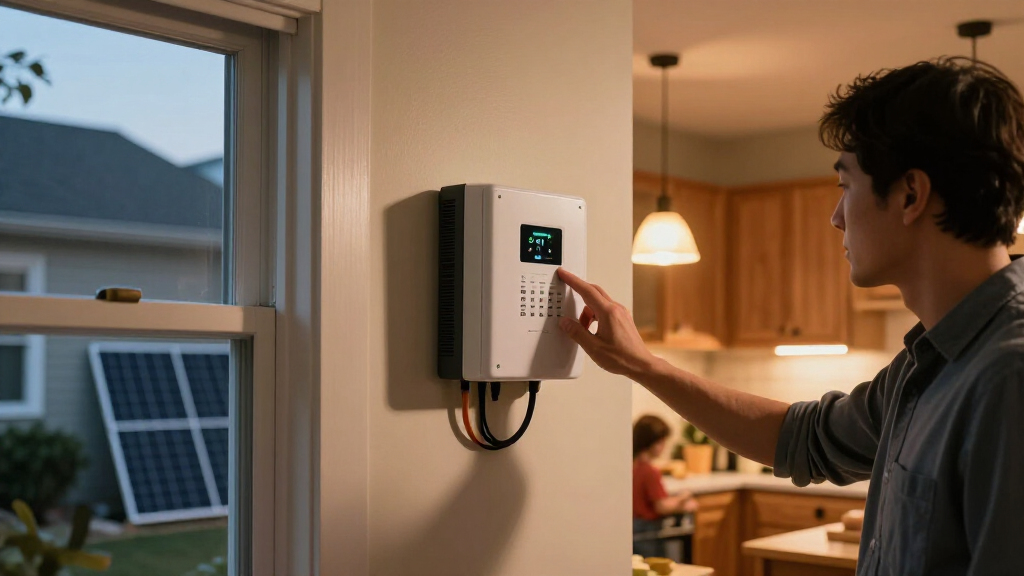

The best home battery backup systems in this roundup are uninterruptible power supplies (UPSs) for protecting computers, routers, and other electronics—not whole-home batteries for running major appliances. My best overall pick is the CyberPower CP1500PFCLCD, which pairs a higher-capacity design with pure sine wave output for compatible equipment. The APC BX1500M is a strong alternative for buyers who want AVR support, while the GOLDENMATE 1000VA/800W Lithium models stand out for lithium battery chemistry. The main tradeoffs are backup capacity, output type, battery replacement and form factor, so the right choice depends on what you need to keep running and for how long. Read on for the full breakdown of all 15 options and guidance on matching a UPS to your setup.

Get backup power and energy gear delivered free with Prime
- Fast, free delivery on millions of items
- Prime Video, Amazon Music and more included
- Member-only deals all year
Key Takeaways
- CyberPower CP1500PFCLCD earns the top spot for combining 1500VA-class capacity with pure sine wave output, a useful match for compatible PCs and sensitive electronics.
- APC BX1500M offers a different kind of appeal: AVR support and substantial capacity make it a contender for buyers focused on managing common voltage fluctuations.
- The two GOLDENMATE 1000VA/800W Lithium listings share the same stated capacity, so compare the exact listing and included features rather than assuming the gray and standard versions differ in performance.
- Compact standby choices such as the CyberPower ST425 and APC BE600M1 suit a router or modest device load better than a multi-device workstation.
- A higher VA figure alone does not tell you how long equipment will run; output watts, connected load, battery condition, and device compatibility matter when estimating useful backup time.


| home battery backup system | Outlets | Capacity | Warranty |
|---|---|---|---|
| APC Battery Backup 650VA/390W | 8 | 650VA / 390W | 3 years |
| GOLDENMATE 600VA/360W Lithium | 6 | 600VA / 360W | — |
| CyberPower CP1500PFCLCD PFC Si | 12 total; 6 battery backup and surge protected, 6 surge protected | 1500VA / 1000W | 3 years, including batteries |
| CyberPower EC850LCD Ecologic U | 12 | — | — |
| CyberPower ST625U Standby UPS | 8 total; 4 battery backup and surge protected, 4 surge protected | 625VA / 360W | 3 years |
| CyberPower CP1500AVRLCD3 Intel | 12 | 1500VA | 3 years |
| APC BX1500M UPS Battery Backup | 10 total: 5 battery backup and 5 surge-only | 1500VA | — |
| CyberPower CP2000PFCRM2U PFC S | 8 | 2000VA | — |
| CyberPower CP1000AVRLCD Intell | 9 | 1000VA | 3 years, including battery |
| GOLDENMATE 1000VA/800W Lithium | 8 | 1000VA | 10 years |
| GOLDENMATE 1000VA/800W Lithium | 8 | 1000VA | — |
| CyberPower SL700U Standby UPS | 8 | 700VA | — |
| APC BE600M1 UPS Battery Backup | 7 | 600VA | 3 years |
| CyberPower ST425 Standby UPS B | 8 | 425VA | — |
| Vertiv Liebert PowerUPS 200 PS | 8 | 1500VA | 2 years |
More Details on Our Top Picks
APC Battery Backup 650VA/390W Uninterruptible Power Supply for PC, BE650G1
I’d choose the APC BE650G1 for a desktop setup that needs a brief window to save work and shut down, not for keeping household equipment running through an extended outage. Its 390W output and eight outlets suit a computer, monitor, and accessories, while the mix of battery-backed and surge-only outlets helps separate essential gear from devices that only need surge protection. Compared with the CyberPower CP1500PFCLCD, this APC is a more modest, simpler fit, but it gives up both output capacity and the sine-wave feature suited to active PFC power supplies. The stated runtime is only about three minutes at a 100W load, so I wouldn’t treat it as a home-scale battery system. Its replaceable battery can extend the unit’s service life, though replacement requires a separate battery model.
Pros:- Eight outlets provide room for a computer setup, with battery backup and surge-only protection options.
- 390W capacity is suited to essential desktop equipment and peripherals.
- User-replaceable battery can extend the UPS’s usable life.
- Compact, wall-mountable design offers flexible placement.
Cons:- Runtime is limited; the provided estimate is about three minutes at a 100W load.
- Replacement requires purchasing the separate RBC17 battery model.
- Its 390W output is far below the CyberPower CP1500PFCLCD’s 1000W capacity.
Best for: Home-office users who want a compact UPS for a desktop and a few peripherals, with enough time to save files and shut down.
Not ideal for: Households seeking long outage coverage, or users running high-draw equipment that needs more than 390W of backup power.
- Capacity:650VA / 390W
- Input and output voltage:120V
- Outlets:8
- Estimated runtime:About 3 minutes at a 100W load
- Dimensions:7.09 × 11.18 × 3.39 in
- Weight:13.6 lb
- Battery average life:3 years
- Warranty:3 years
Our verdict“Choose the APC BE650G1 for basic desktop backup and orderly shutdowns, not prolonged home power coverage.”
GOLDENMATE 600VA/360W Lithium UPS Battery Backup and Surge Protector
The GOLDENMATE 600VA/360W is the lineup’s compact lithium choice: its LiFePO4 battery is specified for a lifespan of more than 10 years, appealing to buyers who would rather not plan around frequent lead-acid battery replacement. Its 76.8Wh capacity still sets a clear limit: this is a UPS for essential electronics and short interruptions, not a battery station for powering a home through a long outage. Compared with the APC BE650G1, it offers less rated output but adds USB charging and a wireless charging pad, while its lithium chemistry is the main differentiator. Six outlets keep the footprint practical, though normal operation requires a continuous utility connection. I’d pick it for a router, small electronics, or a tidy desk setup, not a high-load computer rack or broad household backup plan.
Pros:- LiFePO4 battery is specified for a lifespan of more than 10 years.
- Compact 2.1kg design is easy to place in a small work area.
- Wireless charging and USB Type-A and Type-C ports add convenient device charging.
- Six outlets support several low-power electronics.
Cons:- The 76.8Wh battery capacity limits backup duration.
- 360W output is lower than the APC BE650G1’s 390W and well below larger UPS options.
- Requires continuous connection to utility power for normal operation.
Best for: Apartment dwellers and desk users who want compact UPS protection for a router and small electronics, with a long-life battery and convenient device charging.
Not ideal for: Buyers needing long runtimes, high-wattage equipment support, or an off-grid power source that can operate without utility power.
- Capacity:600VA / 360W
- Battery type:LiFePO4
- Battery capacity:76.8Wh
- Battery voltage and capacity:25.6V, 3Ah
- Outlets:6
- USB charging:Type-C and Type-A, 10W total
- Wireless charging:15W
- Dimensions and weight:280 × 116 × 112mm; 2.1kg
Our verdict“Choose the GOLDENMATE for compact, low-maintenance backup of small electronics, but not for extended outages or heavy loads.”
CyberPower CP1500PFCLCD PFC Sinewave UPS Battery Backup and Surge Protector
For a powerful desktop or entertainment setup, I rank the CyberPower CP1500PFCLCD above the smaller UPS units here because it combines 1500VA/1000W capacity with sine-wave output for active PFC power supplies. That pairing matters for users whose computers need compatible power quality as well as enough headroom for multiple components. Its 12 outlets include six with battery backup, and the LCD shows operating status; automatic voltage regulation can correct some power fluctuations without drawing on the battery. Compared with the APC BE650G1, it supports substantially higher loads, but it is also much heavier at 24.9 pounds and remains a UPS rather than a long-duration home battery. I’d choose it for protecting a demanding workstation and network gear, while buyers with only a router or basic PC should look to a smaller, simpler unit.
Pros:- 1000W capacity supports heavier computer and entertainment loads than the 360–390W units in this batch.
- Sine-wave output is suited to active PFC power supplies.
- Automatic voltage regulation helps address some voltage fluctuations without using battery power.
- LCD panel and USB Type-A and Type-C ports provide status information and device charging.
Cons:- At 24.9 pounds, it is considerably heavier than compact standby UPS options.
- Its 1500VA capacity may not cover very high-power loads or provide long runtimes.
- Only six of its 12 outlets provide battery backup.
Best for: Users with an active-PFC desktop workstation, networking equipment, or home entertainment setup that needs compatible sine-wave output and higher UPS capacity.
Not ideal for: Buyers who need extended household backup, have only a few low-power devices, or want a lightweight unit that is easy to move.
- Capacity:1500VA / 1000W
- Output waveform:Sine wave
- Outlets:12 total; 6 battery backup and surge protected, 6 surge protected
- Batteries:2 × 12V
- Display:Tilting color LCD panel
- USB ports:1 Type-A, 1 Type-C
- Dimensions and weight:14 × 3.9 × 11 in; 24.9 lb
- Warranty:3 years, including batteries
Our verdict“Choose the CyberPower CP1500PFCLCD for a demanding PC or entertainment setup that benefits from sine-wave output and 1000W capacity.”
CyberPower EC850LCD Ecologic UPS Battery Backup and Surge Protector
The CyberPower EC850LCD stands out for buyers balancing multiple connected devices with lower standby energy use. Its ECO mode can switch off designated peripherals when the connected computer is shut down or sleeping, which may help avoid leaving accessories powered unnecessarily. The 12 outlets offer more connection points than the CyberPower ST625U, making this a better match for a computer-and-entertainment arrangement; the LCD also gives users a view of operating status. The tradeoff is that outlet count should not be mistaken for long-duration backup: the supplied data lists about two minutes at full load, and the 500W maximum limits the supported load. Management software requires a USB connection, adding setup overhead. I’d favor it over the simpler ST625U when ECO control and a larger outlet count matter, but skip it if outage runtime is the main goal.
Pros:- ECO mode can reduce unnecessary power use by switching off designated peripherals.
- Twelve outlets accommodate a multi-device computer or entertainment setup.
- Multifunction LCD panel displays UPS status.
- Three-year warranty includes the battery.
Cons:- Provided runtime is about two minutes at full load, limiting outage coverage.
- USB connection is required for management software.
- 500W maximum output is lower than the CyberPower CP1500PFCLCD’s 1000W capacity.
Best for: Home-office or entertainment users with several peripherals who want ECO-mode control and an LCD status display.
Not ideal for: People who need extended backup during outages, or small setups where 12 outlets and computer-connected management feel unnecessary.
- Maximum power:500W
- Output wattage:510W
- Outlets:12
- Estimated runtime:About 2 minutes at full load
- Battery type:Sealed lead acid
- Input voltage:120V
- Battery average life:3 years
- Temperature range:32°F to 104°F
Our verdict“Choose the EC850LCD if ECO mode and outlet capacity matter more than runtime; look to a higher-capacity UPS for heavier loads.”
CyberPower ST625U Standby UPS Battery Backup and Surge Protector
The CyberPower ST625U is the easiest fit here for a small desk that needs basic outage protection without the footprint or weight of a larger tower UPS. At 5 pounds, it is much easier to position than the 24.9-pound CP1500PFCLCD, and its eight outlets plus two USB ports cover a modest computer or entertainment arrangement. The limitation is capacity: 360W and a stated runtime of about two minutes make this a short bridge for saving work or riding through a brief interruption, not a way to keep devices running for hours. Only four outlets provide battery backup; the other four are surge-only. Compared with the APC BE650G1, it offers USB charging and a lighter design, while its 360W rating is slightly lower. I’d choose it for a basic home-office setup, but not for equipment that needs sine-wave output or longer backup.
Pros:- Five-pound weight makes it easier to place than larger tower UPS units.
- Eight outlets include four battery-backed and surge-protected outlets.
- Two USB ports add charging options for small devices.
- Three-year warranty and UL certification are specified.
Cons:- 360W capacity and roughly two-minute runtime limit outage coverage.
- Only half of the outlets provide battery backup.
- Its 360W rating is slightly below the APC BE650G1’s 390W.
Best for: Students and home-office users who want a lightweight UPS for a modest desktop, router, or entertainment setup with USB charging.
Not ideal for: Users running high-draw computers, active-PFC equipment requiring specified sine-wave output, or devices that must remain powered through a long outage.
- Capacity:625VA / 360W
- Outlets:8 total; 4 battery backup and surge protected, 4 surge protected
- USB ports:2
- Input voltage:120V
- Output voltage:120V
- Estimated runtime:About 2 minutes
- Dimensions:3.2 × 9.8 × 5.8 in
- Weight:5 lb
- Warranty:3 years
Our verdict“Choose the ST625U for lightweight, basic protection at a small desk, not for high loads or extended runtime.”
CyberPower CP1500AVRLCD3 Intelligent LCD UPS Battery Backup
The CyberPower CP1500AVRLCD3 suits buyers who want a clear readout and enough rated output for a desktop, network gear, and other essential electronics. Its 1500VA/900W capacity matches the APC BX1500M on stated power, while the color LCD and automatic voltage regulation make changing power conditions easier to track. Twelve outlets also give it more connection points than the APC’s ten, though only the CyberPower description specifies USB charging ports.
This is a short-outage bridge, not a whole-home battery: the listed runtime is just three minutes at full load, so the practical aim is to save work or shut equipment down cleanly. Its 23.8-pound mini-tower form is also less convenient to move than a smaller desk-side unit. Choose it for visibility and outlet count; skip it if you need extended backup or appliance power.
Pros:- 1500VA/900W capacity for a desktop and supporting electronics
- Color LCD displays real-time power and battery status
- Automatic voltage regulation helps manage voltage fluctuations
- Twelve outlets and USB charging ports support a varied desk setup
Cons:- Listed runtime at full load is only three minutes
- At 23.8 pounds, it is heavy for a mini-tower UPS
- A UPS of this type is not a substitute for a high-capacity home battery system
Best for: Desktop users or home-office owners who want a status display, voltage regulation, and several outlets for computers and networking equipment.
Not ideal for: Households seeking long-duration backup for refrigerators, heaters, or multiple high-draw appliances; its listed full-load runtime is only three minutes.
- Capacity:1500VA
- Maximum power:900W
- Input voltage:120V
- Outlets:12
- Form factor:Mini-tower
- Listed runtime:3 minutes
- Battery charge time:8 hours
- Weight:23.8 lb
- Warranty:3 years
Our verdict“Pick the CP1500AVRLCD3 if outlet count and at-a-glance monitoring matter more than long outage runtime.”
APC BX1500M UPS Battery Backup & Surge Protector for Computers and Electronics
The APC BX1500M is a sensible fit for buyers who want a familiar 1500VA/900W desktop UPS with a battery they can replace rather than treating the whole unit as disposable. That serviceability is its clearest distinction from the CyberPower CP1500AVRLCD3, whose supplied details list a three-year warranty but do not specify a replaceable battery. The APC also provides automatic voltage regulation and an LCD, giving users a way to monitor power conditions and reduce unnecessary battery cycling.
Its ten outlets are split between five battery-backed and five surge-only sockets, so buyers must reserve backed outlets for equipment that needs to stay on. Unlike the CyberPower’s twelve-outlet layout, this arrangement offers fewer connections and no stated USB charging ports. The replacement battery is sold separately, and runtime depends on load; this remains a computer and electronics UPS, not backup for a refrigerator or heater.
Pros:- 1500VA/900W rating for computers and home electronics
- Replaceable battery supports longer-term maintenance
- Automatic voltage regulation helps handle voltage fluctuations
- LCD provides power and system status information
Cons:- Replacement battery is sold separately
- Only five of the ten outlets provide battery backup
- Not designed for high-demand appliances such as refrigerators or heaters
Best for: PC owners and home-office users who want 900W-class backup and the option to replace the UPS battery during maintenance.
Not ideal for: People needing long-duration household backup or buyers who want every outlet battery-backed; half of this model’s outlets are surge-only.
- Capacity:1500VA
- Maximum power:900W
- Voltage:120V
- Outlets:10 total: 5 battery backup and 5 surge-only
- Automatic voltage regulation:Yes
- Display:LCD
- Replacement battery:APCRBC124, sold separately
Our verdict“Choose the BX1500M if replaceable-battery upkeep matters more than having the CyberPower CP1500AVRLCD3’s larger outlet count.”
CyberPower CP2000PFCRM2U PFC Sinewave UPS Battery Backup
The CyberPower CP2000PFCRM2U is the lineup’s rack-oriented choice, aimed at people protecting security, networking, or audio/video equipment housed in a rack. Its 2000VA/1200W rating exceeds the 900W APC BX1500M and CP1500AVRLCD3, giving a compatible setup more rated capacity before reaching the unit’s limit. The short-depth rackmount design also helps it fit where a conventional tower UPS would take up awkward floor or shelf space.
That extra output does not mean long outage coverage: the listed runtime at full load is only two minutes, even shorter than the CP1500AVRLCD3’s three-minute figure. Its eight outlets are fewer than either 1500VA tower, and the rack form factor only makes sense if you already have suitable rack space. This is a power-protection component for a rack system, not a portable home battery for running household appliances.
Pros:- 2000VA/1200W rating is higher than the 1500VA/900W tower options here
- Short-depth rackmount design saves space in a compatible rack
- Multifunction color LCD supports system monitoring
- Automatic voltage regulation helps address voltage changes
Cons:- Listed full-load runtime is only two minutes
- Eight outlets provide fewer connection points than the 1500VA CyberPower tower
- Rack form factor is unsuitable for buyers without rack equipment
Best for: Home-network, security, and AV operators with a rack who need more rated capacity for compatible equipment.
Not ideal for: Buyers without rack space or anyone seeking portable, extended backup for household appliances.
- Capacity:2000VA
- Maximum power:1200W
- Input voltage:120V
- Outlets:8
- Form factor:Rackmount
- Listed runtime:2 minutes
- Battery average life:3 years
- Enclosure material:Plastic
Our verdict“Choose this model for higher rated output in a rack-based network or AV setup, not for longer home outage coverage.”
CyberPower CP1000AVRLCD Intelligent LCD UPS Battery Backup
The CyberPower CP1000AVRLCD is the smaller-capacity pick for a computer, router, and a few other essential devices—not a whole-room backup plan. At 1000VA/600W, it has less headroom than the CP1500AVRLCD3’s 1500VA/900W, but its mini-tower dimensions suit a desk where the larger model may feel excessive. Nine outlets offer a useful spread for a modest setup, and its LCD and automatic voltage regulation provide the monitoring features found on the bigger CyberPower.
The tradeoff is limited reserve: the listed full-load runtime is two minutes, so connected equipment needs to be chosen carefully if the goal is a clean shutdown. Its three-year warranty includes the battery, a helpful detail for ownership planning, but the data does not promise extended runtime. I would choose this over the CP1500AVRLCD3 for a lower-demand desk; users with several power-hungry devices should look to the higher-output model.
Pros:- Compact mini-tower format for a desk-side setup
- LCD shows real-time power and battery information
- Automatic voltage regulation helps manage voltage fluctuations
- Three-year warranty includes the battery
Cons:- 600W maximum output is below the 900W CP1500AVRLCD3
- Listed runtime at full load is only two minutes
- Designed for 120V power and not suitable for international voltage systems
Best for: Home-office users with one computer and networking gear who want a space-conscious UPS with an LCD and voltage regulation.
Not ideal for: Users running multiple high-draw devices or expecting to keep equipment powered through a lengthy outage; its capacity and listed full-load runtime are limited.
- Capacity:1000VA
- Maximum power:600W
- Input voltage:120V
- Outlets:9
- Form factor:Mini-tower
- Listed runtime:2 minutes
- Dimensions:10.2 x 3.9 x 9 inches
- Battery average life:3 years
- Warranty:3 years, including battery
Our verdict“Pick the CP1000AVRLCD for a modest computer setup where compact size matters more than the extra capacity of the CP1500AVRLCD3.”
GOLDENMATE 1000VA/800W Lithium UPS Battery Backup & Surge Protector, Gray
The GOLDENMATE 1000VA/800W Lithium UPS stands apart from the lead-acid-style options in this group through its stated 46-minute runtime and lithium iron phosphate battery with a listed average life of ten years. Those figures make it the strongest fit here for buyers trying to keep a lower-load computer, network, or telecom setup running longer than the two- to three-minute full-load figures listed for the CyberPower CP1000AVRLCD and CP1500AVRLCD3. It also offers 800W output despite its 1000VA rating, giving it more wattage headroom than the 600W CP1000AVRLCD.
Runtime varies with connected load, so the 46-minute figure should not be read as a guarantee for a heavily loaded system. The unit has eight outlets, fewer than the CyberPower CP1500AVRLCD3, and its listed voltage details call for checking compatibility with the home supply before purchase. Its buzzer cannot be turned off during power fluctuations. This is still a device-level UPS, not a whole-home battery system.
Pros:- Listed runtime of 46 minutes, subject to connected load
- Lithium iron phosphate battery listed with a ten-year average life
- 800W output exceeds the CyberPower CP1000AVRLCD’s 600W rating
- LCD provides real-time system information
Cons:- Only eight outlets, fewer than the CyberPower CP1500AVRLCD3
- Buzzer cannot be turned off during power fluctuations
- Listed voltage details should be checked against the home supply before use
Best for: Home-office or network users prioritizing a longer stated runtime and a long-life lithium iron phosphate battery for compatible equipment.
Not ideal for: Buyers who need silent alarms, more than eight outlets, or a whole-home system capable of powering major appliances.
- Capacity:1000VA
- Maximum power:800W
- Input voltage:120V
- Listed voltage:110V
- Outlets:8
- Listed runtime:46 minutes
- Battery cell type:Lithium ion
- Battery average life:10 years
- Warranty:10 years
Our verdict“Choose the GOLDENMATE if longer stated runtime and lithium battery longevity matter more than extra outlets or a silent alarm.”
GOLDENMATE 1000VA/800W Lithium UPS Battery Backup & Surge Protector
The GOLDENMATE 1000VA/800W is a practical choice for keeping a desktop, router, and other essential electronics powered long enough to save work or ride through a short outage. Its LiFePO4 battery is rated for an average 10-year life, a meaningful advantage over the lead-acid batteries in the CyberPower ST425 and the shorter stated battery life of the CyberPower SL700U. Eight outlets make it easier to connect a small workstation without adding a power strip. The LCD panel also gives a clearer view of power and battery status than the APC BE600M1’s simpler setup. This is still a UPS, not a whole-home battery: the 800W ceiling and roughly 30-minute runtime at full load limit it to electronics and brief interruptions. Its cooling fan may also be audible under heavier use.
Pros:- LiFePO4 battery with a stated average life of 10 years
- 800W maximum output suits a computer and connected networking equipment
- Eight outlets provide room for several devices
- LCD shows power and battery status, with surge protection and listed safety certifications
Cons:- About 30 minutes of runtime is specified, limiting support during extended outages
- Cooling fan noise may be noticeable under heavy use
- Requires checking that the connected equipment is within the supported 90–140V outlet range
Best for: Home-office users who want a UPS for a computer and network gear, and prefer a longer-lived battery chemistry over a small lead-acid unit.
Not ideal for: Households seeking hours of backup for appliances, heating, or household circuits; its 800W output and short full-load runtime are not designed for that job.
- Maximum output:800W
- Capacity:1000VA
- Battery chemistry:Lithium iron phosphate
- Outlets:8
- Battery charge time:10 hours
- Output voltage:120V
- Form factor:Tower
- Listed certifications:UL1642, UL1973, UL1778, FCC, TUV
Our verdict“Choose this GOLDENMATE if long battery life and an LCD matter more than extended outage coverage or silent operation.”
CyberPower SL700U Standby UPS Battery Backup and Surge Protector
The CyberPower SL700U suits buyers who need a tidy backup for a modest desktop setup rather than substantial outage coverage. Its slim, wall-mountable body is easier to place beside a desk than the tower-style GOLDENMATE 1000VA/800W, and USB charging ports add a convenient spot for a phone or small accessory. Eight outlets provide flexibility, though the 370W limit means this model is better for a router, monitor, and low-demand computer than a high-powered workstation. Its stated two-minute runtime at full load is enough for a quick save-and-shutdown, not continued work through a blackout. Compared with the APC BE600M1, the SL700U emphasizes a thinner installation and USB charging, while the APC offers a user-replaceable battery. The stated three-year battery life also makes long-term ownership less appealing.
Pros:- Slim profile supports discreet placement and wall mounting
- Eight outlets accommodate several home-office devices
- USB ports provide a convenient way to charge mobile devices
- Includes surge protection and an Energy Star listing
Cons:- Only two minutes of stated runtime at full load
- 370W maximum output is restrictive for demanding computer setups
- Stated average battery life is three years
Best for: Apartment dwellers and desk-based users who need a discreet UPS for a router, monitor, and modest computer load.
Not ideal for: Users with power-hungry PCs or anyone expecting to keep working through a long outage; output is limited to 370W and full-load runtime is short.
- Maximum output:370W
- Capacity:700VA
- Outlets:8
- Battery charge time:8 hours
- Battery average life:3 years
- Dimensions:2.76 × 12.76 × 5.4 inches
- Weight:6.8 pounds
- Certifications:Energy Star, RoHS
Our verdict“Pick the SL700U for compact desk-side protection and quick shutdown time, not for extended backup.”
APC BE600M1 UPS Battery Backup & Surge Protector for Computer, Router, NAS
The APC BE600M1 is aimed at buyers protecting a few essentials—such as a router, NAS, and computer—who want the option to replace the battery rather than retire the entire UPS. That serviceability gives it a distinct advantage over the CyberPower ST425, whose listed battery is lead-acid and whose product data does not specify user replacement. Its seven outlets and USB-A port cover a small electronics setup, while its compact case is easier to fit on a shelf than the taller GOLDENMATE 1000VA/800W. The tradeoff is modest capacity: at 330W, it has less headroom than the GOLDENMATE, and its three-minute runtime is for brief outages and orderly shutdowns. There is no LCD for detailed status, so buyers who want at-a-glance information may prefer a display-equipped model.
Pros:- User-replaceable battery can extend the UPS’s useful life
- Seven outlets combine battery backup and surge protection
- USB-A port offers convenient device charging
- Compact dimensions suit shelves and smaller work areas
Cons:- 330W maximum output leaves limited headroom for demanding equipment
- Listed runtime is only three minutes
- No LCD for detailed battery and power-status information
Best for: People protecting a home router, NAS, and modest computer who want to extend UPS service life by replacing the battery.
Not ideal for: Owners of high-wattage computers or buyers who need a status display and longer operating time during outages.
- Maximum output:330W
- Capacity:600VA
- Outlets:7
- Battery charge time:10 hours
- Battery:User-replaceable
- USB connector:USB Type-A
- Dimensions:4.13 × 10.79 × 5.47 inches
- Warranty:3 years
Our verdict“Choose the APC BE600M1 if replaceable-battery serviceability matters more than high output or detailed on-device monitoring.”
CyberPower ST425 Standby UPS Battery Backup and Surge Protector
The CyberPower ST425 is the simplest fit here for protecting low-demand electronics from brief interruptions and power surges. Its eight outlets give a router, modem, and a few accessories plenty of connection options, but its 260W ceiling places it below the APC BE600M1 and well below the GOLDENMATE 1000VA/800W. That makes it a better match for basic networking equipment than a gaming PC or a workstation with several power-hungry components. The listed one-minute runtime is a narrow safety window for saving work or shutting equipment down, not a way to keep using it through an outage. Unlike the APC, the product data does not identify a user-replaceable battery, and its lead-acid chemistry means battery replacement is part of long-term ownership. Its compact design and connected-equipment guarantee may appeal to buyers prioritizing straightforward surge and outage protection.
Pros:- Eight outlets support several connected electronics
- Compact case fits home and office spaces
- Provides both battery backup and surge protection
- Includes a three-year warranty and connected-equipment guarantee
Cons:- One minute of stated runtime offers only a brief shutdown window
- 260W maximum output excludes many demanding computer setups
- Lead-acid battery requires eventual replacement
Best for: Budget-conscious households seeking a basic UPS for a modem, router, or other low-power electronics.
Not ideal for: Gaming-PC owners, users with equipment above 260W, or anyone who needs meaningful runtime during an extended outage.
- Maximum output:260W
- Capacity:425VA
- Outlets:8
- Battery chemistry:Lead acid
- Battery charge time:76 A (as listed)
- Output voltage:120V
- Frequency range:47–63 Hz
- Enclosure material:Plastic
Our verdict“The ST425 makes sense for basic, low-power equipment when compact surge and outage protection matters more than runtime.”
Vertiv Liebert PowerUPS 200 PSA6E-1500LVT UPS Battery Backup 1500VA AVR
With 850W output and automatic voltage regulation, the Vertiv Liebert PowerUPS 200 is the strongest match in this batch for buyers protecting several higher-demand electronics. AVR can help manage voltage fluctuations without relying on battery power for every correction, while the user-replaceable battery makes future maintenance more practical than with models whose data does not specify battery replacement, such as the CyberPower ST425. Eight outlets and LED runtime indicators suit a network rack, surveillance setup, or home office with multiple connected devices. The cost of that extra headroom is a larger footprint: at 15.75 inches long, it is less convenient for cramped desks than the compact APC BE600M1. Its product data does not give a runtime figure, and the two-year warranty is shorter than the three-year terms listed for the APC and CyberPower models. It remains a UPS for electronics, not a whole-home battery system.
Pros:- 850W maximum output provides the highest stated capacity among these five products
- Automatic voltage regulation helps manage voltage fluctuations
- User-replaceable batteries support longer-term maintenance
- Eight outlets and LED runtime indicators suit multi-device setups
Cons:- Product data does not specify runtime
- 15.75-inch length may be awkward in compact spaces
- Two-year warranty is shorter than the three-year terms listed for the APC BE600M1 and CyberPower models
Best for: Home-office, networking, and surveillance users who need up to 850W of UPS capacity, AVR, and a replaceable battery.
Not ideal for: People seeking a small UPS for a tight desk, or buyers who need a clearly specified runtime or backup for household appliances and circuits.
- Maximum output:850W
- Capacity:1500VA
- Input voltage:120V
- Output voltage:120V
- Outlets:8
- Voltage regulation:Automatic voltage regulation
- Battery:User-replaceable
- Dimensions:15.75 × 5.71 × 7.68 inches
- Warranty:2 years
Our verdict“Choose the Vertiv if higher UPS output and AVR matter more than a compact footprint or a stated runtime figure.”
How We Picked
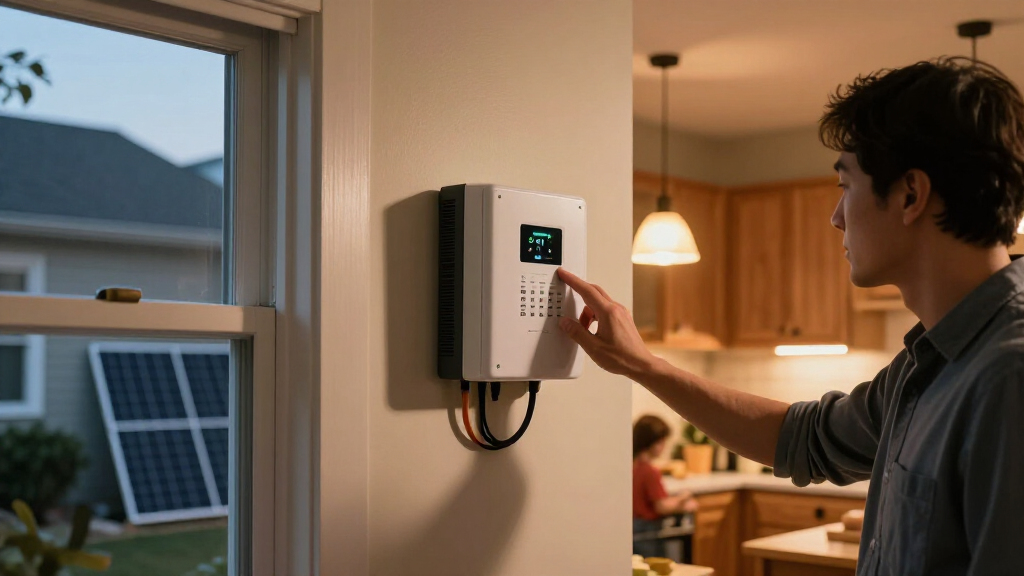
I ranked these systems by how well their stated capabilities fit common home backup jobs: keeping a router online, protecting a desktop computer, or supporting a larger electronics setup through a short outage. I gave weight to usable watt capacity, output type, AVR or standby operation, practical controls and display information, and whether the listed battery chemistry offers a meaningful difference for ownership. I also treated form factor and the likely scale of the setup as part of fit: a compact unit can be a better home choice than a larger UPS if it serves the intended devices without excess bulk.
The ranking favors options with a clearer balance of capacity, compatibility, and useful power-management features, rather than treating the largest VA number as an automatic winner. Pure sine wave models rank well for compatible equipment, while smaller standby units are positioned for simple, lower-load jobs. Closely related listings, including the two GOLDENMATE 1000VA/800W models, are kept distinct but not assigned different performance claims without evidence of a meaningful specification difference. These products are UPS units for electronics; none should be read as a substitute for a whole-home battery system.
Factors to Consider When Choosing Best Home Battery Backup Systems
Before choosing, start with the equipment you need to protect and the job you expect the battery to do. A UPS can cover a brief outage, give you time to save work, or keep a router running while power is interrupted, but those goals call for different capacity and features. These checks help avoid paying for a large unit when a compact one fits—or buying a small UPS that cannot support your actual load.
Match the UPS to the Job, Not the Room
Write down the devices you want powered during an outage and separate must-haves from equipment that can shut down. A router and modem draw far less than a desktop computer with a monitor, so one UPS may not suit both setups equally well. Add the devices’ wattage, using their labels or published specifications, and leave room for load changes rather than sizing right to the limit. A UPS for saving files and shutting down safely has a different purpose from one intended to maintain internet access for hours. Most models in this roundup are designed for electronics, not refrigerators, heating equipment, or an entire house. If your goal is to power large appliances, look at a properly sized home energy storage system instead.
Read Both VA and Watt Ratings
VA and watts describe different limits, and both matter when matching a UPS to devices. The VA figure is not a promise of runtime, while the watt rating indicates the maximum real power the unit can supply. Check your equipment’s actual draw, especially for a desktop with a graphics card, and keep the combined load below the UPS’s watt limit. Avoid comparing two models by VA alone: a unit with a higher VA rating may not offer a proportionally higher watt capacity. Leave headroom for startup or changing demand, and check the manufacturer’s load-versus-runtime information when available. If you cannot find a reliable runtime estimate for your planned load, treat battery duration as uncertain rather than assuming a particular number of minutes.
Choose Output Type for Your Equipment
Some UPSs provide pure sine wave output on battery, while other designs use a stepped or simulated waveform. The difference can matter with certain power supplies, especially active-PFC computer power supplies, which may be more sensitive to the shape of backup power. A pure sine wave model such as the CyberPower CP1500PFCLCD is a sensible shortlist candidate for that kind of setup, but confirm compatibility with the device manufacturer when possible. Many simpler electronics do not need the same level of output matching, so paying for a feature your equipment does not benefit from may not be worthwhile. Check whether the stated waveform applies during battery operation, not only when utility power is present. Compatibility matters more than choosing the most elaborate output type by default.
Understand AVR, Standby Operation, and Outage Behavior
Automatic voltage regulation can correct some high or low input voltage without switching to battery, which can help conserve battery charge during voltage fluctuations. Standby UPS designs are often simpler and may fit modest, straightforward loads, while line-interactive models commonly add AVR and more detailed monitoring. The right choice depends on the power conditions in your home and the equipment attached—not on a feature list in isolation. A UPS does not correct every power problem, and surge protection is not a replacement for sound household wiring or a whole-home surge protector. Check how the unit responds to an outage and whether its alarm or display gives information you will use. If frequent voltage changes are your concern, prioritize the relevant regulation features over extra outlets.
Compare Battery Chemistry and Replacement Plans
Battery chemistry affects ownership, but it does not make capacity or runtime irrelevant. The GOLDENMATE 1000VA/800W listings use lithium batteries, which may appeal to buyers weighing battery longevity and unit design; compare the maker’s specifications and service guidance with conventional UPS options before deciding. Verify whether the battery is user-replaceable, what replacement parts are supported, and how the manufacturer handles battery service. A sealed battery can wear down even when a UPS spends most of its life plugged in, so age and maintenance matter. Do not assume that lithium chemistry means you can ignore battery checks or that every lithium model offers the same service life. Pick a chemistry and replacement path that suit how long you plan to keep the unit.
Plan Outlet Layout, Noise, and Placement
Count the devices you need to connect, then check which outlets provide battery backup and which provide surge protection only. Some UPS designs also include USB charging or data connections, but those features should not replace a clear outlet plan. Make sure the plug arrangement leaves room for bulky adapters and that the unit can sit near your equipment with ventilation around it. A larger tower or rack-style model may provide a better fit for an organized workstation or equipment cabinet, but it can be awkward beside a small desk. Consider alarm sounds and display brightness if the UPS will be in a bedroom or shared living space. Measure the space and map cable reach before buying; a capable UPS is less useful if it cannot be placed safely where you need it.
Frequently Asked Questions
Can any of these UPS units power my whole home during an outage?
No. These are UPS products intended to provide backup power to electronics such as computers, networking gear, and related equipment. Their capacity is far below what is normally needed to run a home’s major circuits or appliances. For whole-home backup, you would need a home battery system sized for your loads and installed with compatible transfer equipment. Use a UPS here for short-term device protection or controlled shutdown, not as a substitute for household energy storage.
How do I estimate how long a UPS will run my router or computer?
Start with the combined watt draw of the devices you plan to connect, then check the UPS manufacturer’s runtime chart for that load. Runtime can change substantially with load, battery age, temperature, and battery condition, so the VA number alone cannot provide a reliable estimate. A router-only setup may run much longer than a desktop and monitor on the same unit. If staying online is the priority, measure the actual draw where practical and choose a model with a suitable runtime margin. Treat published runtime as an estimate, not a guarantee.
Should I choose pure sine wave output for my desktop computer?
It depends on the computer’s power supply and the UPS’s output while running on battery. Some active-PFC power supplies can be sensitive to simulated waveforms, so pure sine wave output can be a safer match for a compatible system. Check the computer or power-supply maker’s guidance rather than relying only on a broad rule. In this roundup, the CyberPower CP1500PFCLCD and CP2000PFCRM2U are the pure sine wave options identified by their product names. If your equipment has no stated waveform requirement, weigh compatibility against the added size and features you may not need.
Is a lithium UPS automatically a better choice than a conventional UPS?
No single battery chemistry is best for every buyer. Lithium models such as the GOLDENMATE units may appeal to people who value lithium battery characteristics, but the decision should also account for watt capacity, output, replaceability, service support, and the manufacturer’s battery guidance. A conventional UPS may be a better fit if its features match your equipment and its replacement path is easier for your needs. Compare the full specifications and ownership information rather than assuming chemistry alone predicts runtime or lifespan. The two GOLDENMATE 1000VA/800W listings share stated capacity, so check their exact listing details before choosing between them.
Can I plug a laser printer or space heater into a UPS?
Usually, these are poor candidates for a small electronics UPS. Laser printers can draw high power in bursts, and space heaters require sustained power that can exceed a UPS’s watt capacity or drain its battery quickly. Check the device’s power requirements against the UPS’s maximum watt output and the manufacturer’s permitted loads before connecting anything. Do not connect equipment that the UPS maker excludes, even if the plug fits. Reserve the battery-backed outlets for devices whose operation matters during an outage, such as a computer, router, or modem.
Conclusion
For most buyers seeking a UPS for a computer and connected electronics, my best overall pick is the CyberPower CP1500PFCLCD for its capacity and pure sine wave output. For best value, compare the CyberPower EC850LCD or CP1000AVRLCD against your actual load and desired monitoring features rather than choosing by VA alone. The best premium fit is the CyberPower CP2000PFCRM2U for buyers who need a larger, rack-oriented pure sine wave option and have room for its form factor. For beginners protecting a modest setup, the APC BE600M1 or CyberPower ST425 keeps the decision simpler; for a specific need such as lithium battery chemistry, shortlist the GOLDENMATE 1000VA/800W models and verify the exact listing details. None of these is a whole-home battery, so choose a different system if you need to power major appliances or household circuits.
Halloween Picks
halloween
As an affiliate, we earn on qualifying purchases.