TL;DR
A Green Building Advisor guest report published Oct. 15, 2026, describes how Zara D’Cotta’s search for explanations for unexplained symptoms led her to building biology and questions about the electrical environment in homes. The supplied report excerpt does not establish that electrical fields caused her symptoms or provide findings from a completed electrical assessment.
Green Building Advisor published a guest report on Oct. 15, 2026, in which Zara D’Cotta describes how investigations into her health led her to building biology and the electrical environment inside homes. The account raises questions about how indoor conditions are assessed, but the excerpt provided does not show that electrical exposure caused her symptoms or establish a health risk.

Get backup power and energy gear delivered free with Prime
- Fast, free delivery on millions of items
- Prime Video, Amazon Music and more included
- Member-only deals all year
D’Cotta writes that she was diagnosed with breast cancer shortly before her 30th birthday and later with melanoma, two years after the first diagnosis. She says both cancers were detected before spreading. After treatment and further surgery, she developed more than 20 symptoms that she says clinicians could not adequately explain.
She reports experiencing heart palpitations while sitting on her living-room couch and tinnitus while trying to fall asleep. Symptoms also became severe at one coworking space, she writes, eventually leading her to stop working there. D’Cotta says the practitioners she consulted generally attributed her symptoms to post-traumatic stress.
According to her account, a healthcare practitioner asked about her history in different buildings and recommended an assessment for mold. The supplied excerpt says a building biologist conducted airborne sampling and moisture testing. It also describes a gauss meter D’Cotta used to assess her exposure to alternating-current magnetic fields in places where she spent extended periods, including her couch, desk and bed. The excerpt ends before reporting assessment results.
Why Indoor Electrical Conditions Matter
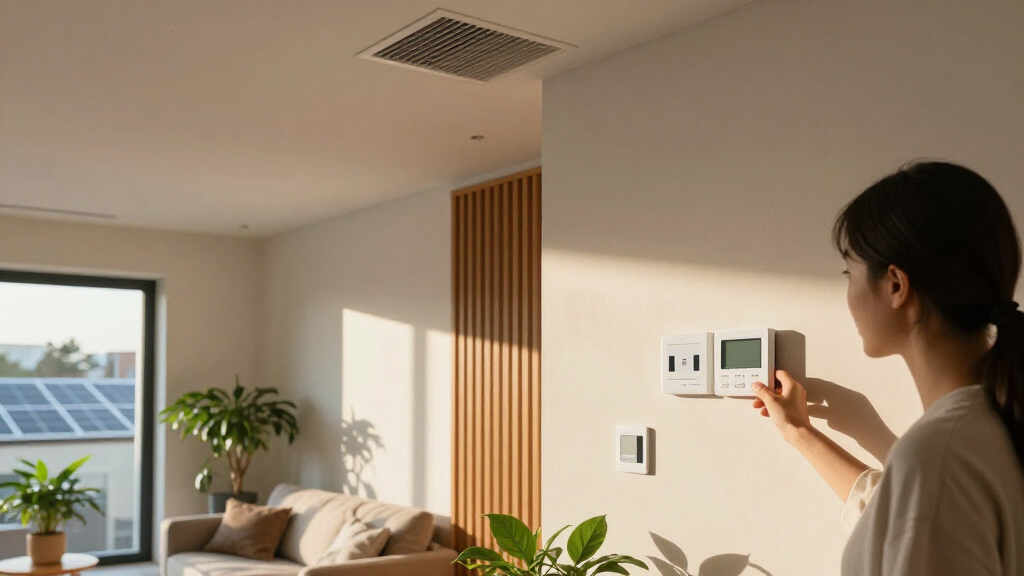
The account draws attention to an aspect of home design that can be hard to see or evaluate: the electrical environment in occupied rooms. D’Cotta’s description of measuring AC magnetic fields at her couch, desk and bed suggests that the places where people spend long periods can be part of an indoor-environment investigation.
For readers considering building assessments, the report also illustrates the need to distinguish measurement from medical explanation. An instrument reading can describe an environmental condition, but the excerpt does not show that any measured field caused D’Cotta’s symptoms. It provides no medical evidence, exposure limits, or results that would support a broader conclusion about health effects.
The practical relevance is therefore limited but clear: people investigating indoor conditions may encounter several possible factors, including moisture, airborne contaminants and electrical fields. The report presents D’Cotta’s experience as a personal account, not a clinical finding or a general assessment of home electrical safety.
Products Worth Considering

LEVOIT Vital 200S-P Smart Air Purifier for Large Rooms, White

Blueair Signature SP1i Smart Air Purifier

Levoit Eleva 300X Air Purifier with Sealed HEPA Filtration
As an affiliate, we earn on qualifying purchases.
From Health Investigation to Building Biology
D’Cotta places the electrical inquiry within a longer search for explanations following two cancer diagnoses, the loss of a close friend to breast cancer, and the emergence of numerous symptoms. She says she consulted several specialists, including a neurologist, immunologist, oncologist and radiologist. In her account, the focus on buildings began when a practitioner asked where she had lived and whether her symptoms varied between locations.
The first suggested step was an assessment for mold, based on the practitioner’s questions and genetic testing that D’Cotta says indicated she might be more susceptible to illness associated with water-damaged buildings. The excerpt then mentions air sampling and moisture testing, before turning toward electromagnetic radiation and magnetic-field measurements. It does not provide the full testing record or explain how the work proceeded from one investigation to the next.
The source is a guest blog by D’Cotta, rather than a reported study or clinical guidance. That distinction matters: the account documents her stated experiences and path of inquiry, while leaving independent verification and scientific conclusions outside the supplied material.
“When my home became part of my health investigation”
— Zara D’Cotta, Green Building Advisor guest author
What the Report Does Not Establish
The provided excerpt does not include the findings from the mold assessment or the magnetic-field measurements. It is therefore unclear what levels were measured, whether any readings were considered unusual, or whether D’Cotta changed anything in her home as a result.
Nor does the material establish that electrical fields, mold or another building condition caused her symptoms. D’Cotta describes symptoms and investigations in her own account, while the excerpt offers no clinical assessment tying those symptoms to a specific exposure. It also gives no research review, comparison group or expert commentary on health effects.
The report’s headline presents the electroclimate as an overlooked part of home design, but the supplied text is incomplete and does not set out design standards or recommendations. Any health or safety conclusions beyond the details in the account remain unconfirmed.
Further Assessment Details Needed
The next useful development would be access to the full report, including the results of the air, moisture and magnetic-field assessments and the methods used to collect them. Those details would help readers understand what was measured and how the author interpreted the findings.
The supplied material does not announce a planned follow-up, a new study or a change to building guidance. Until more information is available, the report can be read as D’Cotta’s account of how her health investigation brought her to building biology—not as proof that a particular electrical condition in a home causes illness.
Key Questions
What is the news in the Green Building Advisor report?
Zara D’Cotta’s guest report, published Oct. 15, 2026, recounts how a personal health investigation led her to examine building conditions, including electrical fields inside homes.
Does the report show that electrical fields caused D’Cotta’s symptoms?
No. The supplied excerpt describes symptoms and field measurements but provides no evidence establishing a cause or linking a specific reading to her health.
What parts of her home did D’Cotta measure?
She says she used a gauss meter to assess exposure to AC magnetic fields in places where she spent extended periods, including her couch, desk and bed. The excerpt does not include the readings.
What other building assessments are mentioned?
D’Cotta says a building biologist conducted airborne sampling and moisture testing as part of an assessment prompted by concerns about mold. The supplied passage does not report the results.
Source: rss