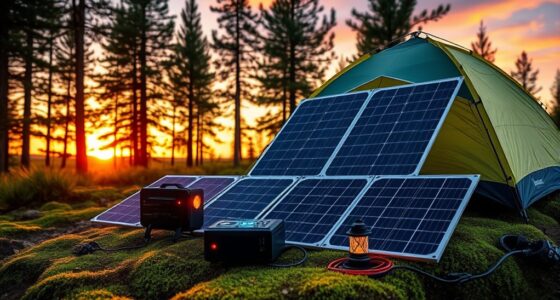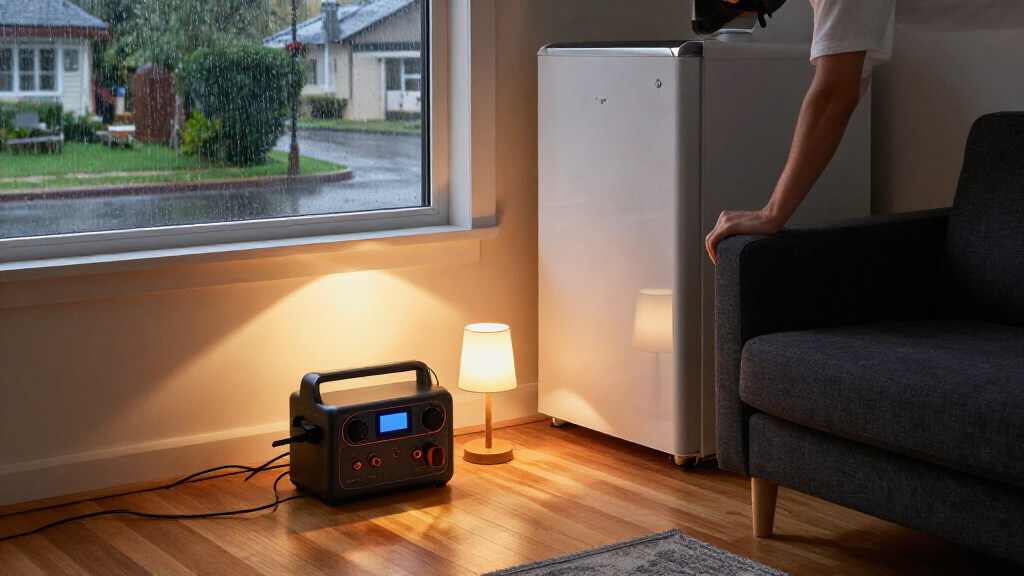

Choosing the right portable power station for home backup requires balancing capacity, output wattage, and battery chemistry against your specific outage scenarios. The BLUETTI AC180 stands out as the best overall pick for its balance of 1152Wh capacity and 1800W output using durable LiFePO4 cells, making it suitable for running refrigerators and small appliances during extended blackouts. For those needing heavy-duty power for tools or air conditioners, the Jackery HomePower 3600 Plus offers massive 3600W output, while the Jackery Explorer 300 remains the ideal entry-level choice for charging phones and laptops. The main tradeoff in this category is between portability and runtime; larger units provide longer backup but become difficult to move. Continue reading for a detailed breakdown of how these models compare in performance, usability, and value.

Get backup power and energy gear delivered free — and shop member deals
- Fast, free delivery on millions of items
- Access to Prime Big Deal Days deals on October 6–7
- Prime Video, Amazon Music and more included
Complete the kit


Key Takeaways
- LiFePO4 battery chemistry dominates the mid-to-high tier models for its superior cycle life and safety over traditional Li-ion.
- Pure sine wave inverters are standard across all recommended units, ensuring compatibility with sensitive home electronics like CPAP machines.
- Units under 500Wh are generally insufficient for running kitchen appliances, serving primarily as emergency lighting and communication hubs.
- Weight becomes a critical limiting factor above 2000Wh, with many large-capacity units requiring two people or wheels for practical relocation.
- High-wattage models (2000W+) often necessitate dedicated 240V outlets or heavy-duty extension cords, which are not always included in the box.
| MARBERO M82 Portable Power Station, 88Wh |  | Best for Emergency Phone and Light Backup | Capacity: 88Wh | Output wattage: 80W | Surge power: 120W | VIEW LATEST PRICE | See Our Full Breakdown |
| EBL Acc2400 Portable Power Station, 1843.2Wh LiFePO4 Battery, 2400W Output |  | Best for High-Load Home Backup | Battery capacity: 1,843.2Wh | Output wattage: 2,400W | Battery chemistry: LiFePO4 | VIEW LATEST PRICE | See Our Full Breakdown |
| Jackery Explorer 300 Portable Power Station, 292Wh |  | Best Compact Mid-Capacity Pick | Capacity: 292Wh | Peak surge output: 600W | Battery chemistry: LiFePO4 | VIEW LATEST PRICE | See Our Full Breakdown |
| 500W Portable Power Station, 519.48Wh |  | Best for a Range of Small Devices | Battery capacity: 519.48Wh | AC output: 500W | AC outlets: 2 pure sine wave outlets, 110V | VIEW LATEST PRICE | See Our Full Breakdown |
| Anker SOLIX C1000 Gen 2 Portable Power Station |  | Best for Fast-Recharging Home Backup | Battery capacity: 1,024Wh | Battery chemistry: LiFePO4 | Output wattage: 2,000W | VIEW LATEST PRICE | See Our Full Breakdown |
| LIBRIDS 640Wh Portable Power Station with 600W Output |  | Best for Fast-Switching Essential Backup | Capacity: 640Wh | Battery type: LiFePO₄ | Running output: 600W | VIEW LATEST PRICE | See Our Full Breakdown |
| Anker SOLIX S2000 Portable Power Station, 2,010Wh, 1,500W |  | Best Balanced Capacity for Home Backup | Battery capacity: 2,010Wh | Battery type: LiFePO₄ | Continuous output: 1,500W | VIEW LATEST PRICE | See Our Full Breakdown |
| DaranEner Portable Power Station, 192Wh LiFePO4 Battery, 300W Output |  | Best Compact Emergency Companion | Capacity: 192Wh | Battery chemistry: LiFePO₄ | AC output: 300W (600W surge) | VIEW LATEST PRICE | See Our Full Breakdown |
| BLUETTI AC180 Portable Power Station, 1152Wh LiFePO4 Battery, 1800W Output |  | Best for Higher-Wattage Essentials | Battery capacity: 1,152Wh | Battery chemistry: LiFePO₄ | Running output: 1,800W | VIEW LATEST PRICE | See Our Full Breakdown |
| BLUETTI Elite 300 Portable Power Station, 3014Wh |  | Best for Extended Outages and RV Backup | Capacity: 3,014Wh | Output power: 2,400W | Surge power: 4,800W | VIEW LATEST PRICE | See Our Full Breakdown |
| Jackery Explorer 1000 v2 Portable Power Station |  | Best Balanced Mid-Capacity Backup | Battery capacity: 1,070Wh | Battery type: LFP | Output / surge: 1,500W / 3,000W | VIEW LATEST PRICE | See Our Full Breakdown |
| Jackery HomePower 3600 Plus Portable Power Station, 3584Wh, 3600W |  | Best for Extended Home Backup | Battery capacity: 3,584Wh | Output wattage: 3,600W | Parallel output: 7,200W | VIEW LATEST PRICE | See Our Full Breakdown |
| BLUETTI Elite 30 V2 Portable Power Station, 288Wh, 600W |  | Best Compact UPS Backup | Capacity: 288Wh | Battery chemistry: LFP | Continuous / surge output: 600W / 1,500W | VIEW LATEST PRICE | See Our Full Breakdown |
| EF ECOFLOW DELTA 3 Classic Portable Power Station, 1024Wh, 1800W AC |  | Best for Fast-Switching Appliance Backup | Capacity: 1,024Wh | AC output: 1,800W | Surge output: 3,600W | VIEW LATEST PRICE | See Our Full Breakdown |
| portable power stations for home backup | Weight | Capacity | Battery capacity | Battery chemistry |
|---|---|---|---|---|
| MARBERO M82 Portable Power Sta | 3.2 lbs | 88Wh | — | — |
| EBL Acc2400 Portable Power Sta | About 54–55 lbs | — | 1,843.2Wh | LiFePO4 |
| Jackery Explorer 300 Portable | About 7.5 lbs in description; 7.1 lbs in specifications | 292Wh | — | LiFePO4 |
| 500W Portable Power Station | 18 lbs | — | 519.48Wh | — |
| Anker SOLIX C1000 Gen 2 Portab | 11.3kg | — | 1,024Wh | LiFePO4 |
| LIBRIDS 640Wh Portable Power S | — | 640Wh | — | — |
| Anker SOLIX S2000 Portable Pow | 35.7 lbs | — | 2,010Wh | — |
| DaranEner Portable Power Stati | 5.73 lbs | 192Wh | — | LiFePO₄ |
| BLUETTI AC180 Portable Power S | 37.4 lbs | — | 1,152Wh | LiFePO₄ |
| BLUETTI Elite 300 Portable Pow | 58 lbs | 3,014Wh | — | — |
| Jackery Explorer 1000 v2 Porta | 23.8 lbs | — | 1,070Wh | — |
| Jackery HomePower 3600 Plus Po | 77.2 lbs | — | 3,584Wh | — |
| BLUETTI Elite 30 V2 Portable P | 9.5 lbs | 288Wh | — | LFP |
| EF ECOFLOW DELTA 3 Classic Por | — | 1,024Wh | — | LiFePO4 |
More Details on Our Top Picks
MARBERO M82 Portable Power Station, 88Wh
I’d choose the MARBERO M82 for keeping phones, small electronics, and a light running—not for powering household appliances. Its 88Wh capacity and 80W output put it far below the Jackery Explorer 300 or the 500W Portable Power Station for backup duration and appliance options, but its 3.2-pound size is much easier to stash near an emergency kit or carry between rooms. Eight output ports let several small devices charge at once, while AC, car, and compatible solar charging offer flexibility when the grid is down. The built-in LED light adds a useful emergency function. The tradeoff is fundamental: 80W limits it to low-draw gear, and a solar panel is not listed as included. I’d skip it as a substitute for a larger home backup battery.
Pros:- Compact 3.2-pound design is easy to store and carry
- Eight output ports support charging several small devices
- AC, car, and compatible solar charging options
- Built-in three-level LED light includes SOS mode
Cons:- 80W output rules out most household appliances
- 88Wh capacity offers limited backup time for multiple devices
- Solar panel is not listed among the included accessories
Best for: People who want a lightweight emergency-kit battery for phones, small electronics, and lighting.
Not ideal for: Households seeking backup for refrigerators, kitchen appliances, or longer outages; its 88Wh capacity and 80W output are too limited.
- Capacity:88Wh
- Output wattage:80W
- Surge power:120W
- Output ports:8
- Weight:3.2 lbs
- Dimensions:6.5 x 4.6 x 3.1 inches
- Charging options:AC, car, and solar
- Included accessories:Power adapter, cigarette lighter output cable, user manual
Our verdict“Choose the MARBERO M82 for portable phone and light backup, not for keeping appliances running through an outage.”
EBL Acc2400 Portable Power Station, 1843.2Wh LiFePO4 Battery, 2400W Output
For buyers who need to run more than small electronics, the EBL Acc2400 is the strongest high-output option in this batch. Its 1,843.2Wh capacity and 2,400W output give it a much broader appliance range than the Jackery Explorer 300 or the 500W Portable Power Station, while four AC outlets and varied USB, DC, car, and wireless outputs can serve several devices at once. The 0.1-second backup mode is useful for equipment that benefits from a rapid power handoff, though I would not treat the stated switch time as a replacement for checking a device’s backup requirements. Its LiFePO4 battery is rated for over 3,500 cycles. The main compromise is portability: at about 54–55 pounds, it is better moved occasionally than carried room to room.
Pros:- 2,400W output supports a wider range of appliances than the smaller stations here
- 1,843.2Wh capacity provides substantial stored energy
- LiFePO4 battery rated for over 3,500 charge-discharge cycles
- Multiple outlet types and 0.1-second emergency backup mode
Cons:- About 54–55 pounds makes frequent carrying difficult
- Its capacity is below larger roundup options such as the BLUETTI Elite 300
- The stated backup switching time may not suit every device or installation
Best for: Households that need high-wattage backup for several devices and can keep the station in a fixed or easy-to-reach location.
Not ideal for: Buyers who need a genuinely lightweight station for frequent carrying, or who want the longest capacity in the wider roundup.
- Battery capacity:1,843.2Wh
- Output wattage:2,400W
- Battery chemistry:LiFePO4
- AC ports:4
- Other ports:2 USB-A, 2 USB-C, 1 car port, 2 DC ports, 1 wireless charging panel
- Maximum connected devices:12
- Emergency backup switching:0.1 seconds
- Battery cycle life:Over 3,500 charge-discharge cycles
- Weight:About 54–55 lbs
Our verdict“Pick the EBL Acc2400 when high output and multiple device connections matter more than easy portability.”
Jackery Explorer 300 Portable Power Station, 292Wh
The Jackery Explorer 300 is a sensible step up from the MARBERO M82 when I want more stored energy without moving to a bulky station. Its 292Wh capacity and 300W rated output can handle small electronics and selected low-wattage devices, but it is not built for major household appliances or long outage coverage. At about 7.5 pounds, it remains far easier to carry than the 18-pound 500W Portable Power Station and the roughly 54-pound EBL Acc2400. Two AC outlets, USB connections, and a car port give it practical flexibility for a few essentials. Solar charging is supported, but the panel is sold separately, and the supplied information gives two different weight figures. I’d choose it for portable, modest backup rather than as the home’s main outage battery.
Pros:- 292Wh capacity is a meaningful step above the MARBERO M82
- About 7.5 pounds with an integrated carrying handle
- Ports include two AC outlets, USB-C, USB-A, and a car port
- Supports solar charging and has a stated LiFePO4 cycle rating
Cons:- 300W rated output limits appliance use
- Solar panel is sold separately
- Provided weight information differs between description and specifications
Best for: People who want a carryable battery for phones, laptops, lights, and a few low-draw essentials during short outages.
Not ideal for: Households that need to run high-wattage appliances or want enough capacity for extended backup.
- Capacity:292Wh
- Peak surge output:600W
- Battery chemistry:LiFePO4
- Ports:2 AC outlets, 1 USB-C PD, 2 USB-A, 1 car port
- Weight:About 7.5 lbs in description; 7.1 lbs in specifications
- Solar charging:About 80% in 2.8 hours with a 100W panel
- Battery charge time:4 hours
Our verdict“Choose the Explorer 300 for portable backup of small essentials when a larger appliance-capable station would be excessive.”
500W Portable Power Station, 519.48Wh
This 519.48Wh station fills the gap between the compact Jackery Explorer 300 and larger backup units: it stores more energy than the Jackery, but its 500W ceiling still confines it to modest loads. Two pure sine wave AC outlets, a 60W USB-C output, and a total of ten output ports make it handy when a household needs to charge several electronics or run suitable small devices at once. That broader connection mix is its main advantage over the simpler MARBERO M82; it does not turn the unit into a solution for high-draw appliances. It weighs 18 pounds, so it is less convenient to carry than either small model here. Wall, car, and compatible solar charging add options, though the solar panel is sold separately and leaving AC output on can drain the battery without a load.
Pros:- 519.48Wh capacity exceeds the Jackery Explorer 300
- Ten output ports support several device types
- Pure sine wave AC outlets and USB-C output up to 60W
- Recharge options include wall, car, and compatible solar input
Cons:- 500W maximum output excludes higher-draw appliances
- At 18 pounds, it is heavier than the MARBERO M82 and Explorer 300
- Solar panel is not included, and AC output can drain the battery when left on
Best for: Households that want more capacity and varied ports than a compact emergency battery offers, mainly for electronics and small appliances.
Not ideal for: Buyers who need to power appliances above 500W, want a lightweight station, or expect solar charging hardware to come included.
- Battery capacity:519.48Wh
- AC output:500W
- AC outlets:2 pure sine wave outlets, 110V
- USB-A outputs:3 QC3.0 ports, up to 18W each
- USB-C output:PD, up to 60W
- Other outputs:2 DC ports, 1 car port, 1 wireless charger
- Total outputs:10
- Weight:18 lbs
- Recharging methods:Wall outlet, car charger, compatible 100W or 200W solar panel
Our verdict“Choose this station for a useful spread of ports and moderate backup capacity, provided your loads stay under 500W.”
Anker SOLIX C1000 Gen 2 Portable Power Station
The Anker SOLIX C1000 Gen 2 pairs meaningful home-backup output with unusually fast recharge figures in this group. Its 1,024Wh LiFePO4 battery and 2,000W output make it a much more capable appliance option than the 500W Portable Power Station, while its 11.3kg weight is far below the EBL Acc2400’s roughly 54–55 pounds. That makes it a more practical choice for buyers who may need to move a station and want it ready again quickly: the listed AC recharge time is 49 minutes, and solar input is rated at up to 600W. The under-10ms UPS switchover is another useful feature for compatible equipment. Capacity remains limited beside larger units such as the EBL, and the listing conflicts on whether it has nine or ten outlets.
Pros:- 2,000W output and 3,000W peak handle more demanding loads than the 500W station
- Listed AC recharge time of 49 minutes and solar recharge time of 1.8 hours
- UPS switchover under 10ms for compatible backup needs
- LiFePO4 battery rated to retain at least 80% capacity after 4,000 cycles
Cons:- 1,024Wh capacity is lower than the EBL Acc2400 and other larger roundup options
- Solar input is capped at 600W
- Listing conflicts between nine and ten outlet counts
Best for: Households seeking a movable, fast-recharging backup station for essential appliances and electronics, with UPS support for compatible equipment.
Not ideal for: Buyers who need multi-day stored energy, the highest available solar input, or an unambiguous outlet count before purchase.
- Battery capacity:1,024Wh
- Battery chemistry:LiFePO4
- Output wattage:2,000W
- Peak output:3,000W
- AC recharge time:49 minutes
- Solar input:600W, 60V max
- Solar recharge time:1.8 hours
- UPS switchover time:Under 10ms
- Weight:11.3kg
Our verdict“Pick the Anker SOLIX C1000 Gen 2 if fast recharging and strong output matter more than maximum stored capacity.”
LIBRIDS 640Wh Portable Power Station with 600W Output
I’d choose the LIBRIDS H1008 for a short list of essential electronics rather than broad household backup. Its 10ms UPS switching is the standout: it can help keep compatible devices powered through a brief outage, while the 640Wh battery offers more reserve than the DaranEner’s 192Wh. Four AC outlets and eight total ports also make it easier to connect several small devices at once. The tradeoff is its 600W running limit, which rules out many higher-draw appliances even if they fit the outlets. It recharges quickly by AC, but must stay dry, and its capacity is far below the Anker SOLIX S2000’s 2,010Wh. I see it as a focused backup unit, not a substitute for whole-room or long-duration power.
Pros:- 10ms UPS switching for compatible devices
- 640Wh LiFePO₄ battery rated for 4,000+ cycles
- Four AC outlets and eight total output ports
- Stated AC recharge time of about 1.5 hours
Cons:- 600W continuous output limits appliance choices
- 640Wh capacity is modest for extended home outages
- Must be kept away from rain and moisture
Best for: Households prioritizing quick backup for a router, modem, computer, and other modest-load essentials.
Not ideal for: Buyers who need to run high-wattage appliances, sustain loads for long outages, or use the unit where moisture exposure is likely.
- Capacity:640Wh
- Battery type:LiFePO₄
- Running output:600W
- Surge output:1200W
- UPS switching time:10ms
- Output ports:8 total, including 4 AC outlets
- AC charging time:About 1.5 hours
- Dimensions:8.3 × 6.9 × 8.2 in
Our verdict“Choose the LIBRIDS if quick-switching backup for several low-draw essentials matters more than powering larger appliances.”
Anker SOLIX S2000 Portable Power Station, 2,010Wh, 1,500W
The Anker SOLIX S2000 lands in a useful middle ground: its 2,010Wh battery and 1,500W continuous output provide much more room for household essentials than the LIBRIDS H1008, without reaching the Elite 300’s 58-pound bulk. Eight outlets help when several devices need power at once, and a sub-10ms UPS switchover suits compatible electronics that should not lose power during an outage. Solar input up to 400W and several other recharge routes add flexibility if an outage lasts beyond the stored charge. The compromises are practical ones: 35.7 pounds is still a substantial lift, and there is no 12V DC port for equipment that needs that connection. Capacity also cannot guarantee a particular runtime; connected load and conditions matter. I’d rank it ahead of smaller units for multi-device backup, but below larger-capacity options for prolonged outages.
Pros:- 2,010Wh LiFePO₄ battery for more reserve than compact stations
- 1,500W continuous and 3,000W peak output
- Eight outlets and UPS switchover under 10ms
- Supports AC, solar, generator, alternator, and car recharging
Cons:- No 12V DC port
- 35.7-pound weight can make frequent carrying inconvenient
- Actual runtime varies with connected appliances and conditions
Best for: Households seeking a portable, mid-capacity station for electronics, communications gear, and selected appliances during outages.
Not ideal for: Buyers needing a 12V DC connection, very long backup duration, or a lightweight unit to carry frequently.
- Battery capacity:2,010Wh
- Battery type:LiFePO₄
- Continuous output:1,500W
- Peak output:3,000W
- Solar input:Up to 400W
- Total outlets:8
- UPS switchover:Less than 10ms
- Weight:35.7 lbs
Our verdict“Pick the S2000 for a strong balance of stored energy, outlet count, and portability, but choose a larger station for longer outages.”
DaranEner Portable Power Station, 192Wh LiFePO4 Battery, 300W Output
The DaranEner is the compact pick for keeping phones, small electronics, and other low-draw essentials going—not for backing up a household’s larger appliances. At 5.73 pounds, it is much easier to store and move than the 37.4-pound BLUETTI AC180, and its LiFePO₄ battery, multiple ports, and built-in emergency light make it handy for a brief outage or a grab-and-go kit. It can charge up to six devices at once, though simultaneous use does not change its 192Wh capacity or 300W AC limit. That leaves little reserve compared with the LIBRIDS H1008, and appliances with high startup surges may not work. AC, car, and solar recharging are supported, but the solar input is limited to 60W and the solar panel and car cables are not included.
Pros:- Lightweight at 5.73 pounds for easy storage and movement
- LiFePO₄ battery rated for 3,500+ cycles
- Ports can charge up to six devices simultaneously
- Built-in LED light includes an SOS mode
Cons:- 192Wh capacity and 300W output are unsuitable for many appliances
- Solar input is limited to 60W
- Solar panel and car charging cables are not included
Best for: Apartment residents or emergency-kit planners who want a lightweight source for phones, lights, and small electronics.
Not ideal for: Households seeking backup for refrigerators, larger appliances, or multiple devices over an extended outage.
- Capacity:192Wh
- Battery chemistry:LiFePO₄
- AC output:300W (600W surge)
- AC outlets:2
- USB-C output:60W PD
- Maximum simultaneous devices:6
- Solar input:60W maximum
- Weight:5.73 lbs
Our verdict“Choose the DaranEner as a portable source for small electronics and lighting, not as the main station for home outage coverage.”
BLUETTI AC180 Portable Power Station, 1152Wh LiFePO4 Battery, 1800W Output
The BLUETTI AC180 suits buyers who need more appliance headroom than the LIBRIDS H1008 can provide. Its 1,800W running output and 2,700W power-lifting mode for compatible loads open the door to a wider range of devices, while the 1,152Wh battery offers a middle step between small emergency units and the Anker SOLIX S2000’s 2,010Wh reserve. That balance is useful when output matters but carrying a much larger station is not the goal. The 20ms UPS response is slower than the LIBRIDS and Anker figures, so I would not rank it first for the fastest interruption-sensitive backup. At 37.4 pounds, it is also portable in the sense that it can be moved, not light enough for effortless carrying. Solar input reaches 500W, provided a compatible source is available.
Pros:- 1,800W running output supports more demanding loads than compact stations
- Power-lifting mode reaches 2,700W for compatible loads
- Supports AC and up to 500W solar charging
- Five-year warranty
Cons:- 37.4-pound weight limits easy portability
- 20ms UPS response is slower than the 10ms options here
- Solar charging depends on having a compatible solar source
Best for: Households that need to run selected higher-wattage essentials and want a mid-capacity station with AC and solar charging.
Not ideal for: Buyers whose main priority is the fastest UPS switchover, frequent carrying, or the longest reserve for extended outages.
- Battery capacity:1,152Wh
- Battery chemistry:LiFePO₄
- Running output:1,800W
- Peak output:2,700W
- AC charging input:1,440W
- Solar input:Up to 500W
- UPS response time:20ms
- Weight:37.4 lbs
Our verdict“Choose the AC180 when appliance output is a priority and its 1,152Wh capacity is enough for your expected outage needs.”
BLUETTI Elite 300 Portable Power Station, 3014Wh
For buyers who put stored energy and high output ahead of easy lifting, the BLUETTI Elite 300 is the heavyweight choice in this group. Its 3,014Wh capacity is substantially larger than the Anker SOLIX S2000’s 2,010Wh, giving a household more reserve before recharging becomes urgent. A 2,400W output, 4,800W surge rating, and 10ms UPS switch time suit a broader backup role than the DaranEner or LIBRIDS. The TT-30 RV outlet and 12V/30A output also make it more adaptable for RV use. Fast AC charging is another advantage, with a stated 0–80% time as fast as 78 minutes. The cost of that reach is 58 pounds, and the listed specs include only two power outlets, fewer than the S2000’s eight. I’d pick it for reserve and capability, not easy room-to-room movement.
Pros:- 3,014Wh capacity with 2,400W output and 4,800W surge
- 10ms UPS switch time for compatible critical devices
- TT-30 RV outlet and 12V/30A DC output
- Stated AC recharge to 80% in as fast as 78 minutes
Cons:- 58-pound weight makes frequent repositioning difficult
- Only two power outlets are listed in the specifications
- Large capacity may be more station than small-load backup needs
Best for: Households facing longer outages, or RV owners who need substantial capacity, higher output, and a TT-30 connection.
Not ideal for: Buyers who need to move a station frequently, require many AC outlets, or want a lighter backup for just a few devices.
- Capacity:3,014Wh
- Output power:2,400W
- Surge power:4,800W
- Battery type:LiFePO₄
- Battery cycle life:6,000+ cycles
- UPS switch time:10ms
- RV outlet:TT-30
- Weight:58 lbs
Our verdict“Choose the Elite 300 when extended backup capacity and RV connections outweigh weight and a limited listed outlet count.”
Jackery Explorer 1000 v2 Portable Power Station
I’d choose the Explorer 1000 v2 for a household that wants more than phone-and-router backup without moving to a much heavier unit. Its 1,070Wh LFP battery and 1,500W output can cover several smaller devices or selected appliances, while its 23.8-pound weight is far easier to reposition than the 77.2-pound Jackery HomePower 3600 Plus. Three pure sine wave AC outlets, USB ports, and a car port add flexibility, and the app provides charging controls, including a quiet overnight mode.
The tradeoff is runtime: its capacity cannot match the HomePower 3600 Plus for extended outages or larger household loads. Emergency charging reaches full capacity in an hour only when enabled in the app; the default time is 1.7 hours. Solar panels are sold separately, and solar compatibility is limited to Jackery panels. I’d rank it as a practical middle ground, not a whole-home substitute.
Pros:- 1,070Wh capacity and 1,500W output suit a useful mix of home essentials.
- LFP battery is rated for 4,000 cycles to over 70% of original capacity.
- Three pure sine wave AC outlets plus USB and car ports support several device types.
- App controls include a quiet overnight charging mode.
Cons:- Capacity is far below the HomePower 3600 Plus, limiting backup duration for heavier loads.
- One-hour full charging requires emergency charging to be enabled in the app.
- Solar panel is not included, and solar charging supports Jackery panels only.
Best for: Households needing portable backup for communications, small electronics, and selected lower-draw appliances, with a station one person can move.
Not ideal for: Buyers who need multi-day support for larger household loads or want broad third-party solar-panel compatibility.
- Battery capacity:1,070Wh
- Battery type:LFP
- Output / surge:1,500W / 3,000W
- Weight:23.8 lbs
- AC outlets:3 pure sine wave
- USB ports:2 USB-C, 1 USB-A
- Charging time:1 hour with emergency charging enabled; 1.7 hours by default
- Charge cycles:4,000 cycles to over 70% original capacity
- Solar compatibility:Jackery solar panels only; panel not included
Our verdict“Choose the Explorer 1000 v2 if you want portable, mid-capacity backup for essential devices without handling a large wheeled unit.”
Jackery HomePower 3600 Plus Portable Power Station, 3584Wh, 3600W
For longer outages and higher-draw appliances, I’d put the HomePower 3600 Plus ahead of the Explorer 1000 v2. Its 3,584Wh capacity and 3,600W output provide much more room for household loads, and capacity can expand to 21kWh per unit or up to 43kWh with multiple units. It also supports AC, solar, gas-generator, and hybrid charging, giving owners more ways to replenish power than the smaller Jackery.
This scale comes with real compromises. At 77.2 pounds, it is not a station I’d want to carry between rooms, though wheels and a telescopic handle help on level ground. Its listed two outlets may also be limiting when several appliances need direct connection. The Explorer 1000 v2 is easier to move and simpler for modest backup needs; this model makes more sense when capacity and output matter more than compactness. Solar panels are optional.
Pros:- 3,584Wh battery and 3,600W output support larger loads and longer backup periods than the Explorer 1000 v2.
- Expandable capacity reaches 21kWh per unit and up to 43kWh with multiple units.
- AC, solar, gas-generator, and hybrid charging give multiple replenishment options.
- Wheels and telescopic handle make movement easier than carrying its weight would suggest.
Cons:- At 77.2 pounds, it is difficult to lift or carry between floors.
- Only two outlets are listed, which may constrain direct connections for multiple appliances.
- Solar panels are optional, adding a separate requirement for solar charging.
Best for: Households preparing for extended outages who need substantial capacity, higher output, and the option to expand their backup setup.
Not ideal for: Buyers who need a lightweight station for frequent carrying, or who need several AC outlets without adding connection equipment.
- Battery capacity:3,584Wh
- Output wattage:3,600W
- Parallel output:7,200W
- Expandable capacity:21kWh per unit; up to 43kWh with multiple units
- Battery type:LFP
- Charging options:Hybrid AC+DC, AC, solar, gas generator
- Weight:77.2 lbs
- Outlets:2
- Warranty:5 years
Our verdict“Pick the HomePower 3600 Plus if extended outage coverage and expandable capacity matter more to you than low weight and easy carrying.”
BLUETTI Elite 30 V2 Portable Power Station, 288Wh, 600W
I’d treat the BLUETTI Elite 30 V2 as a compact backup for internet equipment, phones, and other small essentials—not as a station for running major appliances. At 9.5 pounds, it is much easier to store and move than the Jackery Explorer 1000 v2, and its UPS switch time of up to 10 milliseconds can help keep sensitive electronics powered through a brief interruption. Wall, solar, and car charging also make it flexible for a small emergency kit.
Its size is also its main limit: 288Wh capacity and 600W continuous output mean shorter runtimes and fewer appliance options than the Explorer 1000 v2 or EcoFlow DELTA 3 Classic. Power Lifting Mode can reach 1,500W, but that does not turn its modest battery into long-duration home backup. I’d favor this model for protecting a few essentials in a small space, rather than trying to cover a household outage broadly.
Pros:- 9.5-pound weight and compact dimensions make it simple to store and reposition.
- UPS switching of up to 10 ms suits sensitive electronics that need brief outage coverage.
- Supports wall, solar, and car charging.
- Adjustable AC wall charging allows a lower 200W setting.
Cons:- 288Wh capacity limits runtime, especially for devices with sustained power draw.
- 600W continuous output rules out many larger household appliances.
- Power Lifting Mode does not compensate for the small battery when longer backup is needed.
Best for: Apartment dwellers and remote workers who want a light UPS-style backup for a router, laptop, and small electronics.
Not ideal for: Households seeking long runtimes or backup for refrigerators, large appliances, or multiple high-draw devices.
- Capacity:288Wh
- Battery chemistry:LFP
- Continuous / surge output:600W / 1,500W
- Weight:9.5 lbs
- Power outlets:9 total
- AC charging:380W; adjustable to 200W
- Charging time:0–80% in 45 minutes; 0–100% in 70 minutes
- UPS switch time:≤10 ms
- Standby power:4.5W
Our verdict“Choose the Elite 30 V2 for portable, short-duration protection of small electronics, not as your main household outage power source.”
EF ECOFLOW DELTA 3 Classic Portable Power Station, 1024Wh, 1800W AC
The EcoFlow DELTA 3 Classic is a strong fit when a household needs more output than the Explorer 1000 v2 offers, but does not need the bulk of the HomePower 3600 Plus. Its 1,800W AC output and 3,600W surge rating give it greater headroom for appliance startup than the Jackery 1,070Wh model, while the 1,024Wh capacity keeps it in a more portable class than the 3,584Wh HomePower. Under-10-ms UPS switching is useful for electronics that should stay on through a brief power interruption.
Fast AC charging can restore 80% in 45 minutes, and optional solar charging adds another way to recharge. The tradeoff is that capacity still limits how long heavier loads can run; this is not a replacement for a large expandable system. Its battery compatibility is also restricted: it does not work with DELTA 2 Smart Extra Battery or DELTA 3 Series Smart Extra Battery. I’d choose it for output and quick switching, not for a future expansion plan built around those batteries.
Pros:- 1,800W AC output and 3,600W surge provide more output headroom than the Explorer 1000 v2.
- Under-10-ms UPS switching helps protect electronics during brief outages.
- AC charging reaches 80% in 45 minutes.
- LiFePO4 battery is rated for 10+ years of daily use.
Cons:- Its 1,024Wh capacity cannot match the extended backup potential of the HomePower 3600 Plus.
- Not compatible with DELTA 2 Smart Extra Battery or DELTA 3 Series Smart Extra Battery.
- Solar panel is optional.
Best for: Households wanting a portable station with strong appliance output and fast UPS switching for electronics and selected home loads.
Not ideal for: Buyers planning to extend runtime with a DELTA 2 or DELTA 3 Series Smart Extra Battery, or needing multi-day high-load backup.
- Capacity:1,024Wh
- AC output:1,800W
- Surge output:3,600W
- X-Boost output:Up to 2,600W
- Battery chemistry:LiFePO4
- AC charging:0–80% in 45 minutes
- Solar charging:2.5 hours with an optional 500W solar panel
- UPS switching time:Under 10 ms
- Battery compatibility:Not compatible with DELTA 2 Smart Extra Battery or DELTA 3 Series Smart Extra Battery
Our verdict“Pick the DELTA 3 Classic if you prioritize higher output and fast UPS switching in a portable station, but do not need expansion through the listed EcoFlow batteries.”

How We Picked
I evaluated these fourteen units based on their ability to sustain critical home loads during an outage. The primary criteria were continuous output wattage (to determine what appliances could run simultaneously) and capacity in watt-hours (to determine how long those appliances could run). I prioritized models using LiFePO4 batteries for their longevity, as home backup units are often stored for long periods and need to maintain charge retention better than standard lithium-ion cells. Additionally, I assessed the usability of the display interfaces and the accessibility of ports, favoring designs that allow for quick connection during stressful emergency situations.
Ranking was determined by the price-to-performance ratio for specific use cases rather than raw specs alone. A unit with massive capacity but poor portability ranked lower than a slightly smaller unit that offers better integration with solar charging and home transfer switches. I also filtered out models with unclear safety certifications or insufficient cooling systems for sustained high-load operation, ensuring every recommendation is reliable for long-term storage.
| portable power stations for home backup | Battery chemistry |
|---|---|
| MARBERO M82 Portable Power Sta | — |
| EBL Acc2400 Portable Power Sta | LiFePO4 |
| Jackery Explorer 300 Portable | LiFePO4 |
| 500W Portable Power Station | — |
| Anker SOLIX C1000 Gen 2 Portab | LiFePO4 |
| LIBRIDS 640Wh Portable Power S | — |
| Anker SOLIX S2000 Portable Pow | — |
| DaranEner Portable Power Stati | LiFePO₄ |
| BLUETTI AC180 Portable Power S | LiFePO₄ |
| BLUETTI Elite 300 Portable Pow | — |
| Jackery Explorer 1000 v2 Porta | — |
| Jackery HomePower 3600 Plus Po | — |
| BLUETTI Elite 30 V2 Portable P | LFP |
| EF ECOFLOW DELTA 3 Classic Por | LiFePO4 |
Factors to Consider When Choosing Portable Power Stations For Home Backup
Selecting a portable power station involves more than just picking the largest battery. You must match the unit’s capabilities to your actual household load and storage constraints.Understanding Watt-Hours vs. Continuous Output
Buyers often confuse capacity (Wh) with power (W). Capacity determines how long a device runs, while output determines if it runs at all. A 500Wh station cannot run a 1000W microwave, regardless of how full the battery is, because the inverter cannot deliver the required surge or continuous wattage. For home backup, you must calculate the total wattage of the devices you intend to keep running simultaneously, such as a refrigerator, a few lights, and a router, and choose a station whose continuous output exceeds that sum. Undersizing the inverter is the most common mistake, leading to units that shut down immediately when plugged into standard household appliances.
Battery Chemistry: LiFePO4 vs. NMC
The type of battery inside the station dictates its lifespan and safety profile. LiFePO4 (Lithium Iron Phosphate) batteries, found in models like the BLUETTI AC180 and Anker SOLIX series, offer significantly more charge cycles (3000+) and are more thermally stable than traditional NMC (Nickel Manganese Cobalt) batteries. While NMC batteries are lighter and cheaper, they degrade faster if stored at 100% charge, which is typical for backup scenarios. For a home backup unit that sits in a garage for months, LiFePO4 is the superior choice because it maintains capacity over years of infrequent use, reducing the need for replacement.
Portability and Weight Constraints
As capacity increases, weight rises disproportionately. A 1000Wh unit typically weighs between 20 and 30 pounds, which is manageable for one person. However, units exceeding 2000Wh often weigh over 50 pounds, making them difficult to move quickly in an emergency. I recommend checking if the unit has integrated wheels or telescoping handles if you plan to move it frequently. If the unit will remain stationary in a basement or utility room, weight is less of a concern, allowing you to prioritize capacity and output over ergonomic design features.
Charging Speeds and Solar Compatibility
During a prolonged outage, your ability to recharge the unit from alternative sources is critical. Look for models that support high-wattage solar input (400W+), which allows you to replenish the battery in a few hours under direct sunlight rather than a full day. Additionally, check for AC charging speeds; some older models take 6-8 hours to recharge from a wall outlet, leaving you vulnerable if a second storm hits. Modern units with fast-charging technology can often reach 80% capacity in under an hour, providing greater resilience during back-to-back weather events.
Integration with Home Electrical Systems
For seamless home backup, consider whether the unit can connect to your home’s existing electrical panel via a transfer switch. Not all portable power stations are designed for this; many lack the necessary grounding or isolation transformers required by local electrical codes. High-end models often offer proprietary cables or compatibility with specific transfer switches, allowing you to power select circuits without plugging devices directly into the unit. If you do not have a transfer switch installed, ensure the unit has multiple AC outlets and long extension cords are available to reach your critical appliances.
Frequently Asked Questions
Can a portable power station run a refrigerator?
Yes, but you must match the station’s output to the fridge’s starting wattage. Most modern refrigerators require 100-200 watts to run but may surge to 1000-1500 watts when the compressor starts. A station with 1800W continuous output, like the BLUETTI AC180 or EF ECOFLOW DELTA 3 Classic, handles this surge easily. Smaller units under 500W will likely trip their overload protection when the compressor kicks in, so check the nameplate on your fridge before buying.How long do portable power stations last in storage?
This depends heavily on battery chemistry. LiFePO4 batteries, used in the Anker and BLUETTI mid-range models, have very low self-discharge rates and can sit for 6-12 months with minimal capacity loss if stored at around 50-80% charge. Older Li-ion models may lose significant charge within a few months and require more frequent topping off. To maximize lifespan, avoid storing units at 100% or 0% charge for extended periods, as this stresses the cells and reduces overall capacity over time.Is 1000Wh enough for a house?
1000Wh is sufficient for short outages (4-8 hours) of critical low-draw devices like routers, LED lights, and phone charging. It is not enough to run heating, cooling, or cooking appliances for more than a brief period. For example, a 1000Wh unit might power a small CPAP machine for two nights but would deplete in under two hours if running a space heater. If your goal is to keep the fridge and freezer cold for 24 hours, you need at least 2000Wh of capacity.Can I charge the power station while using it?
Most modern units support pass-through charging, meaning you can recharge the battery while powering devices. However, this generates significant heat and can reduce the efficiency of the charging process. Some budget models may pause charging if the output load exceeds the input rate, or they may throttle the output to protect the battery. Always check the manufacturer’s specifications for pass-through limits, as sustained pass-through charging can degrade battery health faster than standard charge-discharge cycles.Do I need a pure sine wave inverter for home backup?
Yes, absolutely. All recommended models in this roundup feature pure sine wave inverters. Modified sine wave inverters, found in cheaper generic brands, can damage sensitive electronics like laptops, medical devices, and modern appliance control boards. They can also cause motors in refrigerators and pumps to overheat and fail prematurely. Never use a modified sine wave unit for home backup if you intend to plug in standard household electronics, as the risk of equipment damage far outweighs the cost savings.Conclusion
Choosing the right portable power station for home backup depends on your specific load requirements and budget. For most households, the BLUETTI AC180 is the best overall choice, offering a sweet spot of LiFePO4 durability, 1800W output, and manageable weight. If you need to run heavy tools or multiple kitchen appliances simultaneously, the Jackery HomePower 3600 Plus is the best premium option, though it requires more storage space. For beginners or those with limited budgets, the Jackery Explorer 300 provides reliable power for essential communications and lighting without breaking the bank. Finally, if you prioritize longevity and safety above all else, the Anker SOLIX C1000 Gen 2 offers exceptional build quality and battery management. Evaluate your critical loads, measure your available storage space, and select the unit that balances runtime with portability for your situation.
Halloween Picks
halloween
As an affiliate, we earn on qualifying purchases.