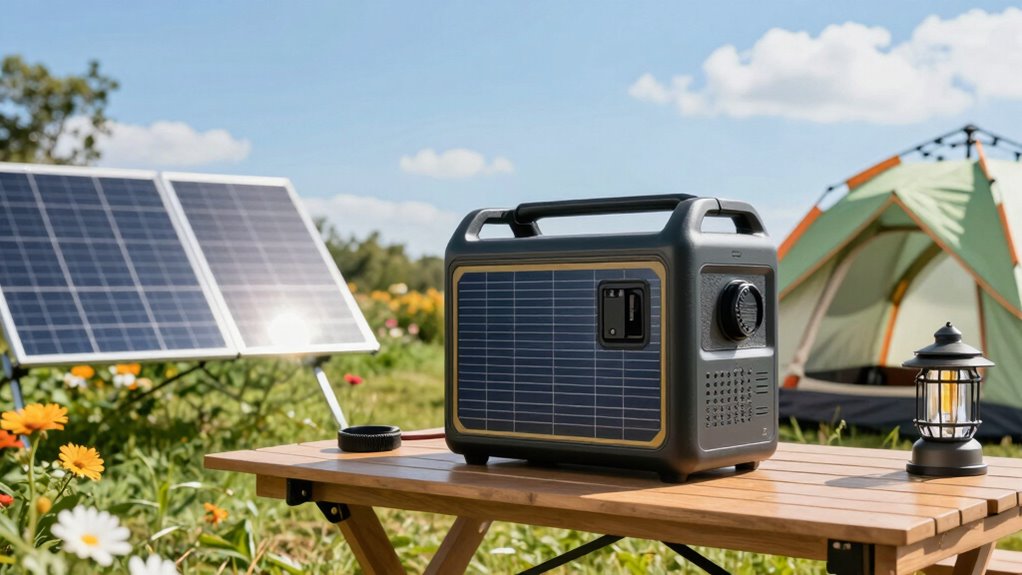

To plan your solar generator for a full weekend, start by listing all devices you’ll need and noting their wattage and daily use hours. Calculate your total energy needs in watt-hours and compare this with your solar panel’s daily output, considering peak sunlight hours and efficiency. Make sure your battery capacity can handle cloudy days or increased usage, adding safety margins. For more tips on fine-tuning your setup, keep exploring how to optimize your power system.
Key Takeaways
- Calculate total energy needs by summing wattage and usage hours of all devices for the weekend.
- Ensure battery capacity exceeds total daily consumption, including safety margins for cloudy days.
- Match solar panel output with daily energy requirements, considering peak sunlight hours and panel efficiency.
- Incorporate buffers for efficiency losses, weather variability, and unexpected power demands in planning.
- Regularly monitor battery levels and adjust device usage or add panels to maintain continuous power.
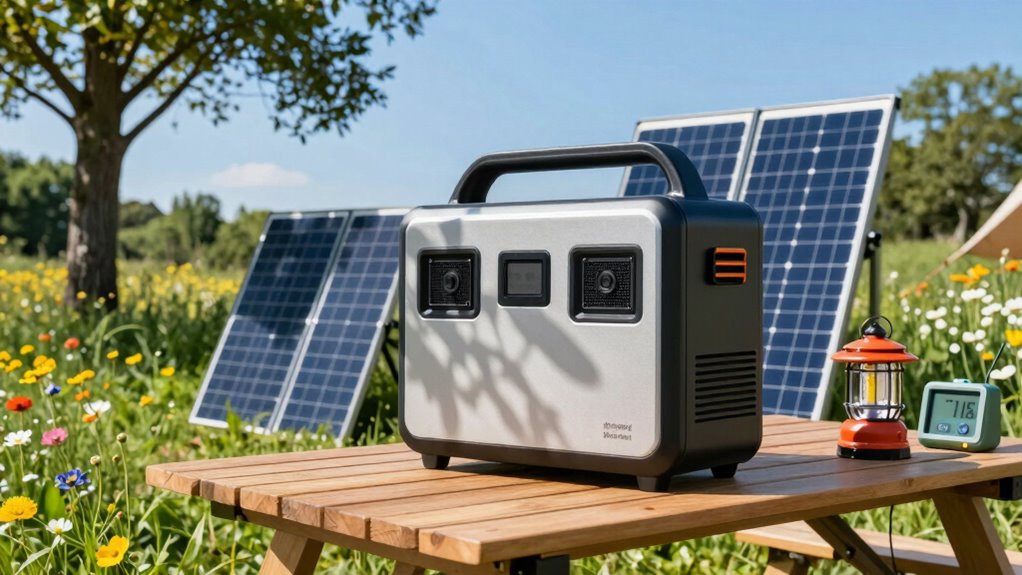
Planning your solar generator’s runtime for a full weekend requires careful calculation and preparation. To do this effectively, you need to understand your power needs and the capabilities of your equipment. First, determine the total energy consumption of all devices you’ll run over the weekend. Make a list of each device, note its wattage, and estimate how many hours you’ll use it daily. This gives you a clear idea of your total energy requirement, usually expressed in watt-hours (Wh). Once you have this number, you can focus on matching it with your solar generator’s capacity.
Your solar generator’s battery capacity is essential because it directly affects how long you can power your devices without recharging. Battery capacity, measured in watt-hours or amp-hours, indicates how much energy your battery can store. If your devices require 500 Wh per day, and your battery capacity is 1,000 Wh, in theory, you can run your devices for two days without additional sunlight. However, always consider efficiency losses and safety margins. A larger battery capacity provides extra buffer, especially if you anticipate cloudy weather or increased usage. Understanding battery capacity is crucial for accurate planning. Additionally, using a battery management system can help optimize the lifespan and performance of your battery.
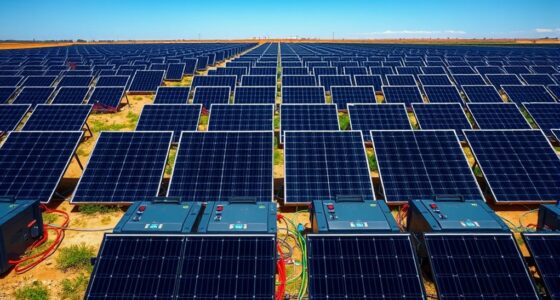
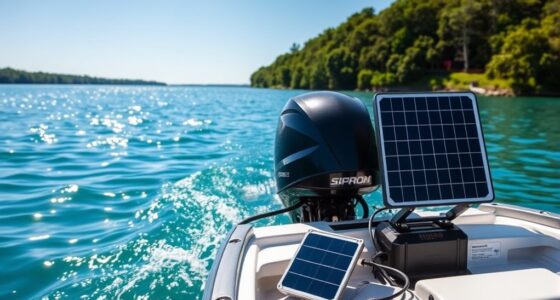
Another vital factor is solar panel efficiency. The efficiency of your solar panels determines how well they convert sunlight into usable energy. High-efficiency panels, usually rated at 20% or more, can generate more power in less space, making them ideal if you’re limited on installation area. The more efficient your solar panels, the quicker your battery recharges during daylight, extending your weekend runtime. To accurately estimate recharge times, consider the peak sunlight hours you typically receive. For example, if your panels generate 150 watts under ideal conditions and you get five peak sunlight hours per day, that’s about 750 Wh of energy daily—enough to recharge your battery and keep your devices running smoothly. Understanding solar panel efficiency can help you optimize your setup for better energy generation. It’s also beneficial to be aware of the seasonal variations that can affect your panels’ output throughout the year. Additionally, factoring in seasonal variations and local weather patterns can help you better anticipate your panels’ actual output.
Integrate these calculations by balancing your energy consumption against your solar panel’s daily energy production and your battery capacity. If your devices draw more energy than your panels can produce in a day, you’ll need a larger battery or additional panels to maintain power throughout the weekend. Keep in mind that weather conditions, panel orientation, and shading can affect efficiency, so plan for some buffer. Regularly monitor your battery’s charge level and usage to adjust your plans if needed. With precise calculations and understanding of your solar panel efficiency and battery capacity, you can confidently plan a weekend where your solar generator provides reliable power from start to finish.

Jackery Solar Generator 1000 v2 with 200W Solar Panel,1070Wh Portable Power Station LiFePO4 Battery,1500W AC/100W USB-C Output, 1Hr Fast Charge for Outdoor,Off-Grid Living,RV,Emergency
Powerful yet Compact: Boasting a 1,500W AC output and a 3,000W surge peak, the Solar Generator 1000 V2…
As an affiliate, we earn on qualifying purchases.
As an affiliate, we earn on qualifying purchases.
Frequently Asked Questions
Can a Solar Generator Power All My Appliances Simultaneously?
A solar generator can power all your appliances at once if its battery capacity matches or exceeds your total power consumption. You need to calculate each device’s wattage, add them up, and guarantee the generator’s output can handle that load. Keep in mind, running multiple appliances simultaneously drains the battery faster, so choose a generator with sufficient capacity and monitor usage to avoid running out of power during your weekend.
How Does Weather Affect Solar Generator Performance Over the Weekend?
Think of your solar generator as a sailor steering through weather’s unpredictable seas. Cloud cover and temperature fluctuations directly impact its performance, reducing power output during overcast skies or extreme heat. These conditions can diminish energy generation, so plan for extra capacity or backup sources. Stay vigilant with weather forecasts, and you’ll keep your energy flowing smoothly, even when the weather throws a wrench in your plans.
What Is the Best Way to Store Excess Solar Energy?
To store excess solar energy effectively, you should focus on your battery capacity and overall energy storage system. Choose high-capacity batteries that match your energy needs, ensuring they can hold surplus power generated during sunny days. Properly maintaining and monitoring your batteries prevents degradation. Additionally, consider integrating a reliable energy management system to optimize storage and usage, making sure you always have power available when the sun isn’t shining.
How Often Should I Recharge My Solar Generator During a Weekend?
You should recharge your solar generator as needed, usually once a day, to maintain ideal battery capacity and prevent it from draining completely. Keep an eye on your power management system, which helps monitor usage and recharge times. By doing so, you guarantee your generator stays ready for consistent power, avoiding unexpected shutdowns. Regular recharging maximizes your generator’s efficiency and prolongs its lifespan during a full weekend.
Are There Maintenance Tips to Maximize My Solar Generator’s Lifespan?
Think of your solar generator as a finely tuned orchestra, where each part plays a essential role. To keep it performing at its best, focus on battery care by avoiding deep discharges and storing it in a cool, dry place. Regular component cleaning clears dust and debris, letting sunlight dance freely on the panels. These maintenance tips extend your generator’s lifespan, ensuring it continues to power your adventures seamlessly.

SOLUPUP Solar Panels 30W Portable Foldable Solar Charger with 5V USB-A and USB-C Fast Charging Compatible with iPhone, iPad, Samsung, Power Banks, IPX5 Waterproof Perfect for Camping, Hiking, Outdoor
EFFICIENT ENERGY CONVERSION: Never run out of power during your outdoor adventures with the SOLUPUP 30W Foldable Solar…
As an affiliate, we earn on qualifying purchases.
As an affiliate, we earn on qualifying purchases.
Conclusion
Planning your solar generator for a full weekend guarantees you stay powered without surprises. Remember, a typical 200-watt solar panel can generate about 1.2 kWh daily in ideal conditions—enough to run essential devices and keep your lights on. By managing your energy use wisely, you can enjoy peace of mind, knowing you’re prepared for any weekend adventure or emergency. With proper planning, solar power keeps you connected and comfortable, no matter where you are.

powkey Solar Powered Generator, 200W Portable Power Station with Solar Panels 40W, 146Wh Power Bank with 2 AC Outlet 110V Pure Sine Wave for Outdoor Camping Emergency Home
SOLAR GENERATOR WITH PANELS INCLUDED: Powkey 200W solar generator power bank with 40W solar panel(200W portable power station…
As an affiliate, we earn on qualifying purchases.
As an affiliate, we earn on qualifying purchases.
solar power monitor
As an affiliate, we earn on qualifying purchases.
As an affiliate, we earn on qualifying purchases.