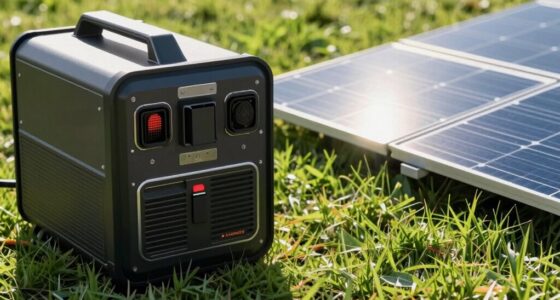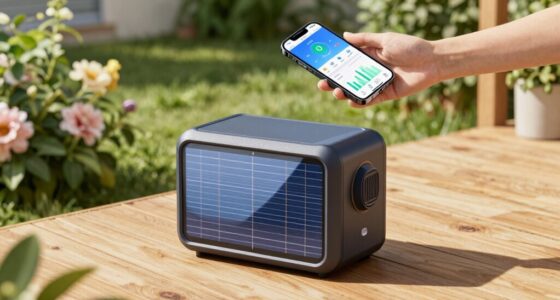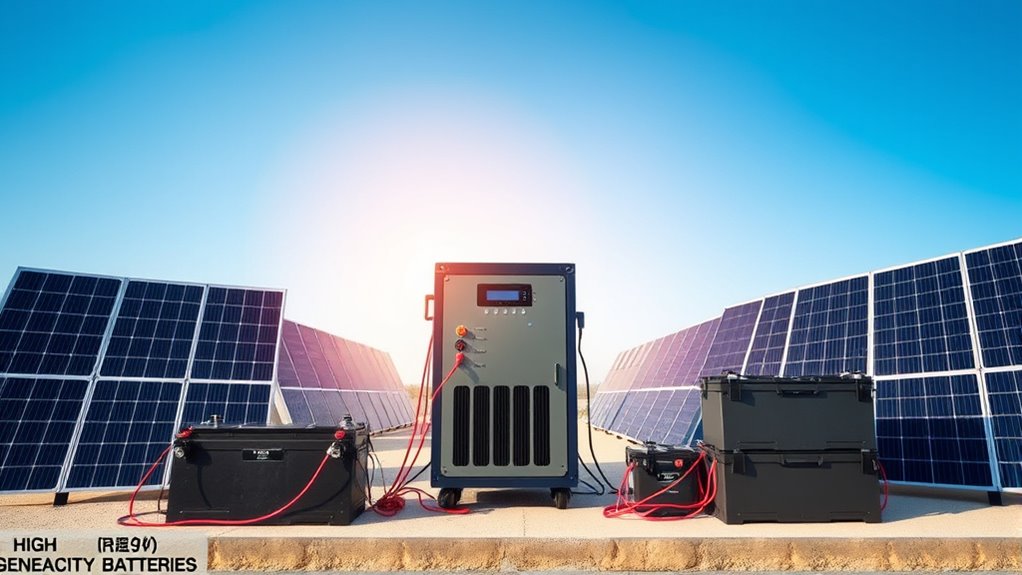

Expanding your solar generator with extra batteries and panels allows you to customize your setup for longer power backup and outdoor use. Adding batteries boosts storage capacity, giving you more runtime, while extra panels increase solar input for faster charging. Just guarantee compatibility with your system’s voltage and wattage limits to avoid issues. Planning ahead makes upgrades smooth and safe. Continue exploring to discover how to expand your system effectively and safely.

Get backup power and energy gear delivered free with Prime
- Fast, free delivery on millions of items
- Prime Video, Amazon Music and more included
- Member-only deals all year
Key Takeaways
- Verify compatibility of additional batteries and panels with your existing solar generator system.
- Expand battery capacity to increase runtime and support larger energy demands.
- Add solar panels in series or parallel to boost power generation, ensuring voltage and wattage compatibility.
- Upgrade wiring, connectors, or inverters as needed for seamless system integration and safety.
- Plan your setup to create a scalable, efficient system adaptable to future energy needs.
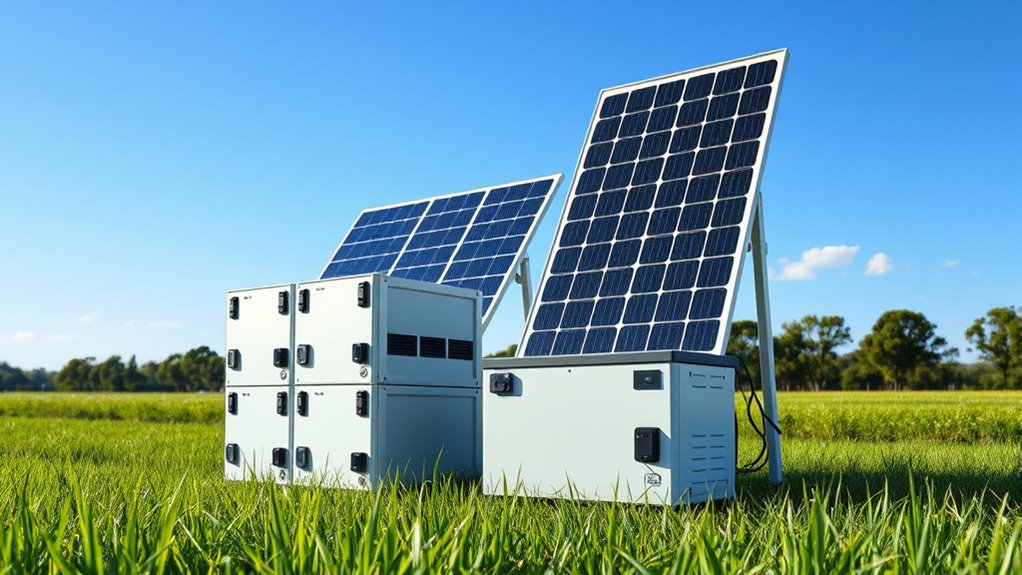
Solar generator expandability allows you to customize and increase your power capacity as your needs grow. Whether you’re planning for a weekend camping trip or preparing for emergency backup, knowing how to expand your system ensures you stay powered without overbuying initially. One of the most straightforward ways to do this is by adding extra batteries. By increasing your battery capacity, you can store more energy, extending your runtime and making your solar generator more versatile. When considering additional batteries, it’s important to check their compatibility with your existing system. Not all batteries work seamlessly with every solar generator, so look for models that are designed to integrate smoothly. This compatibility ensures safe and efficient charging, prevents potential damage, and maximizes the lifespan of your investment.
Beyond batteries, expanding your solar generator involves adding more solar panels. Solar panel compatibility becomes a key factor here. Not all panels are compatible with all generators, especially when it comes to voltage and wattage limits. It’s essential to verify whether your generator can handle additional panels and whether they can be connected in series or parallel configurations. Properly matching your panels to your generator’s input specifications ensures optimal energy transfer without risking overloads or inefficiencies. When selecting new panels, consider factors like size, wattage output, and the quality of the solar cells. Higher wattage panels can generate more power in less space, but ensure your generator can handle the increased input.
Adding solar panels requires checking compatibility with your generator’s voltage and wattage limits.
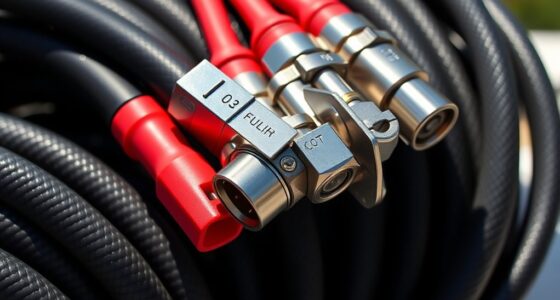
Expanding your solar generator isn’t just about adding more batteries and panels; it’s about creating a scalable system that adapts to your evolving energy needs. The process often involves upgrading or supplementing your existing setup, so planning ahead makes a big difference. For example, if you anticipate needing more power during certain seasons or activities, you can preemptively add compatible batteries and panels. This way, you avoid the hassle of replacing your entire system later and maximize your investment. Keep in mind that expanding your system might require additional wiring, connectors, or even inverter upgrades, so it’s wise to consult the manufacturer’s guidelines or a professional to ensure everything integrates smoothly. Additionally, understanding the safety considerations related to system expansion is crucial to prevent hazards and ensure reliable operation.
In the end, the ability to expand your solar generator allows you to tailor your energy solution precisely to your requirements. By paying attention to battery capacity and solar panel compatibility, you ensure your system remains efficient, safe, and capable of growing with your lifestyle. This flexibility means you won’t be limited by your initial setup and can confidently scale up your power as your needs increase, all while harnessing the clean, renewable energy of the sun.
As an affiliate, we earn on qualifying purchases.
Frequently Asked Questions
Can I Upgrade My Solar Generator’s Inverter Capacity?
Yes, you can upgrade your solar generator’s inverter capacity through inverter upgrades, but it depends on your device’s design. Check if your current inverter is modular or if the manufacturer offers capacity expansion options. Upgrading the inverter can enhance your system’s power output, allowing you to handle larger loads or more panels. Always consult the manufacturer or a professional to guarantee compatibility and safety before attempting an inverter upgrade.
What Are the Risks of Overloading Expandable Solar Systems?
Overloading expandable solar systems can cause serious issues. You risk damaging batteries if you overload the system, since poor battery management may lead to overheating or reduced lifespan. Improper system integration can result in electrical faults or inefficient power distribution. To avoid these risks, always verify your system is correctly rated for added components, follow manufacturer guidelines, and monitor load levels regularly to keep everything running smoothly and safely.
How Do Temperature Changes Affect Expandable Solar Generator Performance?
Temperature changes can impact your expandable solar generator by affecting battery longevity and heat dissipation. When it gets too hot, batteries may degrade faster, reducing their lifespan and efficiency. Conversely, cold temperatures can slow down chemical reactions, lowering performance. To maximize your system’s lifespan and efficiency, guarantee proper ventilation and avoid extreme temperature exposure. Monitoring temperature levels helps maintain ideal heat dissipation, so your solar generator performs reliably year-round.
Are There Compatibility Issues With Different Brands of Batteries?
Like trying to fit a square peg in a round hole, using batteries from different brands can cause compatibility issues. You need to take into account brand compatibility and adhere to established battery standards to ensure seamless integration. Not all batteries are designed equally, so check your solar generator’s specifications and recommended battery types. Sticking to trusted brands and standard standards guarantees safe, efficient expansion without risking damage or reduced performance.
What Maintenance Is Required for Expandable Solar Generator Systems?
You should regularly check your batteries’ lifespan and keep an eye on their performance. Make sure your charger maintenance is up to date by cleaning connections and inspecting for corrosion or wear. Always follow manufacturer guidelines for your expandable solar generator system, and consider periodic system checks to identify potential issues early. Proper maintenance helps extend battery life and keeps your system running efficiently, especially as you add more batteries or panels.
As an affiliate, we earn on qualifying purchases.
Conclusion
Imagine your solar generator as a foundation, ready to grow with your needs. By adding extra batteries and panels, you turn a simple setup into a powerhouse that keeps your life running smoothly—no matter what. Don’t let limitations hold you back; instead, build a solar system that evolves with you. With expandability, your energy independence isn’t just a dream, but a promise waiting to be fulfilled. The future of your power is in your hands—are you ready to expand?
solar generator compatible batteries
As an affiliate, we earn on qualifying purchases.
As an affiliate, we earn on qualifying purchases.
solar panel series parallel connectors
As an affiliate, we earn on qualifying purchases.
As an affiliate, we earn on qualifying purchases.
Halloween Picks
halloween
As an affiliate, we earn on qualifying purchases.