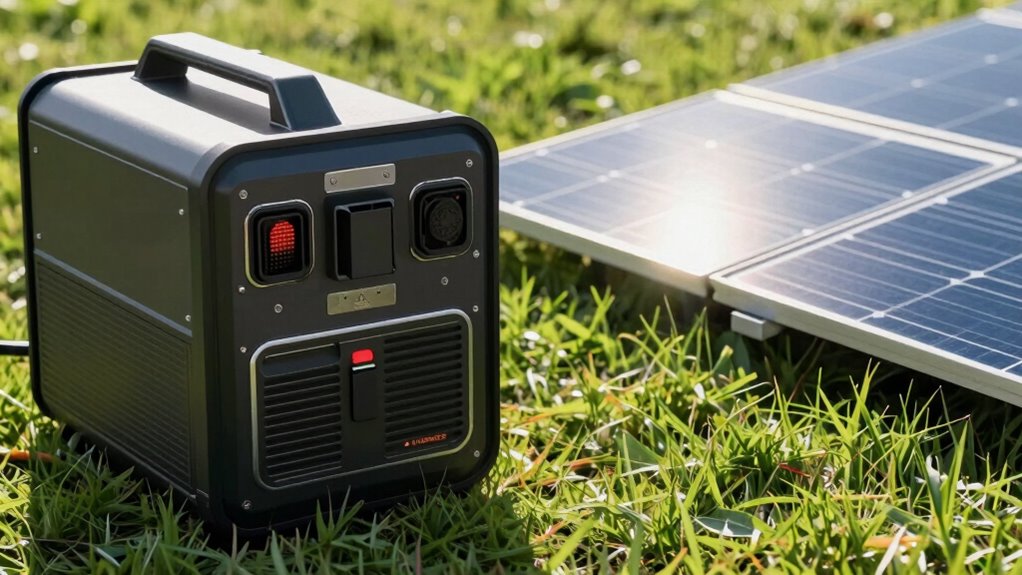

To understand your solar generator’s recharging limits, check its maximum input capacity, which shows the safest power rate it can handle. Keep in mind that exceeding this capacity causes energy loss and slows recharging. Also, consider the efficiency of your solar panels, which can be affected by dirt, shading, or weather, reducing the energy captured. Balancing these factors helps you plan effective recharging strategies, and there’s more to explore to optimize your system further.

Get backup power and energy gear delivered free with Prime
- Fast, free delivery on millions of items
- Prime Video, Amazon Music and more included
- Member-only deals all year
Key Takeaways
- Check the maximum input capacity of the solar generator to avoid exceeding safe power levels.
- Monitor your solar panel’s output and efficiency to estimate actual energy available for recharging.
- Understand that conversion losses and environmental factors reduce the energy effectively received.
- Avoid overcharging by planning recharges within the generator’s cycle and capacity limits.
- Balance solar panel output with the generator’s input capacity for optimal, efficient recharging.

Ever wondered how much your solar generator can recharge before it hits its limit? Understanding this is key to getting the most out of your device, especially if you’re relying on it during outdoor trips or emergencies. The first thing to think about is your solar generator’s battery lifespan. Over time, batteries naturally degrade, which means their capacity to hold a charge diminishes with each cycle. A typical lithium-ion battery, common in many solar generators, can handle around 500 to 1,000 full charge cycles before its capacity drops considerably. Once the battery reaches this point, you’ll notice it won’t hold as much power, and recharging it repeatedly will yield less energy. To maximize your generator’s longevity, avoid frequently discharging it completely and aim for partial charges, which are easier on the battery. Understanding your battery cycles helps you better plan and maintain your device’s performance. Additionally, proper storage and temperature management can help prolong battery life, ensuring your generator remains reliable over time. Protecting your battery from extreme temperatures and storing it in a cool, dry place can significantly extend battery life.
Charging efficiency also plays a vital role in understanding your solar generator’s recharging limits. The efficiency determines how much sunlight your panels convert into usable energy and how effectively that energy charges your battery. Even on a sunny day, no solar panel is 100% efficient. Some energy is lost during the conversion process, meaning you might not get the full potential of the sunlight available. This loss impacts how quickly and fully your generator can recharge. If your panels are dirty, shaded, or aging, their efficiency drops even further, reducing the total energy your generator can absorb during each session. Knowing your solar panels’ efficiency helps you estimate how long it will take to recharge your generator fully and whether you’ll need additional panels or more sunlight to meet your energy needs.
It’s also important to understand your generator’s maximum input capacity. This is the highest rate at which your device can accept power without risking damage. If you connect a solar panel or multiple panels that exceed this capacity, the excess energy won’t be absorbed, and your recharging process will slow down. Conversely, if your panels are too weak or less efficient, your generator will take longer to recharge. By balancing your solar panel’s output with your generator’s input limits and taking into account the battery’s lifespan, you can develop a realistic plan for recharging your device efficiently. Being aware of solar panel efficiency and other factors, such as weather conditions, will help you optimize your recharging strategy.
Products Worth Considering

eufy Security 5-Piece Home Alarm Kit

Ring Alarm 8-Piece Kit (2nd Gen) Home Security System

Sonos Play Portable Wi-Fi and Bluetooth Speaker, White
As an affiliate, we earn on qualifying purchases.
Frequently Asked Questions
Can Solar Generators Be Recharged Indoors?
Yes, you can recharge solar generators indoors, but proper indoor placement is key. Make certain the generator is near a window with good sunlight for efficient recharging. Keep in mind, frequent indoor recharging can impact battery lifespan over time. To maximize longevity, avoid exposing the generator to extreme temperatures and follow the manufacturer’s guidelines. Indoor recharging is convenient, but proper care helps maintain peak performance and battery health.
How Long Does a Full Recharge Take on Cloudy Days?
On cloudy days, a full recharge can take markedly longer—sometimes double or triple the time compared to sunny conditions. Your solar panel efficiency drops, which extends the recharge cycle longevity. Expect a recharge that might take anywhere from 8 to 16 hours, depending on cloud cover and panel quality. To optimize, position your panels properly, and be patient as the power gradually replenishes your generator’s capacity.
Is There a Way to Speed up Recharging Times?
Yes, you can speed up recharging times by maximizing your solar generator’s charging efficiency. Position panels in direct sunlight, clean dust or dirt regularly, and use high-quality cables. Avoid overcharging to protect your battery lifespan, which guarantees longevity. Additionally, reducing power consumption during recharging helps, so limit device use. These steps help recharge your solar generator faster while maintaining ideal battery health and efficiency.
Do Recharging Limits Vary Between Brands?
Yes, recharging limits vary between brands because of differences in brand compatibility and recharging efficiency. Some brands design their solar generators to handle higher input wattages, allowing faster recharging, while others prioritize efficiency, which can extend recharge times. Always check the manufacturer’s specifications for your specific brand to understand its recharging capabilities, ensuring you optimize recharging speed and protect your device from overloading.
How Often Should I Monitor Recharging Levels?
Think of your solar generator as a delicate garden; you need to check its health regularly. You should monitor recharging levels at least weekly to protect your battery lifespan and maintain charging efficiency. Over time, batteries can weaken if left unchecked, like a garden overgrown. Consistent monitoring guarantees your generator stays in peak shape, prolonging its life and optimizing performance when you need it most.
Conclusion
By mastering the mechanics of your solar generator’s recharging limits, you’ll maximize its mighty performance and prolong its lifespan. Recognize recharge routines, respect runtime restrictions, and regulate sunlight’s reach. Remember, responsible recharging restores, refreshes, and reignites your generator’s reliability. So stay savvy, stay sustainable, and seamlessly sustain your supplies — because understanding and respecting limits leads to long-lasting power, peace, and preparedness in every situation.