In low sun conditions, your solar generator will charge more slowly, and sometimes it may pause altogether. Reduced sunlight means less energy hitting your panels, leading to longer recharge times and decreased power output. Weather like clouds, fog, or rain can almost stop charging entirely. Using high-efficiency panels and proper placement can help, but you should expect some fluctuation. To keep your system running smoothly, consider backup options—there’s much more to optimize here.

Get backup power and energy gear delivered free with Prime
- Fast, free delivery on millions of items
- Prime Video, Amazon Music and more included
- Member-only deals all year
Key Takeaways
- Charging speeds will slow down due to reduced sunlight intensity during cloudy or overcast conditions.
- Battery recharging may take significantly longer, possibly causing temporary pauses in the charging process.
- Power output can fluctuate, requiring adaptable energy consumption and management.
- Using high-efficiency panels and optimal positioning can help maximize charging in low-light weather.
- Supplementing with grid power or backup batteries may be necessary during extended low sunlight periods.
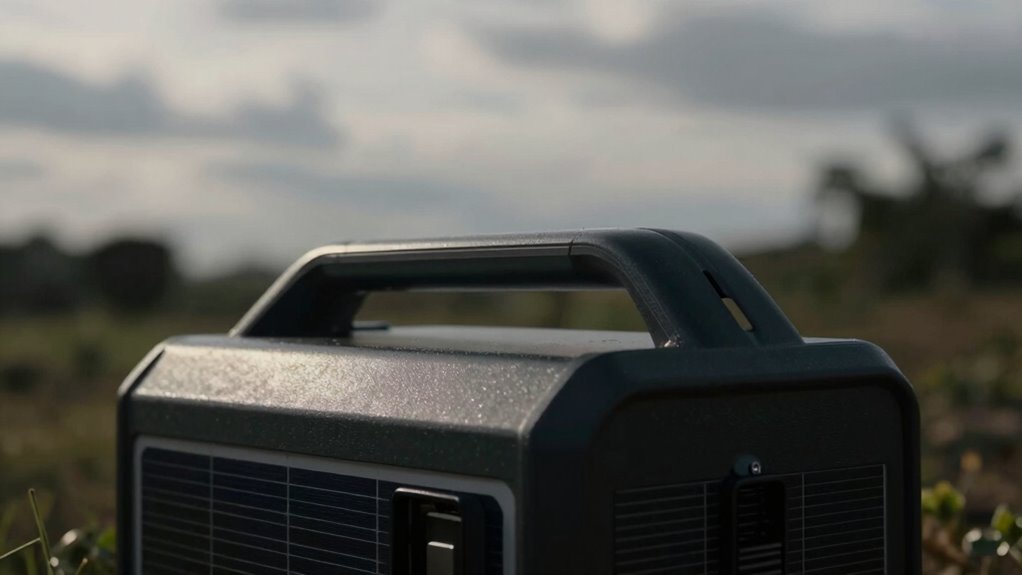
Have you ever wondered how to keep your solar generator charged during cloudy days or in low sunlight conditions? When the sky isn’t clear, your solar generator’s ability to stay charged depends heavily on its battery efficiency and how weather impact affects the process. Low sunlight means less energy hitting your panels, which can slow down or even temporarily halt charging. But understanding what to expect in these conditions can help you manage your power needs better.
Your solar generator’s battery efficiency plays a vital role here. Modern units are designed to maximize energy storage, but no battery is perfect. In low sun, the generator works harder to gather enough sunlight, and the efficiency can drop. This means it takes longer to recharge the battery, and in some cases, the power output is limited. If your generator has a built-in intelligent charging system, it might adjust the charging rate to prevent overloading or damaging the battery, but this can further extend the time needed to recharge. Being aware of this helps you plan your energy consumption appropriately during cloudy periods.
Battery efficiency influences recharge time and power output during low sunlight conditions.
Weather impact is another factor that influences solar generator performance. Cloud cover, fog, and even light rain can considerably reduce the amount of sunlight reaching your panels. Cloud overcast skies scatter sunlight, decreasing the intensity that hits the surface. As a result, your panels produce less power, which slows down the charging process. In heavy rain or thick clouds, the sunlight can be so minimal that charging might almost stop altogether. These weather conditions can cause fluctuations in power generation, making it unpredictable how much energy you’ll have at any given moment. Additionally, the solar panel efficiency can vary depending on the quality and technology used, influencing how well it captures diffuse light during such conditions. To enhance performance in these challenging conditions, using high-efficiency panels designed for diffuse light can be particularly beneficial. Moreover, understanding the weather impact can help you anticipate fluctuations and plan accordingly. Using advanced panel technology can also improve energy capture during low-light weather, providing a more reliable charge.
To mitigate weather impact, some users opt for adjustable or high-efficiency panels capable of capturing diffuse light better. Positioning your panels optimally can also help maximize exposure, even when sunlight is weak. Keep in mind that during extended periods of low sun, your solar generator might need supplemental power sources, like grid charging or portable backup batteries, to guarantee you don’t run out of power when it matters most.
Products Worth Considering

Samsung 55-Inch S90H OLED 4K UHD Smart TV Bundle with Full-Motion Mount and Surge Protector

Roborock Qrevo 2 Pro Robot Vacuum and Mop

Sony BRAVIA XR8B 65-Inch OLED 4K HDR Smart Google TV (K-65XR8B)
As an affiliate, we earn on qualifying purchases.
Frequently Asked Questions
How Long Can a Solar Generator Operate During Prolonged Cloudy Periods?
During prolonged cloudy periods, your solar generator can operate for a limited time, depending on battery longevity and power storage capacity. If the battery is fully charged before the clouds roll in, it might last several hours, but reduced sunlight means slower charging. To maximize operation, guarantee your generator has a high-capacity battery and efficient power management. Keep in mind, extended low sun exposure will eventually deplete stored energy, limiting your generator’s runtime.
Can I Charge My Solar Generator Using Alternative Power Sources?
Think of your solar generator as a resilient ship steering through stormy seas—you can charge it with alternative power sources like AC wall outlets, car adapters, or generators when sunlight’s scarce. This guarantees reliable power storage and proper battery maintenance. Charging via these methods keeps your generator ready for emergencies, extending its lifespan and maintaining ideal performance—even when the sun isn’t shining.
What Are the Best Practices to Maximize Charging Efficiency in Low Sunlight?
To maximize charging efficiency in low sunlight, you should optimize your energy storage and panel positioning. Keep your solar panels clean and angle them toward the sun to capture as much light as possible. Use high-quality panels designed for low-light conditions, and consider tracking systems to follow the sun’s movement. These steps help you gather more energy, ensuring your solar generator charges effectively even on cloudy days.
How Does Temperature Affect Solar Generator Charging in Low Sun Conditions?
Temperature considerably impacts your solar generator’s charging in low sun. When it’s too hot or cold, battery degradation speeds up, reducing overall lifespan, and causing power fluctuation. In cold conditions, charging slows down, while heat can damage internal components. To optimize performance, keep your generator in a temperature-controlled environment and avoid extreme temps, ensuring steady charging and prolonging your battery’s life even during low sunlight periods.
Are There Specific Solar Panel Types Better Suited for Low Sun Environments?
Like a wise owl scanning the night, you’ll want high-efficiency panels for low sun. Monocrystalline panels excel here, thanks to their superior panel efficiency, capturing more light at challenging sun angles. These panels outperform polycrystalline types in low sun, making them your best bet for reliable charging. Expect consistent performance, even when the sun’s rays are faint, ensuring your solar generator keeps humming through cloudy days and short winter days.
Conclusion
Even on days when the sun seems to hide behind clouds, your solar generator can still power through, much like a boat steering through choppy waters—steady and resilient. Remember, a typical solar panel still produces about 25-50% of its capacity in low light. So, don’t be discouraged if your system isn’t at full blast; with patience and a little time, you’ll keep your devices running smoothly, no matter how gloomy it gets outside.