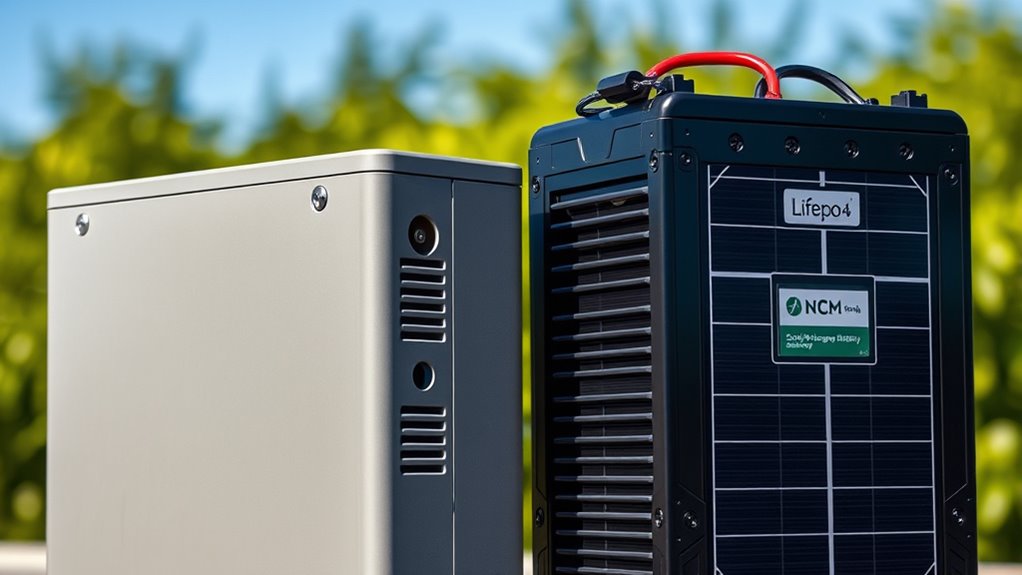

When choosing between Lifepo₄ and NCM batteries for your solar generator, consider what matters most to you. Lifepo₄ batteries last over 10,000 cycles, are safer, durable, and require less maintenance, making them ideal if you want long-term reliability. NCM batteries offer higher energy density, making them more compact and lightweight, perfect for portability. To find out which suits your needs best, keep exploring the key differences and benefits.

Get backup power and energy gear delivered free with Prime
- Fast, free delivery on millions of items
- Prime Video, Amazon Music and more included
- Member-only deals all year
Key Takeaways
- Lifepo₄ batteries offer longer cycle life (~10,000 cycles) versus NCM’s 2,000-3,000 cycles, reducing replacement costs.
- NCM batteries provide higher energy density, making them more compact and lightweight for portable solar setups.
- Lifepo₄ batteries are safer with lower risk of thermal runaway, enhancing reliability over time.
- NCM batteries may have slightly lower charging efficiency and require more careful management for safety.
- Choice depends on whether durability and safety (Lifepo₄) or size and weight (NCM) are the priority.
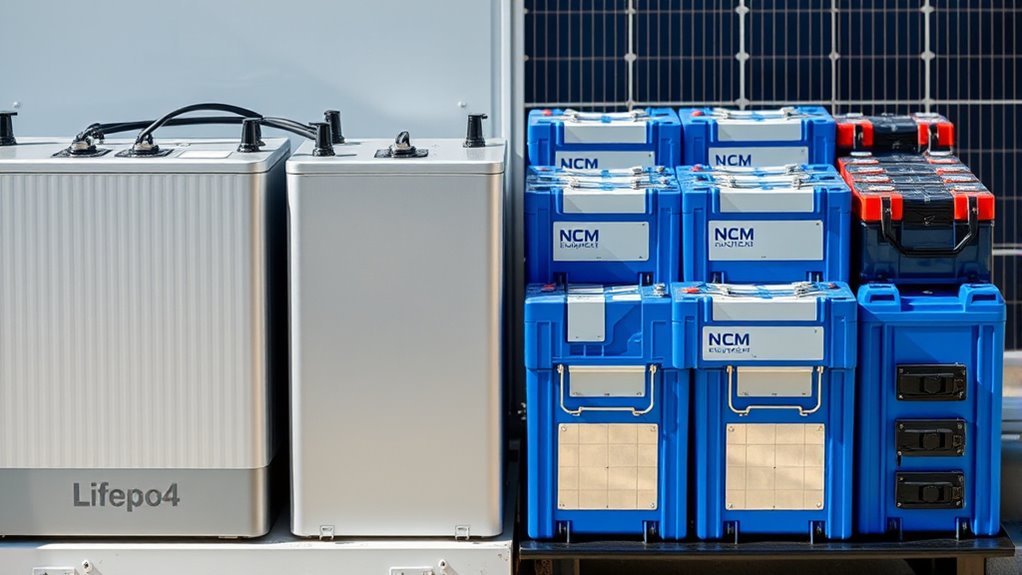
Are you wondering which battery type is best for your solar generator? When choosing between Lithium Iron Phosphate (LiFePO₄ or Lifepo₄) and Nickel Cobalt Manganese (NCM) batteries, understanding their battery lifespan and charging efficiency can help you make the right decision. Lifepo₄ batteries are known for their impressive longevity, often lasting over 10,000 charge cycles, which means they retain their capacity longer over time. This extended battery lifespan makes them a cost-effective choice in the long run, especially if you plan to use your solar generator frequently. Additionally, Lifepo₄ batteries offer high charging efficiency, allowing you to quickly recharge the battery after use without significant energy loss. This means less time waiting to use your generator again and more reliable power on demand.
Lifepo₄ batteries last over 10,000 cycles with high charging efficiency, making them a cost-effective choice for long-term use.
In contrast, NCM batteries tend to have a shorter battery lifespan, typically around 2,000 to 3,000 charge cycles. While they may not last as long as Lifepo₄, NCM batteries often excel in delivering higher energy density, which means they can store more power in a smaller, lighter package. This makes NCM batteries an ideal option if size and weight are critical considerations for your setup. However, their charging efficiency can vary depending on the quality and management system, sometimes resulting in slightly more energy loss during recharge cycles. This could mean longer charging times or reduced overall energy transfer efficiency over time.
You should also consider how the differences in battery lifespan and charging efficiency impact your daily use. Lifepo₄ batteries, with their longer lifespan and stable performance, tend to require less maintenance and replacement, making them more cost-effective in the long run. They’re also safer, with lower risks of thermal runaway, which adds an extra layer of reliability. NCM batteries, while potentially more compact and lightweight, may need replacement sooner and can be more sensitive to charging conditions, which could affect their efficiency and safety if not properly managed.
Ultimately, your choice depends on your priorities. If you want a durable, long-lasting battery with high charging efficiency and safety, Lifepo₄ is the superior option. But if you need a more portable setup with higher energy density and are willing to accept a shorter lifespan, NCM batteries might suit your needs better. Weighing these factors will help guarantee you select the best battery type for your solar generator, maximizing both its performance and your investment.
As an affiliate, we earn on qualifying purchases.
Frequently Asked Questions
Which Battery Type Is More Environmentally Friendly?
Lifepo₄ batteries are more environmentally friendly because they have fewer recycling challenges and a lower manufacturing impact. You’ll find that Lifepo₄’s longer lifespan reduces waste, and their safer composition minimizes environmental hazards. NCM batteries, on the other hand, face more recycling difficulties and involve materials with higher environmental costs during production. So, if sustainability matters to you, Lifepo₄ is the better choice for a greener footprint.
How Do Temperature Ranges Affect Battery Performance?
Temperature ranges considerably influence your battery’s performance. If it’s too hot or cold, it can diminish thermal stability and lower the battery’s efficiency. Lifepo₄ batteries tend to have a broader temperature tolerance, maintaining better performance in extreme conditions. NCM batteries might degrade faster outside their ideal temperature range. To guarantee longevity and reliable power, keep your batteries within recommended temperature limits and consider thermal management solutions.
What Is the Typical Lifespan of Each Battery Type?
Lifepo₄ batteries typically last 2,000 to 3,000 cycles, while NCM batteries usually endure 500 to 1,000 cycles. This means Lifepo₄ batteries often have a longer lifespan, making them more cost-effective over time. Consider the manufacturing processes and battery recycling options, as these factors influence durability and environmental impact. Proper maintenance can also extend each battery’s lifespan, helping you maximize your investment and reduce waste.
Are There Any Safety Concerns With Either Battery?
You should know that Lifepo₄ batteries have a lower fire risk compared to NCM, making them safer for home use. However, NCM batteries can pose recycling challenges due to their complex chemistry. While both batteries are generally safe if handled properly, always follow manufacturer guidelines to minimize fire hazards and guarantee safe disposal. Your safety depends on proper maintenance and understanding each battery’s specific risks.
Which Battery Type Is More Cost-Effective Long-Term?
Lifepo₄ batteries tend to be more cost-effective long-term because they offer lower maintenance costs and longer lifespans, reducing replacement expenses. While NCM batteries may have a lower upfront price, their higher maintenance needs and shorter cycle life make them more expensive over time. The cost comparison favors Lifepo₄ if you’re seeking durability and lower ongoing costs, making it a smarter investment for sustained solar generator use.
As an affiliate, we earn on qualifying purchases.
Conclusion
Choosing between LiFePO₄ and NCM batteries is like picking a vehicle—each has its strengths. I once met a camper who switched to LiFePO₄ and found her setup like upgrading from a bicycle to a motorbike: more reliable and longer-lasting. Remember, LiFePO₄ offers greater safety and lifespan, while NCM provides higher energy density. Think about your needs—like selecting the right ride—and you’ll find the perfect battery to power your adventures.
As an affiliate, we earn on qualifying purchases.
compact lightweight solar battery
As an affiliate, we earn on qualifying purchases.
As an affiliate, we earn on qualifying purchases.
Halloween Picks
halloween
As an affiliate, we earn on qualifying purchases.