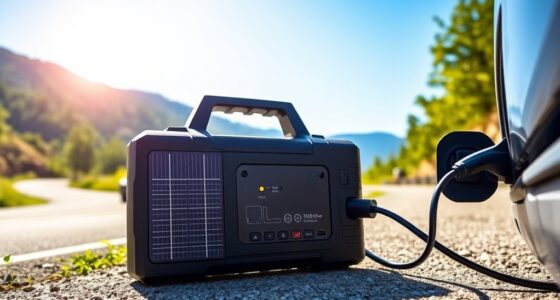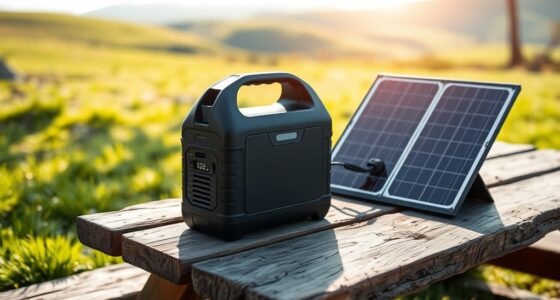
Solar generators play a crucial role in humanitarian aid by providing reliable, emissions-free power where traditional grids fail. They quickly support critical services like healthcare, communication, and water purification during disasters. Their portability and easy setup make them ideal for remote or damaged areas, ensuring aid efforts continue smoothly. With advancements in energy storage and durability, these systems are sustainable and effective. Discover how these innovative solutions transform emergency response as you explore further.
Key Takeaways
- Solar generators provide reliable, off-grid power for medical, communication, and water systems in disaster zones.
- They harness renewable energy, reducing environmental impact and fuel dependence during humanitarian responses.
- Portable and easy to deploy, solar generators support continuous operations in remote or damaged areas.
- They operate quietly and emission-free, creating safer environments for aid workers and affected populations.
- Solar generators require low maintenance, ensuring consistent power delivery in challenging conditions.
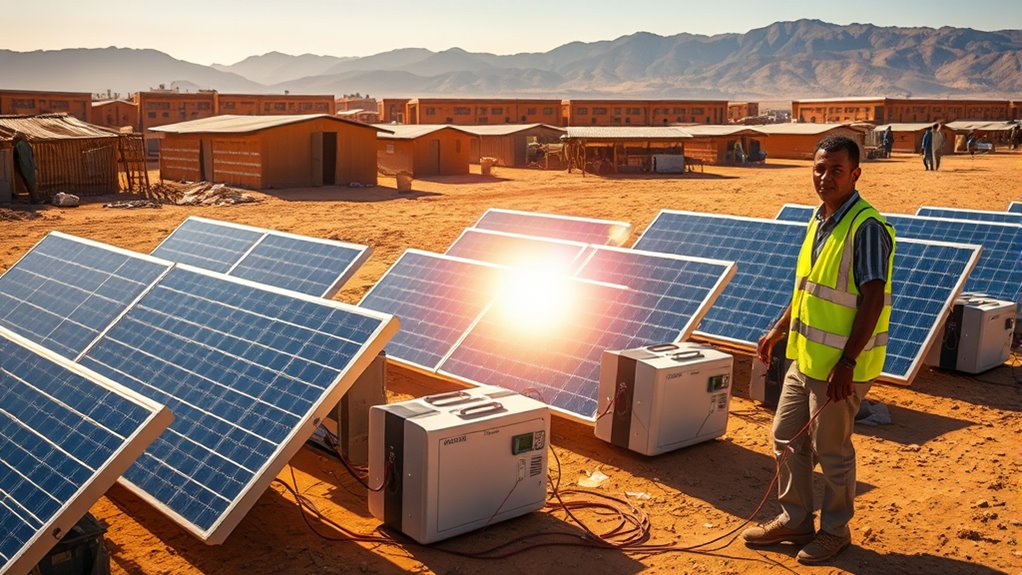
Solar generators are transforming humanitarian aid efforts by providing reliable, clean power in disaster-stricken areas. When a natural disaster strikes, traditional power sources often become inaccessible or damaged, leaving vulnerable communities without essential electricity. This is where solar generators step in, harnessing renewable energy to deliver immediate and sustainable power solutions. By utilizing the sun’s energy, these generators eliminate the need for fuel-dependent systems, reducing logistical challenges and environmental impact. Their ability to operate independently of the grid makes them invaluable in emergency situations, where rapid deployment and dependable energy are critical.
You’ll find that solar generators markedly enhance disaster resilience. They’re designed to be portable, easy to set up, and capable of functioning in harsh conditions, allowing aid organizations to quickly establish power supplies in remote or devastated areas. This resilience means communities can maintain essential services like healthcare, communication, and water purification even amid chaos. Solar power also offers a long-term advantage; it reduces reliance on fossil fuels, which are often scarce or expensive during crises. This shift toward renewable energy not only ensures continued aid operations but also promotes sustainable recovery, helping communities rebuild with less environmental footprint.
Furthermore, solar generators support a variety of humanitarian needs. They power medical clinics, enable communication networks, and provide lighting for night-time operations—all essential components of effective disaster response. Because they produce no emissions during operation, they contribute to cleaner air and healthier environments, which is particularly important in areas where healthcare facilities are overwhelmed. Their quiet operation means aid workers can operate discreetly and safely without creating additional hazards, such as noise pollution or toxic fumes. Additionally, advances in aura technology and energy storage improve the efficiency and reliability of solar power systems, making them even more adaptable in crisis scenarios. Plus, their low maintenance requirements make them practical in settings where technical support may be limited.
Top picks for "solar generator humanitarian"
Open Amazon search results for this keyword.
As an affiliate, we earn on qualifying purchases.
Frequently Asked Questions
How Do Solar Generators Compare to Traditional Fuel-Based Generators?
You’ll find solar generators more cost-efficient over time since they have lower fuel and maintenance costs. They also have a smaller environmental impact, producing clean energy without emissions. Unlike traditional fuel-based generators, solar options harness renewable energy, making them sustainable and reliable in emergencies. Although initial setup might be higher, their long-term savings and eco-friendliness make them a smarter choice for humanitarian efforts.
What Are the Maintenance Requirements for Solar Generators in the Field?
Think of solar generators as quiet heroes needing gentle care. You’ll want to regularly check the batteries and follow cleaning protocols to keep them running smoothly. Battery maintenance involves monitoring charge levels and avoiding deep discharges, while cleaning protocols keep dust and debris at bay. By staying attentive to these simple tasks, you guarantee your solar generator remains reliable, maximizing its power when you need it most in the field.
Can Solar Generators Power Medical Equipment During Emergencies?
Yes, solar generators can power medical equipment during emergencies. They harness solar power to provide a reliable, renewable energy source, ensuring your medical devices stay operational even when the grid fails. Just make sure the solar generator’s capacity matches your medical devices’ power needs, and keep it well-maintained with regular inspections and cleaning. This way, you can confidently rely on solar power to support critical healthcare during emergencies.
How Do Solar Generators Perform in Extreme Weather Conditions?
You might worry that extreme weather will fry your solar generator, but most are built like tanks, offering impressive weather resilience. They can withstand storms, snow, and scorching heat, ensuring power stability when you need it most. While no device is invincible, modern solar generators are designed to keep running through the worst weather, giving you peace of mind that your power source won’t let you down, no matter how fierce nature gets.
What Is the Typical Lifespan of a Humanitarian Solar Generator?
A humanitarian solar generator typically lasts between 10 to 15 years, depending on usage and maintenance. You should watch for battery degradation over time, which can reduce performance. Most come with warranty coverage that protects you against early failures, giving you peace of mind. Proper care and regular inspections help extend the generator’s lifespan, ensuring reliable power during critical humanitarian efforts.
Conclusion
As you embrace solar generators in humanitarian aid, imagine a radiant sun guiding a ship through stormy seas—bright, reliable, and unwavering. These solar-powered beacons light the path for those in need, turning endless sunlight into a steadfast source of hope and energy. By harnessing nature’s gentle power, you become a lighthouse, illuminating lives and fostering resilience in the darkest of times. Together, you transform the future into a horizon filled with promise and possibility.