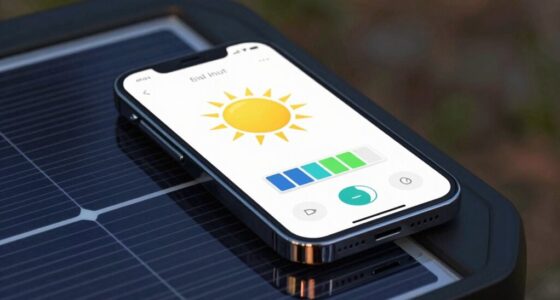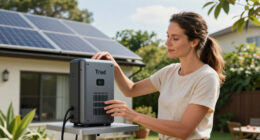
Before running kitchen appliances on your solar backup, you should know your system’s power capacity and target energy efficiency. Use appliances with high Energy Star ratings and avoid high-power devices like ovens or dishwashers during backup. Schedule high-energy tasks during peak sunlight hours and focus on smaller appliances. Regularly maintain your system to guarantee peak performance, and manage your energy demand carefully. Stay informed about your energy consumption to maximize backup reliability and efficiency—you’ll find more helpful tips ahead.

Get backup power and energy gear delivered free — and shop member deals
- Fast, free delivery on millions of items
- Access to Prime Big Deal Days deals on October 6–7
- Prime Video, Amazon Music and more included
Key Takeaways
- Ensure appliances are energy-efficient and have low wattage to match the solar backup capacity.
- Calculate total appliance wattage to prevent overloads during simultaneous use.
- Prioritize essential kitchen devices and avoid high-power appliances during backup operation.
- Regularly maintain batteries and solar panels to ensure optimal system performance.
- Schedule high-energy tasks during peak sunlight or when batteries are fully charged for efficiency.

Next, consider the efficiency of your appliances. Not all kitchen devices consume the same amount of power, and some are more energy-efficient than others. Upgrading to energy-efficient models can considerably reduce your overall energy demand, making it easier to run multiple appliances on a limited solar backup. Look for appliances with high Energy Star ratings or those designed to operate at lower wattages. This not only extends the duration your backup system can support your kitchen but also minimizes the strain on your energy storage, prolonging battery life and reducing the need for frequent recharging. Additionally, understanding the power capacity of your system is essential. Calculate the total wattage of the appliances you intend to run simultaneously and compare it to your solar backup’s output capacity. Overloading the system can cause failures or damage, so it’s important to prioritize essential appliances and manage their usage efficiently. For instance, you might limit the use of high-power devices like ovens or dishwashers during backup periods, focusing instead on smaller appliances like microwaves, blenders, or slow cookers, which consume less energy. Proper system design and maintenance also play crucial roles. Regularly monitoring your battery health and ensuring your solar panels are clean and functioning at their best will keep your backup system reliable. Incorporating smart energy management practices, such as scheduling high-energy tasks during peak sunlight hours or when your batteries are fully charged, can help maximize efficiency. Additionally, understanding the landscape design of your backyard can help optimize the placement of solar panels for better sunlight exposure and overall system performance. Being aware of the energy demand of your household can help you better plan and distribute appliance usage. To further enhance efficiency, consider evaluating your household’s energy consumption patterns to identify peak usage times and adjust appliance operation accordingly. By understanding and managing energy storage, appliance efficiency, and system capacity, you’ll ensure your kitchen remains functional and your food stays fresh, no matter what happens to the grid.
Energy Star rated small kitchen appliances
As an affiliate, we earn on qualifying purchases.
As an affiliate, we earn on qualifying purchases.
Frequently Asked Questions
Can I Run All Kitchen Appliances on Solar Backup Simultaneously?
You can’t run all kitchen appliances on solar backup simultaneously without risking overload. Your energy storage capacity and power efficiency determine what appliances you can operate at once. High-energy appliances like refrigerators and ovens may require more power than your system can supply simultaneously. To avoid issues, prioritize essential appliances, monitor your energy usage, and consider upgrading your storage or system capacity for better performance and reliable operation.
How Long Can I Operate Kitchen Appliances on Solar Backup?
You can operate your kitchen appliances for as long as your energy storage holds out, but it’s a game of power efficiency and capacity. Imagine the clock ticking, knowing your solar backup’s capacity determines how long your appliances run. With efficient energy use, you extend that window. Keep an eye on your storage levels and appliance demands, and you’ll maximize your backup time, avoiding surprises when power runs low.
Do I Need a Special Inverter for Kitchen Appliances?
Yes, you likely need a special inverter for kitchen appliances. Standard inverters may not handle the high starting wattage of appliances like refrigerators or microwaves. A pure sine wave inverter with sufficient power regulation guarantees your appliances operate smoothly without damage. Additionally, consider energy storage capabilities to maintain consistent power, especially during cloudy days or high energy demand periods. This setup guarantees safe, efficient operation of your kitchen appliances on solar backup.
What Maintenance Is Required for Solar Backup Systems?
Maintaining your solar backup system is like tending a garden—you need regular care to keep it thriving. You should perform routine battery maintenance, checking for corrosion and ensuring proper fluid levels, and regularly inspect your inverter for any warning signs or error messages. Keeping these components in good shape helps prevent unexpected failures, ensuring your system runs smoothly when you need it most, and prolongs its overall lifespan.
Are There Any Appliances Incompatible With Solar Backup?
Some appliances are incompatible with solar backup because of their high energy demands or specific power requirements. Heavy-duty appliances like electric ovens, large refrigerators, or high-wattage devices may strain your energy storage system or cause instability. Always check appliance compatibility with your energy storage capacity. Running incompatible appliances can deplete your backup faster or damage your system, so prioritize appliances that match your solar backup’s capabilities.
solar backup compatible microwave
As an affiliate, we earn on qualifying purchases.
As an affiliate, we earn on qualifying purchases.
Conclusion
Now that you’re aware of the essentials, imagine the moment you flip the switch, and your kitchen appliances hum to life—powered by clean, silent solar energy. But what if the unexpected happens? Will your backup system hold strong when you need it most? As you prepare to harness the sun’s power, remember: the true test is still ahead. Stay vigilant, and your solar backup could become your kitchen’s most reliable secret.
As an affiliate, we earn on qualifying purchases.
As an affiliate, we earn on qualifying purchases.
Fall Picks
fall essentials
As an affiliate, we earn on qualifying purchases.